
A wall mount electrical enclosure looks simple. It is just a metal box mounted on a wall, right? Not exactly.
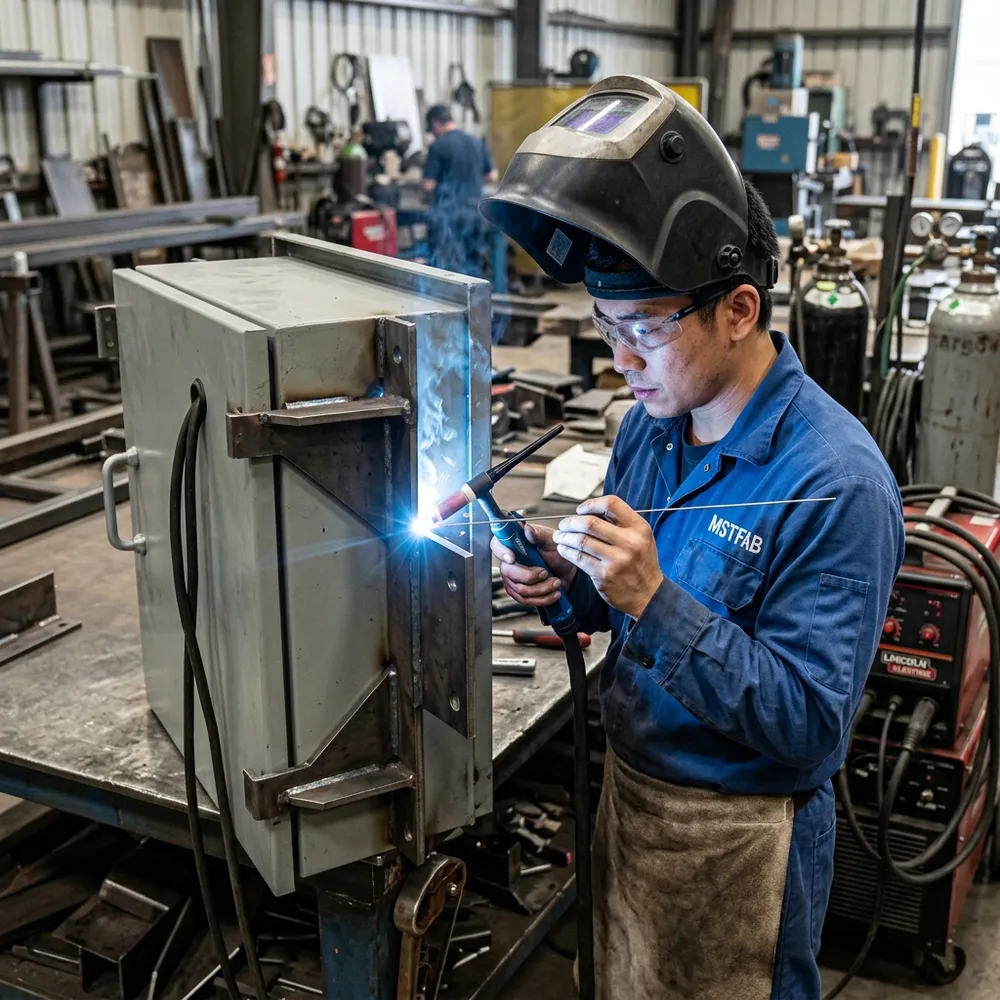
A proper wall-mounted electrical enclosure must support internal components, hold its own weight, carry cable entries, protect wiring, allow heat to escape, keep dust and moisture out, maintain door alignment, and stay safely fixed to the wall after months or years of real use.
If the enclosure is poorly fabricated, the problems show up quickly: Mounting holes do not align. The back panel flexes during installation. The door starts sagging after hardware is installed. Cable gland holes are in the wrong place. The gasket does not seal evenly. Ventilation is added too late. Powder coating scratches during shipping.
Installers start drilling extra holes into finished metal. That is not custom fabrication. That is a wall-mounted headache with sharp edges.
MSTFAB provides custom wall mount electrical enclosure fabrication based on customer drawings, STEP files, CAD files, PDF drawings, samples, or project requirements. Our process can include laser cutting, CNC bending, welding, surface finishing, hardware installation, inspection, export packaging, and DFM review.
Why Wall Mount Electrical Enclosures Need Custom Fabrication
Standard wall boxes can work for simple applications. But OEM equipment often needs custom dimensions, precise cutouts, specific mounting points, internal plates, cable entries, ventilation openings, door hardware, and surface finishing matched to the real working environment.
Custom fabrication helps solve practical problems such as correct wall mounting hole locations, strong back panel structure, custom HMI and push button cutouts, internal mounting plate support, and DIN rail mounting areas.
A good wall mount enclosure should arrive ready for installation. It should not arrive as a metal suggestion that your technicians must “complete” with a drill.
The Real Cost of a Poor Wall Mount Enclosure
The cheapest enclosure quote can become expensive very quickly. A poor wall mount electrical enclosure may cause extra drilling after delivery, slow installation, misaligned internal components, poor door and hinge function, and water or dust ingress risk.
The enclosure price is one number. The project cost is what happens after the enclosure arrives. If installers need to modify a finished powder-coated enclosure on site, the project has already lost time, money, and patience.
Built Around Wall Mounting Requirements
Wall-mounted enclosures have one very important job: they must stay on the wall. That sounds obvious, but wall mounting affects structure, hole placement, back panel strength, internal load, installation access, and packaging.
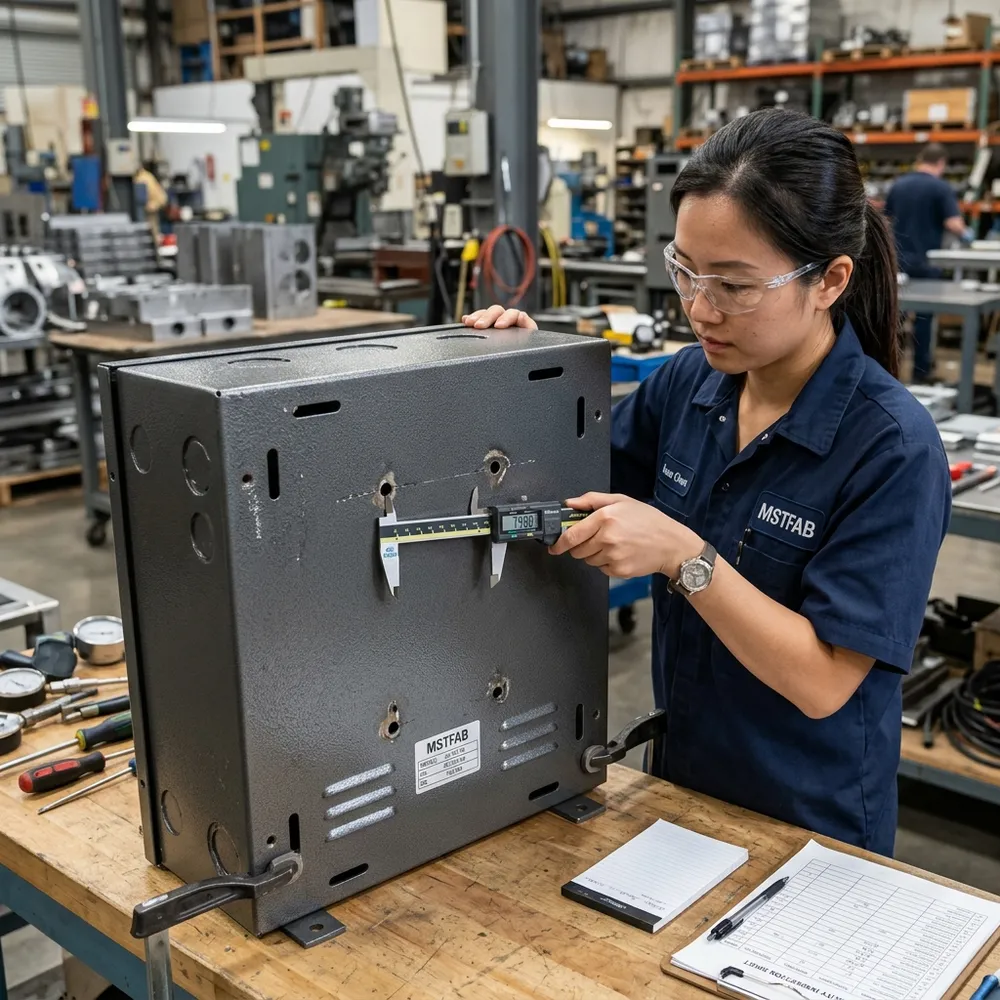
A wall mount enclosure should not flex like a cheap cookie tray when someone tightens the mounting screws. If the internal components are heavy, the mounting structure must be reviewed early. Hope is not a load-bearing feature.
Back Panel and Mounting Plate Design
The back panel is one of the most important parts of a wall mount electrical enclosure. It may support mounting screws, internal mounting plates, DIN rails, terminal blocks, power supplies, relays, PLC modules, and grounding studs.
If the back panel is too weak, the enclosure may flex, deform, or make internal assembly difficult. A good wall mount enclosure should be easy to install and stable after mounting. Nobody wants an electrical box that feels like it is politely trying to leave the wall.
Cable Entry Design
Cable entry is one of the most common pain points in wall mount electrical enclosure projects. Custom fabrication can support bottom cable entry plates, side cable openings, rear cable entries, and removable gland plates.
Cable entry should be planned before fabrication. Cutting cable holes into a finished enclosure is not engineering. It is panic with a hole saw.
Door, Hinges, Locks, and Seals
The door is where many enclosure quality problems become obvious. If the door is weak or poorly aligned, it may sag, flex, or fail to seal properly.
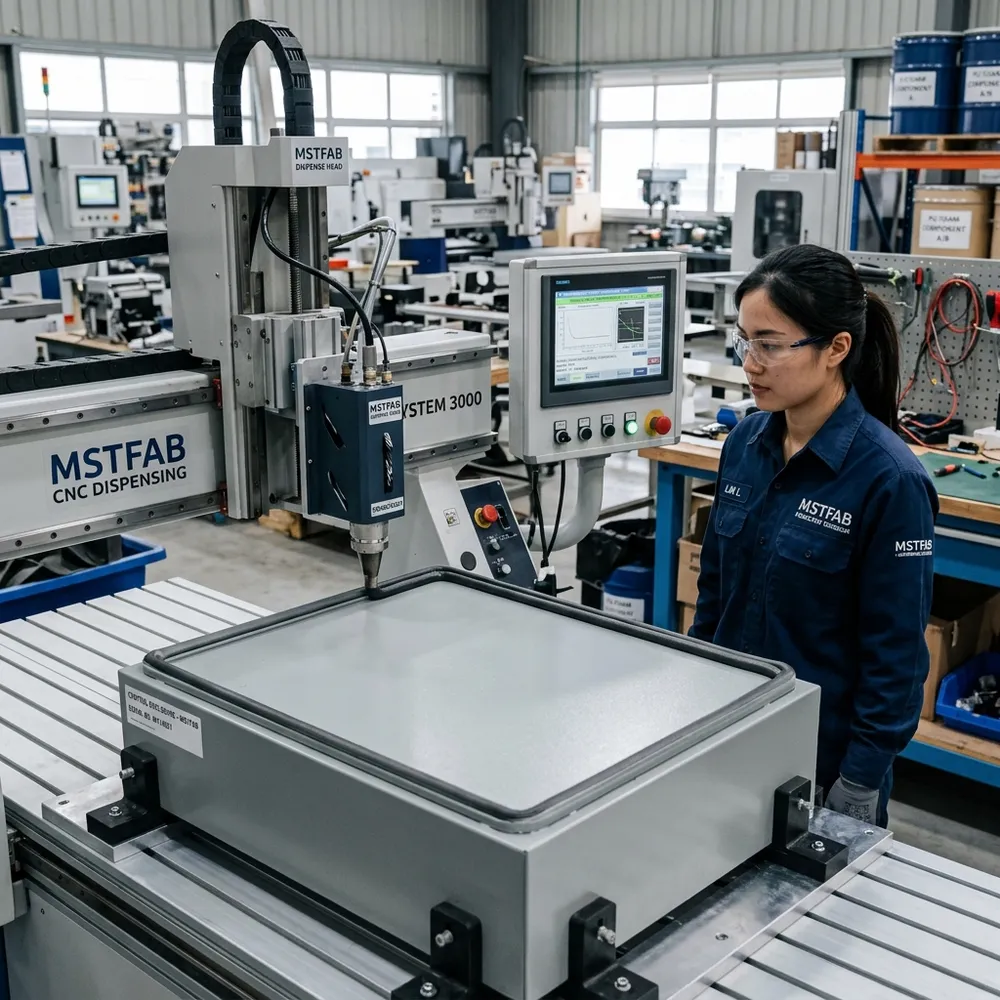
A good enclosure door should open smoothly, close cleanly, and seal consistently. Nobody wants a wall mount electrical enclosure door that behaves like an old kitchen cabinet after one month of use.
Indoor and Outdoor Wall Mount Enclosures
Indoor enclosures are often used for control systems, electrical panels, and machine wiring. Common concerns include clean wiring access, accurate mounting plate layout, and door alignment.
Outdoor enclosures face more demanding conditions. They may need better corrosion resistance, weather-resistant surface finishing, gasketed doors, rain-resistant cable entry, and strong locks.
Manufacturer Evaluation: Wall Mount Enclosure Quality
| Requirement | Professional OEM Factory (MSTFAB) | Generic Job Shop |
|---|---|---|
| Mounting Strength | Reinforced back panels and welded keyhole brackets ensure safe, rigid wall installation. | Thin metal flexes dangerously when mounting screws are tightened on site. |
| Sealing & Weatherproofing | CNC-poured seamless PU gaskets provide reliable IP66/NEMA 4X protection against dust and rain. | Cheap manual stick-on foam strips peel off, leading to water ingress and equipment failure. |
| Cable Entry Design | Pre-cut gland plates and specific routing holes prevent field modification. | Forces your electricians to use hole saws, destroying the powder coating and inviting rust. |
Material Options
Cold-Rolled Steel: Best for indoor electrical boxes and wall mount control enclosures.
Galvanized Steel: Best for semi-outdoor electrical cabinets and telecom control boxes.
Stainless Steel: Best for outdoor electrical enclosures, food equipment, and humid environments.
Aluminum: Best for lightweight wall mount boxes and HMI housings.
Clear Manufacturing Scope
MSTFAB focuses on custom sheet metal fabrication. We manufacture physical metal parts and structures, including wall mount electrical enclosures, PLC enclosures, custom metal enclosure parts, and mounting plates.
We do not design electrical schematics. We do not write PLC programs. We do not design circuitry. This keeps the project boundary clear and helps protect customer intellectual property.
Request a Wall Mount Electrical Enclosure Quote
Need a wall-mounted enclosure designed to support your exact payload and wiring layout? Send us your STEP and PDF files for a professional DFM review and competitive manufacturing quote.
Related engineering resource: If your project involves EV charging infrastructure, review our custom EV charger enclosure fabrication capabilities for outdoor sheet metal cabinet design, powder coating, and export-ready manufacturing.
Related factory capability: For OEM buyers comparing a custom sheet metal enclosure factory, review how MSTFAB handles final assembly, protective packaging, export packing checks, and shipment-ready enclosure delivery.
Frequently Asked Questions
What is wall mount electrical enclosure fabrication?
Wall mount electrical enclosure fabrication is the process of manufacturing custom metal electrical boxes, control enclosures, panels, doors, mounting plates, brackets, cable entry plates, and structural parts designed to be installed on a wall.
What are wall mount electrical enclosures used for?
They are used for control systems, PLC boxes, HMI panels, telecom equipment, power supplies, machine controls, industrial automation, and OEM electrical equipment.
Can wall mount electrical enclosures be customized?
Yes. Size, material, thickness, wall mounting holes, mounting plates, HMI openings, button holes, cable entries, ventilation, doors, locks, hinges, handles, seals, and internal brackets can be customized according to drawings.
What materials are used for wall mount electrical enclosures?
Common materials include cold-rolled steel, galvanized steel, stainless steel, aluminum, and carbon steel depending on strength, corrosion resistance, weight, appearance, and environment.
What drawings are needed for quotation?
A 3D STEP file and 2D PDF drawing are recommended. DXF or DWG files can also help with flat laser-cut parts.
Why is DFM review important?
DFM review helps identify bending, welding, wall mounting strength, hole clearance, cable entry, ventilation, hardware, door alignment, surface finish, and packaging risks before production.
Do you provide wiring or internal electrical components?
No. Our main scope is custom sheet metal fabrication. We manufacture the physical enclosure, box, panel, bracket, chassis, mounting plate, and structural parts. Wiring, electrical components, software, and circuitry are outside our standard scope.
custom sheet metal enclosure fabrication
MSTFAB manufactures custom sheet metal enclosures, electrical cabinets, control boxes and industrial metal housings for OEM buyers.
 WeChat Contact
 WhatsApp Me Directly