
A hinge looks simple.
Until it ruins the whole enclosure.
For many custom sheet metal enclosures, the hinge is not just a hardware accessory. It affects appearance, door alignment, sealing pressure, service access, security, powder coating clearance, welding distortion, and long-term reliability.
External hinges are easy to see, easy to install, and easy to understand. But they can also make a premium OEM cabinet look like a cheap utility box.
Hidden hinges are different.
- They keep the front surface clean.
- They reduce exposed hardware.
- They improve the visual quality of medical devices, control cabinets, telecom enclosures, EV charger housings, operator consoles, and premium OEM equipment.
- They can also support better protection against tampering when designed correctly.
But here is the procurement reality:
A hidden hinge is not magic.
If the enclosure body is poorly fabricated, the hidden hinge will not save it. It will make the problem more obvious. The door may rub. The gasket may not compress. The hinge pocket may interfere with internal components. The powder coating may make the clearance too tight. The technician may open the door once and immediately know the cabinet was designed by someone who never had to assemble one.
That is not premium enclosure engineering.
That is a beautiful problem hiding inside the door gap.
MSTFAB manufactures custom sheet metal enclosures, cabinets, doors, panels, mounting plates, brackets, chassis, and structural sheet metal parts based on customer STEP files, 2D PDF drawings, samples, or project requirements. Hidden hinge design can be reviewed as part of the DFM process before fabrication.
Why Hidden Hinges Matter in Sheet Metal Enclosures
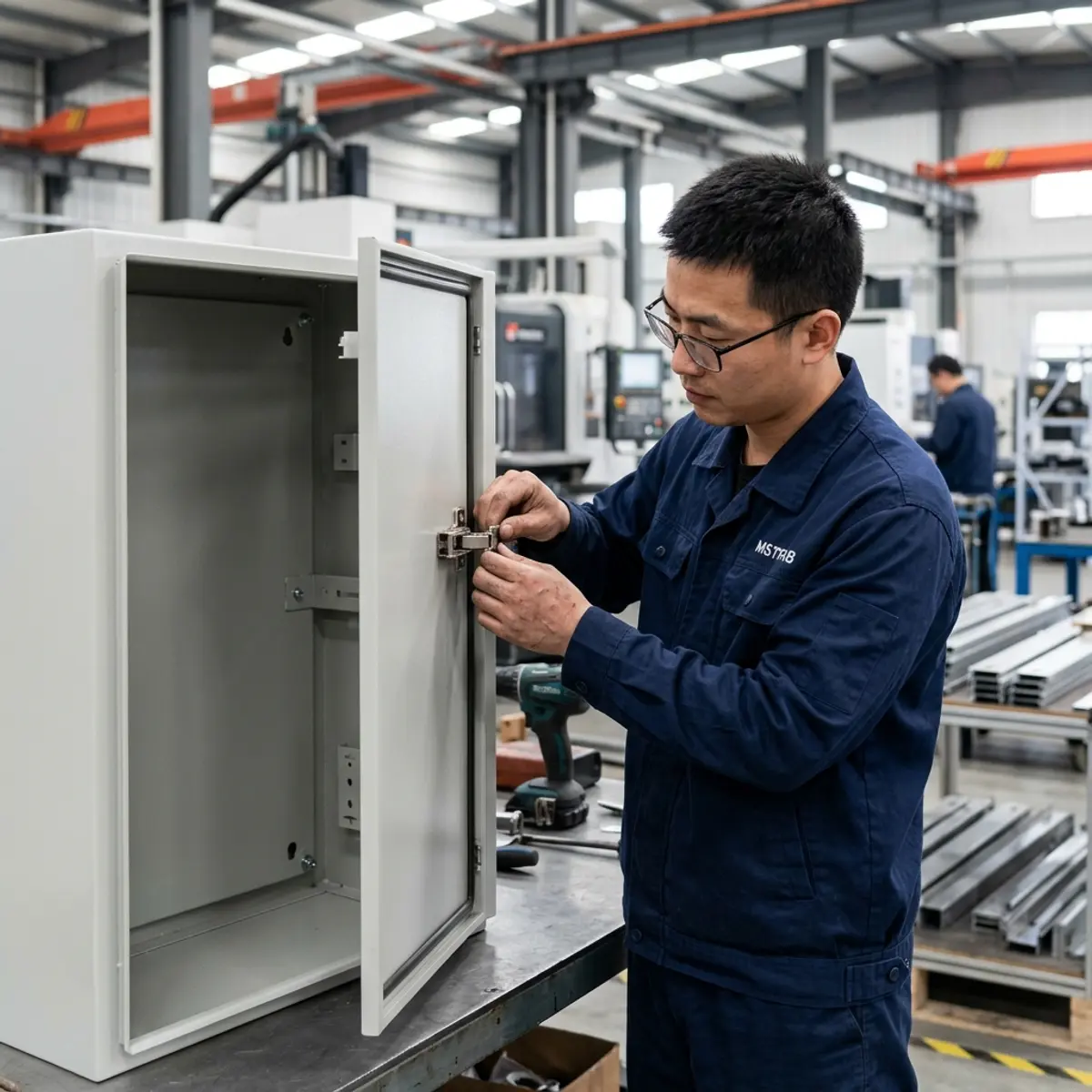
Hidden hinges are often used when the enclosure needs a cleaner, more professional appearance.
They are common in:
- Electrical control cabinets
- Industrial automation enclosures
- HMI operator boxes
- Medical device housings
- Telecom cabinets
- EV charger enclosures
- Battery storage cabinets
- Power distribution cabinets
- Operator console enclosures
- Server and network cabinets
- Outdoor OEM equipment enclosures
- Premium equipment housings
For OEM buyers, hidden hinges solve several practical problems.
- They improve appearance.
- They reduce exposed external hardware.
- They make the product look more finished.
- They can reduce tampering risk.
- They help the enclosure fit into higher-end equipment designs.
- They can support better customer perception.
Because yes, buyers judge the technology inside by the metal outside.
That may feel unfair. It is also real.
A clean hidden-hinge enclosure looks engineered. A sloppy exposed-hinge cabinet looks like it escaped from a maintenance room.
The Real Cost of Bad Hinge Design
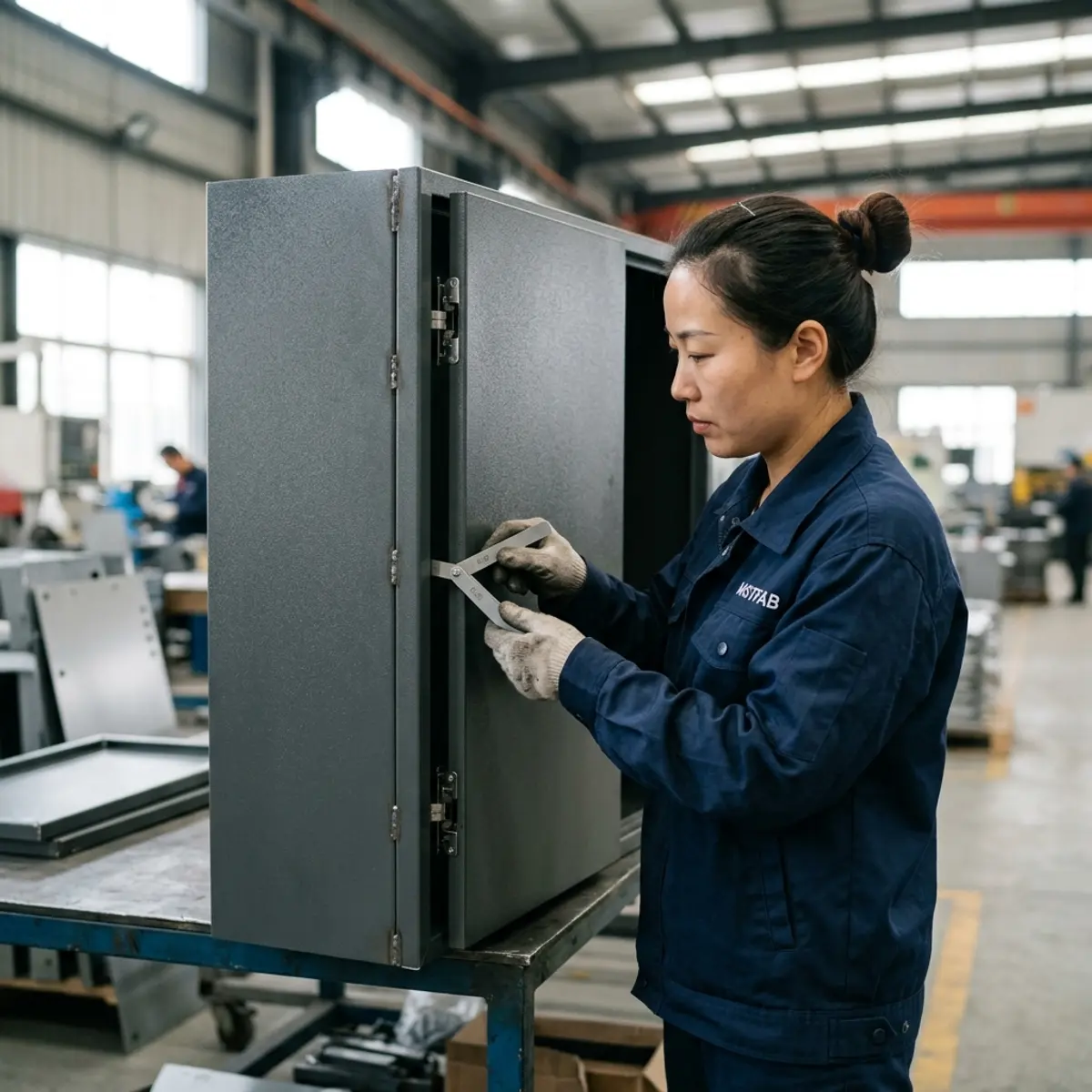
A bad hinge design can cause expensive problems:
- Door rubbing
- Uneven door gaps
- Poor gasket compression
- Hinge binding after powder coating
- Door sagging
- Water or dust ingress
- Poor service access
- Internal component interference
- Lock misalignment
- Extra hand adjustment during assembly
- Batch inconsistency
- Customer complaints
The hinge price is one number. The hinge problem cost is another number.
And that second number usually appears after the cabinet is coated, packed, shipped, and already late.
A hidden hinge system must be designed together with the enclosure structure, not added at the end like a decorative afterthought.
A hinge is not jewelry. It is a moving mechanical joint.
Treat it casually, and it will casually ruin your door alignment.
Hidden Hinges vs External Hinges
Both hidden hinges and external hinges have their place. The right choice depends on the enclosure function, appearance requirement, sealing requirement, cost target, and maintenance needs.
External Hinges
External hinges are easier to install and easier to inspect. They are often suitable for utility cabinets, basic industrial boxes, low-cost electrical enclosures, and applications where appearance is not the main concern.
Advantages:
- Simpler structure
- Easier assembly
- Lower manufacturing complexity
- Easier replacement
- Often lower cost
Risks:
- Exposed hardware
- Less premium appearance
- More tamper-visible
- Possible corrosion risk if hardware is poor
- May interfere with product styling
External hinges are not bad. They are just not always suitable for premium OEM enclosures.
Hidden Hinges
Hidden hinges are used when appearance, security, and clean enclosure design matter.
Advantages:
- Cleaner front appearance
- Better premium product feel
- Less exposed hardware
- Reduced tampering visibility
- Useful for OEM equipment branding
- Better for modern industrial design
Risks:
- More demanding tolerance control
- More complex door design
- Clearance must be reviewed carefully
- Powder coating thickness may affect movement
- Door opening angle may be limited
- Higher DFM importance
Hidden hinges look simple from outside. That is the trick. The clean look is only possible when the engineering behind it is controlled.
Where Hidden Hinges Make Sense
Hidden hinges are a strong choice for enclosures where appearance and controlled access matter.
Medical Device Enclosures
Medical equipment must look clean, safe, and professional. A hidden hinge helps create smooth external surfaces and a premium appearance.
For medical equipment, visible rough hardware can make the whole device feel cheaper. The buyer may not know why the enclosure feels premium. They just know it does. That is good design.
EV Charger Enclosures
EV chargers are public-facing products. People see them in parking lots, commercial buildings, charging stations, hotels, and retail spaces.
An EV charger with sloppy hinges does not look like infrastructure. It looks like someone bolted electronics into a metal locker. That is not the brand image most OEMs want.
Industrial Automation Enclosures
Automation equipment often includes HMI screens, buttons, switches, and service doors.
Operators touch these enclosures every day. A strong, clean, well-aligned door creates trust. A door that rattles creates complaints.
Telecom and Network Cabinets
Telecom cabinets and network enclosures often need repeated service access, cable management, and clean door function. Hidden hinges can improve appearance and reduce exposed hardware when the cabinet design allows it.
For outdoor telecom use, hinge design must also consider corrosion, sealing, and service access. A hidden hinge that looks good but makes maintenance painful is not good engineering. It is just hidden inconvenience.
Battery and Power Cabinets
Battery storage cabinets, UPS cabinets, and power distribution cabinets often need strong doors, reliable hinges, and service access.
For heavy doors, hinge strength and door reinforcement must be reviewed carefully.
A heavy cabinet door does not care about your styling intention. It cares about gravity. Gravity is very consistent.
Hidden Hinge Design Starts with Door Geometry
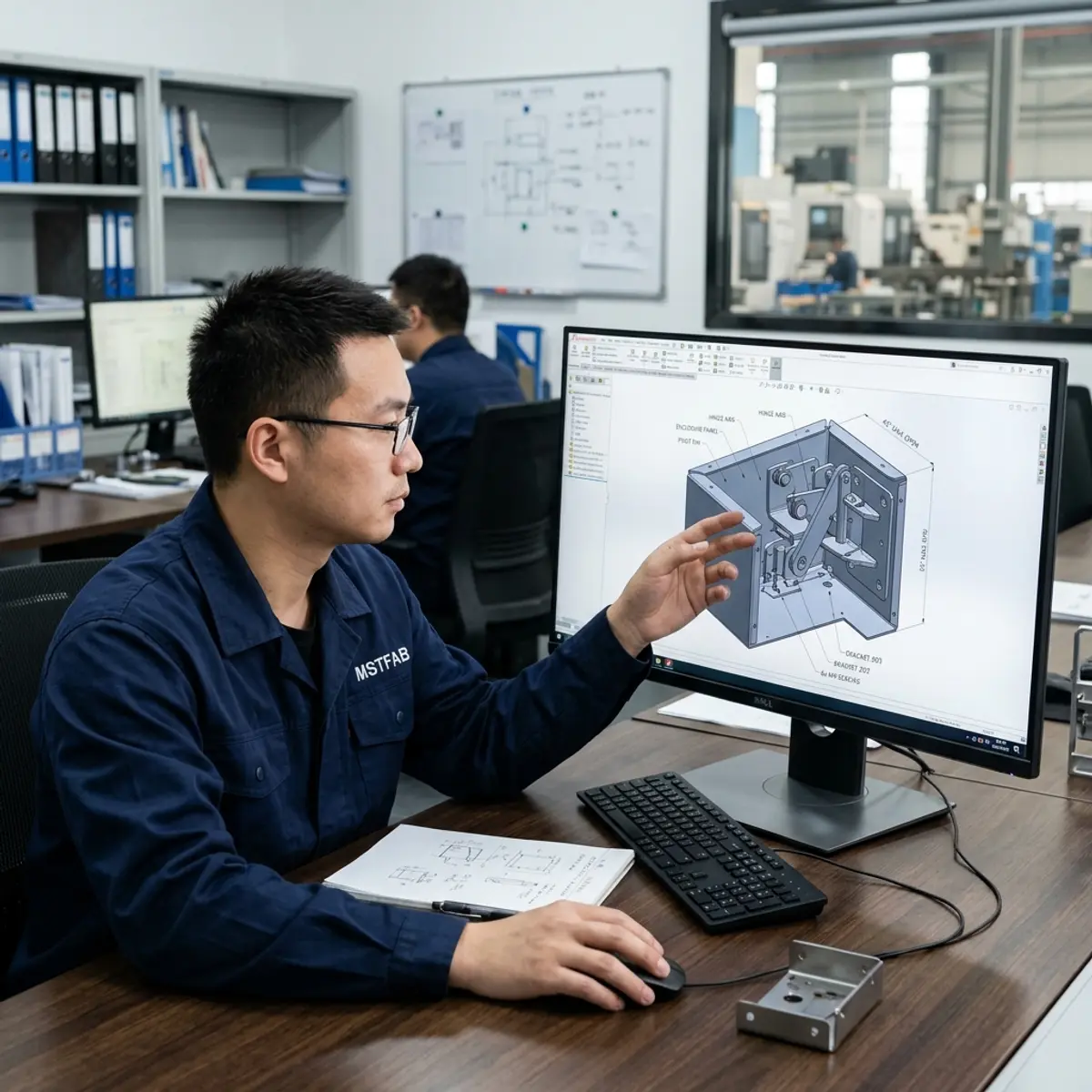
A hidden hinge cannot work properly if the door geometry is wrong.
Before fabrication, the design should review:
- Door size, thickness, and weight
- Door opening direction and required angle
- Internal hinge clearance
- Gasket position and locking pressure
- Door stiffeners and frame structure
- Powder coating thickness and service access space
A small enclosure door may work with a simple hidden hinge system. A large floor-standing cabinet door may need reinforced structure, multiple hinge points, and careful alignment control.
Door Gap Control
Hidden hinges make door gaps more visually important. With external hinges, the hardware can visually distract from small alignment issues. With hidden hinges, the front face is cleaner, so uneven gaps become more noticeable.
A clean hidden-hinge enclosure should have consistent gaps. Not perfect like a luxury watch. But consistent enough that the buyer does not stare at the door and feel suspicious.
Uneven gaps are tiny visual alarms. Procurement people may not measure them, but they notice.
Gasket Sealing and Hidden Hinges
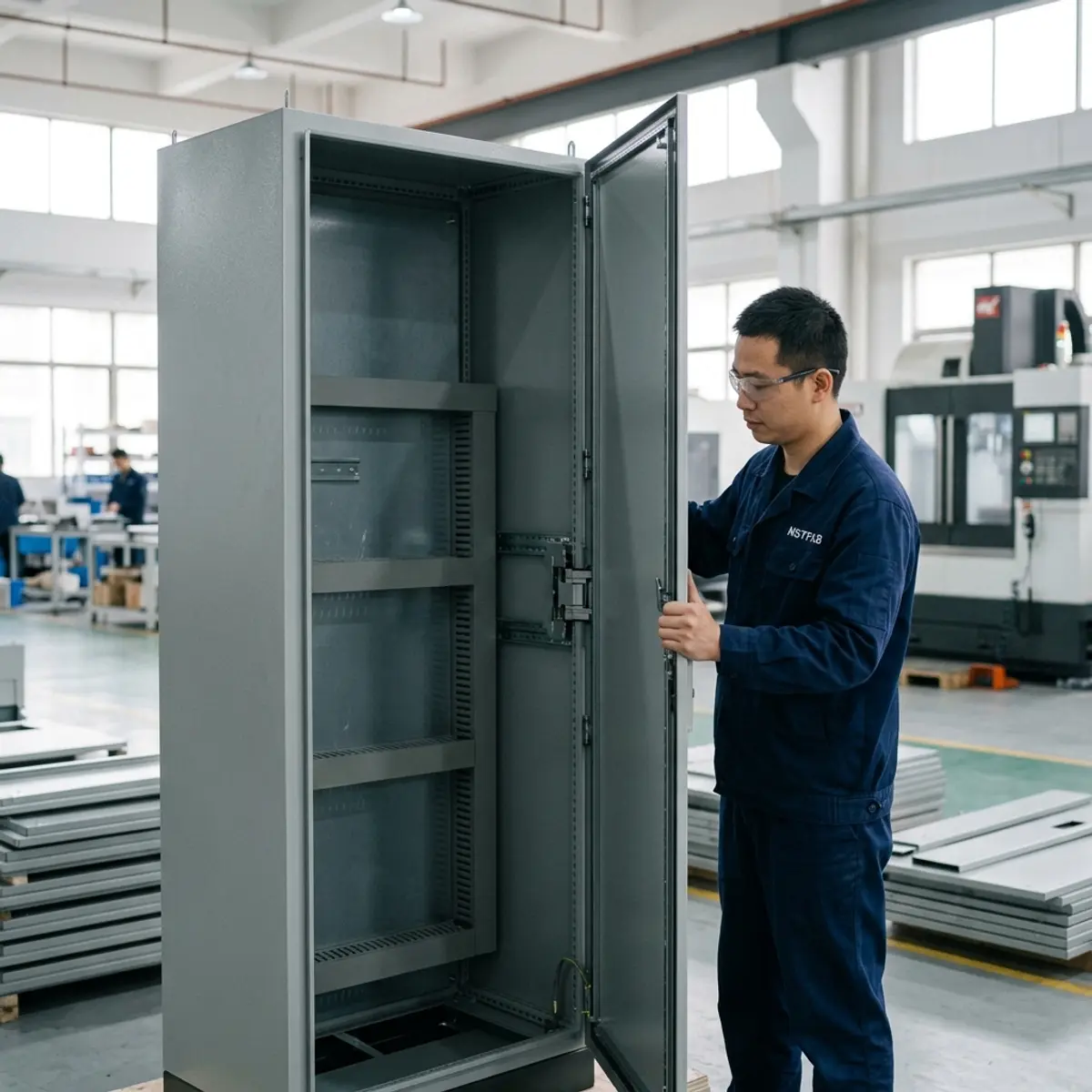
For IP65, IP66, NEMA 3R, NEMA 4, NEMA 4X, waterproof, or weatherproof enclosures, hinge design must support gasket compression. A gasket only works when the door and frame compress it properly.
The hinge side is often where sealing problems appear. If the hinge geometry prevents even compression, the gasket becomes an expensive rubber decoration.
Water does not need a large opening. It only needs one lazy sealing surface.
Powder Coating Clearance
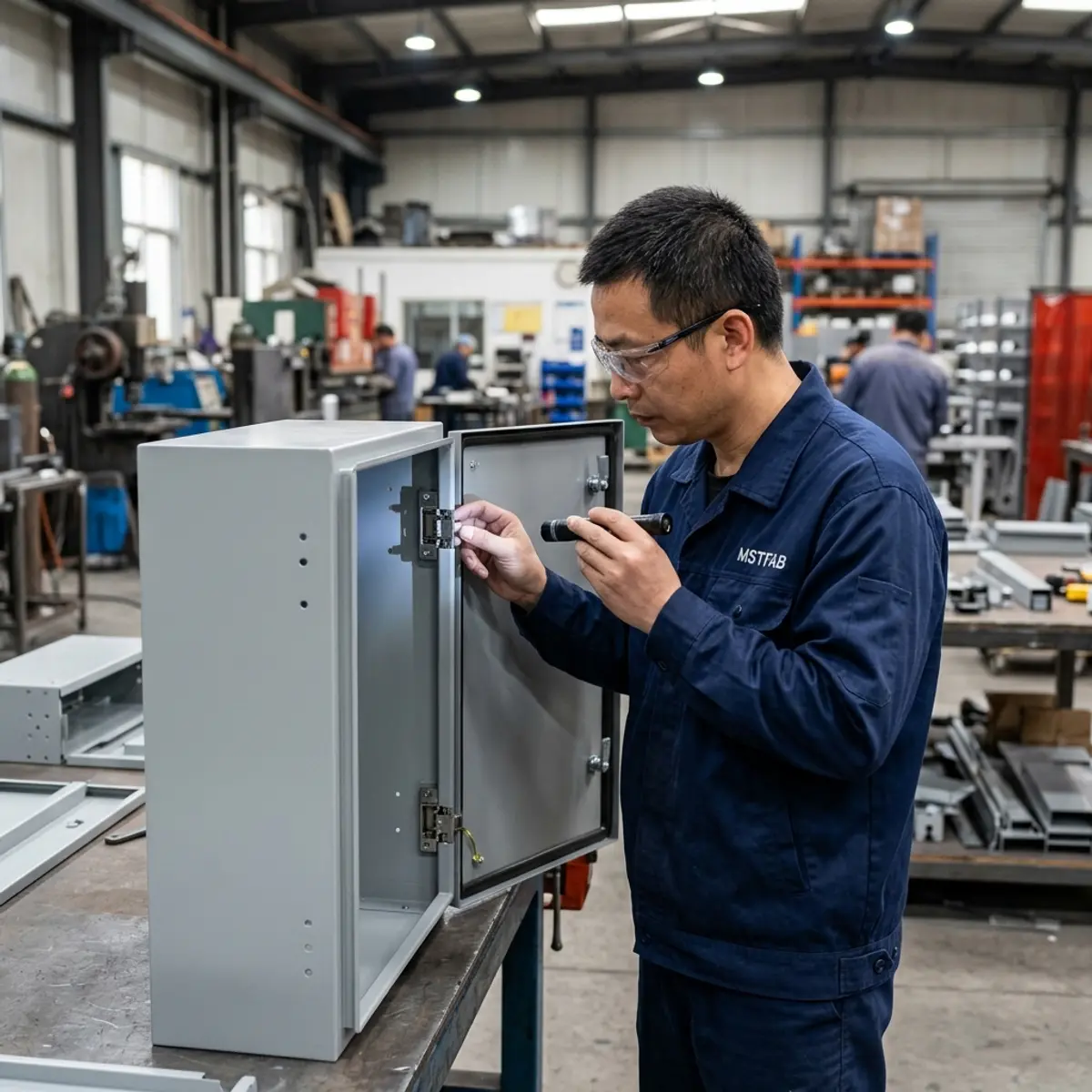
Powder coating adds thickness. That sounds obvious. It is also one of the most common hidden hinge problems.
A hinge that moves smoothly before coating may bind after coating. Powder coating is not just color. It is a dimension. Ignore that, and your hinge will explain it during assembly. Usually with scraping noises.
Welding Distortion Near Hidden Hinges
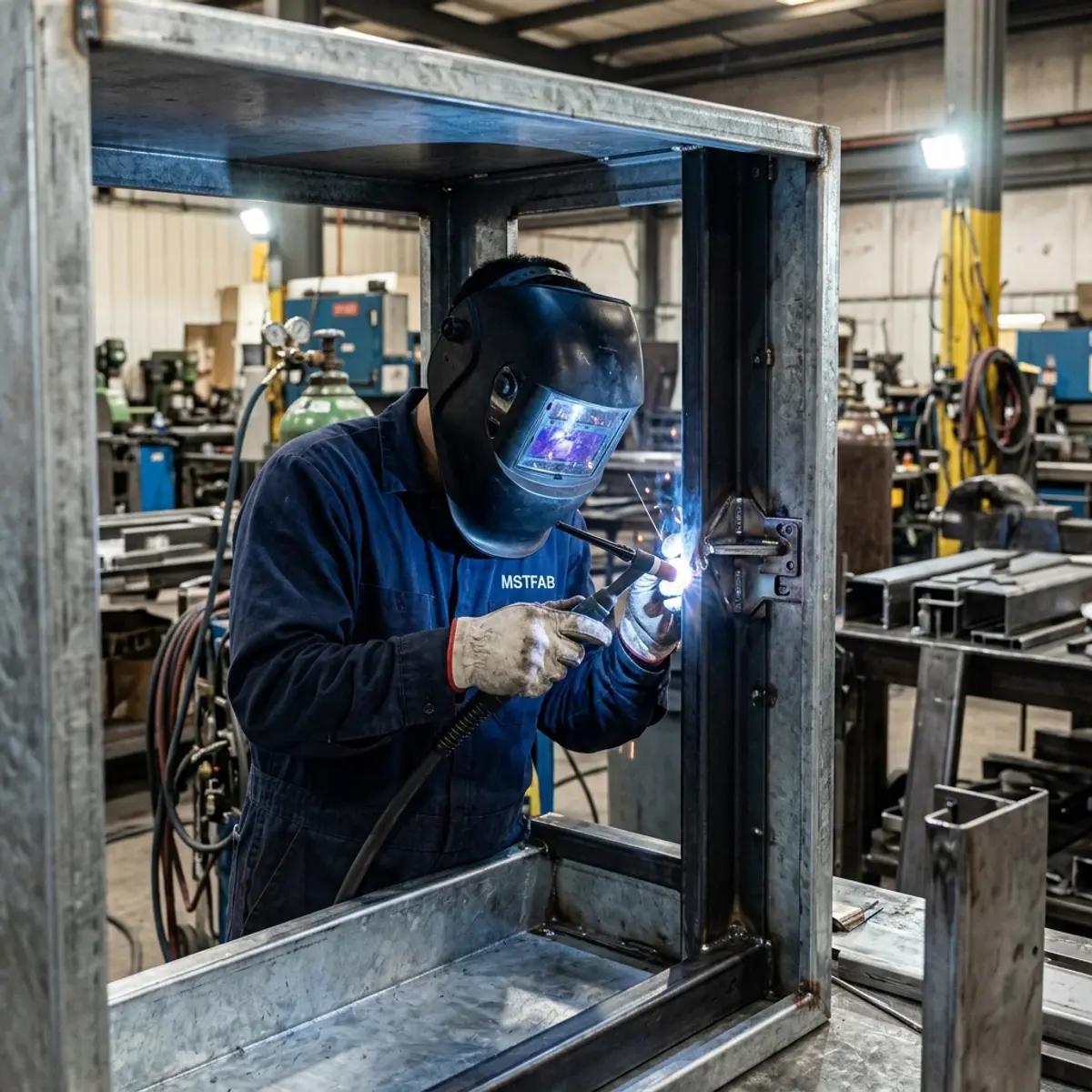
Hidden hinge structures may require welded brackets, reinforced frames, door stiffeners, or hinge pockets. Welding adds heat. Heat moves metal. If the hinge area distorts, the door may not align.
A cabinet that looks square in CAD can come out crooked in real life if welding is ignored. A premium enclosure should not leave welding looking like a banana. Unless the customer ordered fruit storage equipment.
Internal Interference Risk
Hidden hinges require space inside the enclosure. That space may conflict with mounting plates, DIN rails, cable ducts, battery rails, or internal wiring.
A hinge that blocks cable routing is not a premium feature. It is a small metal villain hiding behind the door.
OEM Trust Table: How MSTFAB Engineers Hidden Hinges
| Critical Evaluation Area | Standard Fabrication Shop | MSTFAB Professional Approach |
|---|---|---|
| Door Gap Consistency | Uneven gaps masked by forceful bending during assembly. | Precision CNC bending and DFM review ensure natural alignment and consistent gaps. |
| Powder Coating Clearance | Hinges bind and scrape due to ignored coating thickness. | Clearance models factor in coating dimensions so doors open smoothly without scraping. |
| Gasket Compression | The hinge side leaves a gap, ruining IP/NEMA ratings. | Hinge placement and geometry are calculated to compress polyurethane seals evenly. |
| Welding Distortion | Heat warping causes crooked doors. | Optimized welding fixtures and controlled heat input keep the structural frame square. |
| Prototype Reliability | Hand-tweaked prototypes that fail during mass production. | Process-driven prototyping designed to scale identically for repeatable batch production. |
Prototype Before Batch Production
Hidden hinge enclosures should be prototyped before mass production. A prototype helps confirm door opening, hinge clearance, door gap consistency, lock alignment, and gasket compression.
One good prototype is useful. But the goal is repeatable production. A prototype manually adjusted by a heroic worker is not a manufacturing process. It is a magic trick. Magic tricks do not scale.
Clear Manufacturing Scope and IP Protection
MSTFAB focuses on custom sheet metal fabrication and metal structure manufacturing. We do not design electronics. We do not write PLC programs. We do not design BMS systems.
Our scope is the physical metal enclosure based on customer drawings and requirements. This keeps the project boundary clear and helps protect customer intellectual property.
You bring the product intelligence. We build the metal structure that protects it.
Related engineering resource: If your project involves EV charging infrastructure, review our custom EV charger enclosure fabrication capabilities for outdoor sheet metal cabinet design, powder coating, and export-ready manufacturing.
Related factory capability: For OEM buyers comparing a custom sheet metal enclosure factory, review how MSTFAB handles final assembly, protective packaging, export packing checks, and shipment-ready enclosure delivery.
FAQ
What are hidden hinges in sheet metal enclosures?
Hidden hinges are hinge systems installed inside or behind the enclosure structure so they are not visible from the front exterior surface. They are used to create cleaner appearance, reduce exposed hardware, and support premium enclosure design.
Are hidden hinges better than external hinges?
Not always. Hidden hinges are better for premium appearance, reduced exposed hardware, and cleaner OEM product design. External hinges may be better for lower cost, simpler assembly, and easy replacement. The best choice depends on the enclosure application.
Do hidden hinges help with waterproof enclosures?
They can be used in waterproof or weatherproof enclosure designs, but sealing depends on the full enclosure structure. Door flatness, gasket compression, hinge-side clearance, lock pressure, cable entry, ventilation, and testing scope all matter.
What are the main design risks of hidden hinges?
Common risks include tight clearance, door rubbing, poor gasket compression, internal interference, limited opening angle, welding distortion, powder coating buildup, hinge binding, lock misalignment, and batch inconsistency.
custom sheet metal enclosure fabrication
MSTFAB manufactures custom sheet metal enclosures, electrical cabinets, control boxes and industrial metal housings for OEM buyers.
 WeChat Contact
 WhatsApp Me Directly