
Custom Network Cabinets and Server Rack Cabinets for OEM Equipment
A network cabinet or server rack cabinet is not just a tall metal box with some holes in it. It is the mechanical structure that holds switches, routers, patch panels, servers, rack-mounted devices, cable trays, PDUs, fans, filters, grounding points, doors, locks, hinges, and service access panels in the right place.
If the cabinet is poorly fabricated, the problems are not subtle.
- The 19-inch rack holes do not align.
- The switch does not slide in smoothly.
- The rear cable entry blocks maintenance.
- The cabinet airflow is weak.
- The door rattles after hardware installation.
- The powder coating scratches during shipping.
- The installer starts drilling into a finished coated cabinet.
That is not network cabinet manufacturing. That is a deployment delay wearing a powder-coated shell.
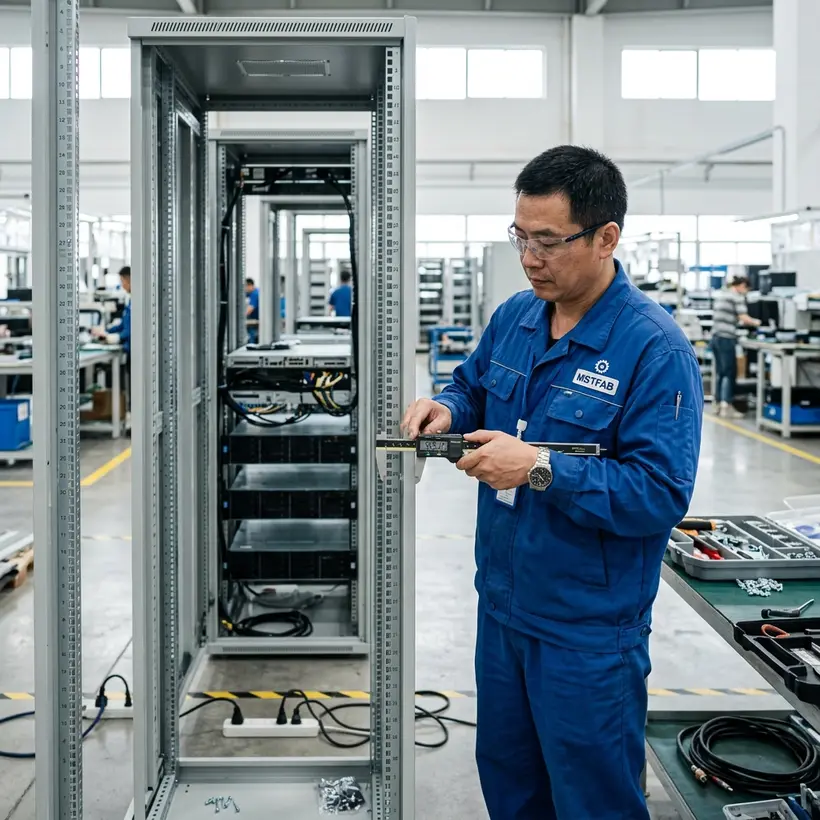
MSTFAB manufactures custom network cabinets and server rack cabinets based on customer STEP files, 2D PDF drawings, DXF files, CAD files, samples, or project requirements. Our sheet metal fabrication process can include laser cutting, CNC bending, welding, grinding, powder coating, hardware installation, rack rail fabrication, ventilation review, cable entry support, DFM review, inspection, and export-ready packaging.
Need production capability? This article focuses on network vs server rack cabinets. For manufacturing scope, process capability and drawing-based quotation support, review MSTFAB’s server rack cabinet fabrication.
Planning an RFQ? This article focuses on network and server rack cabinet layout and cooling. For production capability, drawing review and quotation support, see MSTFAB’s network cabinet fabrication.
Network Cabinet vs Server Rack Cabinet: What Is the Difference?
Network cabinets and server rack cabinets look similar, but they are not always used the same way.
Network Cabinets
Network cabinets are commonly used for switches, routers, patch panels, fiber equipment, access control equipment, security systems, communication devices, and small rack-mounted electronics.
They may be wall-mounted or floor-standing. Network cabinets usually focus on cable management, patching access, ventilation, compact size, and clean installation.
Server Rack Cabinets
Server rack cabinets are usually designed for heavier rack-mounted equipment. They may need higher load-bearing strength, deeper cabinet structure, front and rear rack rails, better airflow, perforated doors, strong base structure, stable floor-standing design, and strong export packaging.
A network cabinet may hold light communication equipment. A server rack cabinet may hold serious weight. Treating both like the same “metal box” is how projects become expensive later.
Why Custom Fabrication Matters
Standard rack cabinets work for simple IT rooms. But OEM equipment, telecom systems, industrial communication devices, edge computing systems, and custom rack-mounted products often need cabinet structures built around the real layout.
Custom network cabinet and server rack cabinet fabrication helps solve:
- 19-inch rack rail accuracy
- Rack unit height requirements
- Front and rear mounting rail alignment
- Cable entry and cable routing
- Ventilation and fan opening design
- Perforated front and rear doors
- Removable side panels
- Grounding and bonding points
- Wall-mounted or floor-standing structures
- Powder coating or corrosion-resistant finishing
- Custom depth, height, and internal mounting
- Prototype to batch production consistency
- Export packaging for large coated cabinets
A good rack cabinet should make installation predictable. It should not arrive as a “nearly correct” cabinet that technicians must modify with drills, files, and very creative vocabulary.
Common Applications
Custom network cabinets and server rack cabinets are used for 19-inch network cabinets, server rack cabinets, wall-mounted network cabinets, floor-standing rack cabinets, data communication cabinets, telecom rack cabinets, router and switch cabinets, patch panel cabinets, edge computing enclosures, industrial network cabinets, server room cabinets, power distribution rack cabinets, CCTV and security network cabinets, and OEM rack-mounted equipment housings.
Each application has different priorities. A wall-mounted network cabinet needs back panel strength and cable entry. A server rack cabinet needs load-bearing structure and airflow. A telecom rack cabinet needs service access, cable routing, and ventilation.
That is why fabrication should start with the actual equipment layout, not only the outside cabinet size.
The Real Cost of a Bad Rack Cabinet
A cheap cabinet quote can look attractive during sourcing. Then the cabinet reaches installation.
| Enclosure Manufacturing Flaw | The Result on Your Installation Site |
|---|---|
| 19-Inch Rail Misalignment | Switches refuse to slide in. Techs waste hours forcing equipment or re-drilling the rack rails. |
| Weak Load-Bearing Frame | The cabinet twists when fully loaded with servers, making it impossible to close the front door. |
| Poor Cable Routing Paths | Cable bundles block rear exhaust fans, causing critical edge computing equipment to overheat. |
| Flimsy Side Panels | Side panels rattle loudly in industrial environments, making the entire OEM product feel cheap. |
The cabinet price is one number. The installation cost is what happens after the cabinet arrives.
If your team needs to modify a finished cabinet before installing switches, servers, patch panels, or cable management parts, the project has already lost time and money. A reliable network cabinet and server rack cabinet manufacturer helps reduce those risks before production begins.
19-Inch Rack Rail Accuracy
For network cabinets and server rack cabinets, 19-inch rack accuracy is not optional. Rack-mounted equipment must align correctly with rails, shelves, slide rails, patch panels, PDUs, brackets, and cable management accessories.
A rack cabinet is not only a shell. It is a precision mounting system wrapped in sheet metal. If the rack rails are wrong, everything inside becomes a fight.
Load-Bearing Structure
Server equipment can be heavy. That means the cabinet frame, base, rails, shelves, and mounting points must be reviewed as structural parts.
Important design points include cabinet frame rigidity, reinforced base structure, rack rail support, shelf support, caster or leveling foot location, door weight, side panel fit, shipping stability, handling and pallet protection.
A tall cabinet that twists during shipping or installation is not a cabinet. It is a metal headache. For heavy rack-mounted systems, the cabinet should be designed around real load conditions, not wishful thinking. Hope is not a load-bearing feature.
Cable Entry and Cable Management
Cable management is one of the biggest pain points in network cabinet projects.
Poor cable entry design can cause messy installation, tight cable bending, blocked airflow, difficult maintenance, and ugly field modification.
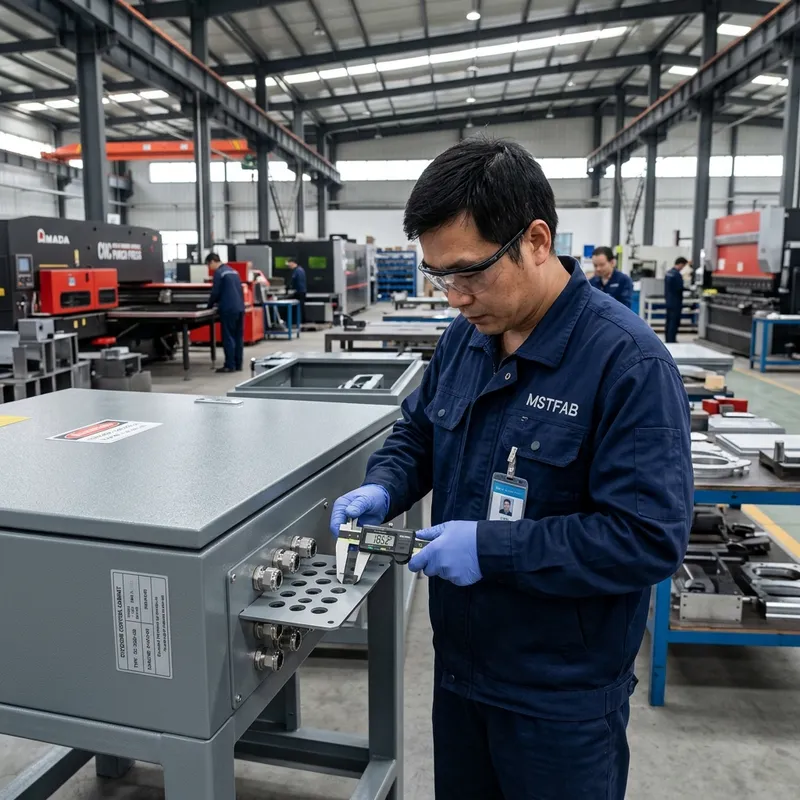
Cable entry should be planned before fabrication. Cutting holes into a finished network cabinet is not engineering. It is corrosion with a deadline.
Ventilation and Airflow
Servers, switches, routers, power units, and edge computing devices generate heat.
A cabinet that blocks airflow is not protecting equipment. It is slowly cooking it.
Custom network cabinets and server rack cabinets may require perforated front doors, perforated rear doors, ventilation side panels, fan openings, filter frames, top fan tray cutouts, air inlet and outlet paths, rear exhaust areas, internal airflow clearance, and removable service panels.
Random holes are not thermal engineering. They are decoration with consequences.
Doors, Side Panels, Locks, and Service Access
Nobody wants a rack cabinet door that behaves like an old filing cabinet after one month of use.
If the door rattles, sags, or refuses to close properly, the buyer will not call it “minor.” They will call it a supplier problem.
Wall-Mounted vs Floor-Standing Server Rack Cabinets
- Wall-Mounted Network Cabinets: Used for compact communication devices. A wall-mounted cabinet should not flex like a cheap cookie tray when the installer tightens the screws. If the back panel is weak, the cabinet will feel cheap immediately.
- Floor-Standing Server Rack Cabinets: Large rack cabinets do not forgive weak structure, weak coating, or weak packaging. A tall cabinet with poor squareness can create problems during installation, service, and shipping. The bigger the cabinet, the less room there is for casual fabrication.
Material Options
| Material Type | Application Environment |
|---|---|
| Cold-Rolled Steel | Indoor server rack cabinets, 19-inch network racks, data communication cabinets. Cost-effective, but raw steel and moisture are not friends. |
| Galvanized Steel | Semi-outdoor network cabinets, telecom rack structures. Cut edges and weld zones still need protection. It is useful, not magic. |
| Stainless Steel (304/316) | Harsh environment rack cabinets, coastal communication cabinets. It costs more. Replacing corroded cabinets in the field usually costs more than that. |
| Aluminum | Lightweight rack enclosures, edge computing housings. Aluminum is not soft steel. Treating it like steel is how nice CAD becomes annoying samples. |
Surface Finishing
For visible network cabinets and server rack cabinets, surface quality matters. A cabinet can be dimensionally correct and still be rejected if the surface is scratched, uneven, or poorly coated.
That is not cosmetic drama. That is quality control. For export projects, packaging after coating is just as important as the coating itself. A perfect finish that arrives scratched is not a perfect finish.
Laser Cutting and CNC Bending for Rack Cabinets
Laser cutting is used for cabinet panels, doors, covers, rack rails, mounting plates, cable entry plates, ventilation panels, brackets, and base structures. Cutting finished coated metal later damages the protection layer, exposes raw edges, and increases corrosion risk. It also makes a precision cabinet look like someone attacked it with a drill and a deadline.
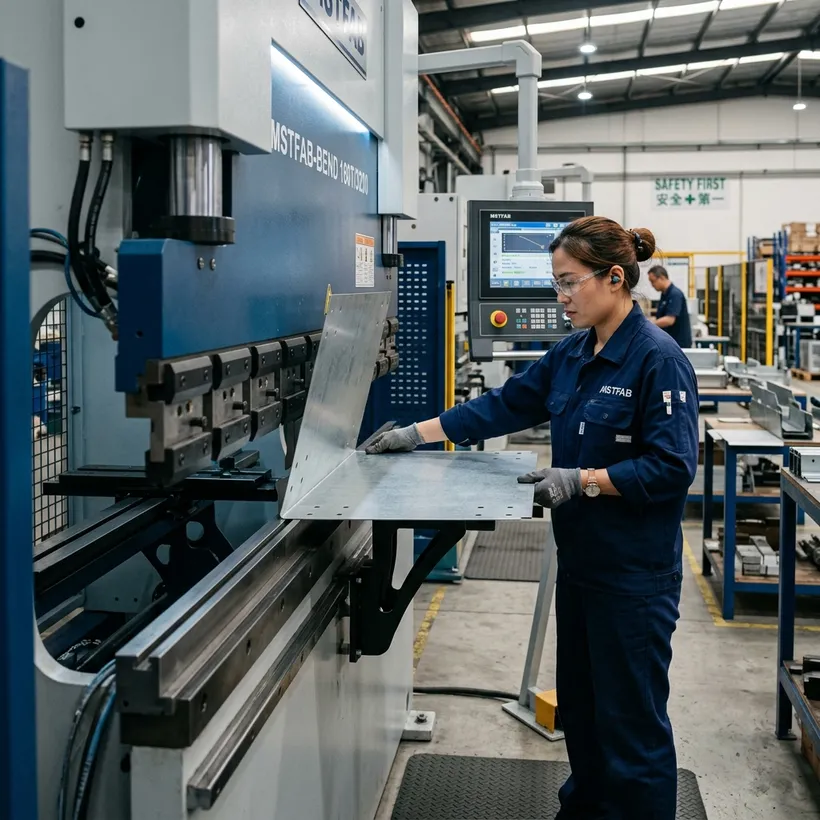
CNC bending forms the cabinet structure. If the frame twists during bending, assembly and rack alignment may suffer. Good bending is not dramatic. That is exactly why engineers like it.
Welding and Structural Assembly
Server and network cabinets may require welding for frames, bases, internal brackets, rail supports, reinforced doors, and mounting structures.
Welding adds heat. Heat moves metal. If welding is not controlled, the cabinet may look square in CAD and crooked in real life.
A server cabinet should not come out of welding looking like a banana.
DFM Review Before Production
A 3D CAD model can look perfect on screen and still create production problems. Sheet metal has thickness. It bends. It springs back. It warps during welding. Powder coating adds thickness. Rack rails need alignment. Doors need flatness. Cable entries need service clearance. Ventilation must not weaken the structure.
A design issue found before production is a drawing update. A design issue found after production is an assembly delay, a field service ticket, and a conversation nobody wants to have. DFM review is not extra paperwork. It is risk control.
Prototype to Batch Production
For network cabinet and server rack cabinet projects, prototype or first-article production is often useful before batch manufacturing.
For OEM buyers, one good sample is not the finish line. The real goal is stable repeat production. A sample made with heroic manual correction is not a manufacturing process. It is a magic trick. Magic tricks do not scale.
Export Packaging
Network cabinets and server rack cabinets are often large, coated, fitted with hardware, and shipped internationally. Poor packaging can damage the cabinet before installation.
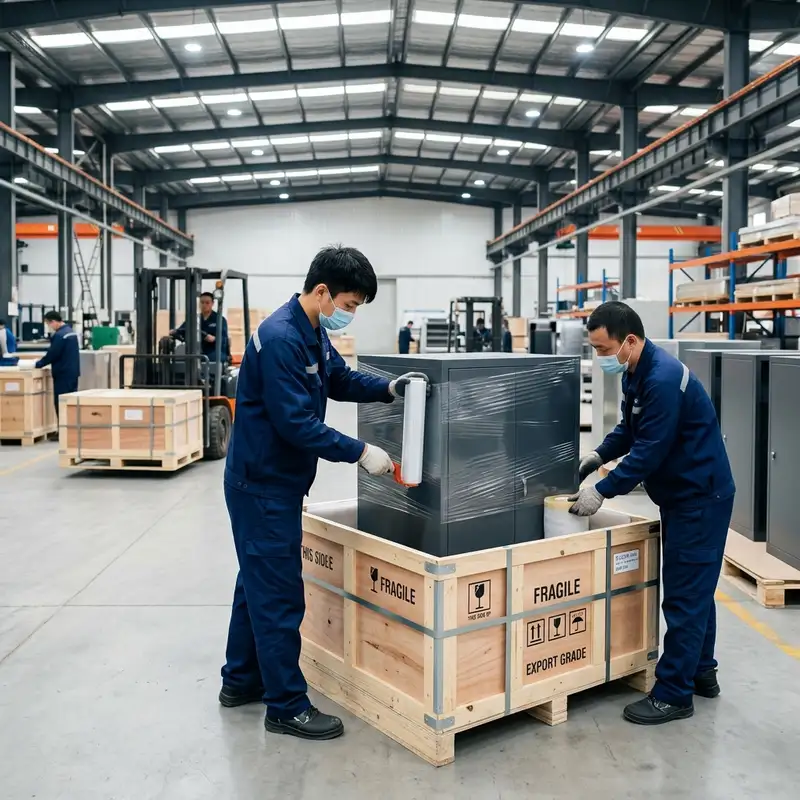
Good packaging is part of quality control. A perfectly powder-coated cabinet that arrives scratched is no longer perfect. It is a customer complaint with forklift marks.
Why Choose MSTFAB for Network and Server Rack Cabinets
MSTFAB is a custom sheet metal fabrication manufacturer in Guangzhou, China, supporting overseas OEM buyers with drawing-based enclosure manufacturing.
- Fast Quotation Support: With complete STEP and PDF drawings, our team can review network cabinet and server rack cabinet projects faster and provide practical quotation support.
- 19-Inch Rack Structure Review: We can review rack rail layout, mounting hole accuracy, cabinet depth, cable entry, ventilation, door design, and internal mounting structures before production.
- DFM Review Before Fabrication: We help identify risks in bending, welding, rack rail alignment, cable routing, ventilation, powder coating, hardware installation, and export packaging.
- Clear Manufacturing Scope: We manufacture the physical rack cabinet and sheet metal structure. We do not provide servers, configure routers, or write network software. You bring the network equipment intelligence. We build the cabinet that holds and protects it.
Request a Network Cabinet or Server Rack Cabinet Quote
If you need custom network cabinets or server rack cabinets for switches, routers, patch panels, servers, telecom systems, edge computing, data communication, industrial networks, or OEM rack-mounted equipment, send us your STEP and PDF drawings.
FAQ
What are network cabinets?
Network cabinets are metal cabinets used to house switches, routers, patch panels, fiber equipment, access control devices, communication equipment, and related network hardware.
What are server rack cabinets?
Server rack cabinets are rack structures used to house servers, rack-mounted devices, PDUs, cable management accessories, and data communication equipment, usually based on 19-inch rack standards.
Can network cabinets and server rack cabinets be customized?
Yes. Size, rack unit height, depth, rack rails, cable entries, ventilation, doors, side panels, shelves, locks, hinges, material, thickness, surface finish, and hardware can be customized according to drawings.
What materials are used for network and server cabinets?
Common materials include cold-rolled steel, galvanized steel, aluminum, stainless steel, and coated carbon steel depending on indoor or outdoor use, corrosion requirements, strength, weight, and budget.
Does MSTFAB provide servers, routers, switches, or network configuration?
No. MSTFAB focuses on custom sheet metal fabrication. We manufacture the physical cabinet, enclosure, panel, bracket, chassis, rack structure, mounting plate, and metal parts. Servers, routers, switches, software, circuitry, and internal electronics are outside our standard scope.
Suggested Further Reading
- Server and Network Cabinets
- Network Cabinet Sourcing Guide
- Network Cabinet Cable Routing Guide
- Custom Telecom Cabinet Manufacturer
- Telecom Sheet Metal Enclosure Fabrication
- Outdoor Telecom Enclosure Fabrication
- Power Distribution Cabinet Fabrication
- UPS Battery Cabinet Sheet Metal Fabrication
- Industrial Automation Enclosure Manufacturer
- Custom Sheet Metal Enclosures
- Sheet Metal Enclosure Factory
- DFM for Sheet Metal Enclosures
- Custom Sheet Metal Enclosure Design Guide
- Sheet Metal Enclosure Manufacturing Process
- Powder Coating for Sheet Metal Enclosures
- Custom Laser Cutting Service
- CNC Sheet Metal Bending
custom sheet metal enclosure fabrication
MSTFAB manufactures custom sheet metal enclosures, electrical cabinets, control boxes and industrial metal housings for OEM buyers.
 WeChat Contact
 WhatsApp Me Directly