Custom Sheet Metal Enclosures Built from Your Drawings
A custom sheet metal enclosure is not just a metal box. It protects your electronics, power modules, control systems, batteries, communication equipment, medical devices, or industrial components from damage, dust, moisture, heat, vibration, careless handling, and sometimes technicians with drills.
If the enclosure is poorly made, the problems are not small:
- The door does not close.
- The mounting holes are off.
- The cable entry is in the wrong place.
- The HMI cutout looks crooked.
- The powder coating scratches during shipping.
- The gasket does not seal.
- The assembly team starts “fixing” a finished cabinet with hand tools.
That is not custom sheet metal enclosure fabrication. That is rework in a metal costume.
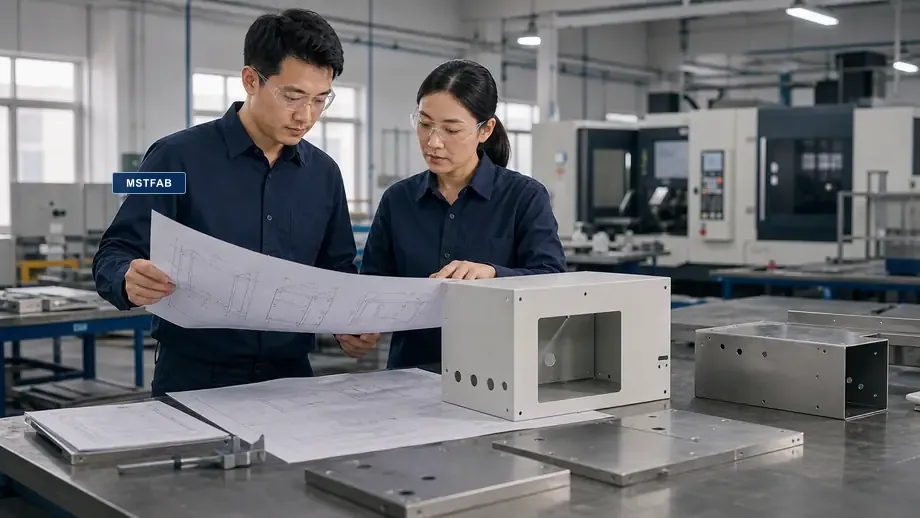
MSTFAB manufactures custom sheet metal enclosures based on customer STEP files, 2D PDF drawings, DXF files, samples, or project requirements. Our manufacturing support can include DFM review, laser cutting, CNC bending, welding, grinding, powder coating, stainless steel finishing, hardware installation, inspection, and export-ready packaging.
What Are Custom Sheet Metal Enclosures Used For?
Custom sheet metal enclosures are widely used in OEM equipment where standard catalog boxes cannot meet the required size, internal layout, installation method, appearance, protection level, or assembly process.
Common applications include:
- Electrical control cabinets & PLC enclosures
- HMI operator boxes & Traffic control cabinets
- Industrial automation enclosures
- Telecom equipment cabinets
- Network cabinets & Server rack cabinets
- EV charger enclosures
- Battery storage cabinets & UPS battery cabinets
- Power distribution cabinets
- Medical device housings & Laboratory equipment enclosures
- Outdoor OEM equipment enclosures
- Custom metal chassis and brackets
Each application has different priorities.
A telecom enclosure needs cable routing and ventilation. An EV charger enclosure needs outdoor durability and clean public-facing appearance. A battery cabinet needs reinforced structure and heat management. A medical device housing needs smooth edges and premium surface quality. An electrical control cabinet needs accurate mounting plates, cable entries, and service access.
That is why custom enclosure fabrication should start with the real equipment layout, not only the outside dimensions.
Why Buyers Choose Custom Instead of Standard Enclosures
Standard enclosures are useful when your project is simple. But OEM equipment often has special requirements that standard boxes cannot solve.
Custom sheet metal enclosures allow you to control:
- Size and structure
- Material and thickness
- Internal mounting layout
- Cable entry location & Ventilation and cooling design
- Door, hinge, lock, and handle position
- HMI screen and button cutouts
- Gasket and sealing structure
- Surface finish, color, and cosmetic appearance
A standard box may be cheaper at first. But if your team needs to drill, cut, repaint, modify, or force internal parts into it, the “cheap” box becomes very expensive very quickly. A custom enclosure should reduce assembly pain, not create it.
The Real Cost of a Bad Sheet Metal Enclosure
A low enclosure quote can look attractive. Then the sample arrives.
| Enclosure Manufacturing Flaw | The Result on Your Assembly Floor |
|---|---|
| Inaccurate Laser Cutouts | Connectors, HMIs, and displays simply won’t fit into the cabinet panel. |
| Poor Bending Geometry | The door frame is twisted, making it impossible for gaskets to seal properly. |
| Welding Distortion | Internal mounting plates become warped, so server racks or breakers won’t align. |
| Random Cable Entries | Technicians are forced to drill holes into a finished box, inviting rust and burrs. |
The enclosure price is one number. The rework cost is another number. And that second number usually appears later, when everyone is already annoyed.
A reliable custom sheet metal enclosure manufacturer helps reduce these risks before production begins through drawing review, DFM feedback, controlled fabrication, and clear quality inspection.
DFM Review Before Cutting Metal
DFM means Design for Manufacturability. This is where many expensive enclosure problems should be caught before production.
For custom sheet metal enclosures, DFM review may check: Material suitability, sheet thickness, bend radius, hole-to-bend clearance, welding distortion risk, door alignment, gasket sealing surface, cable entry layout, ventilation design, hardware clearance, powder coating thickness impact, and packaging risk.
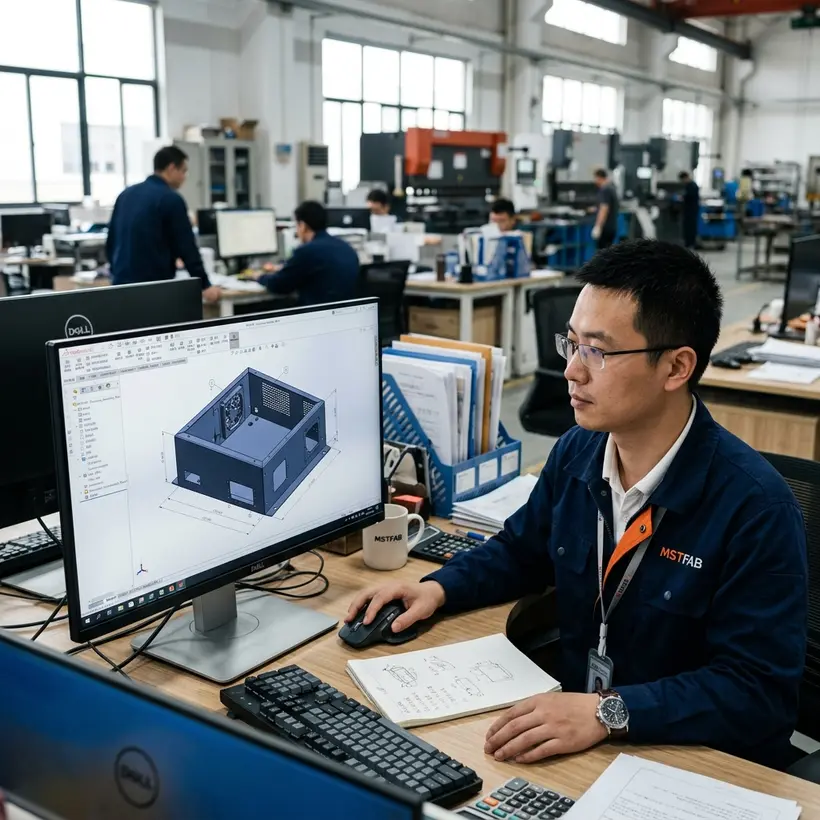
A design issue found before production is a drawing update. A design issue found after production is a rejected sample, delayed delivery, and a meeting nobody wants to attend.
DFM review is not extra paperwork. It is risk control.
Material Options for Custom Sheet Metal Enclosures
| Material Type | Best Practical Application |
|---|---|
| Cold-Rolled Steel | Cost-effective for indoor electrical cabinets, industrial control enclosures, network cabinets, and machine covers. Needs powder coating. Raw steel and water are not friends. |
| Galvanized Steel | Provides better corrosion resistance. Excellent for outdoor electrical enclosures, telecom cabinets, EV charger cabinets, and battery storage. Cut edges and welds still need coating. |
| Stainless Steel (304/316) | Used when corrosion resistance, clean appearance, or washdown resistance matters (e.g., medical equipment, coastal NEMA 4X projects). It costs more, but replacing corroded cabinets in the field costs more than that. |
| Aluminum | Lightweight and naturally corrosion-resistant. Ideal for telecom panels, EV charger covers, and premium OEM shells. Aluminum is not soft steel; treating it like steel is how nice CAD becomes annoying samples. |
Laser Cutting for Accurate Panels and Cutouts
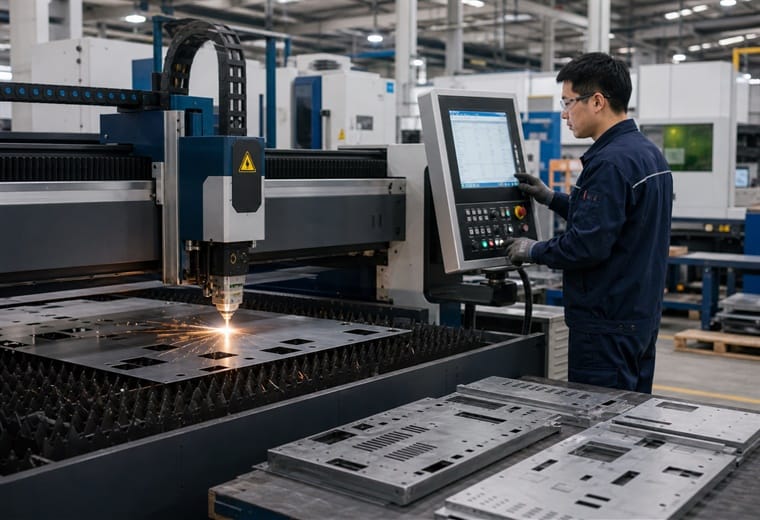
Laser cutting is used to produce enclosure panels, doors, covers, brackets, mounting plates, cable entry plates, ventilation panels, and chassis parts. Common laser-cut features include display openings, button holes, cable gland holes, fan openings, mounting holes, and connector cutouts.
Accurate cutting reduces assembly problems. A 1 mm error may look small on a drawing. It looks much bigger when a button, connector, touchscreen, or rack-mounted device does not fit.
Good fabrication does not rely on “we can adjust later.” Later usually means rework.
CNC Bending for Clean Enclosure Geometry
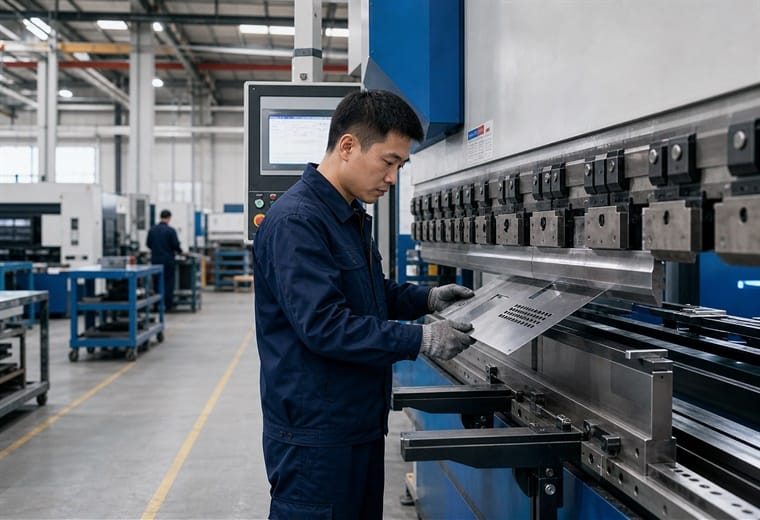
CNC bending forms flat sheet metal into enclosure bodies, doors, covers, flanges, shelves, brackets, frames, and internal supports.
Bending quality affects cabinet squareness, door fit, panel gaps, mounting plate accuracy, gasket contact, and assembly clearance.
Good bending looks boring. That is exactly why engineers like it. Bad bending makes the enclosure look like it had an argument with geometry.
Welding and Structural Assembly
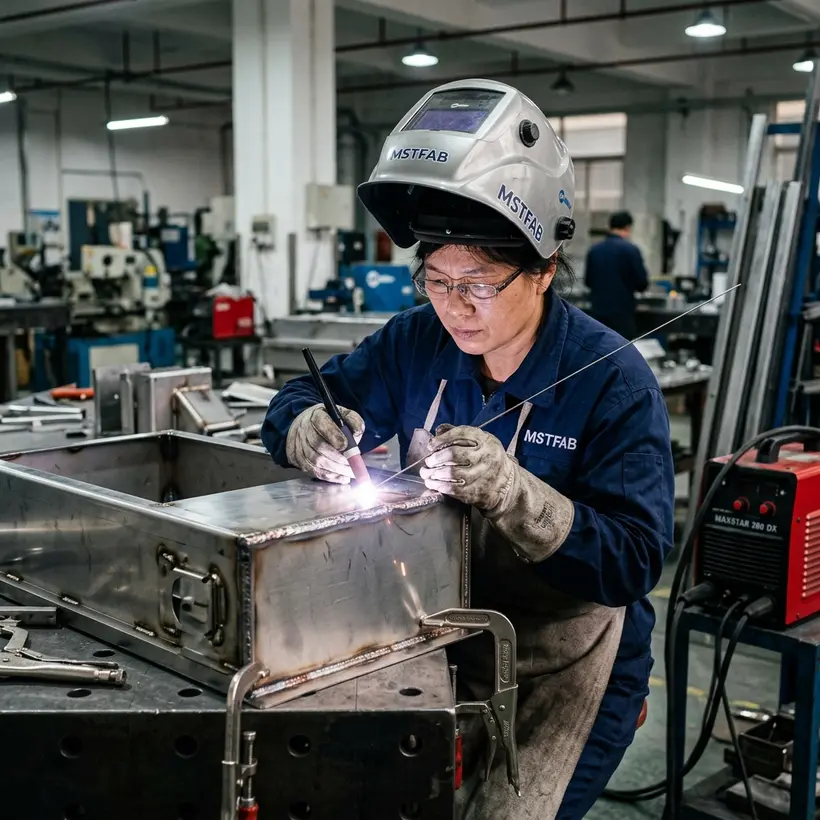
Custom enclosures may require welding for strength, sealing, or structural stability. Welding may be used for cabinet frames, base structures, door stiffeners, internal brackets, battery rail supports, and outdoor cabinet structures.
Welding must be controlled because heat moves metal. Poor welding can cause warped doors, twisted frames, uneven panel gaps, poor gasket contact, visible defects, and assembly mismatch.
A professional enclosure factory should review welding sequence, fixture requirements, visible weld areas, and surface finishing before production. A cabinet should not come out of welding looking like a banana. Unless the project is for fruit storage.
Surface Finishing and Powder Coating
Surface finish affects appearance, corrosion resistance, customer perception, and long-term durability. Common finishing options include powder coating, outdoor-grade powder coating, wet painting, brushed stainless steel, and aluminum finishing.
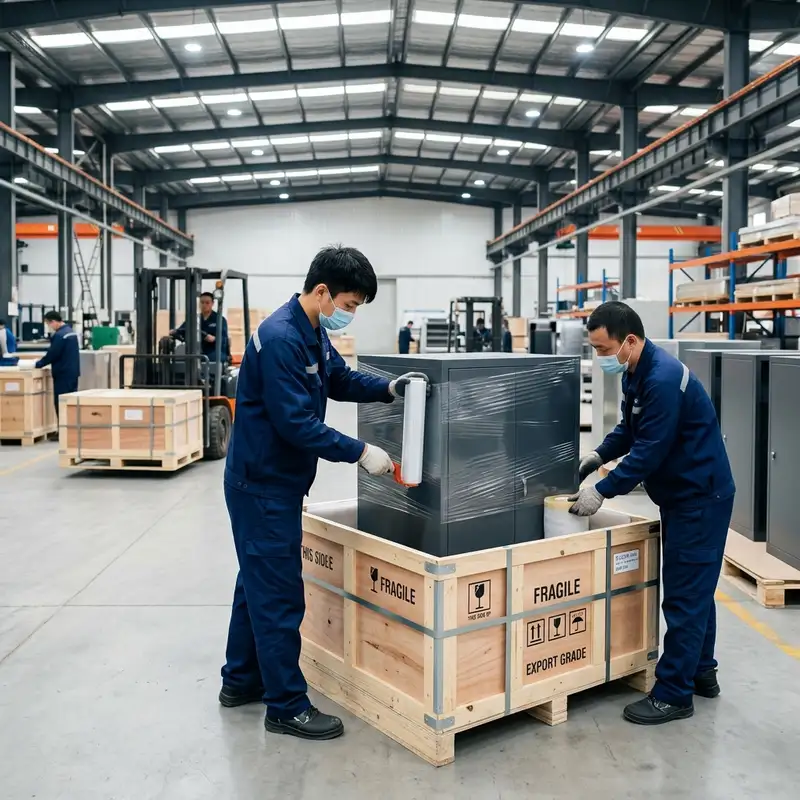
Powder coating is not just “spray color.” For outdoor enclosures, it is part of the protection system. A beautiful coating that arrives scratched is not beautiful. It is a complaint with forklift marks.
Cable Entry and Wiring Support
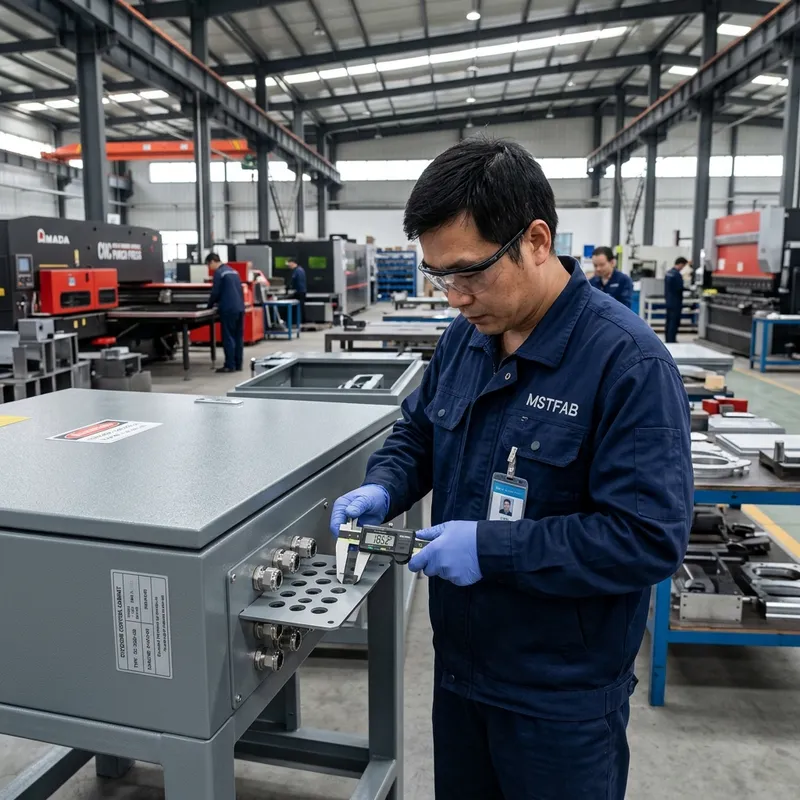
Cable entry is one of the most common pain points in custom enclosure projects.
Poor cable entry design can cause difficult wiring, cable bending stress, poor sealing, messy assembly, extra drilling after coating, and field service problems.
Cable entry should be planned before fabrication. Cutting holes into a finished powder-coated enclosure is not engineering. It is corrosion with a drill.
Ventilation and Thermal Management
Many enclosures protect heat-generating components such as VFDs, rectifiers, batteries, EV charger modules, and industrial electronics.
Random holes are not thermal engineering. They are invitations for dust, water, insects, and regret.
A sealed enclosure with no thermal plan can cook electronics. A ventilated enclosure with no water protection can flood electronics. Both are bad. One is just wetter.
Indoor and Outdoor Custom Enclosures
Indoor enclosures usually focus on: Assembly accuracy, mounting plate fit, cable entry, ventilation, powder coating appearance, door alignment, and cost control.
Outdoor enclosures need additional review for: Rain protection, dust protection, UV exposure, corrosion resistance, gasket sealing, protected ventilation, cable entry sealing, outdoor-grade powder coating, and export packaging.
Outdoor cabinets do not forgive lazy details. A flat-top cabinet can become a small swimming pool. That is not a design feature. That is how corrosion gets comfortable.
IP and NEMA Design Support
Custom sheet metal enclosures may need to support different protection targets, such as IP54, IP55, IP65, IP66, NEMA 3R, NEMA 4, or NEMA 4X.
These requirements affect door flatness, gasket compression, hinge and lock pressure, cable entry sealing, ventilation protection, and welding distortion.
Important note: MSTFAB can fabricate enclosures designed to support customer IP or NEMA requirements based on drawings and specifications. If formal testing, certification, or third-party reports are required, that scope must be confirmed before quotation. Do not assume certification. Assumptions are where compliance projects go to get expensive.
Prototype to Batch Production
A prototype proves one enclosure can be made. Batch production proves the enclosure can be made repeatedly. That difference matters.
One good sample is not the finish line. The real goal is stable repeat production. A sample made with heroic manual correction is not manufacturing. It is a magic trick. Magic tricks do not scale.
Why Choose MSTFAB for Custom Sheet Metal Enclosures
MSTFAB is a custom sheet metal fabrication manufacturer in Guangzhou, China, supporting overseas OEM buyers with drawing-based enclosure manufacturing. Our advantages include:
- Fast Quotation Support: With complete STEP and PDF drawings, our team can review projects faster and provide practical quotation support. Fast response matters when your project schedule is already breathing loudly behind you.
- DFM Review Before Production: We can review bending risks, welding distortion, cable entry, ventilation, gasket sealing, material choice, and packaging risks.
- Custom Enclosure Experience: We support electrical cabinets, telecom enclosures, EV charger housings, battery cabinets, medical device housings, and OEM metal parts.
- Complete Process Support: Laser cutting, CNC bending, welding, grinding, surface finishing, hardware installation, and export packaging.
- Clear Manufacturing Scope: We focus on physical metal enclosures. We do not ask for your proprietary software, internal electronics, PLC programs, BMS logic, or circuit design. You bring the product intelligence. We build the metal structure that protects it.
What to Send for a Quote
To request a quotation for custom sheet metal enclosures, please send: 3D STEP file, 2D PDF drawing, DXF files, material grade, sheet thickness, quantity, surface finish, hardware requirements, cable entry details, and packaging requirements.
Clear information helps us quote faster and more accurately. It also helps avoid comparing three suppliers who are not actually quoting the same enclosure. Without clear requirements, buyers are not comparing suppliers. They are comparing guesses. And the cheapest guess usually becomes the most expensive surprise.
Request a Custom Sheet Metal Enclosure Quote
If you need custom sheet metal enclosures for electrical cabinets, telecom systems, EV chargers, battery storage, power distribution, medical equipment, industrial automation, network cabinets, or OEM metal parts, send us your STEP and PDF drawings.
FAQ
What are custom sheet metal enclosures?
Custom sheet metal enclosures are metal cabinets, boxes, housings, panels, doors, covers, chassis parts, and fabricated structures made according to customer drawings and project requirements.
What are custom sheet metal enclosures used for?
They are used for electrical control systems, telecom equipment, EV chargers, battery storage systems, UPS cabinets, power distribution equipment, medical devices, industrial automation, HMI panels, server racks, and OEM machinery.
What materials are used for custom sheet metal enclosures?
Common materials include cold-rolled steel, galvanized steel, stainless steel, aluminum, and carbon steel for structural parts. The correct material depends on strength, corrosion resistance, weight, finish, environment, and budget.
What files are needed for quotation?
A 3D STEP file and 2D PDF drawing are recommended. DXF or DWG files are useful for flat laser-cut parts. Please also provide material, thickness, quantity, surface finish, hardware, welding, application environment, and packaging requirements.
Can custom enclosures be made from STEP files?
Yes. STEP files are very useful for understanding the 3D geometry. A 2D PDF drawing should also be provided to define tolerances, material, finish, notes, and inspection requirements.
Can MSTFAB support DFM review?
Yes. MSTFAB can review sheet metal enclosure designs for bending risks, welding distortion, cable entry, ventilation, gasket sealing, material selection, powder coating, hardware installation, packaging, and prototype-to-batch production risks.
Can MSTFAB make outdoor sheet metal enclosures?
Yes. MSTFAB can manufacture outdoor enclosures with weatherproof structure design, gasketed doors, cable entry planning, ventilation review, corrosion-resistant materials, powder coating, and export packaging according to project requirements.
Does MSTFAB provide electronics or wiring?
No. MSTFAB focuses on custom sheet metal fabrication. We manufacture the physical enclosure, cabinet, panel, bracket, chassis, mounting plate, and metal parts. Electronics, wiring, software, PLC programming, circuitry, BMS, and internal systems are outside our standard scope.
Suggested Further Reading
- Sheet Metal Enclosure Factory
- Sheet Metal Enclosure Manufacturer
- OEM Electrical Control Cabinet Manufacturer
- Custom Sheet Metal Enclosure Quote
- Sheet Metal Enclosure Fabrication RFQ
- Send Drawing to Enclosure Manufacturer
- Fabrication from STEP File
- Fabrication from CAD Drawings
- Custom Enclosure Design Guide
- Enclosure Manufacturing Process
- Enclosure Material Selection
- Powder Coating for Sheet Metal Enclosures
- Outdoor OEM Equipment Enclosures
- Telecom Sheet Metal Enclosure Fabrication
- EV Charger Enclosure Fabrication
- Battery Storage Enclosure Fabrication
- Power Distribution Cabinet Fabrication
- Medical Device Sheet Metal Enclosure
- Industrial Automation Enclosure Manufacturer
- Custom Laser Cutting Service
- CNC Sheet Metal Bending
custom sheet metal enclosure fabrication
MSTFAB manufactures custom sheet metal enclosures, electrical cabinets, control boxes and industrial metal housings for OEM buyers.
 WeChat Contact
 WhatsApp Me Directly