An outdoor OEM equipment enclosure is not just a metal box placed outside.
It is the protective shell around valuable electronics, power modules, batteries, controls, communication devices, sensors, wiring, cable entries, cooling systems, mounting plates, service doors, locks, hinges, and customer-facing surfaces.
Outdoor equipment has no patience for weak enclosure design.
- Rain will find bad door gaps.
- Dust will find poor ventilation openings.
- UV will punish cheap coating.
- Salt air will attack weak hardware.
- Heavy components will expose weak base structures.
- Technicians will complain when cable entry is in the wrong place.
- Your customer will notice when the cabinet looks cheap after one season outdoors.
That is not an outdoor enclosure problem.
That is a design and fabrication problem wearing powder coating.
MSTFAB manufactures custom outdoor OEM equipment enclosures based on customer STEP files, 2D PDF drawings, CAD files, samples, or project requirements. Our sheet metal fabrication process can include laser cutting, CNC bending, welding, grinding, powder coating, stainless steel finishing, hardware installation, gasket structure review, cable entry support, ventilation review, DFM review, inspection, and export packaging.
Need production capability? This article focuses on outdoor equipment enclosure rfq checklist. For manufacturing scope, process capability and drawing-based quotation support, review MSTFAB’s outdoor sheet metal enclosure fabrication.
Why Outdoor OEM Equipment Enclosures Need Custom Fabrication
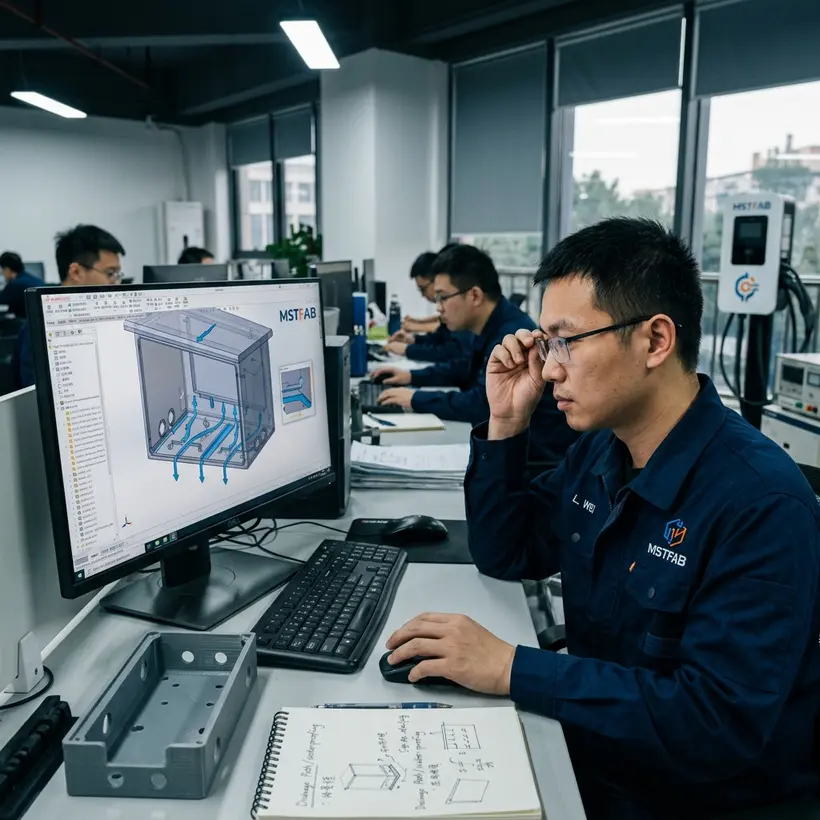
Standard metal boxes may work for simple indoor use.
Outdoor OEM equipment usually needs more careful engineering.
A custom outdoor equipment enclosure may require:
- Weatherproof cabinet structure
- Rain lips and drip edges
- Gasketed service doors
- Cable gland plates
- Protected ventilation
- Fan, filter, or heat exchanger openings
- Internal mounting plates
- Reinforced base structures
- Grounding and bonding points
- Corrosion-resistant materials
- Outdoor-grade powder coating
- Stainless steel hardware
- Wall-mounted or floor-standing design
- Prototype to batch production consistency
- Export packaging for visible coated surfaces
A good outdoor enclosure should protect the equipment, support clean assembly, simplify field installation, resist corrosion, and survive real outdoor service.
It should not arrive as a “nearly correct” cabinet that technicians must finish with drills, sealant, and bad language.
Common Applications
Custom outdoor OEM equipment enclosures are used for:
- Outdoor electrical equipment
- Telecom equipment cabinets
- Network communication enclosures
- EV charger enclosures
- Battery storage cabinets
- Solar power equipment enclosures
- UPS backup power cabinets
- Power distribution cabinets
- Traffic control cabinets
- CCTV and monitoring equipment boxes
- Industrial automation outdoor cabinets
- Remote control equipment enclosures
- Smart locker outdoor housings
- Sensor and IoT equipment cabinets
- OEM weatherproof equipment shells
Each application has different risks.
- A telecom enclosure needs cable routing and airflow.
- An EV charger enclosure needs public-facing appearance and weather resistance.
- A battery cabinet needs reinforced structure and thermal planning.
- A traffic cabinet needs roadside durability and service access.
- A power cabinet needs cable entry, grounding, ventilation, and strong doors.
That is why outdoor enclosure fabrication should start with the real equipment layout, not only outside dimensions.
The Real Cost of a Bad Outdoor Enclosure
A cheap outdoor enclosure quote can look attractive during sourcing.
Then the cabinet reaches the field.
A poor enclosure may cause:
- Water ingress
- Dust contamination
- Rust around cable entries
- Poor airflow & Overheating electronics
- Door alignment problems & Failed gasket contact
- Weak locks or hinges
- Coating peeling & UV fading
- Base deformation
- Extra drilling after finishing
- Packaging scratches
- Field service complaints
The enclosure price is one number. The field failure cost is usually much uglier.
If your team needs to repair, drill, repaint, reseal, or reinforce a finished outdoor cabinet, the project has already lost money.
Built Around the Real Equipment Layout
An outdoor enclosure should be designed around the equipment inside.
If the internal layout is ignored, the enclosure may look good outside but become painful during assembly.
A beautiful outdoor cabinet that cannot route cables, manage heat, or close properly is not premium manufacturing.
It is expensive outdoor decoration.
Weatherproof Structure Design

A flat-top outdoor cabinet can become a small swimming pool.
That is not a feature.
That is how corrosion gets comfortable.
Outdoor enclosure design should guide water away, not invite it to stay. Useful outdoor design details include sloped top surfaces, rain lips, drip edges, protected door seams, and gasketed doors.
IP and NEMA Design Support
Outdoor OEM equipment enclosures may need to support different protection targets, such as IP65, IP66, NEMA 3R, NEMA 4, or NEMA 4X.
These are not the same. A rain-resistant utility cabinet does not need the same design as a washdown stainless steel enclosure.
Writing “waterproof” on a drawing does not make the enclosure waterproof.
The design must earn it.
Cable Entry and Field Installation
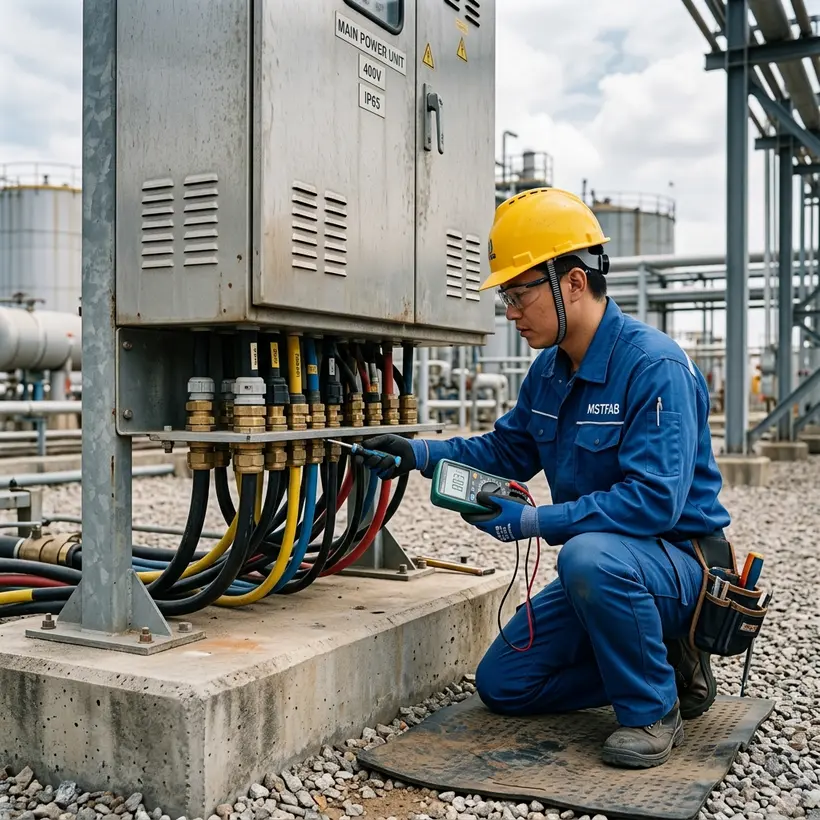
Cable entry is one of the most common failure points in outdoor enclosure projects.
Poor cable entry design can cause water ingress, dust entry, difficult wiring, and messy installation.
Cable entry should be planned before fabrication.
Cutting holes into a finished outdoor enclosure is not engineering.
It is corrosion with confidence.
Ventilation and Thermal Management
Random holes are not thermal engineering.
They are invitations for rain, dust, insects, and regret.
A sealed enclosure with no thermal plan can cook electronics. A ventilated enclosure with no water protection can flood electronics. Both are bad. One is just wetter.
Material Options & Surface Finishing

For outdoor enclosures, powder coating is not just color. It is part of the protection system.
A cabinet can be dimensionally correct and still fail if the coating peels, scratches, fades, or rusts around cut edges.
That is not cosmetic drama. That is field reliability.
Door, Hinges, Locks, and Gaskets
A service door that sags after installation is not a small issue. If the door sags, the seal fails. If the seal fails, the cabinet fails.
Nobody wants an outdoor equipment enclosure door that behaves like an old kitchen cabinet after one month in the field.
Welding and Structural Assembly
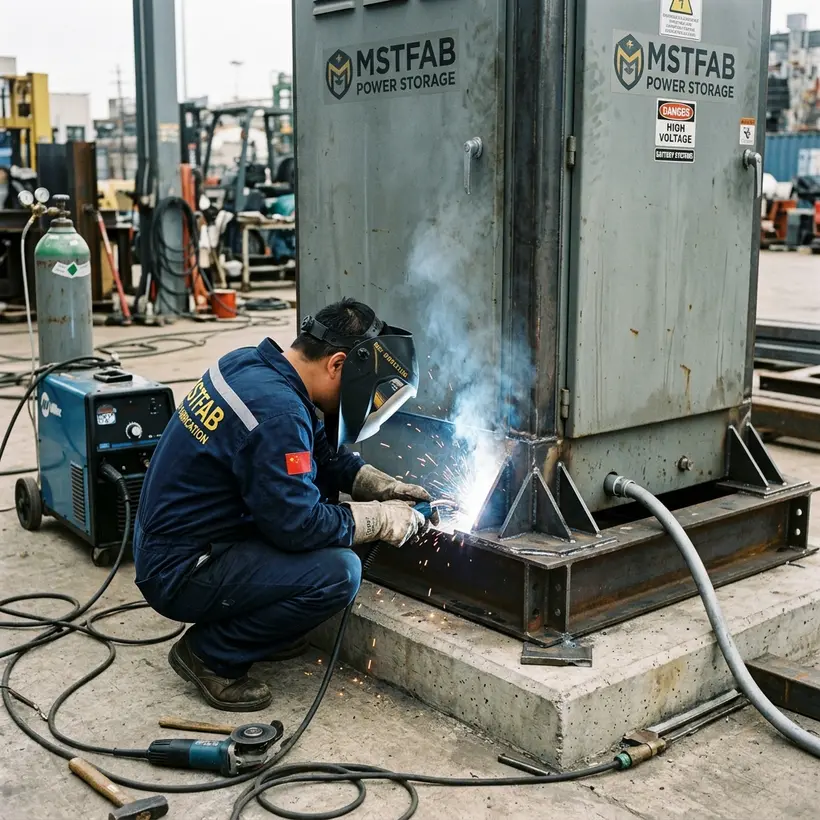
Welding adds heat. Heat moves metal. If welding is not controlled, the enclosure may look square in CAD and crooked in real life.
An outdoor OEM enclosure should not come out of welding looking like a banana.
OEM Trust Table: How MSTFAB Engineers Outdoor Enclosures
| Critical Evaluation Area | Standard Fabrication Shop | MSTFAB Professional Approach |
|---|---|---|
| Water Drainage | Builds flat roofs that pool water and cause premature rust. | Designs sloped roofs, drip edges, and rain lips to naturally guide water away. |
| Cable Entry & Sealing | Forces installers to drill holes in the field, exposing bare metal. | Pre-plans laser-cut gland plates and bottom entry zones before powder coating. |
| Gasket Compression | Doors warp after welding, leaving gaps in the polyurethane seal. | Uses controlled CNC bending and engineered fixtures to ensure even gasket compression. |
| Thermal Management | Punches random holes that let in rain, dust, and insects. | Calculates protected ventilation paths, fan cutouts, and double-wall sun shields. |
| Export Packaging | Uses minimal plastic wrap, leading to forklift scratches and shipping damage. | Provides heavy-duty foam, corner blocks, and custom wooden crates for global export. |
Export Packaging
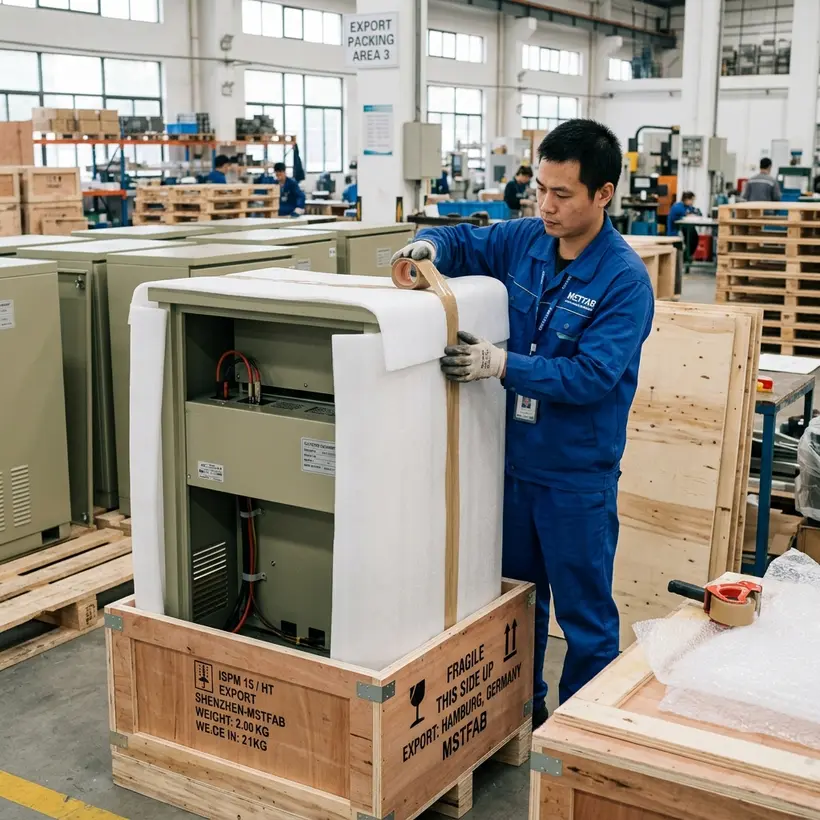
Good packaging is part of quality control.
A perfectly powder-coated outdoor enclosure that arrives scratched is no longer perfect.
It is a customer complaint with forklift marks.
Clear Manufacturing Scope and IP Protection
MSTFAB focuses on custom sheet metal fabrication and metal structure manufacturing. We do not design electronics, write software, or configure telecom systems.
You bring the product intelligence. We build the outdoor metal structure that protects it.
Related engineering resource: If your project involves EV charging infrastructure, review our custom EV charger enclosure fabrication capabilities for outdoor sheet metal cabinet design, powder coating, and export-ready manufacturing.
Related factory capability: For OEM buyers comparing a custom sheet metal enclosure factory, review how MSTFAB handles final assembly, protective packaging, export packing checks, and shipment-ready enclosure delivery.
FAQ
What are outdoor OEM equipment enclosures?
Outdoor OEM equipment enclosures are custom metal cabinets, boxes, panels, frames, and housings designed to protect outdoor equipment such as electronics, power modules, communication systems, batteries, controls, sensors, and industrial devices.
What applications use outdoor equipment enclosures?
They are used for telecom systems, EV chargers, battery storage, power distribution, traffic control, industrial automation, monitoring systems, solar equipment, UPS backup power, and custom OEM outdoor devices.
Can outdoor enclosures be customized?
Yes. Size, material, thickness, doors, locks, hinges, gaskets, cable entries, ventilation, mounting plates, brackets, surface finish, base structures, and packaging can be customized according to drawings.
custom sheet metal enclosure fabrication
MSTFAB manufactures custom sheet metal enclosures, electrical cabinets, control boxes and industrial metal housings for OEM buyers.
 WeChat Contact
 WhatsApp Me Directly