
By: Frank, General Manager
Technical Review: Michael Chen, Quality Manager
Last Updated: July 3, 2026
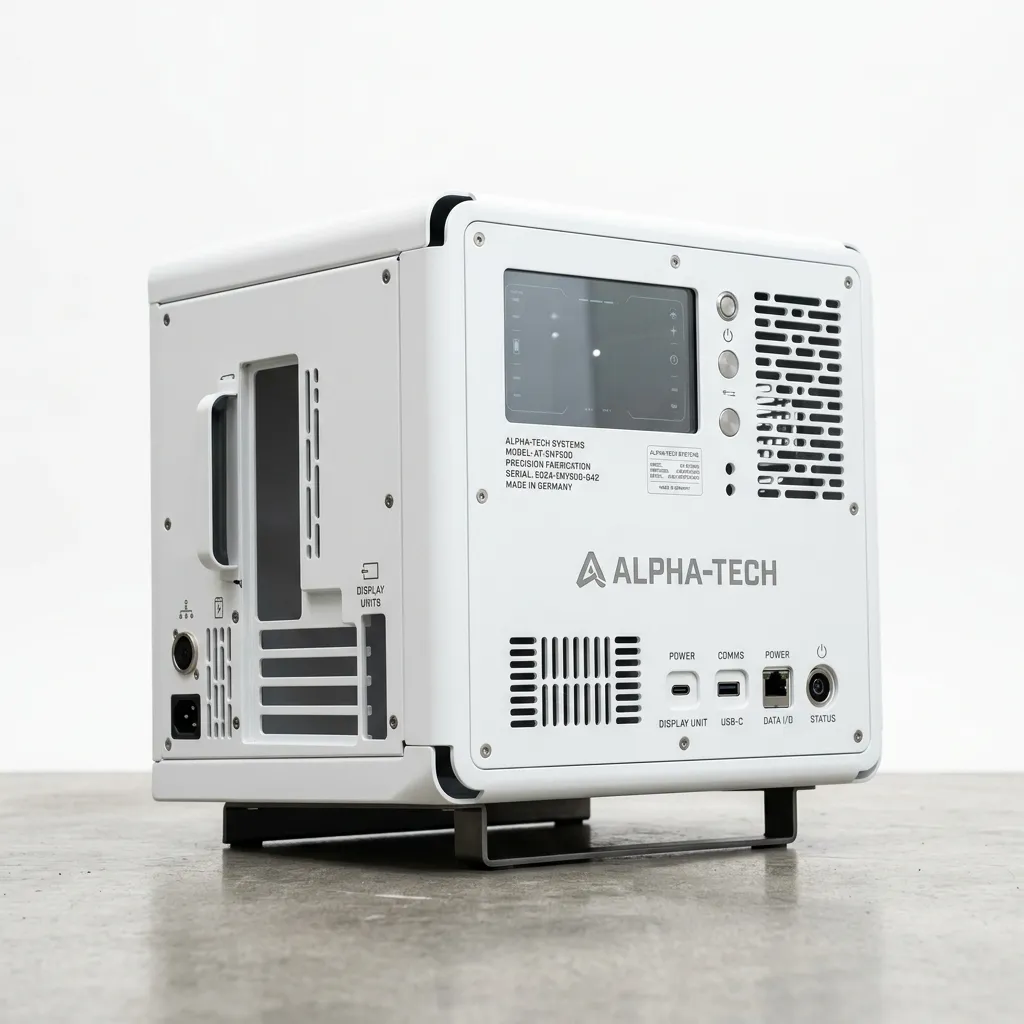
An equipment housing is not just a cover around a machine.
It may protect electronics, motors, sensors, displays, wiring, filters, switches, batteries, control systems, moving components, or customer-facing product features.
It may also be the first thing your customer sees.
Before they inspect the electronics, software, or internal engineering, they see the housing. They touch the door. They open the panel. They notice the finish, the fit, the gaps, the edges, and whether the product feels professionally built.
That is why custom metal parts manufacturing services for equipment housings require more than cutting sheet metal into a box shape.
A successful equipment housing needs to fit its internal components, protect the product, allow practical installation and maintenance, support the intended finish, survive shipping, and remain consistent when production repeats.
At MSTFAB, we support drawing-based manufacturing for equipment housings, machine covers, chassis shells, control housings, device panels, access doors, protective guards, cabinet bodies, mounting structures, and welded metal assemblies.
The objective is simple: Your equipment housing should protect what is inside while making the finished product look and work better.
For wider OEM fabrication capability, visit custom sheet metal fabrication for OEM parts.
What Is a Custom Equipment Housing?
A custom equipment housing is a fabricated metal shell, cover, enclosure, cabinet, or structural outer assembly built around a specific product or machine.
It may protect equipment from accidental contact, dust, handling damage, vibration, moisture exposure, heat buildup, transport damage, or cosmetic wear.
A custom equipment housing may include:
- Main housing body and welded frames
- Front panels, rear panels, and access doors
- Removable covers and mounting plates
- Display openings, HMI cutouts, and push-button holes
- Ventilation panels, fan mounts, and filter openings
- Cable-entry plates and connector openings
- Handles, hinges, locks, and latches
- Internal brackets and grounding studs
- Reinforcement flanges
- Surface finishing and protective export packaging
The housing may be outside the machine. But its manufacturing quality affects the entire product experience.
A Good Equipment Housing Must Do More Than Look Good
A clean housing design may look excellent in CAD. The real test starts after fabrication.
Will the internal components fit? Will the front panel align with the display? Will the access door open fully? Will the cable-entry area allow enough bend radius? Will the cooling openings match the heat source? Will the powder coating block a grounding point? Will the visible surface survive handling and export shipping?
| Requirement | What It Means in Practice |
|---|---|
| Protection | Covers equipment, wiring, components, and moving parts |
| Fit | Aligns with internal modules, mounting points, doors, and panels |
| Access | Allows technicians to install, service, clean, or replace components |
| Strength | Resists vibration, handling forces, and intended operating loads |
| Thermal Control | Supports ventilation, fans, filters, and airflow where needed |
| Appearance | Meets visible surface, finish, edge, gap, and brand-quality expectations |
| Manufacturability | Can be cut, bent, welded, finished, inspected, and repeated efficiently |
| Shipping Readiness | Arrives without scratches, dents, loose hardware, or damaged corners |
A housing that looks attractive but cannot be serviced easily creates problems later. A housing that protects equipment but does not fit the assembly creates problems immediately.

Start With the Equipment Layout, Not the Outer Shell
One common mistake is designing the outer housing first and checking internal fit later. That often creates conflicts with cable routing, connectors, mounting plates, fans, service openings, or maintenance access.
Before fabrication begins, review the actual product layout. Important questions include:
- What components sit inside the housing and which parts generate heat?
- Does the product need a screen, display, HMI, indicator, switch, or emergency-stop button?
- Which panels need to be removable?
- Is there enough room for installation tools?
- Does the housing need to resist vibration or movement?
The housing should support the real assembly process. It should not force technicians to discover new yoga positions while trying to tighten one hidden screw.
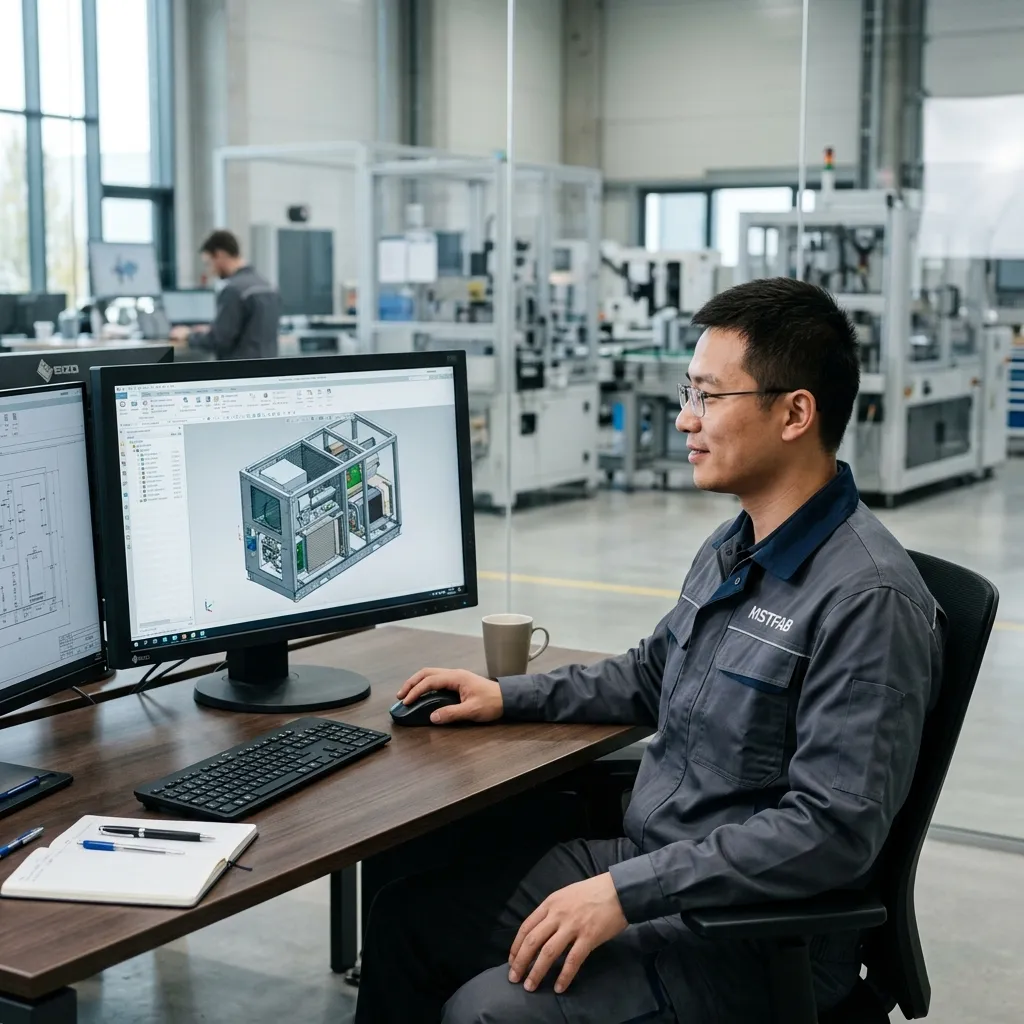
DFM Review Before Metal Is Cut
DFM means Design for Manufacturing. It is the review of a housing design before laser cutting, CNC bending, welding, hardware insertion, finishing, inspection, and packaging begin.
For example, a display opening may weaken a large front panel and require reinforcement. A hinge may not have enough clearance once the door is coated. A large cover may flex unless folded edges are included.
These are normal manufacturing issues. The expensive part is finding them after the housing has already been cut, bent, welded, finished, packed, and shipped.
Material Selection for Equipment Housings
Carbon Steel Equipment Housings
Carbon steel is commonly used for industrial machine covers, equipment cabinets, control housings, frames, guards, and powder-coated assemblies. It can provide practical strength and cost control.
A carbon steel cover for indoor machinery and an outdoor equipment cabinet should not automatically use the same corrosion-protection plan. For details on steel projects, see carbon steel metal parts.
Stainless Steel Equipment Housings
Stainless steel may be suitable when corrosion resistance, frequent cleaning, visible appearance, hygiene, or demanding environments matter. A visible brushed stainless steel housing needs far more cosmetic control than a hidden support panel. Review our capabilities in stainless steel manufacturing.
Aluminum Equipment Housings
Aluminum may be selected where lower weight, corrosion resistance, heat dissipation, or anodized appearance matters. It may suit electronics housings, portable equipment, telecom products, and lightweight machine covers.
A lightweight housing is useful. A lightweight housing that flexes every time the customer touches it is less useful. For aluminum-specific manufacturing guidance, visit aluminum equipment shells and housings.
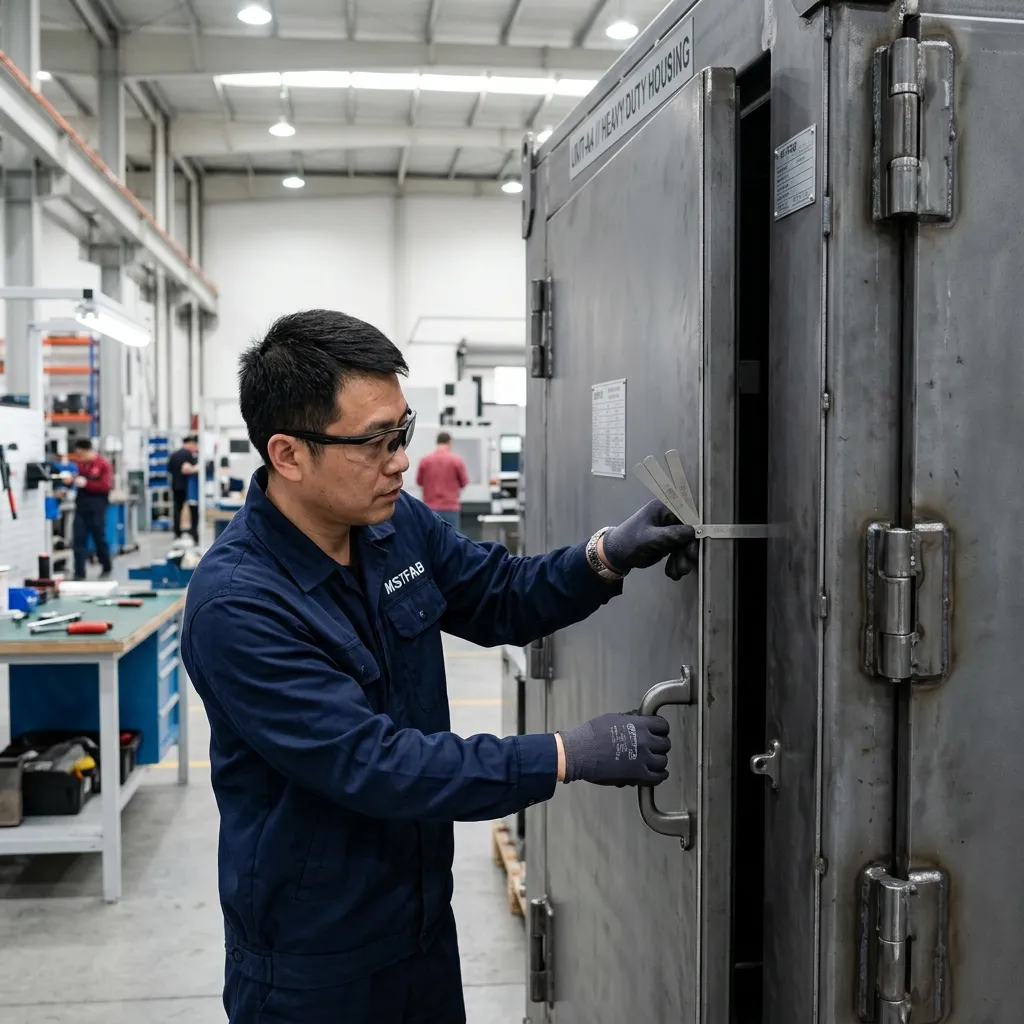
Laser Cutting & CNC Bending Control Fit
Laser cutting creates outer profiles, mounting holes, display openings, HMI cutouts, and ventilation patterns. The cut geometry must support the downstream assembly. For example, a locating tab can help align parts before welding, and a slot can allow installation adjustment.
CNC bending turns flat sheet into equipment covers, enclosure bodies, access panels, and protective structures. Springback happens when metal moves slightly back toward its original flat shape after bending. That means CAD geometry alone is not enough. Bending accuracy affects door gaps, panel alignment, display fit, and overall housing squareness.
Welding Must Protect Fit, Flatness, and Appearance
Welding adds strength, but it also introduces heat. Heat can affect flatness, squareness, panel gaps, door alignment, and cosmetic quality.
A welded housing can be strong but still fail the project if a door does not close, a front panel no longer aligns, or a display cutout becomes mispositioned. A controlled welding plan can reduce distortion and finishing work. See our welding fabrication services.
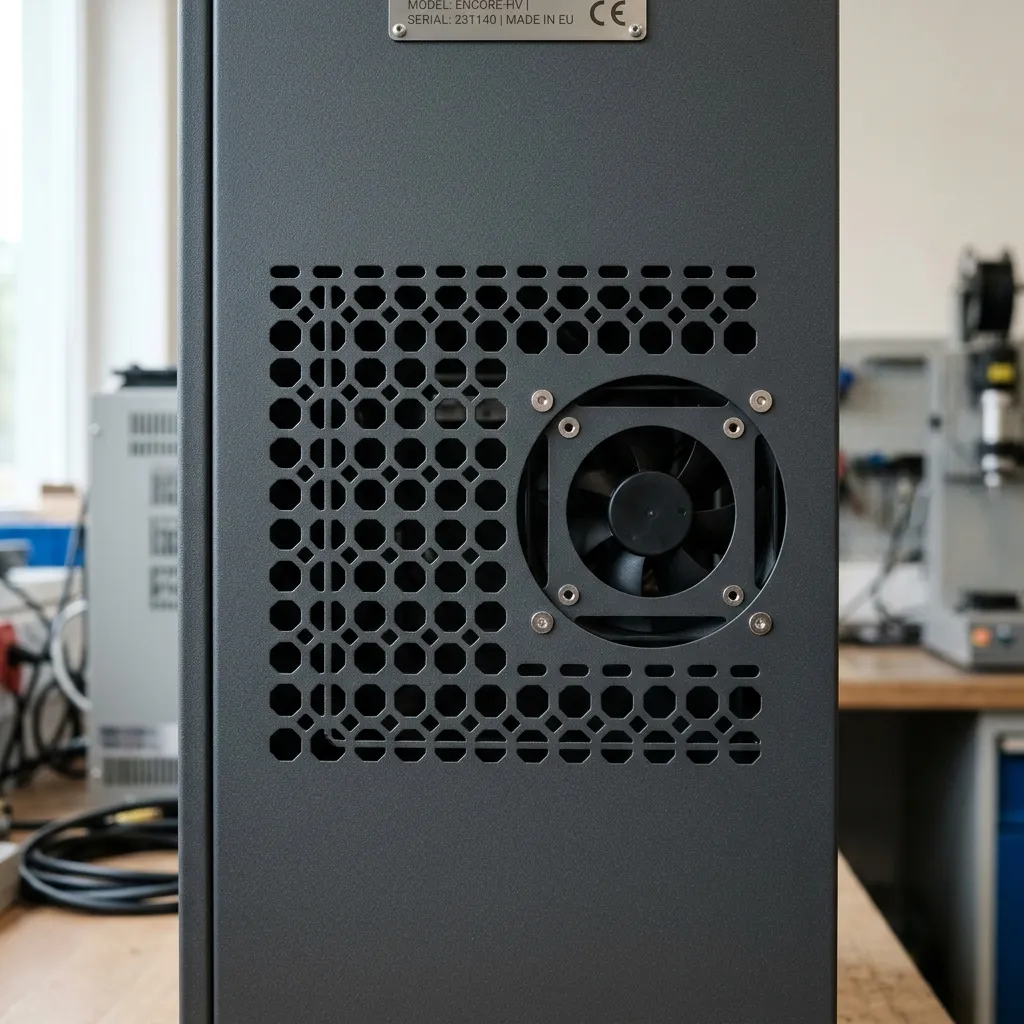
Access Panels, Doors, and Thermal Planning
Equipment housings often include access doors, removable covers, maintenance panels, inspection windows, or service openings. A maintenance panel should reduce service time. It should not require the technician to remove three unrelated parts just to reach one fuse.
Ventilation should be planned according to actual component position, airflow direction, and environmental conditions. A ventilation opening in the wrong place does not improve cooling. It only proves that a laser can cut decorative patterns.
Hardware, Grounding, and Surface Finish
Hardware (PEM nuts, studs, hinges, latches) must be confirmed before powder coating, painting, anodizing, polishing, or final assembly. Coating inside threads may prevent screws from fitting. Grounding areas may require bare-metal contact.
Surface finish influences corrosion resistance, cleanability, scratch resistance, visible quality, and customer perception. “Black equipment housing” is not a complete specification. Matte black, textured black, and glossy black create very different finished products.

Export Packaging Protects the Finished Housing
A housing can pass final inspection and still arrive damaged. Packaging should be part of the project discussion before production begins. A well-made housing that arrives scratched, bent, or missing hardware is not ready for assembly.
Equipment Housing Fabrication Capabilities & Trust Metrics
OEM buyers rely on predictable, tightly controlled fabrication processes. Below is an overview of MSTFAB’s capabilities designed for equipment housing reliability.
MSTFAB Equipment Housing Manufacturing Guarantee
| Capability Domain | Details & Specifications | Buyer Value (OEM Trust) |
|---|---|---|
| DFM & Fit Testing | Pre-production structural review and display cutout trial fitting. | Ensures internal modules and external displays fit perfectly on the assembly line. |
| Cosmetic Surface Finishing | Fine-texture powder coating, brushed stainless steel, and flawless anodizing. | Delivers a premium tactile and visual experience that elevates your final product’s perceived value. |
| Distortion-Free Welding | Controlled TIG/MIG welding sequences for machine frames and large covers. | Prevents warped panels and ensures all access doors open and close smoothly. |
| Hardware Integrity | Automated insertion of PEM nuts and concealed hinge hardware. | Eliminates spinning inserts during door mounting or heavy component installation. |
| Anti-Scratch Export Packaging | Custom ISPM-15 crates, foam separation, and multi-layer edge protection. | Ensures cosmetic housings and front panels arrive completely scratch- and dent-free. |
Start Your Custom Equipment Housing Project
A good equipment housing should do more than cover a machine.
It should protect the product, support practical assembly and service, fit the internal components, meet visual expectations, survive export shipping, and remain consistent when you reorder.
Send your drawings, equipment layout, material requirement, quantity, finish details, hardware list, tolerance notes, and packaging requirements through the MSTFAB quotation page.
Because the best equipment housing is the one that protects the engineering inside while quietly proving that the product was built properly.
 WeChat Contact
 WhatsApp Me Directly