
Stainless steel parts look perfect on a CAD screen.
But when production starts, stainless steel is unforgiving. A beautiful brushed panel is easily scratched by a careless operator. A perfectly square frame twists from welding heat. A 304 bracket meant for outdoor use rusts in six months because it was the wrong grade for a coastal environment.
At MSTFAB, we do not just “cut and bend” stainless steel. We control the material, the finish, the heat, and the handling.
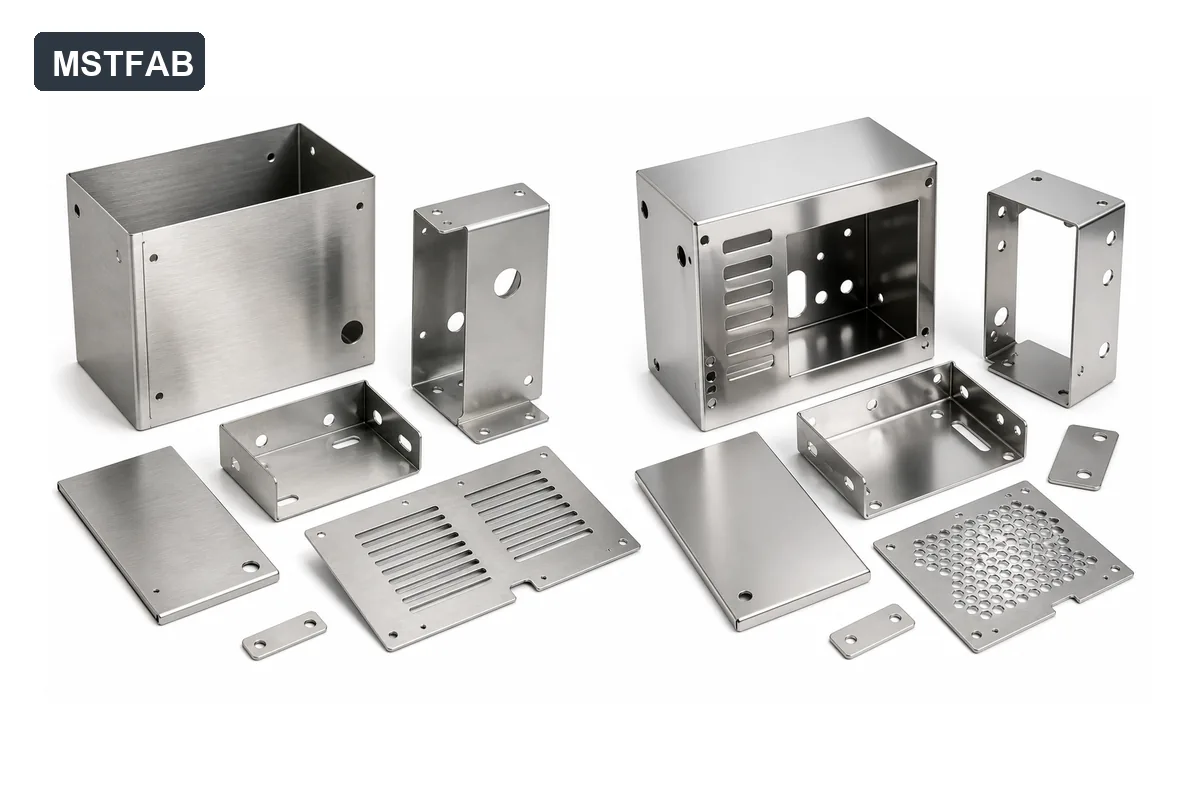
We manufacture OEM stainless steel brackets, panels, enclosures, machine covers, food-grade hoppers, and welded assemblies.
The goal is straightforward: Your stainless steel parts must fit, resist corrosion, and arrive looking like a premium product—not like a piece of scrap metal that survived a street fight.
The 3 Hard Truths of Stainless Steel Fabrication
| The Mistake | What Happens in Production | The OEM Consequence |
|---|---|---|
| Poor Handling | Fabricating without protective film on workbenches. | Premium brushed panels arrive covered in deep scratches. |
| Uncontrolled Heat | Over-welding a joint without a heat-sink strategy. | Severe discoloration (heat tint) and frame distortion. |
| Wrong Grade | Using 304 instead of 316 in chloride environments. | The stainless steel pits and rusts shortly after installation. |
304 vs. 316: Do Not Just Quote “Stainless Steel”
Asking a supplier to quote “stainless steel” is a fast way to get the wrong material.
- 304 Stainless Steel: The industry standard. Excellent for indoor enclosures, machine covers, and general industrial environments.
- 316 Stainless Steel: Contains molybdenum. Mandatory for coastal areas, marine applications, wash-down environments, and areas exposed to chlorides.
If your assembly operates near salt water or harsh cleaning chemicals, 304 will rust. We verify the operating environment before cutting the first sheet.
TIG Welding: Controlling Heat Tint and Distortion
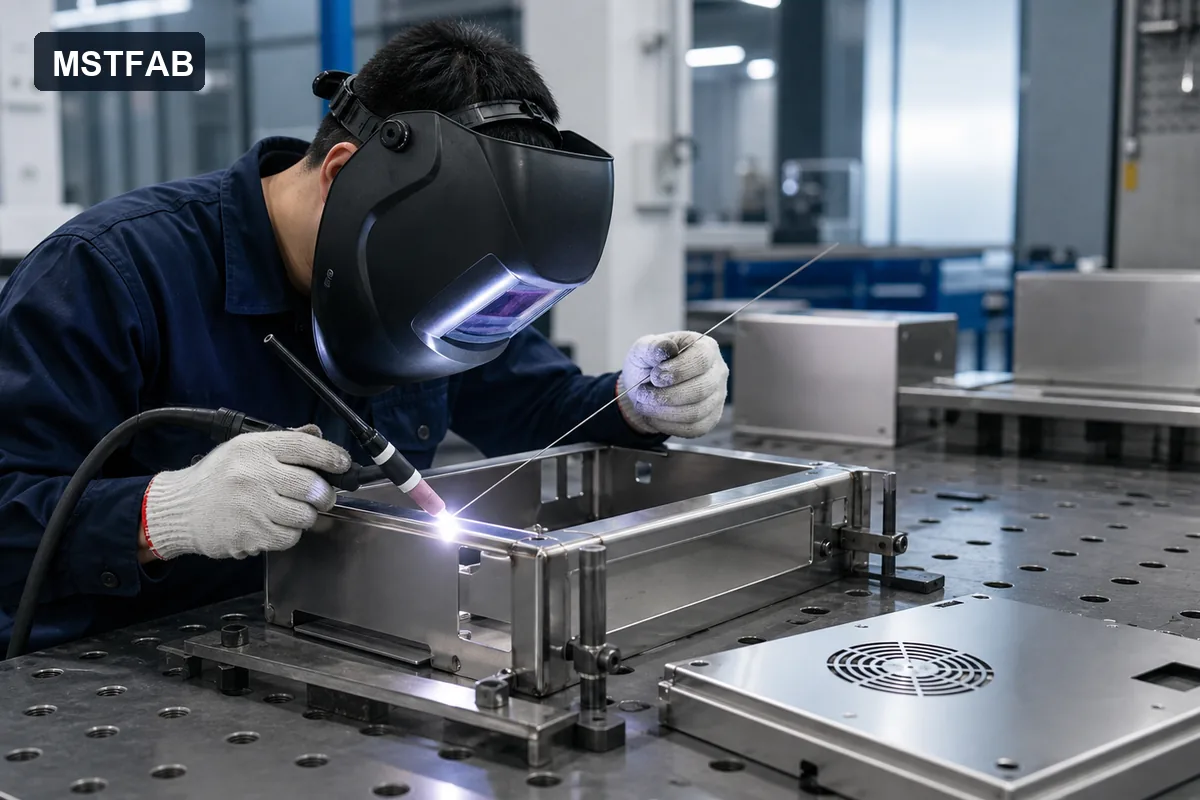
Stainless steel expands more than carbon steel when heated and conducts heat poorly. This makes welding difficult.
If the welder is inexperienced, the frame will warp. If the heat is too high, the metal will suffer severe “sugaring” and deep black scorch marks that ruin the corrosion resistance.
We clarify the weld standard upfront: Does it need to be a structural bead? Does it need to be ground flush? Does it need to be polished back to a #4 brushed finish to become invisible? “Nice weld” is not an engineering specification.
Surface Finish: The Scratches You Cannot Hide
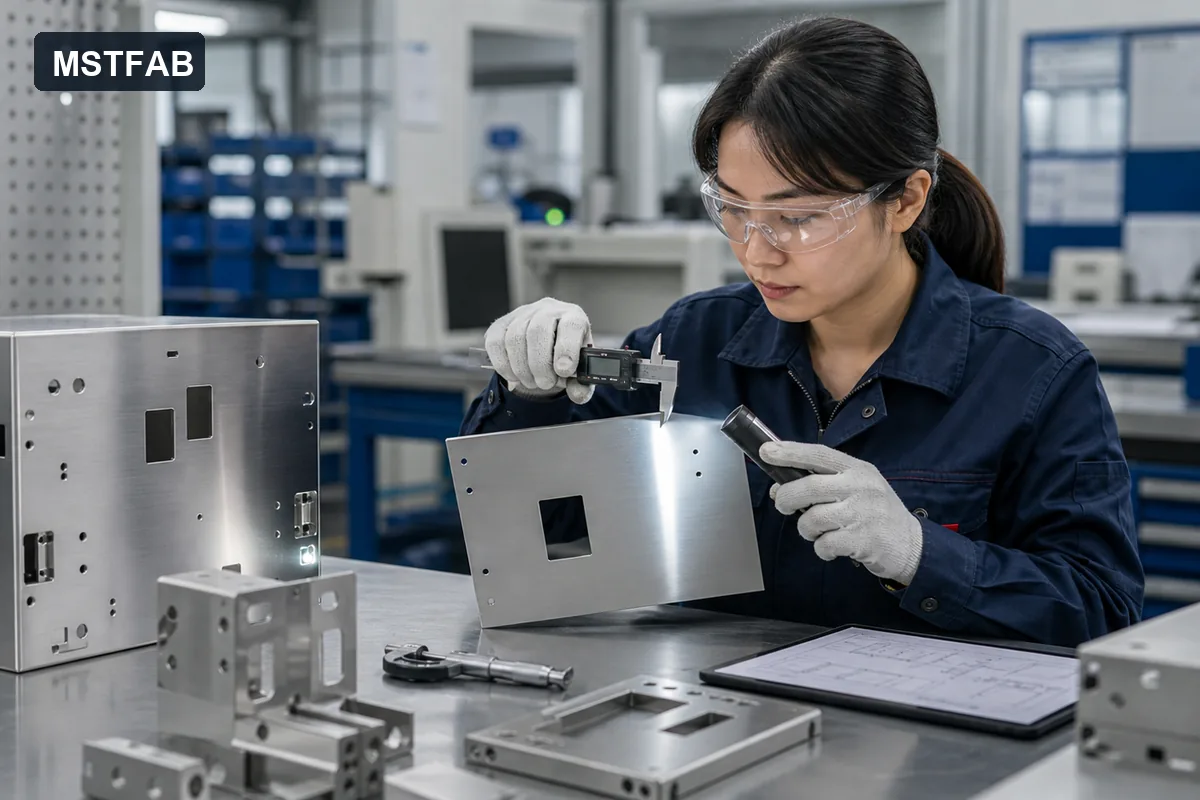
A brushed stainless steel cover is a premium component. It will also reveal scratches with the enthusiasm of a detective under bright lights.
- Grain Direction: If two mating panels have horizontal and vertical grain directions, the final assembly will look terrible. We lock in the grain orientation during the CAD review.
- Protective Film: We laser cut, bend, and handle cosmetic panels with the protective film attached. It is only peeled back around weld zones and edges.
Start With DFM: Respect The Bend Radius
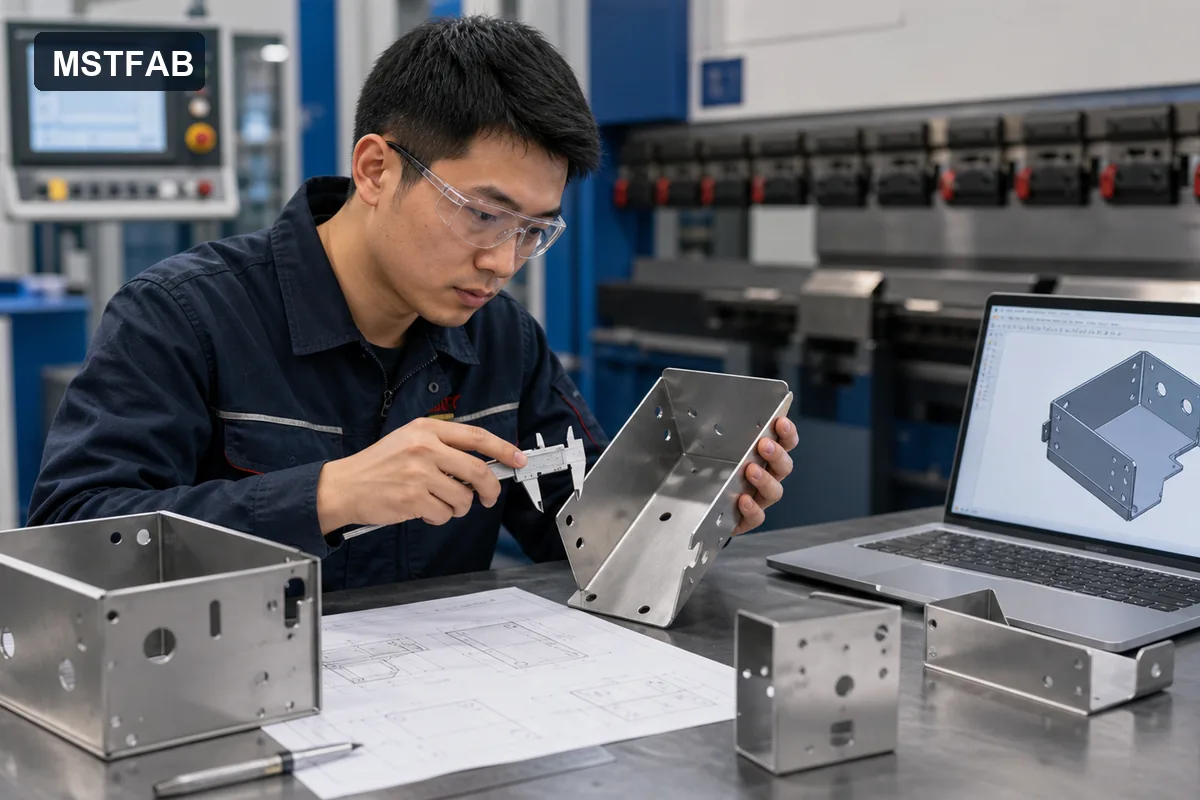
Stainless steel requires more bending force than mild steel. It also suffers from massive springback (the metal’s urge to return to flat).
If you design a tight inner radius on thick 304 material, the outside of the bend will crack. Our DFM (Design for Manufacturing) review ensures your bend radii match the material thickness before production.
Export Packaging: Surviving the Ocean
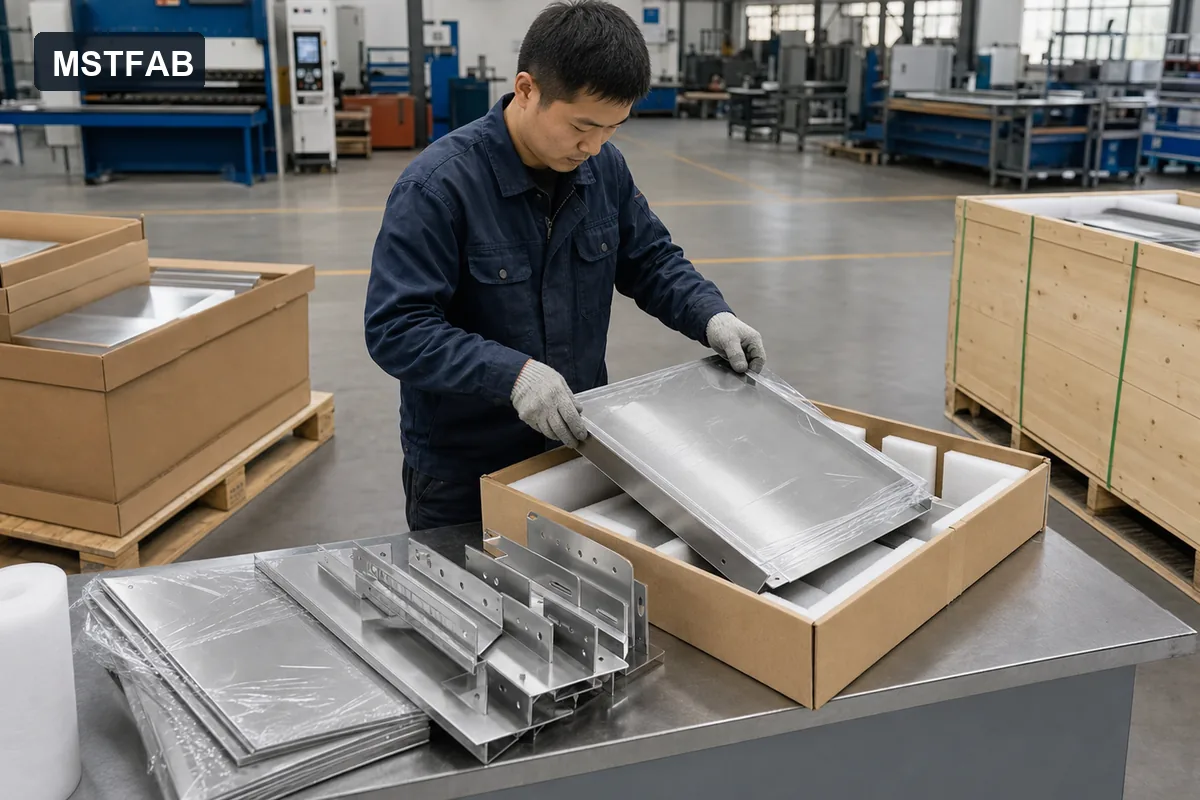
Stainless steel may be tough, but it is not emotionally prepared for a forklift.
If heavy stainless brackets are dumped into a single box, they will arrive looking like scrap metal. We use custom thick foam separators, edge guards, and heavy-duty export wooden crates to ensure your premium parts arrive pristine.
Start Your Stainless Steel Fabrication Project
Send your drawings, material grade (304/316), quantity, and cosmetic requirements through our quotation page. Tell us exactly what environment the part will live in.
Because the best stainless steel part is the one that fits perfectly, never rusts, and never gives your quality inspector a reason to reject the batch.
How to Get an Accurate Sheet Metal Quote
Learn exactly which engineering details—from grain direction to specific alloy grades—you must provide to receive an airtight, no-surprises quotation.
 WeChat Contact
 WhatsApp Me Directly