
By: Frank, General Manager
Technical Review: Michael Chen, Manufacturing Engineer
Last Updated: July 4, 2026
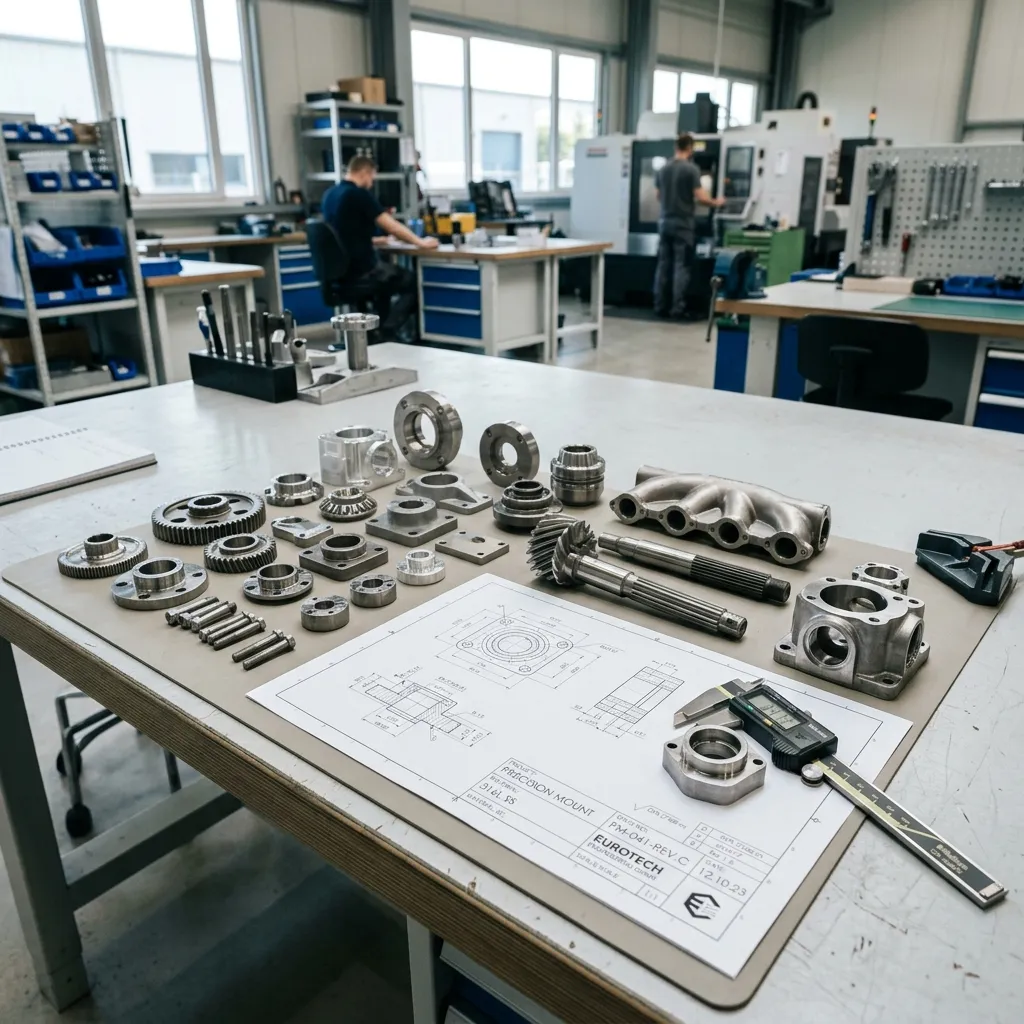
A custom metal parts quote is not only a unit price.
It is a manufacturing plan translated into numbers.
A low-priced quote may only include a laser-cut flat blank. Another quote may include material, laser cutting, deburring, CNC bending, welding, hardware insertion, surface finishing, inspection, protective packing, labels, and export preparation.
Those are not the same scope.
That is why an accurate custom metal parts manufacturer quote starts with clear project information.
The more clearly the buyer defines the drawing, material, quantity, finish, hardware, assembly needs, and packaging expectation, the fewer assumptions the manufacturer needs to make.
And in custom fabrication, fewer assumptions usually mean fewer late surprises.
MSTFAB supports drawing-based quotation for custom brackets, panels, covers, enclosures, electrical cabinets, equipment housings, chassis components, mounting plates, guards, welded frames, and fabrication assemblies.
The goal is simple:
Give buyers a quote that reflects the finished part they actually need, not only the first process required to make it.
For overall manufacturing capability, visit custom sheet metal fabrication for OEM parts.
What Does a Custom Metal Parts Quote Include?
A complete quote should define more than price and quantity.
It should clarify what is being manufactured, how it will be made, what level of finish is required, how it will be inspected, and how it will be packed.
Depending on the project, a custom metal parts quotation may include:
- Material grade and thickness
- Laser cutting
- Deburring or edge treatment
- CNC bending
- Welding
- Grinding or weld finishing
- PEM nuts, studs, rivet nuts, or threaded inserts
- Tapped holes or weld nuts
- Hinges, handles, locks, latches, or other hardware
- Powder coating, painting, anodizing, polishing, brushing, or plating
- First-article inspection
- Dimensional inspection
- Assembly or fit checks
- Protective film
- Foam separation
- Hardware bags
- Pallets or wooden crates
- Part labels
- Export packing requirements
A quote should help the buyer understand what is included. It should not create a mystery that only becomes clear after production starts.
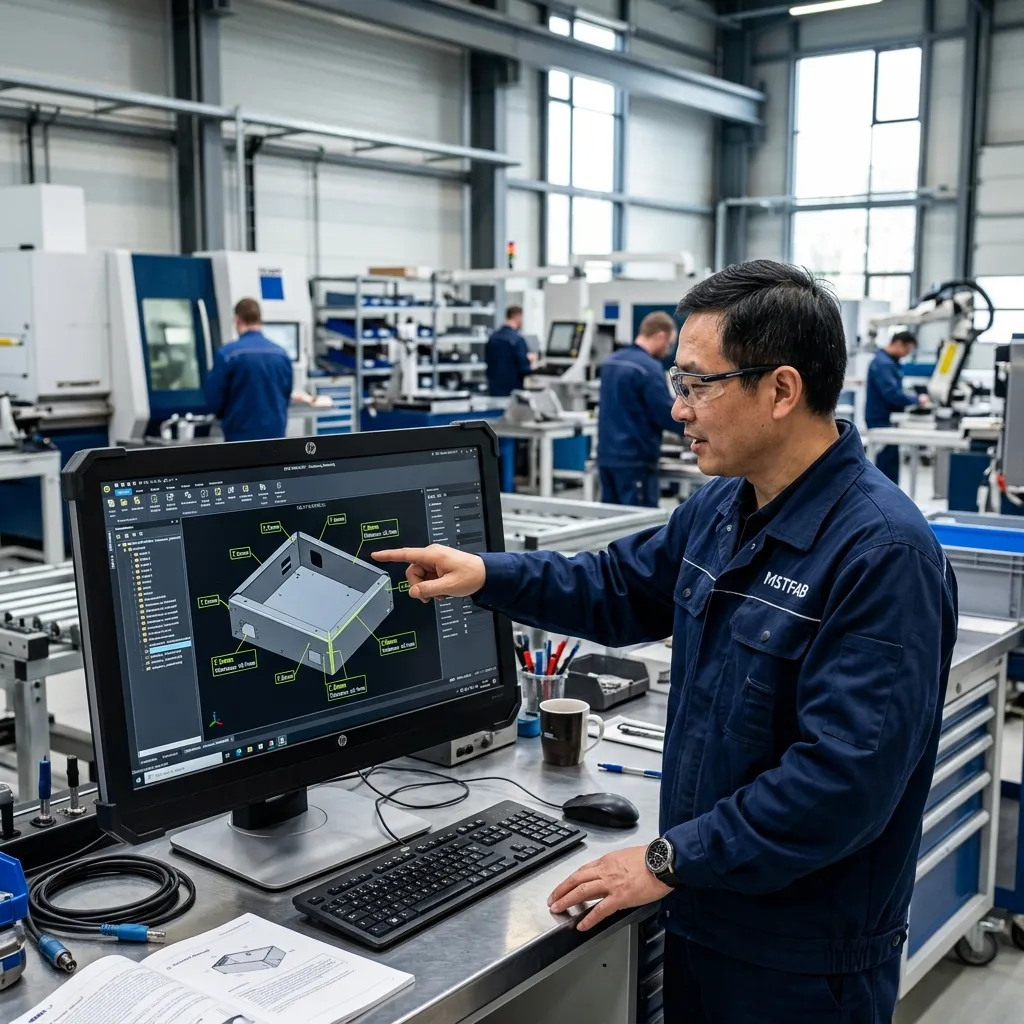
Why “Please Quote This Part” Is Often Not Enough
A PDF drawing may show dimensions. It may not show every manufacturing requirement.
For example, a drawing may not explain:
- Which side is customer-facing
- Which hole is critical after bending
- Whether a thread must remain usable after coating
- Whether a grounding point needs bare-metal contact
- Whether a weld is structural or cosmetic
- Whether the part will be installed indoors or outdoors
- Whether a cabinet door needs controlled gaps
- Whether loose hardware must be packed separately
- Whether the part will ship by air, pallet, crate, or container
- Whether the quote is for a prototype, a pilot batch, or repeat production
A manufacturer can only quote accurately when the actual requirement is visible.
A bracket may be simple in appearance but still need controlled hole positions, bending, hardware, coating, and packaging. The same part can have very different prices depending on what it must do after it leaves the factory.
Start With a Clear RFQ Package
RFQ means Request for Quotation. A good RFQ package helps the manufacturer quote the correct process from the beginning.
For custom metal parts, the strongest RFQ package usually includes: STEP or STP file, PDF drawing with dimensions, DXF or DWG cutting file, part number, drawing revision, material grade, material thickness, quantity required, expected repeat quantity, surface-finish requirement, critical dimensions or tolerances, hardware requirements, welding requirements, assembly drawing, product photo or sample image, packaging requirement, target delivery date, and destination country.
A STEP file helps the manufacturer understand the final shape. A PDF drawing helps confirm dimensions, notes, tolerances, and revision information. A DXF file can support cutting review. Together, these files reduce the chance that the factory is estimating from incomplete information.
The Drawing Revision Must Be Clear
A part can be manufactured correctly and still be wrong if it was made to an old drawing revision.
Before quotation and production release, confirm the part number, drawing revision, revision date, approved file set, material requirement, quantity, finish requirement, hardware list, assembly reference, and packaging instruction.
For repeat orders, revision control is especially important. A repeat purchase order should not accidentally trigger production from an outdated drawing, old hardware requirement, previous finish sample, or earlier packaging method.
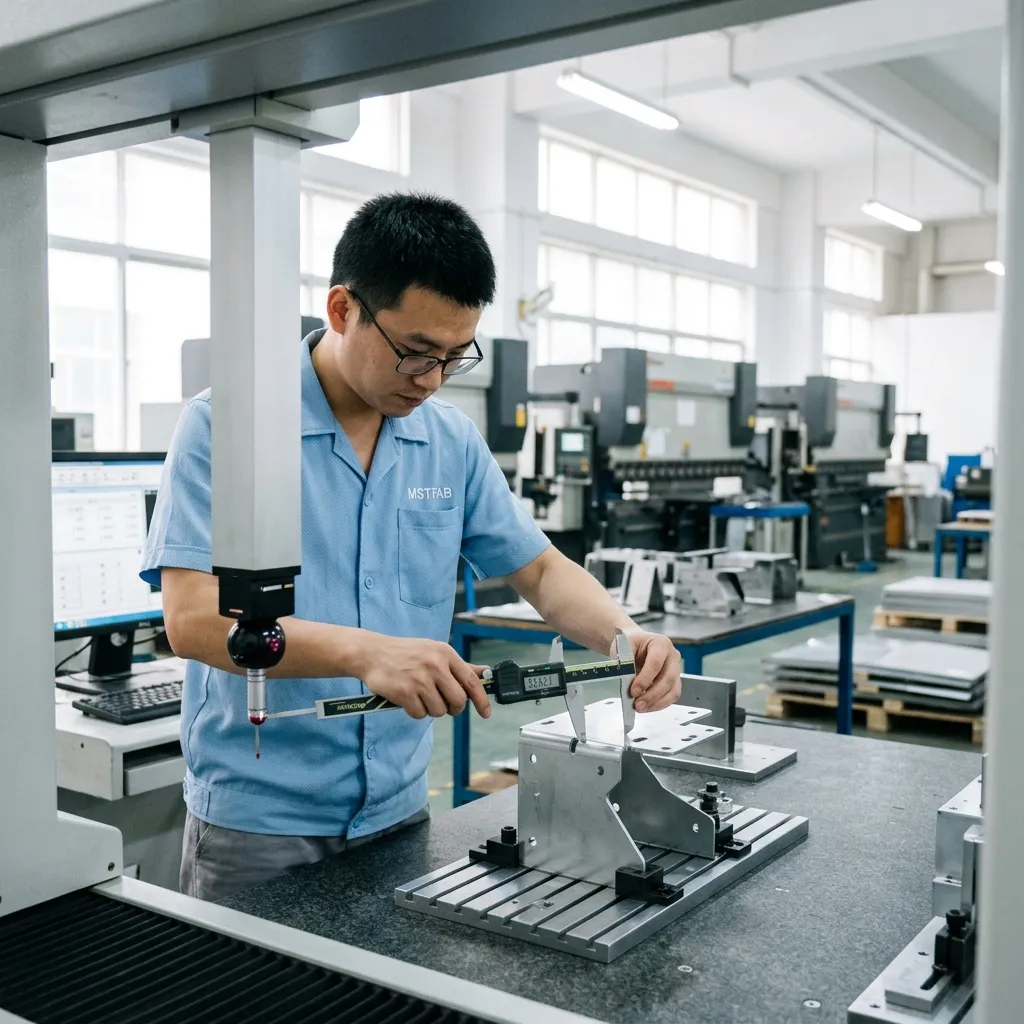
Material Has a Major Impact on the Quote
Material selection affects cutting, bending, welding, finishing, handling, corrosion resistance, weight, appearance, and final cost. “Steel” is usually not enough information. The manufacturer needs to know which steel, how thick it is, what the part does, and whether it will receive a finish.
| Material | Typical Applications | Information Needed for a Quote |
|---|---|---|
| Carbon Steel | Brackets, frames, guards, cabinets, machine covers | Grade, thickness, coating requirement, corrosion exposure |
| Stainless Steel | Visible panels, food equipment, outdoor products, wash-down equipment | Grade, thickness, surface finish, visible-side requirement |
| Aluminum | Lightweight covers, housings, electronics panels, telecom parts | Alloy, temper, thickness, finish, stiffness requirement |
| Galvanized Steel | Cabinet parts, industrial panels, selected enclosure components | Thickness, finish compatibility, visible-surface requirement |
A carbon steel mounting bracket inside a dry machine cabinet may need a different surface plan from an outdoor equipment bracket exposed to moisture.
For material-specific pages, visit:
- Carbon steel metal parts manufacturing services
- Stainless steel metal parts manufacturing services
- Aluminum metal parts manufacturing services
Quantity Changes the Manufacturing Route
Quantity has a direct impact on quotation. A prototype order, pilot batch, and repeat production order do not use the same planning logic.
Prototype Quantity
Prototype orders are useful for verifying material selection, hole positions, bend geometry, hardware fit, welding alignment, surface finish, assembly clearance, and packaging method. For prototypes, the focus is validation. The quote may include more engineering review, setup attention, first-article checks, and process adjustments.
Pilot Batch Quantity
A pilot batch helps confirm repeatability. At this stage, buyers should review the approved drawing revision, material specification, hardware list, surface finish, inspection points, assembly-fit feedback, packing method, and repeat-order records.
Repeat Production Quantity
Repeat production should use controlled records for drawing revision, material grade and thickness, manufacturing sequence, hardware installation, weld standard, surface finish, inspection plan, and packaging method.
The quantity is not only a number. It helps determine how the manufacturer plans material usage, machine setup, inspection, packing, and production control. For prototype and low-volume projects, visit prototype and low-volume sheet metal fabrication.
Laser Cutting Costs Depend on More Than Part Size
Laser cutting is often the first fabrication process for custom parts. It may create outer profiles, mounting holes, slots, ventilation patterns, cable entries, display cutouts, connector openings, access holes, hardware insertion locations, hinge positions, lock cutouts, alignment tabs, and bend reliefs.
A laser-cut quote can be affected by material type, material thickness, overall sheet usage, part dimensions, number of cut features, hole quantity, slot quantity, complexity of the profile, required edge condition, required quantity, nesting efficiency, and whether additional deburring is needed.
A simple rectangular panel with two holes and a panel with many vents, display cutouts, slots, and hardware locations may use similar material but require very different cutting time.
CNC Bending Adds Functional Value
CNC bending turns flat sheet into functional parts such as L brackets, U brackets, Z brackets, covers, doors, trays, channels, enclosure bodies, cabinet panels, reinforcement flanges, and equipment housings.
Bending cost can be affected by the number of bends, material thickness, bend radius, flange length, tooling requirement, bend sequence, part size, tolerance requirement, post-bend inspection requirement, and surface protection needs.
A flat laser-cut part can be economical. Once it becomes a multi-bend bracket, cabinet door, enclosure body, or formed panel, the quote must reflect the bending route and inspection needs. The important dimensions are often the dimensions after bending, not only the dimensions in the flat pattern.
Welding Must Be Quoted With the Finished Assembly in Mind
Welding may be required for frames, structural brackets, cabinet bodies, machine bases, equipment housings, guards, mounting structures, and fabrication assemblies.
Welding costs can be affected by weld location, weld length, weld quantity, continuous or intermittent welds, material thickness, fixture requirement, grinding requirement, structural or cosmetic standard, flatness requirement, squareness requirement, post-weld surface treatment, and inspection requirement.
Welding is not only a strength decision. It can affect panel fit, hole positions, cabinet door gaps, finish quality, and final assembly alignment. A welded frame can be strong and still create problems if the next component no longer fits.
Hardware Must Be Included in the Quote Early
Hardware should not be added after the quote is already approved.
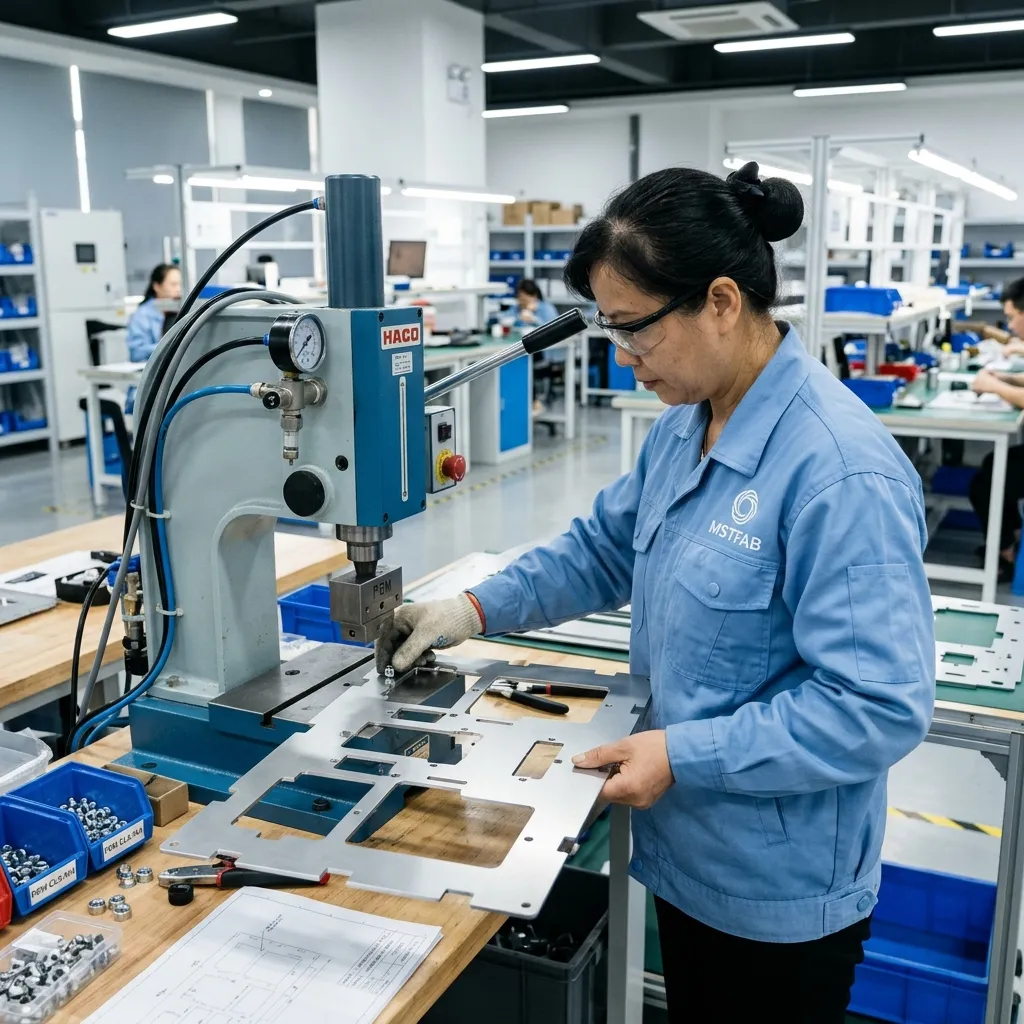
Typical hardware requirements include PEM nuts, PEM studs, rivet nuts, weld nuts, tapped holes, hinges, handles, locks, latches, grounding studs, captive fasteners, threaded inserts, and mounting clips. These items affect both cost and manufacturing sequence.
For example, PEM hardware may need installation before coating. Threads may require masking before powder coating. Grounding points may need bare-metal contact. Hinges need correct alignment after bending and welding. A quote that does not identify the hardware plan may not reflect the finished assembly requirement.
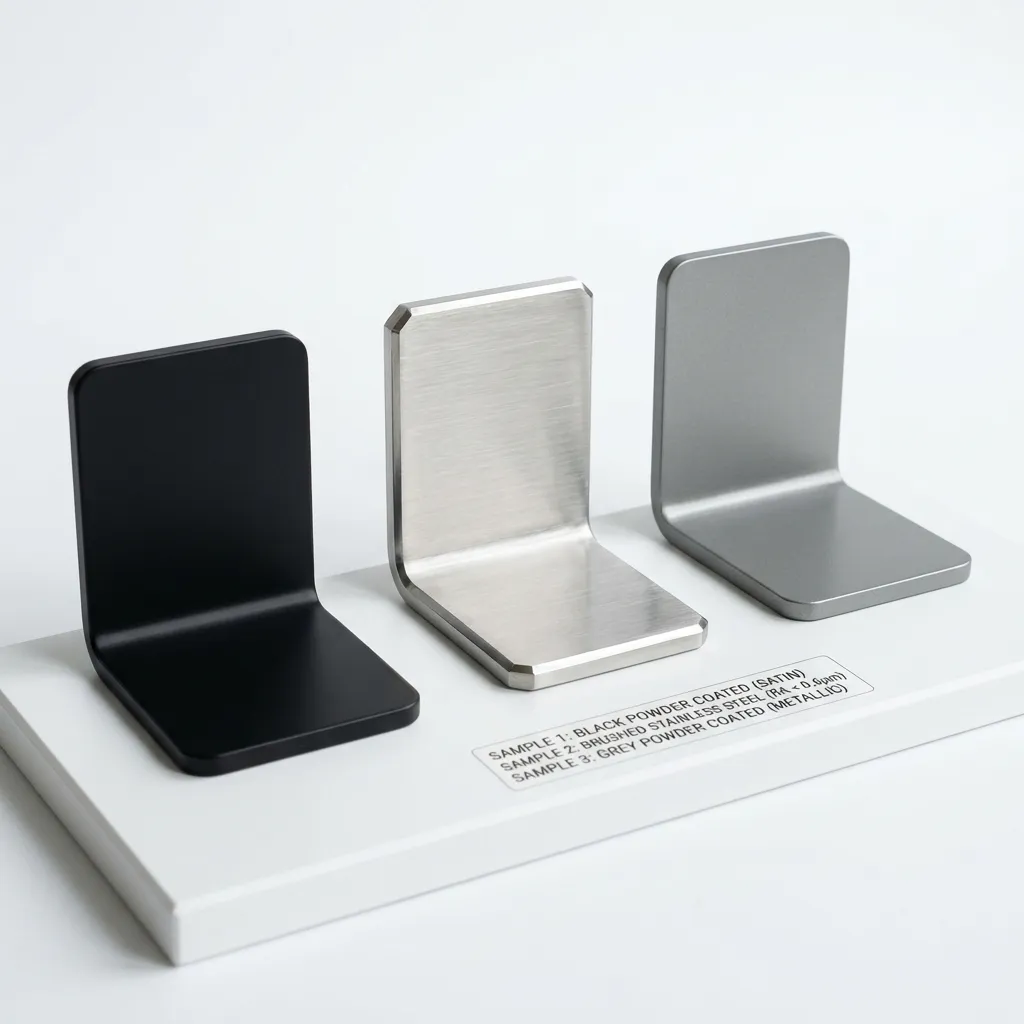
Surface Finish Is Not a Simple Add-On
Surface finish can affect appearance, corrosion resistance, scratch protection, grounding, thread function, gasket contact, packing, and final assembly fit.
For an accurate finish quote, provide finish type, color reference, texture, gloss level, visible faces, brushing direction, thread masking requirements, grounding areas, gasket or sealing surfaces, indoor or outdoor environment, scratch-protection requirement, and packaging requirement.
“Black finish” is not a complete requirement. Matte black, glossy black, textured black, fine-sand black, anodized black, and painted black can look and perform very differently. For finish planning, see surface treatment services for sheet metal parts.
Tolerances Should Focus on What Matters
Not every dimension needs the same tolerance level.
A hidden non-functional edge may not need the same level of inspection as a mounting-hole pattern, a door gap, a display opening, a cable entry, a gasket surface, a hinge location, a locking feature, a critical assembly interface, or a sensor mounting point.
When every dimension is treated as highly critical, the quote may become more expensive without creating a better end product. The best approach is to identify features that affect fit, function, safety, alignment, sealing, grounding, movement, visible appearance, service access, and installation.
For DFM support, visit sheet metal fabrication design for manufacturability.
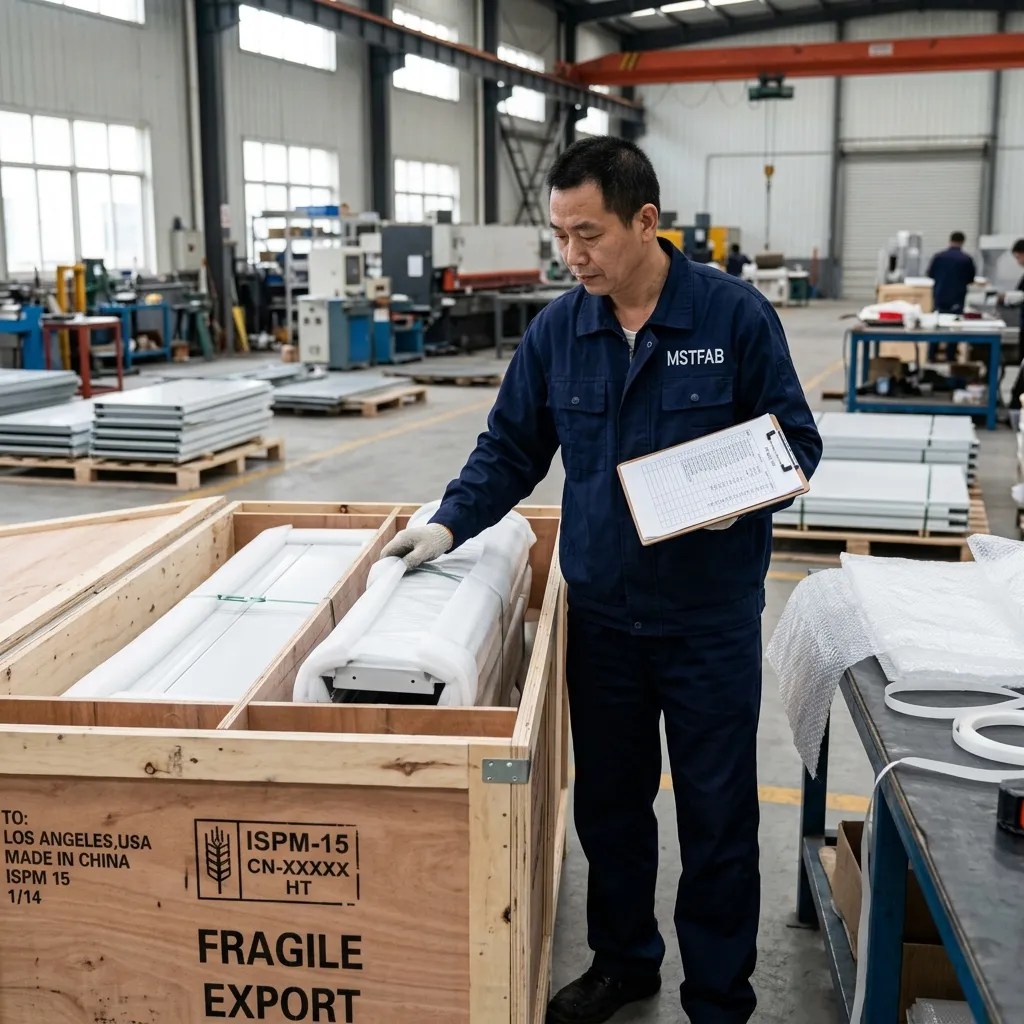
Packaging Requirements Affect the Delivered Cost
A metal part can pass final inspection and still arrive damaged.
The buyer should explain whether the part is a hidden internal component, a customer-facing cosmetic component, a loose part, a finished assembly, a kit with matching hardware, a large welded structure, or a part that needs pallet or crate protection.
Packaging is part of the quotation. It should not be an emergency decision when finished parts are already waiting for shipment.
How to Compare Custom Metal Parts Quotes
Do not compare quotations only by unit price. Compare the full delivery scope.
MSTFAB Quotation Integrity Guarantee
| What to Compare | What Buyers Should Confirm |
|---|---|
| Drawing Review | DFM feedback, revision control, assembly understanding |
| Material | Grade, thickness, surface condition |
| Laser Cutting | Profiles, holes, slots, cutouts, deburring |
| CNC Bending | Bend count, critical post-bend dimensions, tolerance needs |
| Welding | Weld type, distortion control, grinding, visible standard |
| Hardware | Threads, PEM parts, hinges, latches, studs, inserts |
| Surface Finish | Coating, anodizing, polishing, masking, visible-face standard |
| Inspection | First article, critical dimensions, assembly-fit checks |
| Packaging | Protective film, foam, labels, hardware bags, pallets, crates |
| Repeat Orders | Approved drawings, finish records, inspection plan, packing standard |
A lower quote may only include raw fabrication. Another may include engineering review, hardware, finishing, inspection, packing, and export preparation. Those are not equal quotations. The best quote is the one that clearly defines what you will receive.
Common Quotation Mistakes to Avoid
- Sending Only a Product Photo: A photo can help explain appearance or application. It does not replace a drawing. Use photos together with STEP files, PDF drawings, and dimensions.
- Leaving Material Undefined: “Metal” is too broad. Confirm the material category, grade, thickness, environment, and finish requirement.
- Not Defining the Surface Finish: “Black,” “silver,” or “painted” is not enough. Define finish type, color reference, texture, gloss, visible faces, masking requirements, and scratch-protection needs.
- Ignoring Hardware Until Production Begins: Hinges, locks, PEM hardware, studs, threads, latches, and grounding points should be included in the initial quote request.
- Comparing Only the Unit Price: A lower unit price can hide missing inspection, finish, hardware, packaging, or export requirements.
What to Send for a Fast and Accurate Quote
For the most useful quotation, send: STEP or STP file, PDF drawing, DXF or DWG file, part number and revision, material and thickness, required quantity, expected annual or repeat quantity, surface-finish requirement, color reference, texture and gloss requirement, critical dimensions, tolerance notes, welding requirements, hardware list, grounding or masking notes, assembly drawing or product photo, packaging requirements, labeling requirements, target delivery date, and delivery destination.
Even when the file package is incomplete, a product photo, old sample, rough sketch, finish sample, packaging reference, or assembly image can help the manufacturer understand the real requirement. The clearer the RFQ, the less time is spent correcting assumptions later.
Frequently Asked Questions
How do I request a custom metal parts manufacturer quote?
Send a STEP or STP file, PDF drawing, material and thickness, quantity, finish requirement, tolerance notes, hardware details, packaging requirements, and target delivery date.
Why can two manufacturers give very different prices?
The quotations may include different materials, processes, finish levels, hardware, inspection requirements, packing methods, and delivery responsibilities. Compare scope before comparing price.
Do I need a STEP file for a quotation?
A STEP file is highly useful because it helps show the final formed shape. A PDF drawing and DXF file are also valuable for dimensions, notes, and cutting review.
Request Your Custom Metal Parts Quote
A useful quote should do more than give a number.
It should define the material, process, finish, hardware, inspection, packaging, and delivery scope needed to turn your drawing into a usable finished part.
Send your drawings, material requirements, quantity, finish details, tolerance notes, hardware list, assembly information, and packaging expectations through the MSTFAB quotation page.
Because the most accurate quote is usually the one that asks the right questions before production begins.
 WeChat Contact
 WhatsApp Me Directly