
Use this page for carbon steel cost and finish trade-offs
Carbon steel is the cost-friendly workhorse, but it needs the right finish if the part faces corrosion. This page is about strength, finish and price trade-offs, not galvanized coating decisions.
For zinc-coated sheet, use the galvanized steel coating guide. This article focuses on carbon steel grade, thickness, welds, finish and inspection requirements for a drawing-based RFQ.
- Use carbon steel when strength and cost matter more than bare corrosion resistance.
- Specify powder coating, plating or oil protection when rust is a risk.
- Confirm weldability and thickness before final quote comparison.
- Avoid paying for stainless when coated carbon steel is enough.
- Inspect coating coverage and packing protection for finished parts.
| 1 | Use carbon steel when strength and cost matter more than bare corrosion resistance. |
| 2 | Specify powder coating, plating or oil protection when rust is a risk. |
| 3 | Confirm weldability and thickness before final quote comparison. |
| 4 | Avoid paying for stainless when coated carbon steel is enough. |
| 5 | Inspect coating coverage and packing protection for finished parts. |
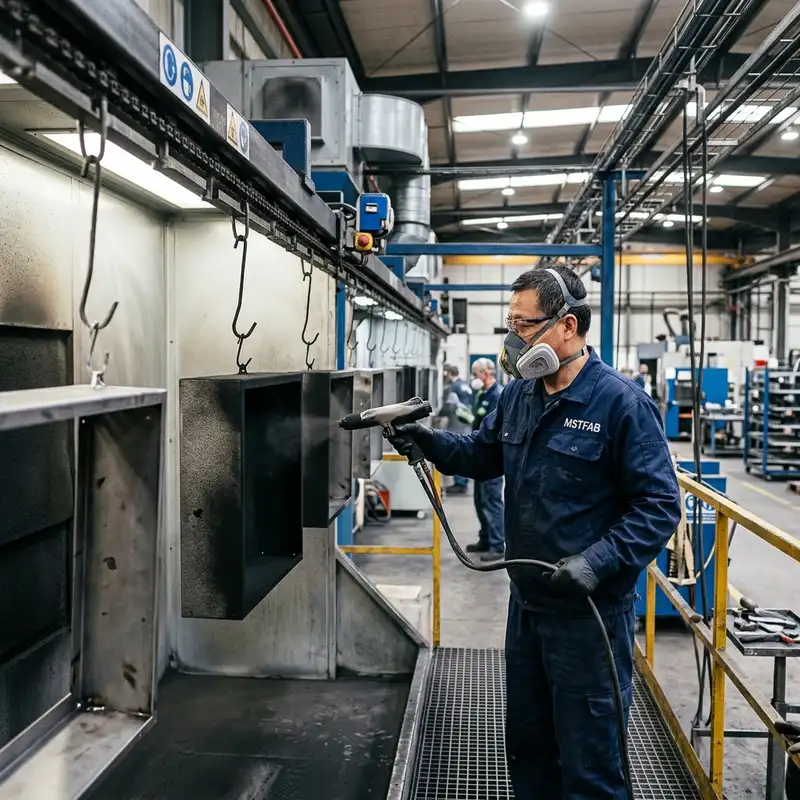
Carbon Steel Sheet Metal Parts: Strength, Finish and Cost Guide for OEM Buyers
Carbon steel is commonly considered for fabricated brackets, frames and enclosures when the drawing calls for its material properties and finishing route. Specify the required grade and condition rather than treating all carbon steel as interchangeable.
But make no mistake: carbon steel is not simply “cheap metal.”
A welded carbon steel frame can distort, coated edges can need additional preparation, and hole positions can affect assembly fit. Define the relevant acceptance requirements on the drawing and inspection plan.
A carbon steel sheet metal fabrication quote should connect the released geometry, material, weld requirements, finish and inspection plan. Agree on acceptance checks rather than assuming permanent corrosion protection or distortion-free production.
Carbon Steel Parts Fabrication for OEM Buyers
MSTFAB fabricates drawing-based carbon steel brackets, panels, covers, cabinet shells, base plates, frames and welded mechanical assemblies. This guide covers material selection, bending, weld distortion, edge preparation, finishing, inspection and packing requirements to confirm before ordering.
Mild steel, cold-rolled steel, hot-rolled steel and structural carbon steel specified by drawing, thickness, weld requirement and finish route.
Laser-cut edge prep, heavy-gauge bend accuracy, fixture-controlled welding, threaded holes, grounding points, powder-coat thickness and packing strength.
MSTFAB fabricates drawing-based mechanical parts and assemblies. The buyer or responsible integrator owns structural approval, load validation and completed-equipment certification.
Carbon Steel Fabrication and Corrosion-Protection Route
Carbon steel is strong and cost-effective, but it needs controlled fabrication and finish planning. A reliable supplier should manage material, edges, bends, weld heat, coating adhesion, inspection and export packing as one route.
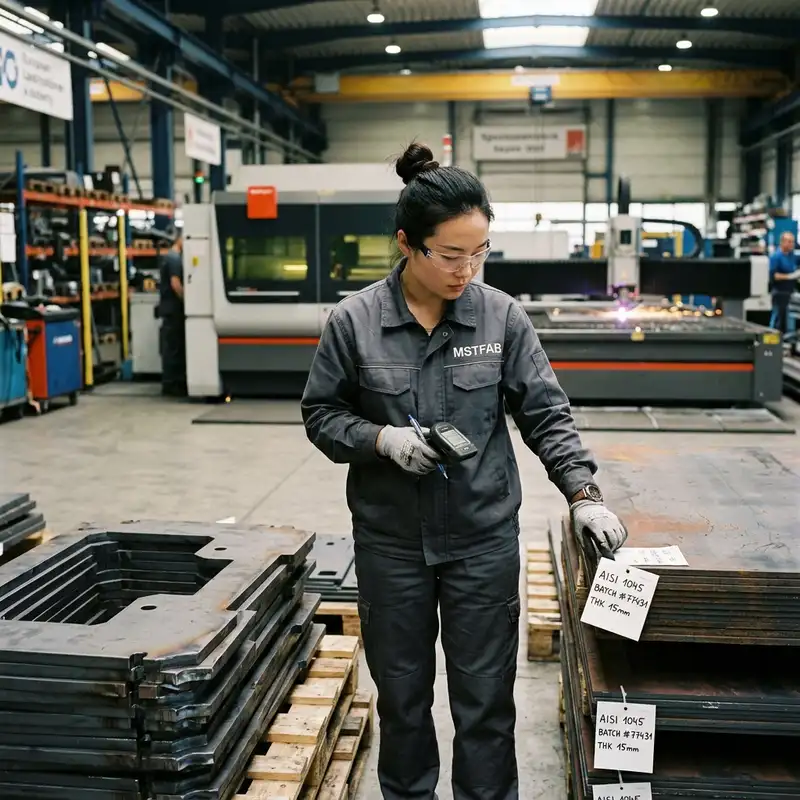
Material & Edge Preparation
Confirming steel grade, thickness, flatness, laser-cut edge condition, dross removal and deburring before bending or coating.
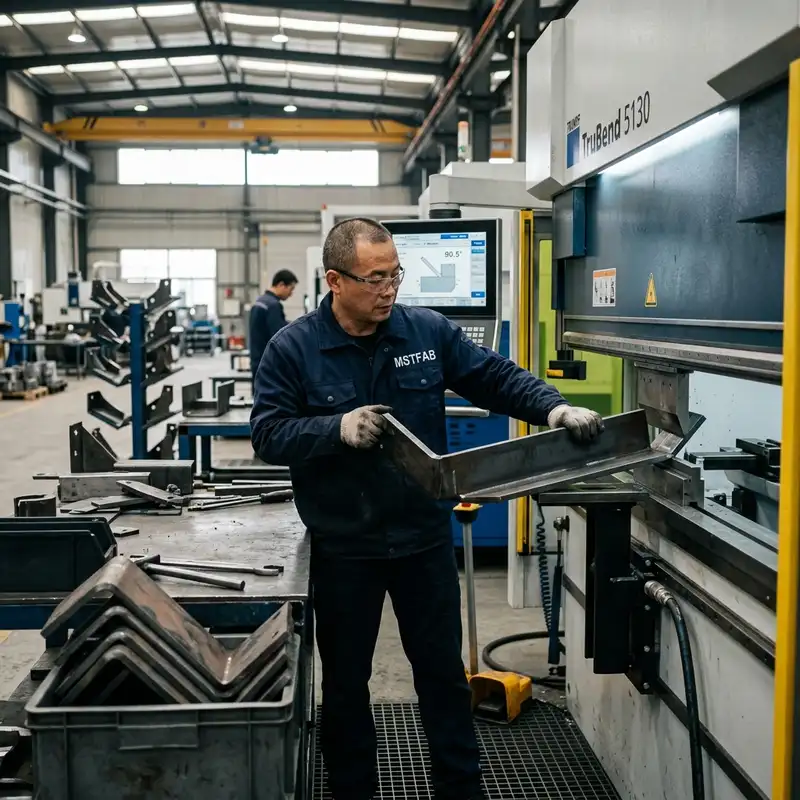
Heavy-Gauge CNC Bending
Reviewing bend sequence, tool access, material condition and the agreed finished dimensions for brackets, covers and panels.
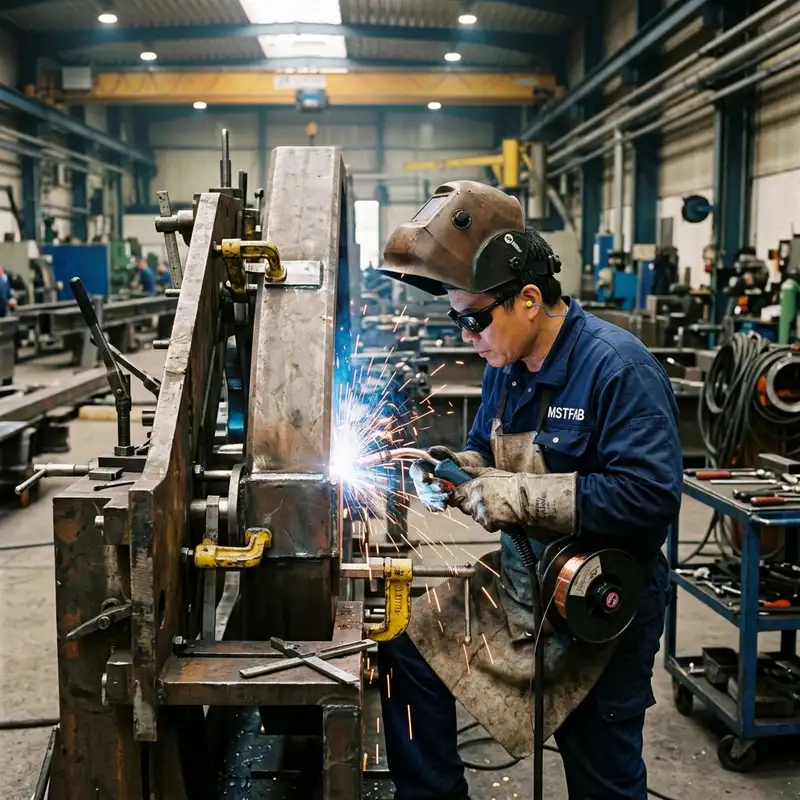
MIG Welding & Fixture Control
Controlling weld sequence, penetration, squareness, grinding and post-weld dimensions for carbon steel frames and assemblies.
Powder Coating & Masking
Preparing edges, weld seams and surfaces before coating while masking threads, PEM hardware, grounding studs and no-coating areas.
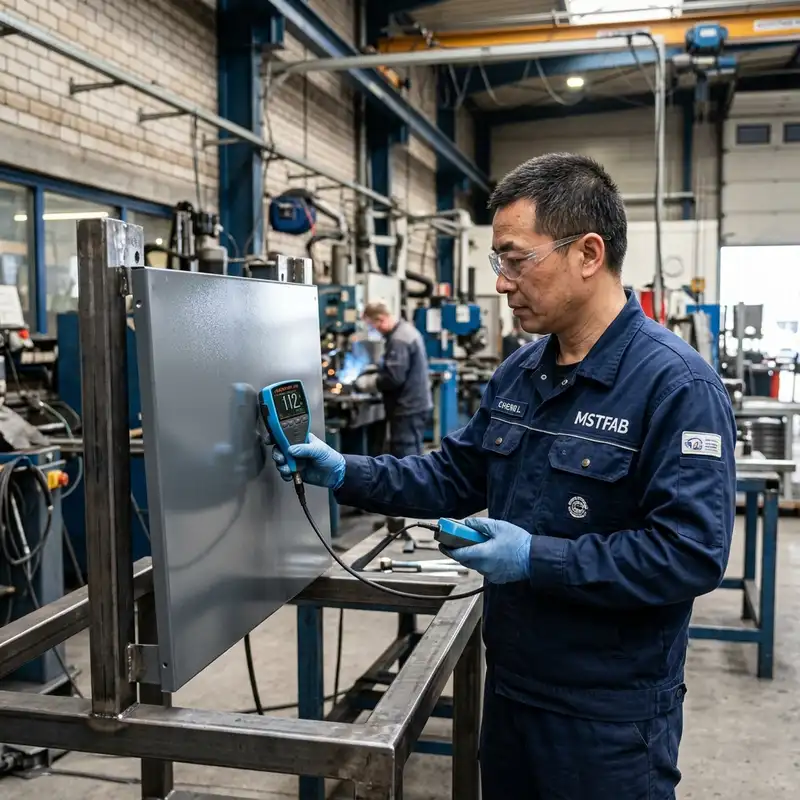
Coating Thickness & Fit QC
Checking coating thickness, dimensions, threads, grounding masks, weld alignment, hole positions and assembly-critical interfaces.
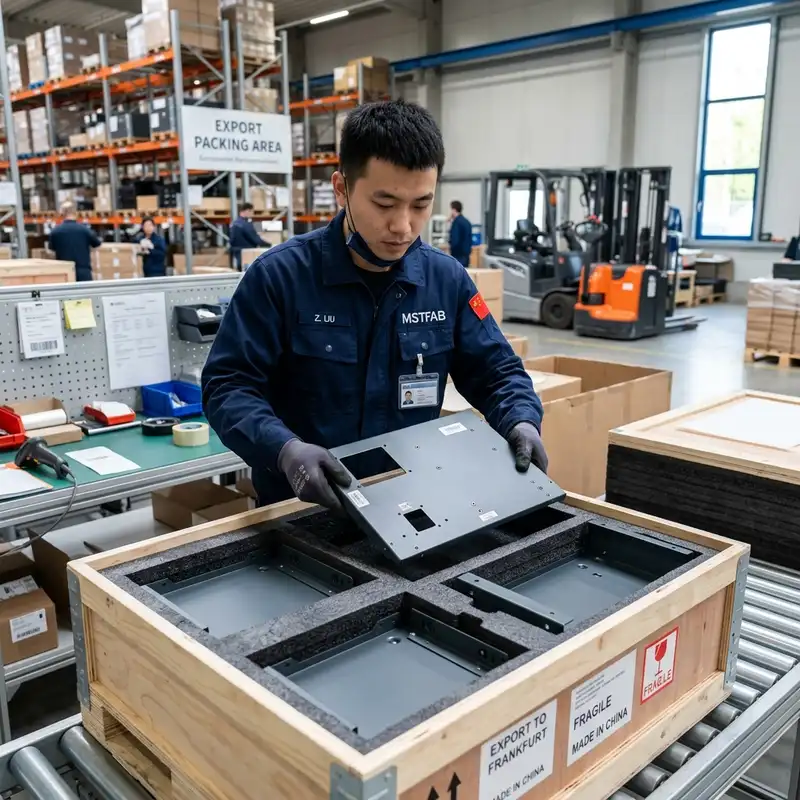
Heavy-Duty Export Packing
Planning surface separation, edge protection, pallet or crate support and handling instructions for the agreed shipment.
Process images are illustrations, not batch inspection records. Agree on the required project records before ordering.
To see our complete processing sequence for enclosures and frames, visit our Sheet Metal Fabrication master guide.
Related Carbon Steel and Sheet Metal Fabrication Resources
Use these related resources to prepare the material, manufacturing, finish and inspection requirements for your RFQ.
How to Compare Carbon Steel Manufacturers
Compare the same drawing, finish, inspection and packing scope across suppliers. Ask what will be checked and which records are included in the quotation.
| What to Compare | What OEM Buyers Should Ask |
|---|---|
| Edge preparation | Which edge, burr and weld-seam conditions will be accepted before finishing? |
| Weld distortion | What fit-up, weld sequence and post-weld dimensional checks are proposed for this part? |
| Coating inspection | What coating requirements, measurement method and acceptance records are agreed? Thickness alone does not establish corrosion life. |
| Hardware masking | Which threads, contact surfaces, grounding interfaces and no-coating areas are defined on the drawing? |
| Packing and handling | What part mass, load support, surface separation and handling requirements define the packing plan? |
Buyer Questions Before Ordering
Can you powder coat carbon steel for outdoor use?
An outdoor project needs an agreed surface-preparation and coating specification, including edges, welds, masking and acceptance checks. Confirm the proposed finishing route in the quotation. Powder coating alone is not a guarantee of corrosion life; the buyer approves the finish for the intended exposure and maintenance conditions.
Why are my carbon steel parts warping after welding?
Localized welding heat causes nonuniform expansion and contraction, which can distort the assembly. Review joint design, fit-up, restraint, heat input and weld sequence for the specific part, then check the agreed post-weld dimensions. A fixture alone does not guarantee distortion-free parts.
What files do you need for a carbon steel quotation?
Send STEP or STP models and controlled 2D drawings with material grade, thickness, weld requirements, finish, critical dimensions, quantities, mechanical hardware and packing needs. Identify missing inputs and agree on inspection records before production.
What carbon steel parts can MSTFAB fabricate?
The drawing-based scope can include brackets, covers, enclosure panels, cabinet bodies, base plates, frames and welded mechanical assemblies. Confirm feasibility, material, hardware, finishing, inspection and packing for the project. Electrical equipment and completed-system validation remain with the buyer or integrator.
Welding reference: TWI: distortion types and causes explains the effects of welding heat and restraint. Apply an agreed procedure and acceptance checks to the actual assembly.
When a drawing specifies JIS G 3101 SS400, use the SS400 sheet metal fabrication cost and risk guide to define grade evidence, accepted equivalents, welding and finish controls.
Request Custom Carbon Steel Metal Parts
A reliable carbon steel manufacturer must do far more than just cut thick plates cheaply.
Agree on critical dimensions, weld acceptance, edge preparation, finishing checks and packing before ordering. Confirm any required records and special-process scope in the quotation.
Send your 3D CAD files, material thickness, required powder coating specifications, grounding notes, and packaging expectations through the MSTFAB quotation system.
Because carbon steel is the foundation of industrial equipment. It deserves to be built right.
 WeChat Contact
 WhatsApp Me Directly