
Buyer guide: This guide explains the design, process and quality checks OEM buyers should confirm before requesting production pricing for custom metal parts manufacturing.
Short version: custom metal parts are easy to describe and much harder to manufacture correctly. A buyer may only need a bracket, panel, machine cover, enclosure door, mounting plate or welded frame. Behind that “simple metal part” are material selection, laser cutting, bending allowance, hole position, welding distortion, hardware installation, surface finish, inspection and packaging.
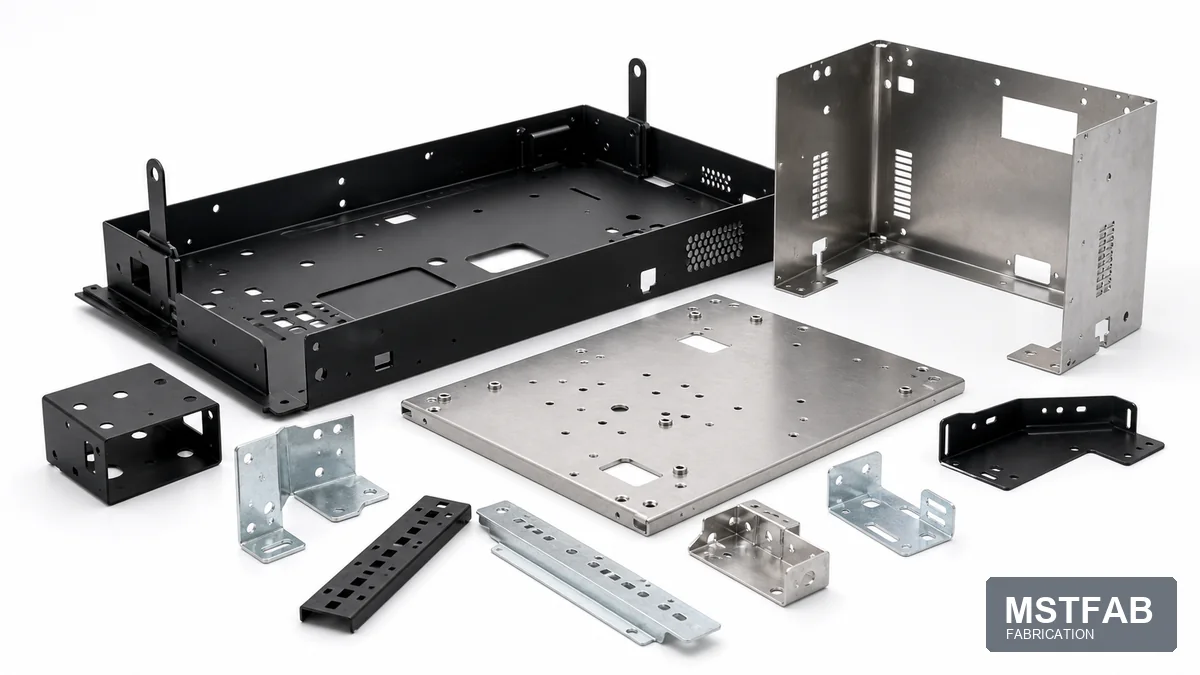
At MSTFAB, we manufacture custom metal parts for overseas industrial buyers that need drawing-based production, clear engineering communication, controlled fabrication and export-ready delivery. Our work focuses on fabricated sheet metal components including brackets, panels, enclosures, cabinets, chassis parts, covers, mounting structures, machine guards and welded metal assemblies.
We do not treat your drawing as a picture to copy. We treat it as a manufacturing task that needs to work in the real world. Metal has a very direct personality: if the hole is wrong, it does not politely negotiate.
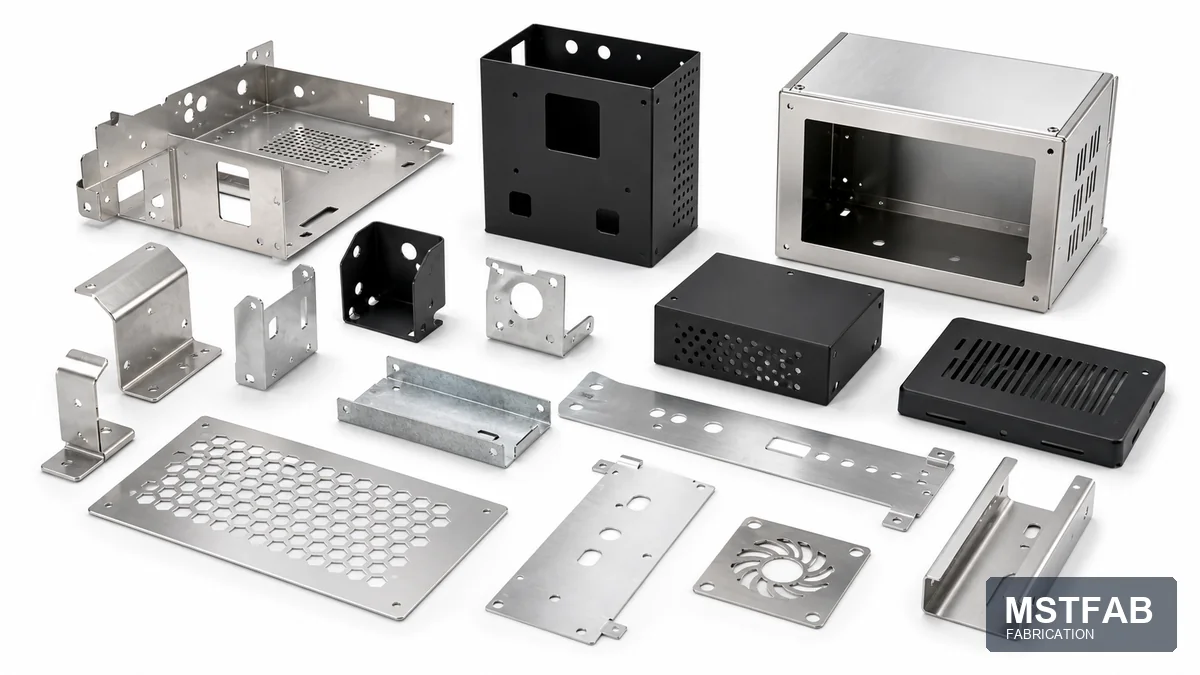
Reviewed by MSTFAB Manufacturing Engineering Team. Last updated: July 1, 2026. Focus: custom sheet metal parts, brackets, panels, enclosures, chassis components, welded assemblies, DFM review, inspection and export packaging for international buyers.
What custom metal parts can MSTFAB manufacture?
MSTFAB supports custom sheet metal parts used in industrial equipment, automation systems, electrical products, telecom equipment, energy systems, machinery, commercial hardware and OEM assemblies.
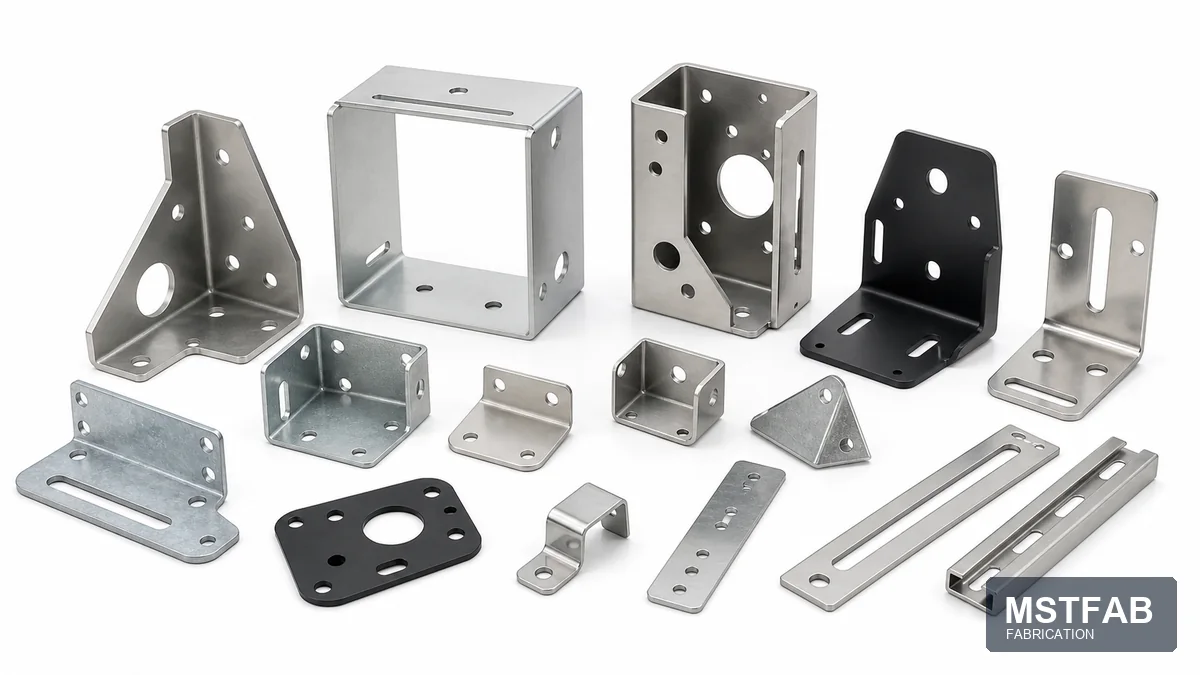
- Sheet metal brackets and mounting supports
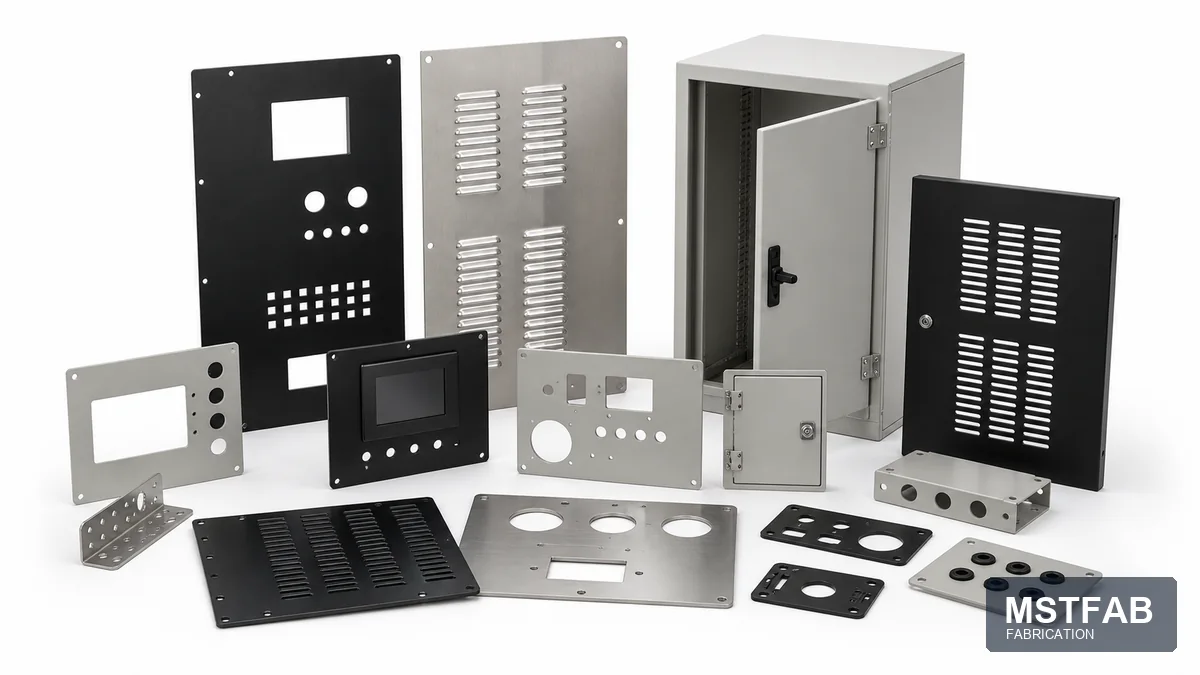
- Equipment panels, control panels and cabinet components
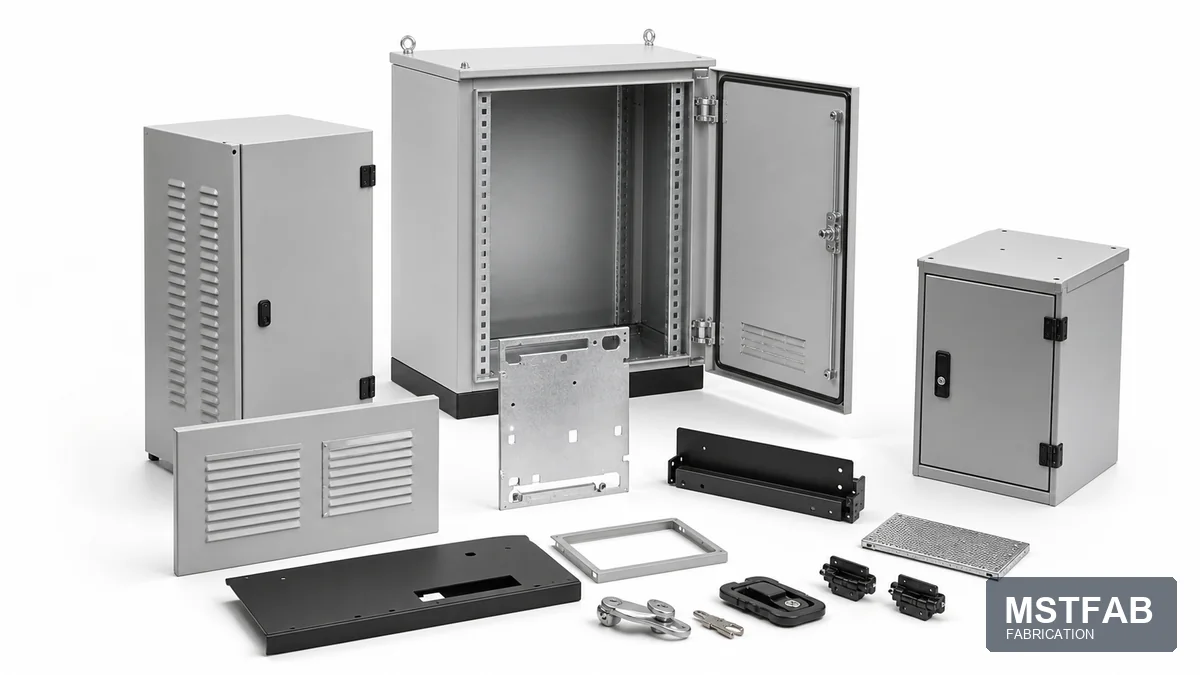
- Electrical enclosures, doors, covers and mounting plates
- Machine covers, protective guards and ventilated panels
- Chassis parts, internal plates, trays and formed bases
- Metal frames, welded bases and custom metal assemblies
- Stainless steel covers, aluminum housings and powder-coated parts
For broader OEM capability details, visit our custom sheet metal fabrication for OEM parts guide or our core sheet metal fabrication services page.
The real problem is not making the part. It is making it fit.
Most sourcing problems do not happen because a supplier cannot cut metal. They happen because the supplier cuts metal without understanding how the part will be used.
Assembly fit
A bracket can have the right outside shape but still fail if holes, slots or bend direction do not match the assembly.
Material choice
Stainless steel, aluminum, mild steel and galvanized steel behave differently in bending, welding and finishing.
Bend planning
Hole-to-bend clearance, flange length and bend radius can decide whether a part forms cleanly or becomes a small metal argument.
Welding control
Welded frames need fixtures and sequence planning because heat can move parts after they looked perfect on the table.
Finish details
Powder coating can protect the part, but masking is needed for threads, grounding areas and tight-fit surfaces.
Repeat orders
The first part should not be a lucky accident. Process notes and inspection points help future batches stay consistent.
Because fixing a CAD file is cheap. Fixing 500 finished parts is a much more expensive hobby.
Common custom metal parts and what buyers should check
| Part type | Typical use | Buyer check points |
|---|---|---|
| Brackets and mounting supports | Industrial frames, machinery, cabinets, electrical assemblies. | Hole position, bend radius, load direction, material thickness and coating thickness. |
| Equipment panels and covers | Control panels, access covers, machine covers and visible product faces. | Cutouts, vents, visible surface finish, scratch protection and edge quality. |
| Enclosure and cabinet parts | Electrical enclosures, telecom cabinets, power equipment and OEM housings. | Door fit, hinge alignment, sealing surfaces, grounding zones and hardware installation. |
| Chassis and internal plates | Electronics, industrial equipment and mounting structures. | Flatness, threaded features, PEM hardware, assembly clearance and repeatability. |
| Welded frames and guards | Machine guards, bases, supports and protective structures. | Weld sequence, distortion, squareness, grinding, coating and export packing. |
From drawing to finished metal part
1. Drawing and DFM review
The first step is to understand what the part needs to do. Buyers can provide a 3D STEP file, 2D PDF drawing, DXF file, DWG file, sample, sketch or product photo. A complete drawing package helps reduce assumptions, but even a sample image can reveal installation direction, visible surfaces and assembly requirements.
During DFM review, the fabrication team should check material grade, thickness, critical dimensions, bend radius, bend direction, hole-to-bend clearance, weld location, hardware requirements, surface treatment compatibility, assembly fit and packing protection.
2. Laser cutting and blank preparation
Laser cutting creates the flat shape before forming, welding, coating or assembly. This stage may include outside profiles, holes, slots, cable openings, ventilation patterns, mounting points, tabs and cutouts for connectors, switches, displays or handles.
Laser cutting is not only about following a line. Correct cut geometry supports the next process. Learn more about our sheet metal laser cutting services.
3. CNC bending and forming
After cutting, flat blanks can be formed into brackets, channels, covers, doors, trays, panels and enclosure structures. CNC bending needs careful planning because sheet metal does not always behave exactly like a drawing.
Material thickness, alloy grade, tooling, grain direction, flange length and springback all affect the final angle and shape. A 90-degree bend on a drawing is not always “just bend it to 90 degrees.” The metal has its own opinion. For formed components, see our CNC sheet metal bending services.
4. Welding and structural assembly
Some custom metal parts are complete after cutting and bending. Others require welding to create frames, supports, cabinet bodies, equipment bases, machine guards and multi-component structures.
Welding adds strength, but it also adds heat. Heat can affect flatness, squareness, visible surfaces and final assembly alignment. For fabricated structures, review our sheet metal welding services.
5. Hardware installation and functional features
Many custom metal parts are not complete until they include functional hardware such as PEM nuts, studs, rivet nuts, tapped holes, weld nuts, hinges, handles, latches, grounding studs and internal mounting hardware.
Hardware features should be considered early because installation sequence matters. Powder coating may affect threads. Grounding points may need uncoated contact areas. Cabinet doors need hinge alignment before the project reaches final assembly.
6. Surface treatment and cosmetic requirements
Surface finish affects corrosion resistance, visual quality, scratch resistance, cleaning, installation and packing requirements. Common options include powder coating, wet painting, brushed stainless steel, mirror polishing, sandblasting, aluminum anodizing, zinc plating, galvanizing and protective film.
Buyers should clarify finish color, texture, gloss level, masking areas, visible cosmetic surfaces and scratch-protection requirements. A request like “black finish” can mean five different things to five different people. For options, see surface treatment services.

Material options for custom metal parts
| Material | Good for | Notes for buyers |
|---|---|---|
| Stainless steel | Corrosion resistance, hygiene, durability and premium appearance. | Specify grade, brushing direction, protective film and weld finish expectation. |
| Aluminum | Lightweight housings, panels, transport components and electronic structures. | Review bend radius, welding method, surface treatment and structural stiffness. |
| Mild steel | Frames, brackets, guards, bases and powder-coated industrial parts. | Strong and cost-effective, but finish and packaging must prevent corrosion risk. |
| Galvanized steel | Cabinets, panels and industrial structures needing added corrosion protection. | Check cut-edge protection, welding compatibility and coating plan. |
Prototype parts before production orders
For complex or assembly-critical projects, prototype production is strongly recommended. A prototype can verify dimensional fit, hole locations, bend angles, hardware compatibility, weld quality, surface finish, assembly sequence, packaging method and future repeat-production feasibility.
The purpose of a prototype is not to slow down the project. It is to make sure the production order is based on a part that works. This is especially important for enclosures, machine panels, welded frames, electrical cabinet components and any part that must connect with expensive customer equipment.
Quality control should focus on what matters
Not every measurement has the same importance. A hidden internal flange and a customer-facing display opening may require different inspection priorities. For custom metal parts, inspection should focus on critical dimensions, hole and slot positions, bend angles, flatness, squareness, hardware installation, thread function, weld location, surface finish, assembly fit and packing protection.
The final goal is not only to produce a part that measures correctly. It is to produce a part that performs correctly in your product.
Why buyers choose a direct manufacturing partner
A custom metal project can involve several processes: cutting, bending, welding, finishing, assembly, inspection and packing. When these stages are managed separately, communication gaps can create unnecessary risk.
A direct fabrication partner helps manage revision communication, material confirmation, manufacturing sequence, quality responsibility, surface treatment coordination, assembly checks, packaging standards and repeat-order consistency. You can also review MSTFAB factory evidence before sending a project.
What to send for a custom metal parts quote
| Information | Why it helps |
|---|---|
| STEP file and 2D PDF drawing | Allows review of geometry, tolerances, bends, hole locations and assembly features. |
| DXF or DWG cutting file | Helps estimate laser cutting and flat pattern preparation. |
| Material grade and thickness | Prevents wrong assumptions about strength, forming and finish compatibility. |
| Surface finish specification | Defines color, texture, visible areas, masking and corrosion protection. |
| Critical tolerance requirements | Shows which dimensions matter most for assembly and inspection. |
| Hardware and assembly details | Confirms PEM nuts, rivet nuts, hinges, handles, grounding studs and other features. |
| Packaging expectations | Protects visible surfaces, corners, threads and assembled geometry during export shipping. |
Frequently asked questions
Can MSTFAB manufacture custom metal parts from my drawing?
Yes. MSTFAB supports drawing-based manufacturing for brackets, panels, enclosures, cabinets, covers, frames, chassis components, mounting plates and welded sheet metal assemblies.
Can you make stainless steel and aluminum parts?
Yes. Stainless steel, aluminum, mild steel, galvanized steel and other suitable sheet materials can be reviewed based on your product requirements.
Can you support prototypes and batch production?
Yes. Buyers can begin with a prototype or first article for fit verification, then move to repeat batch production after technical details are confirmed.
Can MSTFAB provide cutting, bending, welding, finishing and assembly together?
Yes. MSTFAB can coordinate a complete sheet metal fabrication route for suitable projects, from raw material preparation to finished export-ready parts.
Do you provide stamping?
Our core focus is custom sheet metal fabrication through laser cutting, CNC bending, welding, finishing and assembly. For projects requiring dedicated stamping dies, the manufacturing route should be reviewed before quotation.
Start your custom metal parts manufacturing project
Your custom metal part should not only look correct when it leaves the factory. It should fit your assembly, meet functional requirements, arrive safely and remain repeatable for future orders.
Send your drawing, material requirement, quantity, finish details and application information. We will review the manufacturing route before production starts.
For projects requiring consistent, repeatable welds across production batches, learn more about our robotic welding guide capabilities and how fixture-based automation improves weld quality for OEM sheet metal assemblies.
 WeChat Contact
 WhatsApp Me Directly