
A useful prototype proves more than shape. It should show whether the drawing, material, bends, hardware, welds, finish and inspection plan can move into a repeatable production route without a fresh argument at every order.
MSTFAB (Guangzhou Maisituo Sheet Metal Manufacturing Co., Ltd.) manufactures custom sheet metal parts and empty enclosure shells from buyer-controlled drawings. This guide explains what an OEM buyer should send, what a prototype should prove, and what evidence should exist before a pilot or repeat order is released.
What should a prototype supplier prove?
Start with an RFQ that an engineer can use
A fast quote is not automatically a useful quote. Send enough information for the supplier to separate geometry from commercial assumptions. STEP or STP files are useful for 3D geometry; a controlled PDF drawing carries dimensions, tolerances, threads, datums and finish notes. DXF or DWG files may be useful for flat profiles when agreed. Include the prototype need, expected pilot stage and forecast without treating any number as a universal MOQ.
| RFQ item | What to provide | Why it matters |
|---|---|---|
| Files and revision | STEP/STP plus a controlled 2D drawing where available; identify the current revision. | Prevents a good part being made from the wrong file. |
| Material | Grade, thickness and any substitution restrictions. | Material changes bend behavior, corrosion resistance, welding and price. |
| Interfaces | Mating parts, critical holes, door gaps, rails, connectors, gasket lands and service access. | These features usually cause assembly pain first. |
| Order stages | Prototype need, planned pilot release and realistic forecast ranges. | The supplier can separate setup, fixture and repeat-order assumptions. |
| Finish and cosmetics | Color standard, texture, gloss, masked areas and visible-surface rules. | “Looks good” is difficult to inspect and even harder to repeat. |
| Evidence | Required first-article report, material evidence, photos, fit checks or packing approval. | Inspection effort belongs in the quotation, not in a surprise email after production. |
Six control gates from prototype to repeat order
The exact route depends on risk, part complexity and buyer requirements. These six gates give both sides a common language for deciding what is ready and what is still open.
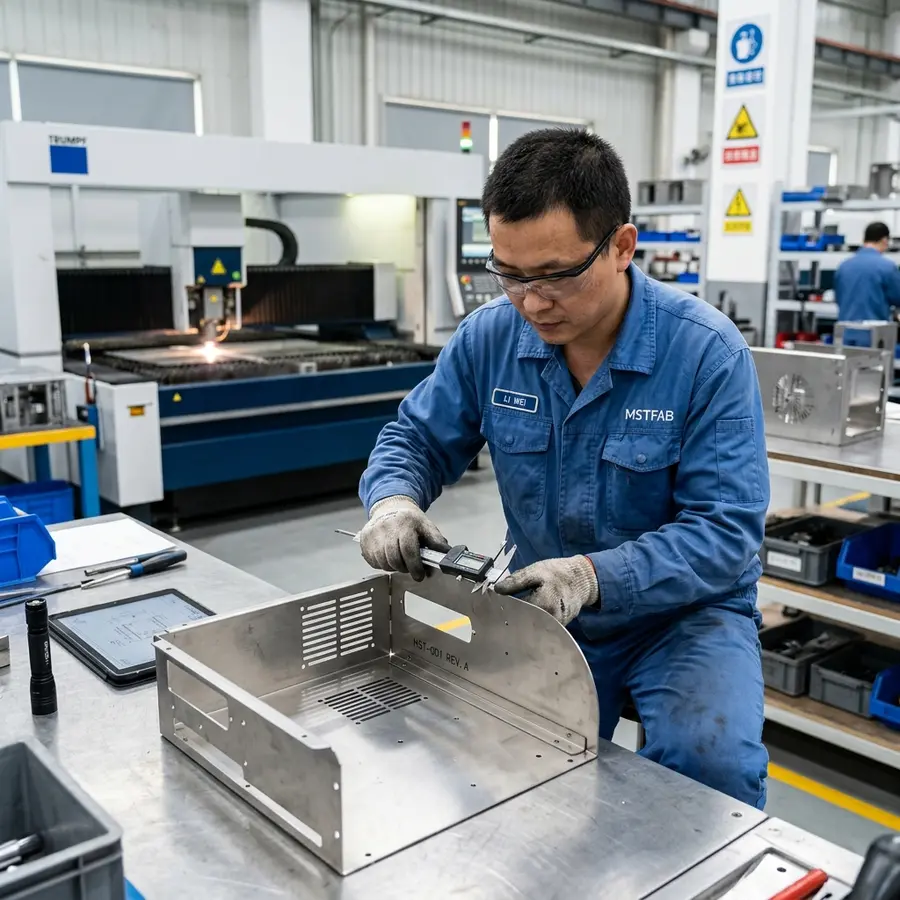
DFM should produce decisions, not a thumbs-up
A useful design-for-manufacturing review identifies a risk, explains the consequence and records the agreed disposition. Typical questions include whether a flange can be formed with available tooling, whether a hole is too close to a bend, whether hardware can be installed after forming, and whether welding or finish buildup will change a mating interface.
- Mark dimensions that control assembly instead of labeling every dimension “critical.”
- Separate cosmetic surfaces from hidden or functional surfaces.
- Confirm bend radii and reliefs before the flat pattern is released.
- Review weld access, heat distortion and grinding expectations together.
- Define masking and grounding areas before finishing.
For a design-focused review, see the sheet metal prototype design review guide.
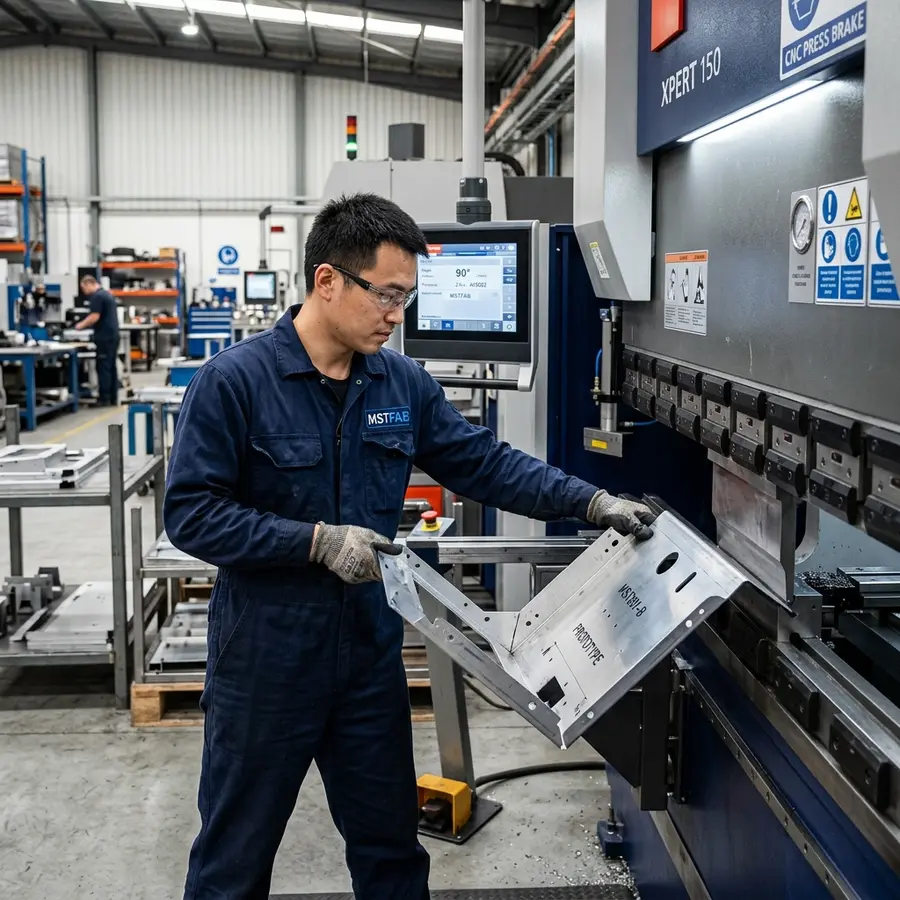
What should the prototype validation plan cover?
The prototype does not need to prove every future production variable. It should prove the risks that matter to the design and the next release decision. Agree on those risks before fabrication begins.
| Validation area | Useful evidence | Release question |
|---|---|---|
| Fit and interfaces | Mating-part trial, fixture check, gap review or installation photos. | Does the part fit the real assembly without unrecorded handwork? |
| Critical dimensions | Agreed measurements tied to drawing callouts and datums. | Are the features that control function within the approved requirement? |
| Hardware and access | Insert retention, screw access, hinge or latch operation and service clearance. | Can the part be assembled and serviced as intended? |
| Joining and distortion | Fixture method, weld sequence, flatness or squareness checks where relevant. | Can the joined assembly repeat without corrective persuasion? |
| Finish | Approved sample, color or texture reference, masked-area review and protection plan. | Is appearance defined well enough for another batch to match? |
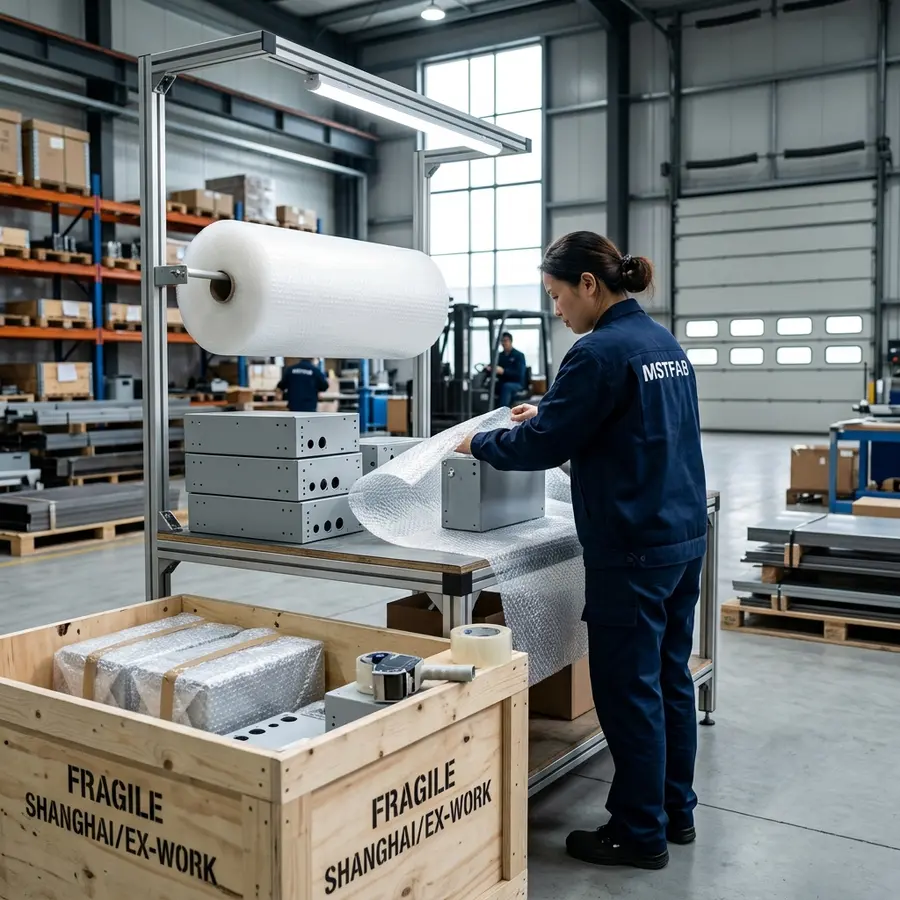
| Packing | Pack layout, separators, protective film, labeling and handling notes. | Will approved parts still be approved after transport? |
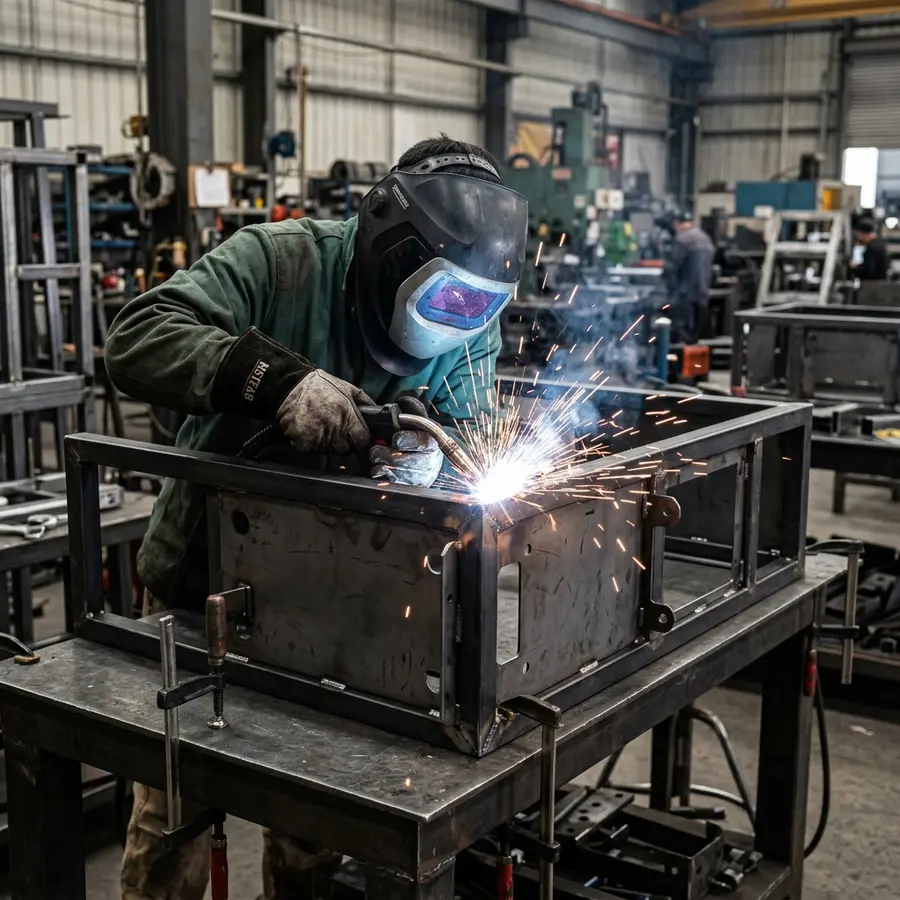
First article and pilot run are not the same gate
A first article checks an initial part against the released requirements. A pilot run asks whether the intended route can repeat those requirements across a controlled pre-production release. Some simple parts may need only a first article. Assemblies with welding, cosmetic finishing, multiple interfaces or change-sensitive hardware may justify a separate pilot plan.
Use the detailed sheet metal pilot run checklist to plan first-off checks, traceability, finish verification, open deviations and the final release decision.
Freeze the approved revision before scaling
Prototype feedback becomes valuable only when it reaches controlled documents. Red-line notes on a workbench, a revised STEP file in one inbox and an old PDF in purchasing are not a release system. Before the pilot or repeat order, confirm:
- The 3D model and 2D drawing identify the same released revision.
- Approved DFM changes are incorporated into the buyer-controlled package.
- Temporary prototype deviations are either closed or formally accepted.
- Critical inspection points and cosmetic requirements are unambiguous.
- Finish, masking, packing and labeling requirements are included where they belong.
- Future changes have an owner, review path and effective date.
Finish and packing belong in the release decision
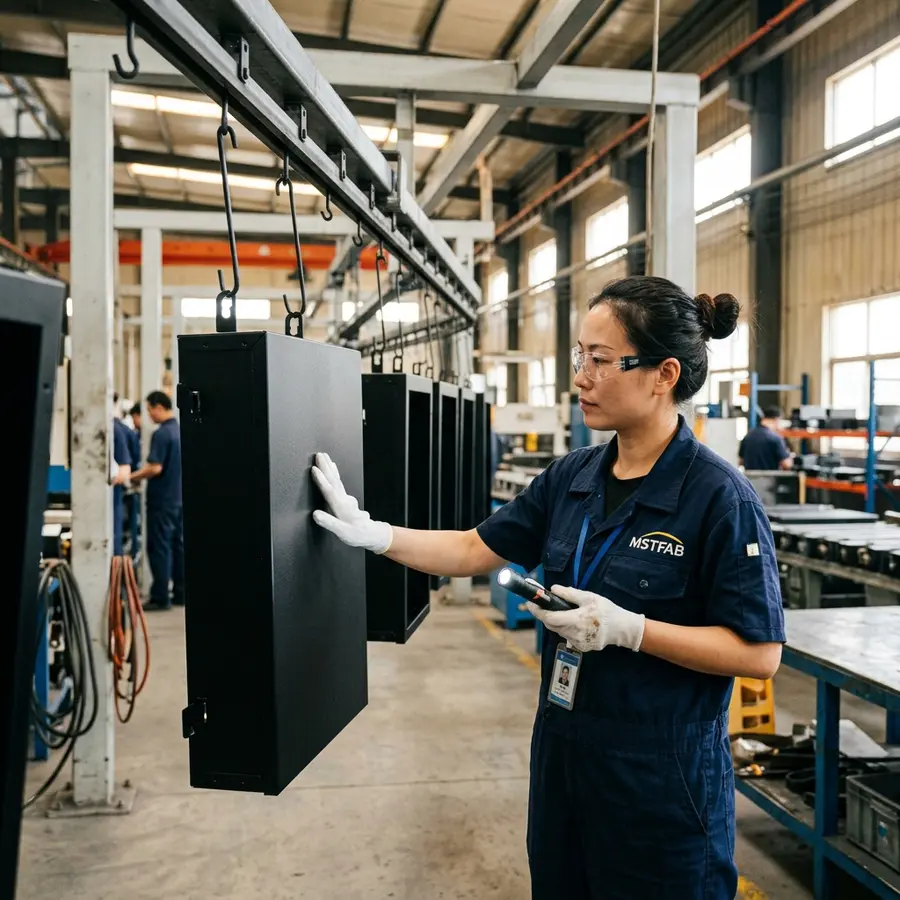
A bare-metal sample can confirm geometry, but it cannot prove every finished interface. Coating buildup may affect threads, grounding zones, gasket lands, hinge movement and close-fitting assemblies. When finish matters, approve the relevant color, texture, masked areas and protection method before repeat orders.
Finishing should be quoted against a defined specification. Where a process is completed by a qualified long-term partner, MSTFAB coordinates the approved requirement and incoming or final checks within the agreed scope. The route should be clear to the buyer; mystery is not a finishing process.
Supplier trust table: ask for evidence, not adjectives
| Buyer concern | Evidence to request | Weak answer |
|---|---|---|
| Which revision will be built? | Revision shown on the quote, order review and inspection record. | “We use the latest file.” |
| Can the prototype route scale? | Explanation of production-intent tooling, fixtures and controlled manual steps. | “The sample looked fine.” |
| How are critical features checked? | Agreed CTQ list, method, sample plan and report format. | “Our tolerance is always very tight.” |
| Who controls outside processing? | Named specification, approved route and responsibility for verification. | “Do not worry; everything is handled.” |
| What releases the pilot? | Closed deviations, inspection evidence and buyer or project-owner sign-off. | “Production starts when purchasing sends the order.” |
| How will finished parts travel? | Packing plan matched to cosmetic risk, weight, route and handling. | “Standard export packing.” |
Frequently asked questions
What files should I send for a sheet metal prototype quote?
Send a STEP or STP model when available and a controlled 2D PDF for dimensions, tolerances, threads, datums and finish notes. DXF or DWG profiles, a BOM, mating-part information and reference photos can be added where relevant. State which revision controls the quote.
Should the prototype use final production material?
Use production-intent material when material behavior affects forming, welding, corrosion, weight, fit or validation. A substitute may be reasonable for an early geometry check, but the deviation and its limitations should be explicit.
Is a first article the same as a pilot run?
No. A first article checks an initial part against released requirements. A pilot run tests whether the intended production route can repeat the approved result across a controlled release. Project risk determines whether both are needed.
How many parts should be in a prototype or pilot order?
There is no universal quantity. The appropriate release depends on part complexity, tooling, destructive tests, assembly trials, finish validation and the number of units needed to judge repeatability. Ask for project-specific quantity breaks.
Does MSTFAB supply complete equipment?
MSTFAB supplies fabricated sheet metal parts, welded assemblies and empty enclosure shells to the approved scope. Electrical integration, software, system validation and final product certification remain buyer-controlled unless a quotation explicitly states otherwise.
Send the drawing package, not a guessing game
Share the current files, material, prototype purpose, critical interfaces, finish, evidence needs and expected next stage. MSTFAB will review the mechanical fabrication scope and identify questions before quotation.
 WeChat Contact
 WhatsApp Me Directly