
In high-end medical equipment manufacturing, there is an unspoken rule that purchasing teams know too well: minor aesthetic flaws on a metal panel ruin the end user’s perception of device quality.
Medical, diagnostic, and aesthetic devices are evaluated by clinical professionals and patients. If the outer sheet metal housing is slightly warped, or if the powder coat texture is uneven, it suggests poor build quality, even if the internal technology is state-of-the-art. Furthermore, a sharp edge that cuts a nurse’s finger or a grounding point blocked by paint represents serious design failures.
MSTFAB manufactures custom sheet metal parts for medical device manufacturers based in Guangzhou, China. We produce medical equipment housings, display panels, chassis parts, mounting brackets, and mobile cart assemblies from your 3D STEP/STP models and 2D engineering drawings (PDF, DXF, DWG). We focus on visual cleanliness, hand-safe edges, tight assembly tolerances, and thread masking so your components arrive ready for the cleanroom.

During modular builds, choosing a reliable partner for custom metal fabrication for telecom equipment ensures that grounding studs, connector plates, and rack ears line up perfectly in your final network layouts.
For custom clean power setups, sourcing from a specialized supplier of sheet metal components for renewable energy systems ensures that solar inverter enclosures, heavy battery trays, and EV charger casings survive harsh outdoor environments.
During the electrical planning phase, sourcing precise custom metal parts for industrial control systems helps electrical engineers line up DIN rails, HMI screen bezels, and cable gland ports without filing down metal in the field.
During mechanical design iterations, sourcing precise components from a supplier of sheet metal parts for robotics manufacturers ensures that AGV shells, sensor brackets, and robotic arm guards fit together cleanly without extra field grinding.
For mobile setups exposed to high dynamic loads, partnering with a supplier of metal fabrication for transport refrigeration equipment ensures that condenser frames and evaporator housings endure severe road shock.
During the structural design review of the main frame, sourcing specialized fabricated metal parts for commercial machinery ensures that heavy motor plates, front door panels, and internal base plates align perfectly.
During the device housing review, consulting a specialist in custom sheet metal for laboratory equipment helps ensure that delicate display bezels, PCB pillars, and chemical-resistant finishes align seamlessly.
During the electrical cabinet design phase, consulting a specialist in sheet metal fabrication for battery equipment ensures that heavy rack frames, high-current busbar barriers, and conductive grounding paths align properly.
During the cabinet frame design phase, consulting a specialist in sheet metal parts for smart locker manufacturers ensures that multiple door clearances, latch positions, and weather seals align perfectly.
During the thermal cabinet design phase, consulting a specialist in custom metal fabrication for HVAC equipment helps optimize fan shroud tolerances, ventilation louvers, and condensate drain channels.
How Medical Device Sheet Metal Differs from Industrial Parts
Unlike standard industrial covers or brackets, medical device fabrication requires a different quality mindset. Sourcing custom parts from a specialized custom sheet metal panel manufacturer addresses unique medical design needs:
- Aesthetic Perfection: Medical enclosures require uniform powder coating gloss, precise color matches, and zero welding marks on visible faces. We protect surfaces from raw sheets to final packing.
- 100% Hand-Safe Deburring: Medical equipment is handled constantly by nurses, technicians, and patients. All laser-cut slots, louver openings, and corners must be hand-safe. We double-deburr all panels.
- Cleanroom-Ready Cleanliness: Parts must be free of cutting oils, metal filings, or grinding dust. We implement rigorous aqueous cleaning before powder coating to ensure clean parts.

Common Sheet Metal Components for Medical Devices
Medical Enclosures & Housings
Housings protect sensitive optical, laser, and electrical components. Sourcing enclosures from a certified metal equipment housing manufacturer ensures flat panel profiles, straight flanged seams, and tight door gaps to maintain cabinet seals.
Chassis & Internal Structural Brackets
The internal chassis houses power supplies, PCB controllers, pumps, and cabling. We maintain hole pitch tolerances of ±0.1mm to ensure PCBA mounting standoffs and linear guides align easily. Learn about our custom sheet metal chassis fabrication.
Ventilation Panels & Access Covers
Medical devices generate internal heat that must be dissipated. Sourcing components from a dedicated metal ventilation cover fabrication manufacturer ensures airflow grilles are deburred, flat, and allow easy filter replacement. Read more about custom louvered sheet metal panels.
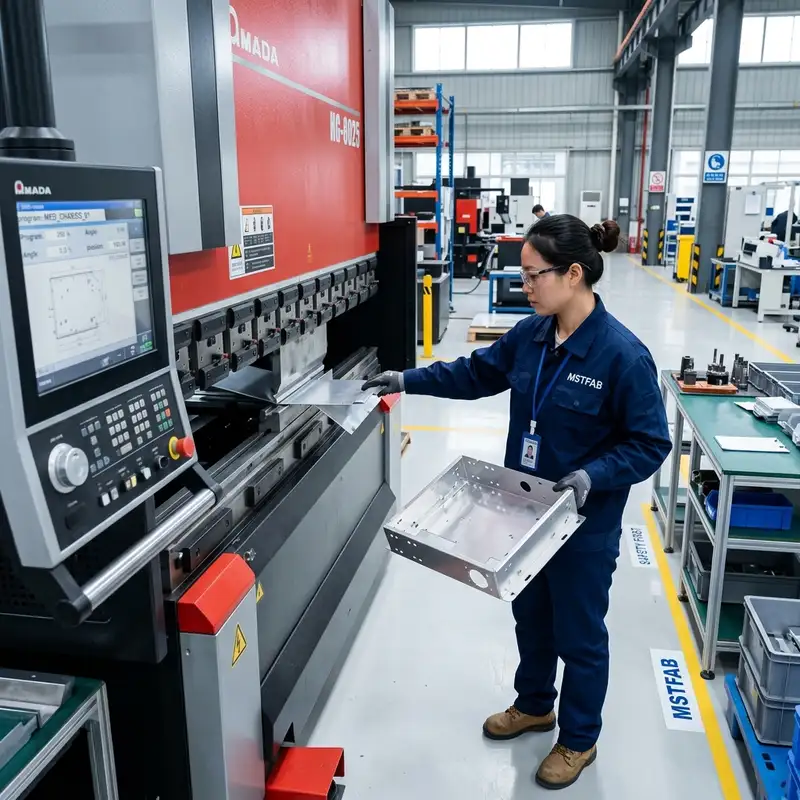
Trust Table: Cheap Supplier vs. MSTFAB Medical Parts
Medical device builders require components that align correctly and look pristine. Here is how MSTFAB compares:
| Quality Metric | The Cheap Supplier’s Parts | MSTFAB’s Medical-Grade Components |
|---|---|---|
| Surface Quality | Scratches, weld marks, and uneven paint gloss on visible panels. | Zero visible weld grind marks, uniform gloss, scratch-free powder coat. |
| Edge Finishing | Sharp burrs left on ventilation slots and display openings. Tears gloves. | Automated sanding and manual deburring for smooth, hand-safe edges. |
| Hole & PEM Tolerances | PEM standoffs slightly skewed, forcing PCB installation. | ±0.1mm tolerance on insertion holes, ensuring straight studs and standoffs. |
| Thread Protection | Paint blocks threaded inserts, requiring manual retapping. | High-temperature silicone plugs keep threads clean and ready for screws. |
| Conductive Grounding | Painted grounding studs, blocking required electrical continuity. | Silicone masking caps leave grounding points clean and conductive. |
| Transit Packaging | Loose packaging. Coated panels rub, scratch, and bend during freight. | Protective film, foam separators, edge guards, and reinforced wooden crates. |
Material Choices for Medical Device Fabrication
The chosen raw material affects device weight, corrosion limits, and cleaning resilience:
- Stainless Steel (SUS304/SUS316): Ideal for hospital washdown, surgical, and laboratory environments due to corrosion resistance. Sourcing from a reliable stainless steel metal parts fabrication supplier ensures grain consistency on brushed surfaces.
- Aluminum (5052-H32): Lightweight and rust-proof. Ideal for desktop diagnostics and hand-held devices. Read about our aluminum sheet metal parts manufacturing.
- Cold Rolled Steel (SPCC/DC01): High strength and cost-effective. Used for powder coated aesthetic enclosures and heavy mobile carts. We apply durable, hospital-clean finishes as a powder coated metal parts manufacturer.

Core Manufacturing Operations
Laser Cutting & Slot Processing
Medical front panels contain display cutouts, button holes, and connectors. We use high-precision fiber lasers with optical height sensor heads to ensure slot dimensions are clean, consistent, and burn-free.
Welding Distortion Control
Welding enclosures introduces intense heat, causing sheet metal to warp. We use heavy pneumatic clamping fixtures and strategic spot-welding sequences to limit the heat-affected zone, ensuring welded assemblies remain straight and square.
PEM Hardware and Grounding Masques
We install PEM nuts, standoffs, and grounding studs using hydraulic insertion machines. Grounding contact zones and threads are masked with high-temperature silicone plugs before powder coating. This prevents paint buildup in threads, ensuring a clean ground connection. Read details on sheet metal fabrication with PEM hardware installation.

Rigorous DFM Checks Before Cutting
Before cutting metal, our engineers perform a complete DFM check on your designs. We verify:
- Hole-to-Bend Distance: Mounting holes must clear bend lines to prevent holes from stretching during forming.
- Tooling Clearance: Checking that PEM nuts have enough clearance from return flanges for insertion tooling access.
- Stiffener Channels: Adding bend returns to large flat panels to prevent panel buckling and maintain flatness.
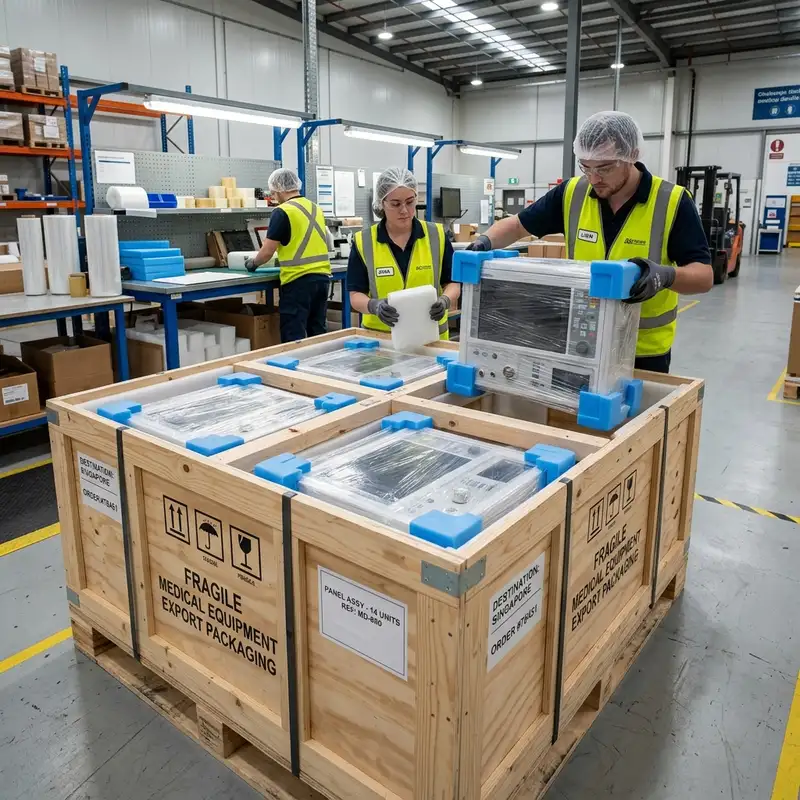
Transit Protection: Export Packaging
Medical device sheet metal parts often feature delicate brackets, return flanges, and powder coated finishes. If they collide during transit, flanges bend and surfaces scratch. MSTFAB protects finished parts by wrapping them in protective film, inserting foam separators, buffering corners, and shipping them in reinforced wooden crates to ensure they arrive flat and ready for your assembly line.
Request a Custom Medical Sheet Metal Quote
Ready to source brackets and covers that actually fit your medical assemblies? Send MSTFAB your native 3D STEP files and 2D engineering drawings (PDF, DXF, or DWG). Our engineering team will review your drawings and prepare a competitive quote.
Upload Drawings & Get QuoteFAQ: Sheet Metal for Medical Devices
What files do I need to send for a sheet metal quote?
Please send a 3D CAD model (STEP or STP file) for shape verification, along with 2D drawings (PDF, DXF, or DWG) defining tolerances, material grade, powder coating specifications, and hardware part numbers. Learn more about what files are needed for a sheet metal fabrication quote.
Do you support material traceability?
Yes. We can provide raw material mill test reports (MTRs) and material certificates for stainless steel, aluminum, and steel components upon request to verify grade compliance.
Does MSTFAB provide FDA or medical device ISO 13485 certification?
MSTFAB focuses on physical sheet metal fabrication according to customer drawings. Complete medical device clinical validation, FDA registration, EU MDR compliance, and ISO 13485-related device compliance remain the responsibility of the medical device manufacturer.
How do you protect grounding contact zones?
We place high-temperature silicone masking caps on grounding studs and use peelable masking tape on flat conductive contact areas prior to powder coating, ensuring a paint-free contact area.
MSTFAB manufactures custom sheet metal enclosures, electrical cabinets, control boxes and industrial metal housings for OEM buyers.
 WeChat Contact
 WhatsApp Me Directly