
BUYER GUIDE · EMPTY METALWORK ONLY
Power electronics equipment needs accurate, durable metalwork around it. MSTFAB fabricates the empty sheet metal chassis, covers, panels, mounting plates, brackets and welded frames to customer drawings. The customer or its electrical integrator installs every PCB, busbar, battery, cable and power module.
That distinction matters. A chassis can look tidy in a rendering and still become an expensive paperweight if a connector cutout is misplaced, a flange bows after welding, or coating fills a threaded feature. This guide explains how procurement teams can control those metalwork risks before production.
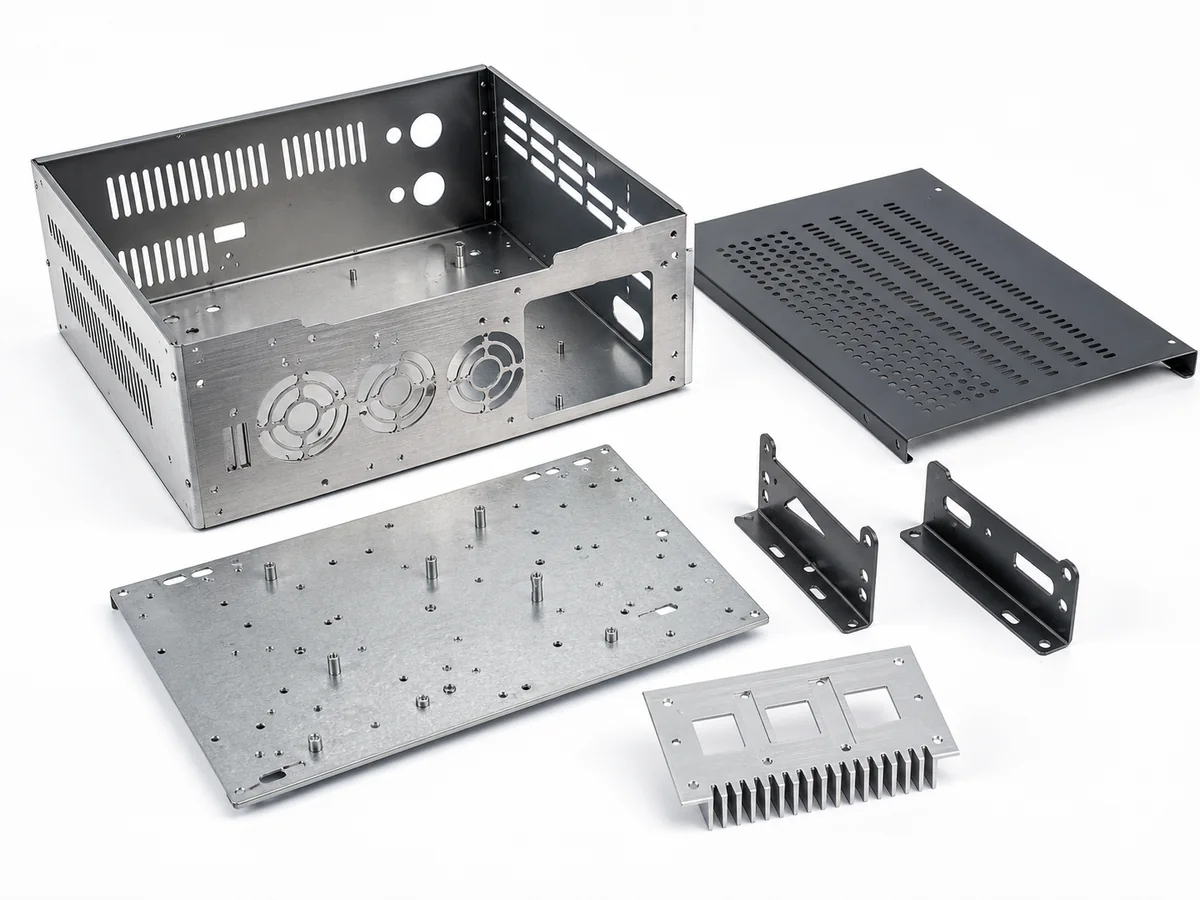
What MSTFAB actually fabricates
Chassis bases and covers
Laser-cut and CNC-bent bases, lids and wraparound covers with customer-defined ventilation, connector and fastener features.
Front, rear and fan panels
Flat or formed panels with repeatable cutouts, countersinks, louvers, grilles and label areas defined on the drawing.
Mounting plates and brackets
Internal trays, stiffeners, support brackets and equipment plates supplied as empty metal parts with optional PEM hardware.
Welded frames and cabinet shells
Fixture-controlled aluminum, stainless steel or carbon-steel structures where squareness, door fit and mating interfaces matter.
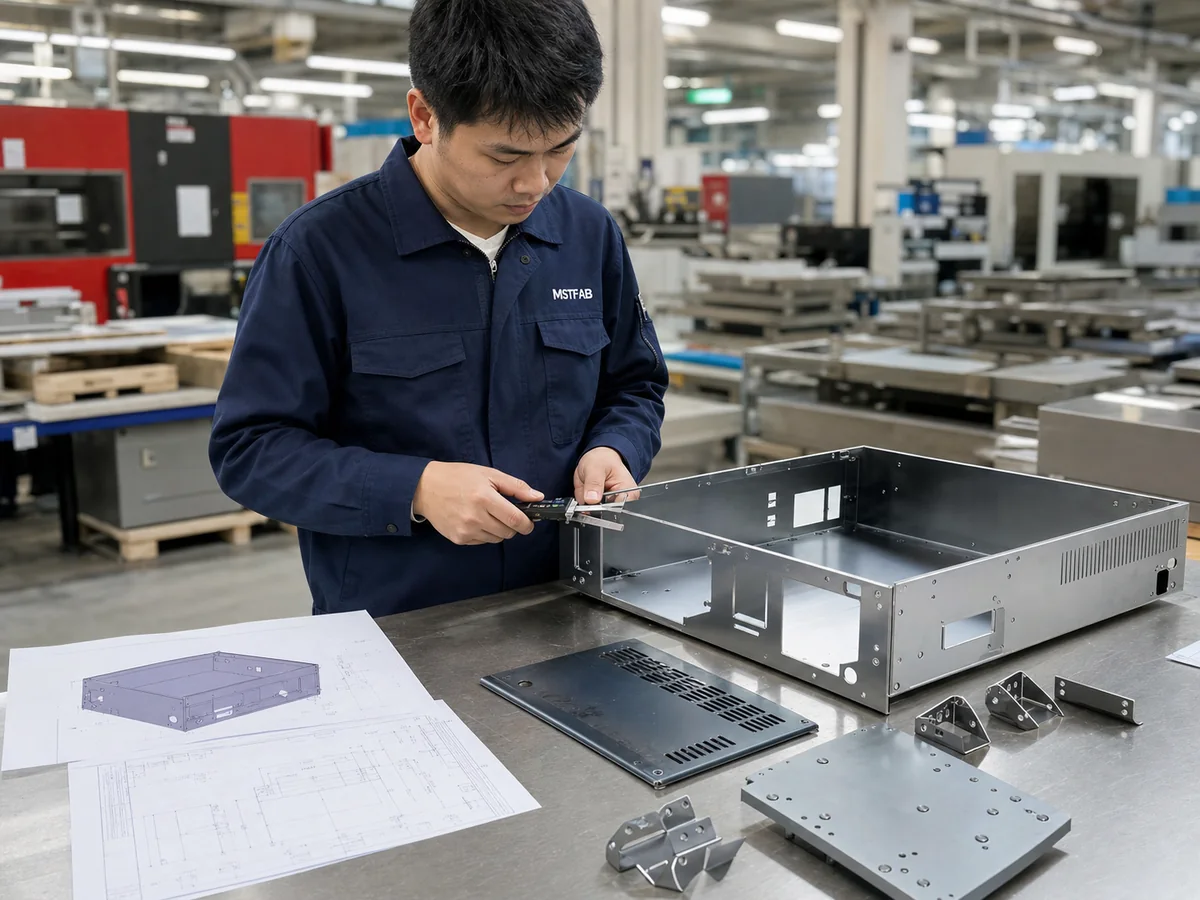
Interfaces that must be defined before metal is cut
MSTFAB reviews the manufacturing route, but the customer owns the electrical design. Good drawings separate those responsibilities cleanly and give the factory measurable acceptance criteria.
| Drawing input | Why the metalwork depends on it | What MSTFAB checks |
|---|---|---|
| Critical cutouts and datum scheme | Connector, fan, switch and display openings must align with the customer assembly. | Feature size, location, edge distance and inspection method. |
| Flatness and squareness | Mounting plates, covers and frames must mate without forcing parts into position. | Bend sequence, weld fixture, measurement points and realistic tolerances. |
| Hardware and access | PEM nuts, studs and brackets need forming and tool clearance. | Hole size, edge distance, installation direction and surrounding geometry. |
| Finish and masking | Threads, gasket faces and customer-defined contact areas may need protection from coating. | Finish specification, color/sample requirement and masking notes on the drawing. |
| Cosmetic surfaces | Visible panels need a shared standard for grain, weld dressing and acceptable marks. | Surface classification, sample approval and protective film or packing method. |

Fabrication route for empty power electronics chassis
Material, revision, datums, key tolerances, bends, hardware and finish notes are checked before release.
Flat blanks receive ventilation, mounting and interface features using the approved drawing revision.
Bend sequence and tooling are planned around flange length, radius, return folds and cosmetic surfaces.
Fixtures control distortion while PEM nuts, studs and brackets are installed to drawing requirements.
Powder coating, anodizing, brushing or passivation is matched to the substrate and visible-surface plan.
Dimensions, fit, coating and hardware are checked before empty metal parts are protected for export.
The linked process pages explain MSTFAB’s laser cutting services, sheet metal bending, welding services and surface treatment in more detail.

Bending and fit: where tidy CAD becomes real metal
Power electronics chassis often combine wide mounting surfaces, short return flanges, ventilation patterns and multiple mating covers. Those features make bend allowance, springback and tolerance stack-up more important than a clean screenshot suggests.

Welding, hardware and distortion control
Welding can pull a large chassis out of square, especially when the frame has long seams or asymmetric heat input. MSTFAB uses a planned weld sequence and fixtures where the drawing requires controlled frame geometry. Weld dressing is agreed by surface class rather than polished everywhere by habit.
PEM nuts, studs and stand-offs are treated as manufacturing features, not decoration added at the end. The RFQ should identify hardware part numbers, installation side, torque or push-out requirements when applicable, and any features that must remain free of coating.
Manufacturing evidence buyers can request
| Buyer concern | MSTFAB production control | Available evidence by requirement |
|---|---|---|
| Wrong revision | Drawing-controlled job release and revision confirmation. | Approved drawing reference on inspection or packing records. |
| Mounting misalignment | Datum-based checks for cutouts, holes and hardware. | Dimensional inspection report for agreed key characteristics. |
| Warped chassis or frame | Bend planning, weld sequence and fixture review. | Flatness, squareness or mating-fit records when specified. |
| Coating blocks assembly | Drawing-based masking for threads and defined interface areas. | Finish sample, coating-thickness check or masking photos when agreed. |
| Cosmetic damage in transit | Protective film, foam separation and reinforced export packing. | Pre-shipment packing photos on request. |
Material selection for the metal shell
| Material | Common metalwork use | Fabrication note |
|---|---|---|
| 5052 aluminum | Lightweight bent chassis, covers and panels. | Good formability; bend radius and cosmetic surface handling still need definition. |
| 6061 aluminum | Machined plates, brackets and structural interfaces. | Less forgiving for tight sheet bends; alloy and temper must be confirmed. |
| Cold-rolled steel | Rigid chassis and economical powder-coated shells. | Needs a suitable finish plan for corrosion protection. |
| Galvanized steel | Cabinet panels and structural parts needing improved corrosion resistance. | Cut edges, welding and finish compatibility require review. |
| 304/316 stainless steel | Corrosion-resistant shells, covers and brackets. | Grain direction, weld tint, passivation and surface protection should be specified. |

Inspection covers metal quality, not electrical performance
MSTFAB can inspect dimensions, hole position, flange height, squareness, flatness, hardware location, coating and cosmetic condition according to the purchase drawing. We do not test insulation, current, firmware, thermal performance or completed electrical safety because those functions belong to the customer’s finished equipment.
For repeat orders, identify a short list of critical-to-assembly dimensions. Measuring every harmless corner with laboratory enthusiasm adds cost; measuring the datums that control fit adds confidence.
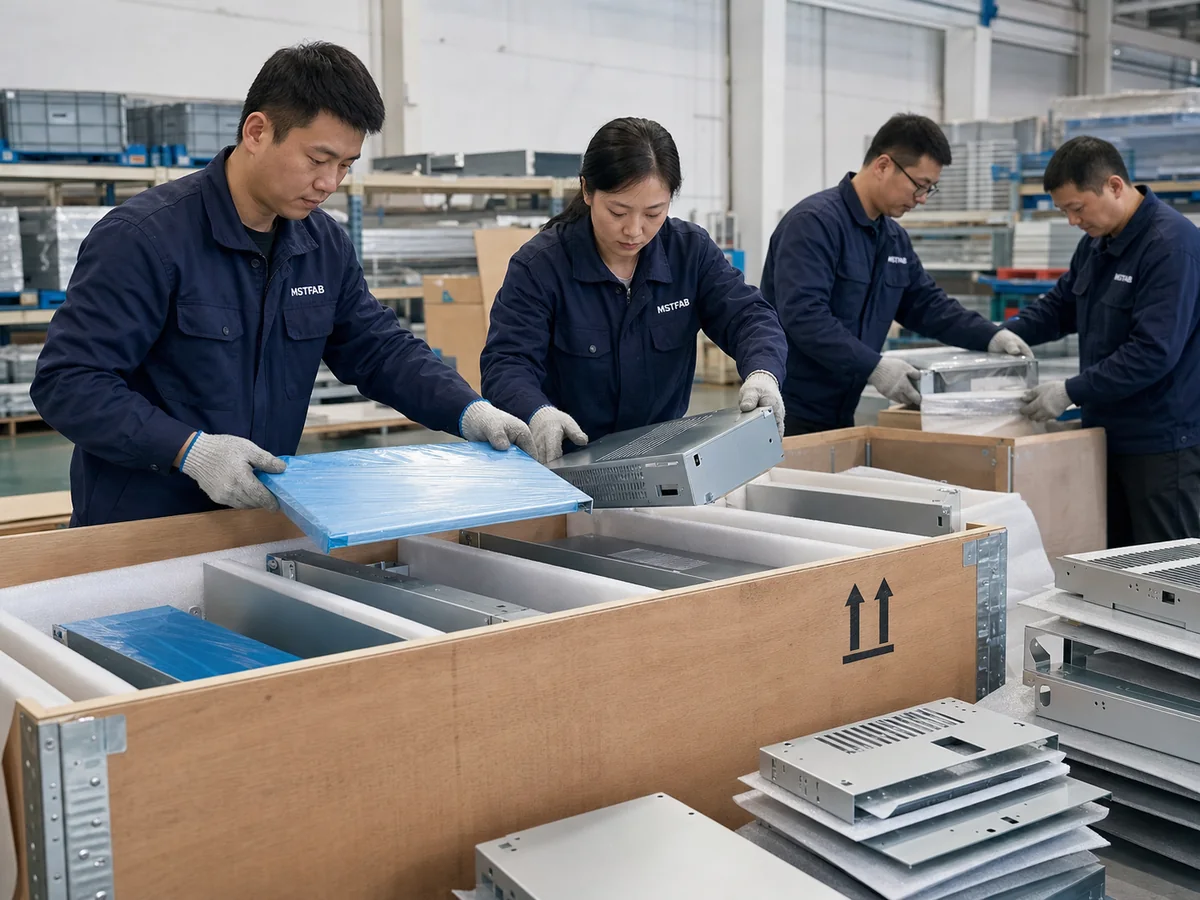
Export packaging for empty chassis, covers and panels
Thin flanges, visible powder-coated surfaces and brushed metal panels can be damaged after perfect fabrication. Packing plans may include protective film, foam separators, corner protection, individual bags, reinforced cartons or export crates depending on geometry, surface class and shipment method.
What to send for a useful quotation
Need the metalwork around your power electronics?
Send the chassis, cover, panel or bracket drawings. MSTFAB will review the fabrication route and quote the empty metal parts. Your team keeps control of the electronics, integration and certification.
Related manufacturing resources
Buyer questions about power electronics metalwork
Does MSTFAB supply completed power electronics equipment?
No. MSTFAB fabricates empty metal chassis, covers, panels, mounting plates, brackets and welded frames. The customer or its integrator installs and tests all electrical components.
What files should be included with an RFQ?
Send STEP or IGES for geometry plus a controlled PDF or DWG showing dimensions, tolerances, material, hardware, finish, masking, cosmetic surfaces and packing requirements.
Can MSTFAB install PEM nuts and studs?
Yes, drawing-defined PEM nuts, studs, stand-offs and related mechanical hardware can be installed. Provide the exact hardware specification and installation direction.
Can specified contact or gasket areas remain uncoated?
Yes, customer-defined threads, gasket faces and interface areas can be masked when they are clearly identified on the drawing. The customer remains responsible for validating electrical performance.
What inspection can be supplied?
Depending on the order, MSTFAB can provide agreed dimensional, flatness, squareness, hardware, coating and cosmetic inspection records. We do not provide electrical function or product certification tests.
Technical review: MSTFAB Manufacturing Engineering Team. Scope reviewed for drawing-based sheet metal chassis and enclosure fabrication. Last updated July 2026.
 WeChat Contact
 WhatsApp Me Directly