
By: Frank, General Manager
Technical Review: Michael Chen, Quality Manager
Last Updated: July 5, 2026
A metal panel may appear simple in a drawing. It may be a flat rectangle with a few holes, a display opening, a ventilation pattern, and several bends around the edge.
But that panel may also become the front face of a machine, the mounting surface for electrical equipment, an access door for service technicians, a visible customer-facing cover, or a critical interface for hinges, locks, gaskets, cables, and control components.
That is why buyers need a custom metal parts manufacturer for metal panels, not only a supplier that can cut flat sheet.
The real requirement is a controlled route from drawing to usable panel:
Material review → laser cutting → bending or forming → hardware insertion → welding or reinforcement if required → surface finishing → inspection → protective packing.
Guangzhou Maisituo Sheet Metal Manufacturing Co., Ltd., operating as MSTFAB, supports drawing-based metal panel fabrication for OEM equipment, including equipment panels, access panels, mounting panels, control panels, HMI panels, ventilation panels, cabinet doors, side panels, cover panels, cable-entry panels, chassis panels, and reinforced welded panel assemblies.
The objective is straightforward:
Deliver metal panels that fit the intended product, accept required hardware, maintain surface quality, and arrive ready for the next assembly stage.
For broader OEM component capability, visit custom sheet metal fabrication for OEM parts.
What Is a Custom Metal Panel?
A custom metal panel is a fabricated sheet metal component designed to cover, support, protect, mount, divide, ventilate, access, or control part of an OEM product.
A panel can be flat, bent, reinforced, welded, hardware-installed, coated, or supplied as part of a larger assembly.
Common custom metal panel types include equipment panels, front panels, rear panels, side panels, access panels, service covers, HMI panels, display panels, control panels, mounting panels, electrical cabinet panels, ventilation panels, cable-entry panels, door panels, chassis panels, machine covers, guard panels, reinforced panels, and welded panel assemblies.
A panel is not defined only by its outer dimensions. It may also require cutouts for displays or controls, mounting holes, threaded hardware, bend flanges, ventilation patterns, cable-entry openings, door hinges, lock cutouts, grounding areas, gasket surfaces, visible-finish requirements, scratch protection, assembly-fit verification, and export-ready packaging.
Metal Panels Are Different From Enclosures
A panel is usually an individual component. An enclosure is normally a larger protective system made from multiple panels, doors, mounting plates, hardware, seams, and sealing features.
- Metal Panel: Individual fabricated component. May be flat, bent, mounted, or removable. Focuses on cutouts, bends, stiffness, and appearance. Can be part of a cabinet, machine, or chassis. Often supplied as a component or kit.
- Metal Enclosure: Multi-part protective housing. Usually includes body, doors, seams, and internal space. Focuses on protection, access, sealing, and internal layout. Often supplied as a complete mechanical assembly.
For enclosure-focused projects, see custom sheet metal enclosure fabrication.
Why Metal Panels Need Careful Manufacturing Control
A panel can meet its basic outside dimensions and still fail in the final product.
For example, a display cutout may be too small after surface finishing. A mounting-hole pattern may not align with the electrical device. A vent pattern may interfere with an internal component. A hinge location may create an uneven door gap. A powder-coated thread may no longer accept a fastener. A grounding pad may be coated by mistake. A large panel may flex without return bends or reinforcement. A visible panel may arrive scratched because packing was not designed around the finish.
The right question is not only: “Can you make this panel?”
The better question is: “Can this panel be installed, wired around, opened, finished, inspected, packed, and repeated without creating problems for the next assembly stage?”
Common OEM Applications for Custom Metal Panels
Custom metal panels are used in many industrial and equipment applications. Typical uses include machine control panels, electrical cabinet panels, operator-interface panels, HMI and display surrounds, equipment access covers, telecom equipment panels, battery-system covers, cable-entry panels, ventilation covers, service doors, cabinet side panels, electronics chassis panels, medical-equipment covers, automation-equipment panels, EV charging equipment panels, industrial machine guards, and mounting panels for relays, drives, terminals, and controls.
Before fabrication begins, the buyer should clarify what the panel protects, supports, or covers, which side is visible to the end user, which holes control assembly fit, whether it needs access openings or grounding areas, and how it should be protected during shipping.
Start With a Complete Metal Panel RFQ
A DXF file may show the flat shape. It does not always define the finished panel requirement.
For an accurate quote, provide the STEP or STP file, PDF drawing with dimensions, DXF cutting file, material grade and thickness, required quantity, hole and slot requirements, display or HMI cutout details, bend angles, hardware list, welding requirements, finish requirements, color reference, grounding notes, and packaging expectations.
A STEP file helps show the finished panel geometry. A PDF drawing controls dimensions, tolerances, revision, materials, finish notes, and inspection expectations. Together, these files reduce assumptions before production begins.
DFM Review for Custom Metal Panels
DFM means Design for Manufacturing. For metal panels, DFM review helps identify risks before cutting, bending, welding, finishing, inspection, or packing begins.
A panel DFM review may consider material thickness, panel size, hole and slot positions, hole-to-bend clearance, display and HMI opening size, ventilation pattern layout, bend radius, flange length, tooling access, hardware installation space, grounding points, door hinges and lock locations, reinforcement requirements, and visible cosmetic faces.
For example, a large HMI cutout may weaken a panel and require a formed edge or reinforcement. A vent pattern may need adequate distance from a bend line. A PEM nut may need installation before powder coating. A grounding pad may need masking before finishing. A panel may need return bends to improve stiffness without increasing material thickness.
Material Options for Custom Metal Panels
The correct panel material depends on weight, stiffness, corrosion environment, finish requirement, cost, and final application.
- Carbon Steel: Equipment panels, machine covers, cabinet doors. Verify thickness and powder coating.
- Stainless Steel: Wash-down panels, visible covers, outdoor panels. Verify grade, brushing, and protective film.
- Aluminum: Lightweight panels, HMI panels, electronics covers. Verify alloy, temper, bend radius, and anodizing.
- Galvanized Steel: Cabinet panels, internal supports. Verify bend route and finish compatibility.
For material-specific sourcing pages, see:
- Custom metal parts manufacturer for carbon steel
- Custom metal parts manufacturer for stainless steel
- Custom metal parts manufacturer for aluminum
- Custom metal parts manufacturer for galvanized steel
Laser Cutting for Metal Panels
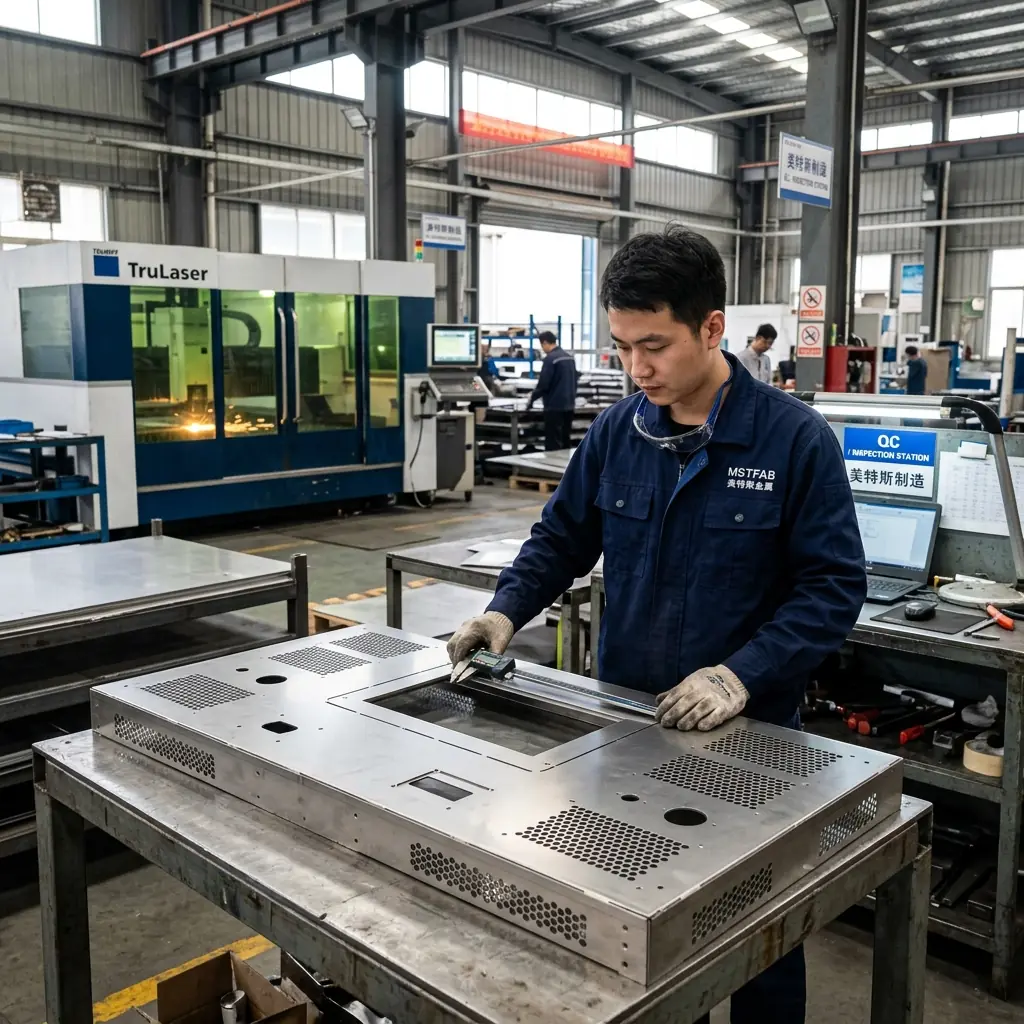
Laser cutting is commonly used to create the panel’s flat geometry before forming, hardware installation, finishing, and assembly.
Typical laser-cut panel features include outer profiles, mounting holes, adjustment slots, ventilation patterns, cable-entry openings, HMI cutouts, display openings, push-button holes, connector cutouts, handle cutouts, hinge locations, lock cutouts, hardware insertion holes, grounding holes, alignment tabs, and bend reliefs.
The cutting pattern should support the next production process. A slot can provide adjustment during final installation. A large cutout may require a formed edge for stiffness. A grounding hole may need masking after hardware installation.
CNC Bending Creates Panel Strength and Fit
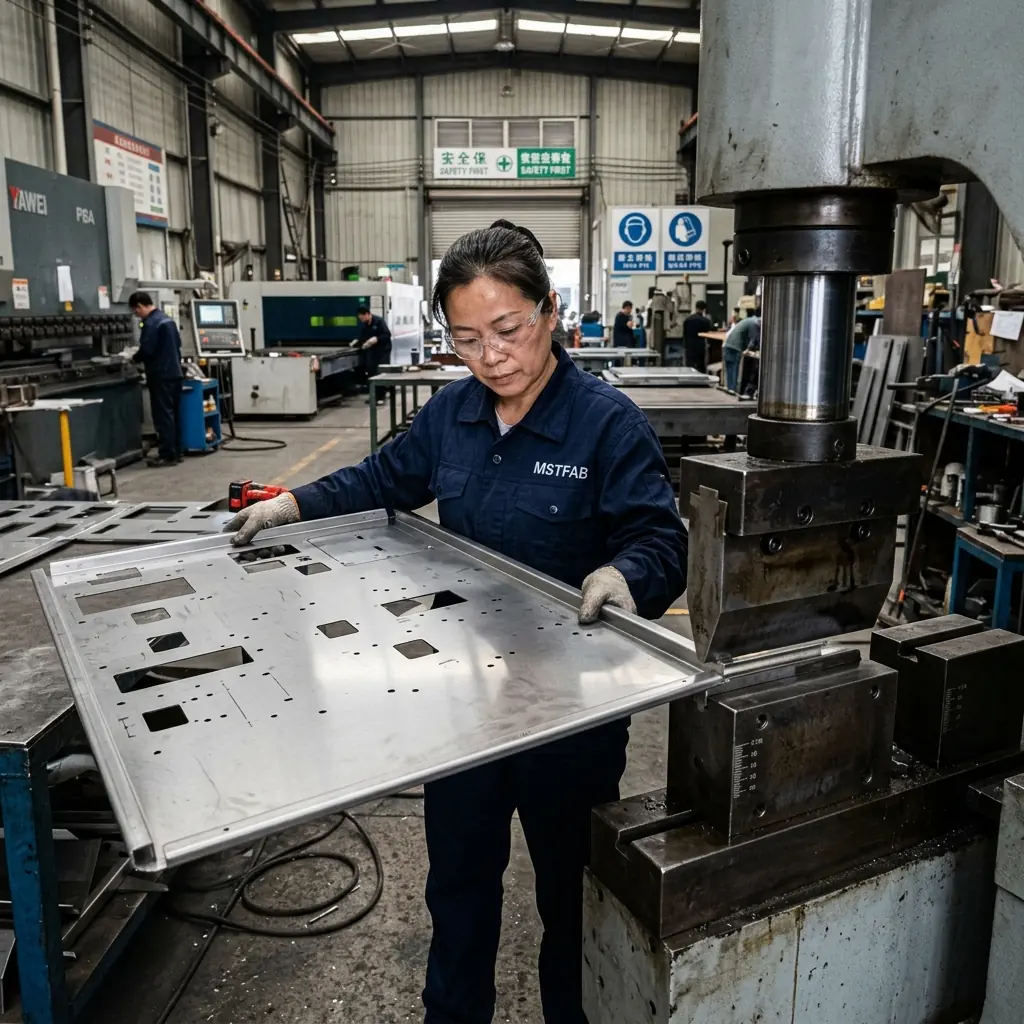
CNC bending can transform a flat panel into a door, cover, channel, tray, chassis panel, formed machine cover, access panel, or reinforced mounting component. Bending can improve panel stiffness, edge safety, mounting position, cable clearance, door fit, hardware access, surface appearance, and assembly alignment.
Springback is normal. Material may move slightly back toward its original shape after bending. That means a flat panel can be correct before forming while the finished panel still has a wrong angle, poor fit, or misaligned holes. Critical post-bend checks include panel width and height, bend angle, flange length, hole position after forming, flatness, squareness, and door gap.
Flatness and Stiffness Matter for Large Metal Panels
Large panels may flex, vibrate, bow, or deform under handling, mounted equipment weight, transport vibration, or repeated opening and closing. A panel does not always need thicker material to improve stiffness.
Useful design features may include return bends, folded edges, reinforcement flanges, formed channels, hat sections, welded gussets, reinforcement plates, internal stiffeners, and edge returns.
For example, a flat control panel may flex around a large display opening. A formed return edge can improve rigidity while also creating a safer edge and more controlled mounting geometry. The best design usually balances material thickness, weight, stiffness, cutout size, bend geometry, and cost.
Hardware, Threads and Grounding Features
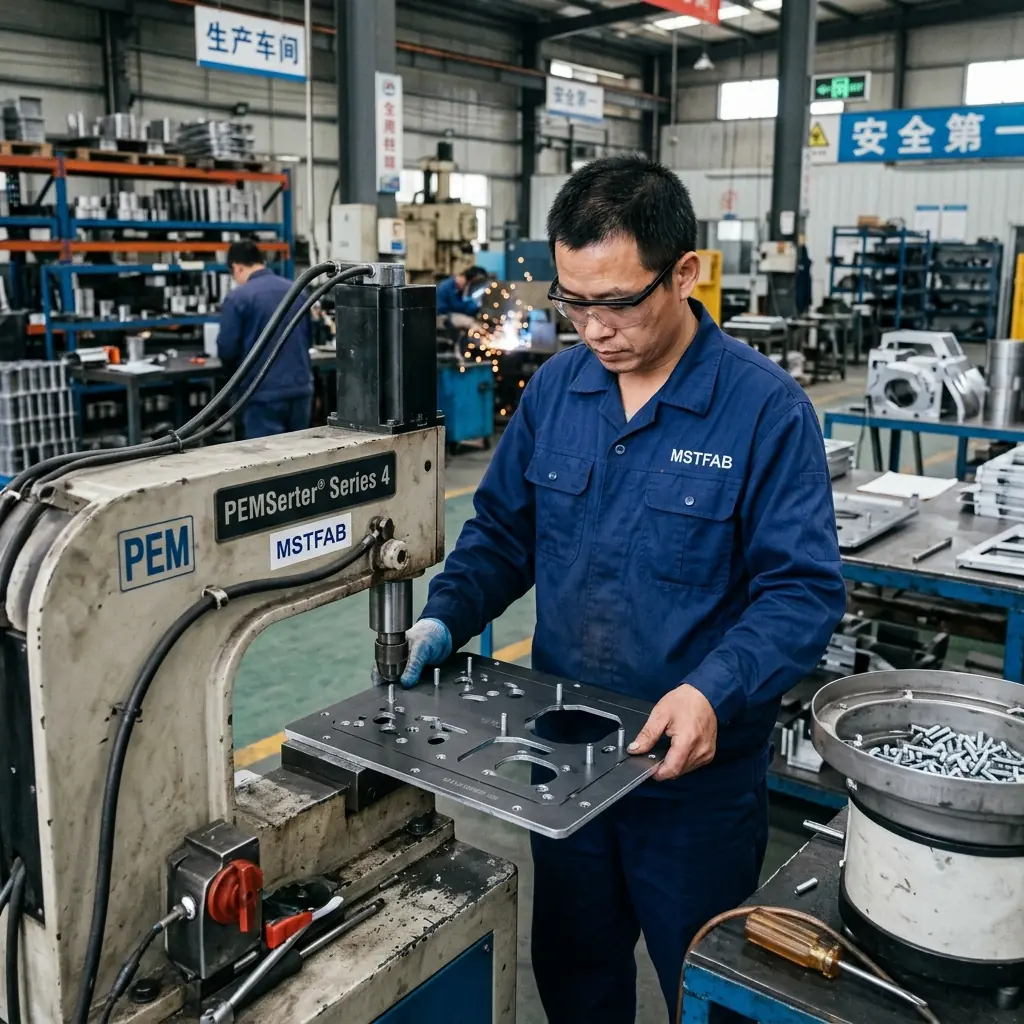
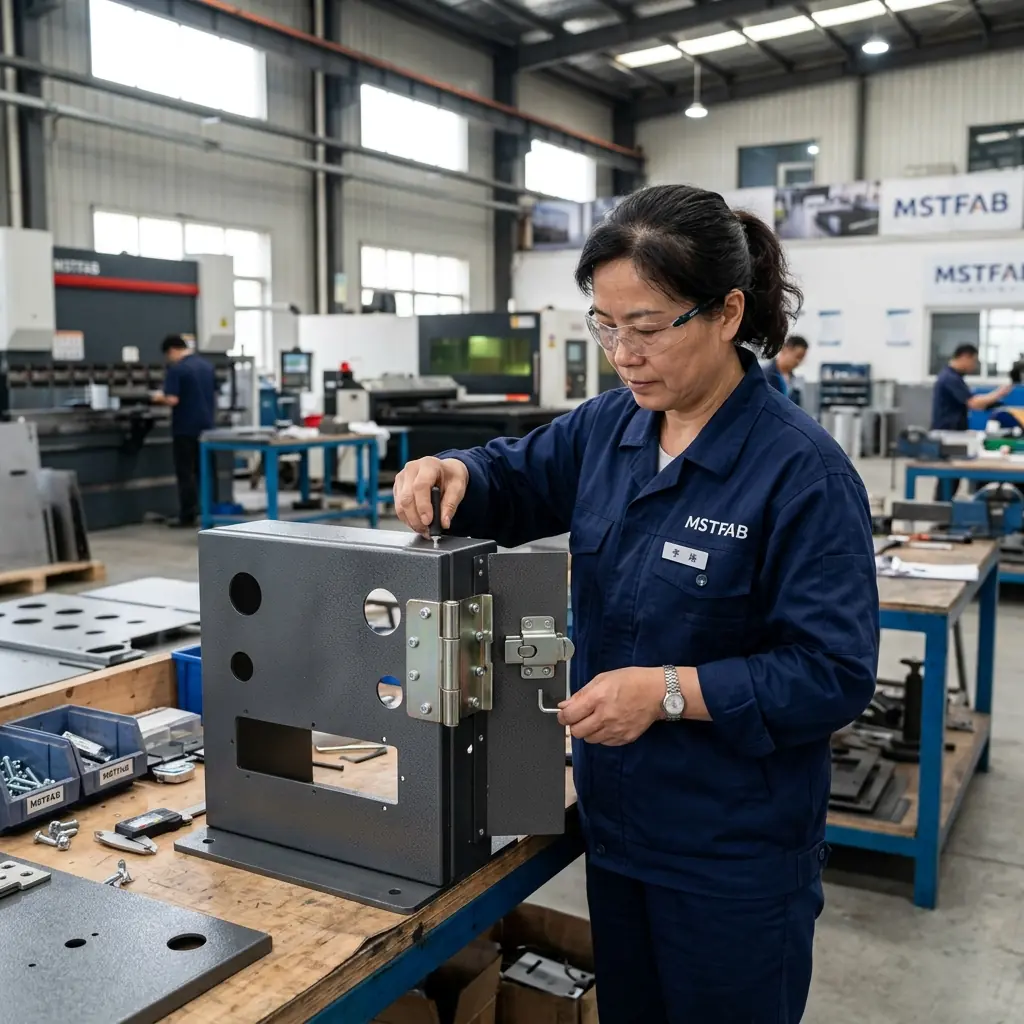
Many metal panels are incomplete until hardware is installed. Typical hardware requirements include PEM nuts, PEM studs, rivet nuts, weld nuts, tapped holes, hinges, handles, locks, latches, grounding studs, captive fasteners, and mounting clips.
Hardware should be planned before the panel is finished. PEM hardware may need installation before powder coating. A threaded hole may need masking before coating. A grounding point may need bare-metal contact. A hinge may need clearance after bending and finishing. A panel is not fully functional until the intended hardware can be installed and used in the final assembly.
Welding and Reinforced Panel Assemblies
Some panels are complete after cutting, bending, and finishing. Others need welding to form heavier covers, reinforced doors, structural panels, chassis sections, machine guards, or multi-part assemblies.
Welding adds strength. It also introduces heat that can affect panel flatness, squareness, hole position, door gaps, panel alignment, surface appearance, and final assembly fit. Before welding begins, clarify weld locations, structural or cosmetic requirements, grinding requirements, fixtures, flatness requirements, and critical post-weld dimensions.
Surface Finishing for Metal Panels
Surface finish affects more than appearance. It can affect corrosion resistance, visible quality, scratch resistance, grounding, thread function, gasket surfaces, door fit, and packaging requirements.
Common finish routes include powder coating, wet painting, anodizing, zinc-related protective finishes, passivation, brushed stainless steel, polished stainless steel, sandblasting, and protective film.
Before production, define finish type, color reference, texture, gloss level, visible faces, thread masking, grounding areas, and gasket surfaces. “Black finish” is not enough information. Matte black, textured black, glossy black, and anodized black produce very different visible results.
Inspection for Custom Metal Panels
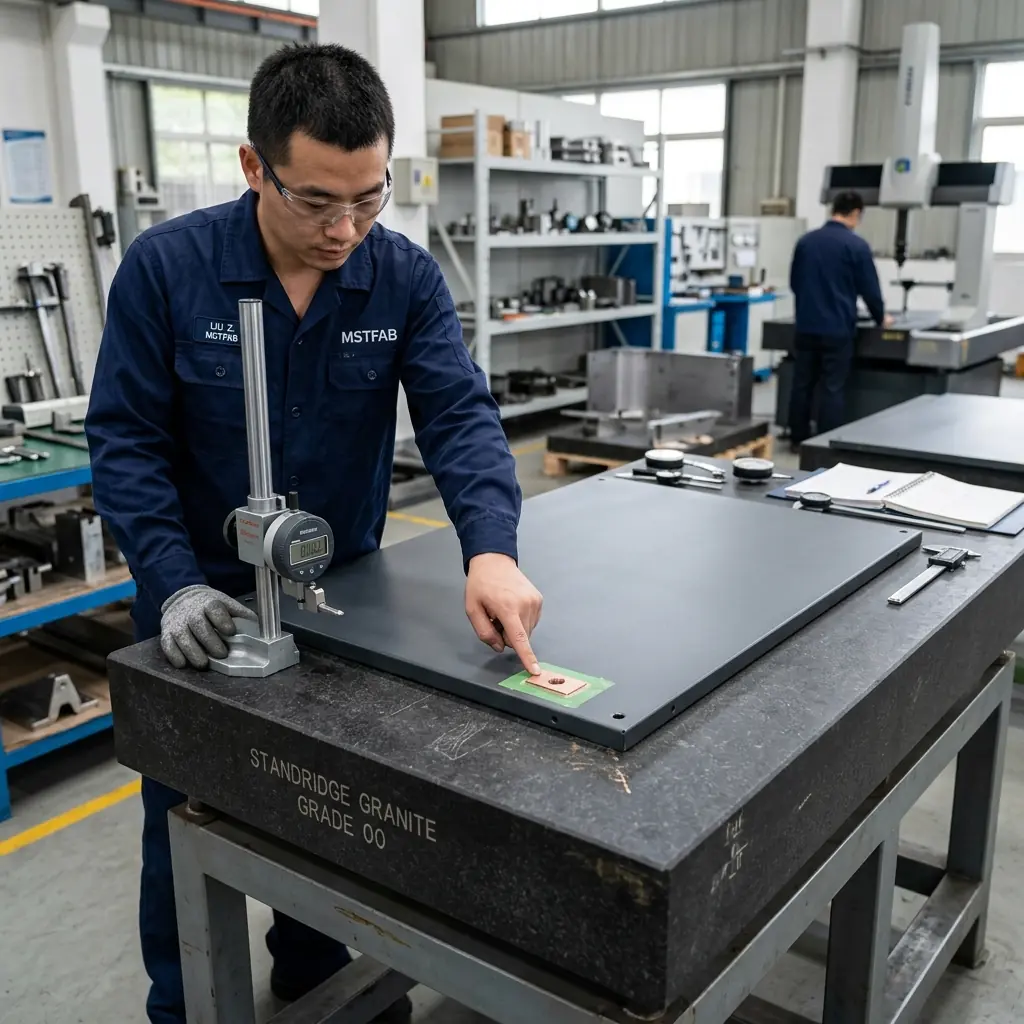
Inspection should focus on features that affect fit, function, visible quality, and delivery. Checks may include overall panel dimensions, hole and slot positions, HMI or display opening size, cable-entry opening location, bend angles, flange length, flatness, squareness, hardware placement, thread function, grounding area condition, surface finish, visible scratches, and door or cover fit.
Not every dimension needs the same inspection priority. A hidden internal edge may not matter as much as a display opening, a mounting-hole pattern, a hinge position, a gasket surface, a visible exterior face, or a grounding point.
Prototype, Low-Volume and Repeat Panel Production
Prototype Panels: Prototype panels help validate material selection, cutout dimensions, bend geometry, hardware fit, hinge and lock operation, panel stiffness, surface finish, and assembly clearance.
Low-Volume Panels: Low-volume production confirms repeatable bending, hardware installation, finish consistency, door or cover fit, inspection criteria, and packing layout.
Repeat Panel Production: Repeat orders should use controlled records for part number, material grade, cutting file, bend sequence, hardware list, welding requirements, finish standard, and packaging method. A repeat order should not depend on a previous photo or memory.
Packaging for Finished Metal Panels
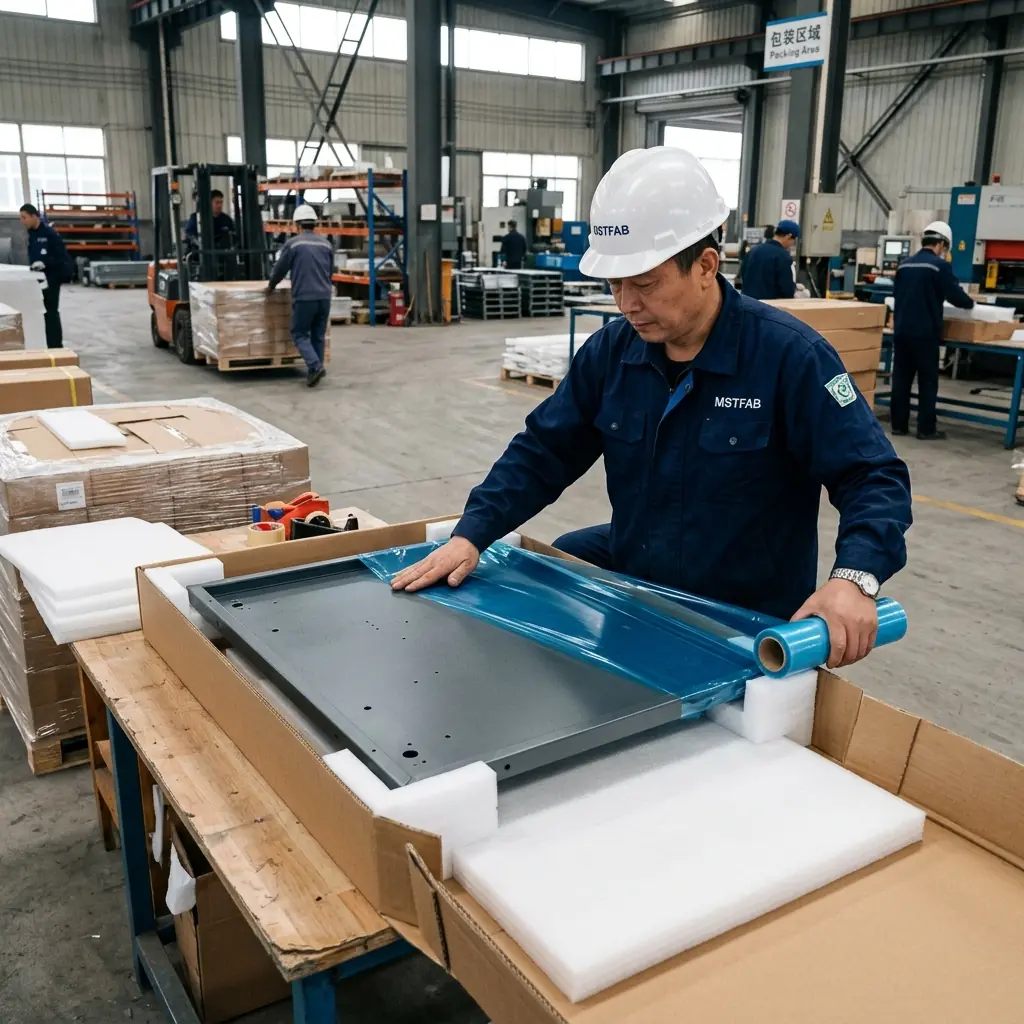
A panel can pass inspection and still arrive damaged if packing does not protect the finish, edges, cutouts, and hardware. This is especially important for powder-coated front panels, brushed stainless steel panels, anodized aluminum covers, HMI panels, display surrounds, and large access covers.
Packaging may include protective film, foam separation, edge guards, divider cartons, individual wrapping, labeled hardware bags, reinforced cartons, pallets, and wooden crates. A visible panel should not rub directly against another metal panel during transit. A display opening should not be damaged by loose hardware.
How to Compare Custom Metal Panel Manufacturers
Do not compare panel suppliers only by material price or cut area. Compare the complete finished requirement.
| What to Compare | What Buyers Should Confirm |
|---|---|
| Drawing Review | Material, cutouts, bends, critical dimensions and revision control |
| DFM Support | Hole-to-bend clearance, panel stiffness, hardware access and finish compatibility |
| Laser Cutting | Profiles, holes, HMI cutouts, vents, slots and edge condition |
| CNC Bending | Bend sequence, flange dimensions, flatness and panel fit |
| Hardware | PEM parts, threads, hinges, locks, latches and grounding features |
| Welding | Reinforcement, fixtures, distortion control and grinding |
| Surface Finish | Coating, anodizing, masking, visible-face standard and protection |
| Inspection | Cutout dimensions, hardware function, flatness, fit and finish review |
| Packaging | Film, foam, labels, cartons, pallets or crates |
| Repeat Orders | Revision control, approved finish and documented packing route |
A low quote may cover only cutting a flat panel. Another quote may include DFM review, bending, hardware, welding, finishing, inspection, labels, export packing, and repeat-order control. Those are not the same delivery scope.
For a service opening rather than a general flat panel, use the custom metal access panel RFQ and fit-up checklist to define the mating opening, hardware, service envelope, finish and trial-fit evidence.
Frequently Asked Questions
What types of metal panels can be custom manufactured?
Custom metal panels can include equipment panels, access panels, mounting panels, HMI panels, control panels, ventilation covers, cable-entry panels, cabinet doors, machine covers, chassis panels, and reinforced welded panel assemblies.
Can metal panels include HMI cutouts, displays and connector openings?
Yes. Custom panels can include display openings, HMI cutouts, connector openings, cable entries, push-button holes, ventilation patterns, and other drawing-based features.
Can custom metal panels include PEM hardware and threaded features?
Yes. PEM nuts, studs, rivet nuts, threaded inserts, grounding studs, hinges, locks, latches, and mounting clips can be included when clearly defined in the drawing and reviewed before fabrication.
Why is panel flatness important?
Flatness can affect appearance, gasket contact, door fit, display installation, mounted-equipment alignment, and customer perception. Large panels may need formed returns, reinforcements, or controlled support during packaging.
Request Custom Metal Panels
A reliable metal panel manufacturer should do more than cut holes into sheet metal.
They should help ensure the panel fits the intended equipment, supports the required hardware, remains stiff enough for use, accepts the correct finish, passes relevant checks, and arrives protected.
Send your drawings, material requirements, quantity, cutout details, bend notes, hardware list, finish requirement, assembly information, and packaging expectations through the MSTFAB quotation page.
Because the best metal panel does not only cover a product. It makes the product easier to assemble, operate, and service.
 WeChat Contact
 WhatsApp Me Directly