
Sheet metal fabrication works by turning flat metal sheets into useful custom parts through a controlled manufacturing process. Simple idea, many moving parts. A bracket may need only cutting, bending and coating. A serious enclosure may need drawing review, laser cutting, CNC bending, welding, grinding, hardware, powder coating, assembly, inspection and packaging. Metal is honest. If one step is lazy, the next step complains.
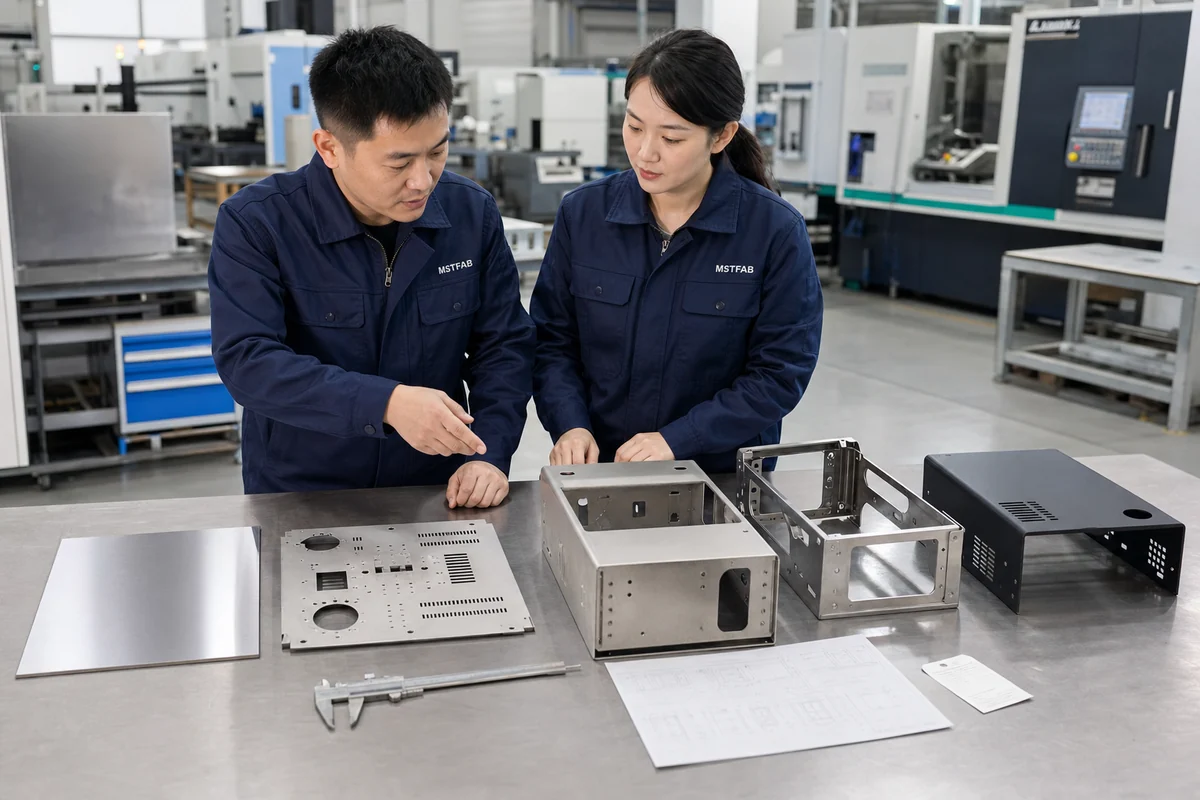
If you are still defining the basics, start with our companion guide: What Is Sheet Metal Fabrication?. That article explains the definition. This page explains the workflow: what happens after a buyer sends drawings and asks, “Can you make this part without turning my timeline into soup?”
Short Answer: Flat Sheet Goes In, Controlled Parts Come Out
A practical custom sheet metal fabrication process usually follows this route: drawing review, DFM, material selection, quotation, material preparation, laser cutting, deburring, CNC bending, welding or riveting, hardware insertion, finishing, powder coating, assembly, inspection, packaging and shipment.
How the Sheet Metal Fabrication Process Works
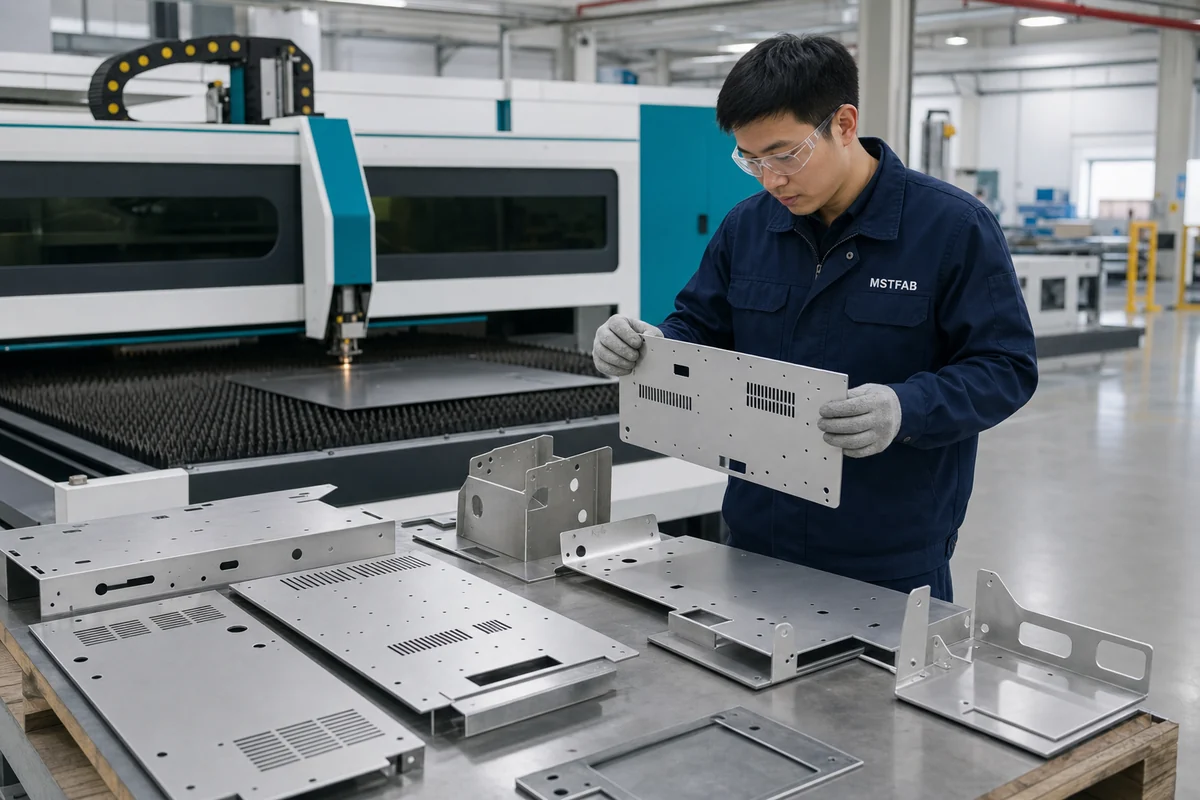

Why DFM Matters Before the First Sheet Is Cut
CAD has no burrs. CAD has no springback. CAD has no welding distortion. CAD has no powder coating thickness. Real production has all of them, plus deadlines. That is why a serious supplier reviews manufacturability before production starts.
DFM is especially important for custom sheet metal enclosure fabrication, electrical enclosures, machine covers, brackets, mounting plates and welded assemblies. It helps confirm which features are critical and which tolerances are accidentally expensive.
Trust Table: What Buyers Should Expect From a Fabrication Partner
| Buyer concern | What MSTFAB checks | Why it matters |
|---|---|---|
| Quote accuracy | Drawing revision, material, thickness, tolerance, finish, hardware, quantity and packaging scope | A low quote with missing scope becomes a surprise invoice later. |
| Manufacturability | Bend radius, flange length, hole-to-bend distance, welding access, coating clearance and assembly fit | Fixing a drawing is cheaper than fixing finished parts. |
| Dimensional repeatability | Laser cutting programs, bend sequence, fixtures, first article checks and critical dimensions | The 200th part should still fit like the approved sample. |
| Cosmetic finish | Visible surfaces, grinding standard, powder coating texture, RAL color, masking and packing protection | A part can be dimensionally correct and still look unacceptable. |
| Export risk | Labels, layer protection, foam, cartons, pallets, crates and packing photos where needed | International shipping is not gentle. Packaging must be part of the process. |
Prototype Fabrication vs Batch Production
Prototype fabrication tests the design. It answers questions like: does the part fit, do the bends work, does the door close, does hardware install, does coating affect clearance, and can the part move to production without heroics?
Batch production tests repeatability. The goal is not to make one impressive sample and then pray. The goal is stable process control, approved drawings, consistent inspection and packaging standards. If you are moving from sample to production, this prototype design review guide is useful.
What Usually Delays Sheet Metal Fabrication?
Most delays are not dramatic. They are small missing details that quietly steal days: no material grade, no sheet thickness, missing quantity, unclear surface finish, no hardware model, missing RAL color, no masking note, conflicting drawing revisions, unrealistic tolerances, or a STEP file that disagrees with the PDF drawing.
If your RFQ says “same as last time” but nobody can find last time, the project is already doing cardio.
Cost also changes with material, thickness, cutting length, hole count, bends, welding, finishing, inspection and packing. For budgeting, read How Much Does Sheet Metal Fabrication Cost?, the practical sheet metal fabrication cost factors guide, and how to reduce sheet metal fabrication cost without damaging quality.

What Should You Send Before Fabrication Starts?
- 3D STEP/STP file and 2D PDF drawing
- DXF or DWG file if flat cutting geometry is available
- Assembly drawing and BOM for multi-part projects
- Material grade, sheet thickness and quantity
- Critical dimensions and tolerance requirements
- Bending, welding, hardware and finish notes
- Powder coating color, gloss, texture and masking areas
- Prototype quantity, batch quantity and target lead time
- Packaging requirements and shipping destination if freight is needed
Good fabrication starts before the machine starts. The cleaner the drawing package, the faster the supplier can review risk, quote accurately and plan production. That is not glamorous. It is just how metal stays civilized.
Related MSTFAB Guides for the Same Buyer Journey
FAQ: How Sheet Metal Fabrication Works
What is the first step in sheet metal fabrication?
The first step is drawing review. The supplier checks STEP files, PDF drawings, material, thickness, tolerances, finish, quantity and manufacturing requirements before quoting or production.
What processes are used in sheet metal fabrication?
Common processes include laser cutting, CNC bending, deburring, welding, riveting, PEM hardware insertion, powder coating, surface finishing, mechanical assembly, inspection and packaging.
Why is DFM review important?
DFM review helps identify issues such as holes too close to bends, short flanges, welding distortion, coating clearance problems and assembly interference before production starts.
Does sheet metal fabrication include powder coating?
It can. Powder coating is commonly used for steel enclosures, cabinets, covers, guards and OEM parts. Buyers should specify color, texture, gloss, masking areas, grounding points and packaging protection.
Can MSTFAB review how my sheet metal part will be manufactured?
Yes. MSTFAB can review STEP/PDF drawings and explain the likely fabrication process, including cutting, bending, welding, finishing, assembly, inspection and packaging for custom sheet metal parts.
Ready to turn a drawing into real sheet metal parts?
Send MSTFAB your STEP, PDF, DXF or DWG files. We will review material, thickness, fabrication process, DFM risks, finish, inspection and packaging scope before preparing a practical quote.
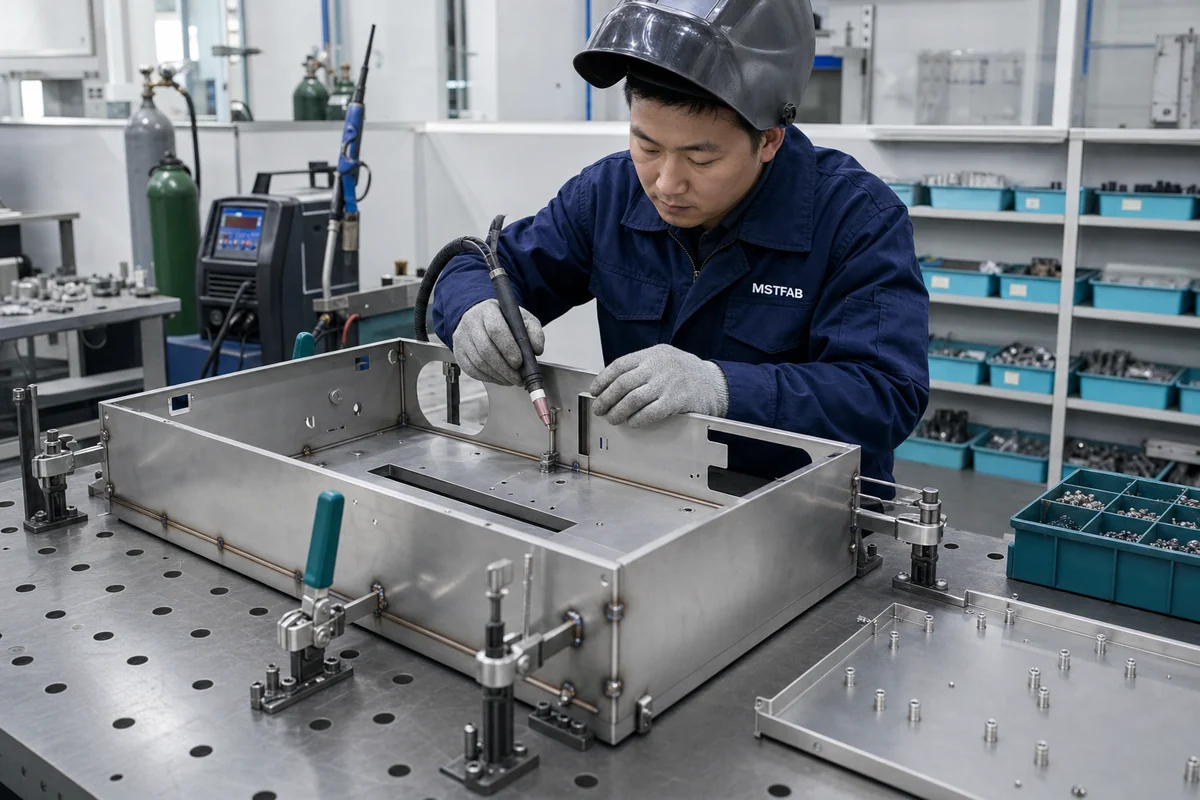
MSTFAB provides TIG and MIG sheet metal welding services for structural assemblies, cabinets, frames and OEM metal components.
 WeChat Contact
 WhatsApp Me Directly