
The Short Answer
The fastest way to reduce sheet metal fabrication cost without sacrificing quality is to optimize part geometry during pre-release DFM—before locking material gauges, bend radii, weld callouts, and cosmetic finish zones. Replacing full cosmetic seam welds with interlocking bent flanges, standardizing inside bend radii to match common V-dies, consolidating self-clinching hardware, and matching sheet thickness to real structural loads routinely lowers total landed unit cost by 15% to 35%.
Explore this guide
01 / Cost Drivers and DFM Review
Target the mechanical design decisions that lock in most of your unit price.
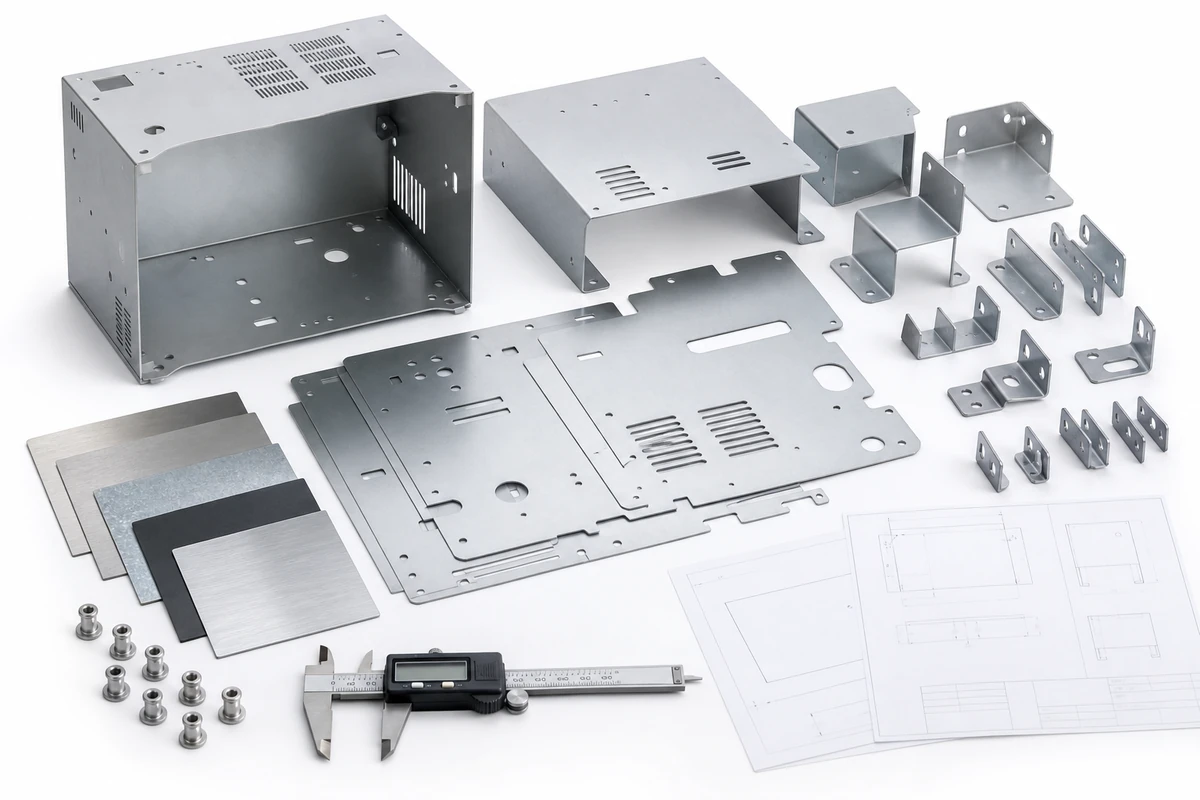
Negotiating a few cents off laser cutting machine minutes rarely moves the needle on an OEM enclosure BOM. In custom sheet metal fabrication, unit cost is governed by five structural drivers: raw sheet nesting yield, press brake setup count, fastener variety, manual TIG/MIG welding and grinding labor, and multi-stage surface finishing prep.
Running a structured DFM for sheet metal fabrication review before freezing your revision lets engineers eliminate non-functional cost drivers while preserving every mounting datum and structural load path.
Flat-pattern nesting yield
Oversized L-shaped or U-shaped unfolded blanks create massive skeleton scrap on standard 1250 x 2500 mm or 1500 x 3000 mm mill sheets. Splitting awkward geometries into two bolted or tab-welded sections often improves sheet utilization by 25%.
Setup and handling touches
Every time a panel moves to a different press brake V-die, countersinking spindle, or hardware press setup, labor cost accumulates. Standardizing radii and fastener codes keeps parts moving in a single setup.
Manual weld and grind hours
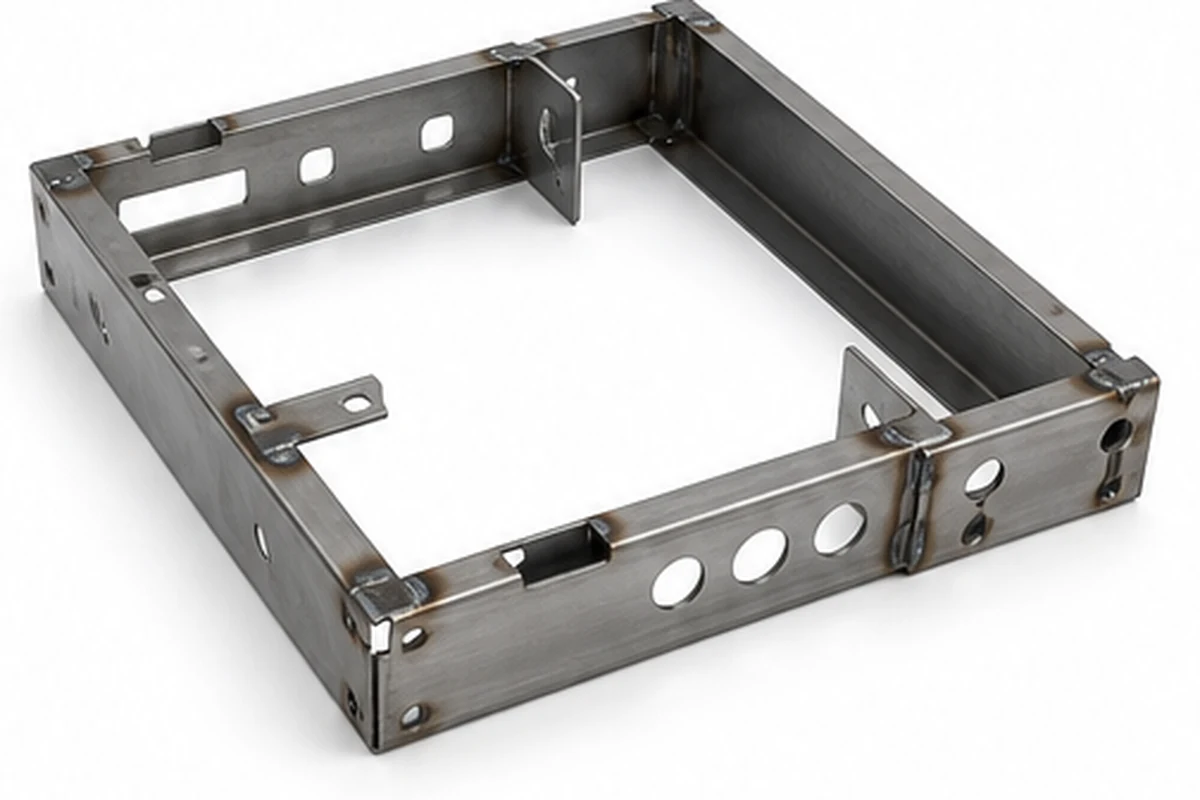
Calling out continuous full-penetration welds and mirror-smooth cosmetic grinding on hidden internal joints can double the fabrication labor of an enclosure frame without adding functional strength.
Prototype vs. production pricing rule: A prototype quote reflects one-off CAM programming, press-brake setup, and small-lot material purchasing. Always share your projected pilot and annual batch volumes so the supplier can quote nested sheet pricing and staged tooling.
02 / Material and Cutting Efficiency
Select functional sheet gauges and design profiles for high-speed cutting.
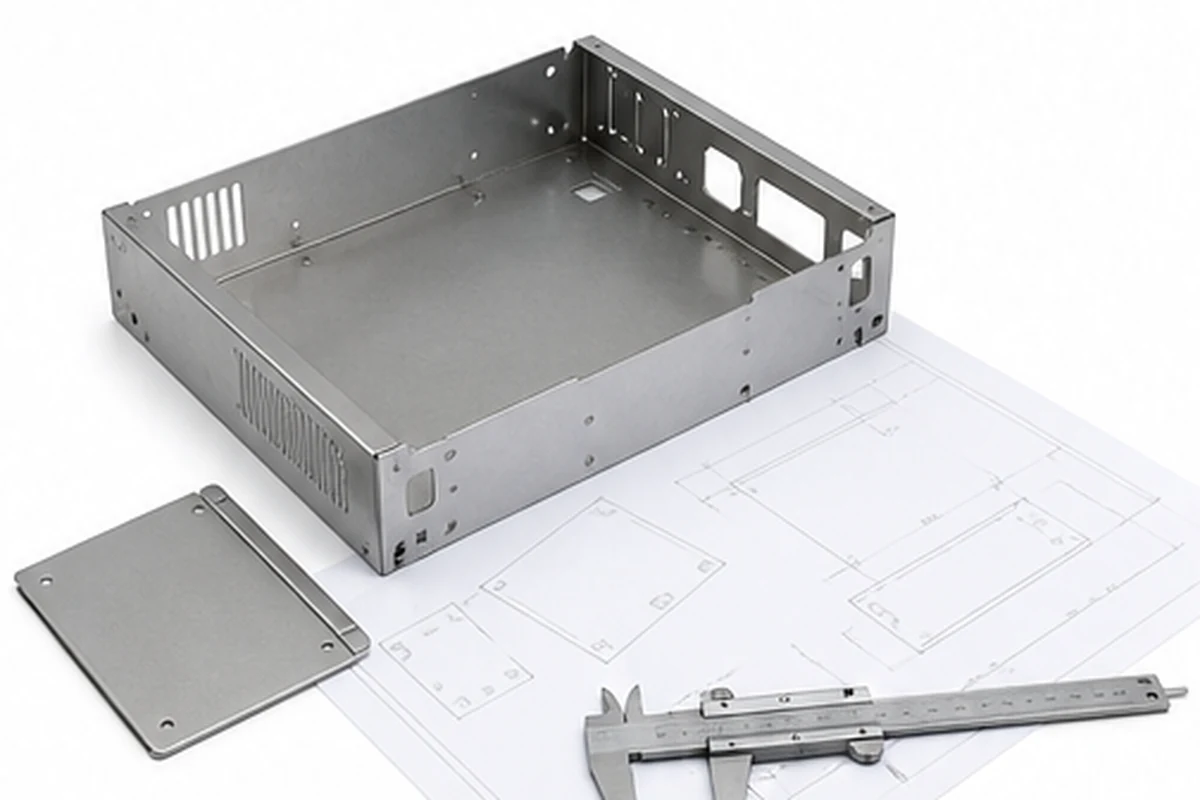
Over-specifying raw material grade or thickness inflates both material weight and downstream laser cutting and bending tonnage. At the same time, overly dense micro-perforations or tight-tolerance non-datum cutouts slow fiber laser travel speeds.
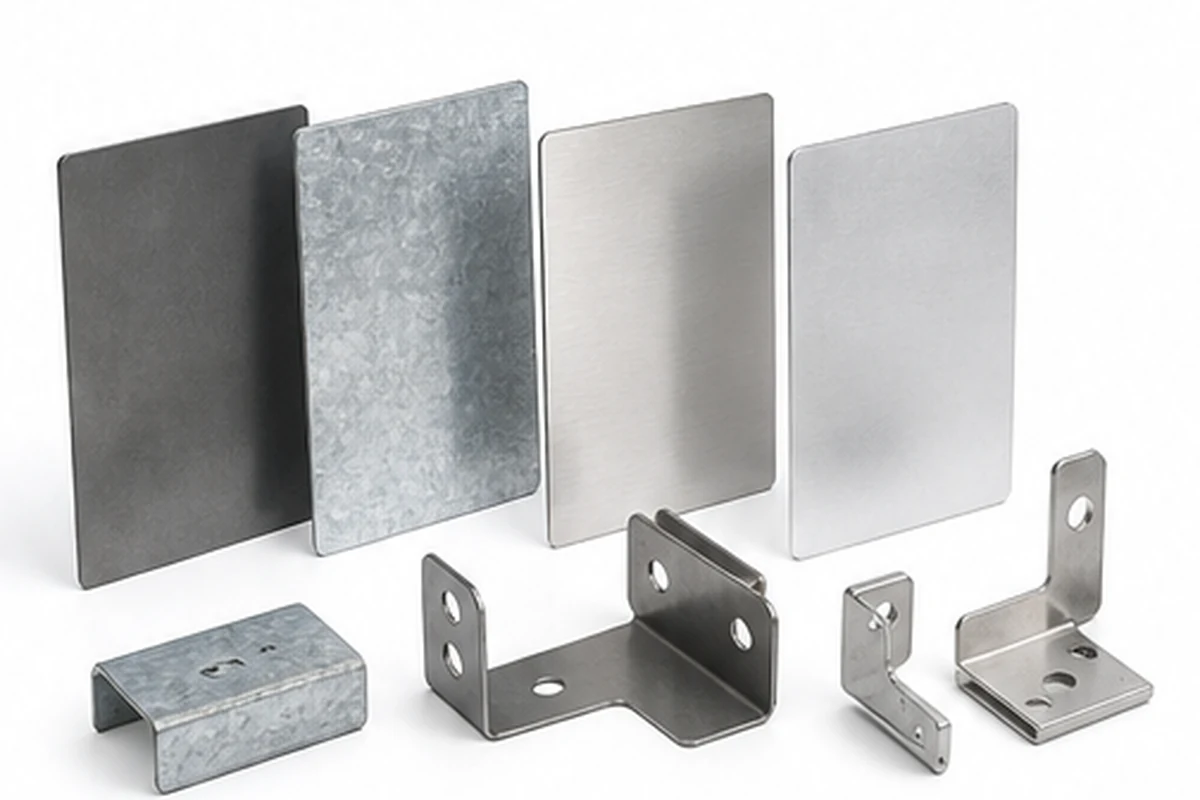
- Match alloy to the real environment: Use powder-coated cold-rolled steel (SPCC / CRS) for indoor cabinets, pre-galvanized steel (SGCC / DX51D+Z) for unpainted internal subplates and rails, and reserve 304/316L stainless or 5052-H32 aluminum for corrosive, outdoor, or weight-critical assemblies.
- Stiffen thin sheet with formed geometry: Instead of jumping from 1.5 mm to 2.5 mm sheet thickness across an entire enclosure door, add return hems, hat-section stiffeners, or formed ribs to increase rigidity while cutting raw material weight.
- Optimize ventilation and cutout patterns: Hundreds of tiny laser-cut holes add thousands of pierces and thermal buildup. Where airflow and finger-guard rules allow, switch to wider stadium slots or turret-punched louver arrays.
Our laser cutting services pair multi-part sheet nesting with calibrated nitrogen and oxygen assist-gas tables to maximize sheet yield and minimize secondary deburring.
03 / Bending and Hardware Standardization
Design for single-setup CNC press brake forming and consolidated fasteners.
Complex bent covers and chassis rails become expensive when flange geometry forces operators to tear down press brake tooling mid-run or when holes placed too close to bend lines deform and require secondary reaming.
- Keep inside bend radii consistent (typically 1.0x material thickness for mild steel and 5052-H32 aluminum) across all bends on the same part so it forms in one V-die setup.
- Maintain proper minimum flange lengths (at least 4x material thickness plus bend radius) and keep holes at least 2.5x thickness plus radius away from bend lines to avoid tear-out or flare.
- Consolidate self-clinching nuts, standoffs, and studs to two or three thread sizes (for example M4 and M6) across the BOM to eliminate repetitive PEM press bowl and anvil changeovers.
Aligning flange geometry and hardware callouts with standard press-brake tooling eliminates custom die charges and speeds up batch throughput.
04 / Welding and Surface Finish Control
Use welding only where structural or sealing duty demands it, and zone your finishes.
Manual welding, weld-spatter removal, angle-grinder blending, and cosmetic putty/sanding are often the single largest labor cost in custom enclosure fabrication. Similarly, applying Class-A cosmetic powder coat specs and complex masking to unseen internal brackets drives up finishing reject rates.
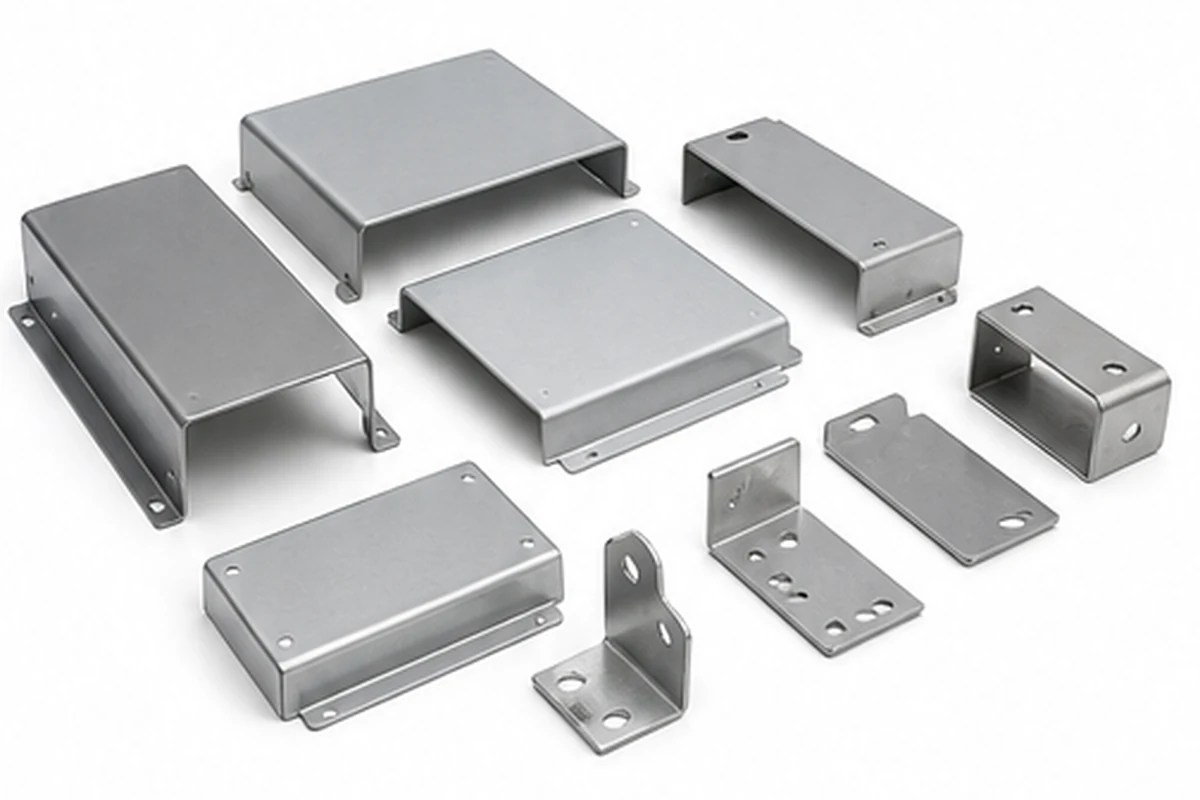
- Replace corner welds with bent return flanges: On indoor chassis and ventilated covers that do not require waterproof ingress sealing, bent overlapping flanges secured with PEM nuts or structural rivets eliminate welding and thermal distortion altogether.
- Use tab-and-slot self-fixturing joints: Laser-cut interlocking tabs and slots allow welders to assemble frames rapidly without custom clamping jigs, using stitch welds on internal structural joints while reserving continuous TIG seam welding for exposed weatherproof corners.
- Define A/B cosmetic finish zones and stock colors: Specify standard stocked RAL textures (such as RAL 7035 or RAL 9005 fine texture, which naturally hides minor substrate grain) and distinguish exterior A-surfaces from internal B-surfaces.
- Leave internal subplates unpainted conductive metal: Fabricating internal component mounting plates from pre-galvanized steel (SGCC) or alodined aluminum avoids powder coating and eliminates tedious masking around grounding studs.
Review our welding services and surface treatment options to balance structural integrity, corrosion protection, and finishing cost.
05 / Buyer Cost-Control Matrix
Verify five cost-saving engineering checks before releasing your RFQ.
Use this engineering matrix during pre-RFQ design reviews to capture real fabrication savings without compromising mechanical fit or durability.
06 / Inspection Handoff
Never cut quality control to chase a lower unit price.
The most expensive sheet metal part is a low-bid batch that arrives with twisted weld frames, paint-filled threads, or shifted mounting holes that halt your assembly line. True cost reduction removes wasted machine time and scrap—never inspection rigor.
We verify every cost-optimized design through documented First Article Inspection (FAI) on prototype and pilot lots, checking flat laser blanks, CNC press-brake flange angles, PEM fastener push-out resistance, and powder-coat adhesion before releasing volume production.
Operating under ISO 9001, IATF 16949, and ISO 14001 management frameworks, our quality team provides mill test certificates and dimensional inspection reports so your incoming QC process stays fast and predictable.
Compare prototype vs. production sheet metal cost structures →
07 / Packing and Release
Protect unit-cost savings with knock-down geometry and engineered export crating.
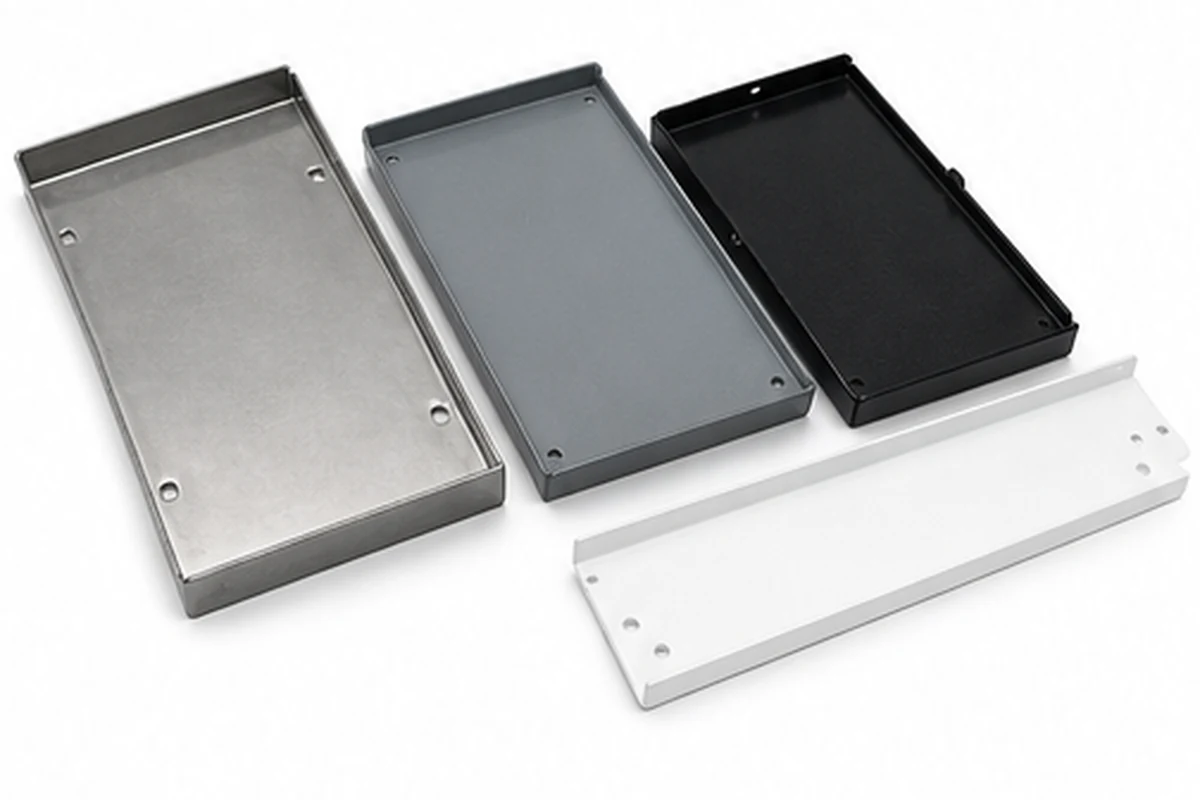
Shipping fully welded, empty metal cabinets halfway around the world means paying ocean or air freight on cubic meters of empty air. Whenever your assembly workflow allows, designing modular bolt-together or flat-pack enclosure kits dramatically lowers packaging volume and freight cost per unit.
Whether shipping flat-packed panels or fully welded shells, you can submit your files via our online quotation upload page to review both part fabrication and palletized export crating density.
Manufacturing scope: MSTFAB manufactures custom build-to-print sheet metal parts, brackets, chassis, and empty enclosure shells to customer drawings under ISO 9001, IATF 16949, and ISO 14001 management systems. Final electrical integration, powered testing, and end-product regulatory certification belong to the OEM.
08 / Ready-to-Review RFQ
Include eight engineering details to unlock a cost-optimized fabrication quote.
- 3D STEP and 1:1 DXF filesInclude native 3D STEP models for formed/welded assemblies so we can optimize flat patterns for our exact press brake dies.
- 2D PDF drawings with CTQ datumsHighlight only true critical-to-quality (CTQ) hole positions and mating interfaces; leave non-critical features at standard ISO 2768-m tolerances.
- Material grade and acceptable alternatesState primary material spec (e.g., SPCC, SGCC, 5052-H32, 304 SS) and note if commercial domestic equivalents are permitted.
- Weld and grinding scope notesClarify which seams require water/dust sealing vs. structural stitch welding, and which corners need flush cosmetic grinding.
- Consolidated hardware listProvide a clear table of self-clinching nuts, studs, and standoffs with thread sizes and installation side.
- Cosmetic A/B surface zoningMark exterior visible faces separately from interior surfaces and specify RAL color, gloss, and texture.
- Prototype, pilot, and annual volumesShare both initial sample quantity and recurring batch release sizes so setup and nesting savings are reflected.
- Openness to DFM cost-reduction proposalsLet our engineers know if minor flange, radius, or tab-and-slot adjustments are welcome to reduce labor and scrap.
Sharing complete 3D/2D files along with target batch volumes allows our engineering team to spot immediate DFM savings before cutting a single sheet.
Sheet metal fabrication cost reduction questions from OEM buyers
What is the fastest way to reduce sheet metal fabrication cost on an existing enclosure?
Request a pre-production DFM review focusing on three high-labor areas: replacing continuous cosmetic corner welds with bent flanges or stitch welds where weather sealing is not required, standardizing all inside bend radii to match a single press-brake V-die setup, and switching unpainted internal mounting plates to pre-galvanized steel (SGCC).
Should we always choose thinner sheet metal to save cost?
Not blindly. While moving from 2.0 mm to 1.5 mm reduces raw material weight and cutting time, going too thin on wide flat panels can cause oil-canning or welding warpage that requires expensive straightening labor. Instead, combine a slightly thinner gauge with formed return flanges or stiffening ribs.
Can DFM changes reduce fabrication cost without altering our PCB or component mounting holes?
Yes. Effective sheet metal DFM keeps all internal PCB standoffs, DIN-rail hole patterns, and external mounting footprints 100% unchanged while optimizing corner joints, bend reliefs, tab-and-slot weld locators, and unfolded blank nesting.
Why is there such a large unit-price gap between prototype and batch production quotes?
In a 2-piece prototype run, engineering CAM programming, laser setup, press-brake tooling staging, weld fixture setup, and powder-coat line purging are amortized over just two parts. In a 100-piece or 500-piece batch, those setup costs spread thin and multi-part full-sheet nesting significantly reduces raw material scrap.
How does powder coat texture affect enclosure manufacturing cost?
Smooth high-gloss finishes magnify every tiny metal grain line or spot-weld dimple, requiring extensive manual puttying, sanding, and rework. Specifying a fine-texture or wrinkle polyester powder coat hides minor substrate marks naturally and lowers finishing reject rates.
What files should we send for a sheet metal cost-reduction review?
Send your 3D STEP assembly model, 2D PDF drawings showing critical tolerances and finish zones, a bill of materials (BOM), and your target prototype and batch order quantities.
Technical references
Reference these international manufacturing standards when defining general sheet metal tolerances, thermal cutting edge classes, and quality management requirements.
- ISO 2768-1 / 2768-2 — General Tolerances for Linear, Angular and Geometrical Dimensions without Individual Tolerance Indications
- ISO 9013 — Thermal Cutting: Classification of Thermal Cuts, Geometrical Product Specification and Quality Tolerances
- ISO 9001 — Quality Management Systems Requirements for Manufacturing Traceability
Upload your enclosure drawings for a practical DFM cost-reduction review.
Share your STEP models, PDF drawings, and batch quantities. MSTFAB engineers will identify high-cost features and return an itemized quote with actionable DFM recommendations.
Have a question first? caroline@mstfab.com
 WeChat Contact
 WhatsApp Me Directly