
Custom Machine Guards Built for Real Farm Equipment
A machine guard on farm equipment has one clear job: Protect people, protect components, and stay out of the way of maintenance. Simple idea. Not always simple to manufacture.
Farm equipment machine guards work around belts, chains, shafts, motors, PTO areas, sensors, cables, hydraulic lines, moving parts, crop residue, dust, mud, vibration, and outdoor weather.
If the guard is poorly fabricated, the problems show up fast. The holes do not align. The guard rubs against a moving belt. The edge is sharp enough to cut a hose. The cover rattles under vibration. The welded frame pulls out of square. The powder coating chips during shipping. The maintenance team removes the guard and quietly never puts it back.
That is not a successful machine guard. That is a safety part pretending to be finished.
MSTFAB manufactures custom machine guards for farm equipment from customer STEP files, 2D PDF drawings, DXF files, samples, or project requirements. Our fabrication support can include DFM review, laser cutting, CNC bending, welding, grinding, deburring, powder coating, stainless steel finishing, inspection, prototype support, batch production, and export-ready packaging.
What Are Farm Equipment Machine Guards?
Farm equipment machine guards are protective metal covers, shields, panels, and structures used to protect operators and machinery from moving parts, impact, crop residue, dust, mud, and field damage.
Common custom machine guards include:
- Belt guards and chain guards
- PTO guards and motor guards
- Drive shaft guards and gearbox covers
- Hydraulic line guards and cable protection covers
- Sensor protection covers
- Sprayer guards and harvester guards
- Seeder, planter, and tractor protective covers
- Irrigation equipment guards
- Grain handling equipment guards
- Access covers and service panels
- Powder-coated machinery guards
- Stainless steel agricultural guards
A good guard should protect the machine without making service work painful. Because a guard that needs three tools, two mechanics, and one bad mood to remove will eventually become “temporarily removed.” And we all know how long “temporarily” can last.
Why Custom Guards Matter for Agricultural Equipment
Standard guards may work for simple machines. OEM farm equipment usually needs guards designed around real equipment geometry, mounting points, service access, safety zones, moving part clearance, vibration, and outdoor exposure.
Custom machine guard fabrication allows buyers to control guard shape and size, material grade, sheet thickness, mounting hole position, bend angles, moving part clearance, edge safety, welded reinforcement, and powder coating color.
For farm equipment, “almost fits” is not good enough. A belt guard that almost fits may rub. A PTO guard that almost protects is not a guard.
The Real Cost of Poor Machine Guards
A low unit price can look good during sourcing. Then the parts arrive.
| Assembly Defect | Low-Cost Job Shop Reality | MSTFAB (DFM-Led OEM Partner) |
|---|---|---|
| Sharp Edges Damage Cables | Skipped deburring causes slow wear on hoses, wires, and hands. | Edges are smoothed and chamfered to protect lines and operators. |
| Guards Rattle & Rub | Ignored tolerances cause guards to hit moving belts or chains. | Precise CNC bending and DFM clearance review ensure quiet, safe operation. |
| Rust Starts Fast | Thin, cheap paint peels at the cut edges after one rain. | Thick, outdoor-grade powder coating over clean metal prevents early rust. |
| Drilling on the Assembly Line | Mechanics waste hours forcing misaligned holes to fit. | Laser-cut holes verified by inspection drop perfectly onto the machine. |
That is not cost saving. That is moving cost from the supplier’s quote to your assembly floor. A reliable farm equipment guard manufacturer should help reduce these risks before production begins through drawing review, DFM feedback, controlled fabrication, inspection, and export packaging.
Designed Around Protection, Clearance, and Maintenance
A machine guard must protect without creating new problems. Before fabrication, the design should consider what component the guard protects, required clearance from moving belts or chains, mounting hole locations, service access requirements, vibration exposure, edge safety, and corrosion exposure.
A guard that protects the component but blocks maintenance is only half successful. A guard that looks good but rattles is annoying. A guard that touches the belt, chain, shaft, or motor is not a guard. It is a problem with powder coating.
DFM Review Before Cutting Metal
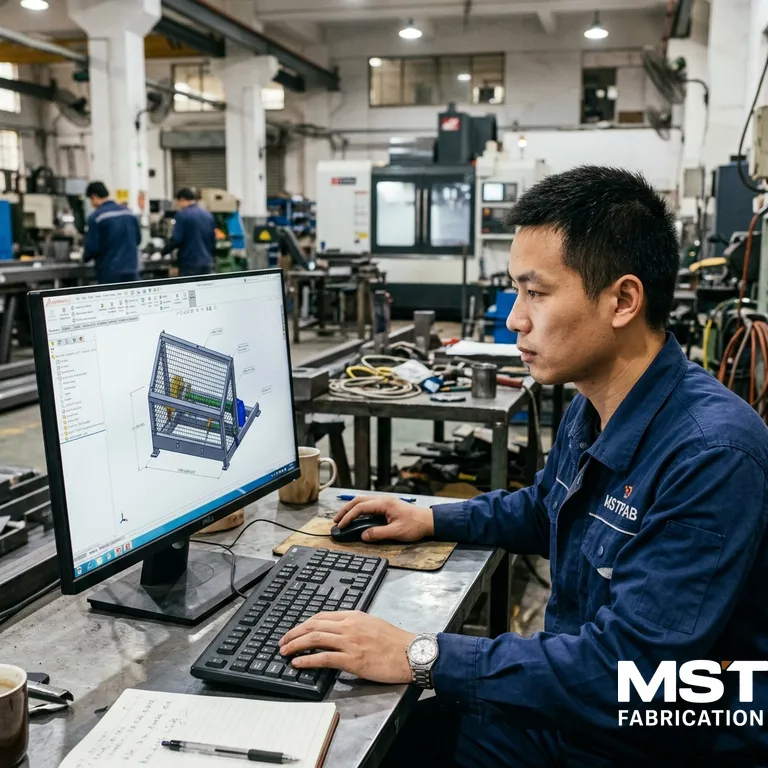
DFM means Design for Manufacturability. For custom machine guards, DFM review helps identify risks before cutting, bending, welding, coating, and packing. A practical DFM review may check material suitability, sheet thickness, bend radius, hole-to-bend clearance, and mounting hole accuracy.
This matters because guards often look simple but work in harsh conditions. A thin guard may vibrate and rattle. A sharp edge may damage cables. DFM review is not extra paperwork. It is how you stop the field from becoming your test lab.
Material Options for Custom Machine Guards
- Carbon Steel: Commonly used for heavy-duty belt guards, chain guards, PTO guards, and protective shields. Needs proper surface protection. Raw steel and farm weather are not friends.
- Cold-Rolled Steel: Useful for indoor or protected equipment guards and powder-coated parts.
- Galvanized Steel: Provides better corrosion resistance. Cut edges, drilled holes, and welded zones still need protection.
- Stainless Steel: Used when corrosion resistance, washdown performance, or chemical exposure matters.
- Aluminum: Lightweight and naturally corrosion-resistant. Aluminum is not soft steel. Treating it like steel is how nice CAD becomes annoying samples.
Sheet Thickness and Guard Strength
The right thickness depends on the guard’s job. Thicker is not always smarter. Sometimes a smarter design works better: add a flange, use ribs or returns, improve bend structure, or move holes away from bend lines.
Good guard design puts strength where it is actually needed. Hope is not a load-bearing feature. But unnecessary heavy steel everywhere is not smart sourcing either.
Laser Cutting, CNC Bending, and Welding
Laser Cutting
Laser cutting is used for guard panels, mounting holes, ventilation slots, and custom shapes. A 1 mm error looks much bigger when the guard does not align with the machine.
CNC Bending
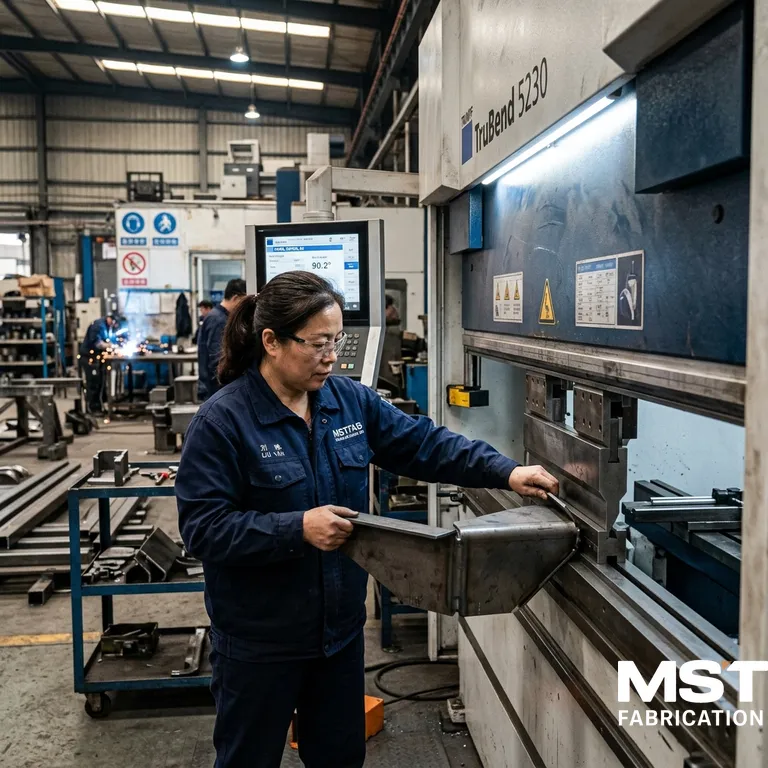
CNC bending forms flat metal into guards, covers, and shields. Poor bending can cause poor fit and rattling guards. Good bending looks boring. That is exactly why engineers like it.
Welding
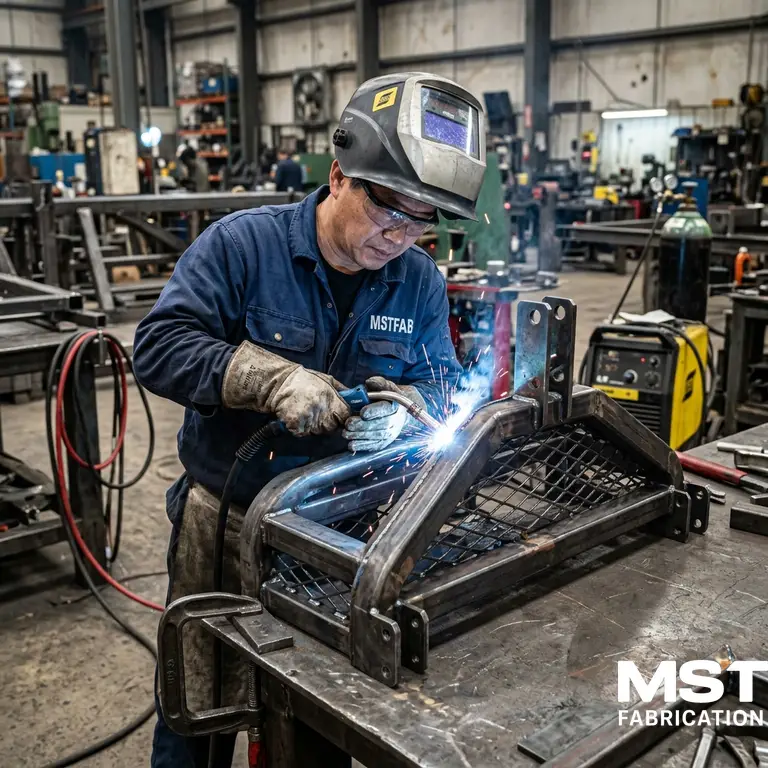
Some farm equipment machine guards require welding for frames, brackets, supports, or multi-piece assemblies. Welding adds heat. Heat moves metal. A farm equipment machine guard should not come out of welding looking like a banana. Unless the machine is designed for banana farms.
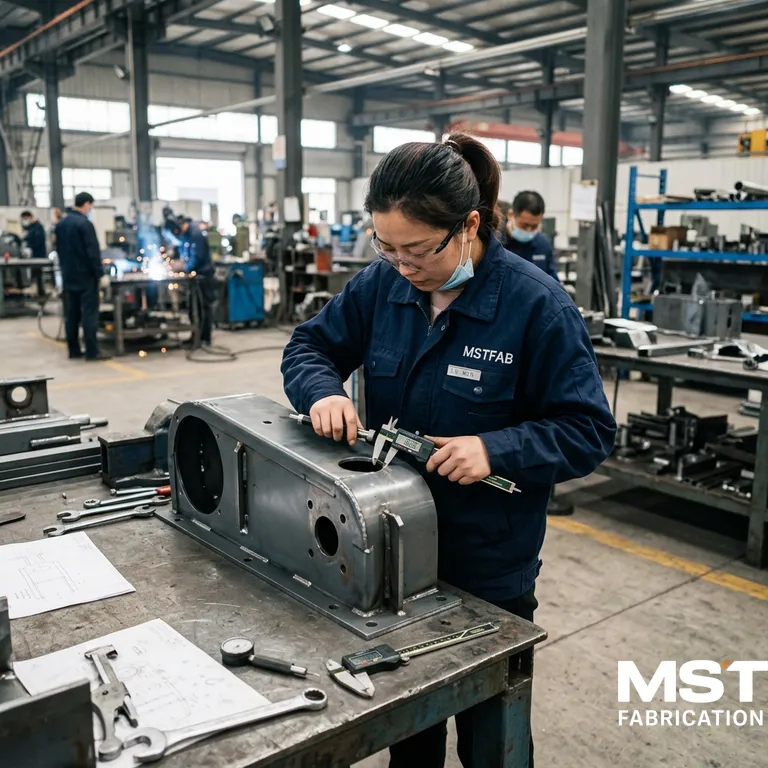
Vibration, Rattle, and Edge Safety
Farm machinery vibrates. A lot. Guards mounted on tractors, harvesters, seeders, and field machines may experience continuous vibration, shock loads, and crop impact. Vibration does not care about appearance. It cares about weak points. And it will find them.
Custom machine guards are often handled during assembly and maintenance. Sharp edges create problems. A sharp edge is not a small defect. It is a small defect with a talent for cutting hands, cables, hoses, and customer trust. A machine guard should feel like a finished safety part. Not like a metal trap with mounting holes.
Powder Coating and Corrosion Protection
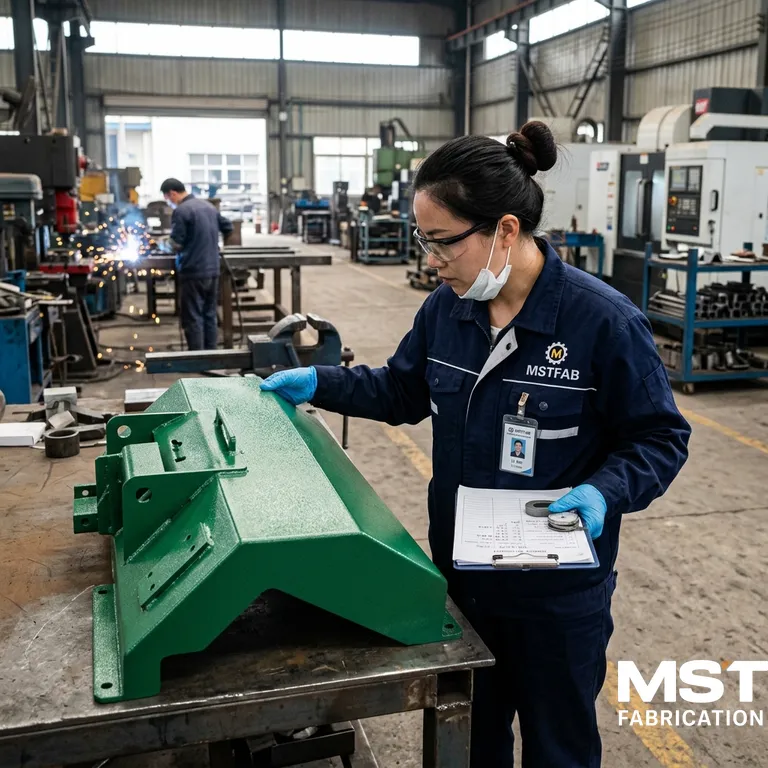
Farm equipment machine guards often need finishing that can survive outdoor use. For machine guards, powder coating is not just color. It may be part of the corrosion protection system.
A coated guard that rusts around cut edges after one season is not just a paint problem. It is a material, design, finishing, and quality control problem. Metal remembers shortcuts. Coating reveals them later.
Service Access and Maintenance
A machine guard should protect, but it should also allow reasonable service access. A guard that blocks maintenance will eventually be removed and not reinstalled. That is not ideal. A good guard protects the machine and respects the person who has to service it. Farm equipment maintenance is already hard enough. No need to add a metal puzzle.
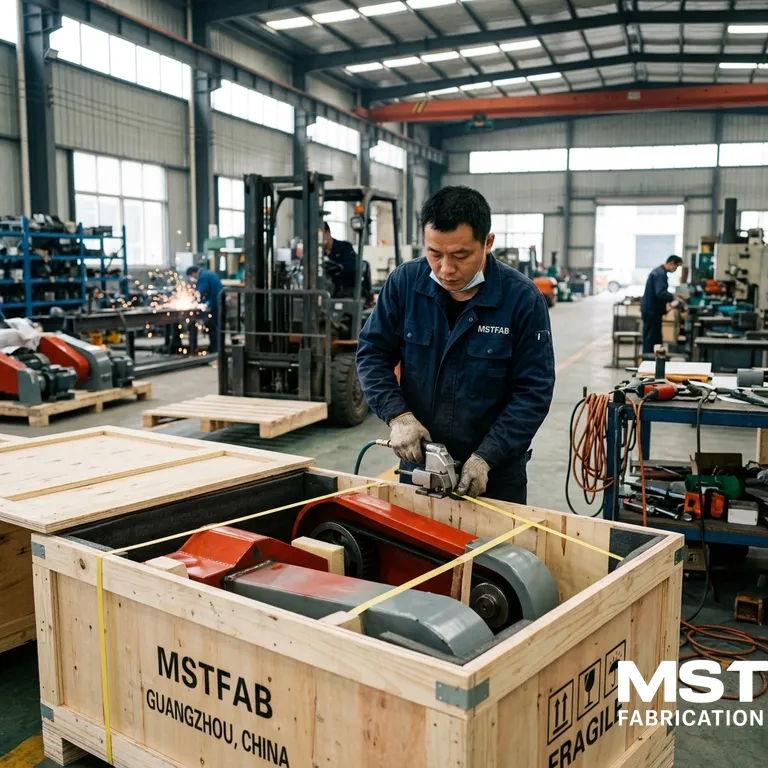
Export Packaging for Machine Guards
Machine guards may be coated, irregular in shape, sharp-edged, or stacked. Poor packaging can damage parts before they reach the buyer’s warehouse. A perfect guard that arrives scratched, bent, or rusty is no longer perfect. It is a customer complaint with forklift marks. Packaging is not an afterthought. It is the last quality process.
Why Choose MSTFAB for Custom Machine Guards?
MSTFAB is a custom sheet metal fabrication manufacturer in Guangzhou, China, supporting overseas OEM buyers with drawing-based manufacturing.
Fast Quotation from STEP/PDF Drawings: With complete drawings, our team can review custom machine guard projects faster.
DFM Review Before Production: We review material, bending, mounting holes, guard clearance, edge safety, vibration risk, and packaging before cutting metal.
Clear Manufacturing Scope: We manufacture the physical metal guards. We do not design tractors or write control software. This keeps the project boundary clear and helps protect customer intellectual property.
Request a Custom Machine Guard Quote
If you need custom machine guards for farm equipment, tractors, harvesters, seeders, sprayers, irrigation equipment, belt drives, chain systems, PTO areas, or OEM agricultural machinery, send us your STEP and PDF drawings.
FAQ
What are custom machine guards for farm equipment?
Custom machine guards for farm equipment are protective metal covers, shields, panels, and structures made according to customer drawings to protect operators, moving parts, belts, chains, shafts, motors, cables, hoses, and machinery components.
What types of machine guards can be fabricated?
Common machine guards include belt guards, chain guards, PTO guards, motor guards, sensor covers, hydraulic line guards, sprayer guards, harvester guards, irrigation equipment guards, access covers, and protective shields.
What materials are used for farm equipment machine guards?
Common materials include carbon steel, cold-rolled steel, galvanized steel, stainless steel, aluminum, and coated steel. The correct material depends on strength, corrosion exposure, weight, finish, and working environment.
Does MSTFAB provide machine safety certification?
MSTFAB focuses on custom sheet metal fabrication. We manufacture the physical guard according to customer drawings and requirements. Formal safety certification, compliance testing, or third-party documentation must be confirmed as a separate project scope before quotation.
Can you fabricate machine guards with ventilation openings?
Yes. Ventilation slots, fan openings, perforated areas, service holes, and access openings can be laser cut according to customer drawings.
Suggested Further Reading
- Agricultural Machinery Guards
- Farm Equipment Metal Guards
- Custom Agricultural Sheet Metal Parts
- OEM Agricultural Sheet Metal Components
- Custom Agricultural Sheet Metal Parts Manufacturer
- Agricultural Equipment Metal Fabrication
- Agricultural Equipment Parts Fabrication USA
- Agricultural Equipment Sheet Metal Parts USA
- Farm Machinery Sheet Metal Parts Australia
- Tractor Sheet Metal Brackets
- Irrigation Equipment Metal Enclosures
- Custom Metal Brackets & Frames for Farm Equipment
- Corrosion Resistant Agricultural Metal Components
- Custom Sheet Metal Bending & Welding Parts
- Custom Laser Cutting Service
- CNC Sheet Metal Bending
- Powder Coating for Sheet Metal Enclosures
- Sheet Metal Enclosure Material Selection
- DFM for Sheet Metal Enclosures
- Sheet Metal Enclosure Manufacturing Process
- Sheet Metal Enclosure Factory
Explore Our Core Capabilities
Discover our full range of agricultural manufacturing services at our core product hub: Custom Agricultural Sheet Metal Parts Fabrication
CNC sheet metal bending services
MSTFAB provides CNC press brake bending services for precision sheet metal parts, enclosures, brackets and OEM assemblies.
 WeChat Contact
 WhatsApp Me Directly