
Need production capability? This article focuses on powder-coated outdoor enclosures. For manufacturing scope, process capability and drawing-based quotation support, review MSTFAB’s sheet metal surface treatment and finishing.
Planning an RFQ? This article focuses on powder-coated outdoor enclosure finish and corrosion control. For production capability, drawing review and quotation support, see MSTFAB’s outdoor sheet metal enclosure fabrication.
Custom Powder Coated Outdoor Metal Enclosures for OEM Equipment
A powder coated outdoor metal enclosure is not just a metal box with a nice color.
That is the beginner mistake.
For outdoor electrical equipment, powder coating is part of the protection system. It must work with the base material, surface pretreatment, edge design, welding quality, gasket sealing, hardware, cable entry, ventilation, and packaging.
If any part of that system is weak, the enclosure may look perfect in factory photos and still fail outdoors.
Common failures are ugly:
- The coating peels around sharp edges.
- Rust starts bleeding from cut holes.
- Cable entry areas corrode first.
- The door gasket leaks because the frame warped during welding.
- The cabinet gets scratched during shipping.
- The outdoor color fades faster than expected.
- The enclosure looks “finished,” but it is not field-ready.
That is not outdoor enclosure fabrication.
That is a warranty claim wearing powder coating.
MSTFAB provides custom powder coated outdoor metal enclosure fabrication based on customer drawings, STEP files, CAD files, PDF drawings, samples, or project requirements. Our process can include laser cutting, CNC bending, welding, grinding, surface pretreatment coordination, powder coating, hardware installation, gasket structure review, inspection, export packaging, and prototype-to-batch production support.

Powder Coating Is a System, Not Just a Color
Many buyers say, “We need powder coating.”
That is not enough.
For outdoor metal enclosures, the coating system should clarify:
- Base material
- Surface pretreatment
- Powder type
- Color or RAL code
- Gloss level
- Texture requirement
- Film thickness requirement
- Outdoor UV resistance
- Corrosion resistance expectation
- Edge coverage requirement
- Salt spray or other test requirement, if any
- Packaging protection after coating
A cheap supplier may treat powder coating like decoration.
A serious supplier treats it like engineering.
Because outdoors, the coating is not there to look pretty for one week. It needs to protect the enclosure through rain, heat, humidity, UV exposure, handling, installation, and years of service.
Outdoor powder coating is not makeup.
It is armor with a color code.
Common Applications
Powder coated outdoor metal enclosures are widely used for OEM and industrial equipment, including:
- Outdoor electrical cabinets
- Telecom equipment enclosures
- EV charger cabinets
- Battery storage cabinets
- Industrial control enclosures
- PLC control boxes
- HMI operator panels
- Renewable energy equipment boxes
- Power distribution cabinets
- Utility control boxes
- Outdoor monitoring equipment
- Network equipment cabinets
- Machine control panels
- OEM electronic device shells
Each application has different risks.
A telecom cabinet may need ventilation and cable routing.
An EV charger enclosure may need public-facing surface quality.
A battery storage cabinet may need reinforced structure and corrosion resistance.
A power cabinet may need safe cable entry and grounding points.
That is why powder coated outdoor enclosure fabrication should start with the actual working environment, not just the color.
The Real Cost of Poor Outdoor Powder Coating
A low-cost powder coated enclosure can look attractive during sourcing.
Then the outdoor environment starts testing it for free.
Poor coating control may cause:
- Rust at laser-cut edges
- Coating peeling near welds
- Scratches during export shipping
- Poor adhesion after rain exposure
- Color fading under UV exposure
- Corrosion around cable entries
- Coating buildup on gasket surfaces
- Poor door sealing after coating
- Customer rejection during inspection
- Warranty replacement after installation
The enclosure price is one number.
The field failure cost is the number nobody wanted to calculate.
If rust appears after installation, the buyer will not care that the first quote was cheaper. They will remember downtime, service cost, replacement parts, and damaged trust.
A reliable powder coated outdoor metal enclosure manufacturer helps reduce those risks before production begins.

Material Selection Before Powder Coating
Powder coating performance depends heavily on the base material.
Writing only “metal enclosure with powder coating” on a drawing is usually not enough.
Galvanized Steel
Galvanized steel is commonly used for outdoor or semi-outdoor electrical enclosures because it provides better corrosion resistance than standard cold-rolled steel.
However, cut edges, weld zones, and coating adhesion still need careful review. Galvanized steel is useful, but it is not magic.
Cold-Rolled Steel
Cold-rolled steel may be used for protected outdoor or indoor/outdoor applications when proper pretreatment and powder coating are applied.
Cold-rolled steel needs strong pretreatment and edge protection if moisture exposure is expected. Raw steel and rain are not friends.
Aluminum
Aluminum is lightweight and naturally corrosion-resistant. It can be powder coated for outdoor equipment housings, telecom panels, HMI boxes, EV charger parts, and OEM enclosures where reduced weight matters.
Stainless Steel
Stainless steel is usually chosen for corrosion resistance, washdown environments, food equipment, coastal applications, or premium visible equipment.
It can be powder coated when a specific color, appearance, or additional surface protection is required.
Stainless steel is strong. Bad preparation is stronger at ruining expectations.
Carbon Steel with Protective Coating
Carbon steel may be used for reinforced bases, heavy-duty frames, brackets, and support structures.
For outdoor use, the full protection system must be planned carefully.
Surface Pretreatment Matters
Powder coating adhesion depends on surface preparation.
For outdoor metal enclosures, pretreatment may include degreasing, cleaning, rust removal, phosphate or zirconium-based pretreatment, surface roughness control, rinsing and drying, weld area cleaning, and edge and corner preparation.
The purpose is simple: help the powder coating bond properly and resist corrosion.
Skipping pretreatment is like painting over dirty glass and calling it durable.
It may look acceptable at first. Then the real world starts peeling away the lie.
Edge Coverage: Where Outdoor Coatings Often Fail
Sharp edges are one of the most common weak points in outdoor powder coated enclosures.
Powder coating naturally becomes thinner on sharp corners and edges. If the design has many sharp exposed edges, corrosion may start there first.
Important design details include avoiding unnecessarily sharp edges, deburring laser-cut profiles, reviewing exposed cut edges, controlling weld grinding areas, protecting cable entry cutouts, avoiding coating damage during assembly, and using suitable packaging after coating.
A cabinet does not usually rust first in the middle of a flat panel.
It rusts at edges, holes, welds, scratches, and places everyone ignored because they looked small.
Outdoor corrosion loves small details.
Procurement should too.
Powder Type, Color, Gloss, and Texture
For outdoor metal enclosures, powder selection matters.
The RFQ should clarify:
- Outdoor-grade powder requirement
- Color or RAL code
- Gloss level
- Texture: smooth, fine texture, orange peel, matte, semi-gloss, etc.
- UV resistance expectation
- Chemical exposure, if any
- Scratch resistance expectation
- Visual surface requirement
A black outdoor enclosure, a light gray telecom cabinet, and a textured EV charger shell are not the same finish project.
Color is not just branding.
Dark colors may absorb more heat outdoors. Textures may hide small surface defects. Gloss level affects appearance and customer perception.
Welding Before Powder Coating
Welding must be controlled before powder coating.
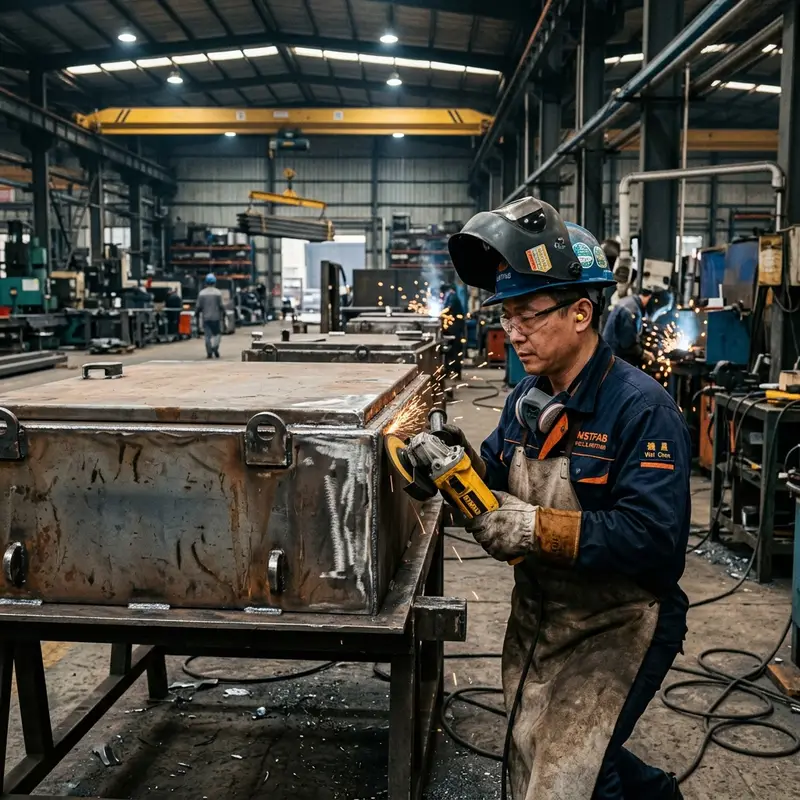
Poor welding can create warped panels, misaligned doors, uneven gasket surfaces, grinding marks, pinholes, corrosion traps, visible surface defects, and coating adhesion risks around weld zones.
Powder coating can hide color differences.
It cannot fix a warped cabinet.
A welded outdoor enclosure should not come out of fabrication looking like a banana and then hope powder coating will provide therapy.
Door, Hinges, Locks, and Gasket Surfaces
The door is where many outdoor enclosure failures become obvious.
Powder coating adds thickness.
That thickness can affect assembly fit, hinge movement, gasket compression, lock function, and hardware installation.
A good manufacturer reviews this before production.
A bad one discovers it after coating, when everyone is already tired.
Gasket Sealing and Powder Coating
Powder coating and gasket sealing must work together.
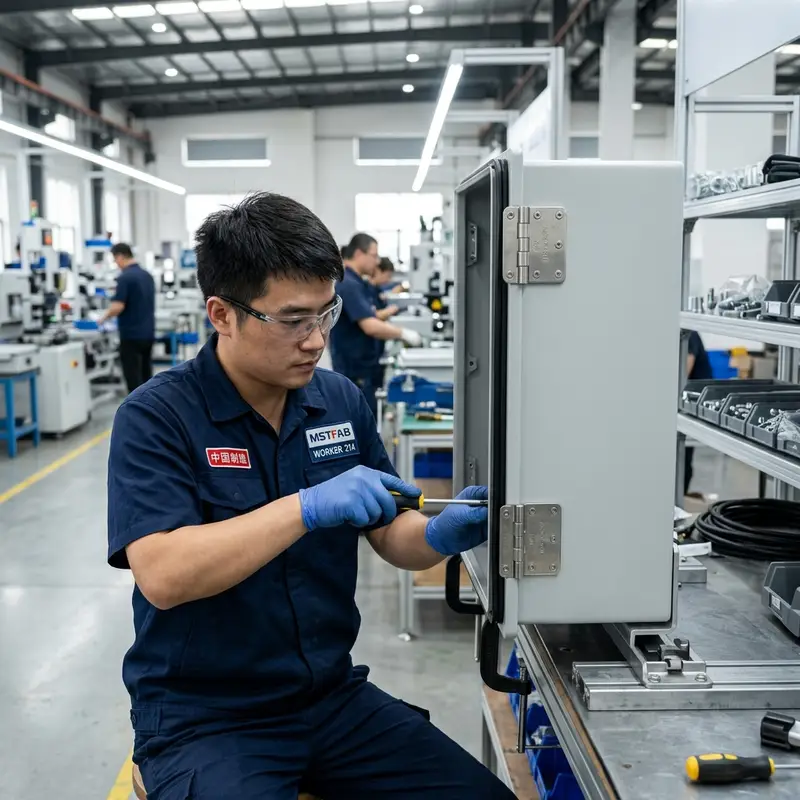
For outdoor electrical enclosures, gasket design should consider flat gasket contact surface, correct door alignment, suitable gasket material, even compression, strong hinge structure, proper latch or lock pressure, door stiffness, controlled coating buildup on sealing areas, clean gasket corners, and avoiding weld distortion near gasket surfaces.
A gasket cannot save a twisted frame.
If the door is warped or the sealing surface is uneven, the gasket becomes an expensive decoration.
Cable Entry: Protect the Cut Edges
Cable entry is one of the most common failure points in outdoor enclosure projects.
Cable entry should be cut and finished before powder coating.
Cutting holes after powder coating is not engineering.
It is corrosion with a drill.
Ventilation Without Letting Rain Inside
Outdoor electrical enclosures often need ventilation because internal components generate heat.
But random holes are not thermal engineering.
They are invitations for water, dust, insects, and regret.
Ventilation openings must also be powder coated correctly and protected from corrosion.
A cabinet needs to breathe without drowning the electronics.
Water-Shedding Geometry
Outdoor enclosure design should help water move away from critical areas.
A flat-top outdoor cabinet can become a small swimming pool.
That is not a design feature.
That is how corrosion gets comfortable.
Powder coating helps, but it should not be asked to fight bad geometry alone.
IP and NEMA Design Support
Many powder coated outdoor enclosures are designed around protection targets such as:
These are not the same.
Important note: fabrication can be designed to support customer IP or NEMA requirements, but formal certification, laboratory testing, or third-party documentation must be confirmed before quotation.
Do not assume certification.
Assumptions are where compliance projects go to get expensive.
Laser Cutting for Powder Coated Outdoor Enclosure Parts
Laser cutting is used for enclosure panels, doors, covers, mounting plates, cable entry plates, ventilation panels, base parts, and brackets.
These features should be cut before powder coating.
Cutting finished coated metal later damages the protection layer, exposes raw edges, and increases corrosion risk.
It also makes a precision enclosure look like someone attacked it with a drill and a deadline.
CNC Bending Before Finishing
CNC bending forms flat sheet metal into enclosure bodies, doors, covers, flanges, rain lips, mounting structures, and internal supports.
For outdoor powder coated enclosures, bend radius and bend sequence should be reviewed before production.
If holes are too close to bend lines, they may deform.
If the bend radius is too small, some materials may crack.
If the frame twists during bending, sealing may suffer.
Good bending is not dramatic.
That is exactly why engineers like it.
Wall-Mounted and Floor-Standing Options
Wall-Mounted Outdoor Enclosures
Wall-mounted enclosures are often used for control boxes, PLC enclosures, HMI panels, telecom devices, utility boxes, and outdoor power units.
A wall-mounted enclosure should not flex like a cheap cookie tray when the installer tightens the screws.
Floor-Standing Outdoor Cabinets
Floor-standing designs are used for larger control cabinets, power equipment, telecom systems, EV charger cabinets, battery storage cabinets, and outdoor electrical systems.
Large outdoor cabinets do not forgive weak structures, weak coating, or weak packaging.
DFM Review Before Production
A 3D CAD model can look perfect on screen and still create outdoor production problems.
A Design for Manufacturability review helps identify risks before production.
A design issue found before production is a drawing update.
A design issue found after production is a rusting cabinet, a leaking door, a coating complaint, and a conversation nobody wants to have.
DFM review is not extra paperwork.
It is risk control.
Prototype, Pilot Run, and Batch Production
For powder coated outdoor enclosure projects, prototype or first-article production is often useful before batch manufacturing.
For OEM buyers, one good sample is not the finish line.
The real goal is stable repeat production.
A sample made with heroic manual correction is not a manufacturing process.
It is a magic trick.
Magic tricks do not scale.
Quality Control for Powder Coated Outdoor Enclosures
Quality control should focus on both fabrication accuracy and outdoor coating performance.
If salt spray testing, coating thickness records, adhesion tests, IP testing, NEMA testing, or third-party documentation are required, these requirements should be stated before quotation.
Export Packaging After Powder Coating
Powder coated outdoor enclosures can be damaged easily during international shipping if packaging is poor.
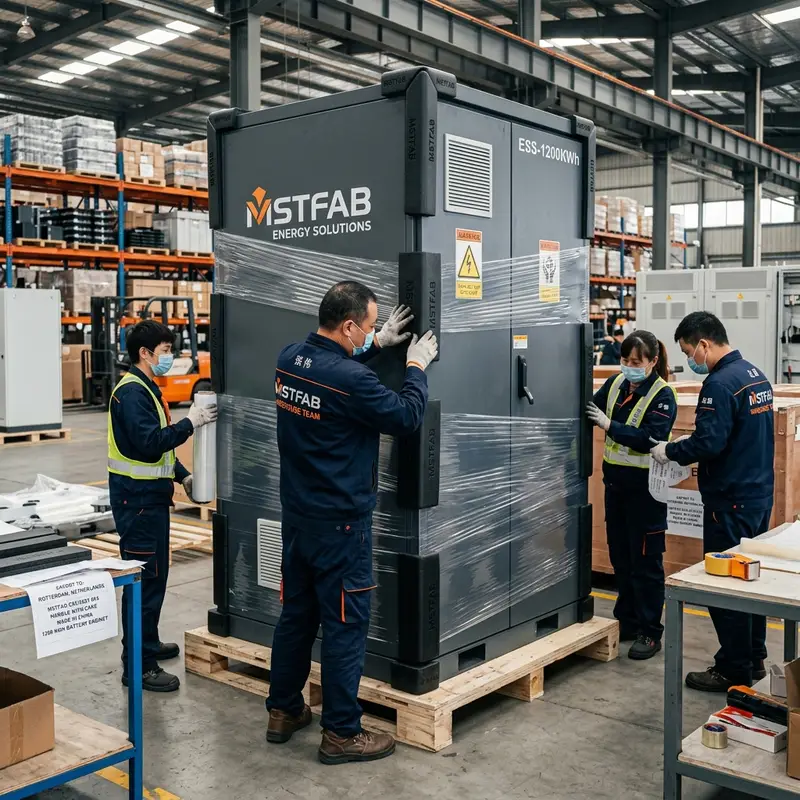
Good packaging is part of quality control.
A perfectly powder coated enclosure that arrives scratched is no longer perfect.
It is a customer complaint with forklift marks.
Clear Manufacturing Scope and Compliance Notes
MSTFAB focuses on custom sheet metal fabrication and metal structure manufacturing.
We do not design electrical schematics.
We do not write PLC programs.
We do not design circuitry.
Our scope is the physical metal enclosure, cabinet, panel, bracket, chassis, frame, or structural component based on customer drawings and project requirements.
Important note: if the project requires formal IP rating certification, NEMA certification, coating test reports, laboratory testing, third-party validation, or specific compliance documentation, those requirements should be stated clearly before quotation. Fabrication can be designed to support customer outdoor, powder coating, IP, or NEMA requirements, but certification scope must be confirmed project by project.
What to Send for a Quote
To quote powder coated outdoor metal enclosures accurately, please provide:
- 3D STEP file and 2D PDF drawing
- Material requirement and sheet thickness
- Quantity
- Required IP or NEMA design target, if any
- Surface pretreatment requirement, if any
- Powder coating requirement (Color, Gloss, Texture)
- Gasket, Hardware, Cable entry, and Ventilation requirements
- Indoor, outdoor, dusty, wet, coastal, washdown, or chemical exposure notes
Request a Powder Coated Outdoor Enclosure Quote
If you need powder coated outdoor metal enclosure fabrication for telecom equipment, EV chargers, battery storage, industrial controls, PLC cabinets, HMI boxes, power distribution, renewable energy equipment, or OEM systems, send us your drawings and project requirements.
A good powder coated outdoor enclosure should resist weather exposure, protect the equipment, support clean assembly, and arrive without coating damage.
That starts with clear drawings, practical DFM review, controlled fabrication, proper finishing, and export-ready packaging.
FAQ
What is powder coated outdoor metal enclosure fabrication?
Powder coated outdoor metal enclosure fabrication is the process of manufacturing custom metal cabinets, boxes, panels, doors, mounting plates, cable entry plates, brackets, and structural parts with outdoor powder coating for weather-resistant equipment protection.
What are powder coated outdoor metal enclosures used for?
They are used for outdoor electrical cabinets, telecom equipment, EV charger cabinets, battery storage systems, industrial control systems, PLC boxes, HMI panels, power distribution cabinets, renewable energy equipment, and OEM electronic systems.
Is powder coating suitable for outdoor enclosures?
Yes, powder coating can be suitable for outdoor enclosures when the material, pretreatment, powder type, edge coverage, curing, surface finish, and packaging are properly controlled.
What materials can be powder coated for outdoor enclosures?
Common materials include galvanized steel, cold-rolled steel, aluminum, stainless steel, and coated carbon steel depending on corrosion requirements, strength, weight, appearance, and budget.
What causes outdoor powder coating failure?
Common causes include poor pretreatment, sharp exposed edges, weak coating adhesion, damaged surfaces during shipping, poor weld cleaning, coating damage around cable entries, and unsuitable material selection for the environment.
Can powder coated outdoor enclosures be customized?
Yes. Size, material, thickness, doors, gaskets, hinges, locks, mounting plates, cable entries, ventilation, internal brackets, powder color, texture, gloss, and hardware can be customized according to drawings and project requirements.
What drawings are needed for quotation?
A 3D STEP file and 2D PDF drawing are recommended. DXF or DWG files can also help with flat laser-cut parts. The drawing package should include material, thickness, finish, gasket, hardware, cable entry, ventilation, and inspection requirements.
Why is DFM review important for powder coated outdoor enclosures?
DFM review helps identify coating risks, sharp edge corrosion risks, welding distortion, gasket contact issues, cable entry leakage, ventilation water risks, hardware conflicts, and packaging risks before production.
Can you provide coating test reports or certified outdoor enclosures?
Fabrication can be designed to support customer outdoor coating, IP, or NEMA requirements based on drawings and specifications. If formal coating tests, IP/NEMA certification, laboratory testing, or third-party reports are required, the requirement must be confirmed before quotation.
Do you provide wiring or internal electrical components?
No. Our main scope is custom sheet metal fabrication. We manufacture the physical enclosure, cabinet, panel, bracket, chassis, mounting plate, and structural parts. Wiring, electrical components, software, and circuitry are outside our standard scope.
MSTFAB Capabilities
- Outdoor Powder Coating Support
- Material + Pretreatment + Coating Review
- Gasket, Cable Entry and Ventilation Design
- Steel / Galvanized Steel / Aluminum / Stainless Steel
Related engineering resource: If your project involves EV charging infrastructure, review our custom EV charger enclosure fabrication capabilities for outdoor sheet metal cabinet design, powder coating, and export-ready manufacturing.
custom sheet metal enclosure fabrication
MSTFAB manufactures custom sheet metal enclosures, electrical cabinets, control boxes and industrial metal housings for OEM buyers.
 WeChat Contact
 WhatsApp Me Directly