
Grain Handling Sheet Metal Parts: Hoppers, Chutes and Bins for Farm Equipment OEMs
Grain handling sheet metal parts look simple until grain starts moving through them. A hopper is not just a box. A chute is not just a bent panel. A bin is not just a container.
These parts deal with abrasion, dust, vibration, impact, moisture, outdoor storage, repeated loading, unloading, and field maintenance.
That means grain handling sheet metal parts must do more than look correct in a drawing. They must handle real agricultural use.
At MSTFab, we often review RFQs for grain handling equipment parts such as hoppers, chutes, bins, covers, guards, access panels, flow panels, brackets, support frames, auger covers, discharge shields, grain conveyor panels, and grain elevator sheet metal parts.
The drawings may look basic at first. But the real buyer concerns are usually hidden in operation:
- Will grain flow smoothly without clogging?
- Will the chute wear too quickly?
- Will welds crack under vibration?
- Will coating peel where grain rubs the surface?
- Will the hopper trap moisture and start rusting?
- Will mounting holes still align after welding?
- Can the part be cleaned and serviced easily?
- Can the supplier repeat the same fit in batch production?
A grain handling part that looks good in the factory may still fail in the field. Grain is small. But when tons of it move through a metal part, it becomes very persuasive.
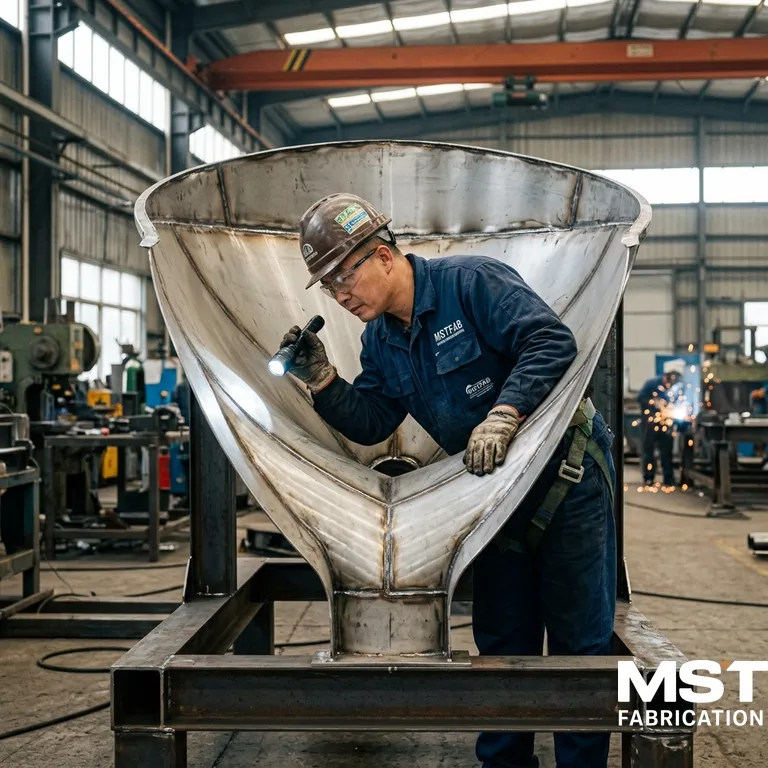
1. What Are Grain Handling Sheet Metal Parts?
Grain handling sheet metal parts are custom fabricated metal components used in equipment that moves, stores, guides, protects, or processes grain and crop material.
They may be used in grain handling systems, grain conveyors, grain elevators, auger systems, grain carts, seed handling equipment, feed handling equipment, farm storage equipment, agricultural processing machinery, combine or harvester grain systems, and grain loading/unloading equipment.
Common parts include grain hoppers, chutes, bins, discharge chutes, loading funnels, auger covers, conveyor covers, access panels, inspection doors, wear plates, flow guide plates, grain shields, support brackets, side panels, base plates, and reinforcement frames.
For OEM buyers, the goal is not only to receive parts that match the drawing. The goal is to receive parts that support smooth grain flow, resist wear, reduce clogging, survive vibration, and remain serviceable during busy operating seasons.
Because when grain equipment stops, nobody celebrates that the part was cheaper. They ask why it failed. Usually loudly.
2. Grain Flow Should Be Considered Before Fabrication
For hoppers, chutes, and bins, shape matters. A part can be well fabricated and still perform poorly if the flow design creates grain bridging, clogging, material buildup, dust accumulation, difficult cleaning, uneven discharge, or trapped moisture.
OEM buyers should review chute angle, hopper slope, discharge opening size, internal corner design, material transition areas, weld seam position, surface roughness, and cleaning access.
Sharp internal corners, poor transitions, or rough weld areas can slow material flow and collect grain residue. A grain chute should not become a grain parking lot. The grain has places to go. The metal should help it get there.
3. Abrasion Is a Real Issue in Grain Handling Parts
Grain may seem harmless compared with rocks or metal scrap. But moving grain can still wear sheet metal surfaces over time, especially in high-flow or high-impact areas.
Common wear zones include chute bends, discharge areas, hopper outlets, impact points, sliding surfaces, auger cover edges, and flow transition points.
Buyers should consider material thickness, replaceable wear plates, local reinforcement, smooth internal surfaces, weld seam placement, and coating durability. A thin chute may look fine during prototype approval. Then real production volume starts sanding it from the inside.
Grain is patient. Wear is quieter than failure, but it always keeps working.
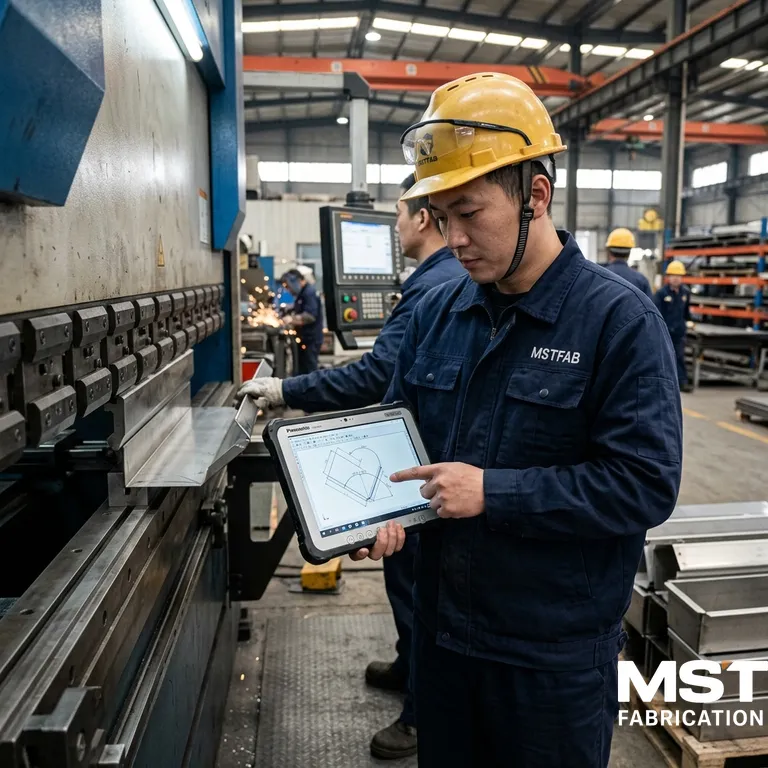
4. Material Selection Should Match the Application
The right material depends on strength, corrosion risk, abrasion, food contact concerns, weight, coating, and cost.
- Mild Steel: Commonly used for hoppers, chutes, bins, and strong frames. Practical when strength and cost matter most. But raw steel and moisture are not friends. They need proper coating.
- Galvanized Steel: Provides better base corrosion resistance for covers, panels, and conveyor guards. It is useful, not magic. Cut edges and welds still need protection.
- Stainless Steel: Selected for cleanability, food processing, and harsh corrosion environments (304 or 316). It costs more, but replacing corroded hoppers costs more than that.
- Aluminum: Used for lightweight covers and portable components. It can reduce weight, but a lightweight panel that wears too quickly is not useful. That is not engineering; that is dieting gone too far.
5. Welding Must Be Controlled for Strength and Smooth Flow
Poor welding can cause distortion, rough internal seams, grain buildup, weak joints, and cracking under vibration. For grain handling equipment, weld location matters.
A rough weld in the wrong internal area can become a grain trap or a wear point. A beautiful weld outside and a rough grain trap inside is not good manufacturing. It is decoration on the wrong side.
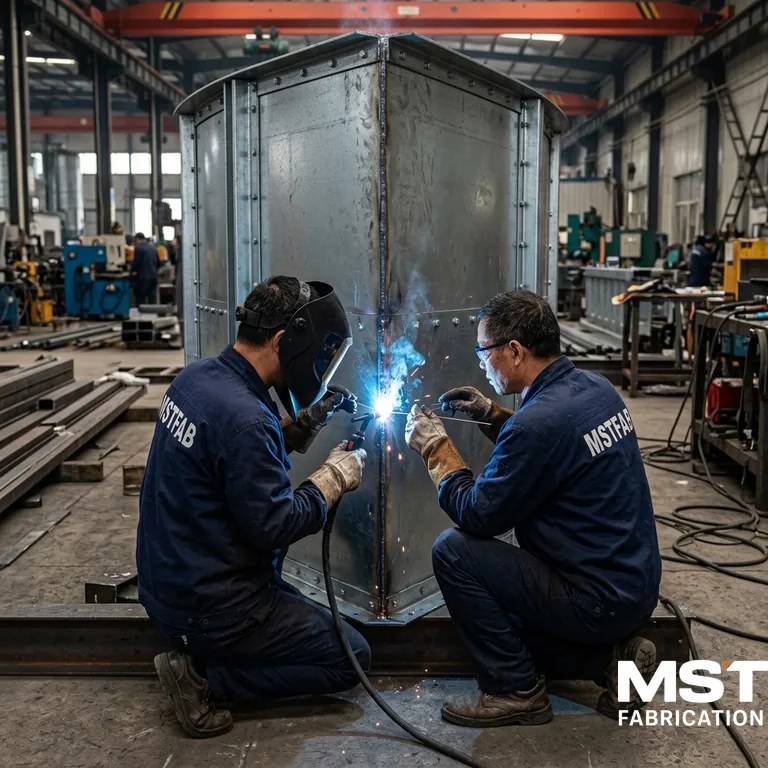
6. Bending Accuracy Affects Fit and Flow
CNC bending turns flat sheet into hopper walls, chute panels, and covers. For grain handling parts, bending quality affects assembly fit, chute angle, hopper slope, discharge alignment, and panel gaps.
Buyers should confirm bend radius, material thickness, hole-to-bend distance, and assembly fit after bending. A chute angle that looks “close enough” in the factory may not behave the same when grain flow depends on it. Grain does not read tolerance excuses. It either flows or it does not.
| Manufacturing Problem | Low-Cost Job Shop Approach | MSTFAB (DFM-Led OEM Partner) |
|---|---|---|
| Internal Weld Seams | Rough, untreated welds that trap grain and moisture. | Controlled TIG/MIG welding, ground smooth to ensure clean material flow. |
| Mounting Hole Alignment | Holes shift after bending; buyers have to redrill them manually. | Precision laser cutting with DFM review ensures bolt holes align every time. |
| Chute Angles | “Almost right” angles that cause grain bridging or clogging. | Accurate CNC bending verified to the exact design angle. |
| Corrosion Protection | Thin paint that chips and rusts at the edges after one season. | Thick, durable powder coating with pre-treatment and protected cut edges. |
7. Corrosion Protection and Powder Coating
Grain handling parts may face outdoor storage, rain, dust, fertilizer residue, and condensation. Corrosion usually starts at laser-cut edges, weld seams, bottom corners, and scratched areas. Rust rarely starts where the product photo was taken. It starts where nobody inspected carefully.
Powder coating is not only cosmetic. It affects corrosion resistance, scratch resistance, and service life. A nice coating that chips before installation is just disappointment in color.
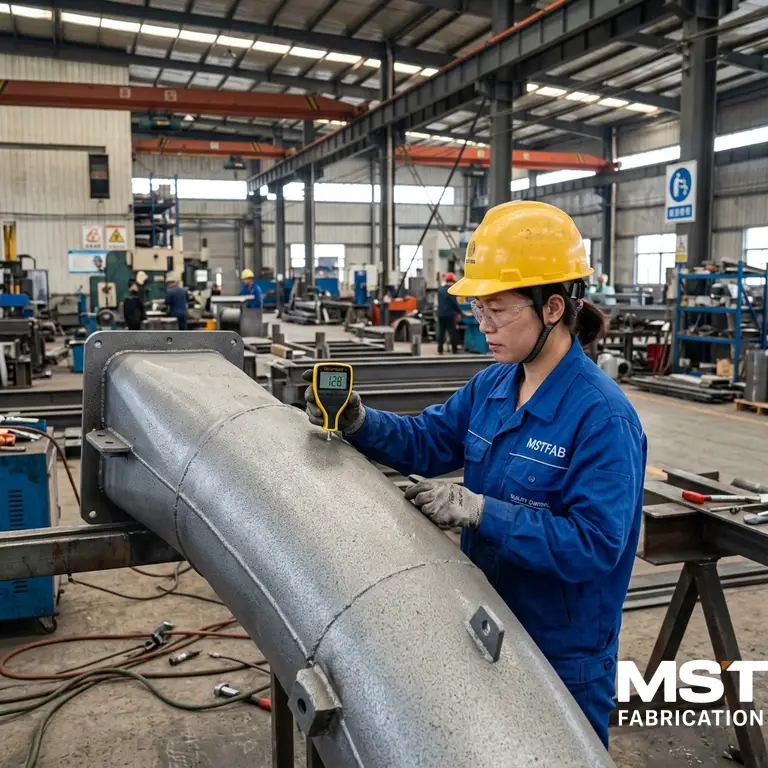
8. Hoppers, Chutes, and Bins: The Big Three
- Hoppers: Need strong corners and clean discharge design. A hopper should not only hold grain. It should release it predictably. A hopper that holds grain too enthusiastically is just a storage problem with angles.
- Chutes: Need smooth internal surfaces and correct angles. A chute should guide material. It should not negotiate with it. If grain has to fight the chute, the design needs review.
- Bins: Need strength, drainage, and service access. A bin that looks square when empty may behave differently when loaded. Grain has weight. Metal should be designed like it knows that.
9. Dust Control, Serviceability, and Mounting Accuracy
Grain handling creates dust. Poor design can create cleaning difficulty, corrosion risk, and airflow issues. A part that traps grain dust and moisture is not helping. It is quietly building a maintenance problem.
Serviceability matters during busy seasons. A part that is strong but painful to remove can still create problems. Field maintenance is not performed in a showroom.
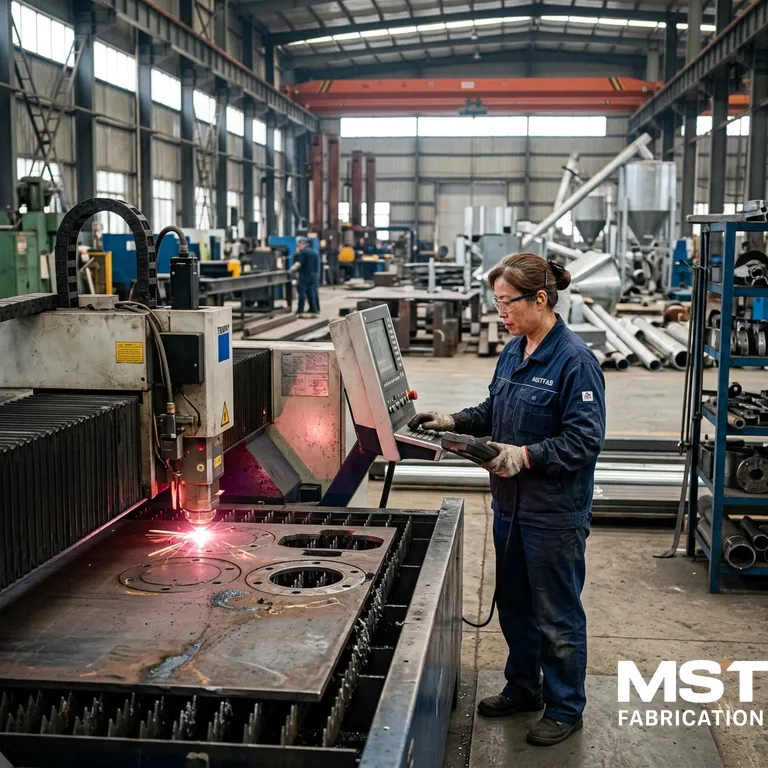
Mounting accuracy affects equipment assembly. Common problems include holes shifting after bending and slot issues. The flat pattern is not the final part. The installed assembly is the final part.
10. Prototype to Batch Consistency and Packaging
One good prototype is useful. But the real goal is repeatable batch production. A prototype that requires too much manual correction may look fine, but it is not ready for batch production. Magic tricks do not scale. Manufacturing processes should.
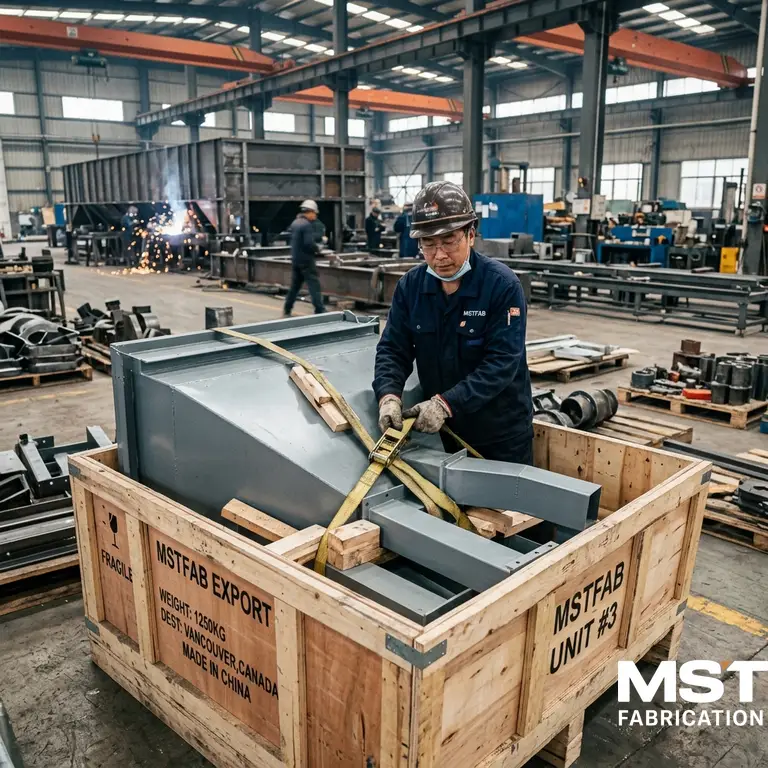
Export packaging must protect large and coated parts. A well-made hopper that arrives scratched or bent is not a successful shipment. It is a logistics problem shaped like a metal part. Packaging is part of quality control.
How MSTFab Supports Grain Handling Sheet Metal Fabrication
MSTFab manufactures custom sheet metal parts based on customer drawings and requirements.
We support farm equipment OEM projects involving grain hoppers, chutes, bins, conveyor covers, elevator parts, auger covers, and custom agricultural sheet metal components.
Our manufacturing support includes DFM review, laser cutting, CNC bending, TIG/MIG welding, grinding, powder coating, galvanized and stainless fabrication, and export packaging.
We manufacture the physical sheet metal parts. We do not design grain handling systems or control systems. You bring the equipment design. We build the metal parts that help move, protect, mount, guide, service, and survive real grain handling use.
Request a Grain Handling Parts Quote
If you need custom hoppers, chutes, bins, panels, brackets, or sheet metal parts for agricultural and grain equipment, send us your STEP and PDF drawings.
FAQ
What are grain handling sheet metal parts?
Grain handling sheet metal parts are fabricated metal components used to move, guide, store, protect, or support grain handling equipment. Examples include hoppers, chutes, bins, covers, brackets, panels, auger covers, and discharge shields.
What materials are used for grain handling hoppers, chutes, and bins?
Common materials include mild steel, galvanized steel, stainless steel, aluminum, and cold-rolled steel depending on strength, corrosion resistance, abrasion, weight, coating requirement, and application environment.
Why is abrasion resistance important for grain handling parts?
Moving grain can wear surfaces over time, especially at chute bends, discharge areas, hopper outlets, and impact points. Material thickness, wear plates, smooth surfaces, and proper weld placement can help reduce wear issues.
Why is corrosion protection important for grain equipment parts?
Grain handling parts may face crop moisture, dust, outdoor storage, cleaning water, humidity, and surface scratches. Proper material selection, coating, edge protection, and drainage help reduce corrosion risk.
Should grain handling parts be prototyped before mass production?
Yes. A prototype or first article helps confirm equipment fit, hopper angle, chute alignment, bin structure, mounting holes, coating quality, service access, and packaging before batch production.
Suggested Further Reading
- Custom Agricultural Sheet Metal Parts for Farm Equipment OEMs
- Agricultural Equipment Sheet Metal Parts for the USA Market
- Farm Machinery Sheet Metal Parts for Australia
- Custom Metal Guards for Agricultural Machinery
- Harvester Sheet Metal Covers
- Sprayer Metal Guards
- Farm Machinery Control Box Enclosure
- Custom Sheet Metal Enclosure Fabrication
- Mounting Plates, Cable Entry Plates, Metal Brackets & Chassis Parts
- Sheet Metal Enclosure Manufacturing Process
- DFM for Sheet Metal Enclosures
- Custom Enclosure Prototype to Mass Production
- CNC Sheet Metal Bending Service
- TIG Welding Service
- Powder Coating Service
- Powder Coating for Sheet Metal Enclosures
- Steel Enclosure Fabrication
- Mild Steel Enclosure Fabrication Manufacturer
- Galvanized Steel Enclosure Fabrication
- Stainless Steel Sheet Metal Enclosure Fabrication
- Aluminum Sheet Metal Enclosure Fabrication
Explore Our Core Capabilities
Discover our full range of agricultural manufacturing services at our core product hub: Custom Agricultural Sheet Metal Parts Fabrication
CNC sheet metal bending services
MSTFAB provides CNC press brake bending services for precision sheet metal parts, enclosures, brackets and OEM assemblies.
 WeChat Contact
 WhatsApp Me Directly