GALVANIZED ENCLOSURE RFQ CONTROL
A galvanized enclosure RFQ specification should do more than say “galvanized steel, 1.5 mm, powder coated.” That is only the opening sentence. A usable purchase package also defines the steel designation, zinc coating, exposed-edge treatment, finish boundaries, functional datums and the evidence required at first article.

THE QUICK ANSWER
Specify the material condition, not just the metal family
A reliable RFQ tells the fabricator what arrives as sheet, what changes during cutting and welding, and what must be true after finishing. That closes the gap between a CAD model that looks correct and a delivered shell that actually fits.
- Pair one controlled 3D model with released 2D drawings.
- Name the applicable grade, coating designation and thickness.
- Define cut-edge, weld-zone, masking and finish requirements.
- List CTQs and first-article evidence before quotation.
Why This Page Has a Narrower Job
MSTFAB already publishes separate technical guides about laser-cut edge protection, weld repair, powder-coating adhesion and outdoor exposure. Repeating all of them under another broad “galvanized enclosure fabrication” title would give search engines several pages answering the same question and give buyers several tabs saying almost the same thing.
This guide has one job: help an OEM buyer write a galvanized enclosure RFQ that a sheet metal factory can quote, manufacture and inspect without inventing missing requirements. It is a procurement handoff guide, not a promise that every zinc-coated box is suitable for every environment.
Drawing package
Geometry, revision, datums, tolerances, welds, hardware and after-finish interfaces.
Material package
Steel designation, coating standard, coating mass or class, thickness and certificates.
Quality package
CTQs, inspection method, approved finish sample, FAI format and change control.
Start with One Controlled Product Definition
Send the STEP or STP assembly to show shape, mating parts and service clearances. Send released PDF drawings to define dimensions, tolerances, notes and acceptance criteria. A DXF may help with flat profiles, but it should not quietly become the master drawing while the PDF shows a different revision.
Every file should carry a matching part number and revision. If the model says Rev C and the drawing says Rev B, the supplier is not doing DFM anymore; the supplier is choosing which future complaint sounds less expensive.
| RFQ input | Buyer should define | Why it matters |
|---|---|---|
| 3D assembly | Part relationships, keep-outs, access and installed orientation | Supports bend sequence, tooling and trial-fit review |
| 2D drawing | Datums, CTQs, weld symbols, hardware, finish and revision | Creates an inspectable acceptance record |
| Material callout | Standard, grade, thickness, zinc coating and surface condition | Prevents substitution by appearance alone |
| Environment statement | Indoor, sheltered, humidity, chemicals, condensation and service life | Supports material and finish approval by the OEM |
| Quality plan | FAI, certificates, sampling, gauges and approved samples | Makes approval repeatable after the first batch |
Write a Material Callout That Purchasing Can Actually Buy
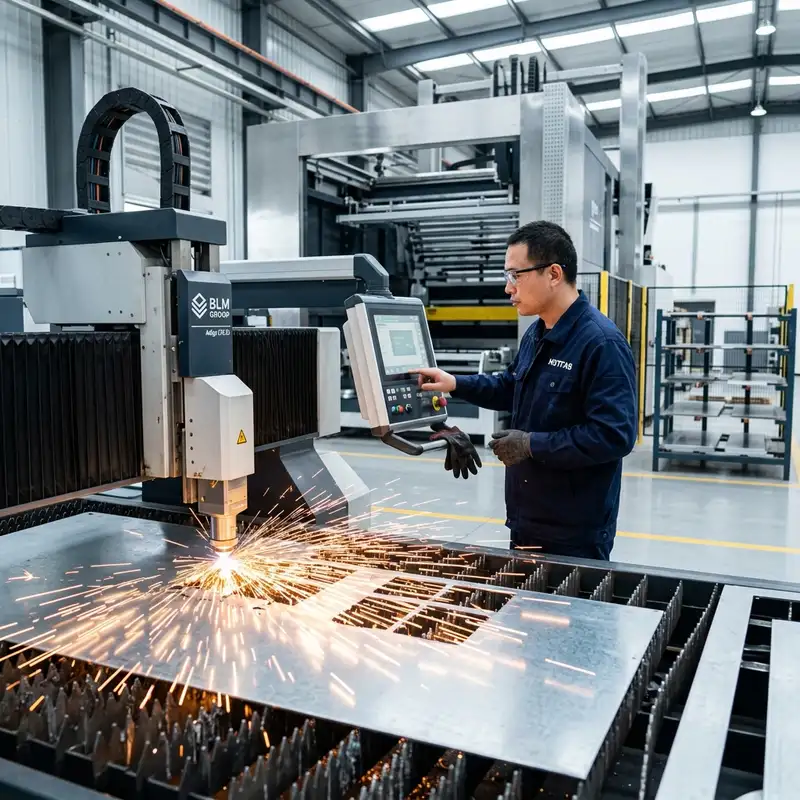
“Galvanized” describes a coating family, not one universal sheet. The drawing or purchasing specification should identify the agreed standard, grade or forming quality, nominal base-metal thickness, zinc coating designation, surface treatment and any required certificate.
For continuous hot-dip zinc-coated sheet, standards such as ISO 3575 and ASTM A653/A653M distinguish products by qualities, grades and coating designations. The correct callout depends on the customer’s engineering requirements and supply chain. MSTFAB can review availability and fabrication risk, but material substitutions require written customer approval.
Technical references: ISO 3575:2025 and ASTM A653/A653M.
Do Not Let Zinc Coating Become a Mystery Number
The zinc coating designation influences corrosion protection, formability, weld behavior, appearance and cost. More coating is not automatically better for every enclosure detail. Heavy coating and a tight bend can be an awkward combination, while a light coating may not match the intended exposure.
The OEM should approve the coating class based on the finished equipment environment and required service life. The fabricator should confirm that the selected material can be sourced consistently and formed with the proposed bend radii.
Name the standard
Do not use an internal shorthand unless the supplier has the controlled cross-reference.
Name the grade
Separate commercial or forming quality from structural strength requirements.
Name the coating
State the coating mass or designation and surface treatment where required.
Name the evidence
Define whether a material certificate, lot trace or incoming verification is required.
Laser-Cut Profiles Need Functional Datums
Laser cutting creates the perimeter, holes, slots and locating features, but the drawing should distinguish cosmetic cutouts from functional interfaces. Mounting holes, hinge patterns and connector openings should reference stable datums instead of a chain of dimensions that collects tolerance one link at a time.
Small holes, narrow slots and features close to a bend may require a secondary process or a geometry change. The quotation should record that decision. Otherwise, a part can pass the flat-pattern drawing and still become wrong after bending.

Bending Changes More Than the Angle
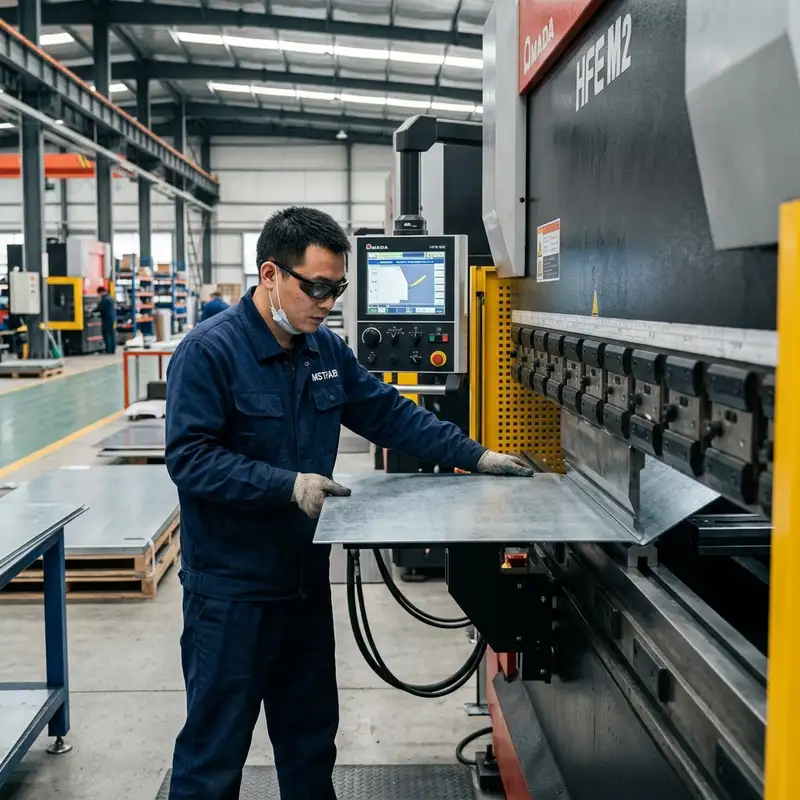
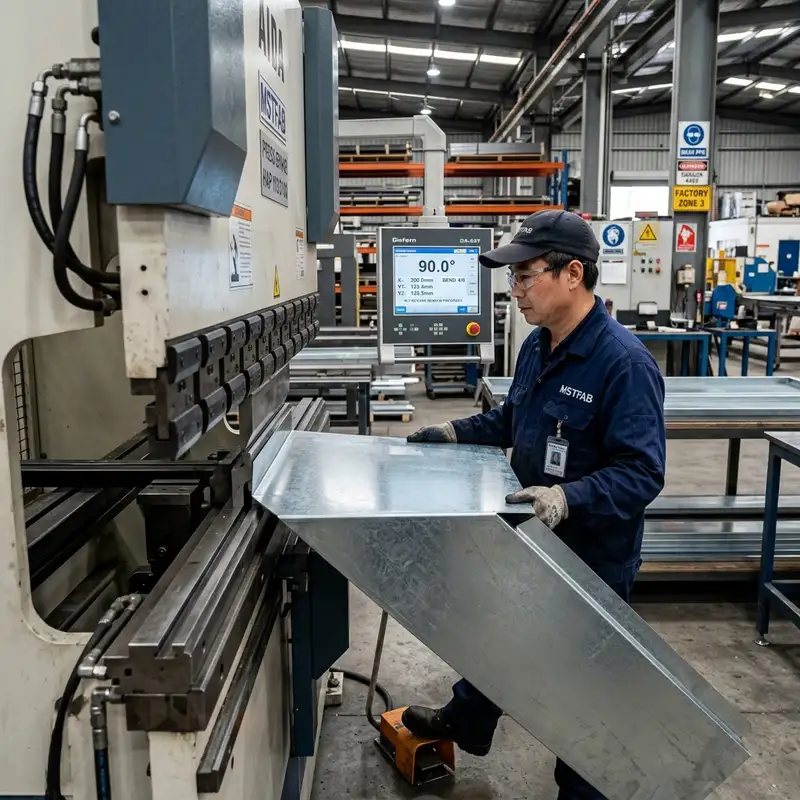
Material grade, thickness, grain direction, coating condition, inside radius, flange length and tooling all affect bending. The RFQ should highlight functional offsets, door returns, mounting-plate stand-offs and gasket lands that must remain controlled after forming.
For a multi-bend enclosure, dimension critical relationships from functional surfaces. A long chain of bend-line dimensions can look tidy in CAD and become a small tolerance parade in production.
Choose Welds, Tabs and Hardware as a System
Welding burns or disturbs zinc near the joint and can distort thin panels. The RFQ should identify weld process, size, length, continuity, cosmetic class, post-weld treatment and any flatness requirement. It should also show which seams may use folded tabs, mechanical fasteners or press-in hardware instead.
Reducing unnecessary weld length may improve flatness and lower finishing work. That is not cutting corners. It is deciding which corners genuinely need welding.
For detailed edge and weld-zone controls, use our galvanized sheet metal weld repair and edge protection guide as the supporting process reference rather than repeating those requirements in every enclosure article.


Powder Coating Needs Boundaries, Not Just a RAL Number
If the shell receives powder coating, specify color, texture, gloss range, target thickness, visible class, pretreatment requirement and approved sample where appearance matters. Identify masked threads, grounding points, press-fit zones, labels, studs and tight mechanical interfaces.
Coating thickness changes fit. A door gap, mounting slot or captive fastener can work perfectly in bare metal and become stubborn after finishing. The drawing should say whether critical dimensions apply before or after coating.
| Finish item | RFQ callout | Useful evidence |
|---|---|---|
| Color and texture | RAL or approved color, texture and gloss range | Approved coupon or master sample |
| Coating thickness | Target range and measurement locations | Dry-film thickness record |
| Masking | Threads, contacts, fits and no-coat zones | Visual check and functional gauge |
| Adhesion | Test method, frequency and acceptance | Lot or first-article test record |
Door Fit and Flatness Should Be Checked After Welding
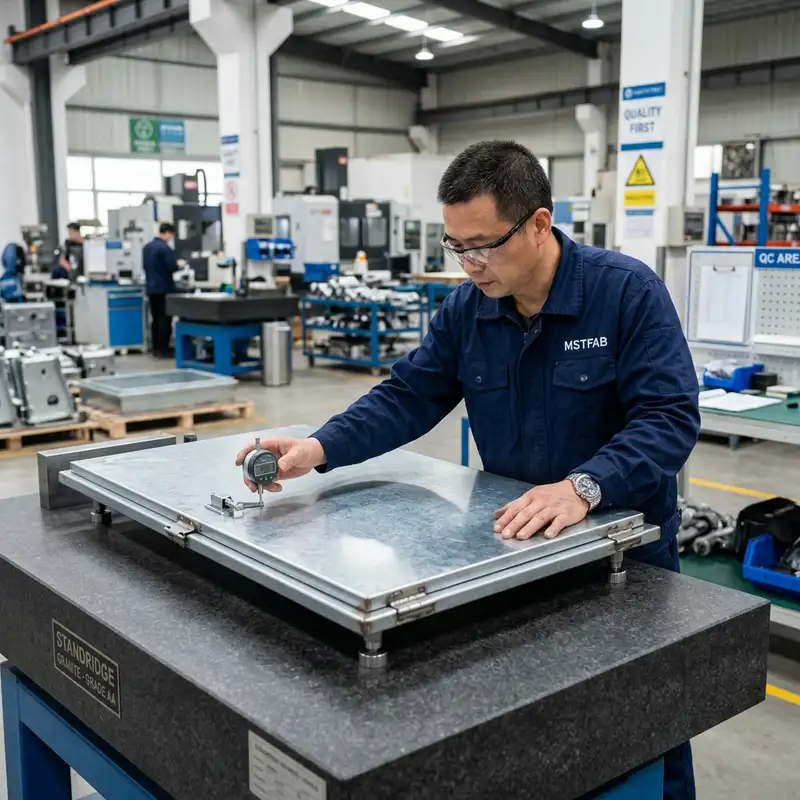
Large doors and frames move when they are cut, bent and welded. Define the functional gap, flushness, latch engagement, hinge alignment and gasket landing geometry. If a mounting plate or internal component is customer-supplied, provide its interface model or a representative gauge for trial fit.
Build the First-Article Plan Before the Purchase Order
An effective FAI is not every dimension measured because a spreadsheet had empty rows. It focuses on characteristics that control installation, sealing, appearance and repeatability. Agree the report format, measurement stage, sampling and customer approval route before production begins.
Useful evidence may include material certificates, thickness verification, part and revision identity, CTQ results, weld inspection, hardware checks, coating records, approved visual samples and trial-assembly photographs.

A Practical Supplier Handoff Matrix
| Decision | OEM responsibility | MSTFAB responsibility |
|---|---|---|
| Intended environment | Define exposure, service life and equipment requirements | Flag fabrication risks and quote the approved material/finish |
| Material | Approve standard, grade, coating and thickness | Verify incoming material against the purchase specification |
| Enclosure geometry | Release design, interfaces, CTQs and tolerances | Perform DFM and build to the approved revision |
| Finished equipment | Components, wiring, sealing validation, testing and certification | Supply only the agreed sheet metal shell and mechanical scope |
| Change control | Approve deviations and drawing changes | Record the approved revision and notify material/process changes |
Be Precise About Ratings and Certifications
MSTFAB can provide: build-to-print fabrication, DFM comments, specified mechanical assembly, material documentation, dimensional inspection, finish inspection and agreed first-article records.
MSTFAB does not provide through an empty shell quotation: completed electrical cabinet assembly, component selection, wiring, thermal design, EMC validation, UL listing, NEMA or IP certification, or compliance approval for the finished machine.
An enclosure shell may be designed to support a customer’s sealing or certification plan, but the rating applies only after the complete design, components, assembly method and required testing have been evaluated by the responsible party.
Packaging Is Part of the Specification
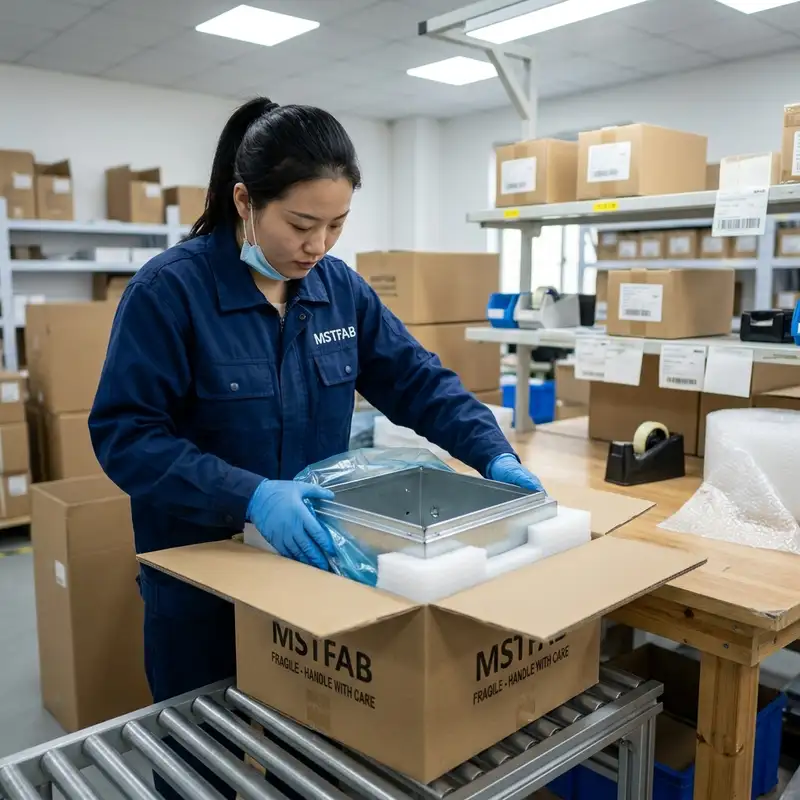
Protect zinc-coated and powder-coated surfaces from trapped moisture, abrasion, metal chips and impact during export. Specify protective film restrictions, desiccant or moisture barrier needs, corner protection, pallet limits, stacking rules and labeling.
Packaging is rarely the glamorous line on the purchase order. It becomes very interesting when twelve approved doors arrive rubbing against one another.
Galvanized Enclosure RFQ Checklist
- Released STEP or STP assembly and controlled PDF drawings
- Part numbers, revisions and quantity by production stage
- Material standard, grade, thickness and zinc coating designation
- Required material certificate or lot traceability
- Installed orientation and intended environment
- Functional datums, CTQs and after-finish tolerances
- Weld symbols, cosmetic class and post-weld protection
- Hardware type, orientation and installation requirements
- Powder-coating color, texture, thickness, masking and test method
- Door gap, latch, hinge and gasket-land acceptance
- FAI format, approved samples and production sampling
- Packaging, labeling and delivery destination
Frequently Asked Questions
Does “SGCC” alone fully specify the material?
No. The purchase package should identify the applicable standard, forming or strength requirement, thickness, zinc coating designation, surface condition and certificate needs. Supplier shorthand should be confirmed before approval.
Can MSTFAB choose the zinc coating for our environment?
We can explain sourcing and fabrication implications, but the OEM approves material and coating based on exposure, service life, corrosion assessment and finished-equipment requirements.
Do you manufacture a complete electrical cabinet?
No. We manufacture custom sheet metal shells and specified mechanical parts from customer drawings. Electrical components, wiring, controls and final certification are outside our scope.
Can dimensions be inspected after powder coating?
Yes. The drawing should identify which interfaces are controlled after finish and which are measured in bare metal. That prevents coating thickness from creating an argument later.
Will a galvanized shell automatically meet an IP or NEMA rating?
No. A rating depends on the complete enclosure design, sealing components, assembly and required testing. Material choice alone does not create a certified rating.
Use the broader sheet metal enclosure RFQ checklist to add files, hardware, quantity, inspection, packing and delivery inputs around this galvanized-material specification.
Send a Specification, Not a Zinc-Colored Guess
Provide the controlled model, drawings, material callout, finish, quantity and inspection requirements. MSTFAB will review the empty enclosure shell for manufacturability, repeatable measurement and quotation clarity.
 WeChat Contact
 WhatsApp Me Directly