
How do fabricators restore corrosion protection on sheared edges and welded joints of galvanized sheet metal?
Corrosion protection across fabricated galvanized sheet steel (SGCC, SECC, Galvanneal) is restored and maintained through five critical engineering procedures: (1) Relying on galvanic cathodic sacrificial protection for sheared/laser-cut edges (effective for sheet thicknesses ≤ 2.5 mm, where surrounding zinc dissolves preferentially to seal exposed steel edges with insoluble zinc hydroxycarbonate), (2) Remediating zinc coating burn-off around heat-affected weld zones per ASTM A780 (thorough mechanical deslagging followed by application of organic zinc-rich primer containing ≥ 92% pure metallic zinc dust in dry film), (3) Controlling welding fumes and zinc-oxide porosity using pulse-MIG with silicon-bronze (CuSi3) brazing or proper joint gap spacing, (4) Pretreatment conversion washing (zinc/zirconium phosphate) before powder coating to prevent zinc gas bubbling and pinhole outgassing, and (5) Non-destructive magnetic coating thickness verification (ASTM D7091) and moisture-barrier export crating.
Galvanized sheet steel (hot-dip SGCC or electro-galvanized SECC) is one of the most cost-effective materials for industrial enclosures, HVAC ducting, solar mounting frames, and server cabinets. Its exceptional corrosion resistance stems from the metallurgical zinc layer that provides barrier protection and galvanic sacrificial shielding. However, manufacturing operations—fiber laser cutting, punch shearing, press brake forming, and seam welding—disrupt this protective barrier. Without proper edge engineering and ASTM A780 weld repair, corrosion will rapidly initiate at exposed steel edges and propagate across the part.
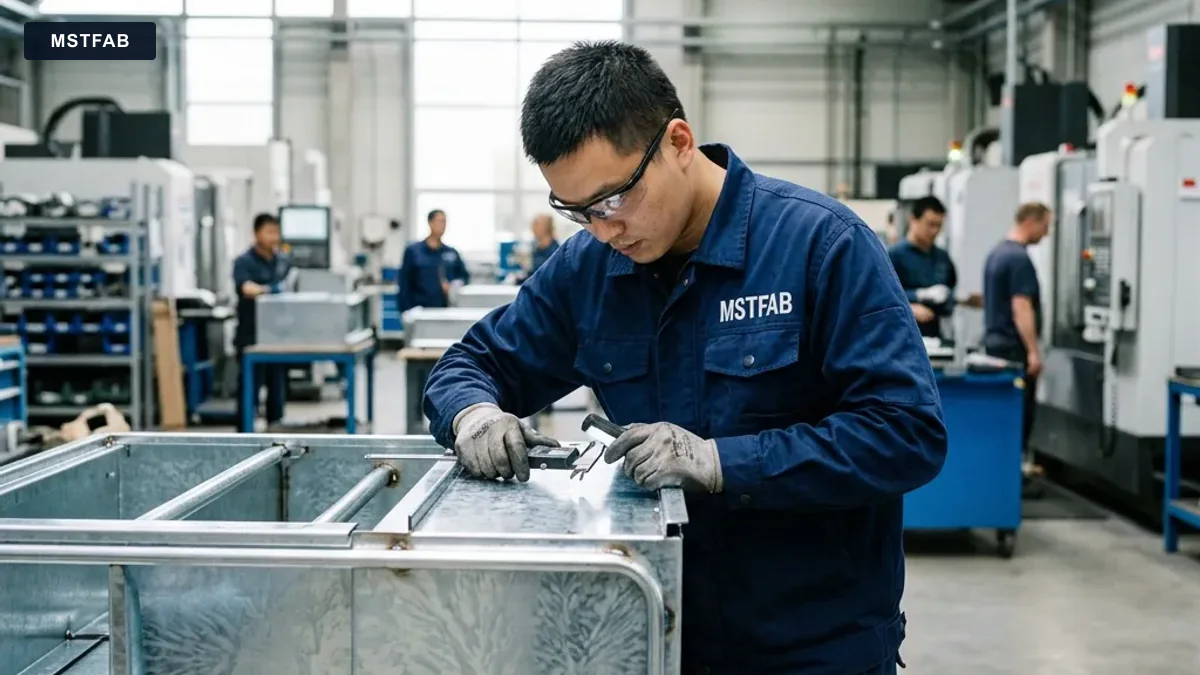
The 5 Engineering Principles of Galvanized Protection
1. Cathodic Self-Healing on Cut and Sheared Edges
When galvanized steel is cut by a fiber laser or CNC turret punch, the bare carbon steel core is exposed along the cut face. Fortunately, zinc is electrochemically more active than iron. In atmospheric moisture, zinc acts as a sacrificial anode, giving up electrons to protect the exposed steel. This “self-healing” cathodic protection effectively bridges cut gaps up to 1.5 mm to 2.0 mm thick. For plates thicker than 2.5 mm, secondary edge sealing is required.
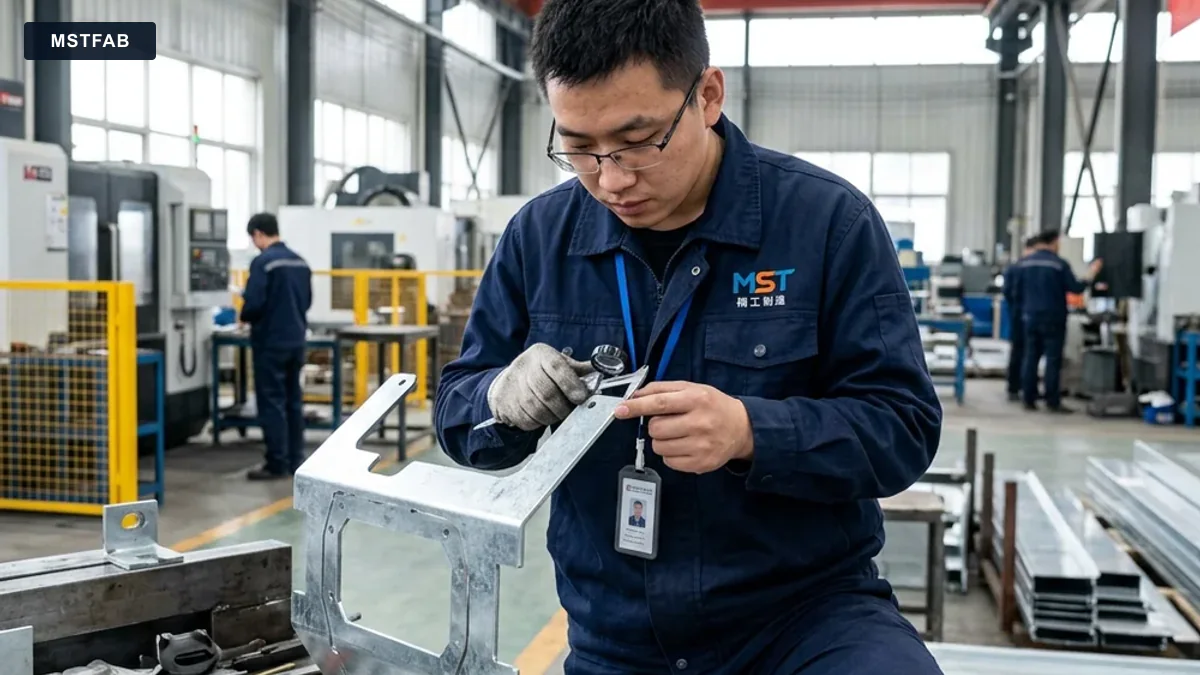
2. ASTM A780 Zinc Repair for Welded Seams
Welding vaporizes zinc (which boils at 906° C, far below steel’s melting point of 1538° C), leaving bare steel and zinc-oxide smoke across a 10 mm–20 mm heat-affected zone (HAZ). To restore corrosion resistance, fabricators execute ASTM A780 Standard Practice for Repair of Damaged Galvanized Coatings:
- Surface Preparation: Power wire-brushing or grit blasting to SSPC-SP 11 (Power Tool Cleaning to Bare Metal) to remove all weld spatter, flux, and soot.
- Zinc-Rich Paint Application: Applying an approved organic zinc-rich primer containing ≥ 92% pure metallic zinc dust by weight in the dry film, achieving a minimum dry-film thickness of 75 to 100 μm.
- Zinc Solder Stick Repair: For high-spec aesthetic applications, heating the joint to 315° C and applying a zinc-lead-tin solder alloy stick that metallurgical bonds with the base steel.
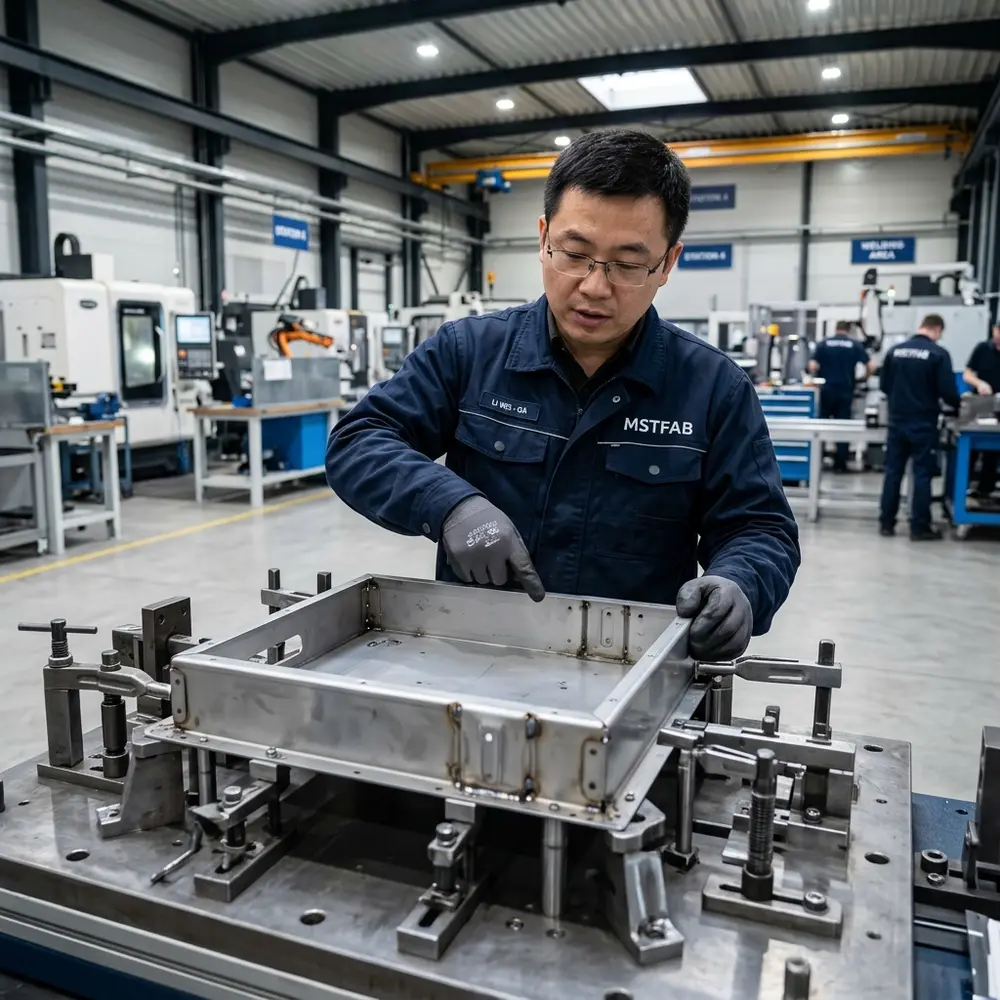
3. CNC Press Brake Bending Without Zinc Flaking
Low-grade commercial galvanized sheet can experience micro-cracking or flaking of the brittle zinc-iron alloy layer when bent over sharp radii. MSTFAB specifies minimum inside bend radii R ≥ 1.0T and utilizes continuous-galvanized G90 / Z275 coils with zero-spangle, highly ductile zinc coatings that flex without flaking.
4. Pretreatment to Prevent Powder Coat Outgassing
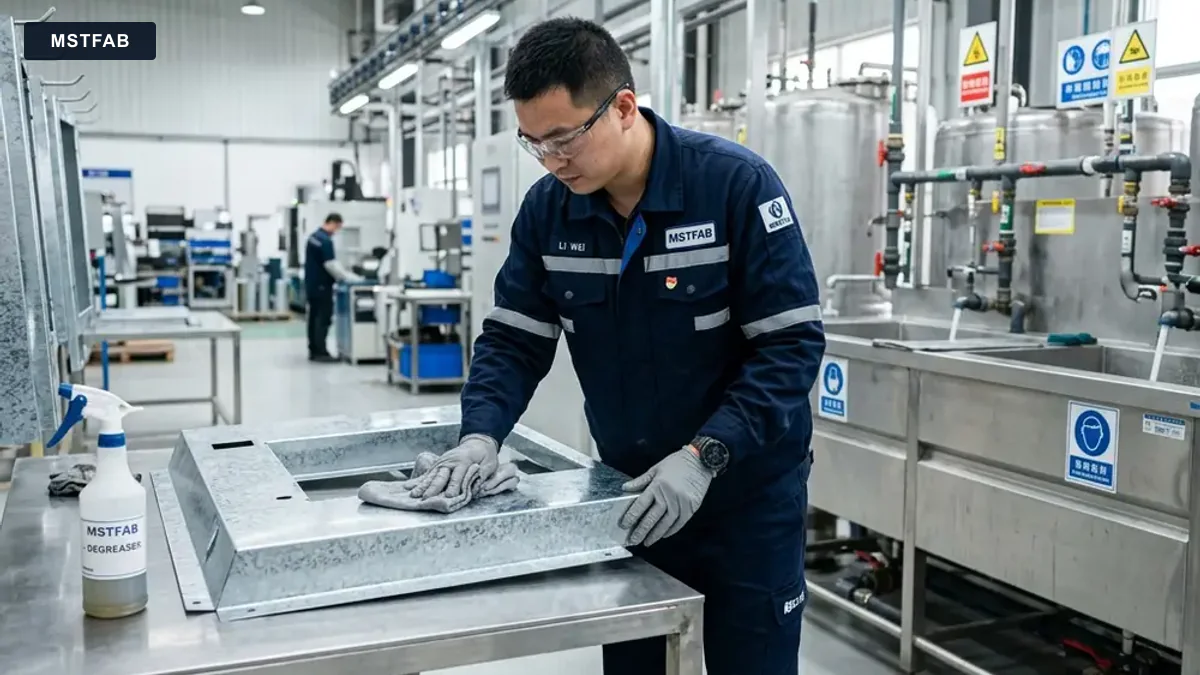
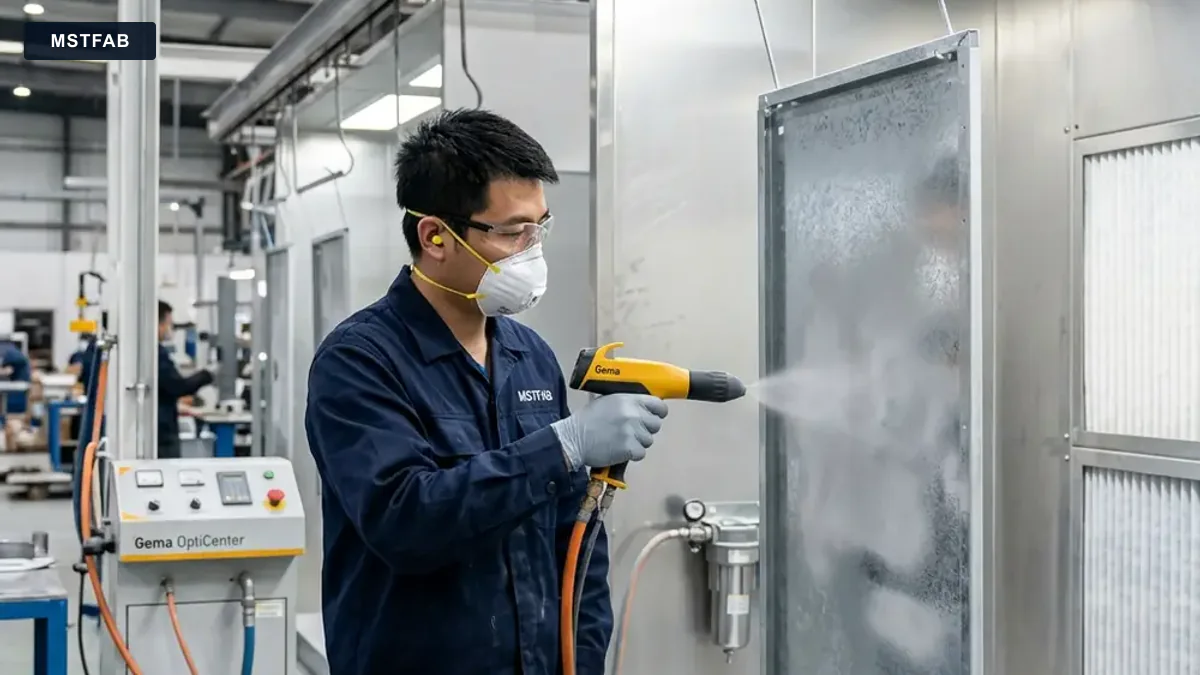
Powder coating over galvanized steel requires specialized chemical pretreatment. Trapped air and moisture in the porous zinc crystal structure expand when heated in the 200° C curing oven, causing microscopic gas bubbles that burst through the molten paint film (pinholing or outgassing). MSTFAB prevents outgassing by running parts through an automated zinc-phosphate wash line followed by a dry-off preheating pass and utilizing anti-outgassing polyester powder formulations.


Galvanized Steel Weld Repair & Protection Matrix
The engineering reference table below outlines corrosion remediation standards and testing protocols for galvanized sheet metal:
| Protection Area | Mechanism of Corrosion Risk | Remediation & Engineering Standard | Quality Verification Method |
|---|---|---|---|
| Laser / Sheared Cut Edge | Bare steel exposed to atmospheric humidity | Galvanic cathodic self-healing (thickness ≤ 2.5 mm) | Visual audit: burr-free edge allows zinc ion migration |
| MIG/TIG Welded Seam | Zinc vaporized in 10–20 mm heat-affected zone (HAZ) | ASTM A780 Zinc-rich primer (≥ 92% metallic zinc dust) | Magnetic thickness gauge (DFT ≥ 75 μm) |
| Press Brake Bends | Micro-cracking or flaking of zinc-iron alloy layer | Maintain inside bend radius R ≥ 1.0T | 10× optical magnification for zinc flaking |
| Powder Coating Adhesion | Outgassing pinholes & poor paint bonding | Zinc-phosphate chemical wash + anti-outgassing powder | Cross-hatch adhesion ASTM D3359 Class 5B |
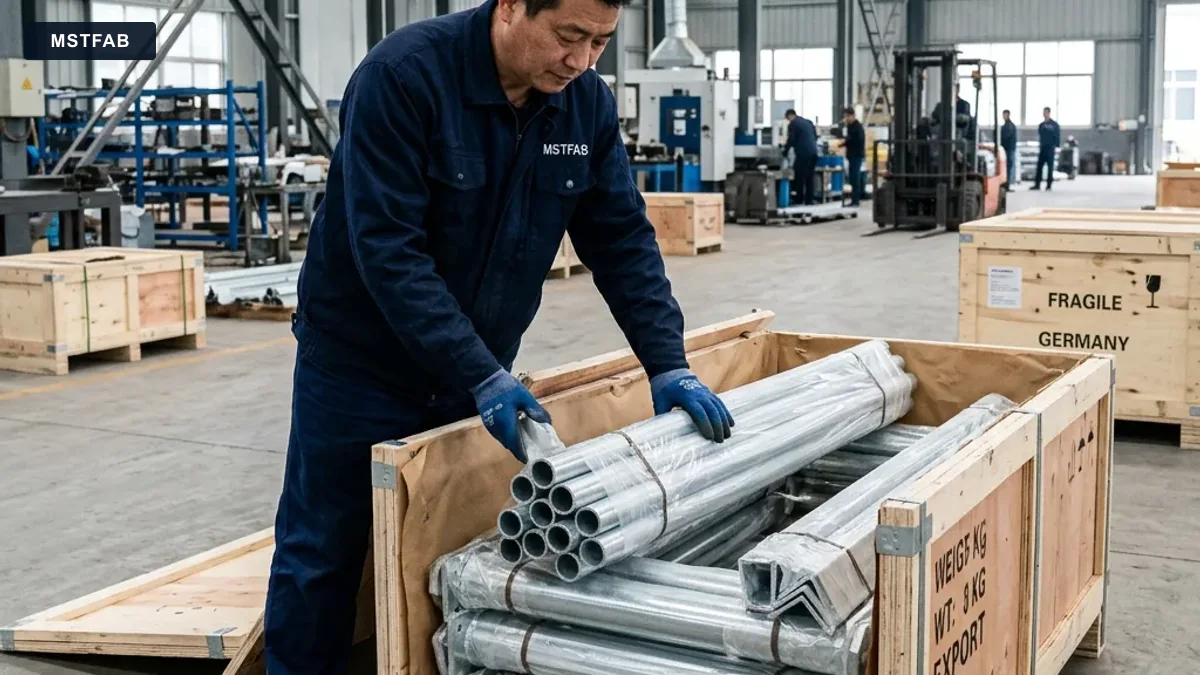
| Storage & Transit | White rust (wet storage stain) from trapped moisture | Desiccant bags + ventilated wooden export crating | Zero white zinc hydroxide formation upon container delivery |
Partner with MSTFAB for Galvanized Sheet Metal Manufacturing
MSTFAB provides complete precision sheet metal fabrication for galvanized steel enclosures, server chassis, and solar mounting structures. With ductile G90/Z275 coil sourcing, fiber laser cutting, certified ASTM A780 weld restoration, and pinhole-free powder coating, we guarantee long-lasting outdoor corrosion resistance. Contact our engineering team today.
 WeChat Contact
 WhatsApp Me Directly