
A PLC enclosure sounds like a control system until the purchasing mess begins. Let’s keep the wires out of the soup: MSTFAB fabricates the sheet metal enclosure, cabinet shell, door, mounting plate, brackets, and hardware features to your drawings. We do not build complete PLC control panels. No PLC modules. No wiring. No programming. No magical cabinet that wakes up and runs your factory.
Quick answer: A PLC enclosure is the mechanical sheet metal housing used by an OEM or system integrator to protect and mount the electrical components they supply. MSTFAB can fabricate empty PLC enclosure shells, doors, back mounting plates, gland plates, hinge/latch areas, PEM inserts, grounding studs, brackets, powder-coated housings, and export packaging from 2D drawings and STEP files. The buyer or integrator remains responsible for the PLC, wiring, terminals, electrical design, programming, testing, and final control panel certification.
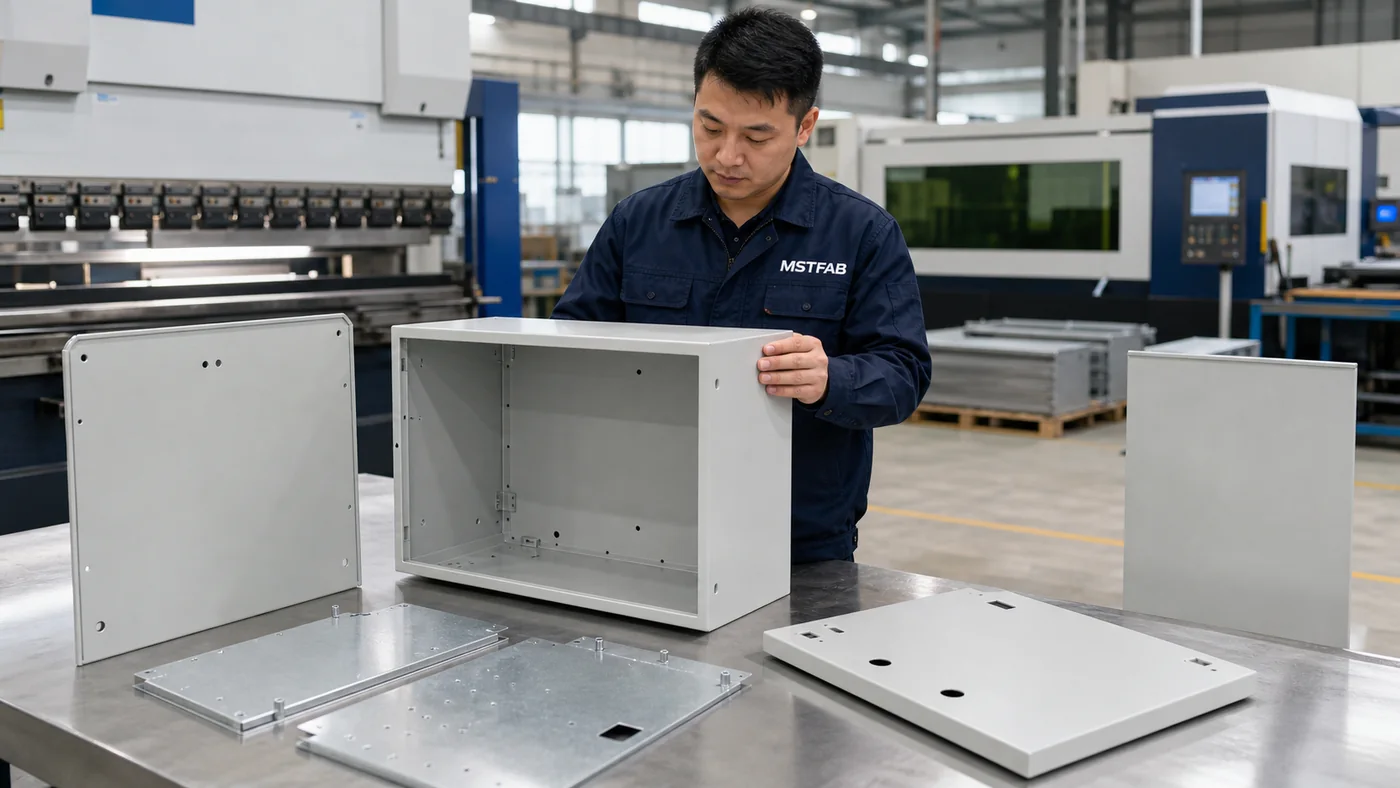
Scope First: We Make the Enclosure, Not the PLC Panel
This is the trust line. If a sheet metal supplier talks like it is delivering a certified control system, ask where the PLC engineers, wiring shop, software team, and test lab are hiding. A metal box can protect a control panel; it is not the control panel.
MSTFAB fabricates: empty cabinet shells, doors, removable covers, side panels, back mounting plates, cable gland plates, hinge/latch areas, PEM inserts, grounding studs, ventilation panels, brackets, powder coating, and protective packaging.
MSTFAB does not supply: PLC modules, relays, terminals, circuit breakers, DIN rail assemblies, wiring harnesses, HMI screens, software, programming, control logic, complete panel assembly, or UL 508A / IEC 61439 / NFPA 79 final certification.
We can fabricate toward your mechanical drawing, gasket plan, finish requirement, and inspection points. Final electrical design, heat validation, IP/NEMA rating, safety compliance, and control panel certification must be handled by the OEM or system integrator after full assembly.
What PLC Enclosure Sheet Metal Parts Can Be Fabricated?
A useful RFQ separates the enclosure into parts. That keeps the quote clear and stops “one cabinet” from becoming a mystery box with hinges.
| Sheet Metal Part | Function | Buyer Risk | What to Confirm |
|---|---|---|---|
| Outer enclosure shell | Mechanical housing for the buyer’s PLC panel assembly | Warped box, poor squareness, coating damage | Material, thickness, bend sequence, flatness, packing |
| Door and removable panels | Access for maintenance and later electrical assembly | Door gap, hinge mismatch, gasket face problems | Hinge datum, latch position, gasket groove, panel flatness |
| Back mounting plate | Mounts buyer-supplied PLC modules, terminals, rails, and wiring | Hole mismatch or weak grounding contact | Hole pattern, grounding pads, PEM inserts, tolerance table |
| Cable gland plate | Provides cable entry openings defined by the panel designer | Burrs, wrong cutout size, bad sealing surface | Cutout drawing, edge radius, deburring, masking requirement |
| Vent panels and louvers | Support airflow for the final electrical design | Slot distortion or water/dust path problems | Slot pattern, drainage direction, filter interface, finish plan |
| Internal brackets and studs | Support buyer-supplied components and grounding points | Assembly stack-up drift | Critical dimensions, PEM types, thread masking, datum control |
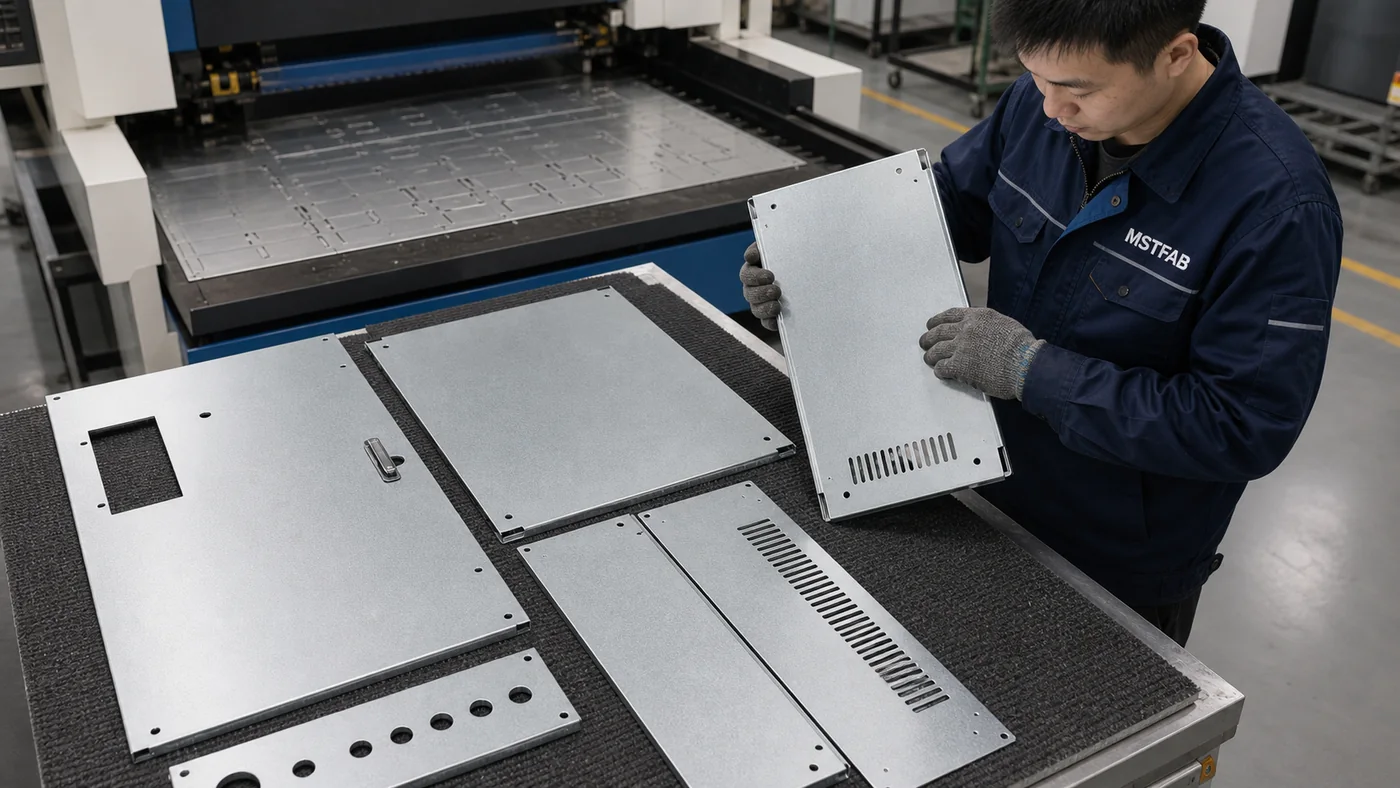
Laser Cutting: Cutouts Are Where Trouble Starts
PLC enclosure panels often need gland openings, hinge holes, latch cutouts, mounting holes, vents, and display windows that the buyer will populate later. MSTFAB can cut those features, but the electrical layout and component choices must come from the OEM or integrator.
Before cutting, confirm hole-to-edge distance, burr direction, slot width, corner radius, and whether any area must stay cosmetic. A wrong cutout is tiny until your cable gland or gasket refuses to fit. Then it becomes the star of the meeting.
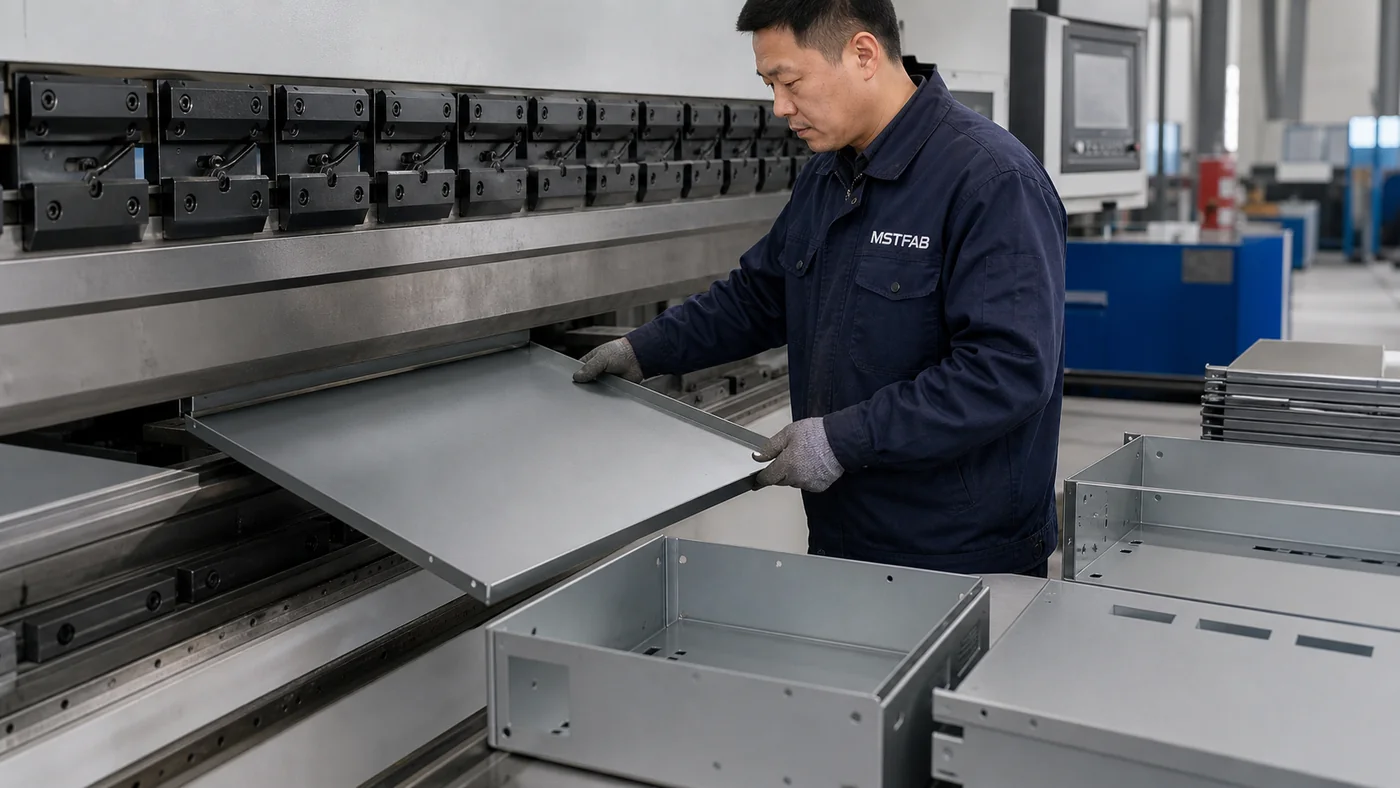
CNC Bending: Door Fit Is Made Here
Enclosure quality is mostly decided before paint. Bend sequence, flange width, bend radius, and box squareness all affect whether the door closes cleanly and the mounting plate sits where it should. The press brake is not a forgiveness machine. It remembers the drawing.
For enclosure manufacturing basics, see custom metal enclosure box fabrication. For control-panel-focused sheet metal work, see OEM sheet metal fabrication for control panels.
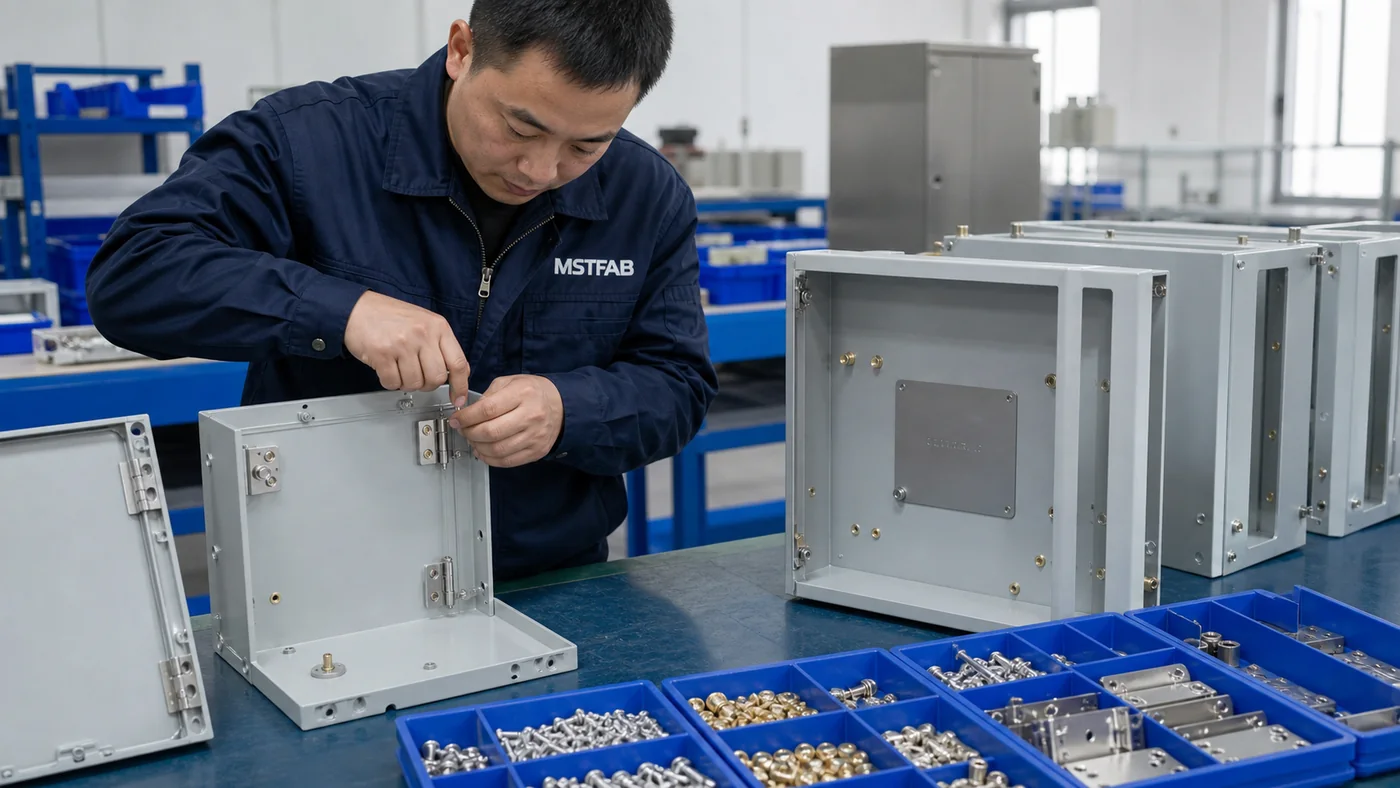
Hardware: Hinges, Latches, PEM Inserts and Grounding Studs
Hardware looks small, but it decides whether the enclosure becomes easy to assemble or a box-shaped headache. Define hinge size, latch position, PEM type, grounding studs, removable panel fasteners, and mounting plate standoffs before production.
MSTFAB can install mechanical hardware and inserts into the empty sheet metal enclosure. The buyer still owns the electrical layout. In plain English: we can prepare the house; you decide where the furniture and nervous little PLC brain goes.
Powder Coating: Mask the Functional Areas
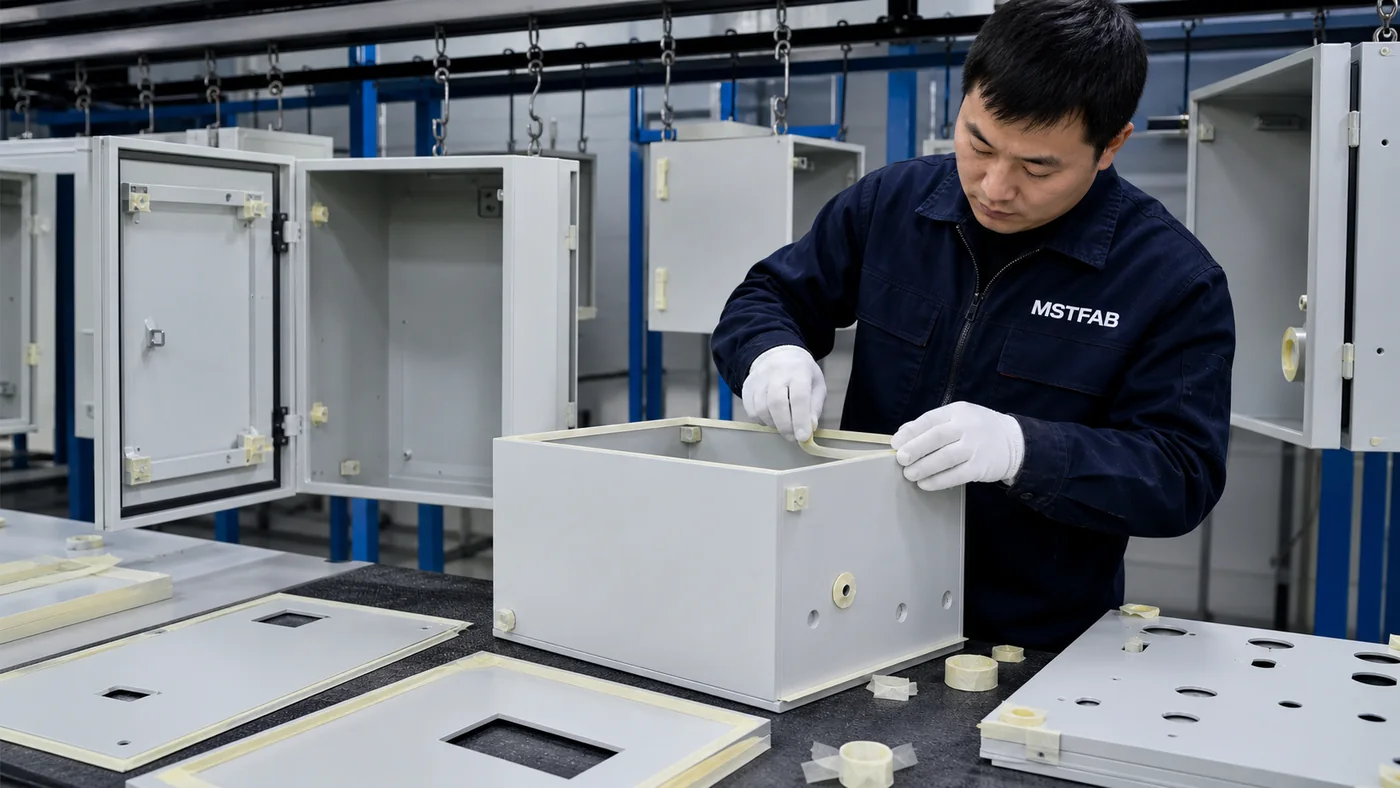
Powder coating is great for steel PLC enclosure housings, but it adds thickness. Threads, grounding pads, gasket faces, hinge seats, and cable entry areas may need masking. If the quote says only “powder coat grey,” that is not a finish spec. That is a color wish wearing work boots.
For finish selection and masking concerns, use Powder Coating vs Anodizing vs Plating: Sheet Metal Finishes Guide.
Inspection: The Trust Evidence Buyers Should Ask For
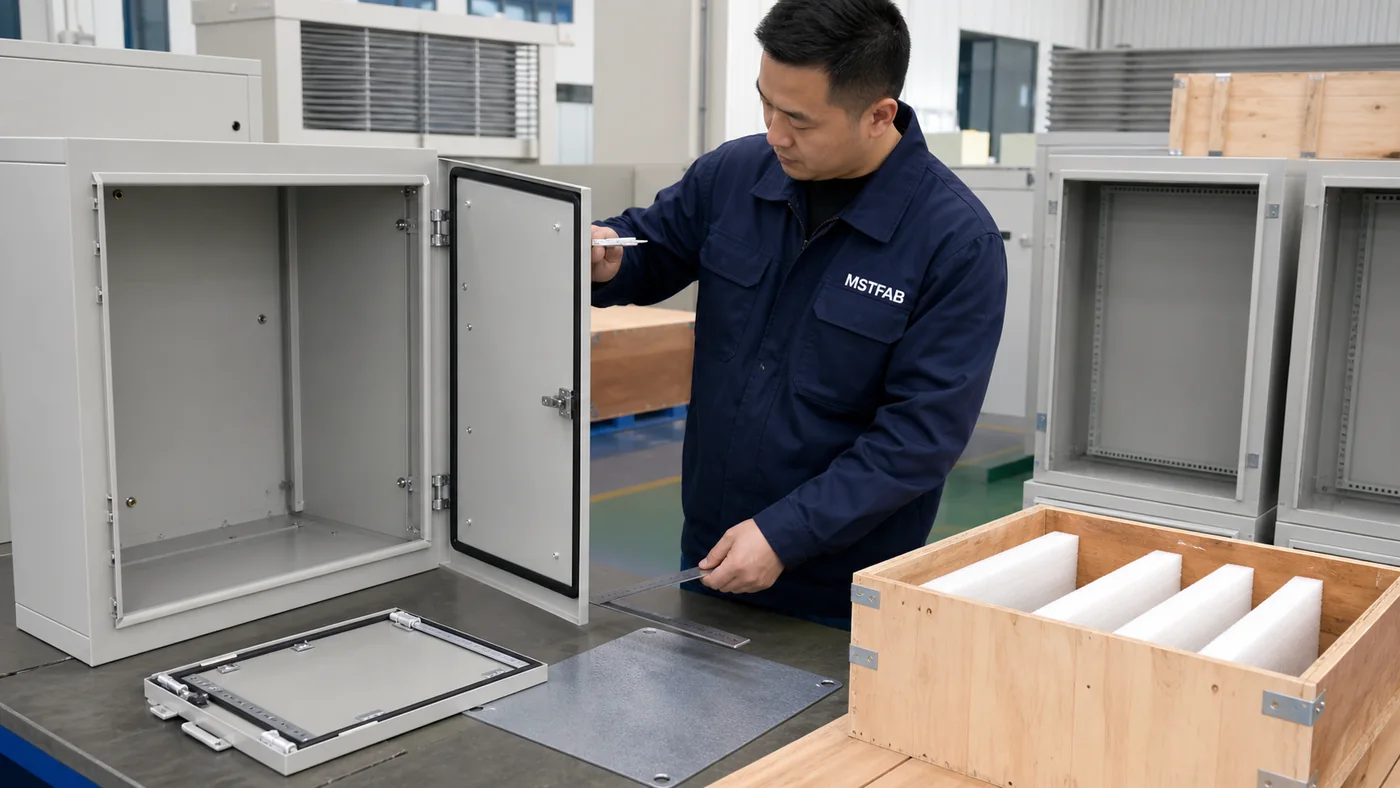
The buyer does not need a heroic paragraph about quality. The buyer needs proof that the enclosure shell will accept their later electrical assembly without a fight. Define the critical dimensions before production and ask for first-article evidence.
| Buyer Concern | Fabrication Check | Evidence to Ask For | Why It Matters |
|---|---|---|---|
| “Will my mounting plate fit?” | Hole pattern, plate size, datum control, PEM locations | First article photos and marked inspection report | Prevents re-drilling and module layout mismatch |
| “Will the door close and seal?” | Door gap, hinge alignment, latch datum, gasket face flatness | Door trial fit, flatness check, hinge/latch photos | Supports the buyer’s enclosure protection target |
| “Will grounding points still work?” | Masking on grounding pads and studs | Masking photos before coating and after-finish check | Stops powder coat from becoming an accidental insulator |
| “Will coating block threads?” | Thread masking or post-coat tapping plan | Hardware check and thread gauge photos | Prevents assembly delay on incoming inspection |
| “Will it arrive usable?” | Foam separation, carton/crate plan, corner protection | Packing photos before shipment | Good parts packed badly become expensive scrap |
What to Send for a Real RFQ
A PLC enclosure quote gets cleaner when the inputs are not a scavenger hunt. Send the package upfront and suppliers have fewer places to guess. Guessing is fast right up until it sends you rework.
- 2D drawings with dimensions, tolerances, bend notes, and critical features.
- STEP files for enclosure geometry and assembly context.
- Material and thickness: cold rolled steel, galvanized steel, stainless steel, or aluminum.
- Finish: powder coating, brushed stainless, passivation, plating, or bare metal.
- Door, hinge, latch, gasket, and mounting plate requirements.
- PEM insert, grounding stud, thread, and hardware list.
- Critical dimensions and acceptance criteria.
- Packing and shipping requirements.
- Scope note confirming empty sheet metal enclosure parts only, not a complete PLC control panel.
Red Flags in PLC Enclosure Sourcing
- The supplier claims complete PLC panel capability but only quotes sheet metal shells.
- The quote references UL 508A or IEC 61439 certification without explaining who certifies the final assembled panel.
- No one asks about gasket faces, hinge alignment, grounding pads, or cable entry plates.
- Powder coating is quoted with no masking map.
- Material is listed only as “steel” with no grade or thickness.
- The supplier does not separate cabinet shell, door, mounting plate, hardware, finish, and packing.
- There is no first-article inspection plan for critical features.
For early manufacturability checks, see DFM Design Rules for Sheet Metal Parts. For tolerance choices, use Sheet Metal Tolerances Explained for OEM Buyers. For budget planning, see Sheet Metal Fabrication Cost: What Actually Drives Your Part Price.
Key Takeaways
- MSTFAB fabricates PLC enclosure sheet metal housings, not complete PLC control panels.
- The OEM or system integrator owns PLC selection, wiring, programming, testing, and final certification.
- The main fabrication risks are door fit, mounting plate accuracy, grounding pads, coating thickness, and packaging damage.
- Clear drawings, STEP files, hardware lists, masking maps, and critical dimensions make the quote safer.
- A trustworthy sheet metal supplier states the scope clearly instead of pretending a box is a finished electrical system.
Frequently Asked Questions
Does MSTFAB manufacture complete PLC control panels?
No. MSTFAB manufactures custom sheet metal enclosure parts to buyer drawings. We do not supply PLC modules, wiring, terminals, programming, complete control panel assembly, or final electrical certification.
What PLC enclosure parts can MSTFAB fabricate?
We can fabricate empty cabinet shells, doors, side panels, removable covers, back mounting plates, cable gland plates, brackets, hinge/latch areas, PEM inserts, grounding studs, ventilation panels, and powder-coated housings.
Can MSTFAB build an enclosure toward IP or NEMA requirements?
We can fabricate the mechanical enclosure according to the buyer’s drawings, gasket design, material, finish, and inspection points. Final IP, NEMA, UL, IEC, or complete panel certification must be tested and approved by the OEM or system integrator after assembly.
What matters most for a PLC enclosure RFQ?
Send drawings, STEP files, material grade, thickness, finish, hardware list, gasket/hinge/latch requirements, critical dimensions, masking areas, and packing expectations. Also confirm that the scope is empty sheet metal enclosure fabrication only.
Why is powder coating masking important?
Powder coat can block threads, insulate grounding pads, thicken gasket faces, and affect hinge or latch fit. Masking those areas before coating prevents assembly problems later.
Need PLC Enclosure Sheet Metal Parts?
Send MSTFAB your 2D drawings, STEP files, material, finish, hardware list, masking notes, and target quantity. We will quote the sheet metal enclosure parts clearly, and we will not pretend an empty cabinet shell is a complete PLC control panel. The box deserves honesty too.
 WeChat Contact
 WhatsApp Me Directly