
Picking a finish feels like picking a paint color for your house, right up until the wrong choice means rust in a year, threads that no longer fit, or a quote that suddenly grew shoulders. Powder coating, anodizing, and plating are not interchangeable. They are different jobs wearing the same “make metal look finished” jacket.
Quick answer: Choose the finish by material, environment, and function. Powder coating is the versatile, durable, color-flexible choice for steel and aluminum enclosures, but it adds thickness and needs masking on threads and fit areas. Anodizing is for aluminum only; it gives a thin, hard, premium-looking oxide layer, but color range is limited. Plating adds a thin metal layer, usually zinc or nickel, mainly for steel corrosion protection, conductivity, solderability, or functional wear resistance. Match the finish to the job, not to a screenshot you liked.
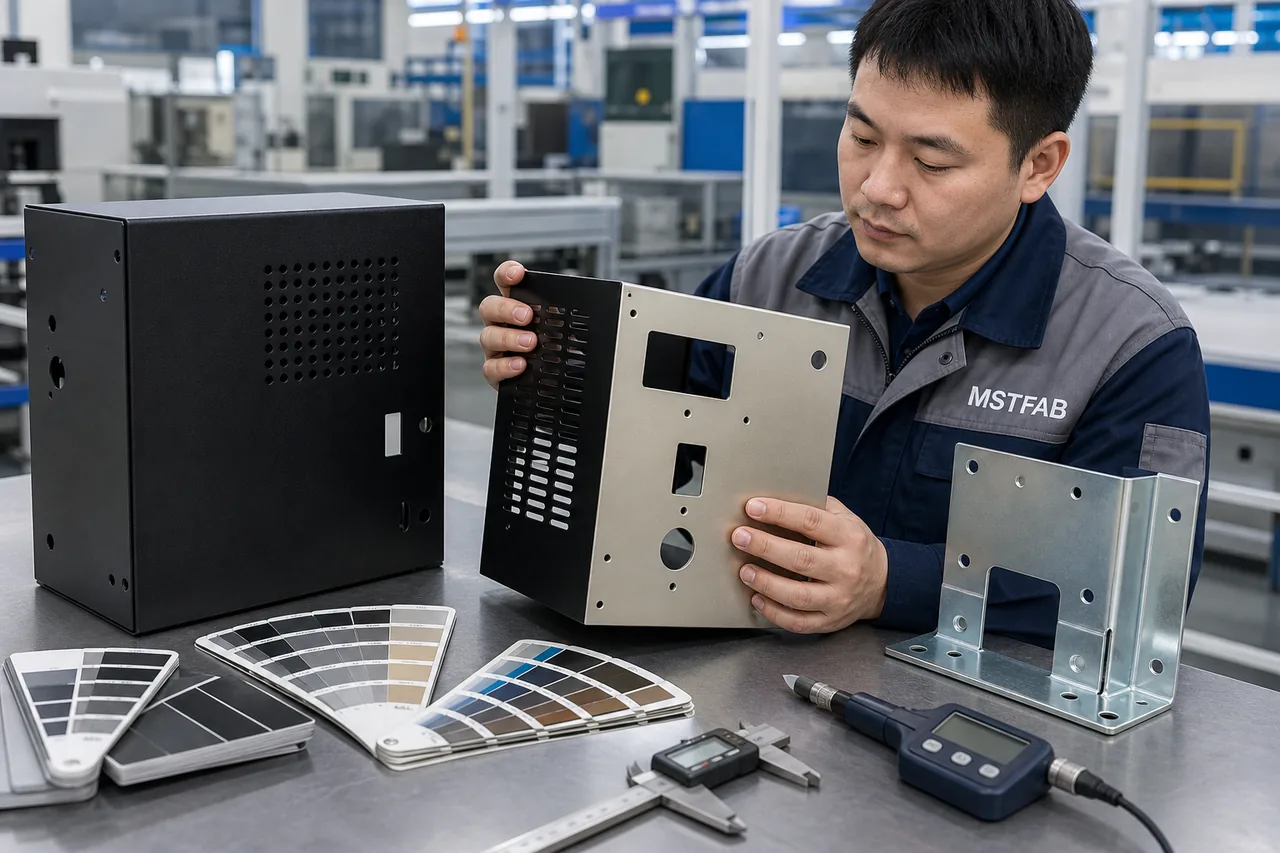
First Rule: Finish Is Not Decoration
A finish can protect against corrosion, control appearance, prevent scratches, support grounding, improve solderability, reduce wear, or simply make the part look less like it escaped from a tool drawer. The mistake is treating finish as the last cosmetic decision after the drawing is done.
For sheet metal buyers, finish is part of design for manufacturing. It affects hole sizes, thread masking, bend edges, gasket surfaces, grounding pads, packing method, cost, and lead time. If the quote says only “black finish,” you do not have a specification. You have a wish with a purchase order attached. For customer-facing parts, define the powder-coated sheet metal cosmetic standard before production.
Finish Selection Trust Table
| Finish | Best Material Fit | Look and Thickness | Best Use | Buyer Checks Before RFQ |
|---|---|---|---|---|
| Powder coating | Carbon steel, galvanized steel, aluminum, and some stainless applications. | Any RAL-style color, matte/gloss/textured options; commonly around 60-100 um film thickness depending on process. | Enclosures, cabinets, brackets, outdoor housings, customer-facing industrial parts. | Color code, gloss, texture, coating thickness, pretreatment, masking points, outdoor exposure, packing protection. |
| Anodizing | Aluminum only. | Thin oxide layer, metallic premium look; clear, black, champagne, bronze and limited color families. | Aluminum panels, instrument housings, heatsinks, bezels, lightweight enclosures. | Alloy, anodize type, color tolerance, rack marks, sealing method, conductivity/grounding needs, cosmetic class. |
| Plating | Mostly steel parts and hardware; nickel also used for functional surfaces. | Thin metal layer; zinc looks functional, nickel looks harder and shinier. | Steel brackets, fasteners, clips, grounding parts, solderable or corrosion-protected components. | Plating type, RoHS/REACH needs, salt spray target, thread condition, hydrogen embrittlement risk, packing. |
Powder Coating: The Crowd-Pleaser
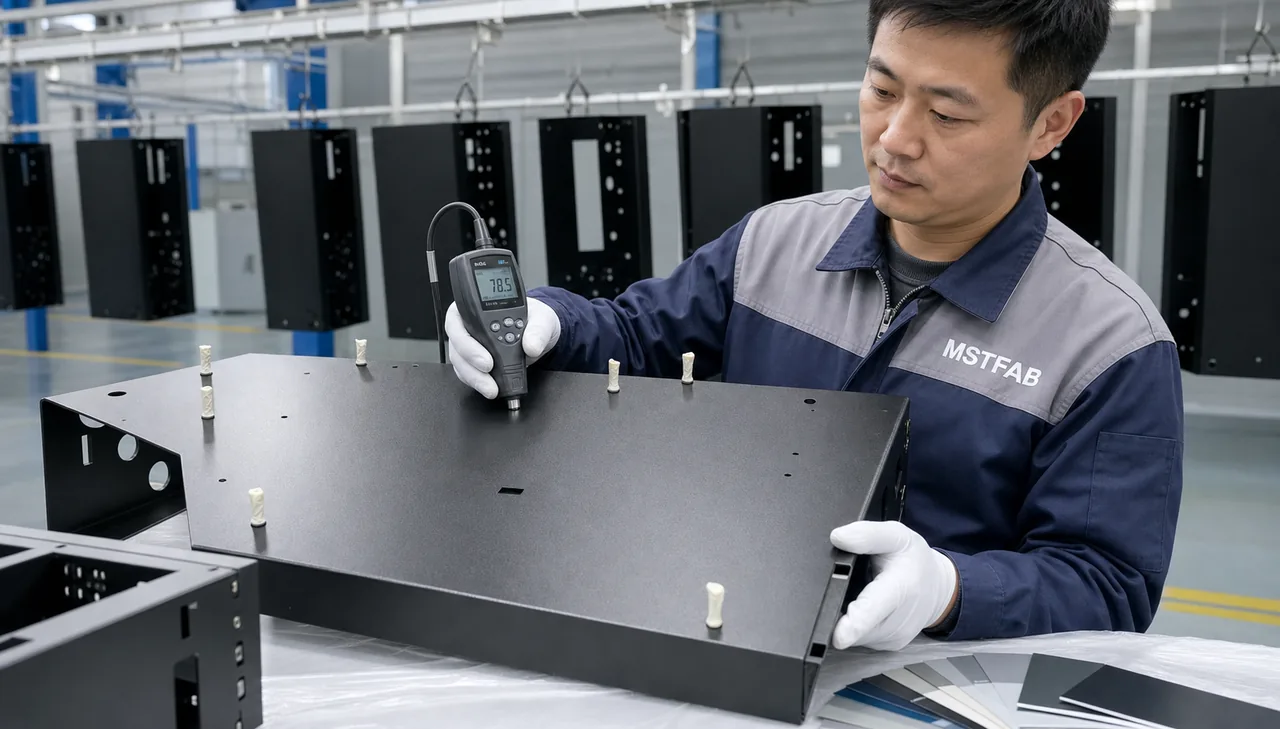
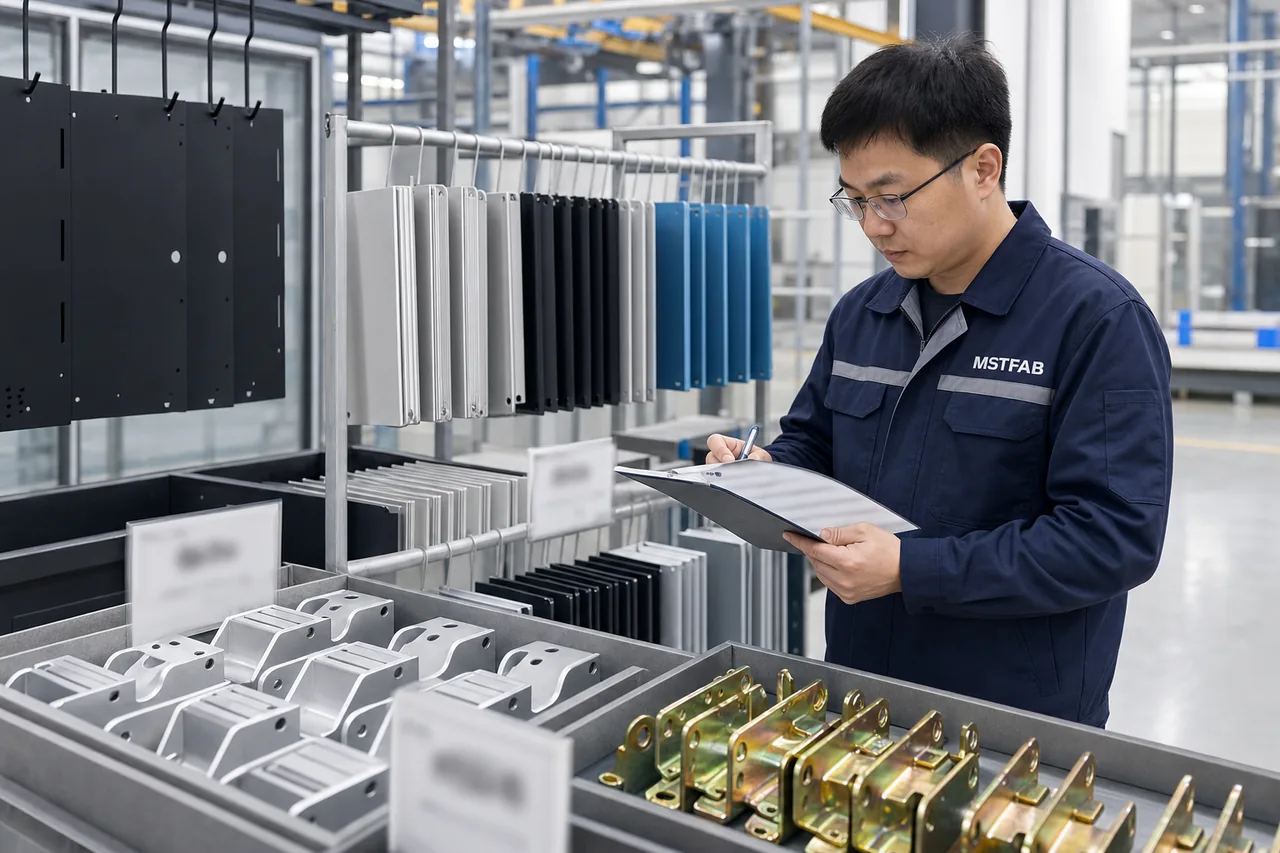
Powder coating is a dry powder sprayed onto the part and baked into a tough finish. It is popular because it is durable, color-flexible, and cost-effective for steel and aluminum sheet metal enclosures.
- Looks: almost any color family, including matte, gloss, fine texture, and wrinkle texture.
- Durability: good resistance to chips, scratches, UV exposure, and general industrial handling when pretreatment is right.
- Best for: steel and aluminum enclosures, cabinets, covers, brackets, control boxes, outdoor equipment shells.
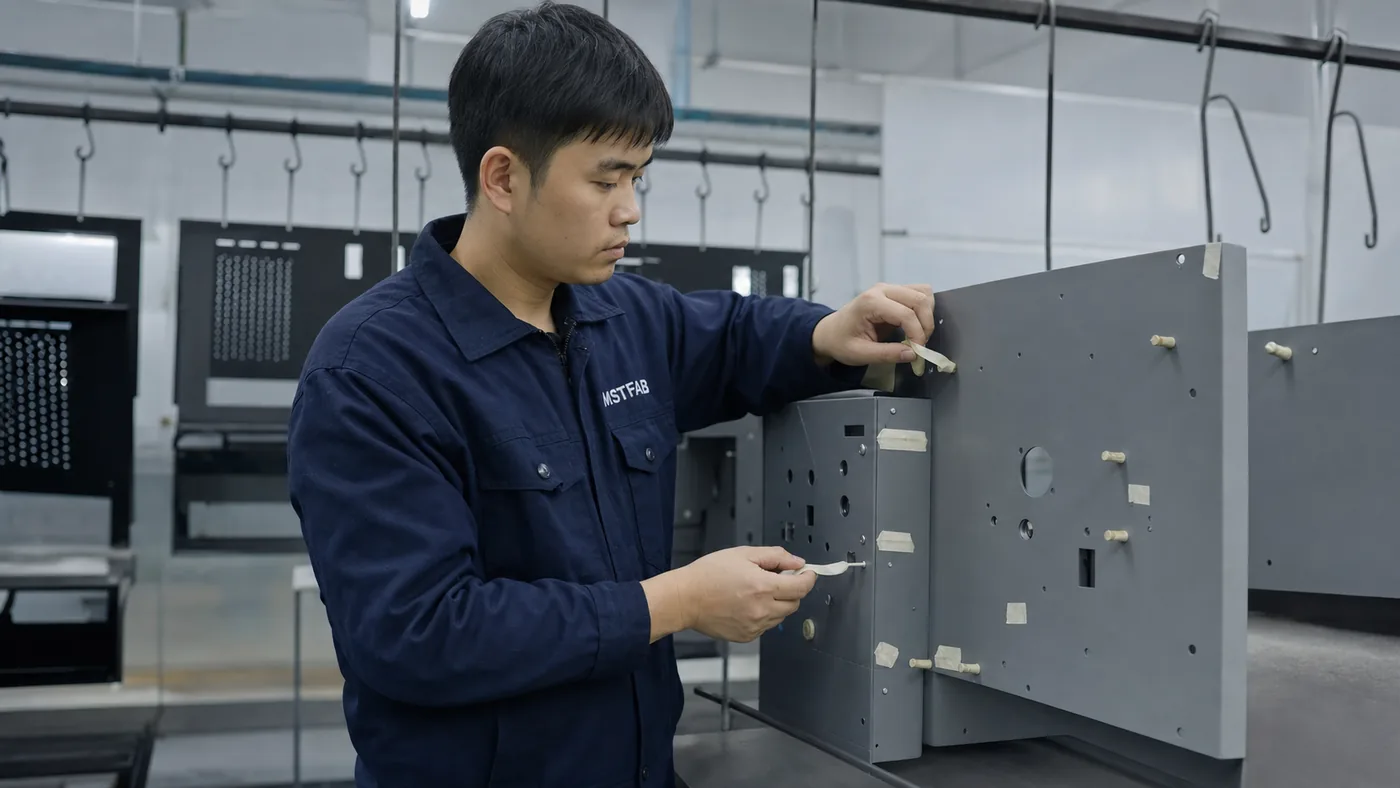
- The catch: it adds measurable thickness. Threads, hinge areas, sliding fits, grounding pads, gasket surfaces, and PEM areas may need masking or post-coat tapping.
The classic buyer mistake is saying “powder coat black” and assuming the shop reads minds. Black what? RAL code? Gloss level? Texture? Indoor or outdoor powder? Masked threads? If you leave the details blank, the details may leave you later, usually in the form of rework.
Anodizing: The Aluminum Specialist
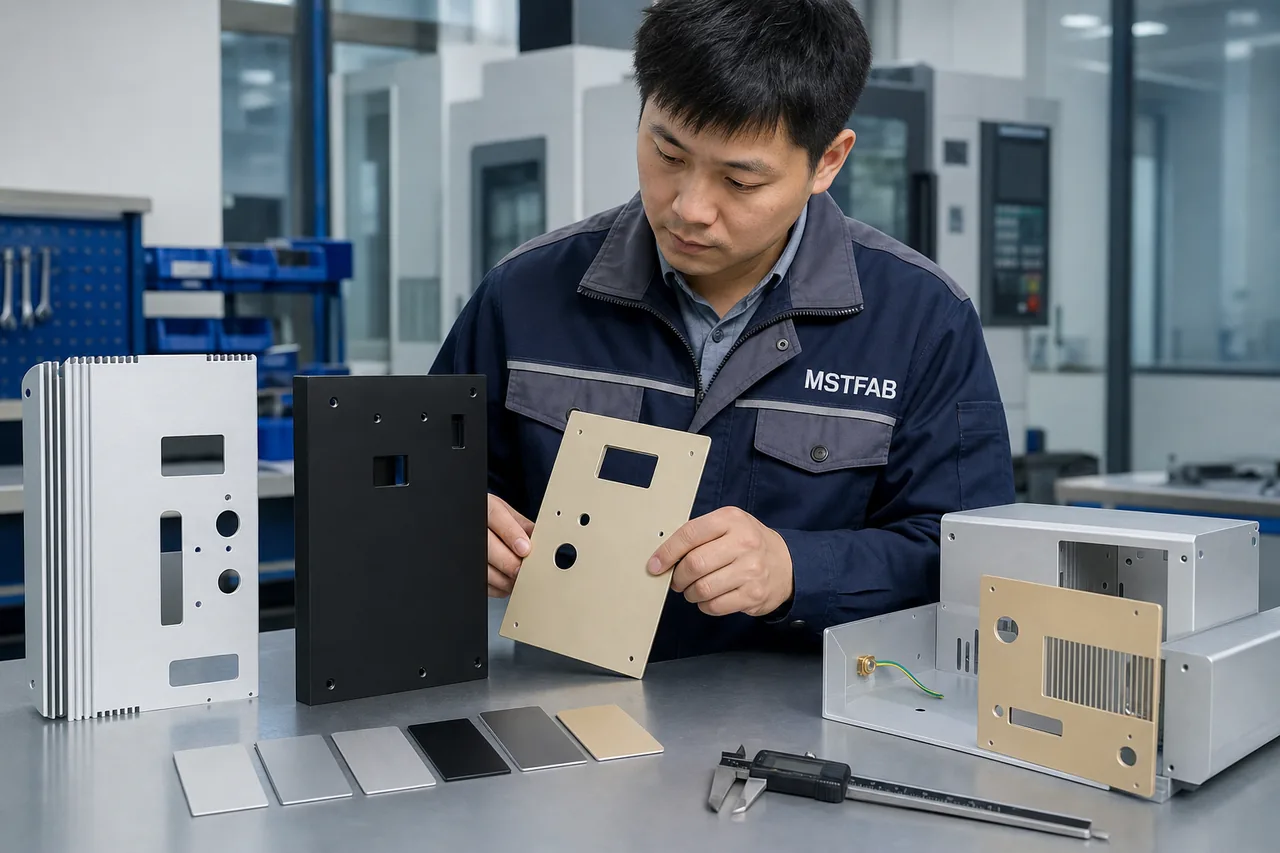
Anodizing is an electrochemical process that grows a hard oxide layer into the aluminum surface. It is not paint sitting on top. It is the aluminum surface upgraded, which is why it feels clean, technical, and premium.
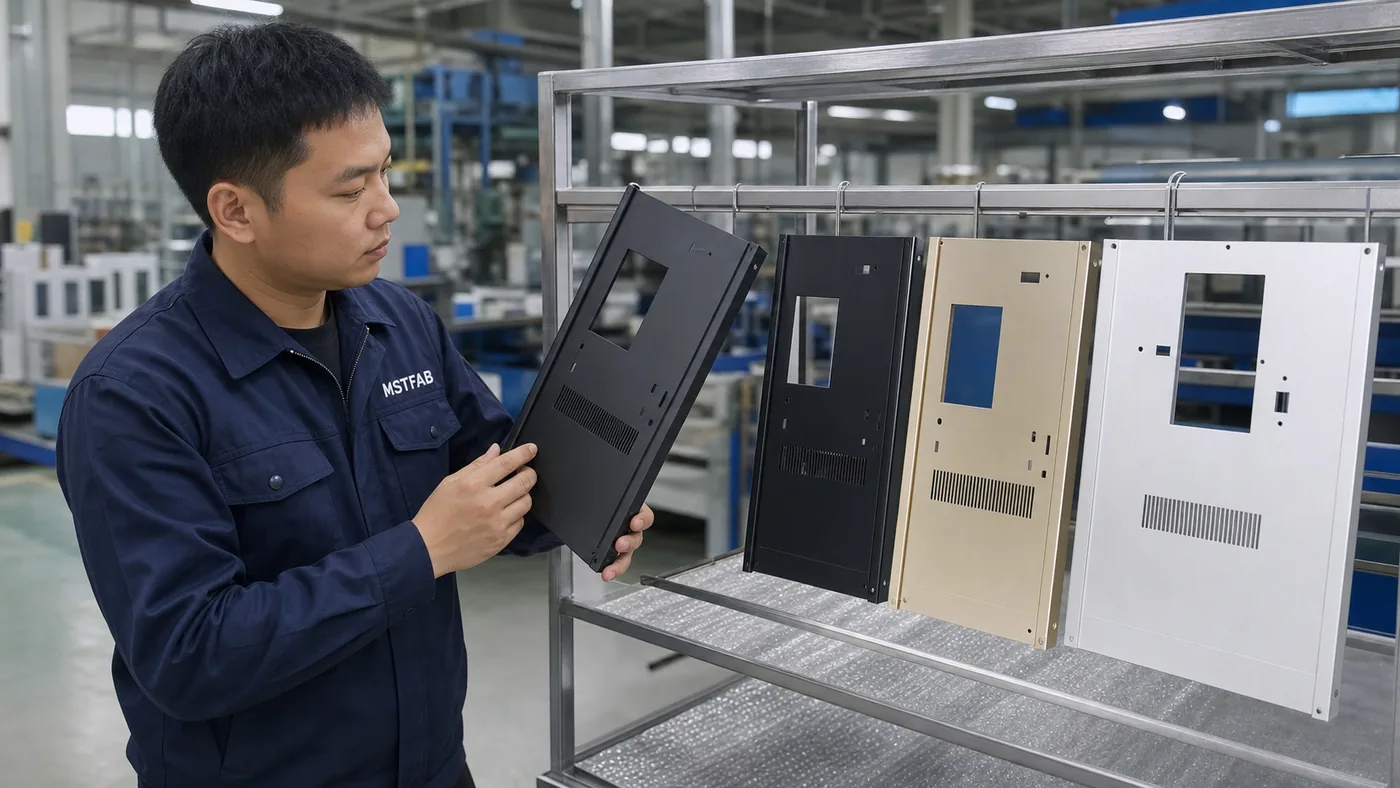
- Looks: clear, black, champagne, bronze, gold, and other limited metallic tones. It is not “any RAL color you want.”
- Durability: hard and corrosion-resistant, but sharp impacts can still dent the base aluminum underneath.
- Best for: aluminum panels, electronics housings, heatsinks, instrument parts, and premium exposed aluminum components.
- The catch: aluminum only. Steel cannot be anodized. Color can vary by alloy and batch, and welded aluminum can show cosmetic mismatch after anodizing.
Anodizing can also matter for electronics. Some anodized layers are insulating enough to affect grounding strategy, while bare or masked contact points may be needed. This is one of those small details that looks boring until the assembly refuses to behave.
Plating: The Thin-Metal Shield
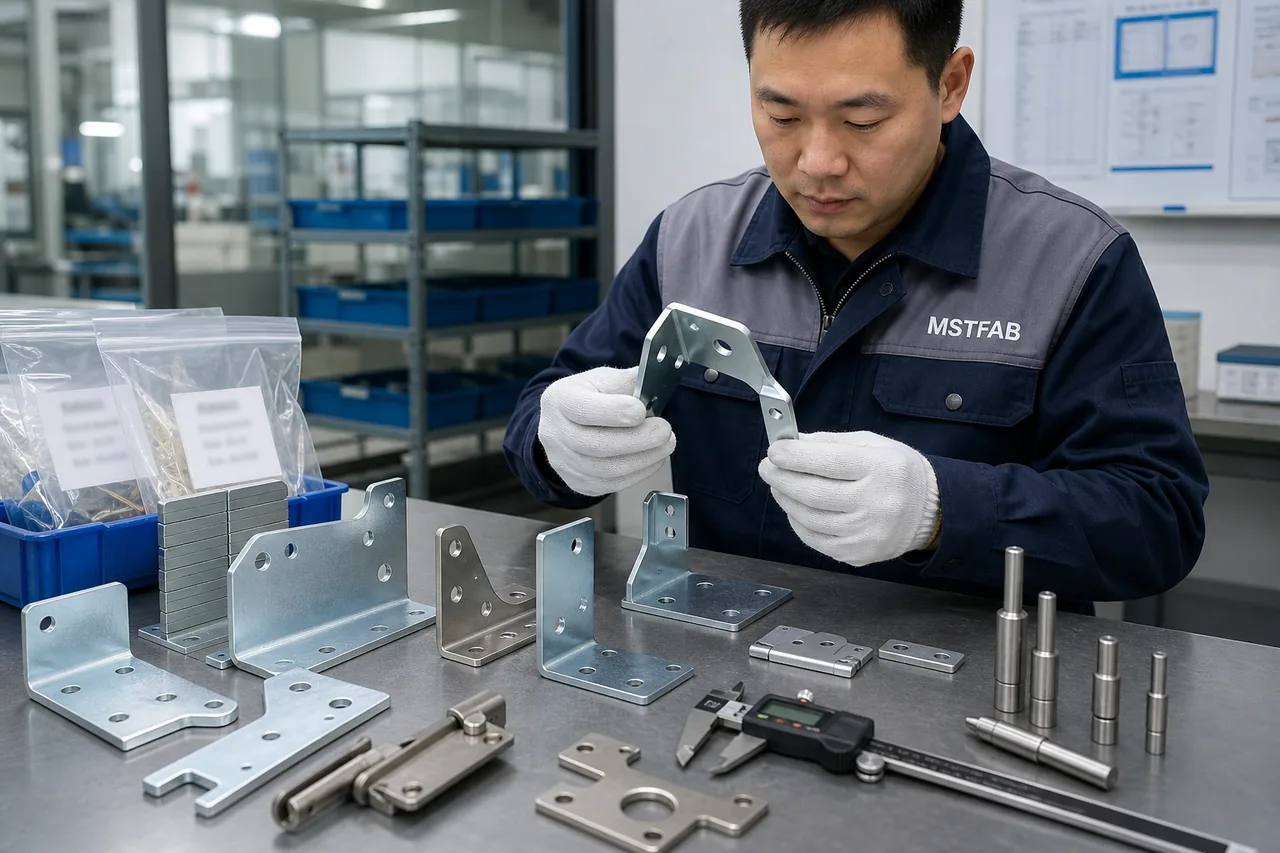
Plating deposits a thin metal layer on the part. Zinc plating is common for corrosion protection on steel. Nickel plating can add hardness, wear resistance, conductivity, or solderability depending on the specification.
- Looks: functional metallic. Zinc may look blue-white, yellowish, or clear depending on passivation; nickel is smoother and shinier.
- Durability: useful for corrosion control and functional surfaces, but not a thick cosmetic skin like powder coating.
- Best for: steel brackets, fasteners, clips, grounding parts, and components that need a thin protective metal layer.
- The catch: plating chemistry, environmental compliance, hydrogen embrittlement risk, and salt spray targets must be specified. “Just plate it” is not enough.
Plating is usually the practical friend, not the fashion friend. If you want a matte blue customer-facing enclosure, plating is the wrong room. Powder coating is down the hall.
Material Decides What Is Possible
Material comes first. Steel, aluminum, stainless steel, and galvanized sheet do not accept finishes in the same way. Anodizing is for aluminum. Powder coating works broadly, but pretreatment changes by substrate. Stainless may need passivation, brushing, electropolishing, or a cosmetic grain direction instead of a color coat.
If you are still choosing the metal, use this before locking the finish: Steel vs Aluminum vs Stainless: Material Guide for Sheet Metal Enclosures.
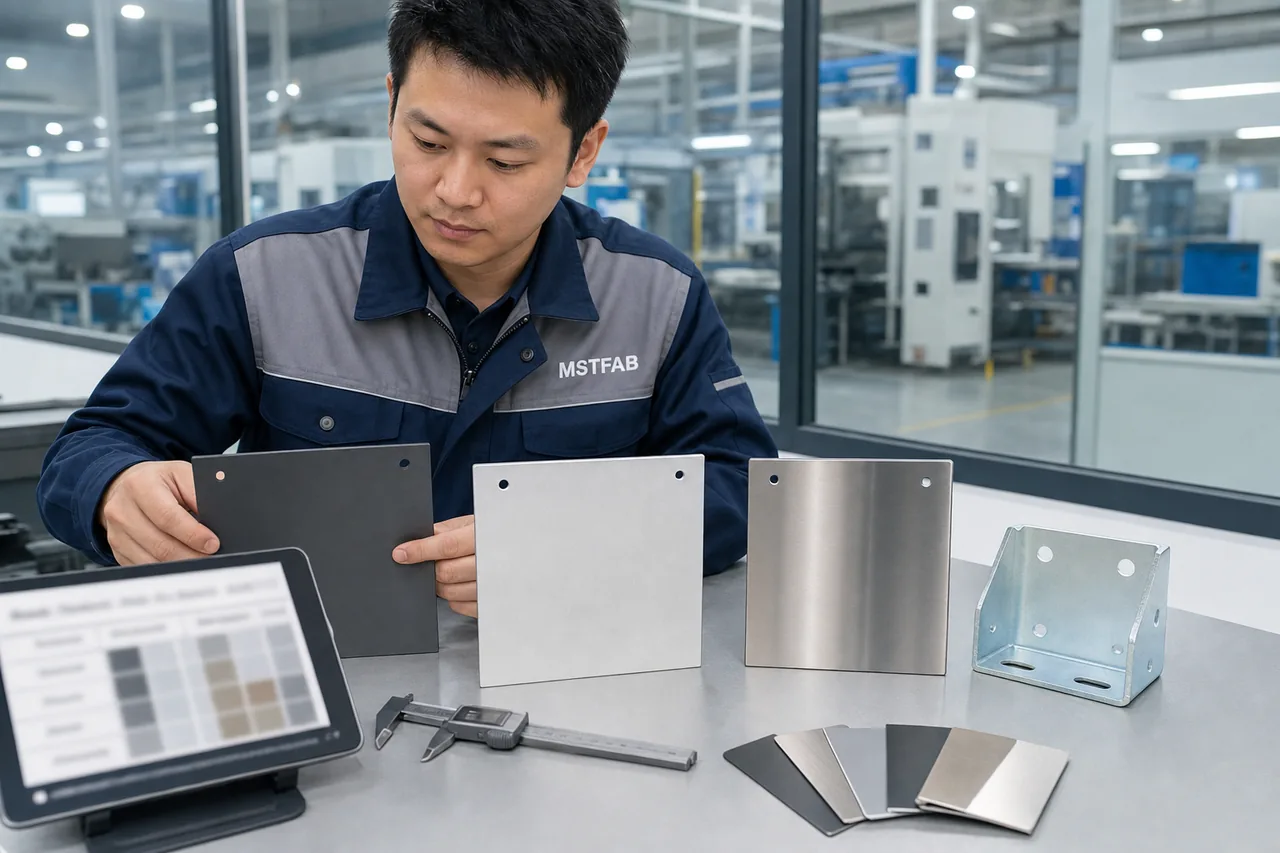
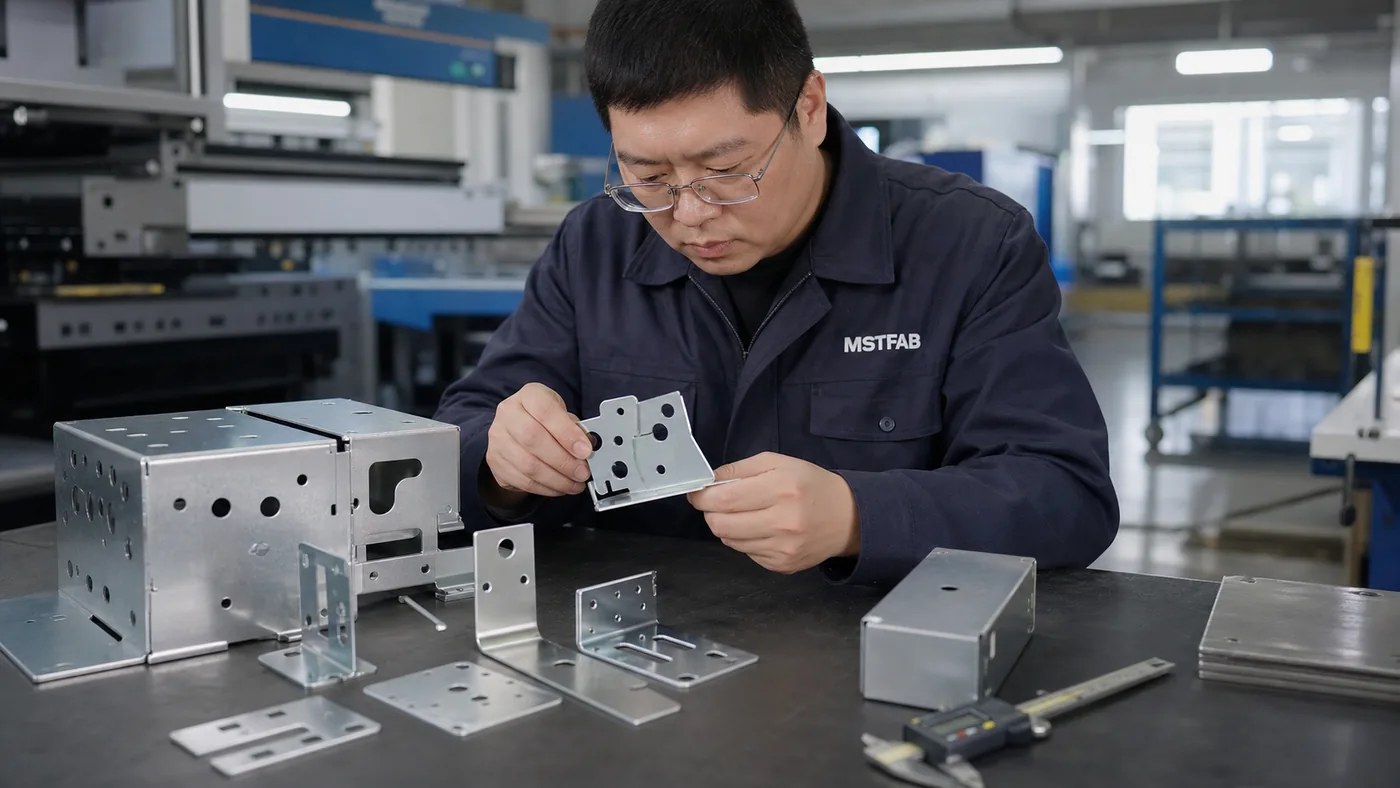
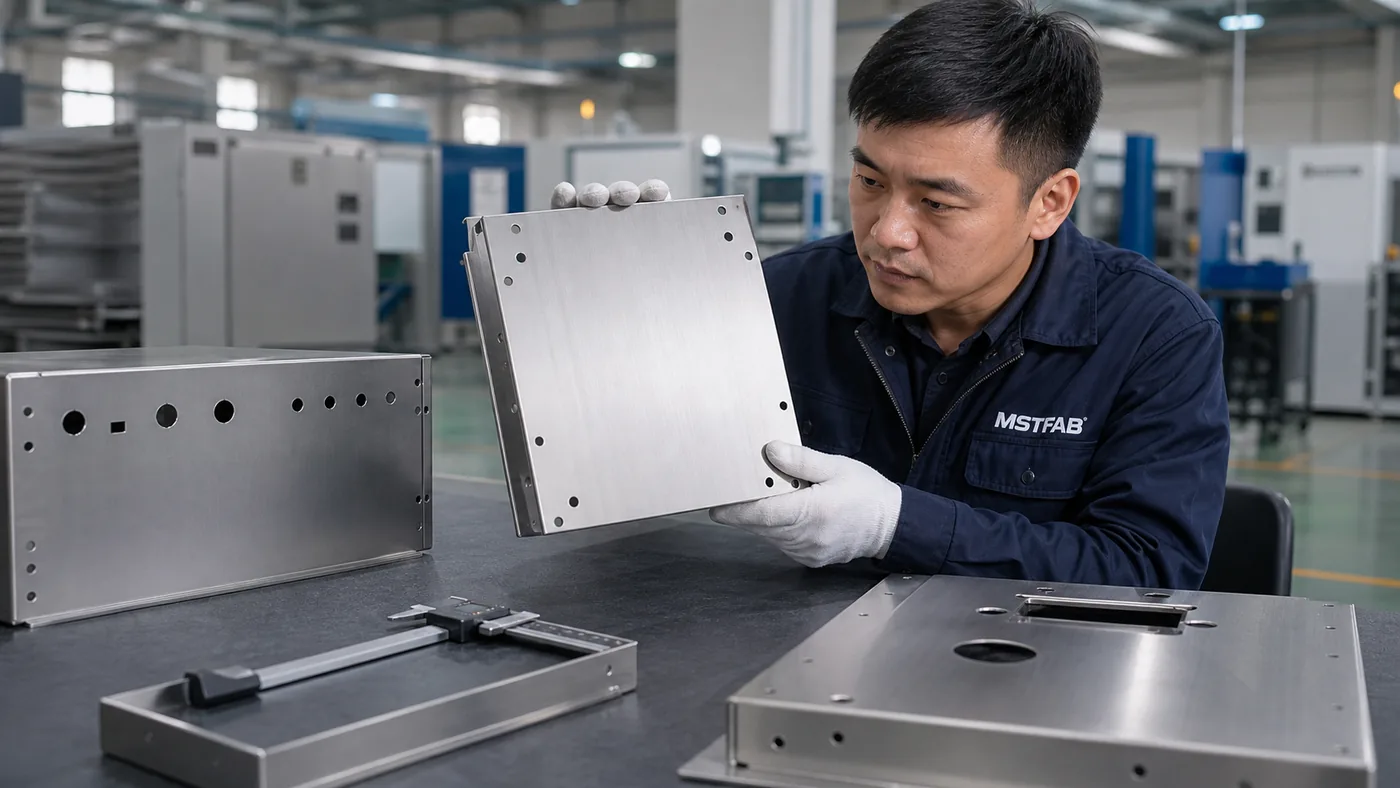
Surface Finishing Examples Buyers Should Check
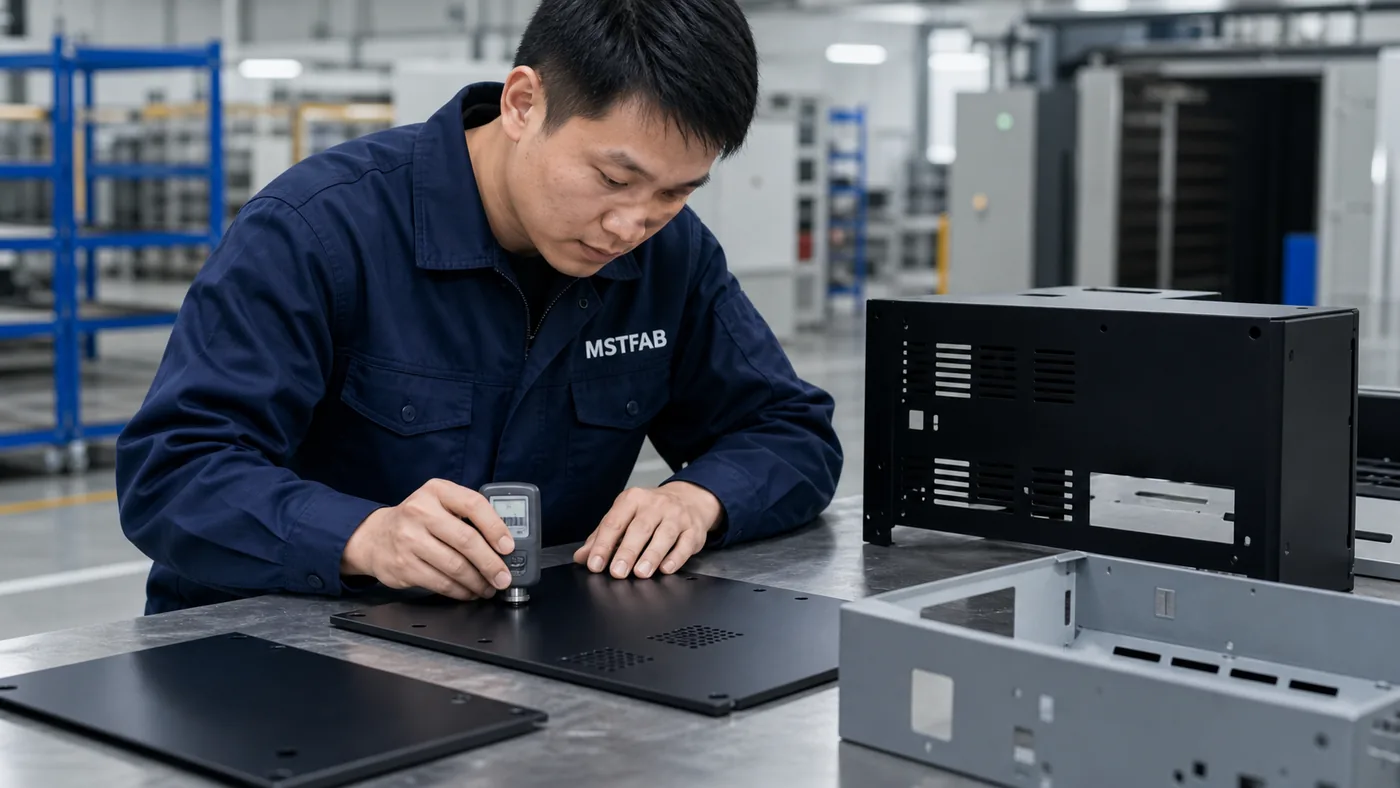
Use these shop-floor examples as a quick visual checklist before approving a finish spec. The goal is simple: protect the part, keep the assembly working, and avoid paying for a cosmetic upgrade where a functional finish would do the job.

How to Pick Without Overthinking
- Outdoor steel enclosure? Powder coating over proper pretreatment is usually the practical default.
- Aluminum housing that should look premium? Consider clear or black anodizing.
- Steel bracket that only needs rust protection? Zinc plating may be enough.
- Need custom color matching? Powder coating gives the widest color range.
- Tight threads, bearing seats, or sliding fits? Avoid coating buildup or specify masking/post-process tapping.
- Need grounding through the part? Define masked contact areas or conductive finish requirements early.
- Hidden internal bracket? Do not spend showroom-finish money where nobody will see it.
The Expensive Mistakes
- Specifying anodizing on steel: it physically does not work. Steel is not secretly aluminum with confidence.
- Powder coating unmasked threads: congratulations, the thread is now decorative.
- Asking for any color on anodizing: anodizing is not a printer. Its color palette has boundaries.
- Using plating as a premium cosmetic finish: it often reads functional, not luxury.
- Over-finishing hidden parts: an internal bracket does not need a showroom coat unless it has a corrosion job to do.
- Forgetting packaging: a perfect finish can still arrive scratched if the export packing is lazy.
Cost and Lead Time Reality
Powder coating and anodizing are often in a similar practical cost range, while plating varies by type, compliance requirement, and batch size. The finish itself is only part of the price. Masking, pretreatment, inspection, scrap risk, color matching, and packaging all add cost.
If a quote shows the finish as one vague line, ask what is included before the PO. A cheap part can get expensive quickly when masking, coating thickness checks, color approval, or packing were assumed by nobody. This guide helps decode that problem: How to Read a Sheet Metal Quote (And Spot Hidden Costs).
For broader budget planning, see Sheet Metal Fabrication Cost: What Actually Drives Your Part Price.
Finishing also adds calendar time, especially when coating, anodizing, or plating is outsourced. The process may take a day. The queue may not. For schedule planning, use Sheet Metal Lead Time Explained: From RFQ to Delivery.
Finish Details to Put in the RFQ
- Base material and grade: SPCC, SGCC, 304, 316, 5052, 6061, or equivalent.
- Finish type: powder coating, anodizing type/color, zinc plating, nickel plating, passivation, or brushed stainless.
- Color and appearance: RAL, gloss, texture, acceptable color variation, visible surface class.
- Thickness or standard: coating thickness, anodize thickness, plating requirement, salt spray target if needed.
- Masking points: threads, PEM inserts, grounding pads, gasket surfaces, bearing seats, sliding surfaces.
- Inspection: film thickness, adhesion, color check, sample approval, corrosion test, visual acceptance criteria.
- Packaging: protective film, foam separation, corner protection, individual bags, export crate, scratch prevention.
Red Flags in a Finish Conversation
- A supplier offers anodizing on your steel part without blinking.
- “Any color” is promised for anodizing with no sample approval.
- Powder coating is quoted with no masking plan for threads or grounding pads.
- Finish lead time is not separated from fabrication time.
- The quote ignores packaging for customer-facing coated or anodized parts.
- The most expensive finish is pushed onto an internal part nobody will see.
Key Takeaways
- Powder coating is durable, versatile, and color-flexible, but it adds thickness.
- Anodizing is aluminum-only and premium-looking, with limited colors and alloy sensitivity.
- Plating is a thin functional metal layer, mainly for corrosion protection, conductivity, solderability, or wear.
- Material, environment, fit, grounding, and packaging should drive the finish choice.
- A complete finish spec prevents cost surprises, lead-time delays, and scratched parts on arrival.
Frequently Asked Questions
Which finish is best for an outdoor steel enclosure?
Powder coating over proper pretreatment is usually the best practical choice for outdoor steel enclosures. It gives strong color control, good weather resistance, and durable protection, as long as masking, edge coverage, and packing are specified.
Can you anodize steel?
No. Anodizing is for aluminum. Steel needs another finish such as powder coating, zinc plating, nickel plating, passivation-related processes for stainless, or another corrosion protection method.
Does powder coating change my part dimensions?
Yes. Powder coating adds measurable film thickness, often around 60-100 um depending on the system. That can affect threads, tight slots, hinge fits, gasket areas, and grounding pads. Mask critical areas or plan post-coat tapping where needed.
Which finish gives the most color options?
Powder coating gives the widest color and texture options. Anodizing has a more limited metallic palette, and plating is mostly functional metallic appearance.
Is anodizing more expensive than powder coating?
It depends on alloy, color, thickness, batch size, cosmetic requirement, and whether sample approval is needed. Anodizing can be similar or higher than powder coating, especially when color control or hardcoat requirements are strict.
Need Help Choosing the Right Finish?
Send the drawing, material, environment, color target, and fit requirements. MSTFAB can review whether powder coating, anodizing, plating, or another surface treatment makes the most sense before the quote becomes an expensive guessing game.
 WeChat Contact
 WhatsApp Me Directly