
A low-volume order needs a process route that fits the drawing and quantity. Compare setup assumptions, feasible batch sizes, approval steps and repeat-order conditions before committing. A minimum order that does not suit your forecast is a question to resolve, not proof of supplier misconduct.
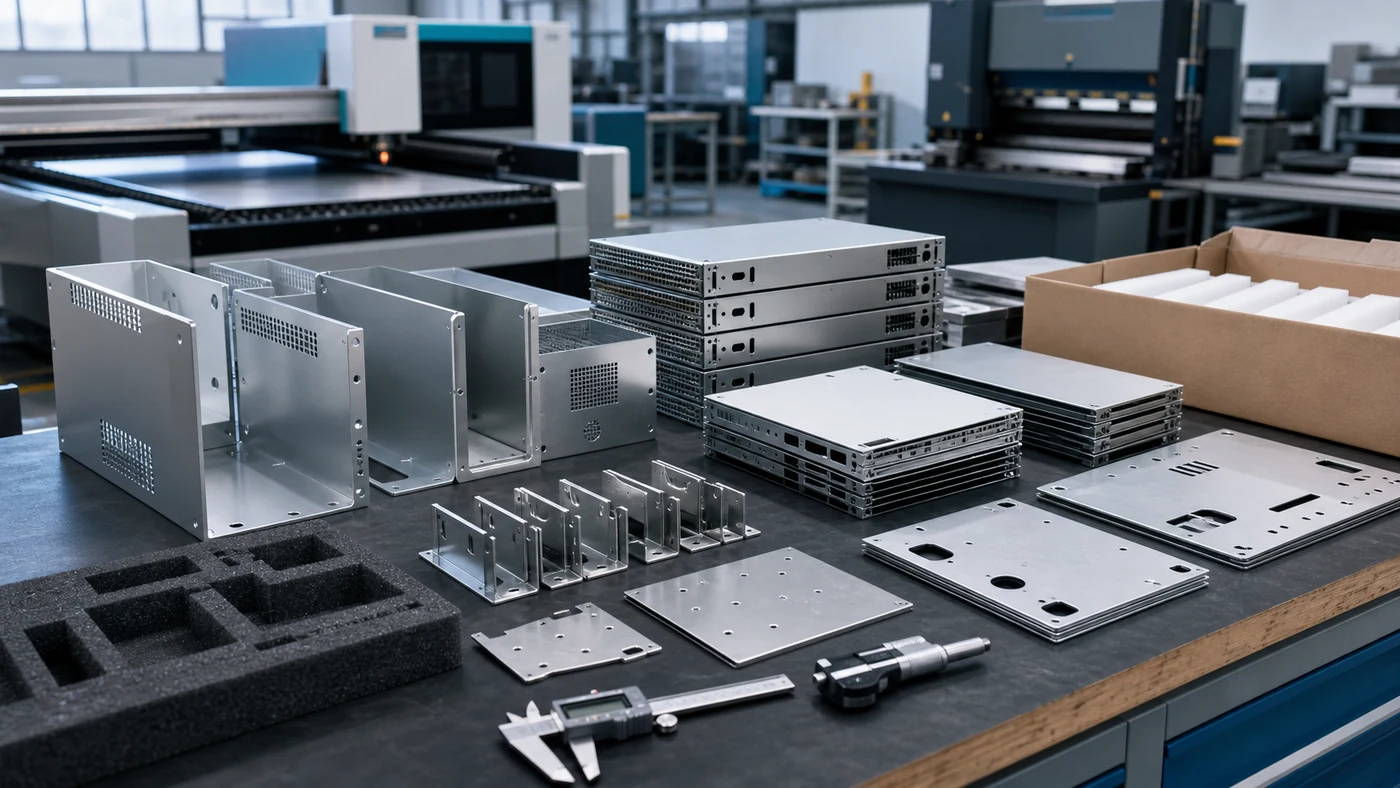
Quick answer: Define low volume for the actual part, route and release quantity. Confirm setup treatment, inspection, finishing, packing and change approval. MSTFAB manufactures drawing-based enclosure shells, chassis, panels, brackets and mounting plates. It does not supply finished electronics, batteries, EV chargers or validated end systems.
Low volume is not just smaller production
Setup and programming can be spread across more parts in a longer run, but they do not disappear. A small first order may need sample review and a later drawing change. Compare both the current release and realistic repeat quantities, with estimates separated from purchase commitments.
Agree the review, approval and change-control process as well as the unit price. A successful sample is useful, but the next batch still needs a released revision, agreed acceptance criteria and a feasible schedule.
When one purchase order contains many part numbers in small quantities, use the high-mix low-volume sheet metal RFQ guide to group compatible SKUs while keeping setup cost, revisions, CTQs, finishes and packing visible.
Scope note: This guide is about empty metal enclosure shells and structural sheet metal parts: cabinet bodies, U-shaped chassis, front panels, covers, mounting plates, brackets, vent panels and welded frames. It is not about finished electronics, batteries, EV chargers, medical devices, wiring harnesses or certified end products.
What counts as low-volume sheet metal production?
There is no universal low-volume threshold. A practical quantity depends on part size, material utilization, bend and weld setup, hardware, finish, inspection and packaging. Treat “low volume” as a production condition to define in the RFQ, not as a fixed MOQ that applies to every drawing.
| Build stage | Order pattern | What the buyer should prove |
|---|---|---|
| Prototype sample | One or a few validation sets | Basic size, fit, connector openings and material direction. |
| Engineering validation | Limited batch matched to the test plan | Mechanical fit, PCB clearance, thermal openings, access and assembly sequence. |
| Customer or field trial | Trial quantity based on deployment needs | Finish, hardware, gasket surfaces, packaging and repeatability. |
| Pilot production | Controlled pre-production release | Approved route, FAI, batch inspection and a cost curve before scale-up. |
| Low-rate production | Repeated releases against a forecast | Stable process assumptions, controlled revisions and appropriate quantity pricing. |
Why a Small Order Can Cost More per Part
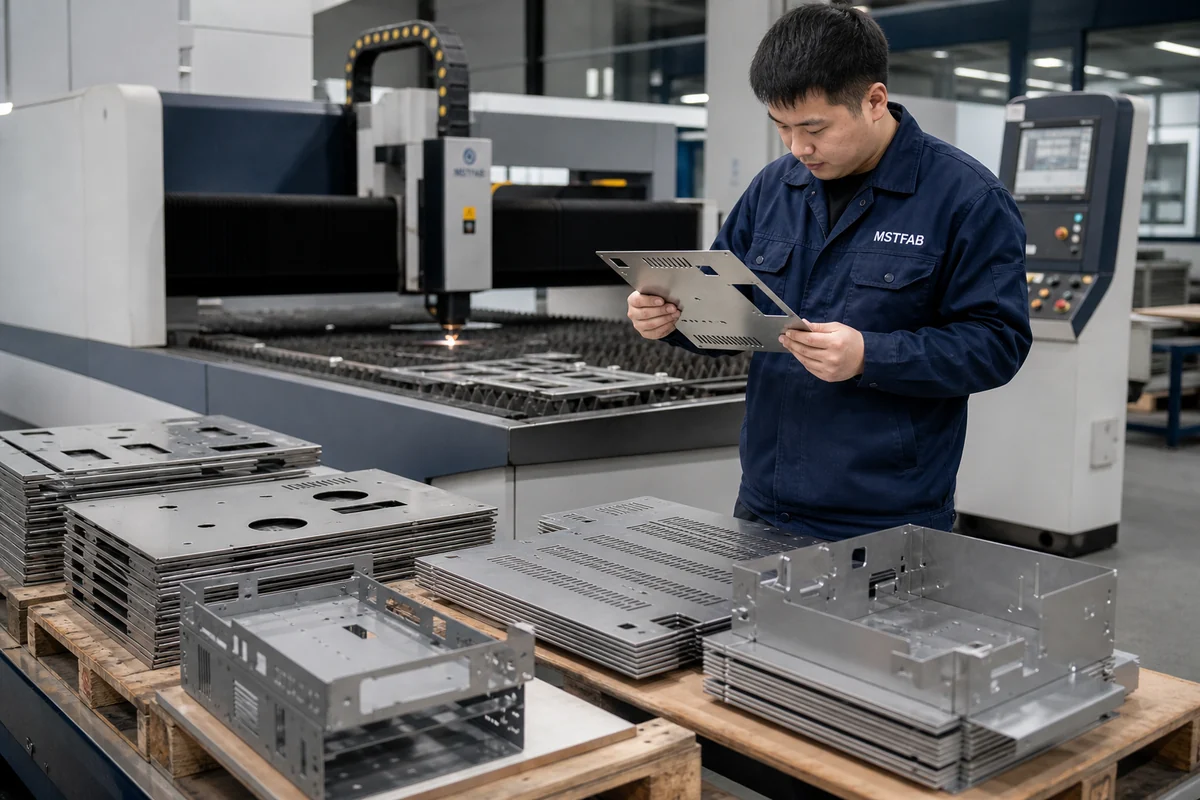
Drawing review, programming, setup and any required first-article work can have a larger per-part impact on a small batch. The effect depends on the material and route; ask for the actual pricing basis rather than assuming the same cost structure for every part.
Some suppliers bundle setup into the unit price and others quote it separately. Ask which costs are included, which recur, and what changes trigger a requote. Compare the same drawing, quantities, finish, inspection and delivery basis without counting included costs twice.
| Cost driver | Why startups feel it | How to control it |
|---|---|---|
| Setup and engineering | Fixed work is spread over fewer parts. | Ask for pricing at several realistic quantity breaks selected for your forecast. |
| Material in small lots | You may buy full sheets even when the batch uses only part of them. | Use common grades and combine compatible parts when possible. |
| Revision risk | Startup drawings move after fit tests. | Freeze critical interfaces before ordering a larger batch. |
| Finish approval | Small batches still need color, texture and masking control. | Approve finish samples before powder coating the whole batch. |
| Inspection | FAI takes time even for 30 pieces. | Inspect critical-to-quality features, not every decorative edge. |
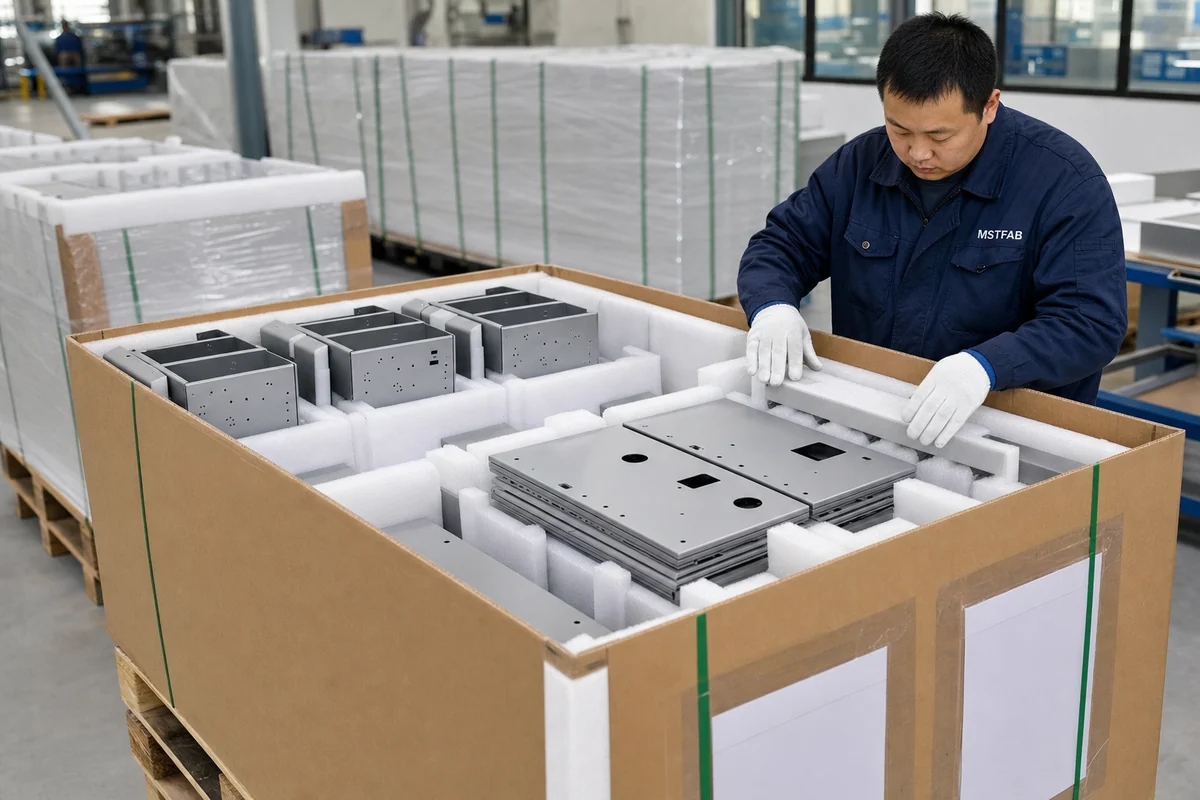
| Packaging | One damaged demo enclosure can ruin a launch week. | Specify foam, corner protection and export packing up front. |
What a startup-friendly enclosure manufacturer should provide
The RFQ package that gets a serious quote
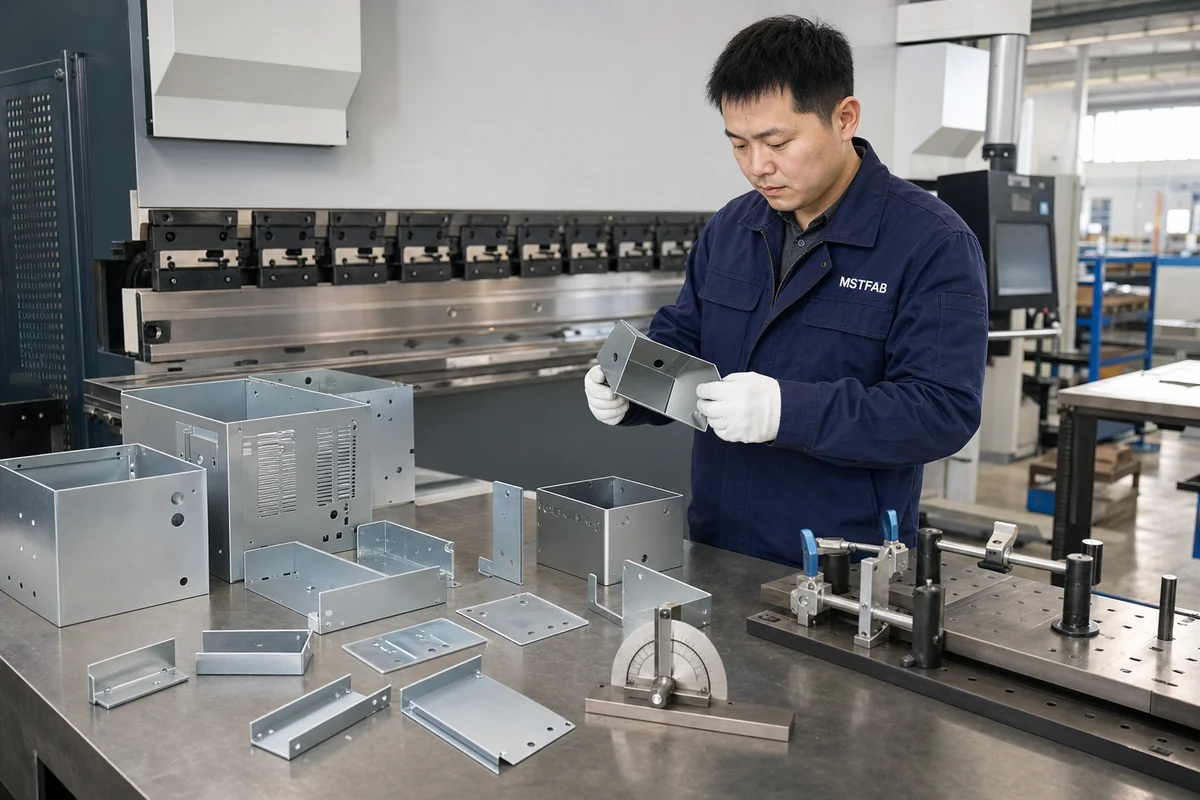
Send controlled files and the required supply scope. If the design is still changing, identify provisional dimensions, the sample objective and the approval route instead of implying the files are ready for production.
- STEP file plus 2D PDF drawing with revision number.
- Quantity now and expected quantity over the next 6 to 12 months.
- Material grade, thickness, surface finish and visible face requirements.
- Critical dimensions: PCB mounting, connector cutouts, hinge/latch areas, gasket surfaces and cable-entry positions.
- Hardware: PEM nuts, standoffs, hinges, locks, grounding studs and fasteners.
- Finish notes: powder coat color, texture, masking, threads and cosmetic standard.
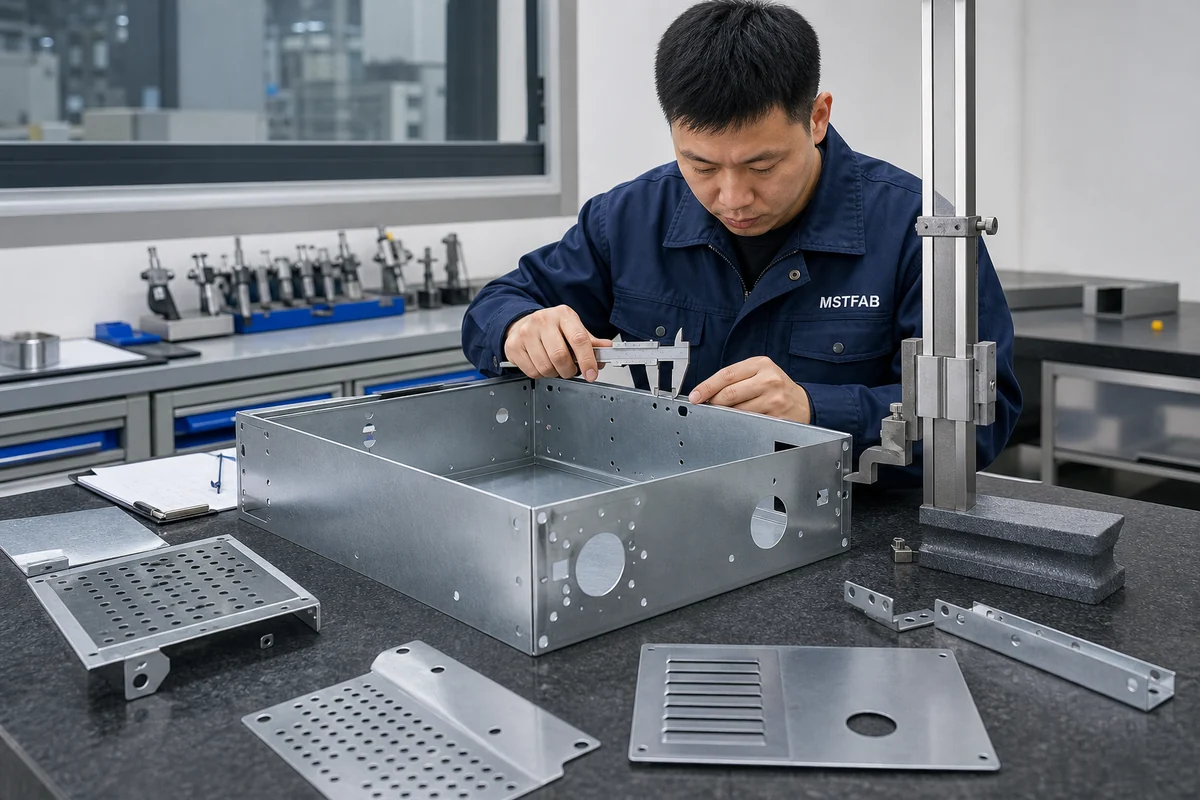
- Inspection requirement: FAI, measurement photos, CMM if needed and sample approval.
- Packaging requirement, destination country and preferred shipping mode.
Low-volume process route at MSTFAB
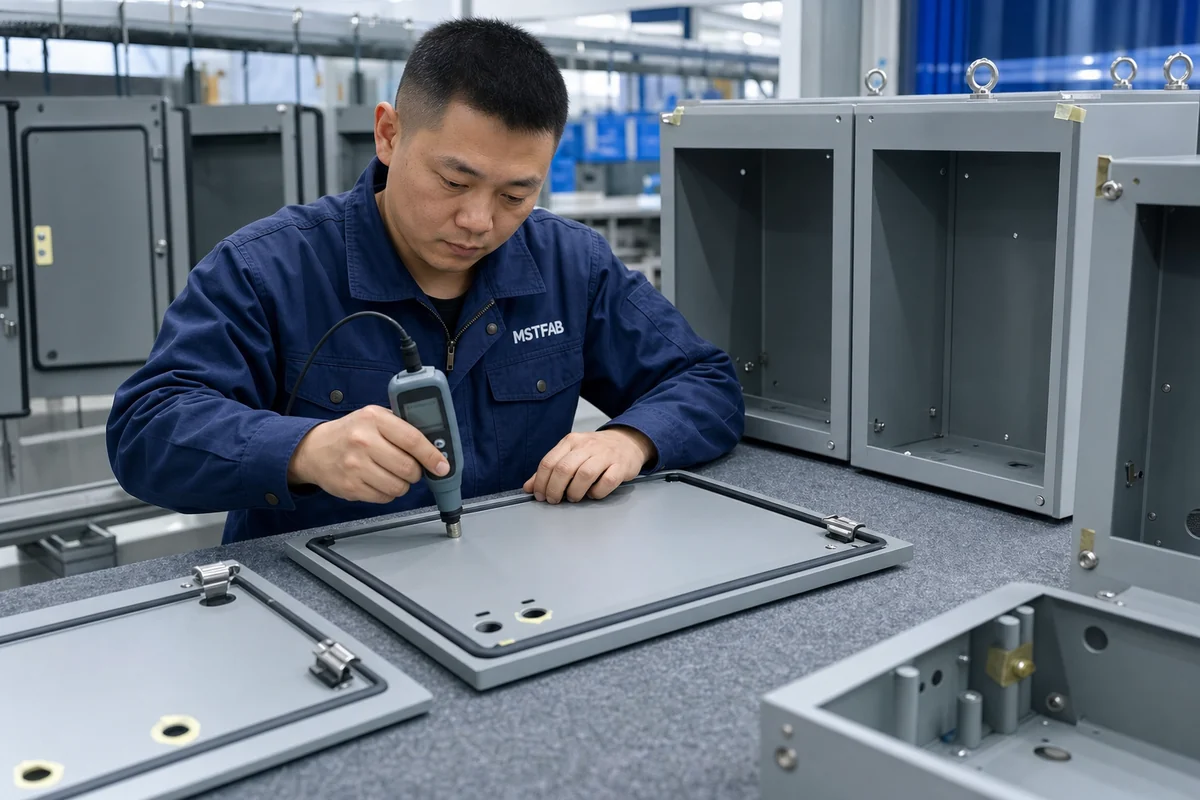
MSTFAB reviews cutting, bending, specified welding, hardware installation, coordinated finishing, inspection and packing as a mechanical fabrication scope. Confirm which operations and records apply to the project, who approves the first article and how later changes are released.
Trust table for startup buyers
| Buyer requirement | Question to resolve | Record to agree |
|---|---|---|
| Order economics | Which setup and recurring costs are included at each release quantity? | Quotation assumptions and validity. |
| Mechanical interfaces | Which dimensions and mating parts need approval before repeat production? | Controlled drawing and agreed sample checks. |
| Drawing changes | How are the next revision, existing stock and work in progress handled? | Approved change and release record. |
| Finish and inspection | Which appearance and dimensional checks are required and available? | Agreed specification, sampling and record format. |
| Confidentiality and tooling | Which file-use, confidentiality and tooling terms need commercial approval? | Written agreement reviewed by the responsible team. |
| Packing | How are the parts separated, restrained and identified? | Agreed pack specification and any required photos. |
Red flags before you approve a pilot batch
- Quantity or minimum-order assumptions that have not been reconciled with the forecast.
- No written confirmation of material, finish, hardware, inspection or packing requirements.
- Setup and recurring charges whose inclusion remains unclear; bundling alone is not a warning sign.
- No agreed sample or first-article approval where the project requires one.
- Finished-equipment photographs offered instead of evidence relevant to the quoted metal parts.
- No explanation of the route or release conditions for a repeat order.
- Tooling commitments requested before feasibility, ownership and change conditions are agreed.
How to lower cost without wrecking the project
Review avoidable operations and unclear requirements before negotiating the price. Proposed changes to geometry, material or acceptance criteria need approval from the design authority.
- Use standard material grades and thicknesses where possible.
- Loosen non-critical tolerances and mark only the features that truly affect fit.
- Keep holes and slots away from bend lines unless the design has no choice.
- Use common PEM hardware and standard fasteners.
- Approve a finish sample before coating the batch.
- Bundle parts into one batch when revisions are stable.
- Ask for a cost curve instead of guessing when to scale.
Related buyer resources
FAQ
What is a low-volume sheet metal enclosure manufacturer?
It is a fabrication partner for limited releases of custom enclosure shells, panels, chassis parts and brackets. Confirm the process route, feasible quantities, sample approval and repeat-order conditions for the actual drawing.
How many units count as low volume?
There is no universal threshold. Part size, material use, setup, finish, inspection and packing affect the feasible batch. Send the current quantity and a clearly identified forecast so project-specific quantity breaks can be reviewed.
Why is low-volume sheet metal more expensive per unit?
Programming and setup may be spread across fewer parts, while finishing, inspection and packing can also include recurring costs. Confirm which charges are bundled, separate or repeated after a change. Do not assume every cost disappears on the next order.
Does MSTFAB make finished electronic products for startups?
No. MSTFAB supplies drawing-based mechanical parts and empty enclosure shells. Electronics, firmware, wiring, cooling-equipment installation and completed-system certification or validation remain with the buyer or responsible integrator.
What should a startup send for a quote?
Send matching STEP/STP and PDF revisions, material and thickness, finish, current quantities, forecast assumptions, hardware, critical interfaces, inspection and packing requirements, and the target delivery basis. Identify open design decisions.
Review the Next Production Release
Send matching STEP/STP and PDF revisions, quantities, material, finish, hardware, approval records and delivery requirements. Identify open decisions so the process route and quotation schedule can be confirmed.
MSTFAB supplies drawing-based mechanical sheet metal parts and empty shells. Electronics, wiring, cooling-equipment installation and completed-system validation remain with the buyer or responsible integrator.
Specialized Low-Volume Part Types: Brackets, Panels & Materials
Low-volume precision fabrication spans distinct part families with specialized manufacturing constraints. At MSTFAB, our flexible CNC cell structure accommodates high-mix, low-volume (HMLV) orders across all common industrial geometries:
1. Low-Volume Custom Sheet Metal Brackets & Structural Gussets
From heavy-duty 6.0 mm structural chassis brackets to delicate 1.2 mm optical sensor mounts, bracket fabrication requires rapid turnaround without bespoke stamping dies. MSTFAB deploys automated multi-tool CNC press brakes with segmented tooling, allowing complex return flanges, formed stiffening ribs, and offset joggles in pilot batches of 10 to 500 pieces. We install pre-finish PEM self-clinching studs and standoffs with certified torque retention.
2. Low-Volume Custom Sheet Metal Panels & Rack Enclosures
Front panels, 19-inch server rack faceplates, and operator interface bezels demand tight aesthetic control and precise cutout alignment. Our fiber laser centers achieve ±0.05 mm hole-to-hole true position for D-sub connectors, USB-C ports, and toggle switches. We provide complete cosmetic finishing in-house, including chem-film conversion coating (MIL-DTL-5541), grain-matched brush finishing (#4 stainless), and fine-texture powder coating with custom silkscreened lettering.
3. 5052-H32 Aluminum Fabrication for Low-Volume Components
5052-H32 is the premier aluminum alloy for low-volume sheet metal enclosures, marine equipment, and automotive brackets due to its superior formability and corrosion resistance. Unlike brittle 6061-T6, 5052-H32 withstands tight 1.0 × T inside bend radii without outer-flange tensile cracking. MSTFAB stocks certified 5052-H32 sheets in thicknesses from 1.0 mm to 6.0 mm, fully compatible with clear or black anodizing and chromate conversion pretreatment.
4. Recurring Blanket Orders & Kanban Release Programs
For OEMs transitioning from initial prototypes to recurring serial production, MSTFAB offers flexible Blanket Purchase Order (BPO) agreements:
- Volume Pricing with Staggered Delivery: Lock in annual volume discounts (e.g., 2,000 units/year) while releasing monthly or bi-weekly batches of 50 to 200 units.
- Safety Buffer Stocking: We maintain safety inventory of raw sheet metal and semi-finished laser blanks in our warehouse, cutting lead times on recurring releases down to 3–5 working days.
- Engineering Change Notice (ECN) Control: Revision changes are tracked via formal ECN documentation to ensure outdated revisions are never manufactured.
 WeChat Contact
 WhatsApp Me Directly