Small-Batch Stainless Steel Fabrication for Startups: RFQ and Pilot-Run Guide
A small batch is not mass production with fewer cartons. It is the stage where a startup proves fit, finish, assembly and supplier communication before the revision number develops a social life of its own.
Use the first batch to retire risk
A startup rarely needs a tiny batch merely to own ten shiny parts. It needs evidence. Does the enclosure fit the electronics? Can a technician reach the fasteners? Does the door close after welding? Will the finish survive assembly? Can the factory reproduce the approved part after the CAD file changes?
Write those questions into the pilot plan. A batch of ten that answers them can be more valuable than a batch of fifty that quietly repeats the same mistake. Quantity alone does not define the right manufacturing route; learning objectives do.
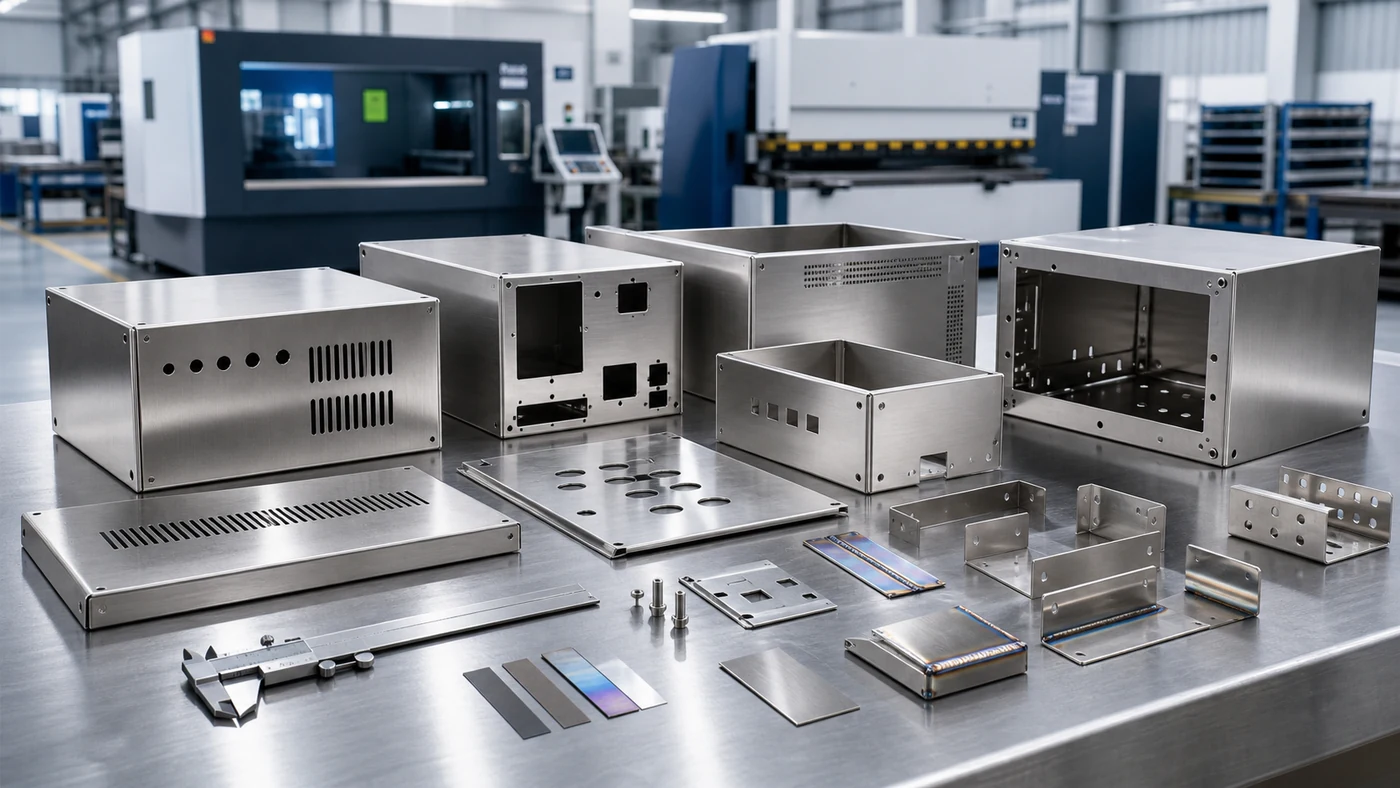
| Startup stage | Question to answer | Evidence worth keeping |
|---|---|---|
| Concept prototype | Does the basic geometry fit the components and user interaction? | Fit notes, marked photographs and a list of controlled changes. |
| Engineering prototype | Do bends, hardware, welds and service clearances work together? | Measured critical features, trial assembly and DFM dispositions. |
| Finish sample | Are grain, color, texture and cosmetic limits understood? | Approved physical sample, photographs and viewing conditions. |
| Pilot batch | Can the approved route repeat across several parts? | FAI results, batch sampling, nonconformance record and packing approval. |
| Repeat order | Is the released revision still connected to the approved process? | Purchase-order revision, change approval and inspection baseline. |
Select stainless steel from the actual exposure
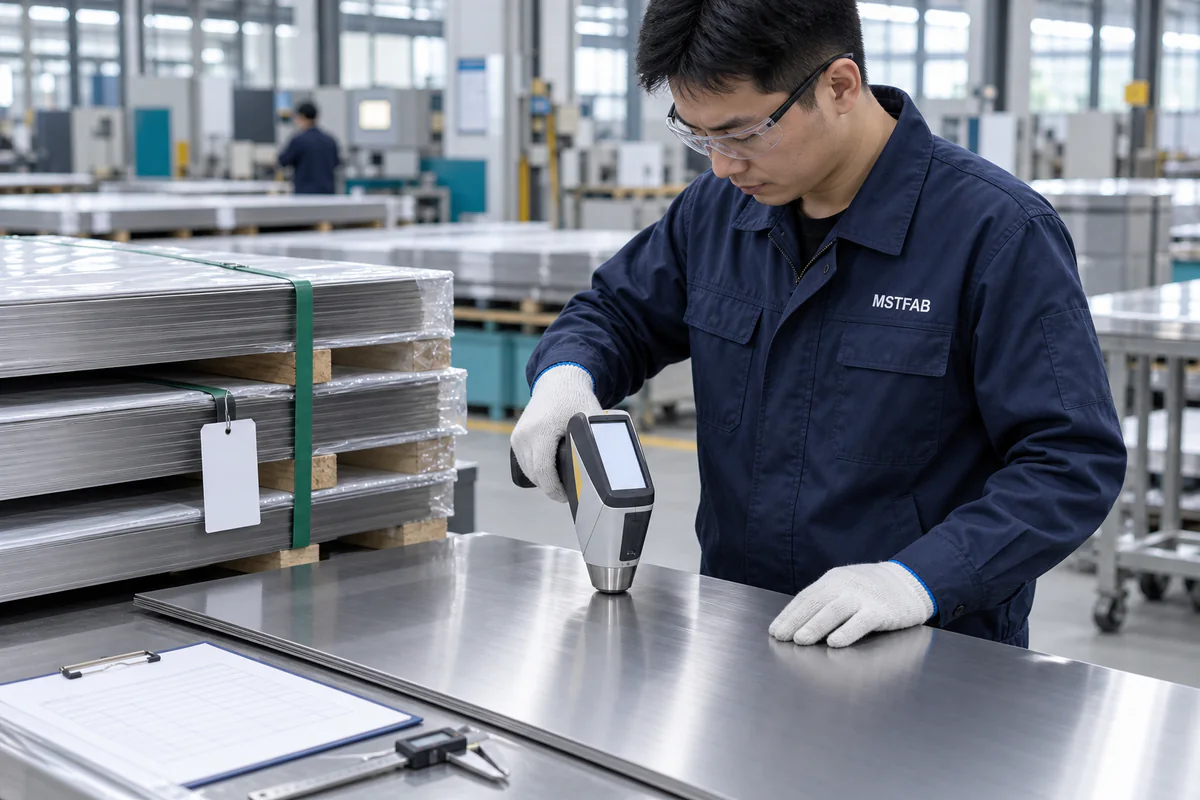
304 or 304L is often a practical starting point for indoor equipment and controlled environments. 316 or 316L may deserve evaluation for coastal air, chlorides or more aggressive cleaning. A startup should not pay for a higher grade because it sounds reassuring, and it should not select a lower grade because the prototype will live safely on an office desk.
Define the installed environment, cleaning method and expected service life. The 304 vs 316 stainless steel selection guide helps turn those conditions into an approved material decision. The buyer remains responsible for material suitability in the finished product.
Separate setup cost from unit cost
Small orders carry work that does not shrink with quantity: drawing review, programming, setup, fixtures, finish sampling, first-article inspection and export documentation. A cheap unit price can hide those items until the invoice or, worse, omit the controls that made the sample useful.
The broader low-volume sheet metal fabrication guide explains the commercial model across materials. For stainless projects, add contamination control, visible-surface protection, weld cleanup and grain consistency to the comparison.
| Cost driver | Why it appears in a small batch | How a buyer can control it |
|---|---|---|
| Engineering and programming | The drawing and toolpath still need review even when only a few parts are cut. | Send clean files, one revision and explicit critical features. |
| Forming setup | Tool selection, bend sequence and first-piece adjustment happen before repeat output. | Use practical radii and avoid unnecessary special bends. |
| Welding fixtures | A simple fixture may be needed to control door gap, squareness or mounting geometry. | State whether the fixture is temporary, reusable and owned by the buyer. |
| Finish minimums | Partner processes may have batch, handling or color-change charges. | Approve standard finishes where suitable and combine compatible parts. |
| Inspection evidence | A detailed FAI report takes time independent of order size. | Measure the characteristics that govern fit and risk, not every line on the drawing. |
Freeze the revision before cutting
Startups move quickly, which is useful until two file versions reach the same factory. Every quotation, production release and inspection record should identify the controlled revision. When the design changes, describe what changed and whether existing material, fixtures, samples or finished parts remain usable.
A prototype can tolerate learning; a purchasing system cannot tolerate mystery. Use the prototype enclosure guide when the design is still proving component fit and user access. Move to the stainless pilot-batch plan only when the team can name the features it intends to approve.
Use DFM to preserve function, not redesign the product
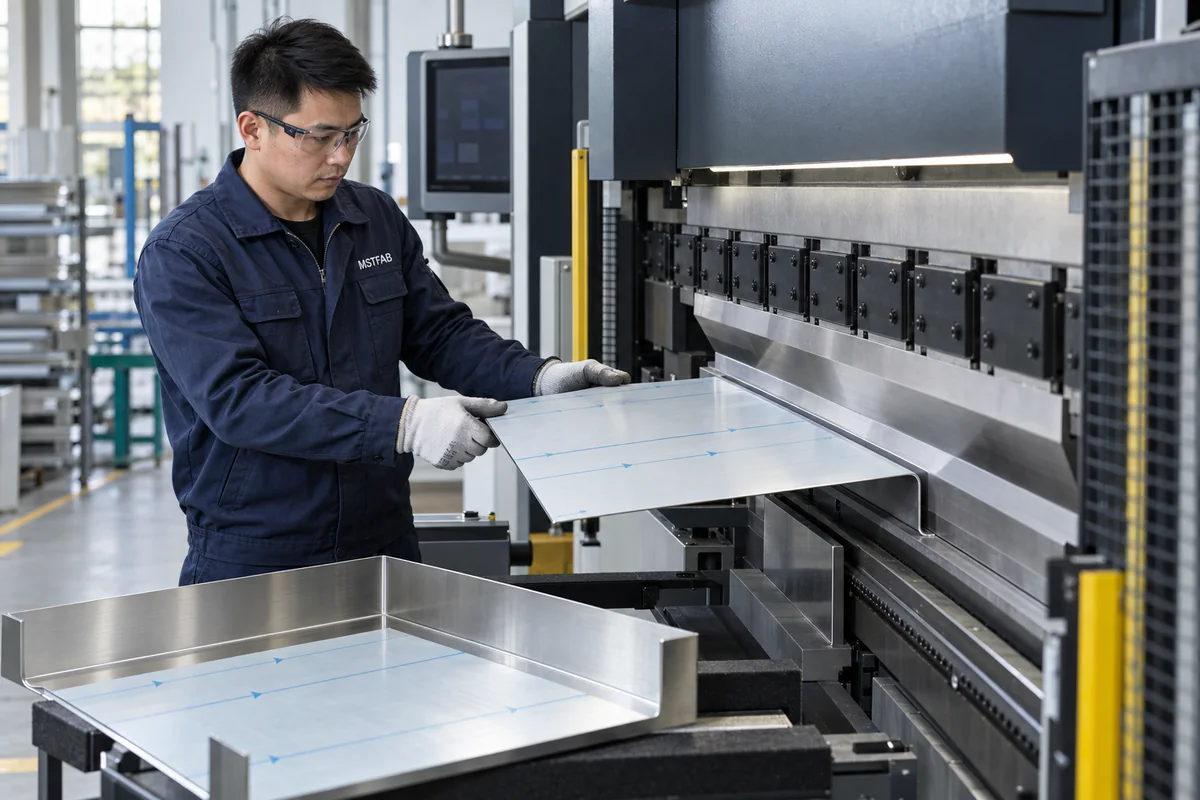
A useful DFM review flags hole-to-bend conflicts, inaccessible welds, unrealistic flange lengths, hardware interference, difficult tolerance stacks and surfaces likely to warp. The buyer decides whether to accept a proposed change. The supplier should not quietly alter geometry because it is easier to make.
For enclosure shells, identify mounting datums, removable panels, connector openings, gasket lands, latch locations, grounding or bonding features and cable interfaces. For standalone brackets or covers, identify mating parts, load direction and visible surfaces. These are the details that determine whether a neat sample becomes a usable product.
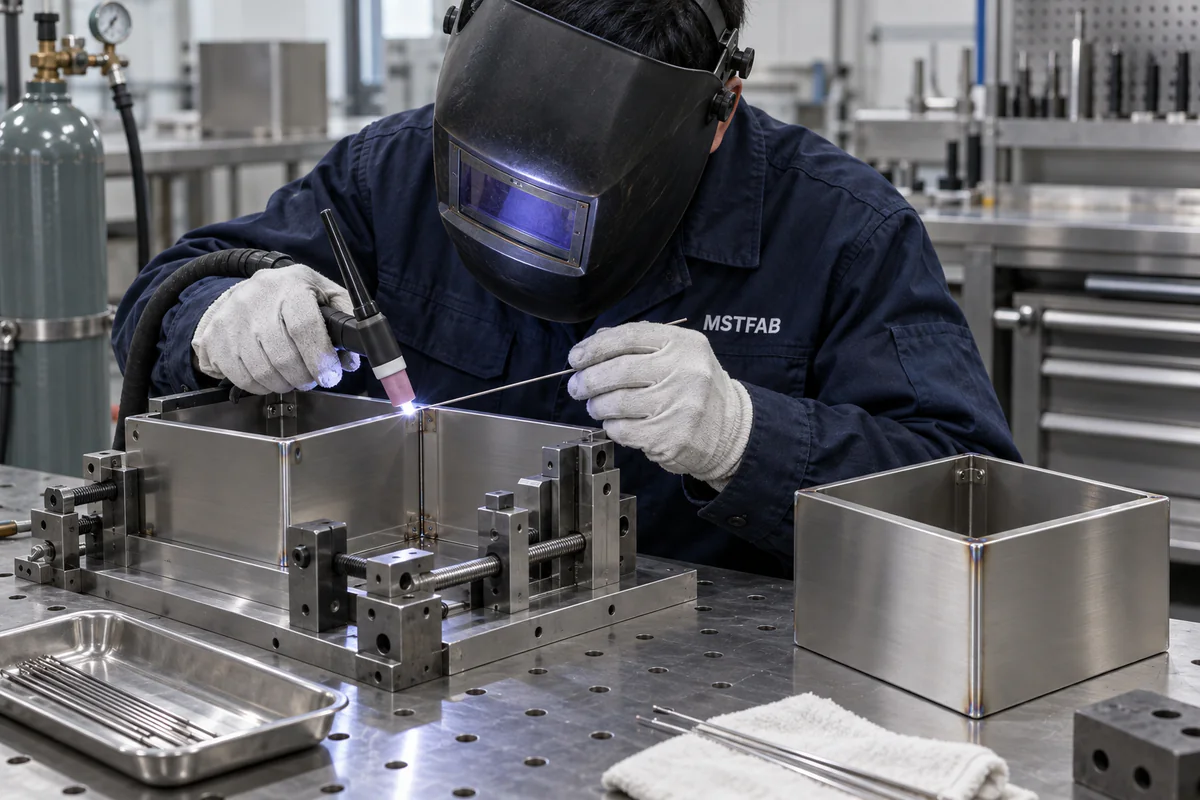
Agree on first-article evidence before production
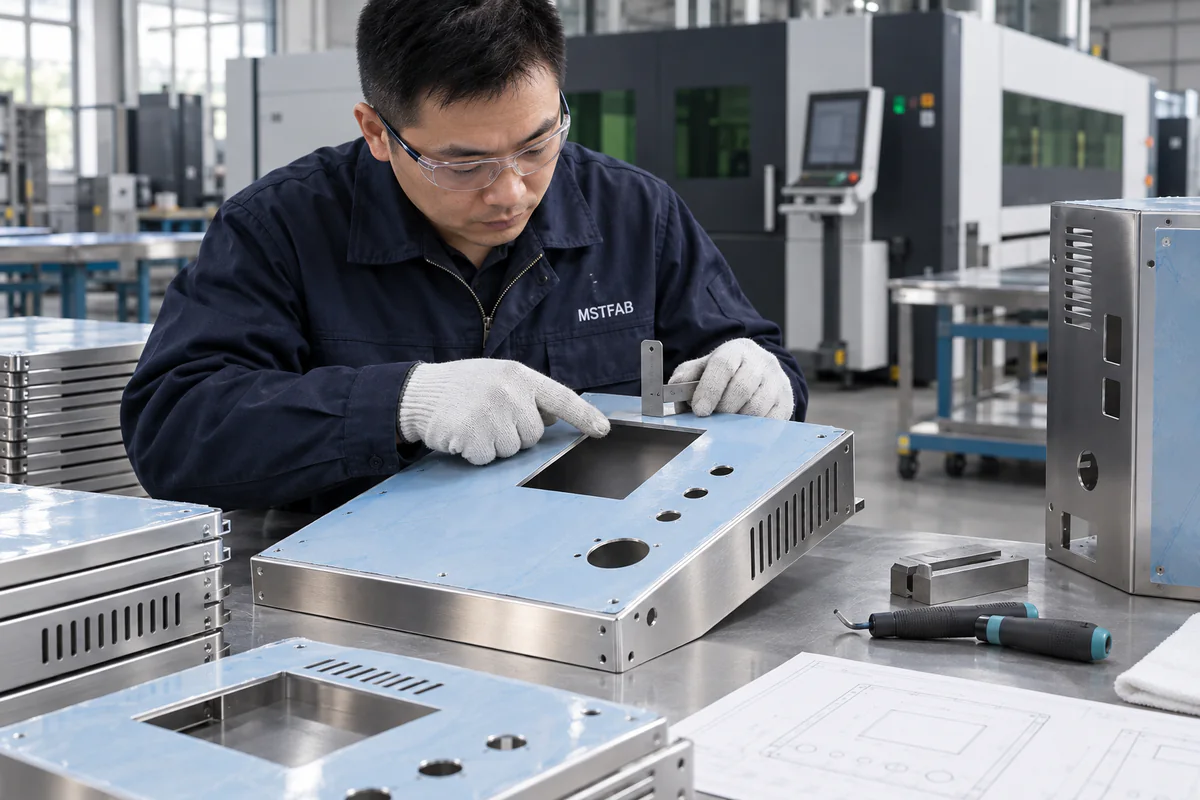
First article inspection should answer whether the released design can be manufactured and assembled as intended. It may include critical dimensions, door gap, flatness, hardware position, component trial fit, visible finish and packaging. The record should also state the drawing revision and how any deviation was resolved.
The stainless steel fabrication quality plan provides a deeper framework for scratches, contamination, weld distortion, grain direction and export protection. Not every startup needs a thick report. Every startup does need a clear approval baseline.
| Approval gate | Minimum decision | What moves forward |
|---|---|---|
| Drawing release | Geometry, grade, finish, revision and critical interfaces are approved. | Programming and process planning. |
| First article | Fit, measured features and workmanship meet the agreed baseline. | Remaining pilot quantity. |
| Finish approval | Color, grain, gloss, texture or weld blend is acceptable. | Batch finishing under the same approved reference. |
| Pilot review | Assembly feedback and deviations are closed or documented. | Frozen production revision and repeat-order plan. |
| Repeat release | No unapproved material, process, tooling or drawing change is introduced. | Controlled batch production. |
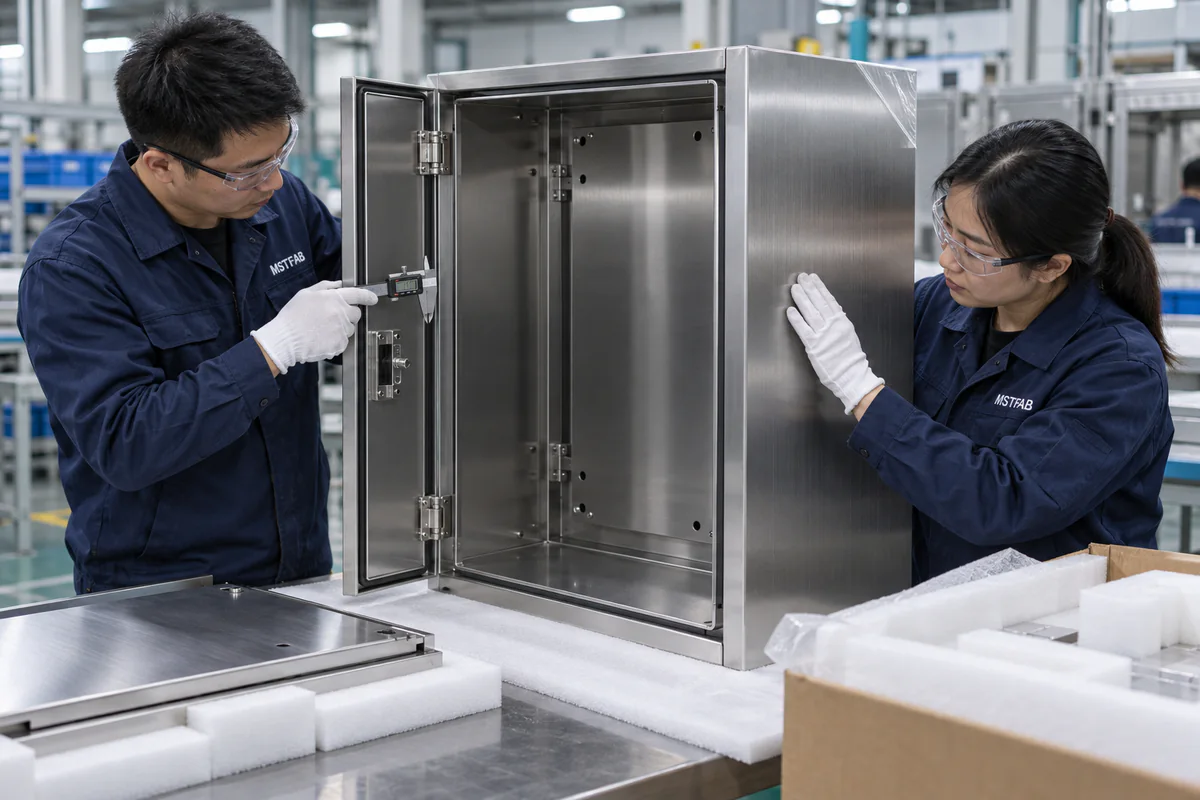
Make the quotation package complete
A supplier should not have to reverse-engineer commercial intent from a CAD model. State whether the request is for one learning prototype, a pilot batch or a repeatable low-volume program. Give separate quantities for each stage and explain which features still need validation. That lets the quotation distinguish temporary setup from controls that must survive into repeat production.
- Identify the released drawing revision and the person authorized to approve changes.
- List the exact stainless grade, thickness and any buyer-approved equivalent.
- Mark assembly datums, mating interfaces, cosmetic faces and truly critical tolerances.
- Define weld extent, hardware, finish, masking and post-treatment acceptance.
- State the prototype quantity, pilot quantity, expected repeat demand and delivery destination.
- Request only the inspection records, photographs, material evidence and packing approval that the project risk justifies.
Also tell the supplier what happens after approval. A credible repeat-order estimate helps process planning, but it is not permission to manufacture an unapproved forecast. Purchase quantities, revisions and release dates should remain explicit.
Surface treatment and outside-process control
Brushing, polishing, passivation, electropolishing and other specified treatments require their own scope and acceptance criteria. Some processes may be coordinated through qualified long-term partners when included in the approved route. The quotation should identify the process, any minimum charge, masking, dimensional effect, inspection evidence and handling after treatment.
Frequently asked questions
Does MSTFAB have one standard MOQ for stainless steel parts?
No universal MOQ applies to every project. Feasible quantity depends on geometry, material availability, setup, outside processes, inspection and commercial scope. The quotation should state the quantity and any batch-related cost clearly.
Should a startup order one prototype or a small pilot batch?
Order a prototype when the main questions concern geometry, component fit or user access. Use a pilot batch when the design is stable enough to test repeatability, assembly flow, finish consistency, inspection and packing.
What files are needed for a small-batch stainless quote?
Send the STEP or STP model, controlled 2D drawings in PDF, DXF or DWG as applicable, exact grade and thickness, finish, critical tolerances, quantities, inspection evidence, packing and destination.
Can the first article use a different process from repeat production?
Sometimes, but the difference should be disclosed and approved. If prototype tooling, hardware, welding, finish or inspection differs from the planned batch route, record the gap so the sample does not create a false production baseline.
Does MSTFAB provide finished electrical products?
MSTFAB normally supplies drawing-based metal parts, welded assemblies and empty mechanical enclosure shells. Electrical integration, software and finished-product certification remain with the buyer or responsible integrator unless the approved quotation explicitly includes another item.
Send a pilot-batch RFQ with a purpose
Share the controlled files, approved stainless grade, prototype and pilot quantities, interfaces, finish, evidence requirements and destination. MSTFAB will review the drawing-based fabrication scope before quotation.
 WeChat Contact
 WhatsApp Me Directly