
Let’s be completely honest. In your 3D CAD model, sheet metal bends with a single keystroke, holes are perfectly round, paint has zero thickness, and parts float together in ideal alignment. No burrs, no friction, no gravity.
But real manufacturing doesn’t live in a computer. Real manufacturing involves material tolerances, laser kerf, springback physics, press brake tooling collisions, welding distortion, and the rough reality of shipping crates.
At MSTFAB, we specialize in bridging the gap between CAD perfection and physical reality. When you send us your laser cut and bent metal parts RFQ, we don’t just run it through an automated quoting engine that spits out a number and ignores the risks. We review your drawings from the perspective of the Chinese factory floor, identifying issues before they turn into scrap metal.
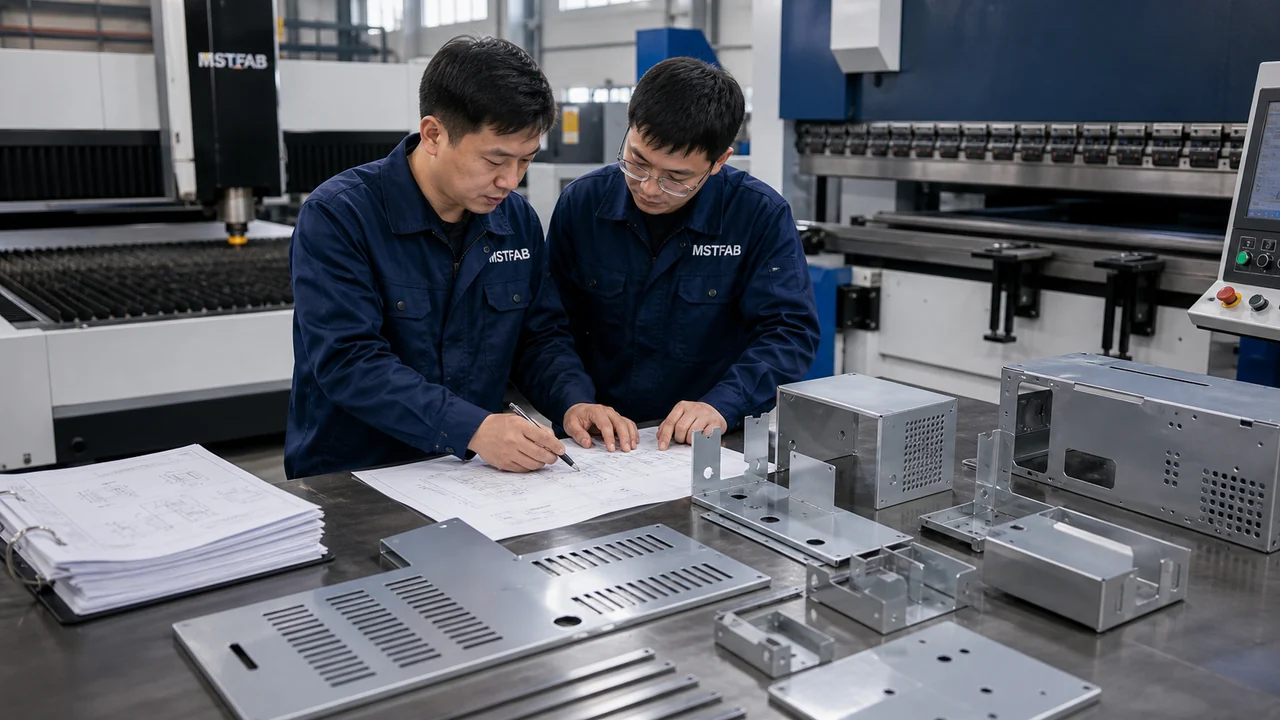
The MSTFAB RFQ Trust & Reality Standards
We believe that a good quotation isn’t just about offering the lowest unit price to win the job, only to hit you with surcharges later when the design proves unmanufacturable. Here is how we evaluate your RFQ packages compared to typical industry shortcuts:
| RFQ Aspect | Typical Industry Shortcut | MSTFAB Engineering Standard |
|---|---|---|
| File Review | Auto-quotes from 3D step files only, ignoring 2D tolerance callouts. | Cross-checks 3D STEP models against 2D PDF tolerance drawings and DXF cutting paths. |
| Hole-to-Bend Feasibility | Cuts holes close to bend lines anyway, resulting in stretched, egg-shaped openings. | Identifies deformation risks early; suggests relief cuts or position adjustments during DFM. |
| Tooling Access | Assumes standard dies work; runs into flange-die collisions on the press brake mid-run. | Simulates the bend sequence to verify punch/die clearance for multi-bend geometries. |
| Coating Fit | Ignores paint thickness; parts won’t assemble because powder coat fills up critical clearances. | Factors in coating buildup; protects internal threads and specifies clear masking zones. |
| Packaging Protection | Tosses metal parts loose in cardboard boxes; parts arrive scratched and dented. | Wraps parts individually, separates layers, and uses custom foam corners in wooden crates. |
1. Precise Laser Cutting defines the Blank
Laser cutting is the foundation. If the flat pattern is inaccurate, nothing else matters. We use high-precision fiber laser cutters to profile mild steel, stainless steel, and aluminum sheets. Whether you need custom L, U, or Z brackets, mounting plates, or complex enclosure blanks, we optimize the nest to save material and cut down on waste.
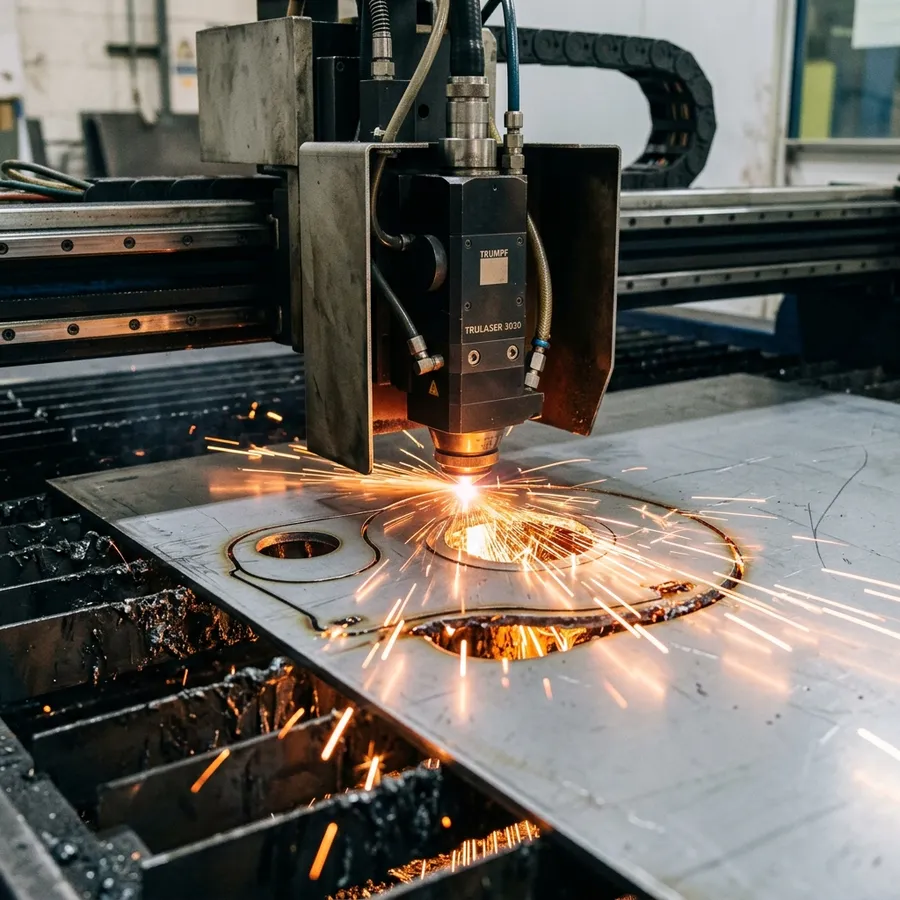
But remember: a laser doesn’t just cut lines; it creates a kerf (the material removed by the beam). Our engineering review factors in material thickness and thermal expansion, ensuring that the dimensions on your custom sheet metal cutting bending welding services drawings match the flat cut profile perfectly before bending begins.
2. CNC Bending Brings the Part into 3D
In CAD, sheet metal bending looks like magic. In reality, it is a constant battle against material springback and tooling limitations. Mild steel, stainless steel, and aluminum all spring back differently depending on their grade, temper, and grain direction.
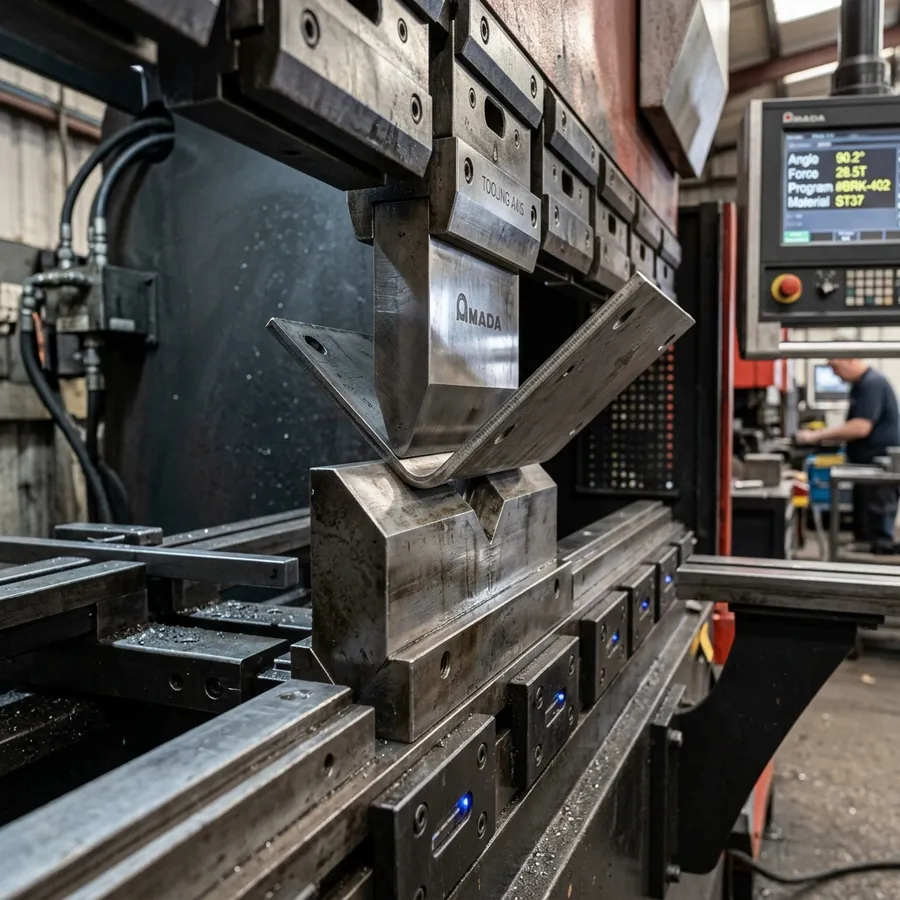
When reviewing a custom bent sheet metal parts quote, we check the minimum flange length and hole-to-bend distances. If your drawing places a mounting slot right on the bend radius, we’ll let you know ahead of time. It’s better to resolve a hole deformation risk during a DFM for sheet metal fabrication review than to realize your bolts won’t fit on the assembly line.
3. Welding and Assembly Integrity
Welding adds intense heat, and heat makes metal move. That is physics sending its invoice. Without proper clamping, weld fixtures, and heat management, a beautifully bent enclosure body can warp, twist, or lose its squareness.
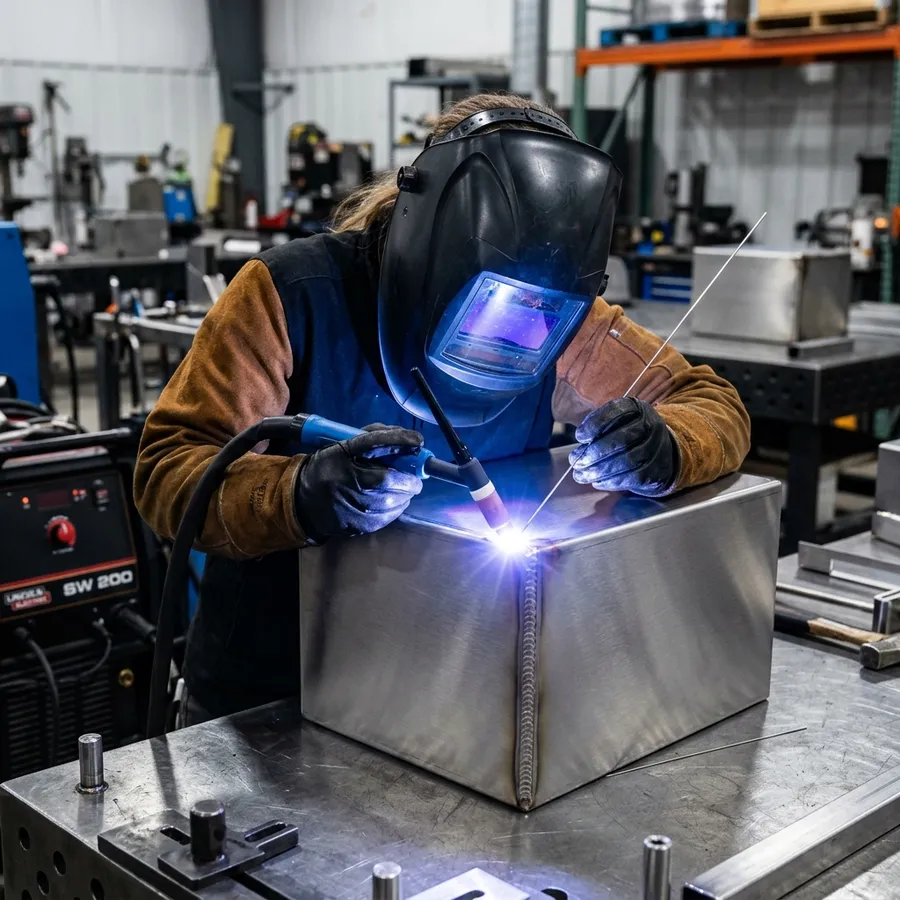
Whether you need spot welding, full seam welding, or cosmetic grinding for stainless steel cabinets, we include these details in our quotation scope. By using robust welding fixtures and skilled welders, we make sure that our sheet metal fabrication and assembly services deliver assemblies that align with your drawings, not crooked components that require a hammer to install.
4. Hardware Insertion: Getting Threads Right
A metal bracket or cabinet panel is rarely used alone—it needs threads, studs, and standoffs to mount components. Standard hardware insertion is done using hydraulic press machines to press PEM nuts, PEM studs, standoffs, and rivet nuts into the pre-cut holes.
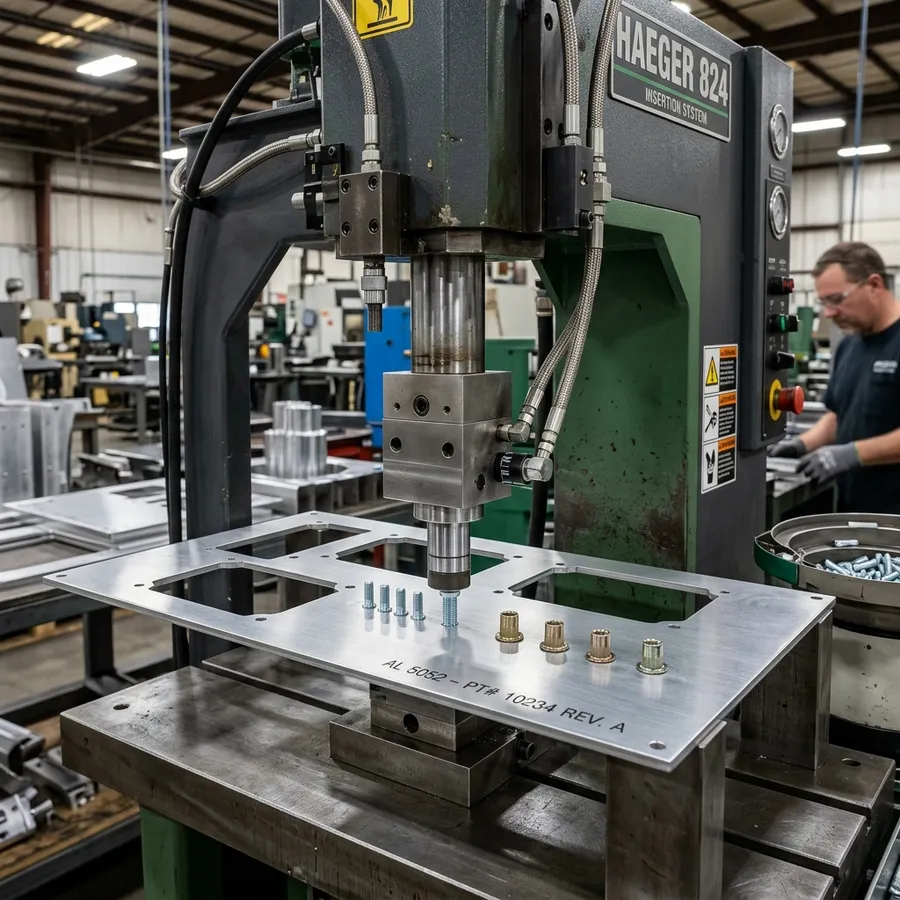
During the RFQ stage, we verify that the holes are sized correctly for the specific hardware and that there is enough edge clearance to prevent the material from bulging. We also check the sequence: installing hardware before bending can sometimes interfere with the press brake tooling, so we schedule insertion at the optimal point in the workflow.
5. Powder Coating & Surface Finishes
Powder coating is not just about color; it changes the geometry of the part. A standard powder coat adds between 60 to 120 microns of thickness. That might not sound like much, but if you have a tight tolerance hinge, a grounding point, or sliding metal guides, that paint buildup will prevent the assembly from working.
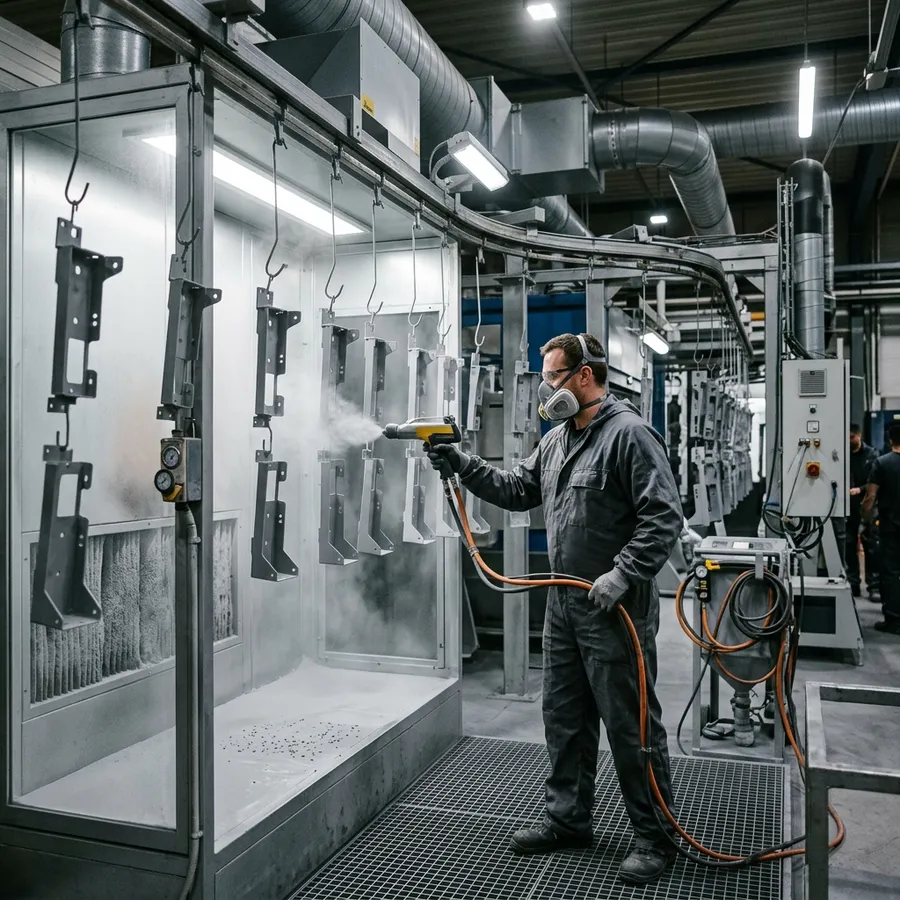
If you specify sheet metal fabrication with powder coating in your RFQ, please let us know where we need to mask threads, keep surfaces raw for electrical grounding, or adjust tolerances to accommodate the paint layer. This saves you from having to tap threads on finished parts manually later.
6. Export Packaging: The Final Quality Process
A perfect metal bracket, panel, or enclosure that gets dented, bent, or scratched during shipping is no longer perfect. It is just an expensive customer complaint. We treat packaging as a core step in the manufacturing process.
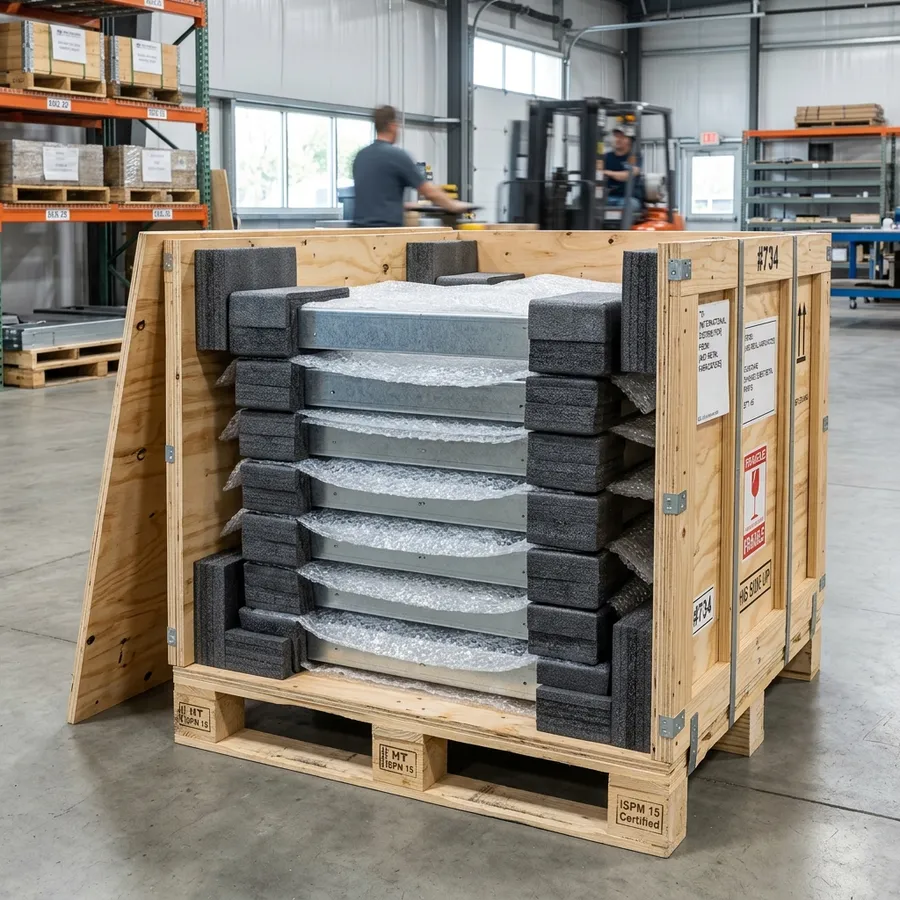
For international shipments, we wrap parts individually, separate layers with protective foam, reinforce corners, and build sturdy wooden crates that can survive the long sea or air transit. We want the parts to arrive at your facility looking exactly as they did when they left our quality control table.
What to Include in Your RFQ Package
To avoid assumptions and ensure we provide an accurate, competitive quote for your CNC bending sheet metal fabrication needs, please include:
- 3D Models (STEP/STP): Essential for checking the geometry, flat layouts, and bend sequences.
- 2D PDF Drawings: Crucial for defining tolerances, hardware part numbers, critical dimensions, surface finishes, and masking zones.
- DXF/DWG Files: Helpful for immediate laser nesting calculations.
- Project Scope Details: Quantities (prototypes vs. production batches), RAL color codes, and any specific assembly or inspection notes.
Send MSTFAB your drawings today. We will review the manufacturability and prepare a practical, clear laser cut and bent metal parts quote that represents real manufacturing, not guesswork.
MSTFAB provides TIG and MIG sheet metal welding services for structural assemblies, cabinets, frames and OEM metal components.
Use the laser cutting and CNC bending checklist when the supplier must reconcile flat data with a formed model.
 WeChat Contact
 WhatsApp Me Directly