
Select a sheet metal finish by substrate, service exposure, appearance and functional interfaces. This comparison covers powder coating, aluminum anodizing and common plating options for an OEM RFQ. For production-control steps rather than finish selection, use the sheet metal powder-coating workflow guide.
Quick answer: Specify the material and required result before choosing a finishing system. Powder coating adds a film that can affect fit and protected contact areas. Aluminum anodizing changes the substrate surface, with results dependent on alloy and process. Plating deposits a specified metal layer for the required function. Agree on thickness, masking, appearance samples and acceptance checks; none of these finishes is a universal choice for every part.
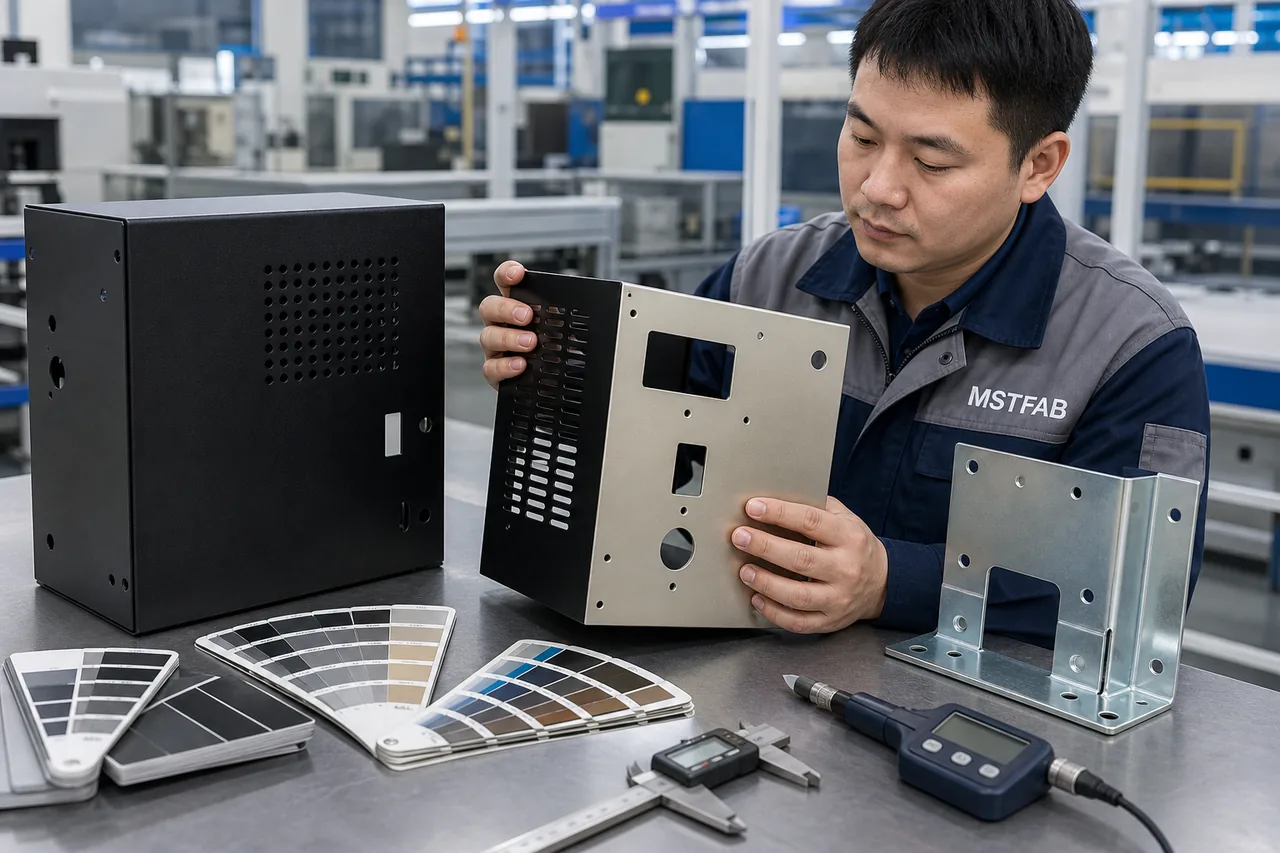
First Rule: Finish Is Not Decoration
A finish can protect against corrosion, control appearance, prevent scratches, support grounding, improve solderability, reduce wear, or simply make the part look less like it escaped from a tool drawer. The mistake is treating finish as the last cosmetic decision after the drawing is done.
For sheet metal buyers, finish is part of design for manufacturing. It affects hole sizes, thread masking, bend edges, gasket surfaces, grounding pads, packing method, cost, and lead time. If the quote says only “black finish,” you do not have a specification. You have a wish with a purchase order attached. For customer-facing parts, define the powder-coated sheet metal cosmetic standard before production.
Sheet Metal Finish Comparison
| Finish | Best Material Fit | Look and Thickness | Best Use | Buyer Checks Before RFQ |
|---|---|---|---|---|
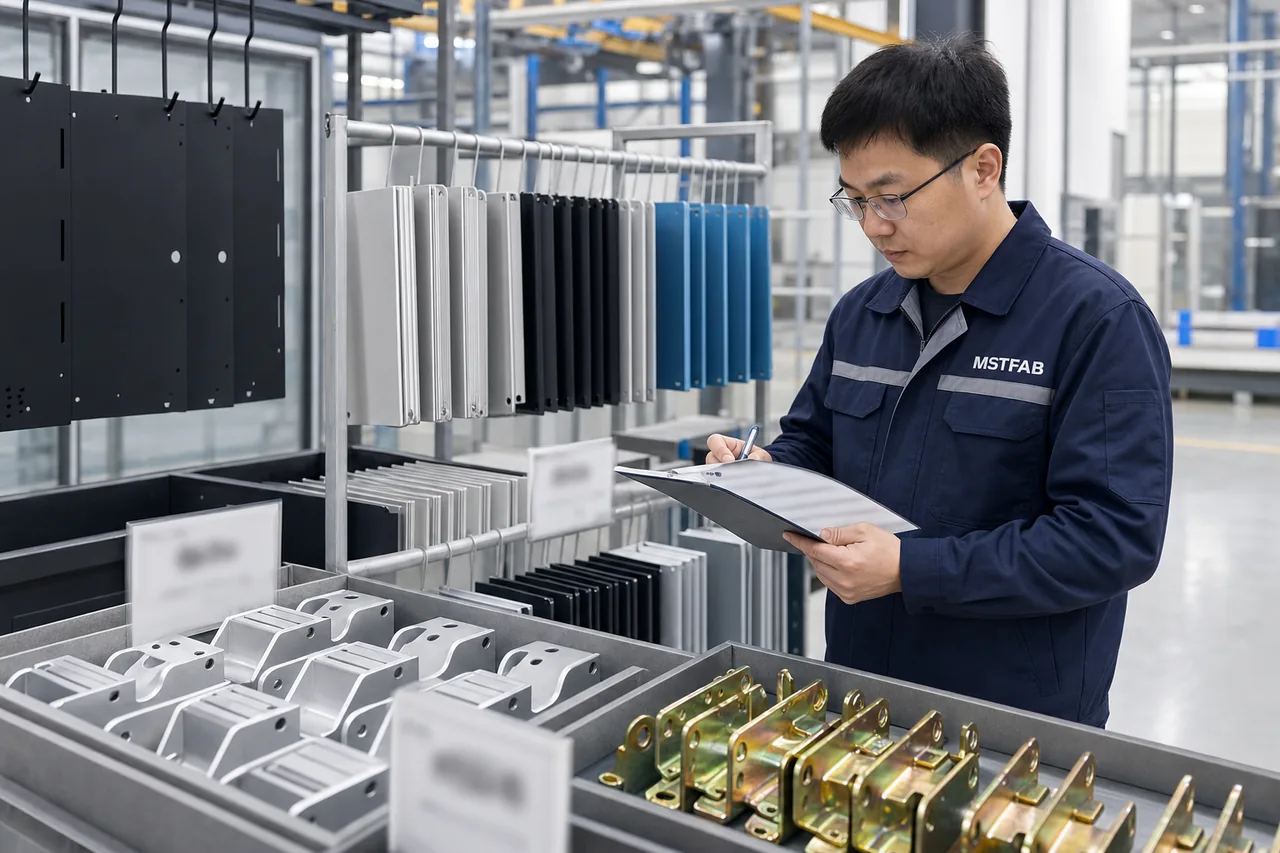
| Powder coating | Carbon steel, galvanized steel, aluminum, and some stainless applications. | Specify the selected color reference, gloss, texture and required film thickness; approve the relevant finish sample. | Enclosures, cabinets, brackets, outdoor housings, customer-facing industrial parts. | Color code, gloss, texture, coating thickness, pretreatment, masking points, outdoor exposure, packing protection. |
| Anodizing | Suitable aluminum alloys for the specified aluminum-anodizing system. | An anodic oxide finish; color, texture and dimensional effects depend on alloy, preparation and process. | Aluminum panels, instrument housings, heatsinks, bezels, lightweight enclosures. | Alloy, anodize type, color tolerance, rack marks, sealing method, conductivity/grounding needs, cosmetic class. |
| Plating | Mostly steel parts and hardware; nickel also used for functional surfaces. | Thin metal layer; zinc looks functional, nickel looks harder and shinier. | Steel brackets, fasteners, clips, grounding parts, solderable or corrosion-protected components. | Plating type, RoHS/REACH needs, salt spray target, thread condition, hydrogen embrittlement risk, packing. |
Powder Coating: The Crowd-Pleaser
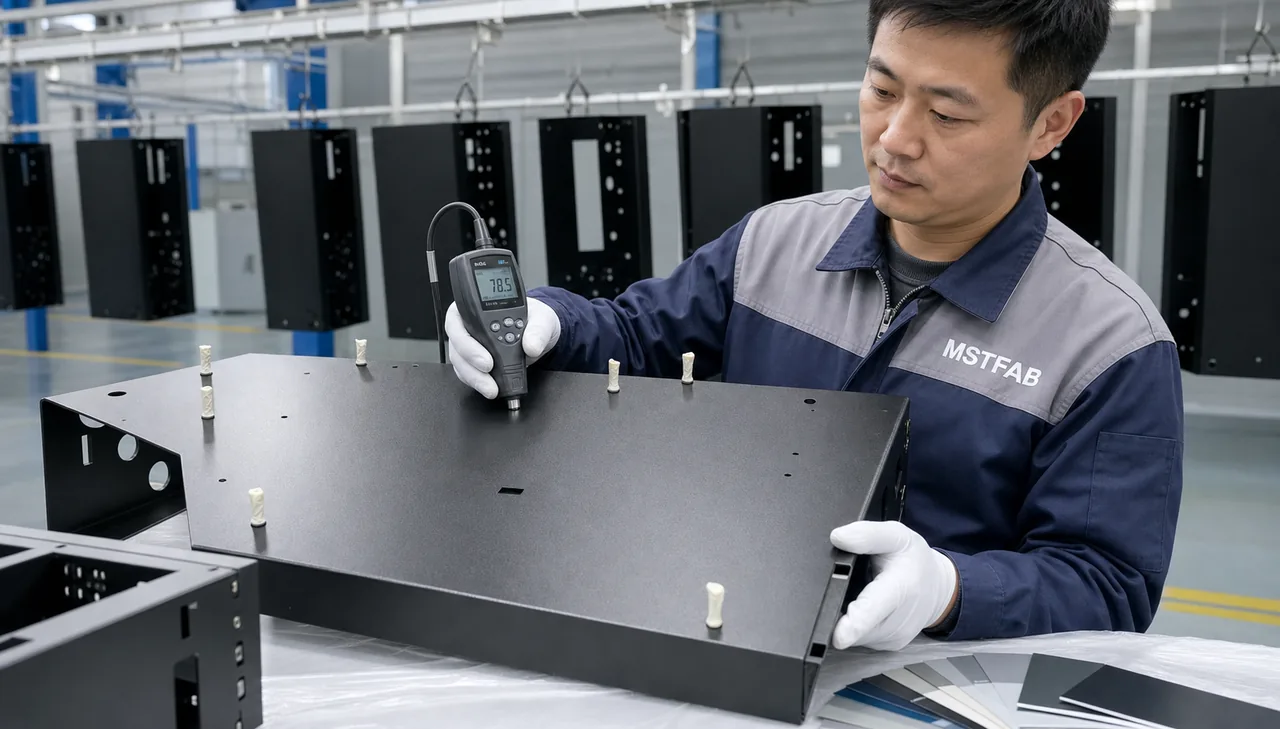
Powder coating is a dry powder sprayed onto the part and baked into a tough finish. It is popular because it is durable, color-flexible, and cost-effective for steel and aluminum sheet metal enclosures.
- Looks: almost any color family, including matte, gloss, fine texture, and wrinkle texture.
- Durability: define the service exposure and required performance, then confirm the powder chemistry, pretreatment and acceptance evidence for that system.
- Best for: steel and aluminum enclosures, cabinets, covers, brackets, control boxes, outdoor equipment shells.
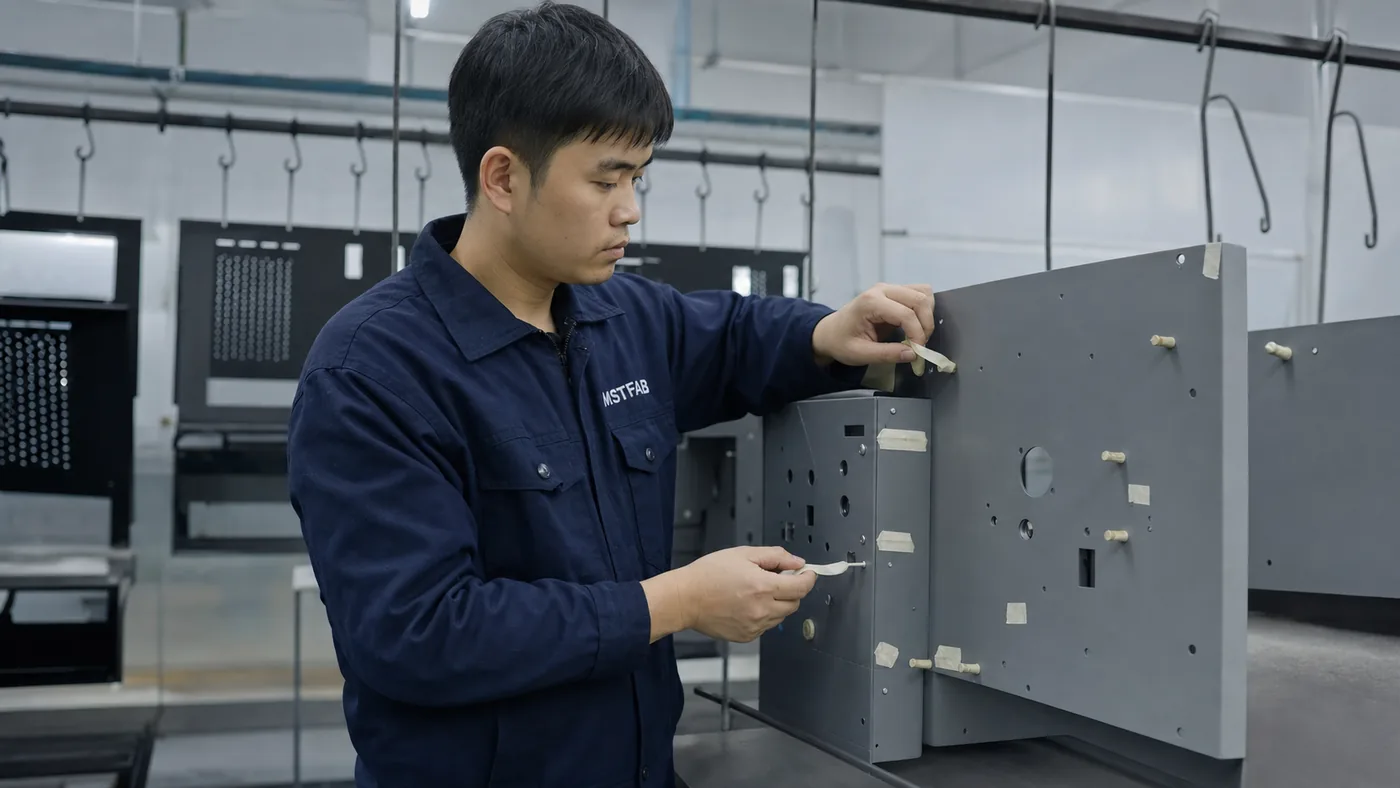
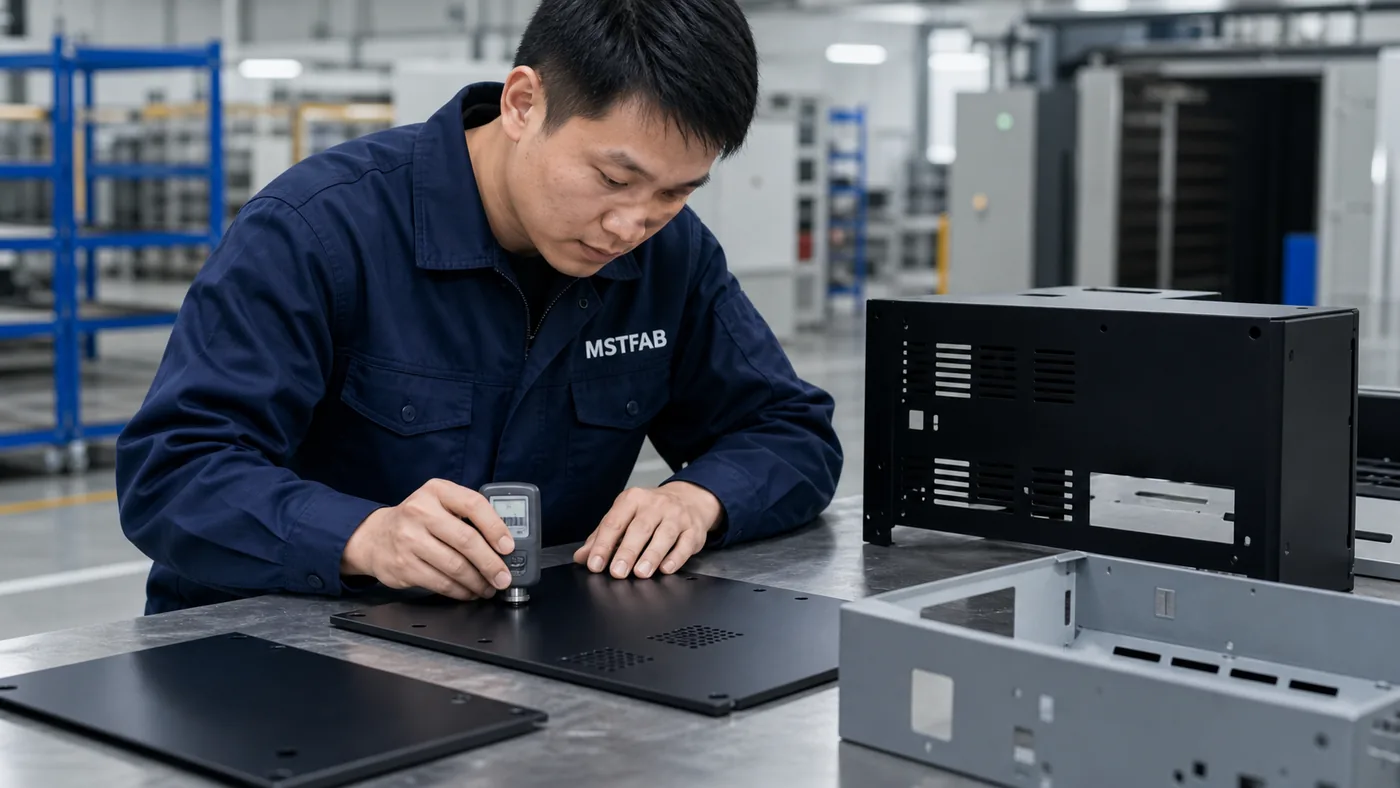
- The catch: it adds measurable thickness. Threads, hinge areas, sliding fits, grounding pads, gasket surfaces, and PEM areas may need masking or post-coat tapping.
The classic buyer mistake is saying “powder coat black” and assuming the shop reads minds. Black what? RAL code? Gloss level? Texture? Indoor or outdoor powder? Masked threads? If you leave the details blank, the details may leave you later, usually in the form of rework.
Anodizing: The Aluminum Specialist
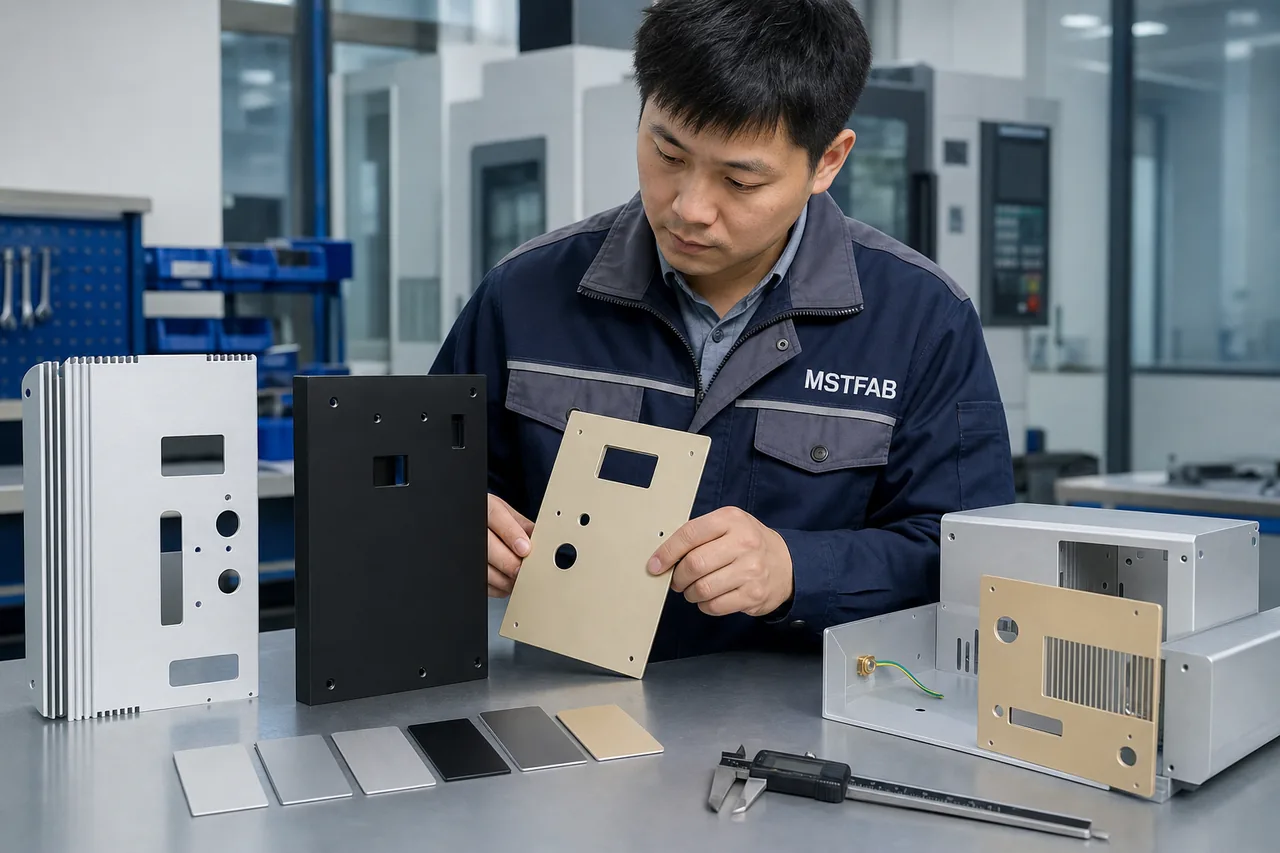
The Aluminum Anodizers Council’s process explanation notes that anodizing is not exclusive to aluminum; other nonferrous metals can also be anodized. This guide discusses aluminum sheet metal, not those other processes. Its specification guidance also explains why alloy and processing conditions matter when agreeing on appearance. These references are not MSTFAB capacity claims.
- Looks: agree on an achievable appearance range using the specified alloy, preparation and coloring process. Do not assume a color name or RAL reference establishes an identical anodized result.
- Durability: hard and corrosion-resistant, but sharp impacts can still dent the base aluminum underneath.
- Best for: aluminum panels, electronics housings, heatsinks, instrument parts, and premium exposed aluminum components.
- The catch: the conventional aluminum-anodizing system discussed here is not a steel finishing specification. Review alloy, weld appearance, processing and batch-to-batch acceptance with the anodizer.
Anodizing can also matter for electronics. Some anodized layers are insulating enough to affect grounding strategy, while bare or masked contact points may be needed. This is one of those small details that looks boring until the assembly refuses to behave.
Plating: The Thin-Metal Shield
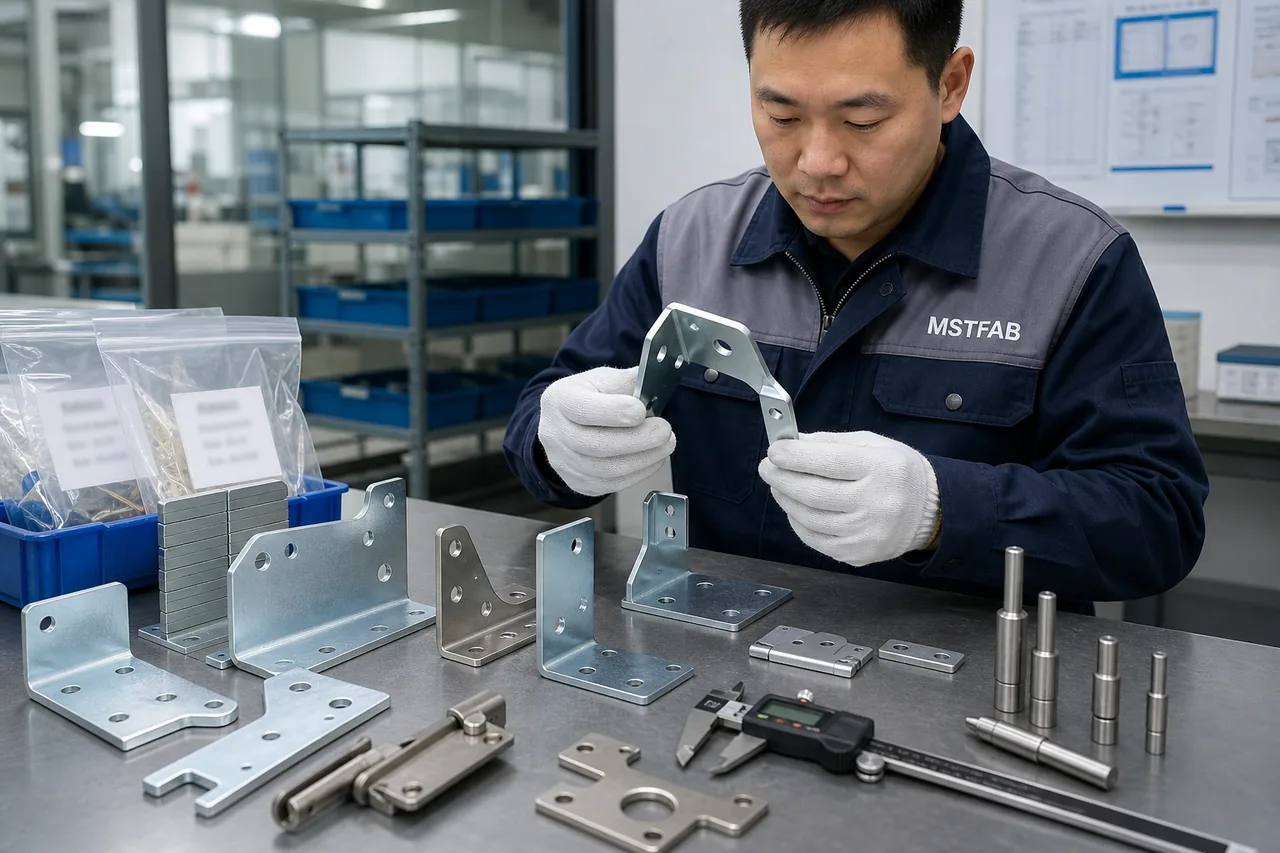
Plating deposits a thin metal layer on the part. Zinc plating is common for corrosion protection on steel. Nickel plating can add hardness, wear resistance, conductivity, or solderability depending on the specification.
- Looks: functional metallic. Zinc may look blue-white, yellowish, or clear depending on passivation; nickel is smoother and shinier.
- Durability: useful for corrosion control and functional surfaces, but not a thick cosmetic skin like powder coating.
- Best for: steel brackets, fasteners, clips, grounding parts, and components that need a thin protective metal layer.
- The catch: plating chemistry, environmental compliance, hydrogen embrittlement risk, and salt spray targets must be specified. “Just plate it” is not enough.
Plating is usually the practical friend, not the fashion friend. If you want a matte blue customer-facing enclosure, plating is the wrong room. Powder coating is down the hall.
Material Decides What Is Possible
Material comes first. Steel, aluminum, stainless steel, and galvanized sheet do not accept finishes in the same way. Anodizing is for aluminum. Powder coating works broadly, but pretreatment changes by substrate. Stainless may need passivation, brushing, electropolishing, or a cosmetic grain direction instead of a color coat.
If you are still choosing the metal, use this before locking the finish: Steel vs Aluminum vs Stainless: Material Guide for Sheet Metal Enclosures.
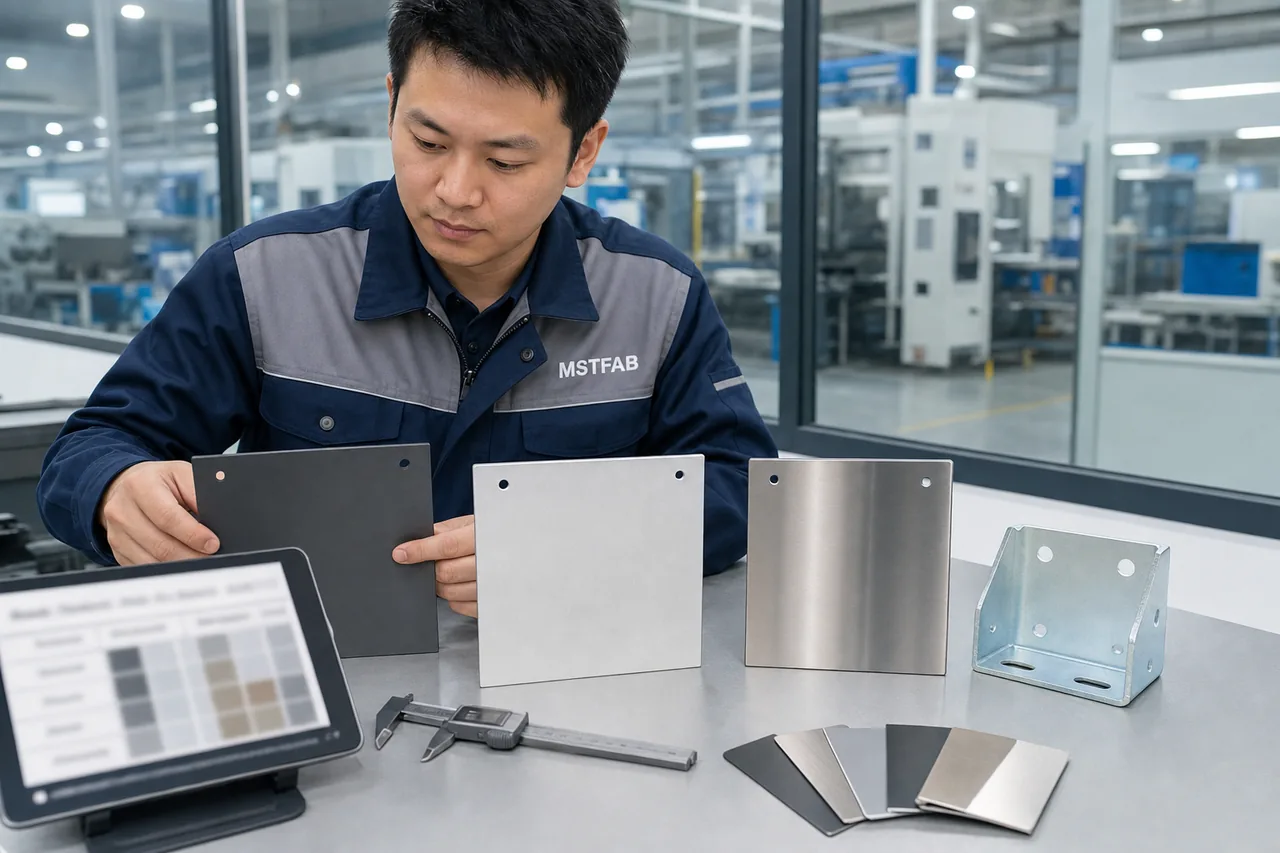
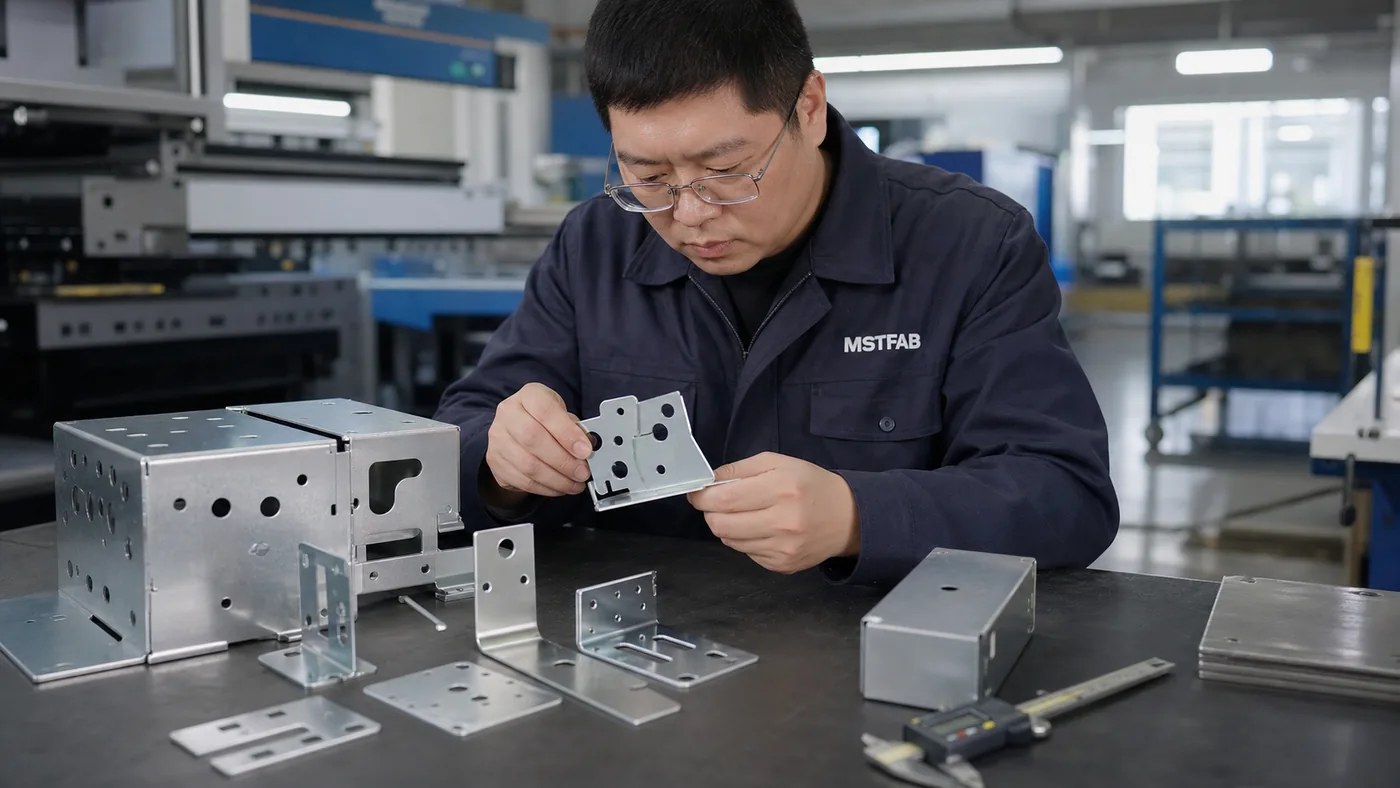
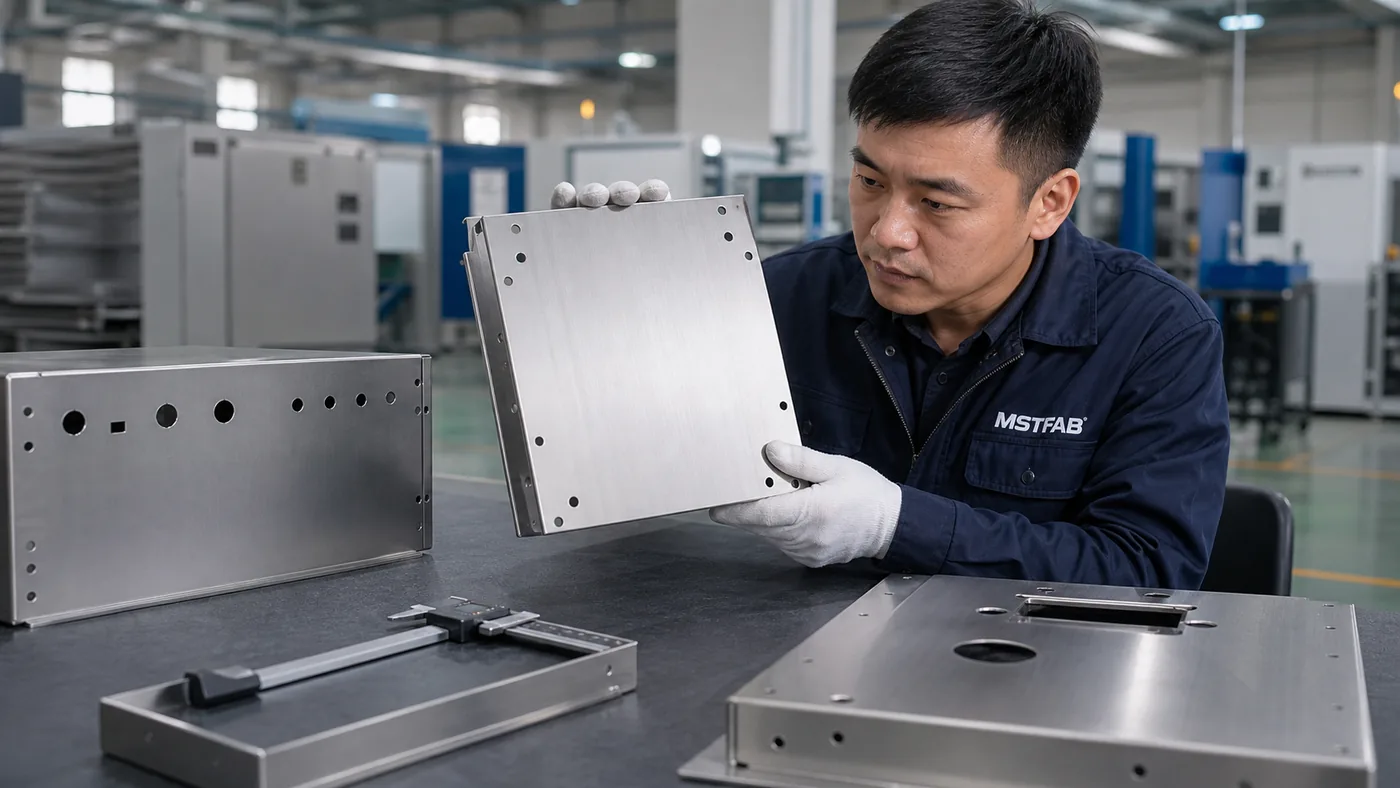
Surface Finishing Examples Buyers Should Check
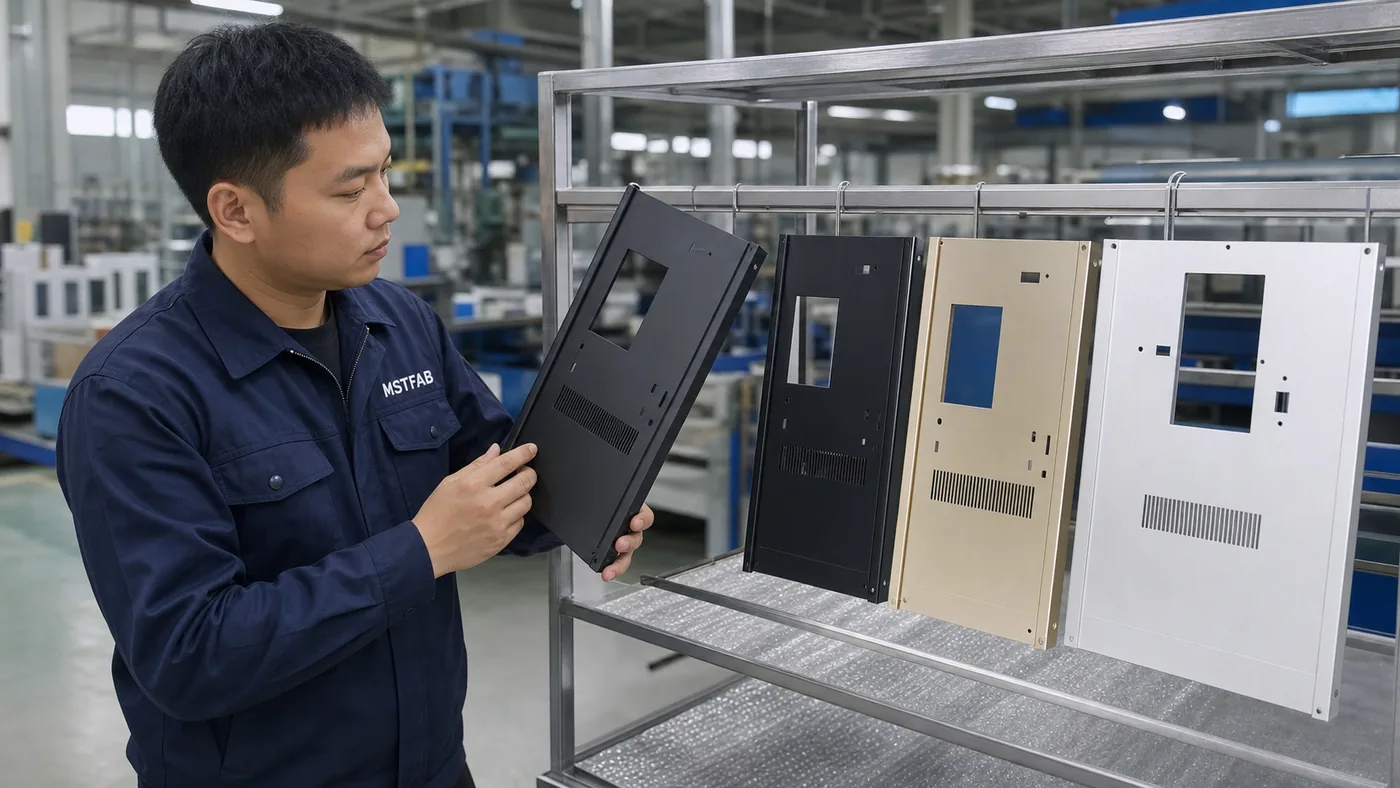
Use these shop-floor examples as a quick visual checklist before approving a finish spec. The goal is simple: protect the part, keep the assembly working, and avoid paying for a cosmetic upgrade where a functional finish would do the job.

How to Pick Without Overthinking
- Outdoor steel enclosure? Powder coating over proper pretreatment is usually the practical default.
- Aluminum housing that should look premium? Consider clear or black anodizing.
- Steel bracket that only needs rust protection? Zinc plating may be enough.
- Need custom color matching? Powder coating gives the widest color range.
- Tight threads, bearing seats, or sliding fits? Avoid coating buildup or specify masking/post-process tapping.
- Need grounding through the part? Define masked contact areas or conductive finish requirements early.
- Hidden internal bracket? Do not spend showroom-finish money where nobody will see it.
The Expensive Mistakes
- Using an aluminum-anodizing specification for steel: select a substrate-appropriate finishing system rather than transferring an aluminum process note to another metal.
- Powder coating unmasked threads: congratulations, the thread is now decorative.
- Asking for any color on anodizing: anodizing is not a printer. Its color palette has boundaries.
- Using plating as a premium cosmetic finish: it often reads functional, not luxury.
- Over-finishing hidden parts: an internal bracket does not need a showroom coat unless it has a corrosion job to do.
- Forgetting packaging: a perfect finish can still arrive scratched if the export packing is lazy.
Cost and Lead Time Reality
There is no fixed cost ranking that applies to every powder-coated, anodized or plated part. Compare current quotations for the actual substrate, preparation, finish specification, quantity, masking, inspection and packaging scope.
If a quote shows the finish as one vague line, ask what is included before the PO. A cheap part can get expensive quickly when masking, coating thickness checks, color approval, or packing were assumed by nobody. This guide helps decode that problem: How to Read a Sheet Metal Quote (And Spot Hidden Costs).
For broader budget planning, see Sheet Metal Fabrication Cost: What Actually Drives Your Part Price.
Confirm the finishing partner’s preparation, batch queue, sample approval, processing, inspection and transport windows for the order. Do not infer a delivery promise from a generic process duration. For schedule planning, use Sheet Metal Lead Time Explained: From RFQ to Delivery.
Finish Details to Put in the RFQ
- Base material and grade: SPCC, SGCC, 304, 316, 5052, 6061, or equivalent.
- Finish type: powder coating, anodizing type/color, zinc plating, nickel plating, passivation, or brushed stainless.
- Color and appearance: RAL, gloss, texture, acceptable color variation, visible surface class.
- Thickness or standard: coating thickness, anodize thickness, plating requirement, salt spray target if needed.
- Masking points: threads, PEM inserts, grounding pads, gasket surfaces, bearing seats, sliding surfaces.
- Inspection: film thickness, adhesion, color check, sample approval, corrosion test, visual acceptance criteria.
- Packaging: protective film, foam separation, corner protection, individual bags, export crate, scratch prevention.
Red Flags in a Finish Conversation
- A supplier transfers an aluminum-anodizing process note without reviewing the actual substrate and required finish.
- “Any color” is promised for anodizing with no sample approval.
- Powder coating is quoted with no masking plan for threads or grounding pads.
- Finish lead time is not separated from fabrication time.
- The quote ignores packaging for customer-facing coated or anodized parts.
- The most expensive finish is pushed onto an internal part nobody will see.
Key Takeaways
- Powder coating is durable, versatile, and color-flexible, but it adds thickness.
- For aluminum anodizing, specify alloy, process, appearance range and inspection requirements; other-metal anodizing processes are outside this comparison.
- Plating is a thin functional metal layer, mainly for corrosion protection, conductivity, solderability, or wear.
- Material, environment, fit, grounding, and packaging should drive the finish choice.
- A complete finish spec prevents cost surprises, lead-time delays, and scratched parts on arrival.
Frequently Asked Questions
Which finish is best for an outdoor steel enclosure?
There is no universal best finish. Define the exposure, substrate, edge condition, service requirements and acceptance criteria. Compare suitable protective systems with the finishing provider; a powder-coated appearance alone does not establish outdoor service life.
Can you anodize steel?
Not using the conventional aluminum-anodizing process discussed here. Choose a substrate-appropriate finish for steel. Anodizing is not exclusive to aluminum in general, but processes for other metals are outside this sheet metal comparison.
Does powder coating change my part dimensions?
Yes. The specified coating film can change clearances at holes, threads, sliding fits and mating surfaces. Define the required thickness, protected areas and finished-part acceptance checks. Any post-finish corrective operation needs an agreed method rather than an assumption that rework is acceptable.
Which finish gives the most color options?
Powder coating offers a broad range of color and texture options. Anodized appearance depends on alloy, preparation and coloring process, while plating has its own finish characteristics. Request an achievable sample and acceptance range rather than assuming the processes produce identical colors.
Is anodizing more expensive than powder coating?
Neither process has a fixed price advantage for every part. Compare current like-for-like quotations covering substrate preparation, specified finish, thickness, quantity, masking, appearance approval, inspection and packaging.
Need Help Choosing the Right Finish?
Send the drawing, material, environment, color target, and fit requirements. MSTFAB can review whether powder coating, anodizing, plating, or another surface treatment makes the most sense before the quote becomes an expensive guessing game.
 WeChat Contact
 WhatsApp Me Directly