
Powder Coated Metal Parts Manufacturer
When sourcing custom metal parts, buyers often treat powder coating as an afterthought—just picking a RAL color and calling it a day. But a beautiful paint job that peels off in two months, or worse, ruins the threads of fifty screw holes, is not a finished product. It’s an assembly line disaster waiting to happen. As a professional powder coated metal parts manufacturer, we know that coating is a precise engineering process. It requires rigorous surface preparation, strategic masking of electrical ground points, and controlled curing to ensure your enclosures, brackets, and panels look premium and assemble perfectly.
For detailed guidance on thread protection and masking during powder coating, see our guide on sheet metal fabrication with threaded inserts.
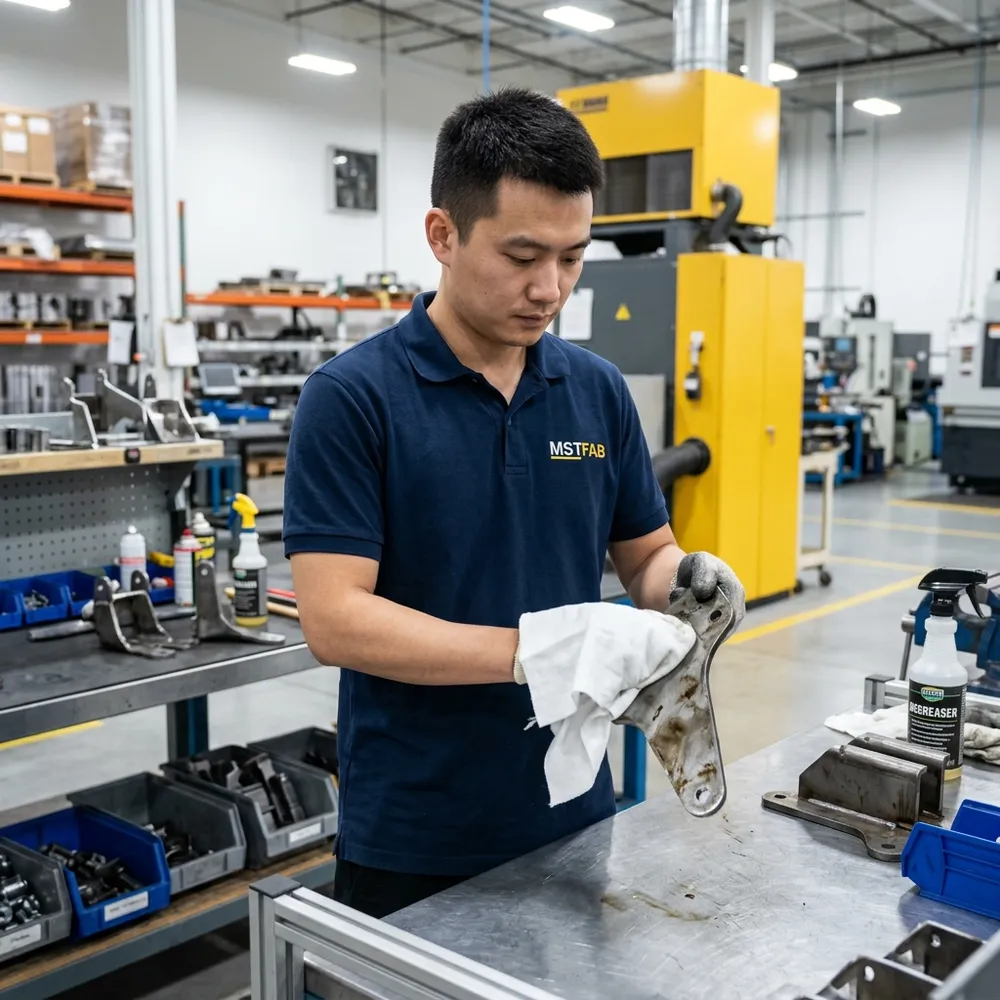
1. Surface Preparation is Everything
If you spray powder directly over machine oil, laser cutting slag, or weld spatter, the paint will eventually bubble and flake off like an old sticker. Real quality starts in the wash phase. Depending on the material—whether it’s mild steel, SPCC, or aluminum—we use chemical degreasing, phosphating, and mechanical deburring to prepare the metal.
Cold rolled steel (SPCC/DC01) is one of the most common base materials for powder coated parts. Learn more about cold rolled steel sheet metal fabrication including material selection and coating preparation.
Powder coating aluminum requires specific pretreatment for proper adhesion. Learn more about aluminum sheet metal parts manufacturing including surface preparation and coating review.
When powder coating galvanized steel, proper pretreatment is critical for coating adhesion. Learn more about galvanized steel sheet metal parts fabrication including surface preparation and zinc layer review.
Galvanized steel requires special attention for powder coating adhesion, pretreatment, grounding masking and thread protection. Learn more about powder coated galvanized steel sheet metal parts.
Deburring is especially critical for coating longevity. Sharp laser-cut edges cause a phenomenon called “edge pull,” where the liquid paint thins out over the sharp corner during curing. By mechanically rounding the edges before coating, we ensure a thick, rust-resistant barrier across the entire part profile.
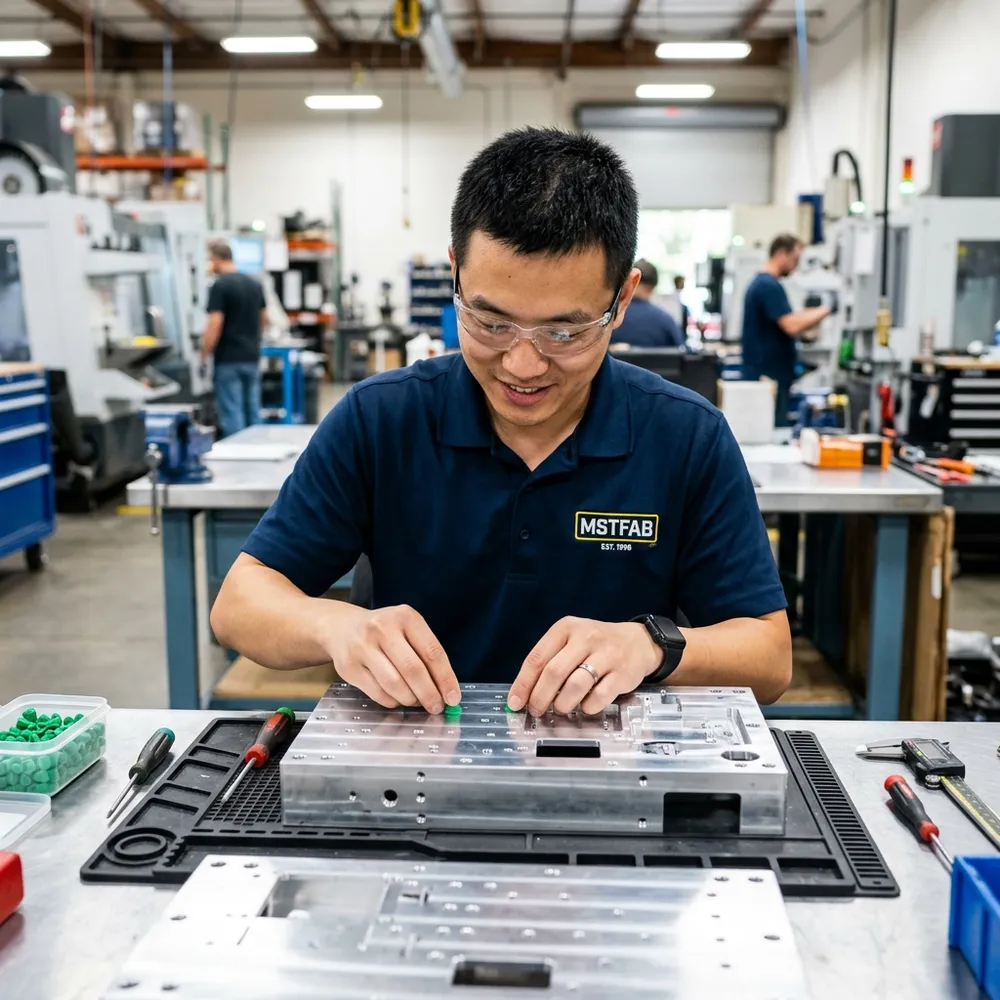
2. Masking Threads and Grounding Points
Powder coating adds physical thickness. If a supplier sprays blindly, that thickness will clog your threaded PEM nuts and coat over your electrical grounding studs. This turns your “finished” part into a massive rework project.
We review your CAD drawings during our pre-production DFM check to identify all no-paint zones. We apply specialized high-temperature silicone plugs to threaded holes and custom masking tape to electrical contact pads. When the part arrives at your facility, the paint is flawless, and the threads are perfectly bare and ready for immediate assembly.
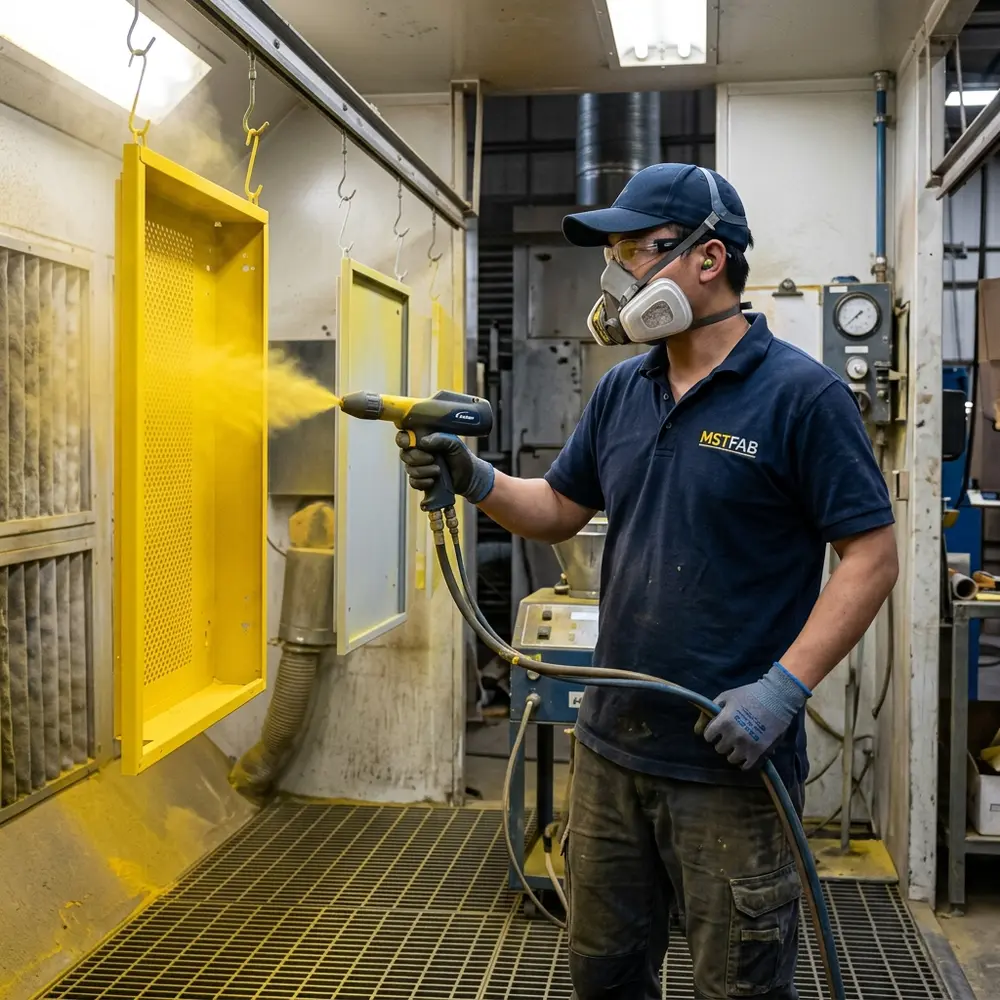
3. Controlling Coating Thickness and Assembly Fit
In the world of sheet metal enclosures, tolerance is tight. If a cabinet door is engineered with a 1.5mm gap, applying a heavy, uncontrolled layer of powder coat on both the door edge and the door frame will cause the hinges to bind and the door to jam.
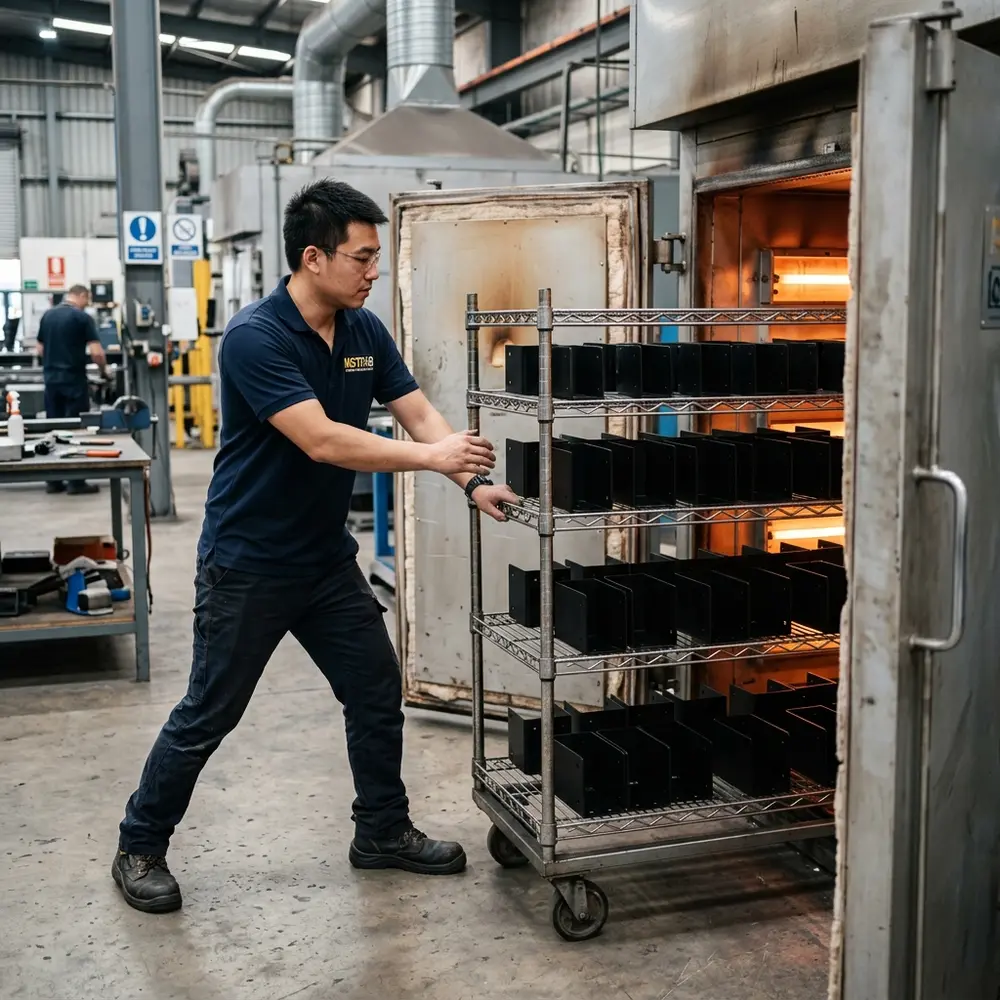
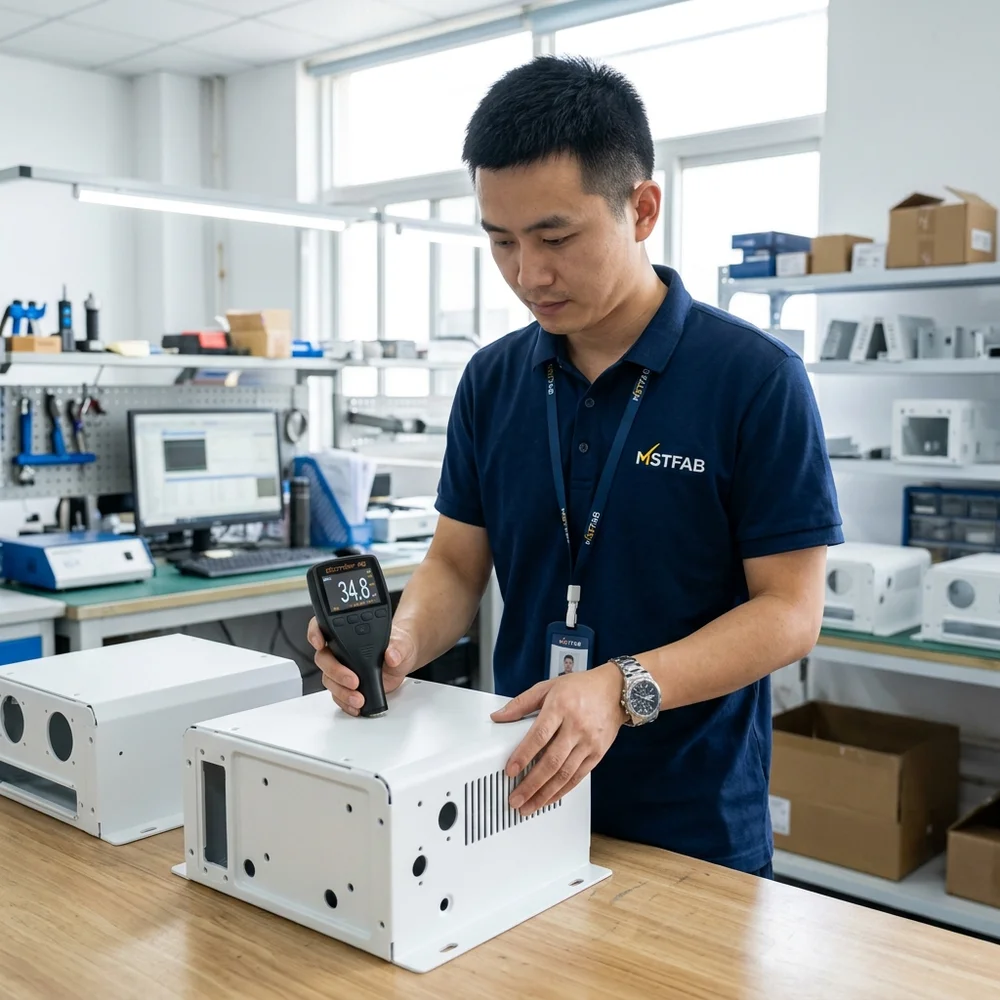
We monitor our electrostatic spray parameters and curing oven temperatures to maintain a consistent coating thickness (typically 60–80 microns, depending on the specification). This ensures that moving parts, sliding rails, and flush panels fit together without forced adjustment.
4. Trust Comparison: Standard Metal Shop vs. MSTFAB Standards
| Evaluation Metric | Standard Metal Fabrication Shop | MSTFAB Powder Coating Standard |
|---|---|---|
| Surface Preparation | Sprays directly onto oily metal; paint peels off like a sticker after two months. | Performs strict degreasing and phosphating to ensure lifetime coating adhesion. |
| Edge Protection | Sprays over sharp laser-cut burrs, leading to “edge pull” and premature rust. | Mechanically deburrs all edges before coating for thick, rust-resistant corner coverage. |
| Thread Masking | Coats everything blindly, leaving you to manually re-tap 50 clogged screw holes. | Uses high-temp silicone plugs to protect all specified threaded holes and PEM nuts. |
| Electrical Grounding | Paints over internal grounding studs, causing failed electrical safety tests. | Applies custom masking tape to keep grounding pads and electrical contact surfaces bare. |
| Thickness Control | Applies uneven powder, causing doors to bind and hinges to jam during assembly. | Controls coat thickness digitally to guarantee uniform finish without assembly interference. |
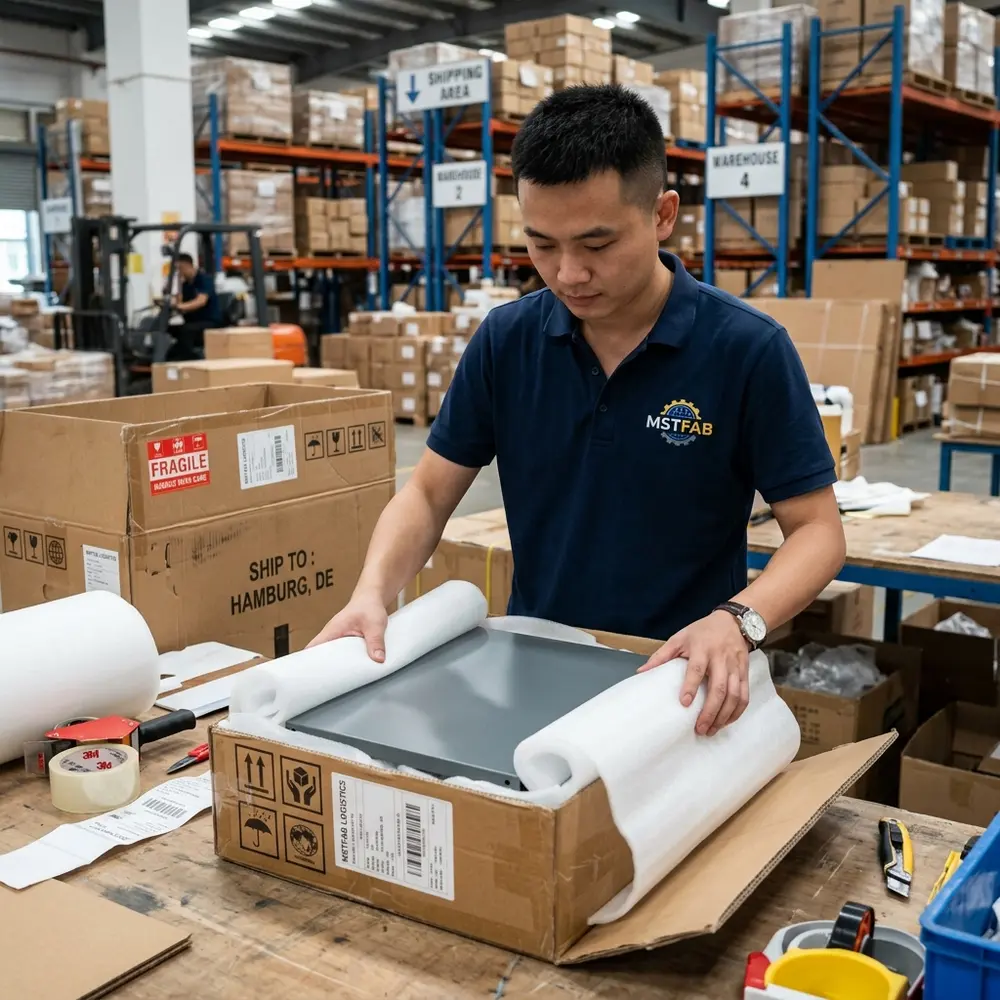
| Shipping Packaging | Throws parts in a loose cardboard box; they arrive chipped and scratched. | Wraps each coated panel in thick PE foam and packs them tightly inside plywood crates. |
5. Custom Parts We Manufacture and Coat
We provide full-service fabrication (laser cutting, bending, welding) followed by in-house powder coating for a wide range of industrial components:
- Industrial Enclosures: Electrical boxes, control cabinets, EV charger housings, and telecom racks.
- Panels and Covers: Machine guards, display faceplates, access doors, and ventilation screens.
- Structural Components: Mounting brackets, welded base frames, DIN rails, and chassis assemblies.
6. Engineering Scope and Responsibilities
We are a build-to-print physical fabrication manufacturer. We do not provide software logic, electrical wiring diagrams, or formal CE/UL product certification testing. You provide the engineering drawings, material callouts, and RAL color codes; we deliver precision-fabricated, beautifully coated metal parts that are ready for your assembly line.
Frequently Asked Questions
Q: What information do you need to quote powder coated parts?
A: We need your 3D STEP files and 2D PDF drawings. The PDF must indicate the RAL color code, gloss level (matte, semi-gloss, high-gloss), surface texture preference, and clearly mark all areas that require masking.
Q: Can you powder coat aluminum parts?
A: Yes. Aluminum can be powder coated. We use specific surface pre-treatments suited for aluminum to ensure the powder bonds permanently without flaking.
Q: How do I make sure my threaded holes don’t get painted?
A: Simply add a note to your PDF drawing highlighting the specific holes or PEM inserts as “No Paint” or “Mask.” Our team will plug them during the coating process.
Q: Can you do custom textures like ‘sand’ or ‘wrinkle’ finishes?
A: Yes. Textured finishes are excellent for industrial equipment because they hide fingerprints and minor material imperfections better than smooth, high-gloss finishes.
Submit your 3D STEP files and PDF drawings detailing your masking and color requirements for a comprehensive fabrication and coating quotation.
MSTFAB provides TIG and MIG sheet metal welding services for structural assemblies, cabinets, frames and OEM metal components.
 WeChat Contact
 WhatsApp Me Directly