
Industrial sheet metal fabrication is not one magic service with a nicer business card. It shows up as enclosures, control panels, machine guards, brackets, frames, covers, trays, and welded assemblies. Same factory floor, very different ways to ruin a buyer’s week if the drawing, finish, tolerance, or packing plan is vague.
Quick answer: Industrial sheet metal fabrication is used for OEM equipment enclosures, control panels, machine guards, access covers, mounting brackets, chassis, welded frames, telecom cabinets, agricultural parts, and production machinery components. Buyers should not choose a supplier by asking only “can you make it?” The better question is: can they review the application risk, confirm material and finish, control fit and flatness, document inspection, and pack the parts so they arrive usable?
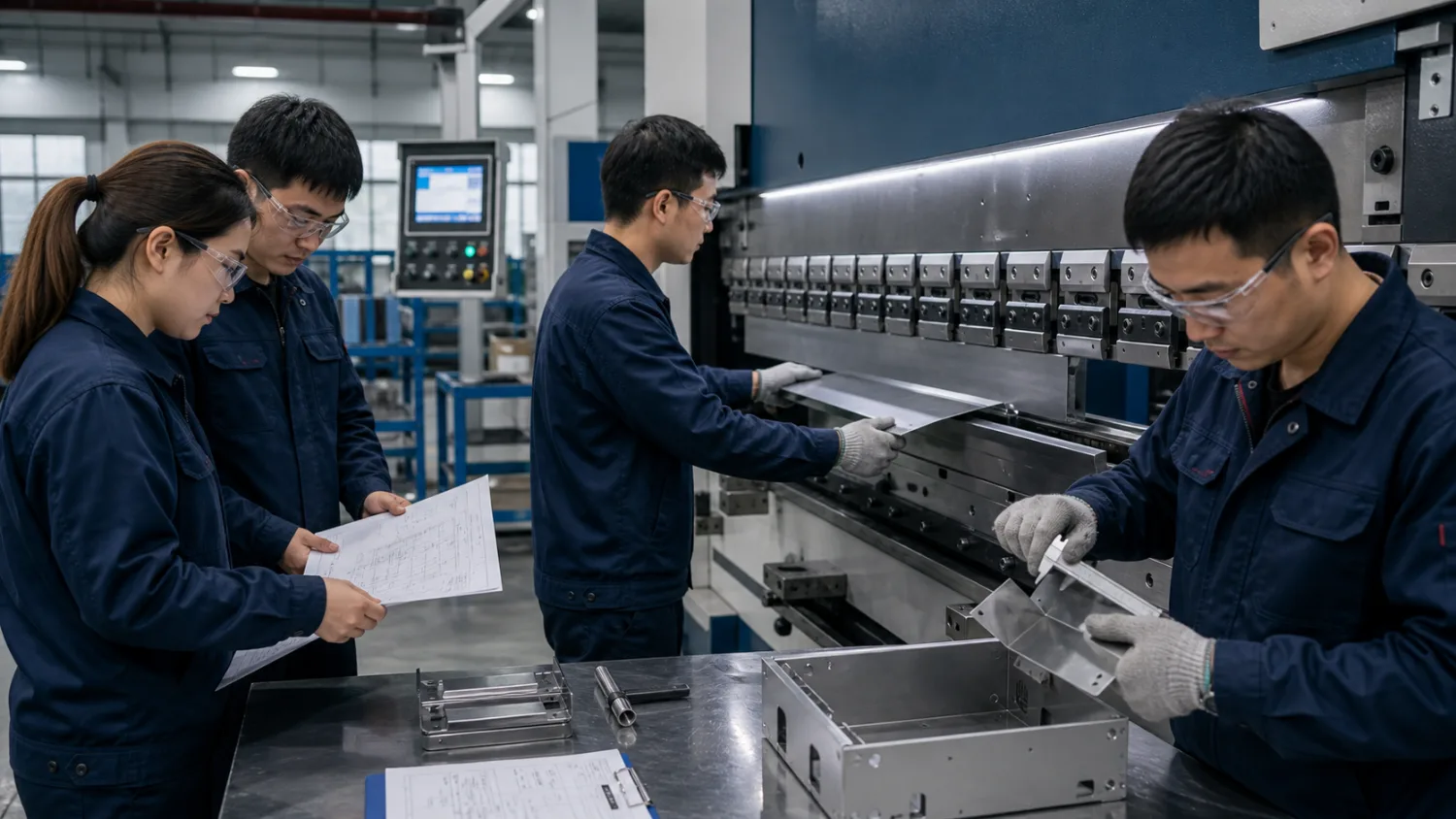
Start With the Application, Not the Process
Laser cutting, bending, welding, inserting hardware, and powder coating are just verbs. Useful verbs, yes, but still verbs. For OEM buyers, the application matters more because it tells the supplier what the part must survive: vibration, rain, washdown, operator abuse, heat, grounding, assembly stack-up, or the occasional forklift love tap nobody admits happened.
A good supplier will ask where the part lives and what failure looks like. A weak supplier quotes the drawing as if every bracket, cabinet, and cover has the same job. That is how “cheap” parts become expensive meetings.
Common Industrial Applications and Buyer Risks
Use this table to match the application with the real procurement risk. It is not glamorous, but neither is explaining a line stop because a hinge hole moved 1 mm after welding.
| Application | Typical Sheet Metal Parts | Main Buyer Risk | What to Confirm Before PO |
|---|---|---|---|
| Industrial equipment enclosures | Cabinets, covers, chassis, access panels | Door fit, flatness, vibration, coating damage | Assembly stack-up, hinge/latch locations, finish thickness, packing method |
| Control panels and electrical boxes | Panel boxes, mounting plates, terminal covers | Grounding pads, cutout accuracy, masked threads | Electrical layout, masking map, enclosure rating target, hardware list |
| Machine guards and access covers | Removable guards, vented covers, safety panels | Loose fit, sharp edges, poor repeat service access | Edge finish, slot position, fastener access, handle and label locations |
| Welded frames and base structures | Equipment frames, support rails, welded brackets | Weld distortion and poor squareness | Fixture plan, weld sequence, critical datums, inspection points |
| Mounting brackets and plates | Brackets, adapter plates, sensor mounts | Hole alignment and tolerance mismatch | Critical holes, mating parts, tolerance table, PEM or threaded hardware |
| Agricultural and construction equipment | Guards, covers, heavy brackets, reinforcement plates | Corrosion, impact, vibration, mud and outdoor exposure | Material grade, coating system, weld strength, export packaging |
Application 1: Equipment Enclosures and Cabinets
Enclosures are where industrial sheet metal fabrication gets judged by people who do not care how hard manufacturing was. Doors must close. Panels must line up. Powder coating must not fill the threaded holes. If the box rocks on a flat bench, nobody says, “well, at least the laser cutting was inspirational.”
For enclosure work, buyers should confirm bend sequence, flatness, door gaps, hinge/latch positions, grounding pads, coating thickness, and packaging. For a deeper enclosure-focused page, see custom metal enclosure box fabrication.
Application 2: Control Panels and Electrical Hardware
Control panels are not just boxes with holes. They are interface parts between metalwork, wiring, safety, and field service. Cutouts must match switches, glands, connectors, displays, fans, and terminal blocks. Grounding areas need masking or controlled finish. Labels and fasteners need clearance after coating.
This is where a “simple change” becomes comedy with invoices. Move a hole after powder coating and you are not editing a drawing anymore. You are doing archaeology with a drill.
Application 3: Machine Guards, Covers, and Service Panels
Machine guards and removable covers need a different mindset. They must be strong enough for use, light enough for service, smooth enough for safety, and repeatable enough that maintenance teams do not invent new words while removing them.
Buyers should define edge requirements, airflow openings, mounting direction, access frequency, and whether the part is cosmetic or purely functional. For removable equipment covers, link the drawing review to real service access, not just “make panel here.”
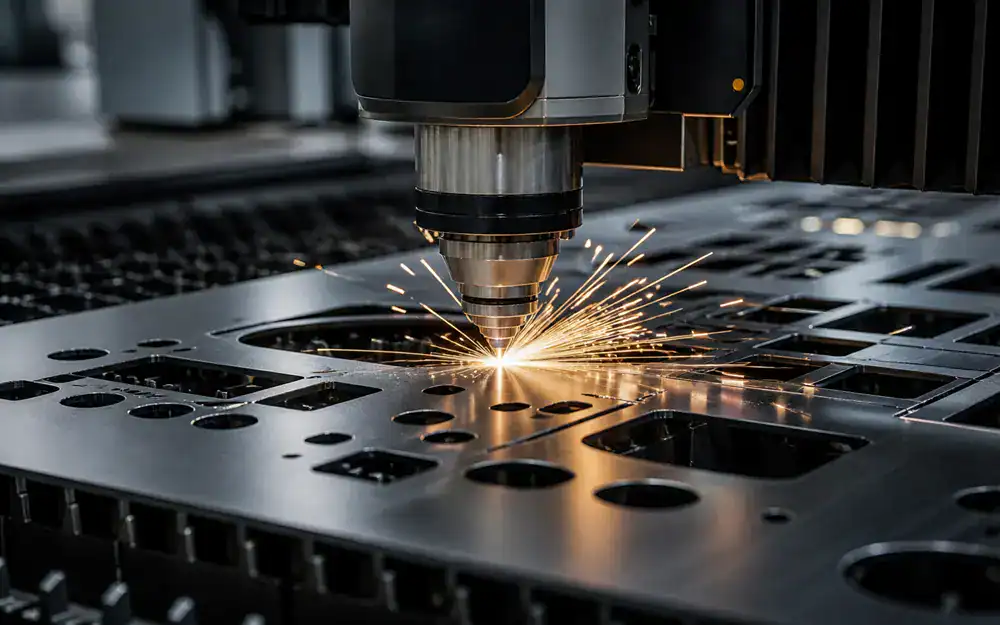
Application 4: Welded Frames and Structural Assemblies
Welded sheet metal assemblies are where optimism goes to be measured. Heat moves metal. Thin panels warp. Long welds shrink. If the drawing demands a perfectly square frame but says nothing about fixture strategy, you have not specified quality. You have made a wish with dimensions.
Ask the supplier how they control weld distortion: fixtures, tack sequence, intermittent welds, inspection points, and post-weld straightening limits. If every welded assembly is quoted like a flat bracket, put the quote down gently and step away.
Application 5: Brackets, Mounting Plates, and Build-to-Print Parts
Brackets are small enough to look harmless and important enough to stop an assembly when the holes are wrong. Define the mating part, critical holes, slot direction, fastener type, and tolerance table. Do not tolerance every edge tightly “just to be safe.” That is not safety. That is paying for a microscope where a clearance slot would do.
For practical tolerance choices, use Sheet Metal Tolerances Explained for OEM Buyers. Tighten the features that must fit. Let the rest breathe like normal metal.
Application 6: Agricultural, Construction, and Outdoor Equipment
Outdoor and heavy-duty parts need more than “paint it black.” They need the right material, corrosion plan, drainage, weld strength, edge treatment, and packaging. Mud, vibration, UV, rain, salt, and impact do not read your purchase order. They simply test it.
For agricultural equipment, galvanized steel plus powder coating may be a good value choice. Stainless may be required near chemicals, washdown, or salt exposure. The right answer depends on environment, not habit.
What Buyers Should Send in the RFQ
If you want a serious quote, send serious inputs. A vague RFQ is not faster; it just moves the delay to a more expensive part of the timeline.
- 2D drawing with dimensions, tolerances, bend notes, and critical features.
- 3D STEP file for geometry review and assembly context.
- Material grade and thickness, not just “steel” or “aluminum.”
- Finish requirement: powder coat, plating, anodizing, brushing, passivation, or bare.
- Quantity: prototype, pilot run, and expected annual volume.
- Hardware list: PEM inserts, standoffs, fasteners, hinges, locks, handles.
- Inspection requirement: first article, critical dimensions, appearance standard.
- Packing and shipping requirement, especially for coated or export parts.
Trust Signals That Actually Matter
Industrial OEM buyers do not need a supplier who says “yes” to everything. That is not service; that is how rework gets a head start. You want a supplier who asks annoying but useful questions before the PO.
| Trust Signal | What It Looks Like | Why Buyers Should Care |
|---|---|---|
| DFM review | Supplier flags bend radius, hole placement, weld distortion, finish masking | Prevents expensive design loops before production starts |
| Process ownership | Cutting, bending, welding, hardware, finishing, QC and packing are managed as one workflow | Reduces finger-pointing when fit or finish issues appear |
| Inspection clarity | Critical dimensions and acceptance criteria are agreed before first article | Stops “your standard vs our standard” arguments |
| Finish planning | Masking, coating thickness, color, texture, grounding pads, and packaging are specified | Protects parts from cosmetic damage and assembly failures |
| Export readiness | Protective packing, cartons/crates, documentation, and shipping terms are clear | Prevents good parts arriving as expensive scrap |
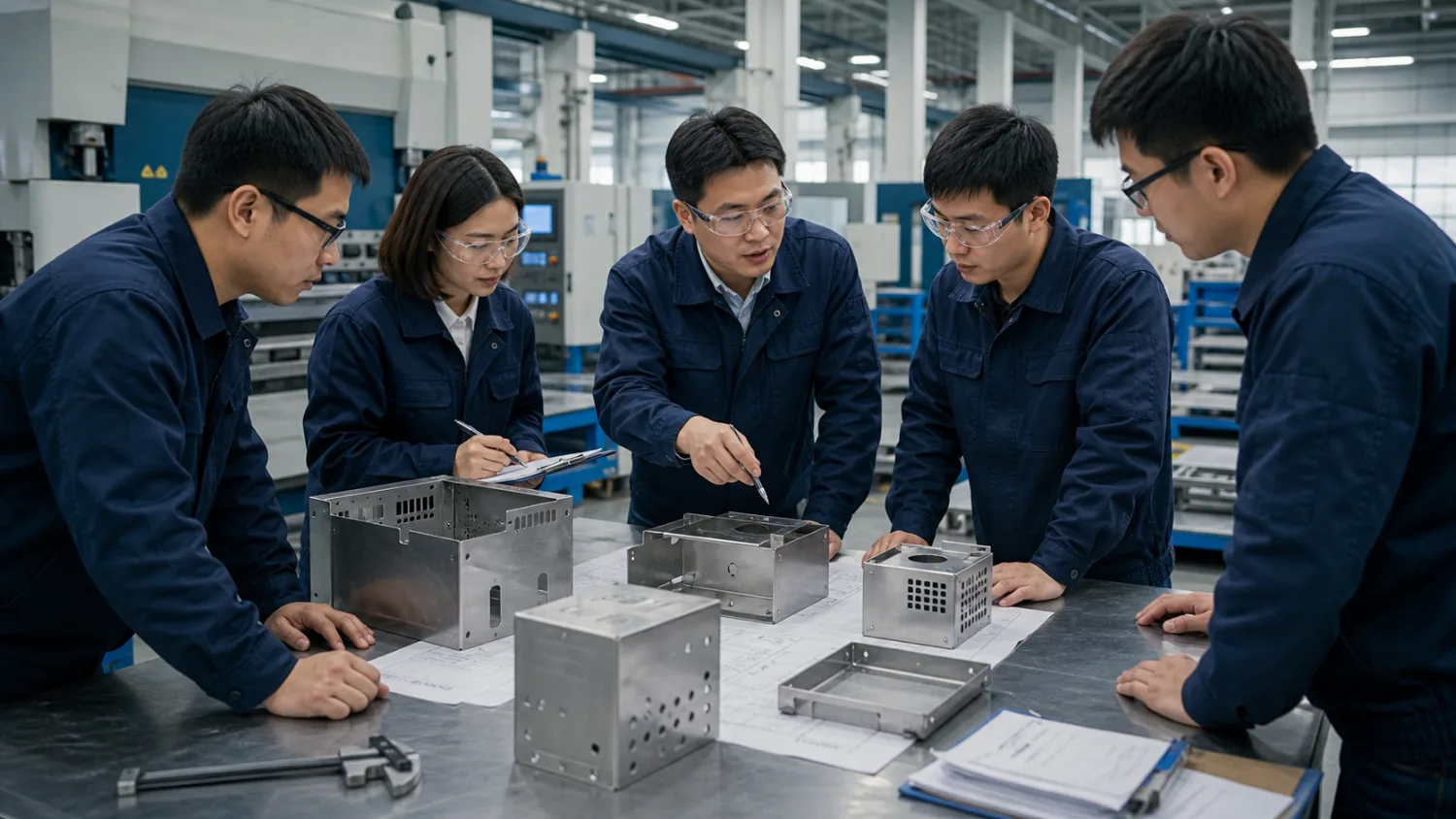
Cost, Lead Time, and Finish Depend on the Application
A control panel with masked grounding pads is not priced like a farm bracket. A welded frame is not scheduled like a flat laser-cut plate. An outdoor enclosure has a finish and packing problem that an internal machine cover may not have. Same material family, different risk stack.
For cost drivers, see Sheet Metal Fabrication Cost: What Actually Drives Your Part Price. For early manufacturability checks, use DFM Design Rules for Sheet Metal Parts. For finish choices, see Powder Coating vs Anodizing vs Plating: Sheet Metal Finishes Guide.
Red Flags in Industrial Sheet Metal Sourcing
- The quote has only a unit price and no process breakdown.
- The supplier never asks where the part will be used.
- Material is listed as “steel” with no grade or thickness confirmation.
- Welded assemblies are quoted with no fixture or distortion discussion.
- Powder coating is quoted with no masking plan for threads or grounding.
- Packaging is ignored even though the parts are coated, large, or exported.
- Inspection is described as “standard” but no one defines the standard.
Key Takeaways
- Industrial sheet metal fabrication applications include enclosures, control panels, guards, brackets, frames, covers, and heavy-duty equipment parts.
- The application should drive material, tolerance, finish, welding, inspection, and packing decisions.
- Trustworthy suppliers review manufacturability and risk before production, not after the parts fail inspection.
- A complete RFQ is faster than a vague RFQ because it removes guessing.
- Compare suppliers by total risk reduction, not only by the unit price printed in a quote.
Frequently Asked Questions
What are common industrial sheet metal fabrication applications?
Common applications include equipment enclosures, control panels, machine guards, access covers, mounting brackets, chassis, welded frames, telecom cabinets, agricultural equipment parts, and production machinery components.
How should OEM buyers choose the right fabrication process?
Start with the part’s job: fit, strength, environment, finish, assembly, and service access. Then match the process: laser cutting, bending, welding, hardware insertion, finishing, and inspection. The process should serve the application, not the other way around.
Why do industrial sheet metal parts fail after a cheap quote?
Usually because the quote skipped application risk: unclear material, loose inspection assumptions, no finish masking plan, poor weld distortion control, or weak packaging. The missing details come back later as rework, rejects, or delivery damage.
What should I include in an RFQ for industrial sheet metal parts?
Send a 2D drawing, STEP file, material grade and thickness, finish, tolerance table, critical dimensions, hardware list, quantity, inspection requirements, and packing/shipping expectations. The clearer the RFQ, the fewer expensive assumptions.
What makes a sheet metal supplier trustworthy for OEM manufacturing?
Look for DFM feedback, clear process control, realistic tolerance discussion, finish planning, inspection evidence, and export-ready packaging. A trustworthy supplier does not just say yes; they explain what could go wrong and how they will prevent it.
Need Industrial Sheet Metal Parts Built to Your Application?
Send MSTFAB your drawing, STEP file, material, finish, quantity, and application notes. We will review the manufacturability risks before quoting, because surprises belong in birthday parties, not OEM production schedules.
 WeChat Contact
 WhatsApp Me Directly