EV Charger Cabinet Manufacturer for AC and DC Charging Stations
Choosing an EV charger cabinet manufacturer is not the same as buying a standard metal box.
An EV charger cabinet protects sensitive electrical components, supports heavy cable routing, manages severe outdoor exposure, controls extreme heat, provides safe grounding paths, allows service access, and still needs to look highly professional after production, shipping, installation, and public use.
At MSTFAB, a dedicated custom EV charger enclosure factory, we don’t just cut metal. We engineer stability. For OEM buyers, the most important question is: Can this factory manufacture the cabinet consistently, inspect the critical dimensions, and reduce assembly problems before batch production begins?
AC vs DC EV Charger Cabinets: Radically Different Needs
AC and DC charging stations may both need metal cabinets, but the requirements are entirely different. The buyer should never treat them as the same box with a different label.
AC charger cabinets are often smaller and may be wall-mounted or pedestal-mounted. A small cabinet can still fail if the cable entry is poorly sealed, the door gaps are uneven, or the coating scratches during shipping. Small cabinet. Same physics. Same rain.
DC charging cabinets are massive. They need stronger structures, highly specialized thermal planning, and massive service access. A cabinet that is too tight may save sheet metal cost up front. Then it charges the buyer back through difficult assembly, poor airflow, and service complaints. That is not a saving. That is cost relocation.
Grounding Paths: Where Paint Becomes an Insulator
EV charger cabinets require reliable grounding and bonding paths according to your electrical design.
Powder coating can completely block electrical contact if grounding areas are not masked properly. A cabinet can look beautifully powder-coated and still fail entirely as an electrical safety structure. Grounding should be planned before coating, not scraped off with a tool after coating.
Internal Structure and Thermal Layout
Inside the cabinet, the sheet metal structure must rigidly support the buyer’s electrical layout—power modules, contactors, relays, and massive cooling fans.
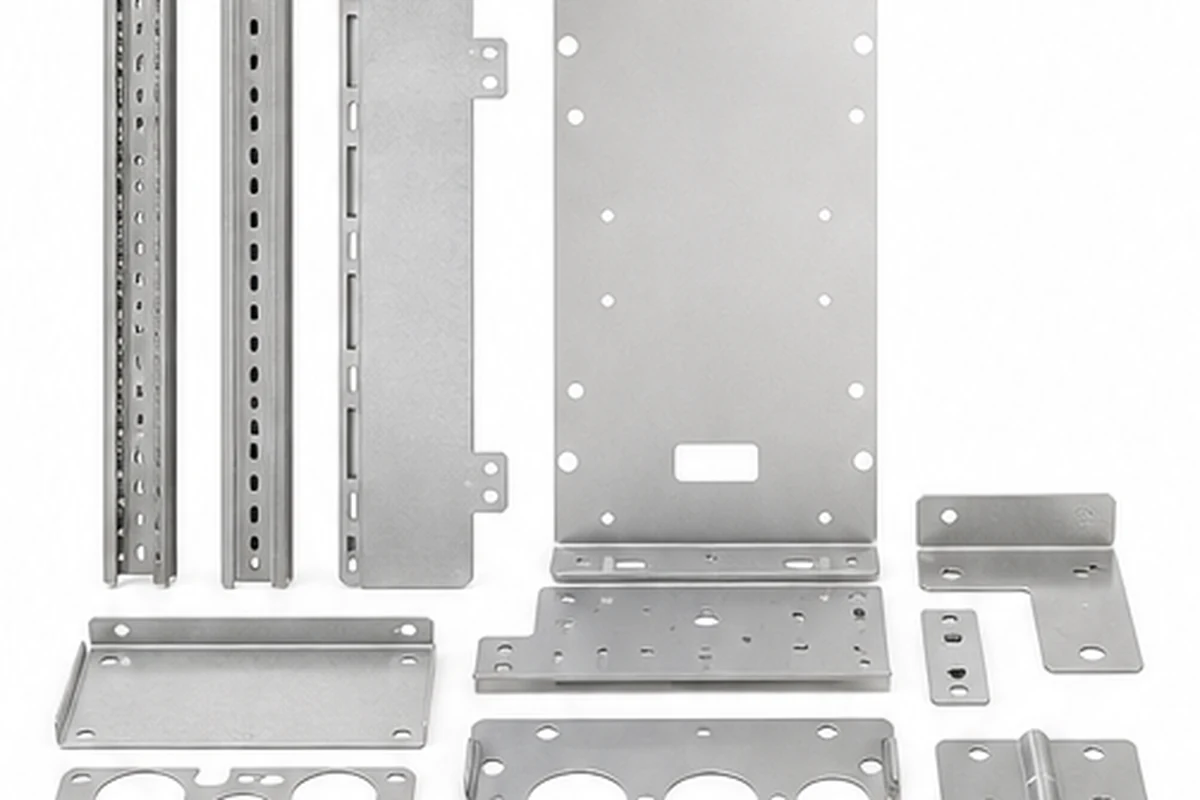
A sealed cabinet with no thermal plan is not “well protected.” It is a warm metal room for expensive electronics. We ensure mounting plates do not bend under component weight, brackets do not interfere with thick copper wiring, and PEM nuts are installed flawlessly.

Cable Entry: The Smallest Panel, The Biggest Risk
Poor cable entry design causes water ingress, dust entry, cable bending stress, wiring congestion, and corrosion around holes.
If your current supplier is drilling cable holes after powder coating the cabinet, they are not doing engineering. They are doing corrosion with a drill. A cable entry plate is small. Its mistakes are not.
| Procurement Risk Factor | The Generic “Job-Shop” Trap | The MSTFAB Standard |
|---|---|---|
| Grounding Integrity | Powder coats the entire cabinet, forcing your electricians to scrape paint off grounding studs to make contact. | Uses high-temperature silicon masking on all grounding points and studs prior to powder coating for perfect bare-metal contact. |
| Thermal Space (DC) | Shrinks the cabinet size slightly to save material cost, creating a claustrophobic wiring nightmare for assembly workers. | Performs strict DFM reviews to guarantee ample clearance for heavy power modules, cable bend radiuses, and cooling fans. |
| Batch Repeatability | Produces a perfect first sample, but the 100th unit has warped doors and misaligned PEM nuts. | Locks the entire process via ERP. The 500th cabinet uses the exact same laser program and bending fixture as the approved First Article. |
| Scope Confusion | Promises they can build the “entire charger” but outsources the metalwork to a cheap local shed. | We build the physical sheet metal cabinet structure. You bring the electrical design. Clear boundaries, zero outsourcing. |
How MSTFAB Supports EV Charger Procurement
We manufacture the physical sheet metal cabinet structure. We do not design EV charging modules, power electronics, charging software, payment systems, or wiring harnesses.
You bring the EV charging design. We manufacture the cabinet body that helps protect, mount, wire, service, and scale it reliably.
Ready to Scale Your EV Charger Cabinet Production?
We provide honest DFM reviews, repeatable CNC processing, and export-ready packaging for global OEMs.
Explore More Custom Fabrication Capabilities
- EV Charging Station Enclosure Fabrication
- EVSE Cabinet Manufacturer
- EV Charging Cabinet Sheet Metal Fabrication
- Outdoor Charging Station Enclosures
- Custom EV Charger Enclosure
- Custom Sheet Metal Enclosure Fabrication
- Electrical Cabinet Manufacturing
- Electrical Control Cabinet Manufacturer
- Power Distribution Enclosure
- Battery Storage Cabinet Fabrication
- Custom Climate Controlled Enclosures
- IP54 Enclosure
- Sheet Metal Material Selection Guide
- Mounting Plates & Brackets
- Manufacturing Process
- DFM for Sheet Metal Enclosures
- Prototype to Production
- CNC Sheet Metal Bending
- TIG Welding
- Powder Coating
- Stainless Steel Enclosures
- Aluminum Enclosures
custom sheet metal enclosure fabrication
MSTFAB manufactures custom sheet metal enclosures, electrical cabinets, control boxes and industrial metal housings for OEM buyers.
 WeChat Contact
 WhatsApp Me Directly