A power distribution enclosure is not just a metal cabinet with breakers inside.
It protects electrical components, supports cable routing, controls heat, prevents dust and water ingress, and allows technicians to install and maintain equipment safely.
When the enclosure is poorly designed or poorly fabricated, the problems usually appear after installation:
- large power cables cannot bend properly
- breakers overheat inside a sealed cabinet
- busbar clearance is too tight
- cable gland areas start rusting
- door sealing pressure is uneven
- mounting plates do not align
- grounding contact is blocked by powder coating
- technicians cannot access components easily
At MSTFab, we often review RFQs where buyers focus on cabinet size, steel thickness, and unit price first.
Those are important, but they are not enough.
For power distribution projects, the real procurement question is:
Will this enclosure support safe electrical installation and long-term field operation?
Because a cheap enclosure that causes installation rework is not cheap.
It is just a delayed cost with screws attached.
For an overview of our electrical manufacturing capability, review Custom Sheet Metal Enclosure Fabrication.
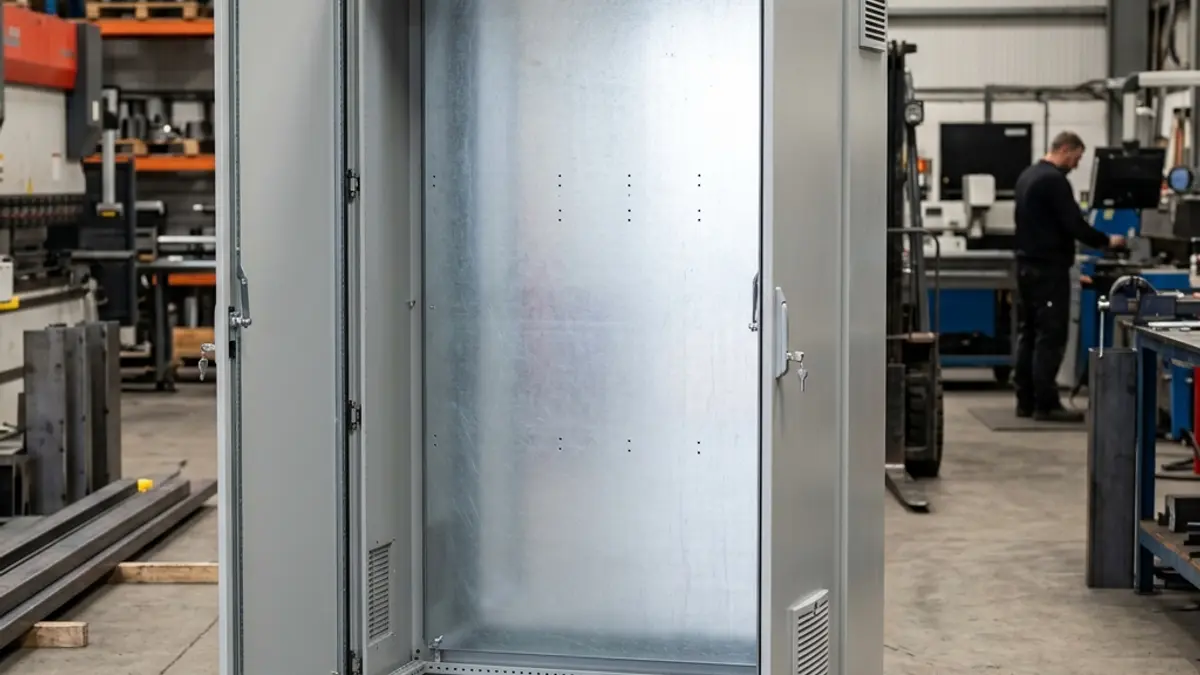
Need production capability? This article focuses on power distribution enclosure. For manufacturing scope, process capability and drawing-based quotation support, review MSTFAB’s distribution board and electrical cabinet fabrication.
1. Cable Clearance Is One of the Biggest Procurement Risks
Power distribution enclosures often handle thick incoming and outgoing cables.
These cables need enough space for:
- bending radius
- cable gland installation
- terminal connection
- service access
- safe separation from control wiring
- heat dissipation
One common mistake is making the enclosure too compact to reduce material cost.
The drawing may look fine, but during field installation technicians discover incoming cables cannot bend safely, terminals are difficult to access, cable glands are too close together, lower cabinet space is insufficient, and installation takes much longer than planned.
For OEM buyers, cable clearance should be reviewed before fabrication.
Important points include cable entry direction, gland plate size, bottom clearance, busbar position, breaker terminal access, and power and signal cable separation.
A cabinet that saves 80mm of height but adds two hours of installation time is not optimized.
It is just smaller in the wrong way.
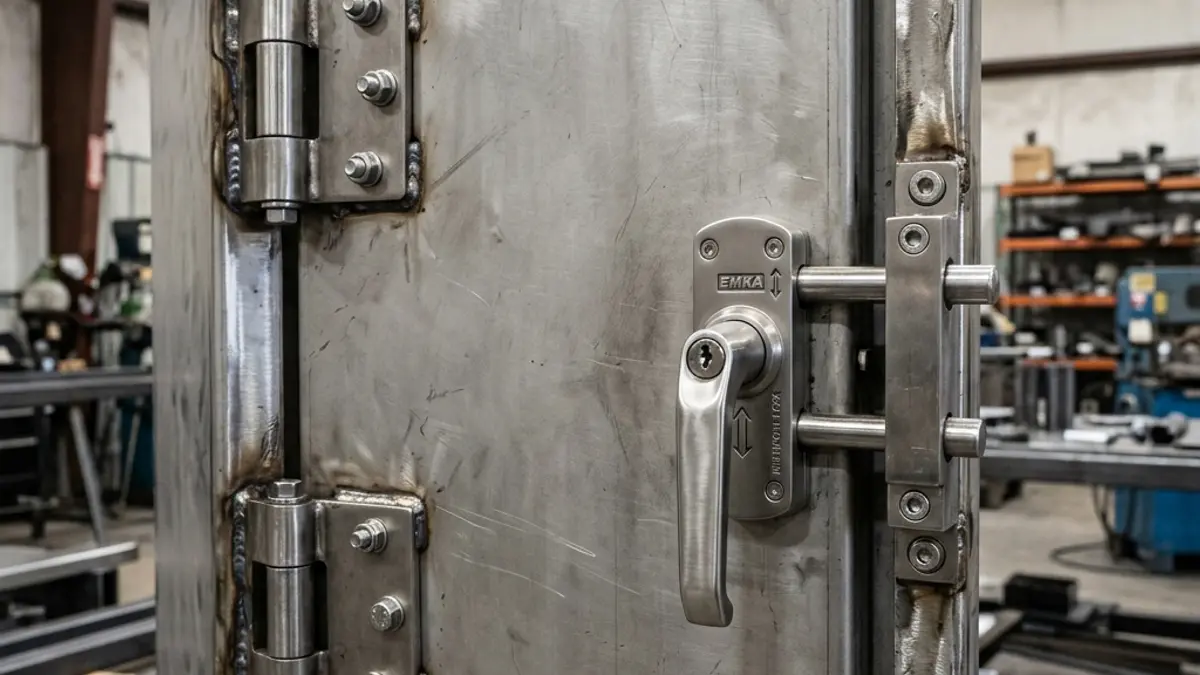
2. Heat Management Must Be Planned Early
Power distribution components generate heat.
Common heat sources include MCCBs, MCBs, contactors, transformers, power supplies, busbars, terminal blocks, and surge protection devices.
If the enclosure is sealed too tightly or internally crowded, temperature rises quickly.
This can lead to breaker derating, insulation aging, terminal loosening, component failure, unstable electrical performance, and shorter service life.
OEM buyers should evaluate component spacing, ventilation path, heat source separation, fan or filter placement, airflow blocked by cable bundles, outdoor sun exposure, and whether climate control is required.
For outdoor or high-load electrical systems, buyers may need to compare with Climate Controlled Power Distribution Enclosures.
A sealed cabinet with no thermal plan is not a premium electrical enclosure.
It is a warm metal closet for expensive components.
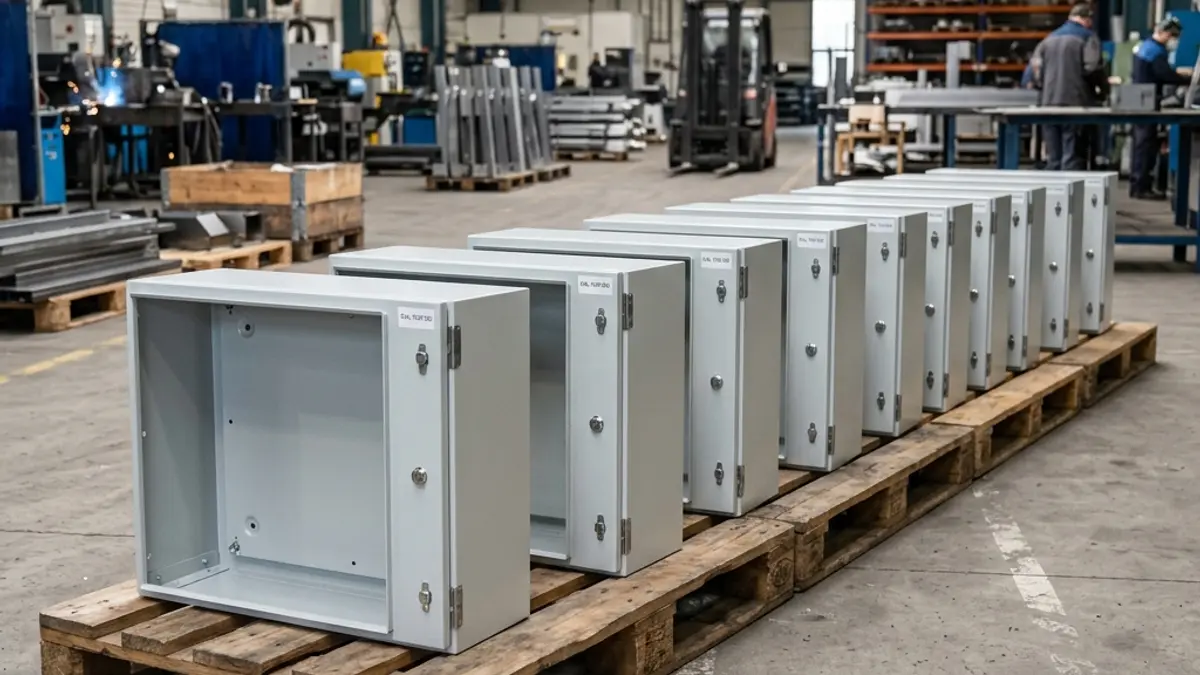
3. IP Sealing Depends on Door Flatness and Structure
Many buyers request IP65 or outdoor protection.
That is common for outdoor power distribution cabinets, telecom power enclosures, EV charging systems, renewable energy equipment, and industrial control systems.
But IP protection is not only about using a gasket.
It also depends on door flatness, flange consistency, hinge alignment, latch pressure, welding distortion, gasket compression, and coating thickness around sealing areas.
If the door is warped, even a good gasket cannot seal properly.
For power distribution enclosures, buyers should check whether the supplier performs door fitment inspection, gasket contact check, latch compression review, frame squareness inspection, and trial assembly before shipment.
A cabinet can pass basic dimensional inspection and still fail sealing performance.
Water does not read inspection reports.
It finds gaps.
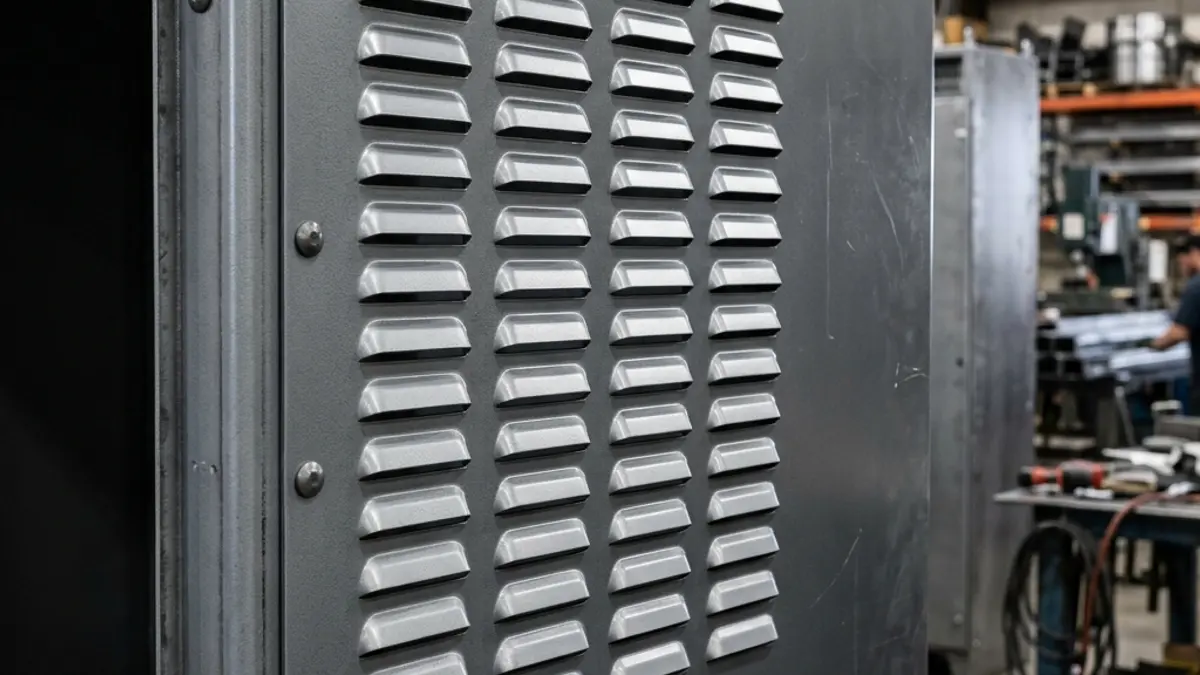
4. Material Selection Should Match the Installation Environment
Power distribution enclosures can be made from different materials depending on cost, corrosion risk, and installation conditions.
Powder Coated Steel
Good for indoor electrical cabinets, industrial power cabinets, cost-effective OEM production, and color-customized electrical enclosures.
Recommended internal link: Powder Coated Steel Enclosure Fabrication
Galvanized Steel
Good for indoor or semi-protected electrical cabinets, better base corrosion resistance, and control and distribution enclosures.
Recommended internal link: Galvanized Steel Enclosure Fabrication
Stainless Steel
Good for outdoor power distribution cabinets, coastal environments, chemical plants, food processing facilities, and high-humidity sites.
Recommended internal links: 304 Stainless Steel Electrical Enclosure Manufacturer and 316 Stainless Steel NEMA Enclosure Fabrication
Aluminum
Good for lightweight electrical housings, outdoor power equipment covers, telecom power systems, and heat-sensitive applications.
Recommended internal link: Aluminum Sheet Metal Enclosure Fabrication
The right material depends on the cabinet’s real working environment.
A dry indoor factory, a coastal telecom site, and an outdoor solar power station should not use the same material logic.
The environment always gets the final vote.
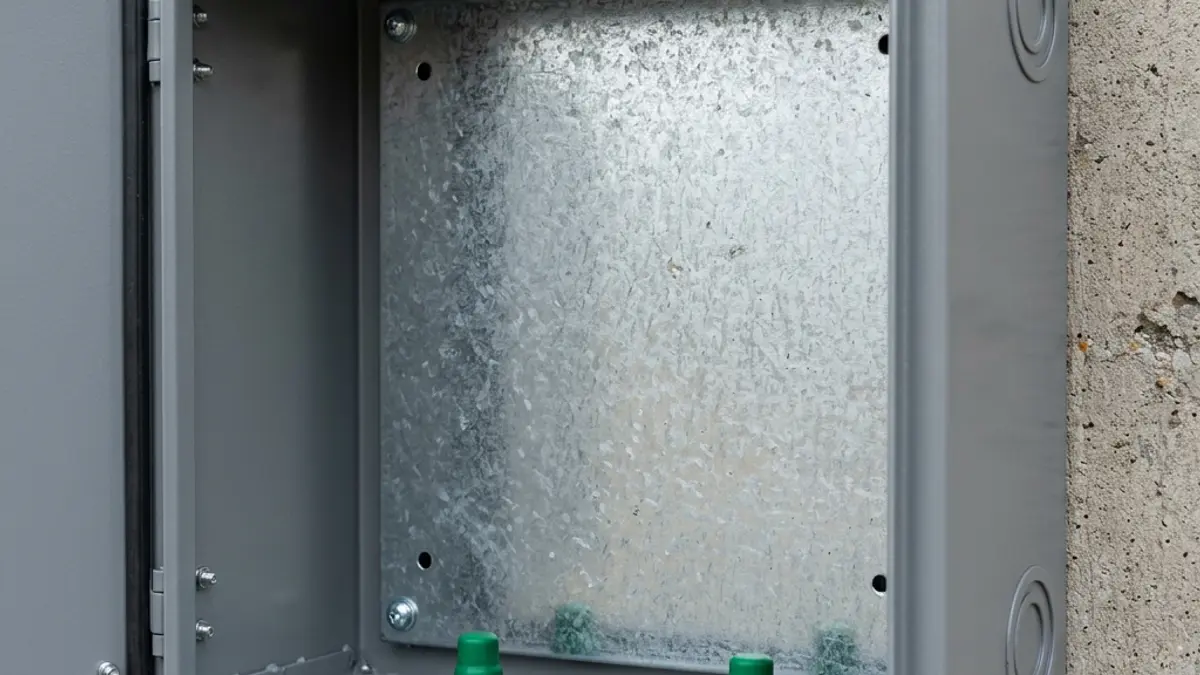
5. Grounding and Electrical Bonding Must Be Designed Before Coating
Power distribution enclosures need reliable grounding.
But powder coating can block electrical contact if grounding points are not planned correctly.
Common problems include coated grounding studs, poor door bonding, insulated mounting plates, weak electrical continuity, missing masked contact areas, and inconsistent hardware contact.
OEM buyers should define grounding stud locations, masked grounding areas, door bonding method, conductive hardware requirements, grounding wire route, and electrical contact surfaces.
For electrical cabinets, a beautiful powder coated finish is useless if it prevents grounding.
That is like wearing safety gloves and then taping your fingers together.
Looks safe. Works badly.
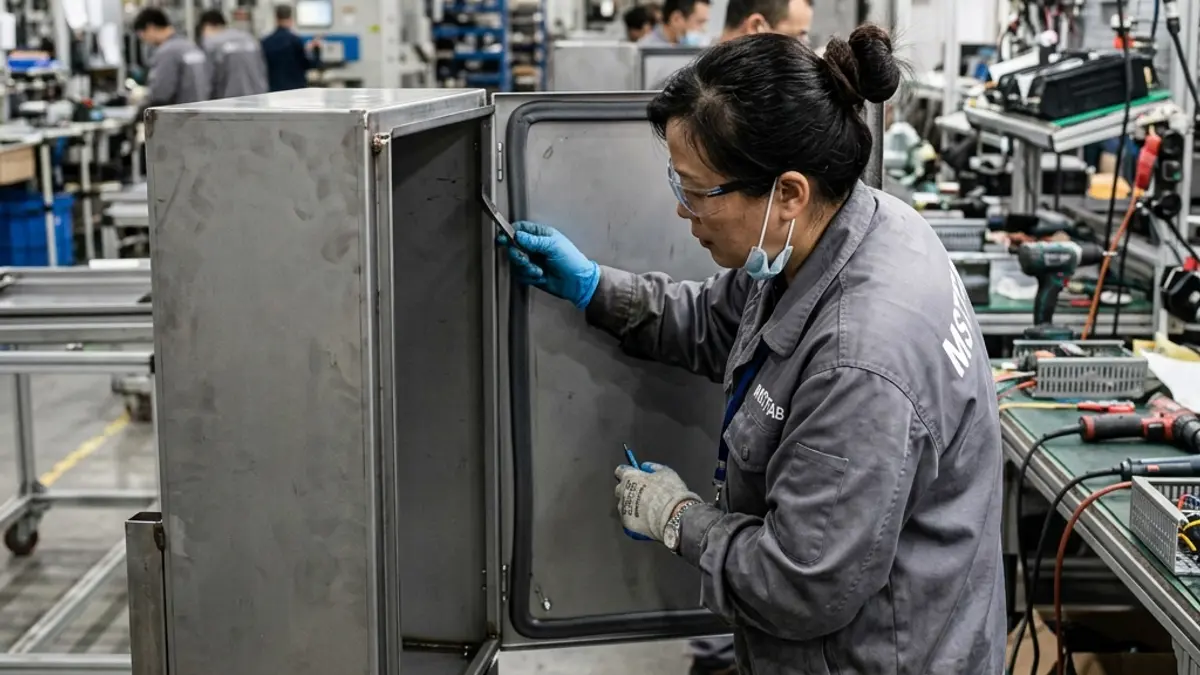
6. Busbar and Mounting Plate Layout Need Practical Space
Power distribution cabinets often include copper busbars, circuit breakers, terminal blocks, DIN rails, mounting plates, wiring ducts, power supplies, and surge protection units.
The enclosure must provide enough space for both equipment and installation.
Common buyer pain points include busbar clearance too tight, mounting plate holes misaligned, wiring duct space insufficient, breaker replacement difficult, internal layout too crowded, and maintenance access blocked.
Before production, buyers should check busbar clearance, mounting plate flatness, hole position accuracy, internal component spacing, technician hand access, and future expansion space.
A power distribution enclosure should not force technicians to install components with the patience of a watchmaker.
Industrial electrical work needs space.
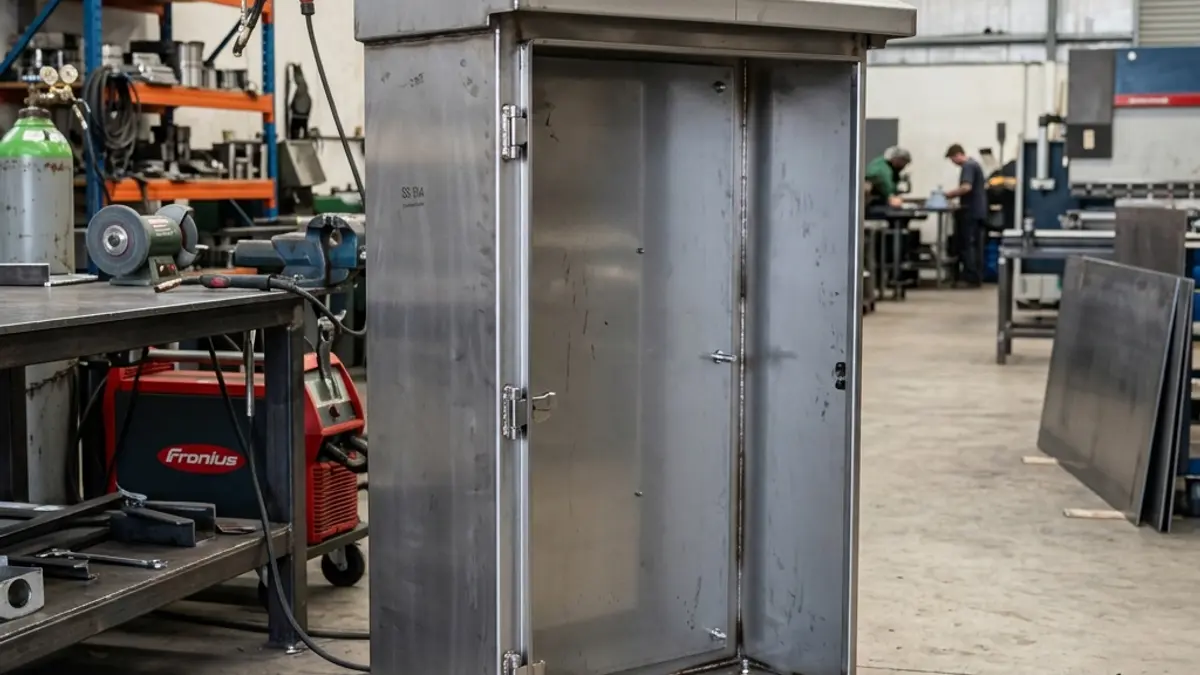
7. Welding Distortion Can Affect Door Sealing and Assembly
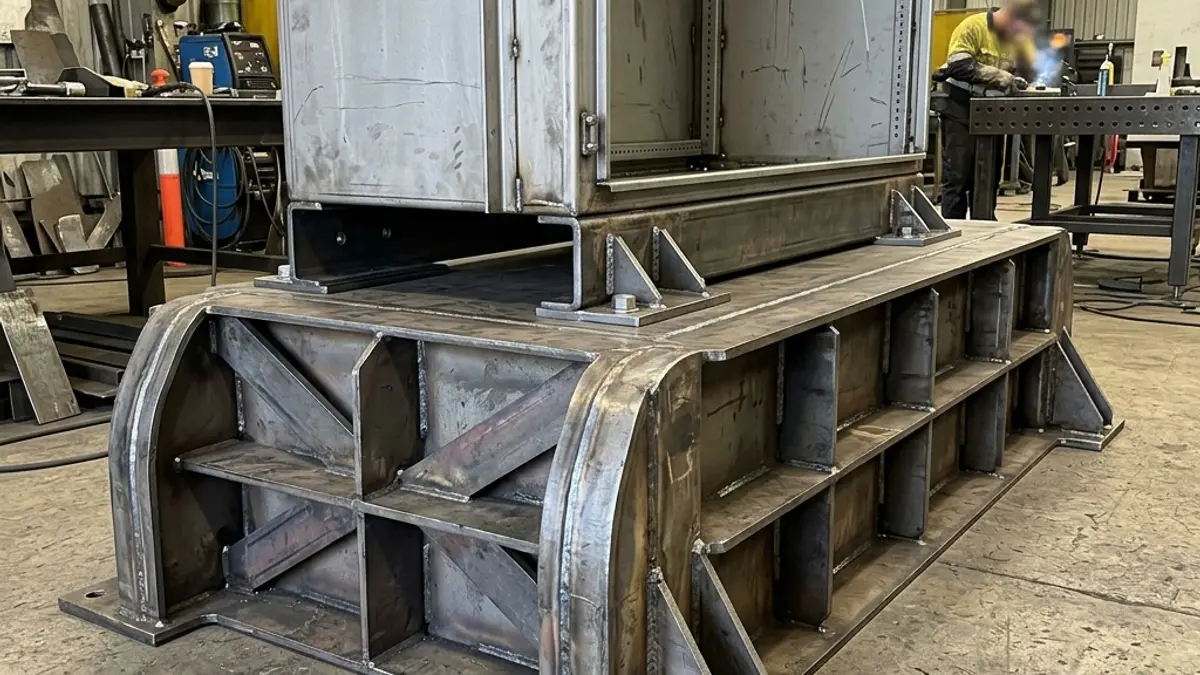
Large power distribution enclosures often require welding for frames, corner structures, mounting brackets, base supports, reinforcement parts, and door frames.
Poor welding control may cause cabinet frame twisting, door misalignment, uneven gaps, mounting plate distortion, sealing flange deformation, and poor latch engagement.
For welded power cabinets, buyers should ask how the supplier controls welding sequence, fixture support, heat input, frame squareness, door fitment after welding, and trial assembly.
Recommended internal link: TIG Welding Service
More welding does not always mean better strength.
Sometimes smart bending (see CNC Sheet Metal Bending Service), flanges, and reinforcement design reduce welding risk and improve consistency.
8. Powder Coating Quality Affects Corrosion and Assembly
Most power distribution enclosures use powder coating.
Buyers should not treat powder coating as only color. It affects corrosion resistance, outdoor durability, edge protection, assembly fit, grounding control, and appearance consistency.
Common powder coating problems include rust around cable holes, coating peeling near welds, blocked threaded holes, poor adhesion at sharp edges, coating scratches during shipment, and inconsistent color between batches.
Buyers should specify RAL color, gloss level, texture requirement, coating thickness, masking areas, outdoor durability requirement, salt spray expectation if needed, and packaging protection.
Recommended internal link: Powder Coating Service
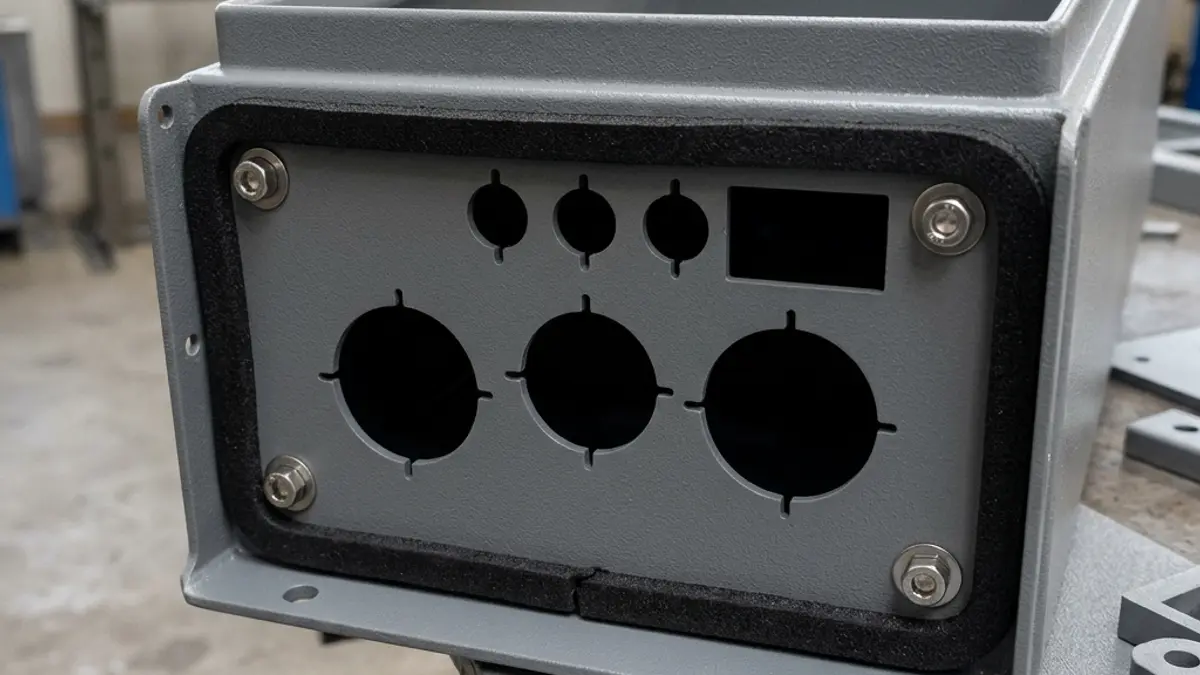
For power distribution cabinets, cable openings and bottom panels need special attention.
Rust often starts where no one wanted to look.
9. Maintenance Access Is a Real Cost Factor
A power distribution enclosure should be easy to service.
Poor maintenance access increases technician labor time, troubleshooting difficulty, downtime, wiring mistakes, and future upgrade cost.
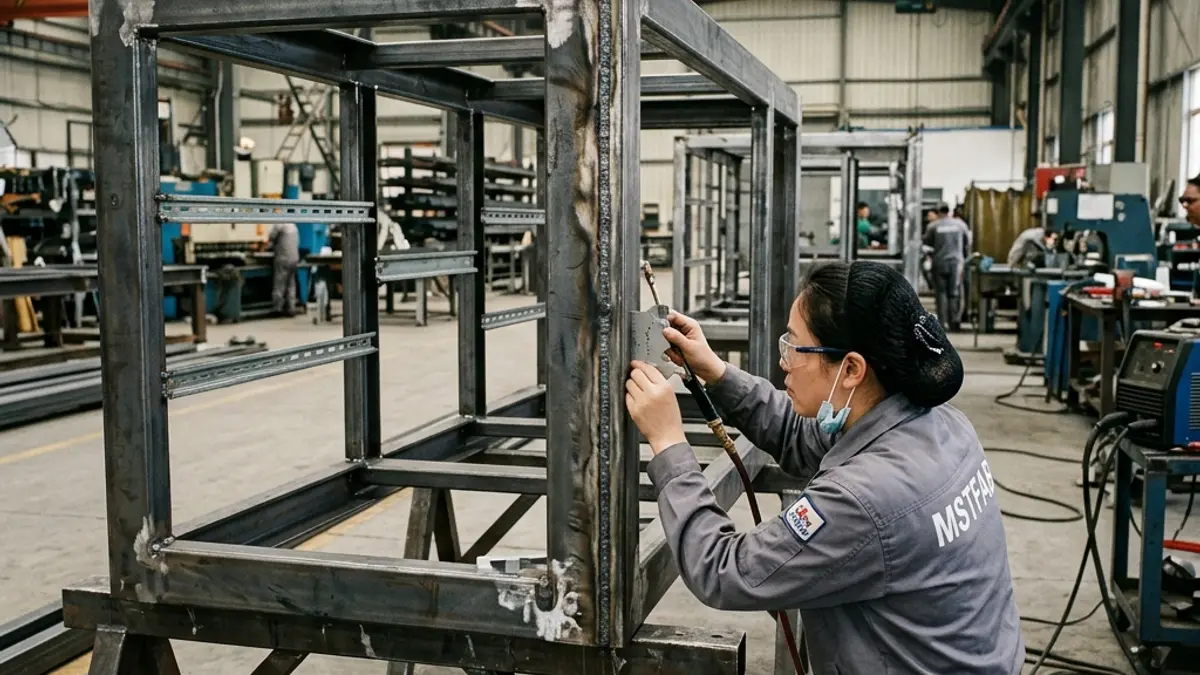
Buyers should review door opening angle, removable panels, breaker access, terminal block access, fan or filter replacement, cable gland access, and lock and hinge quality.
A cabinet that is difficult to maintain may look fine at delivery, but it becomes expensive during field service.
The purchase order ends quickly.
Maintenance cost stays around longer.
10. Export Packaging Must Protect Structure and Finish
Power distribution enclosures are often large and heavy.
During export shipment, weak packaging may cause scratched powder coating, dented doors, bent mounting plates, twisted cabinet frames, damaged corners, loose hardware, and moisture exposure.
OEM buyers should confirm pallet strength, foam separation, corner protection, cabinet fixation, moisture protection, accessory packing method, and wooden crate requirements if needed.
A cabinet that leaves the factory square but arrives twisted is not a finished product.
It is a shipping problem with a cabinet shape.
11. What Buyers Should Send for an Accurate Quote
To get a reliable power distribution enclosure quotation, buyers should provide:
- STEP or 3D CAD files
- 2D PDF drawings
- cabinet dimensions
- material and thickness
- indoor or outdoor application
- IP or NEMA requirement
- surface finish requirement
- cable entry positions
- busbar layout if available
- mounting plate details
- grounding requirement
- lock and hinge requirements
- annual order quantity and packaging requirement
For high-load or outdoor projects, buyers should also provide heat source layout, expected installation environment, ventilation or cooling requirement, corrosion exposure, and maintenance access requirements.
If the RFQ only says “power distribution enclosure, please quote fast,” the supplier has to guess.
And guessing is not procurement.
It is just a faster way to create engineering revisions.
MSTFAB OEM Trust Table for Power Distribution Enclosures
Electrical safety and technician convenience are built into the sheet metal. Here is how MSTFab protects your high-voltage distribution systems:
| OEM Procurement Priority | MSTFAB Delivery Standard |
|---|---|
| Cable & Busbar Clearance | Upfront DFM checks to ensure adequate internal volume for high-amperage incoming cable bend radii and safe busbar air gaps. |
| IP / NEMA Door Sealing | Heavy-duty multipoint locking bars combined with precisely welded and flattened door frames to ensure 100% continuous PU gasket compression. |
| Masked Grounding Points | Mandatory application of high-temp silicone caps on all welded grounding studs before powder coating to ensure perfect electrical bonding. |
| Mounting Plate Alignment | Galvanized back plates are CNC-punched for precise breaker alignment and reinforced with edge-bends to prevent flexing under heavy copper loads. |
| Heavy-Load Export Crating | Large freestanding cabinets are bolted directly to reinforced timber pallets to prevent base twisting and frame distortion during ocean transit. |
Final Thoughts
A power distribution enclosure is more than a steel cabinet for electrical parts.
For OEM buyers, a good power distribution enclosure must control cable routing, thermal management, IP sealing, grounding, material selection, busbar clearance, welding distortion, powder coating quality, maintenance access, and export packaging.
At MSTFab, we support OEM customers with custom power distribution enclosure fabrication, CNC laser cutting, CNC bending, TIG/MIG welding, powder coating, assembly, and DFM review for industrial electrical systems, telecom power cabinets, EV charging infrastructure, renewable energy equipment, and OEM electrical cabinet projects.
For more specific applications, check out Electrical Cabinet Manufacturing, Outdoor Telecom Enclosure, Custom EV Charger Enclosure, and Battery Storage Equipment Enclosure solutions.
The best time to solve power distribution enclosure problems is before production starts.
Not after the installer discovers the incoming cable cannot bend inside the cabinet.
custom sheet metal enclosure fabrication
MSTFAB manufactures custom sheet metal enclosures, electrical cabinets, control boxes and industrial metal housings for OEM buyers.
 WeChat Contact
 WhatsApp Me Directly