
EV Charging Cabinet Sheet Metal Fabrication: From CAD Drawing to Production
An EV charging cabinet does not become reliable just because the CAD drawing looks clean. CAD is polite.
It never complains about tight bends, weak brackets, awkward cable entry, poor gasket compression, or a door that may warp after welding. Metal is less polite. Metal bends, springs back, scratches, warps, rusts, heats up, and exposes every shortcut once production begins.
That is why EV charging cabinet fabrication should not start with “just cut and bend it.” As an experienced custom EV charger enclosure manufacturer, MSTFAB knows that true quality control starts with reviewing the drawing before a single spark flies.
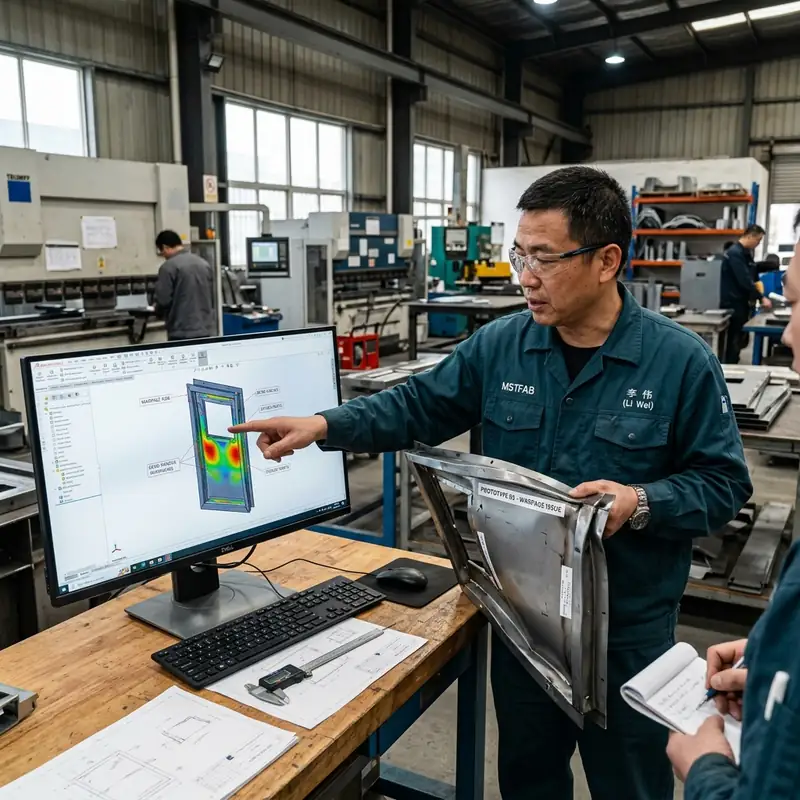
1. DFM Review: Where CAD Meets Reality
A supplier that only says “yes, we can make it” to a flawed drawing may sound easy to work with. But in sheet metal fabrication, a supplier who never questions anything is simply saving the bad news for later. And later is usually more expensive.
DFM (Design for Manufacturability) is not about changing your design for fun. It is about preventing avoidable problems. A 3 mm hole mismatch in CAD is easy to fix. A 3 mm hole mismatch after powder coating, packing, shipping, and installation is a very different kind of conversation. Nobody enjoys that conversation.
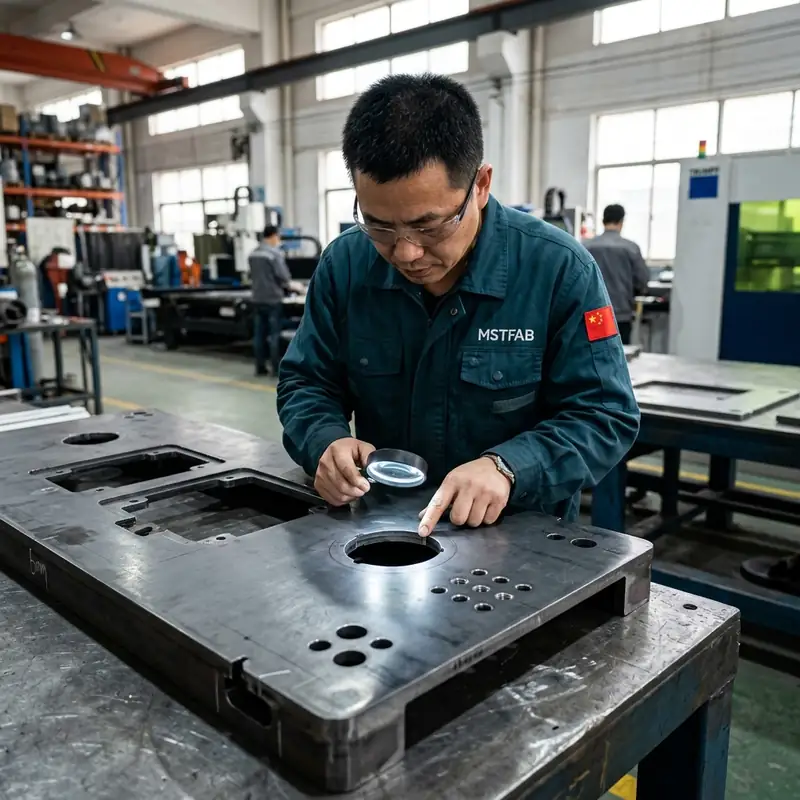
2. Laser Cutting and Cable Entry Prep
Laser cutting creates the EV cabinet panels, doors, covers, and cable entry plates. For EV charger cabinets, cutting quality directly affects electrical safety.
A sharp edge or laser-cut burr near wiring is not just ugly. It can slice through high-voltage cable insulation during installation. Drilling cable holes after powder coating is not engineering—it is corrosion with a drill. All holes must be laser-cut and deburred before any chemical pretreatment.
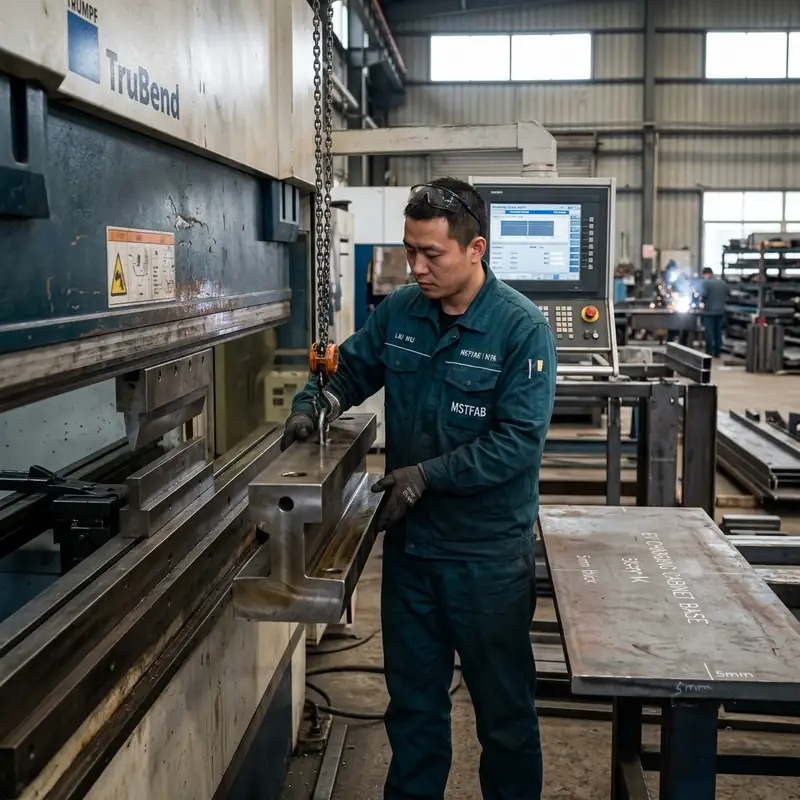
3. CNC Bending: Tolerances You Can Feel
A laser-cut sheet can be perfect. Then the press brake tells the truth.
If CNC bending is not strictly controlled, the cabinet may look “close enough” but fail completely during assembly. Important bending checks include material springback, bend radius, and final flange length. A door that is bent with a 2mm twist will never compress an IP54 gasket evenly.
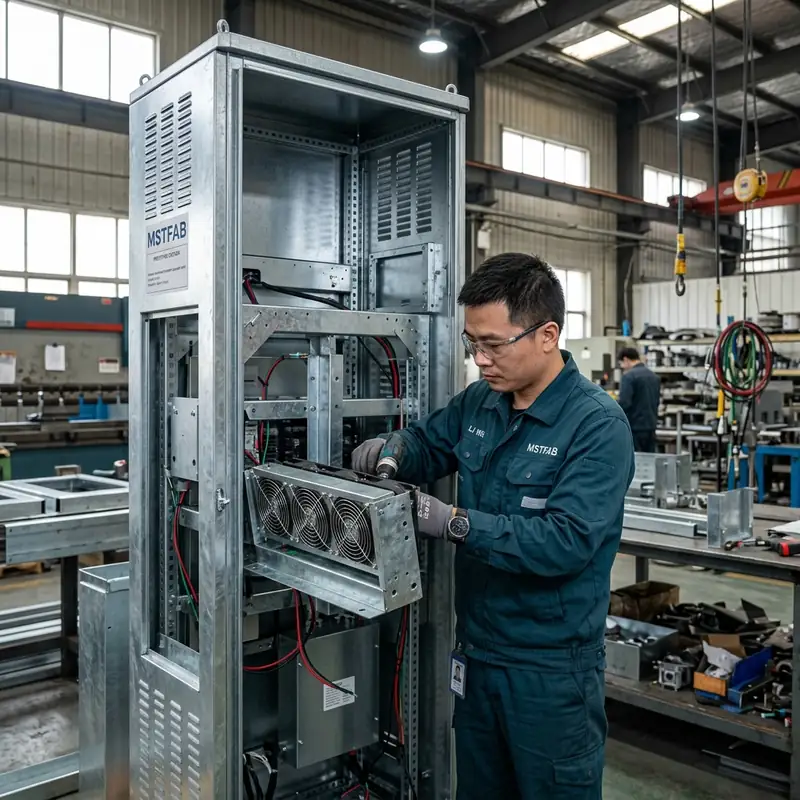
4. Prototype Trial Assembly
A prototype should not only be photographed. It should be assembled, checked, opened, closed, measured, wired, packed, and reviewed like a real product.
A prototype that requires too much manual correction by an engineer with a grinder may look fine eventually, but it is not ready for batch manufacturing. Magic tricks do not scale. Manufacturing processes should.
| Production Stage | The Cheap “Job-Shop” Approach | The MSTFAB Standard |
|---|---|---|
| Drawing Review | Skips DFM review completely. Blindly feeds the raw CAD into the laser cutter and hopes for the best. | Performs a 24-point DFM check covering bend radius, hole-to-bend distance, and welding distortion risk. |
| Flat Patterning | Uses generic K-factors, leading to panels that are 2-3mm off after bending, requiring workers to hammer them into shape. | Uses precise, material-specific bend deductions and allowances to ensure exact hole alignments post-bending. |
| Welding Phase | Welds heavy steel without cooling breaks. The cabinet warps heavily, and the door never closes flush. | Uses rigid fixture jigs and sequenced heat-control welding to maintain perfect cabinet squareness. |
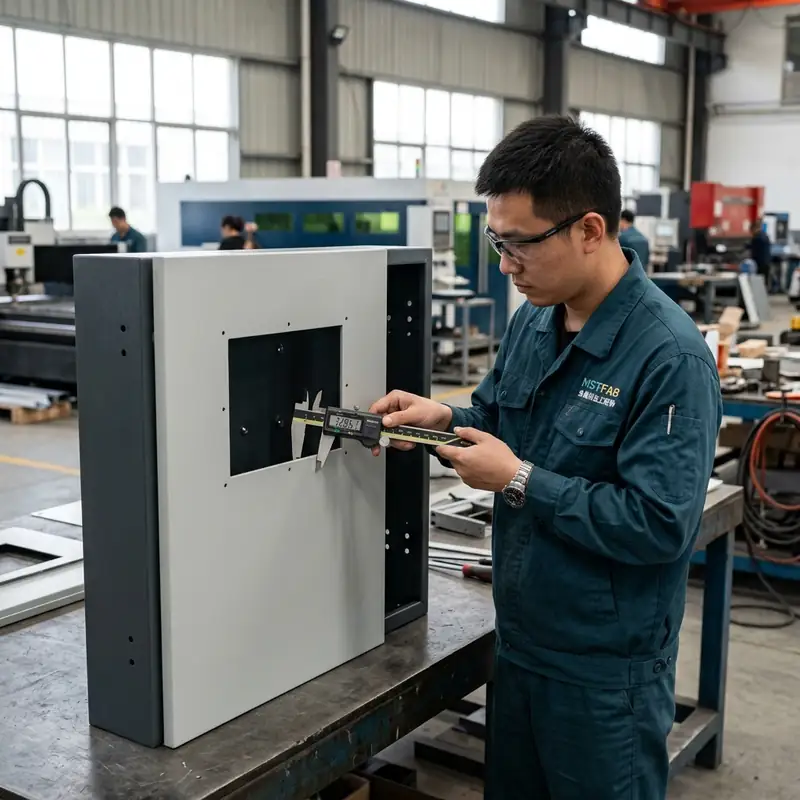
| First Article (FAI) | Sends you a few photos of a painted box and calls it “approved for mass production.” | Performs full FAI reporting, using digital calipers to verify critical tolerances like display cutouts and PEM thread integrity. |
Clear Scope Builds Production Trust
At MSTFab, we manufacture the physical sheet metal cabinet structure. We do not design EV charging modules, power electronics, charging software, payment systems, or wiring harnesses.
You bring the EV charging design. We fabricate the cabinet body that helps protect, mount, wire, service, and manufacture it reliably.
Move Your EV Cabinet from CAD to Reality
We specialize in taking complex EVSE designs and turning them into highly repeatable, batch-produced metal enclosures.
Explore More Custom Fabrication Capabilities
- EVSE Cabinet Manufacturer
- EV Charger Cabinet Manufacturer
- EV Charging Station Enclosure Fabrication
- Custom EV Charger Enclosure
- Custom Sheet Metal Enclosure Fabrication
- Electrical Cabinet Manufacturing
- Electrical Control Cabinet Manufacturer
- Power Distribution Enclosure
- Battery Storage Cabinet Fabrication
- Custom Climate Controlled Enclosures
- IP54 Enclosure
- Sheet Metal Material Selection Guide
- Mounting Plates & Brackets
- Manufacturing Process
- DFM for Sheet Metal Enclosures
- Prototype to Production
- CNC Sheet Metal Bending
- TIG Welding
- Powder Coating
- Stainless Steel Enclosures
- Aluminum Enclosures
custom sheet metal enclosure fabrication
MSTFAB manufactures custom sheet metal enclosures, electrical cabinets, control boxes and industrial metal housings for OEM buyers.
 WeChat Contact
 WhatsApp Me Directly