
Best Sheet Metal Fabrication Manufacturer for Startups
A practical framework for choosing a custom sheet metal partner that can support design review, prototypes, pilot builds and repeat production without forcing a young hardware company into the wrong cost or process structure.
- DFM review
- Prototype support
- Low-volume pilot runs
- Production-ready QC

The best sheet metal fabrication manufacturer for a startup is not automatically the largest or cheapest factory. It is the supplier that can review your drawings, explain manufacturing risks, build a controlled prototype, document first-article results and preserve the approved process as quantities grow. Evaluate the complete route—laser cutting, CNC bending, welding, finishing, hardware insertion, inspection and packaging—not only the unit price.
Hardware startups buy more than metal parts. They buy speed of learning, reliable engineering feedback and a path from an early enclosure or bracket to a repeatable commercial product. A quotation that looks inexpensive can become costly if the prototype cannot be reproduced, the coating changes between batches or the supplier silently changes material or subcontractors.
This guide is specifically about custom sheet metal fabrication services. It covers build-to-print enclosures, cabinets, panels, brackets, chassis and welded assemblies made through laser cutting, CNC press brake bending, welding, surface finishing and inspection. It does not treat stamping, die casting or CNC machining as substitutes for a normal fabricated-sheet-metal route.
What “startup-ready” should mean in sheet metal fabrication
Manufacturing questions are raised before material is cut, while a design change is still inexpensive.
The supplier records the approved material, revision, bend setup, weld route, finish and inspection points.
Quantity, setup cost and tooling are discussed openly instead of hidden inside a misleading unit price.
Critical dimensions, cosmetic criteria and first-article results are agreed before a larger batch is released.
Every drawing and CAD file is tied to a revision so an obsolete prototype does not enter production.
Capacity, fixtures, inspection frequency and packaging change deliberately as demand grows.
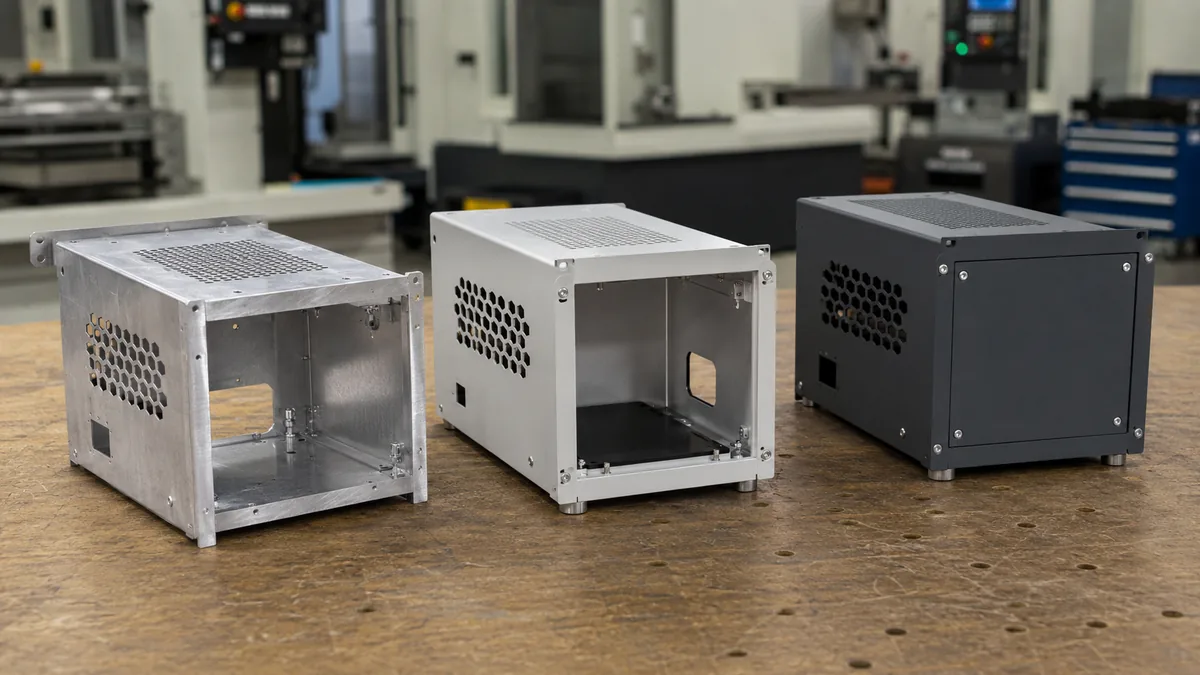
Seven criteria for choosing a sheet metal manufacturer for a startup
| Criterion | What to ask | Evidence to request | Why it matters |
|---|---|---|---|
| DFM support | Which features create bending, welding, tolerance or finish risk? | Marked drawings, review notes or a written list of open points. | Prevents avoidable redesign after material and finishing costs are committed. |
| Low-volume fit | Can you quote prototype and pilot quantities separately? | Itemized material, setup, tooling, finishing and inspection costs. | Lets the startup compare cash exposure instead of unit price alone. |
| Process coverage | Which operations are in-house and which are externally processed? | Process route, supplier-control method and inspection plan. | Clarifies responsibility across cutting, bending, welding and finishing. |
| First-article control | How will critical dimensions and cosmetic areas be approved? | FAI report, measurement records, photos and approved sample. | Creates an objective release point before the pilot batch. |
| Revision control | How are new CAD files and drawing changes released? | Revision history, order confirmation and controlled production file. | Reduces the risk of manufacturing an obsolete design. |
| Scale readiness | What changes when quantity increases? | Fixture plan, batch capacity, inspection frequency and backup route. | Exposes whether the prototype process can become repeatable production. |
| Communication | Who owns engineering, quality and delivery questions? | Named contacts, response expectations and escalation path. | Fast, precise communication protects a time-sensitive product launch. |
Use a 1–5 score for each criterion and weight the first-article, DFM and revision-control categories more heavily when the design is still changing. A supplier that cannot provide evidence should not receive the same score as one that can.
Start with a manufacturing-ready RFQ, not only a 3D model
A useful RFQ gives the fabricator enough information to identify risk and quote the same scope you expect to receive. Send a STEP file for geometry and a 2D PDF for controlled dimensions, tolerances, material, finish, hardware, cosmetic surfaces and revision. DXF or DWG files can support flat-pattern or cutting review when appropriate.
- Part number and drawing revision
- Material grade and sheet thickness
- Critical dimensions and tolerance callouts
- Surface finish, color and cosmetic class
- PEM hardware, welding and assembly scope
- Prototype, pilot and forecast quantities
- Inspection records required with shipment
- Packaging and destination requirements
For a more detailed review sequence, use the MSTFAB Sheet Metal DFM Handbook. Complete drawings also make quotation comparisons more meaningful because each supplier is pricing the same requirements.
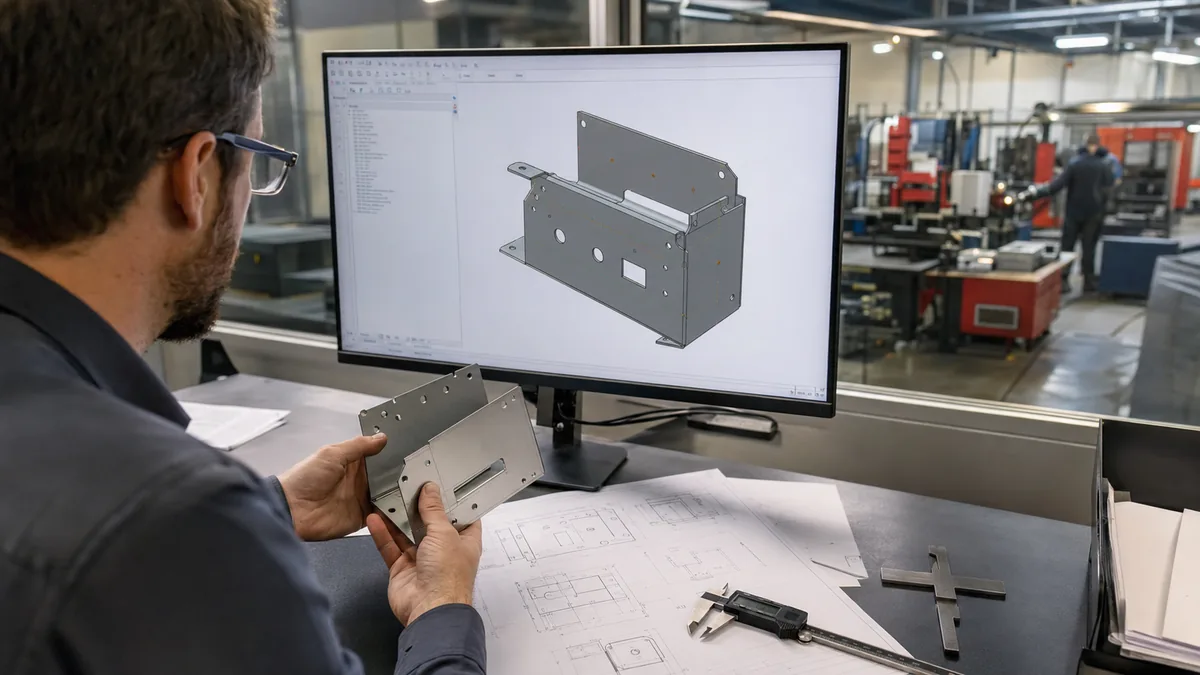
The fabrication route a startup supplier should be able to explain
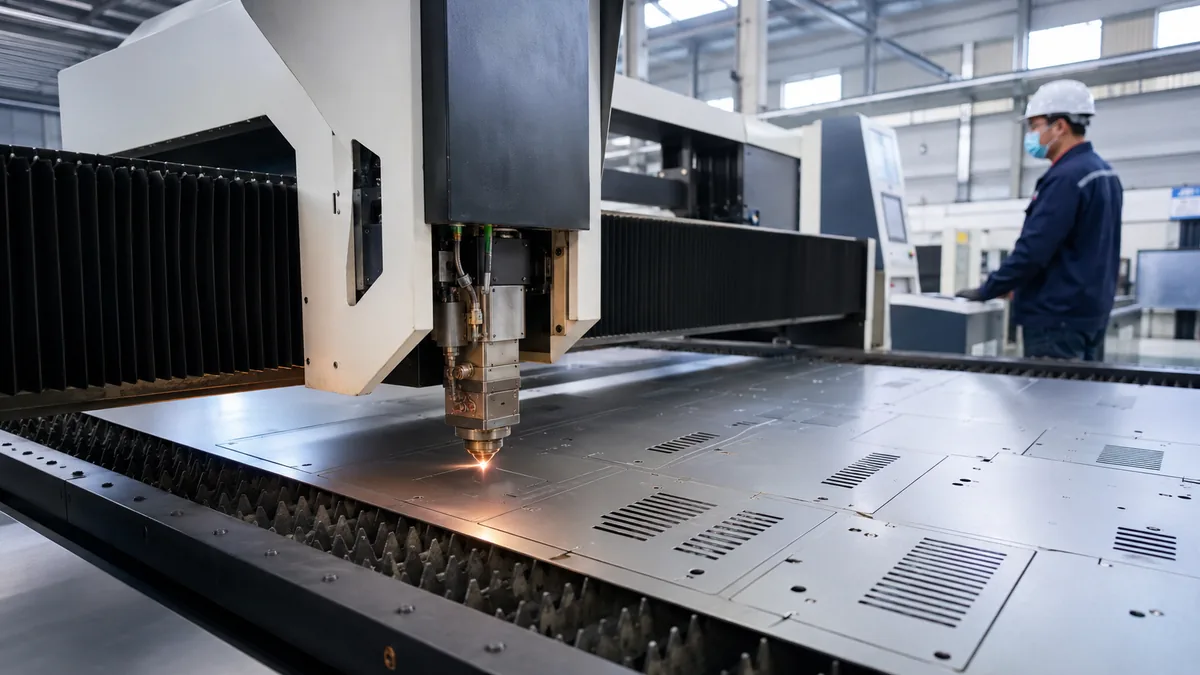
1. Laser cutting and blank preparation
Laser cutting creates the blank, slots, vents, mounting holes and access openings. The review should consider kerf, minimum feature size, heat effects, edge condition, nesting direction and the relationship between holes and future bend lines. A supplier should also explain deburring and surface-protection requirements for visible panels. Learn more about custom metal laser cutting services.
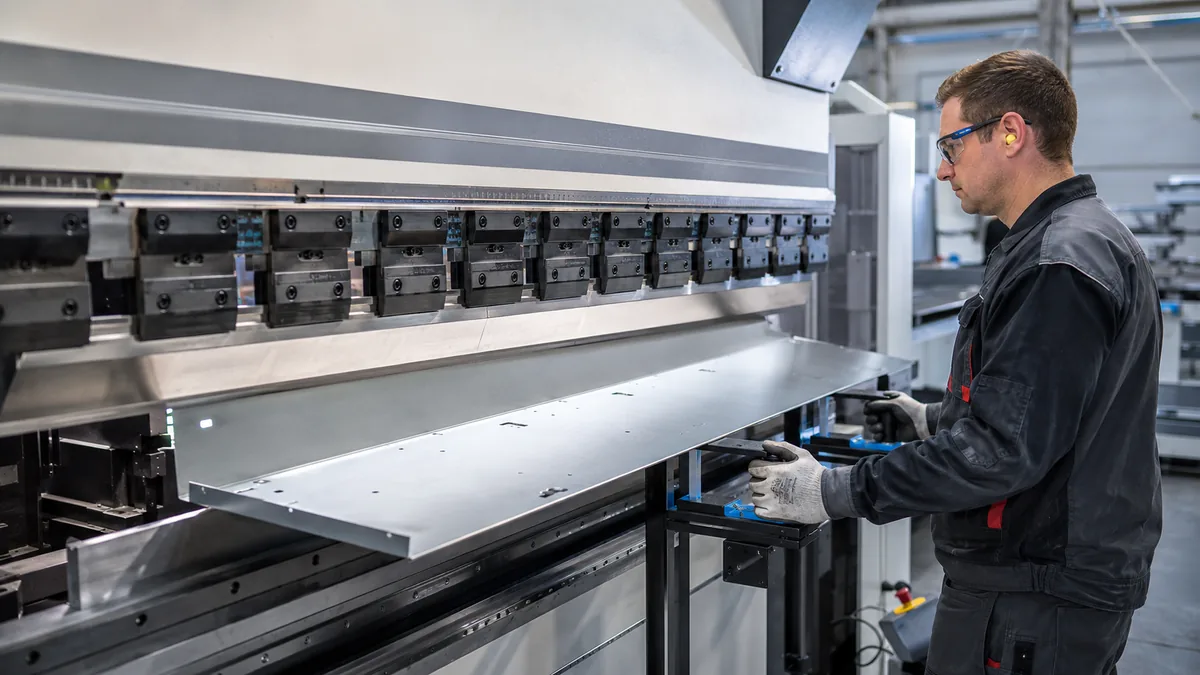
2. CNC press brake bending
Bend radius, flange length, relief geometry, hole-to-bend distance, grain direction, tooling access and springback all influence whether a design can be formed consistently. For boxes, channels and return flanges, the bend sequence matters as much as the final dimensions. A strong supplier reviews these constraints before cutting and documents the approved setup for repeat orders. See MSTFAB’s CNC sheet metal bending services.
3. Welding, hardware and assembly
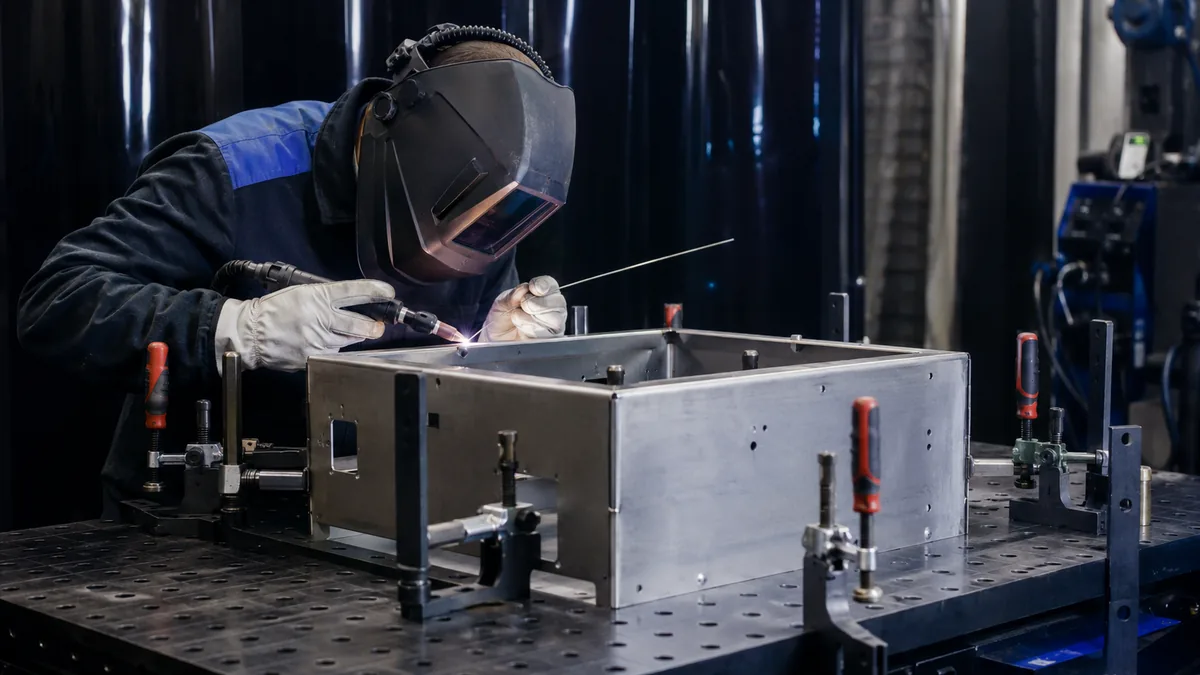
TIG, MIG or spot welding may be selected according to material, thickness, joint geometry, strength and cosmetic requirements. The quotation should define weld location, weld size, grinding expectations and visible surfaces. Fixtures become increasingly important as quantity grows because they control distortion and keep assembly interfaces consistent. Threaded inserts, weld nuts and PEM hardware should also be checked for access, pull-out requirements and protection during finishing. Review sheet metal welding services.
4. Surface finishing and cosmetic control
Powder coating, anodizing, plating, passivation, painting and other finishes have different substrate, corrosion, masking and appearance requirements. Define color reference, texture or gloss, coating thickness where relevant, grounding or threaded areas to mask, and the acceptable cosmetic zone. A finish sample can help, but repeatability still depends on documented preparation, masking, inspection and packing. Compare options on the sheet metal surface finishing services page.

Prototype, first article and pilot production are different gates
Confirm files, material, tolerances, finish, hardware, quantity and open DFM points.
Test geometry, fit, assembly access and major process choices on a controlled revision.
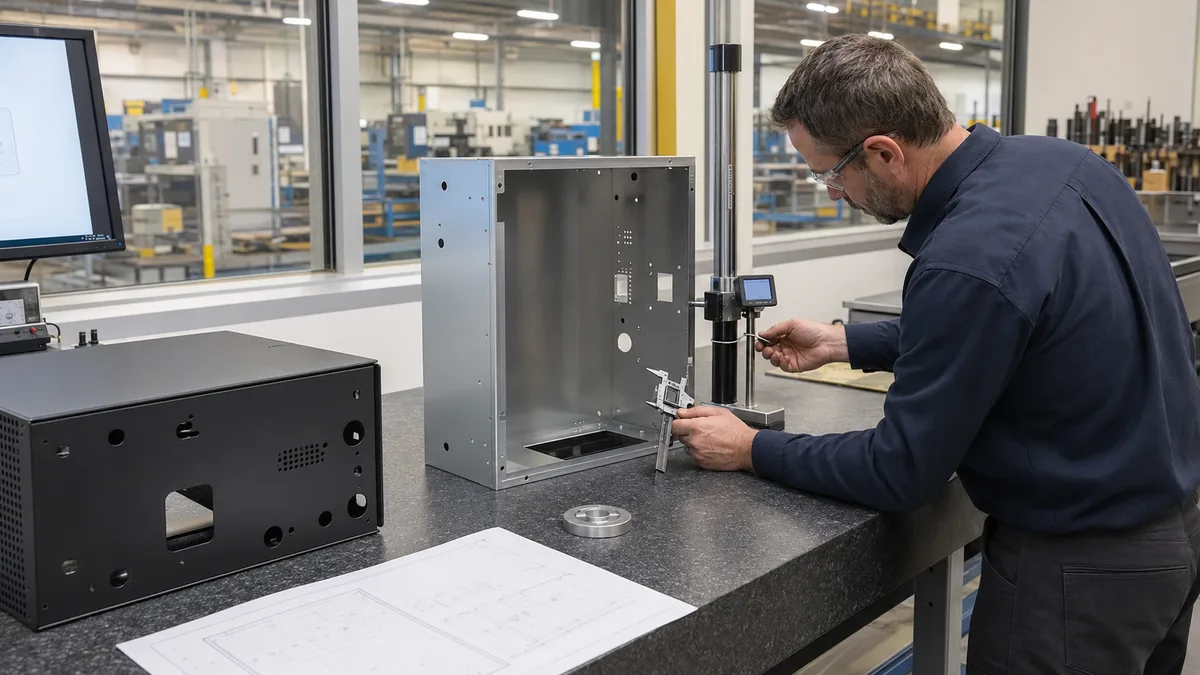
Record critical measurements, cosmetic observations and any approved deviations.
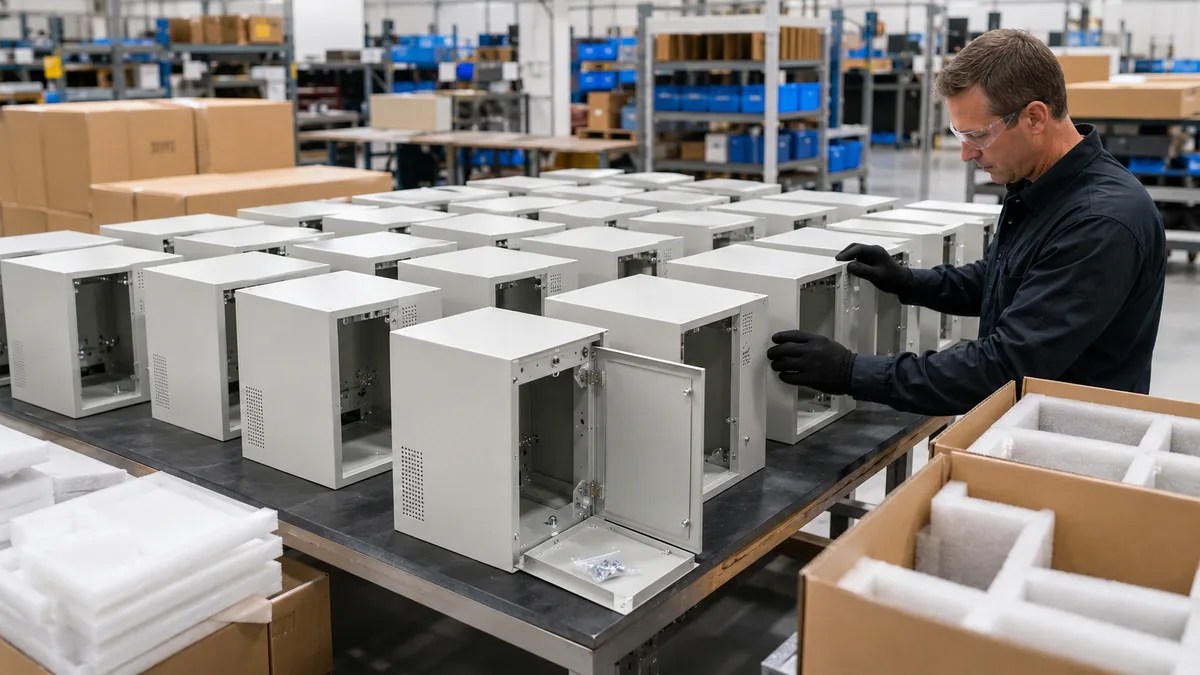
Verify repeatability, fixtures, production handling, finishing consistency and packaging.
Freeze the approved revision and process documents before larger quantities start.
Track material, revision, key inspection data and changes that could affect fit or appearance.
An attractive prototype is not proof that the next 100 parts will be identical. Read why an approved prototype does not guarantee stable mass production, then use a small paid order to test the supplier’s real workflow. The sheet metal supplier trial-order plan explains how to structure that evaluation.
How to handle MOQ, setup cost and tooling without wasting runway
There is no universal startup MOQ for custom sheet metal parts. A practical quantity depends on material utilization, sheet size, part dimensions, machine setup, bend tooling, fixtures, outsourced finishing, inspection scope and packaging. Some parts can be economical in very small batches; others require a larger batch or dedicated fixture to control cost and consistency.
Ask for separate prototype and pilot quotations. Require material, setup, tooling or fixture, finishing, inspection and packaging costs to be identified where practical. Then compare total cash exposure, not only unit price. If the design is likely to change, paying a higher unit cost for a smaller learning batch may be cheaper than holding obsolete inventory.
Important: avoid publishing a fixed claim such as “5–500 pieces with no penalty.” Low-volume capability must be confirmed against the actual drawing and process route. Use the custom sheet metal MOQ negotiation guide to prepare the discussion.
Quality evidence to request before scaling
Define a short list of critical-to-function and critical-to-appearance requirements. Do not apply tight tolerances to every dimension unless the design truly needs them; unnecessary tolerance can raise cost without improving performance.
- Material confirmation: agreed grade and thickness, with certificates when required by the purchase specification.
- First-article data: measured results for critical dimensions and interfaces.
- Fit and assembly check: panels, doors, hardware and mating components evaluated together.
- Weld and distortion review: joint location, cleanup, flatness and fixture results checked against the drawing.
- Finish inspection: color, coverage, masking, coating condition and cosmetic zones confirmed.
- Packaging approval: edges and visible surfaces protected for the actual export route.
When volume grows, agree how inspection frequency will change and which characteristics remain subject to first-piece or batch records. The goal is not paperwork for its own sake; it is repeatable evidence tied to the released drawing.
Protect design information with practical controls
Before sharing sensitive product geometry, use a confidentiality agreement appropriate to the countries and parties involved, and obtain legal advice for important IP. Operational controls are equally useful: label files with part number and revision, share only the information needed for the quoted scope, control access, and record which files were released.
Do not follow a universal rule that native CAD can never be shared. Some manufacturing reviews genuinely need editable geometry. Instead, decide what the supplier needs at each stage and use written confidentiality, access and revision controls. For a fuller procurement framework, read how to protect product IP with a sheet metal manufacturer.
Red flags when evaluating a fabrication supplier
- The supplier quotes a complex enclosure without asking about material, tolerances, finish, hardware or quantity.
- The scope does not identify which processes are in-house and which are externally processed.
- Prototype dimensions are approved informally, with no controlled drawing or first-article record.
- Tooling, fixtures and finishing charges appear only after the order is placed.
- Different answers are given by sales, engineering and quality teams.
- The supplier cannot explain what will change when quantity increases.
- There is no revision-control method for updated drawings and CAD files.
- Delivery promises are made before the full manufacturing route is reviewed.
Commercial stability also matters when a startup expects the supplier to support future orders. Use this sheet metal supplier financial stability assessment as part of due diligence.
Why a startup may shortlist MSTFAB
MSTFAB is a Guangzhou sheet metal source factory serving drawing-based OEM projects. The factory supports custom enclosures, cabinets, brackets, panels and welded assemblies through DFM review, laser cutting, CNC bending, welding, hardware insertion, surface treatment, inspection and export packaging.
For a startup project, MSTFAB can review prototype, pilot and forecast quantities as separate stages. Final MOQ, tooling, lead time and inspection scope are quoted from the drawing because material, geometry, finish and quality requirements differ from part to part. MSTFAB’s published factory information includes a 5,000 m² production floor, an ISO 9001 quality-managed workflow and more than 23 years of sheet metal manufacturing experience. Buyers can review the MSTFAB company profile and factory photos before sending an RFQ.
Have a startup enclosure, bracket or chassis to manufacture?
Send your STEP file and 2D drawing with material, finish, quantities and target application. MSTFAB will review the manufacturing route and identify the information needed for a clear quotation.
Key takeaways
- The best sheet metal fabrication manufacturer for startups should be evaluated on DFM, prototype-to-pilot continuity, quality evidence, revision control and communication—not price alone.
- A complete sheet metal route includes laser cutting, CNC bending, welding or hardware, surface finishing, inspection and packaging.
- MOQ and lead time must be based on the actual drawing; avoid universal quantity promises.
- Use a controlled prototype, first-article approval and paid pilot batch before releasing larger production.
- Request evidence: marked DFM feedback, FAI data, process scope, revision records and packaging approval.
Frequently asked questions
What is the best sheet metal fabrication manufacturer for a hardware startup?
The best fit is a supplier that can review the design, quote prototype and pilot stages clearly, provide first-article evidence and preserve the approved process as quantities grow. Compare technical response and process control, not only factory size or unit price.
What files should a startup send for a sheet metal quotation?
Send a STEP model plus a controlled 2D PDF whenever possible. Include material grade, thickness, critical tolerances, finish, hardware, cosmetic surfaces, quantities, revision and packaging requirements. DXF or DWG files may also support cutting review.
Can a sheet metal manufacturer produce both prototypes and low-volume batches?
Many can, but capability depends on part size, material, bend tooling, fixtures, finishing and inspection. Ask for separate prototype and pilot quotes and confirm which setup information will be reused after approval.
What is a reasonable MOQ for custom sheet metal parts?
There is no universal MOQ. A simple laser-cut bracket and a welded, powder-coated enclosure have very different setup and finishing economics. The supplier should calculate MOQ from the drawing and explain the cost drivers.
How should a startup move from prototype to production?
Use defined gates: DFM review, controlled prototype, first-article approval, pilot batch and production release. Freeze the approved revision and document material, bend, weld, finish, inspection and packaging requirements before increasing quantity.
How can a startup protect confidential product designs?
Use appropriate confidentiality agreements, release only the files needed for the manufacturing scope, label every file with part number and revision, restrict access and keep a release record. Obtain qualified legal advice for patents, cross-border enforcement and high-value IP.
Does MSTFAB provide custom sheet metal fabrication for startups?
Yes. MSTFAB reviews drawing-based prototype, pilot and repeat-production projects for custom enclosures, cabinets, brackets, panels and welded assemblies. Quantity, tooling, lead time and inspection are confirmed after the drawings and requirements are reviewed.
 WeChat Contact
 WhatsApp Me Directly