
⚡ Direct Answer: How to Protect Intellectual Property When Working with a Sheet Metal Manufacturer?
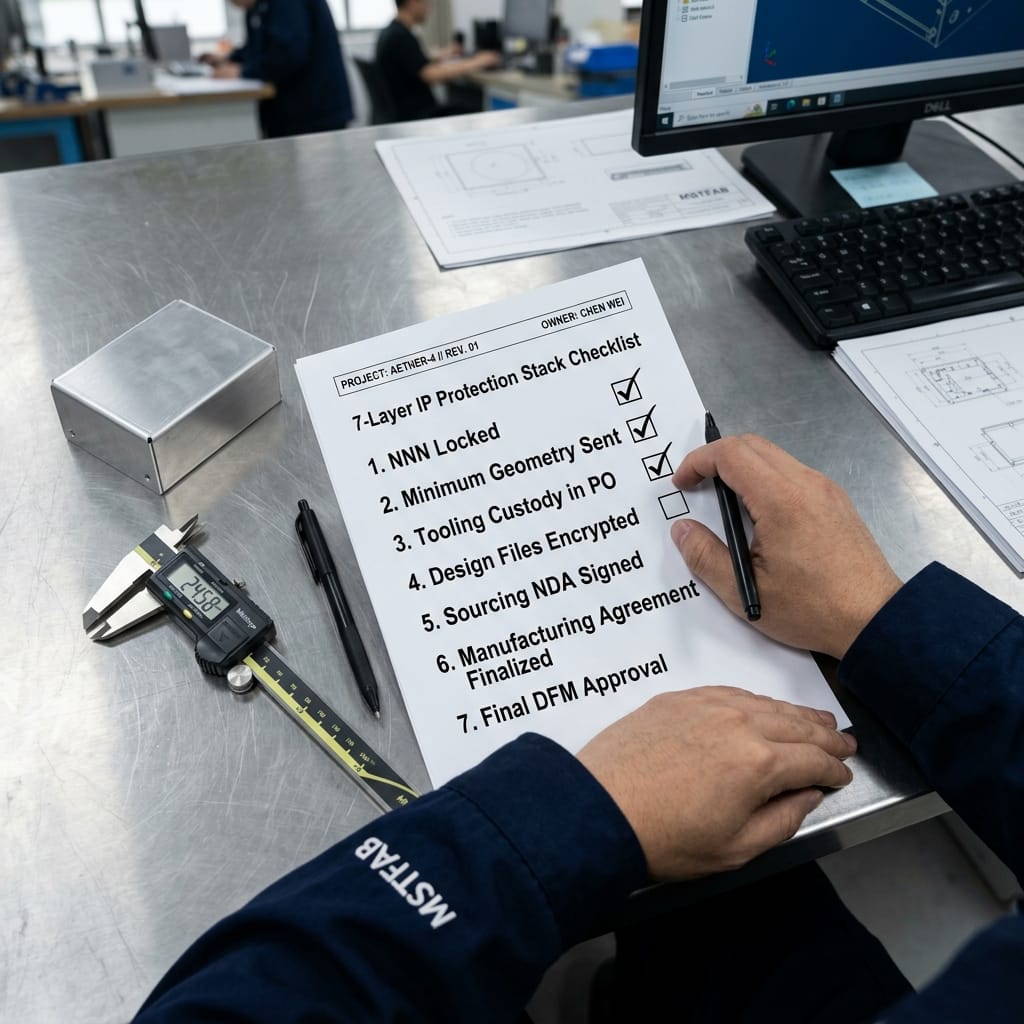
Protecting your product IP when outsourcing custom sheet metal fabrication requires moving beyond a generic Western Non-Disclosure Agreement (NDA) to deploy a comprehensive 7-Layer IP Defense Stack: 1) China-Enforceable Bilingual NNN Agreement: Binding the manufacturer under Chinese law to Non-Disclosure, Non-Use, and Non-Circumvention with pre-agreed liquidated damages ($150,000+ per breach); 2) Clear Tooling Title Vesting: Ensuring custom stamping dies, press brake tools, and weld jigs are contractually owned by the buyer with physical steel asset tags attached; 3) Ownership of Derivative Works & CAM Programs: Stating in writing that all NC cutting programs, brake profiles, and CAD DFM modifications belong exclusively to the OEM; 4) Shop-Floor Need-to-Know File Segmentation: Providing flat DXFs only to CAM operators while withholding overall assembly context; 5) Mandatory Scrap Bin Destruction Audits: Ensuring defective/trial sheet metal blanks are crushed or sheared to prevent reverse-engineering from factory scrap piles; 6) Modular Sourcing: Splitting internal brackets from external chassis skins; and 7) Post-Project Return-or-Destroy Certification: Formally verifying complete data wiping upon contract exit.
Intellectual property in custom sheet metal is rarely stolen through Hollywood-style digital hacking. It is compromised through mundane operational failures: a broker emailing unencrypted CAD files to ten unvetted job shops, a factory selling un-crushed trial enclosures from the scrap bin to local traders, or an overseas supplier using your stamping dies to run unauthorized night shifts. A structured 7-layer defense prevents every common vector of loss.
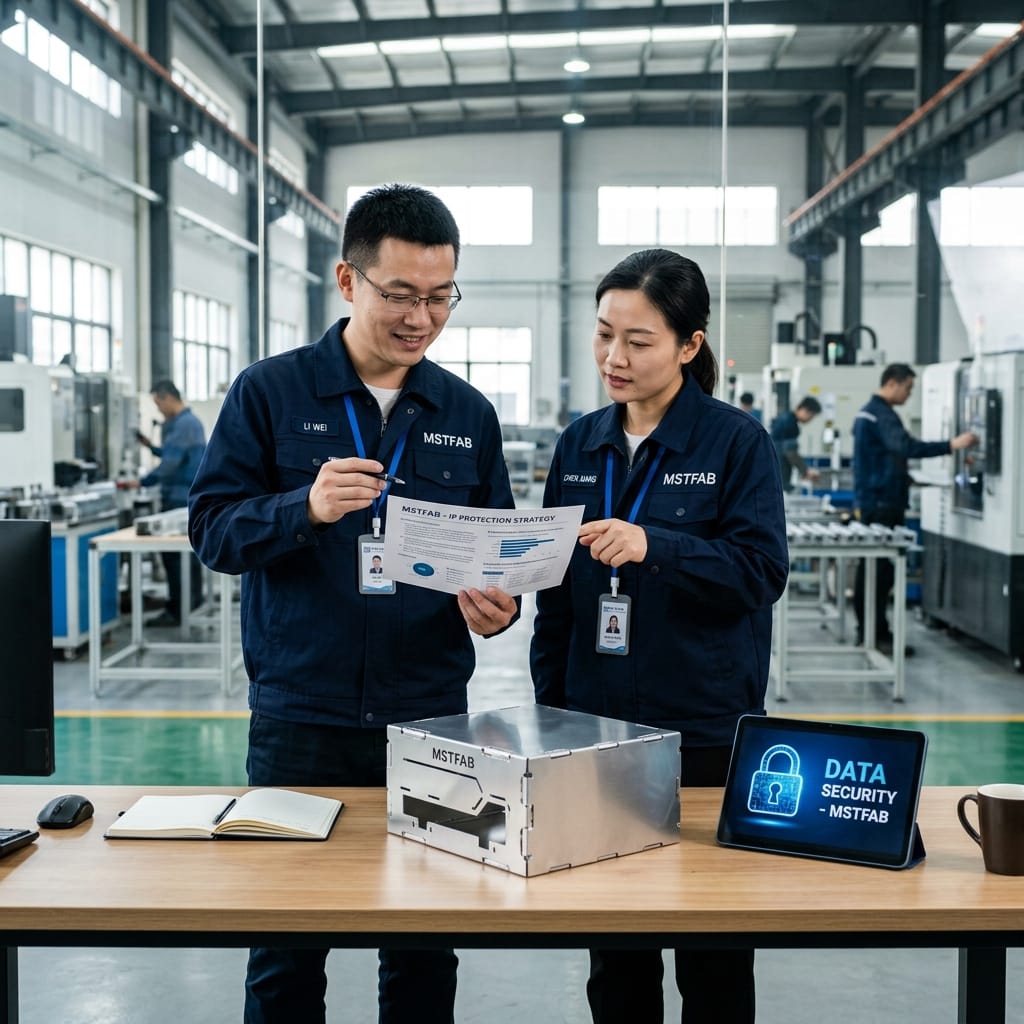
The 7-Layer Sheet Metal IP Protection Defense Stack
Implement these seven interlocking protective layers across legal, digital, and factory shop-floor domains:
| Layer | Protection Mechanism | Operational Implementation | Failure Risk Prevented |
|---|---|---|---|
| 1. Legal Governance | Bilingual Chinese NNN Agreement (Non-Disclosure, Non-Use, Non-Circumvention) | Governed by Chinese law; signed and stamped with official red company seal (Gongzhang). | Prevents supplier from manufacturing your parts for third parties or competing directly. |
| 2. Tooling Custody | Title Transfer on Payment & Bailment Agreement | Physical stainless steel asset plates riveted to dies reading: “Property of [Buyer Name]”. | Stops factory from holding dies hostage during commercial disputes or bankruptcy seizures. |
| 3. Derivative IP Rights | Ownership of DFM Modifications & CAM Programs | Explicit contract clause stating all NC toolpaths and DFM enhancements vest in the buyer. | Prevents supplier from claiming intellectual ownership over bend sequences or laser nests. |
| 4. Digital Access Control | Role-Based Need-to-Know File Segmentation | Deliver flat DXFs only to CAM laser programmers; 2D bend drawings only to brake operators. | Eliminates shop-floor visibility of overall product architecture and assembly function. |
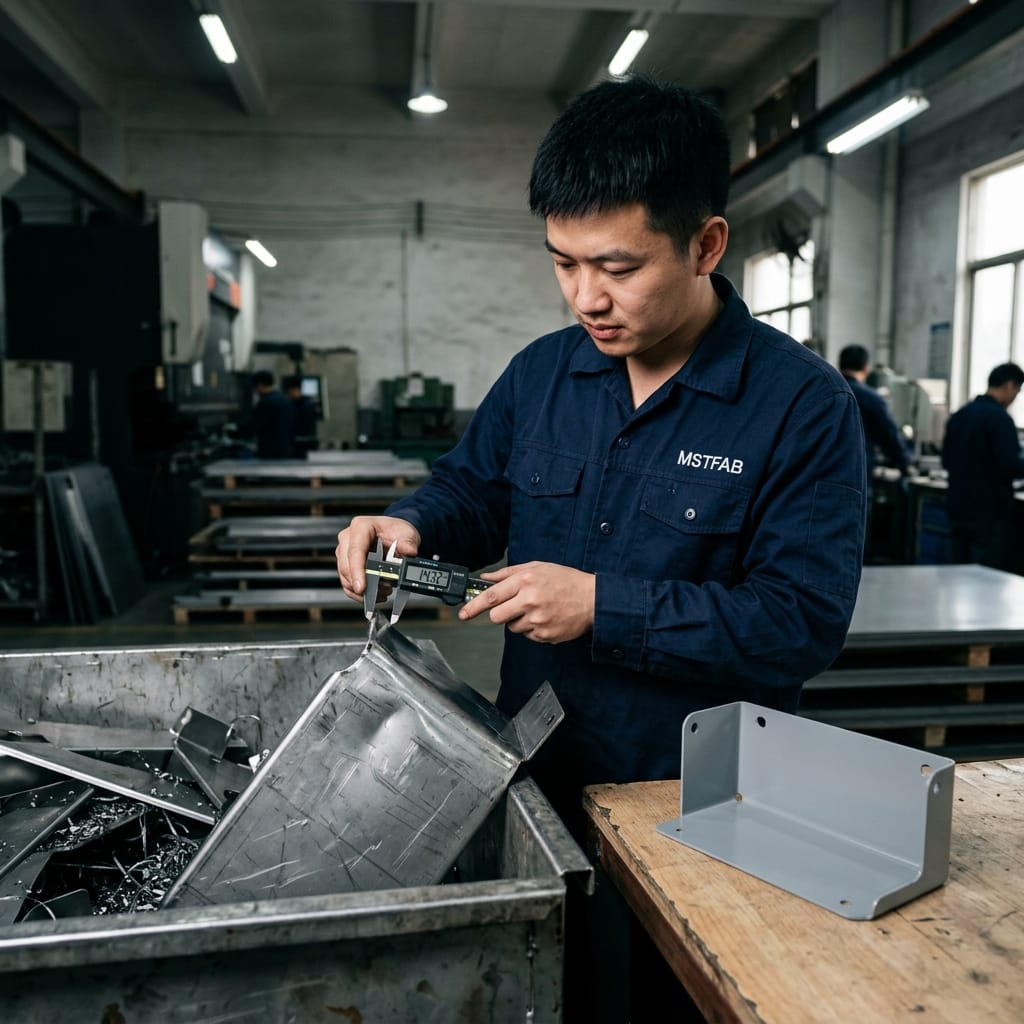
| 5. Physical Scrap Audits | Destruction & Shredding of Setup Parts & Scrap | All trial parts and out-of-spec blanks must be sheared in half before scrap bin disposal. | Prevents discarded intact parts from being scavenged and reverse-engineered. |
| 6. Modular Sourcing | Black-Box Decomposition of Enclosure BOM | Source external chassis from Fabricator A; proprietary internal mounting rails from Fabricator B. | Ensures no single external factory ever holds the complete mechanical puzzle. |
| 7. Post-Project Wipe | Certificate of Destruction (CoD) & File Purge | Formal IT purge across workstations and CNC machines; signed CoD within 14 days of exit. | Prevents legacy CAD files from remaining on old factory hard drives indefinitely. |
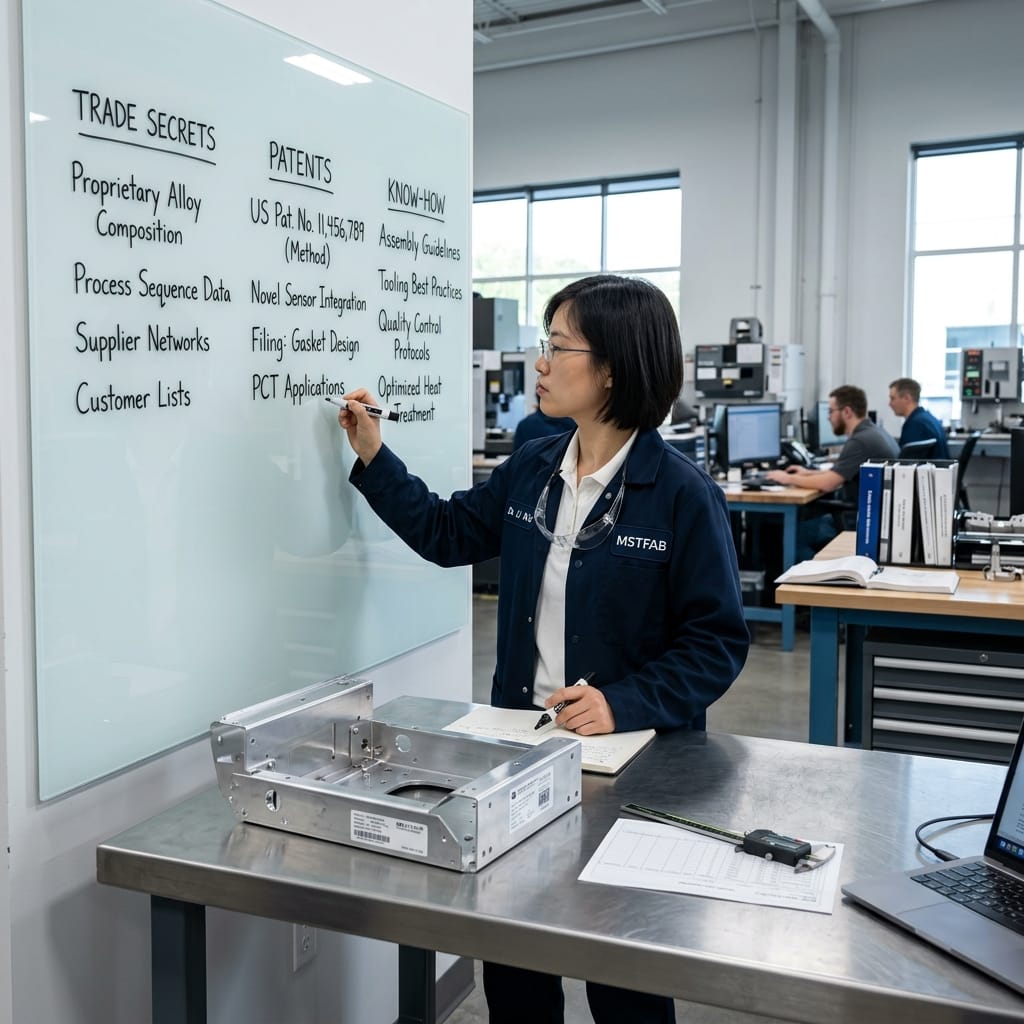
Why Western NDAs Fail and Why You Need an NNN Agreement
Most Western procurement teams rely on a standard US or European NDA. In international manufacturing, this document is virtually useless for 3 reasons:
- NDAs Cover Disclosure, Not Use: A standard NDA prevents a factory from telling others about your design. It does not clearly prevent the factory from using your CAD files to produce similar parts under their own brand.
- Non-Circumvention is Missing: Without a non-circumvention clause, the manufacturer can bypass you to sell your customized sheet metal enclosure directly to your end-customers.
- Foreign Jurisdiction Impotence: A contract stating “Governed by the laws of California” cannot be easily enforced against an overseas factory. Chinese courts generally do not enforce foreign court judgments without an active treaty. A valid NNN must be written in Chinese, governed by Chinese law, and enforceable in the factory’s local court.
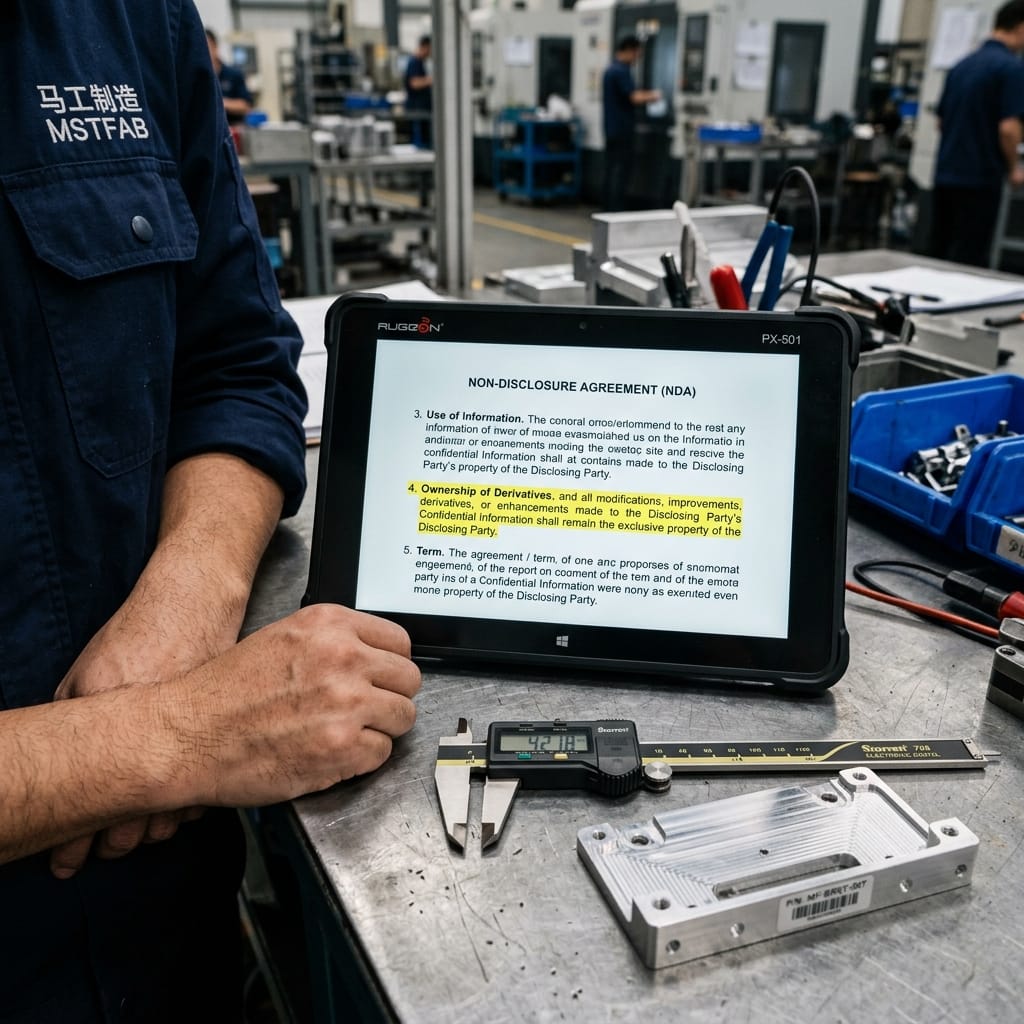
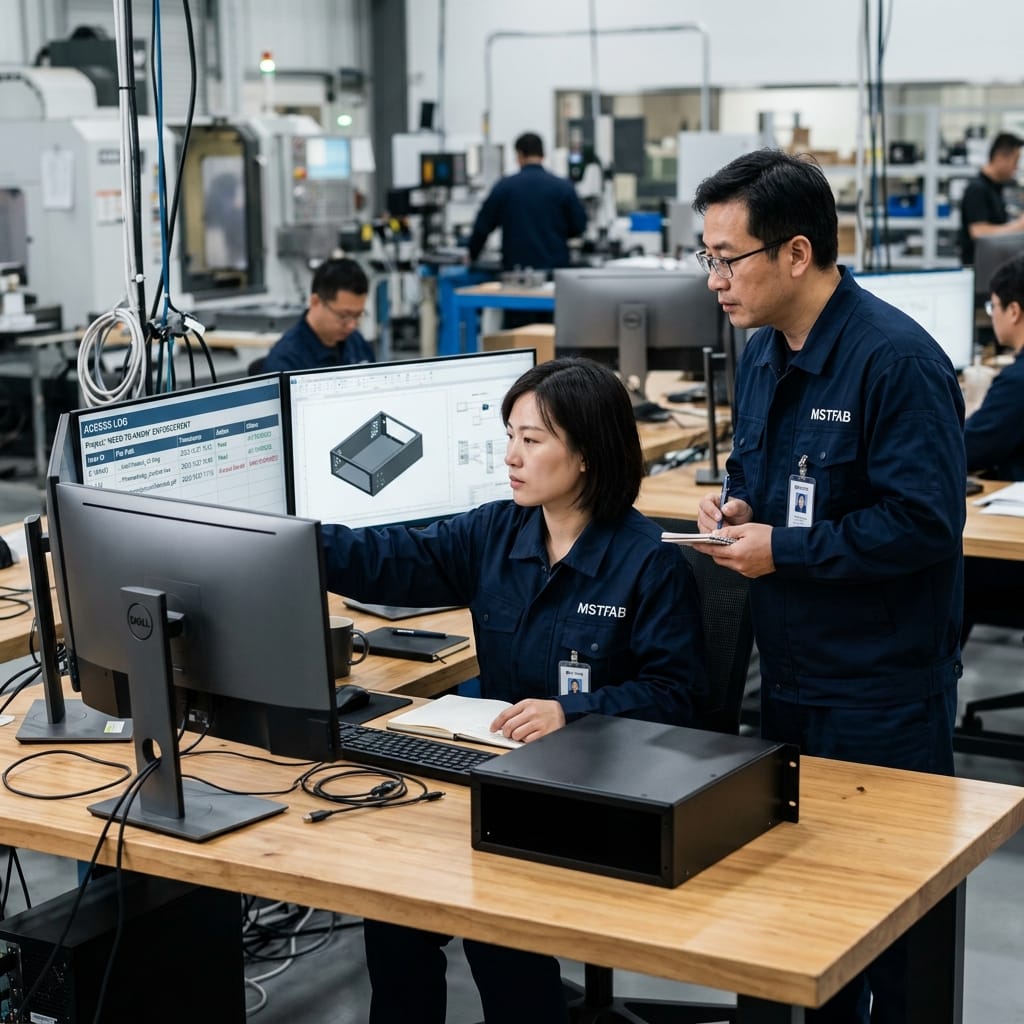
Secure & Scalable IP-Protected Sheet Metal Manufacturing Sourcing With MSTFAB
MSTFAB combines direct factory manufacturing, China-enforceable NNN IP security, transparent tooling ownership, and flexible low-MOQ rapid prototyping. Protect your designs and streamline precision production.
Frequently Asked Questions (FAQ)
Does MSTFAB sign bilingual Chinese NNN agreements with foreign buyers?
Yes, routinely. As a trusted Tier-1 contract manufacturer serving global industrial, medical, and telecom OEMs, MSTFAB signs binding bilingual NNN agreements governed by Chinese law and endorsed with our official corporate seal before receiving client design files.
How does MSTFAB physically destroy setup parts and trial scrap blanks?
All sheet metal setup blanks, out-of-spec test pieces, and laser skeletons are routed through dedicated hydraulic scrap shears that slice parts into un-recoverable metal strips before entering sealed recycling bins. Clients can request scrap destruction photo/video logs for every production lot.
Who owns the laser cutting NC programs and press brake tooling profiles?
Under our standard customer agreements, the buyer retains 100% intellectual property ownership of all product CAD models, 2D profiles, and custom tooling assets. MSTFAB holds technical files solely as an operational custodian to execute your authorized production orders.
 WeChat Contact
 WhatsApp Me Directly