
MSTFAB manufactures custom sheet metal enclosure shells, panels, brackets and welded frames from your drawings. Our DFM review helps OEM buyers catch bend, tolerance, sealing, welding and finishing risks before the purchase order becomes a very expensive lesson.
Important scope note: we make the sheet metal work, not finished electrical equipment. No batteries, no chargers, no PLC electronics, no complete control panels. We build the metal housing and structural parts that your own assembly team or contract manufacturer completes.
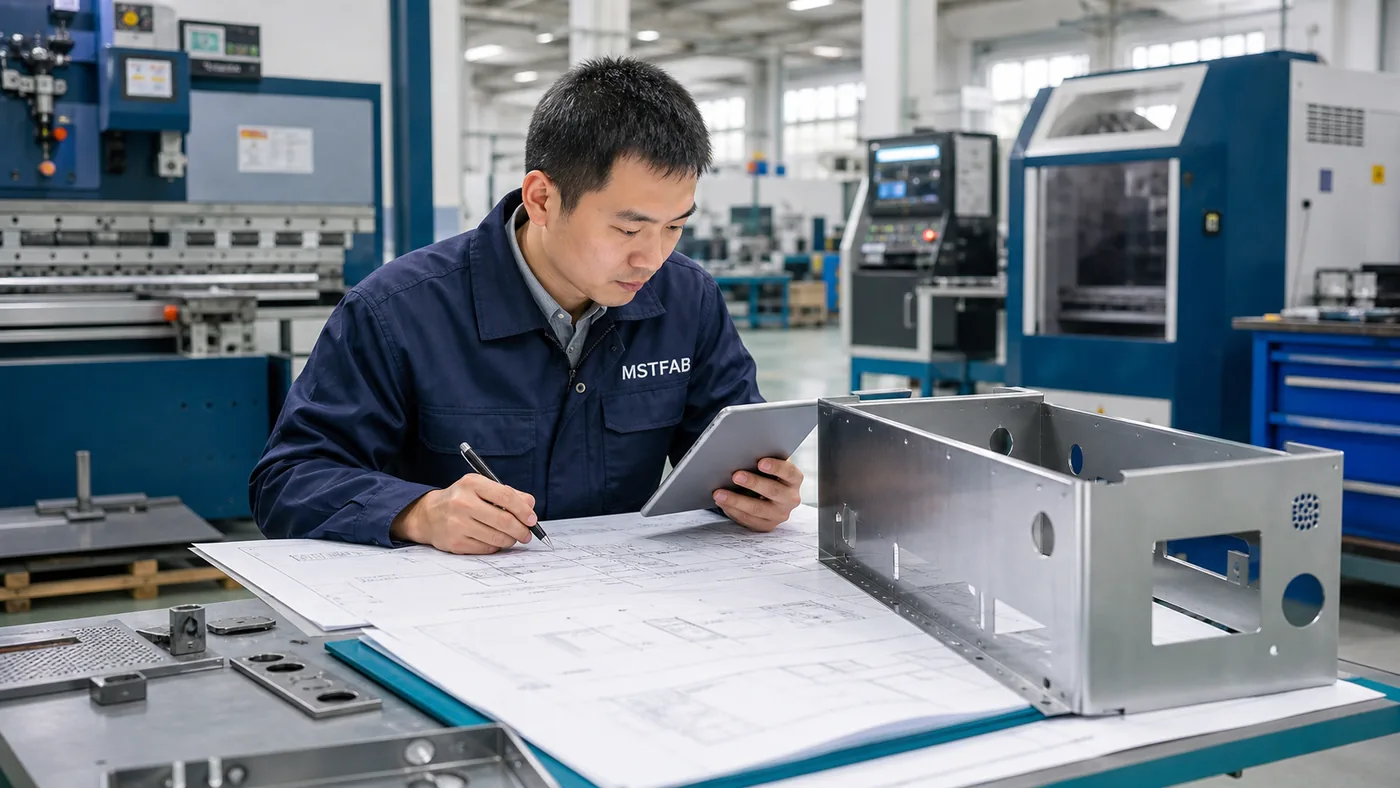
Quick answer: DFM support should produce drawing-specific questions, proposed changes, manufacturing assumptions and acceptance points. It does not authorize the supplier to change the design or certify the completed equipment. Agree who approves each proposal and which released files control quotation, first article and repeat production.
What MSTFAB Manufactures, and What We Do Not
Many pages in this industry make buyers guess whether the supplier is selling a finished device or the metalwork behind it. Let us remove the fog. MSTFAB is a sheet metal fabrication factory. We manufacture custom metal enclosures and parts from approved drawings; we do not sell complete powered products.
We manufacture
- Sheet metal enclosure shells, doors, covers and panels.
- Welded frames, brackets, mounting plates and rack structures.
- Laser cut, CNC bent, welded, riveted and powder coated metal parts.
- PEM inserts, hinges, locks, grounding studs and basic mechanical hardware installation.
- Export-ready packaging for custom metalwork.
We do not manufacture
- Finished EV chargers, solar battery systems or telecom equipment.
- Electrical design, PCB, BMS, inverter, PLC or controller assembly.
- Certification of complete end-use equipment.
- Complete powered products outside the agreed mechanical fabrication scope.
- System-level performance validation or final equipment approval.
The Buyer Problems DFM Engineering Prevents
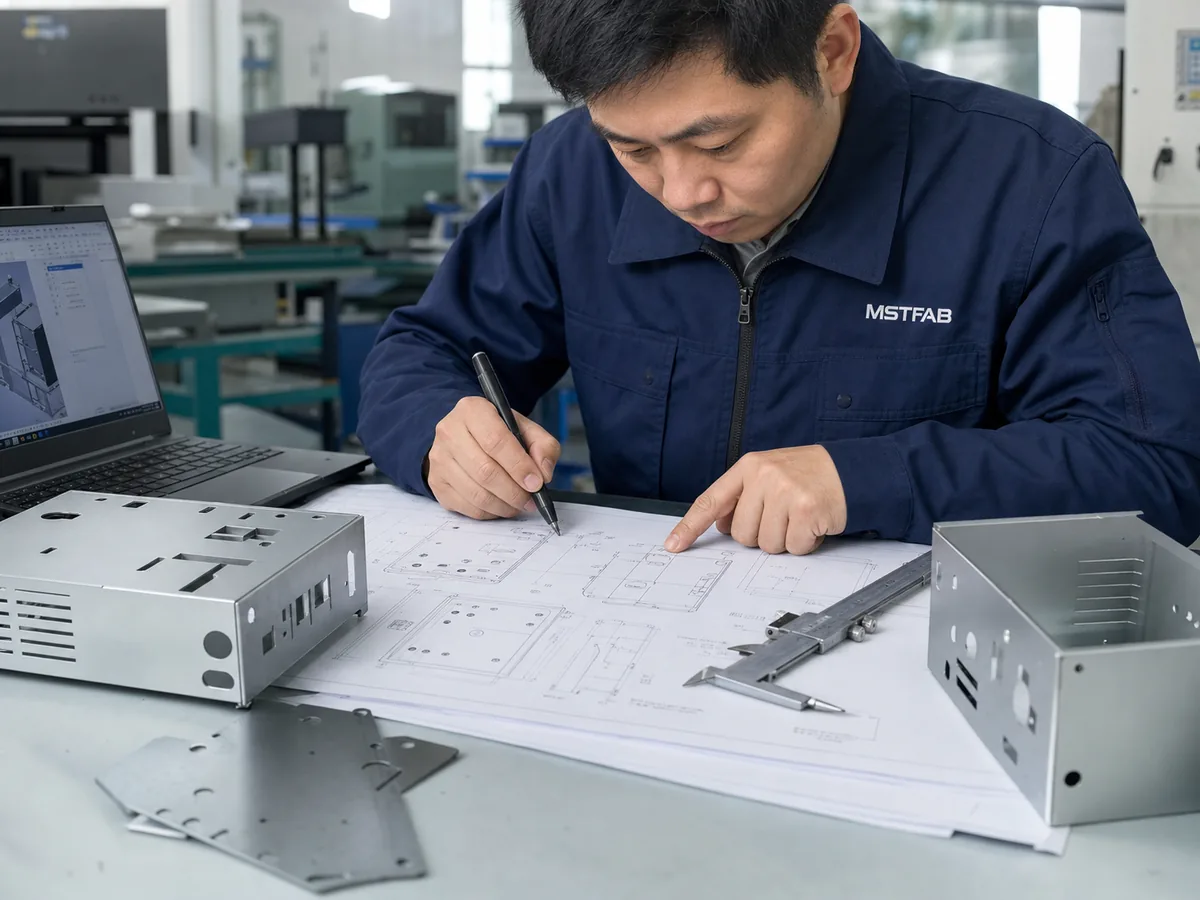
DFM is not a fancy engineering sticker. It is a practical checkpoint between your design intent and the factory floor. The best time to fix a hole too close to a bend is before steel is cut. The worst time is after 500 coated parts are waiting in cartons, silently judging everyone.
| Buyer risk | What MSTFAB checks | Why it matters |
|---|---|---|
| Tolerance stack-up | Bend-to-hole distance, mating surfaces, door gaps, mounting hole patterns. | Small deviations can stack across panels and make an enclosure hard to assemble. |
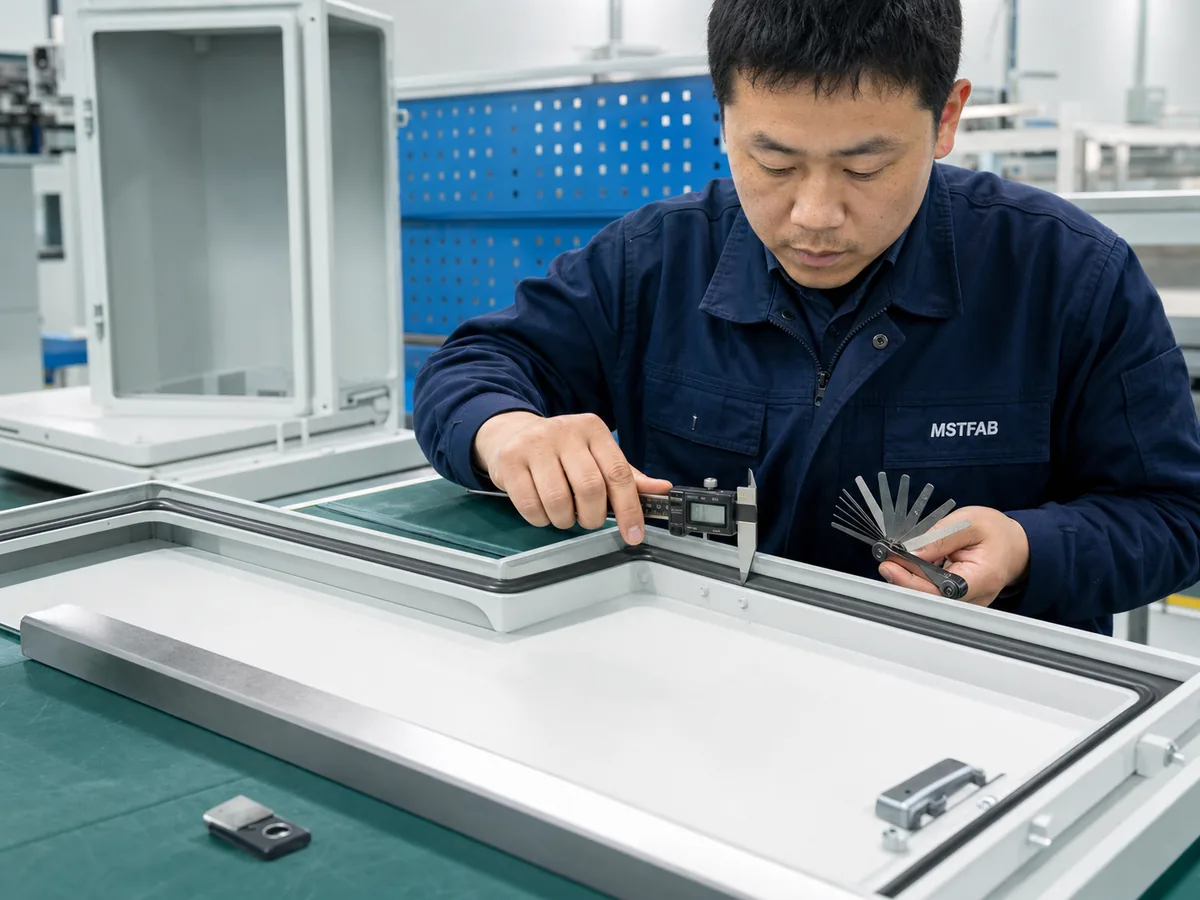
| Sealing failure | Flange flatness, gasket compression zone, weld distortion, coating buildup near sealing areas. | A nice-looking enclosure still fails if the gasket lands on a warped flange. |
| Weld distortion | Material thickness, weld sequence, fixture access and heat input. | Welding can pull panels out of square if the design gives heat no place to behave. |
| Hardware surprises | PEM insert access, hinge position, lock clearance, thread masking and grounding points. | The drawing may say "install hardware"; the factory still needs physical access to do it cleanly. |
| Finish and packaging damage | Masking, film thickness, edge coverage, protective packing and carton/crate layout. | Overseas buyers need parts that arrive usable, not a modern art collection of scratches. |
What Our Engineers Review Before Quoting
A useful quote needs more than a unit price. It needs the assumptions behind the price. MSTFAB reviews the manufacturing route before quoting, so both sides know what is included: material, cutting, bending, welding, hardware, finish, inspection and packing.
- Material and thickness: SPCC, SGCC, stainless steel, aluminum and the thickness that matches the load, finish and bending method.
- Bend feasibility: inside radius, flange height, hole-to-bend distance and whether existing tooling supports the design.
- Critical dimensions: which features need tighter control and which cosmetic edges can use normal process tolerance.
- Hardware and assembly: PEM, studs, hinges, locks, gasket path, grounding and fastener access.
- Finish control: powder coating, brushing, plating, masking and coating allowance for threads or sealing surfaces.
- Inspection plan: first article checks, dimensional reports, photos and packaging verification before shipment.
What Should a Useful DFM Response Contain?
Connect each comment to a part number, drawing revision and feature. State the observed manufacturing risk, the proposed action and any assumptions that need the buyer's confirmation. If a quotation depends on a changed radius, different hardware or revised finish, identify that condition explicitly.
| DFM output | Buyer decision | Release evidence |
|---|---|---|
| Question about conflicting files | Identify the controlling geometry or note | Consistent released drawing and model |
| Proposed manufacturing change | Approve, reject or request further review | Updated revision or documented disposition |
| Critical interface concern | Confirm functional limits and mating requirements | Agreed inspection condition and method |
| Unresolved scope assumption | Confirm who supplies the part, process or record | Quotation and order scope that identify inclusions and exclusions |
A Recommendation Is Not a Design Release
For example, moving a hole away from a bend may help manufacture the part but change the mating assembly. The supplier should explain the constraint; the design owner approves the resulting interface. Do not accept a workshop adjustment as an undocumented replacement for the drawing.
After approval, connect the quotation, BOM, model and drawing to the same revision. Agree which changed features the first article must demonstrate. Record any accepted sample deviation and whether it changes the repeat-production specification. A DFM review is a manufacturing input, not a guarantee that every functional or field risk has been resolved.
Production Steps Behind the DFM Review
DFM only matters if engineering feedback is connected to real machines. A drawing comment from someone who never sees a press brake is just a polite opinion. At MSTFAB, review connects to cutting, bending, welding, hardware installation, finishing, inspection and packing.
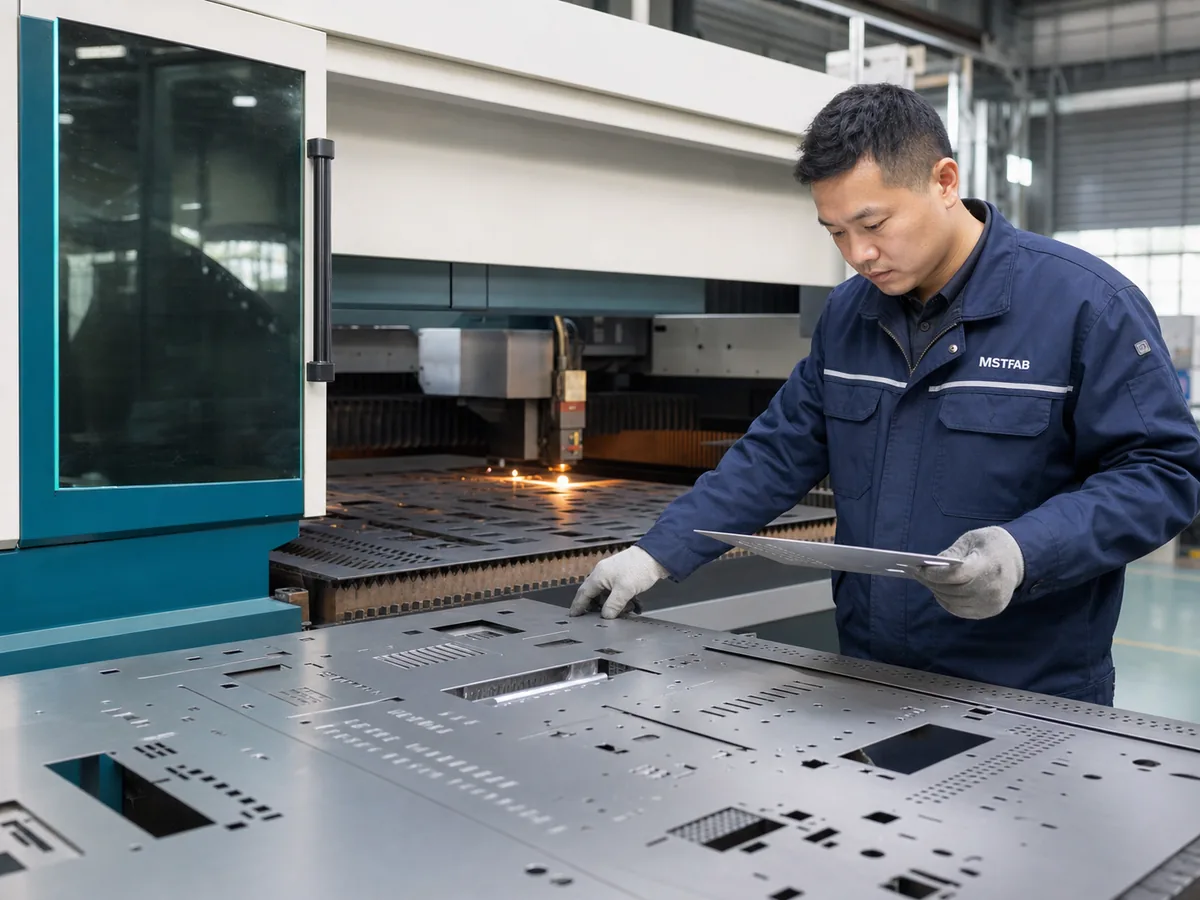
Fiber laser cutting
Cutouts, vents and mounting holes are checked against material thickness and drawing revision before panels move forward.
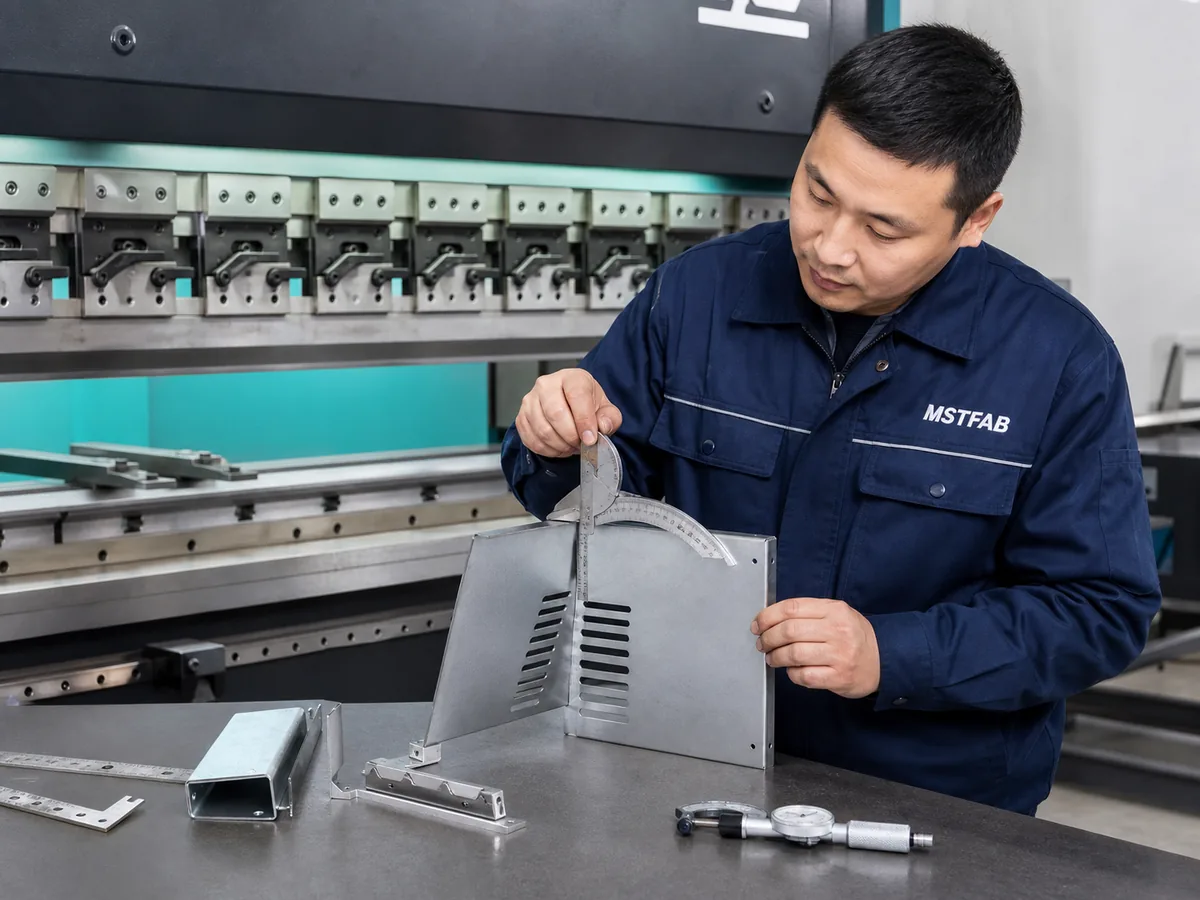
CNC bending
Bend sequence, flange height and bend angle are controlled so enclosure parts assemble instead of arguing with each other.
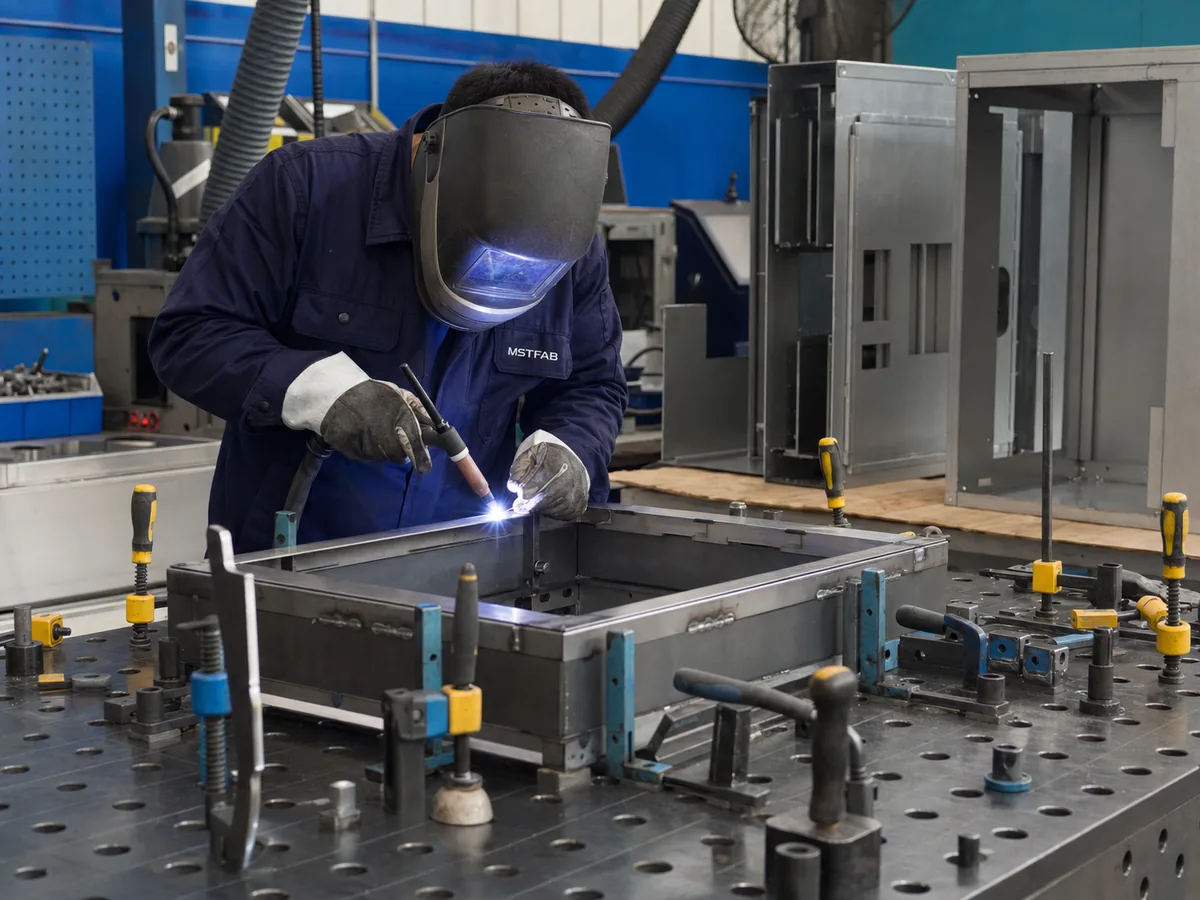
Fixture welding
Weld sequence and fixtures help control distortion on frames, corners and enclosure shells.
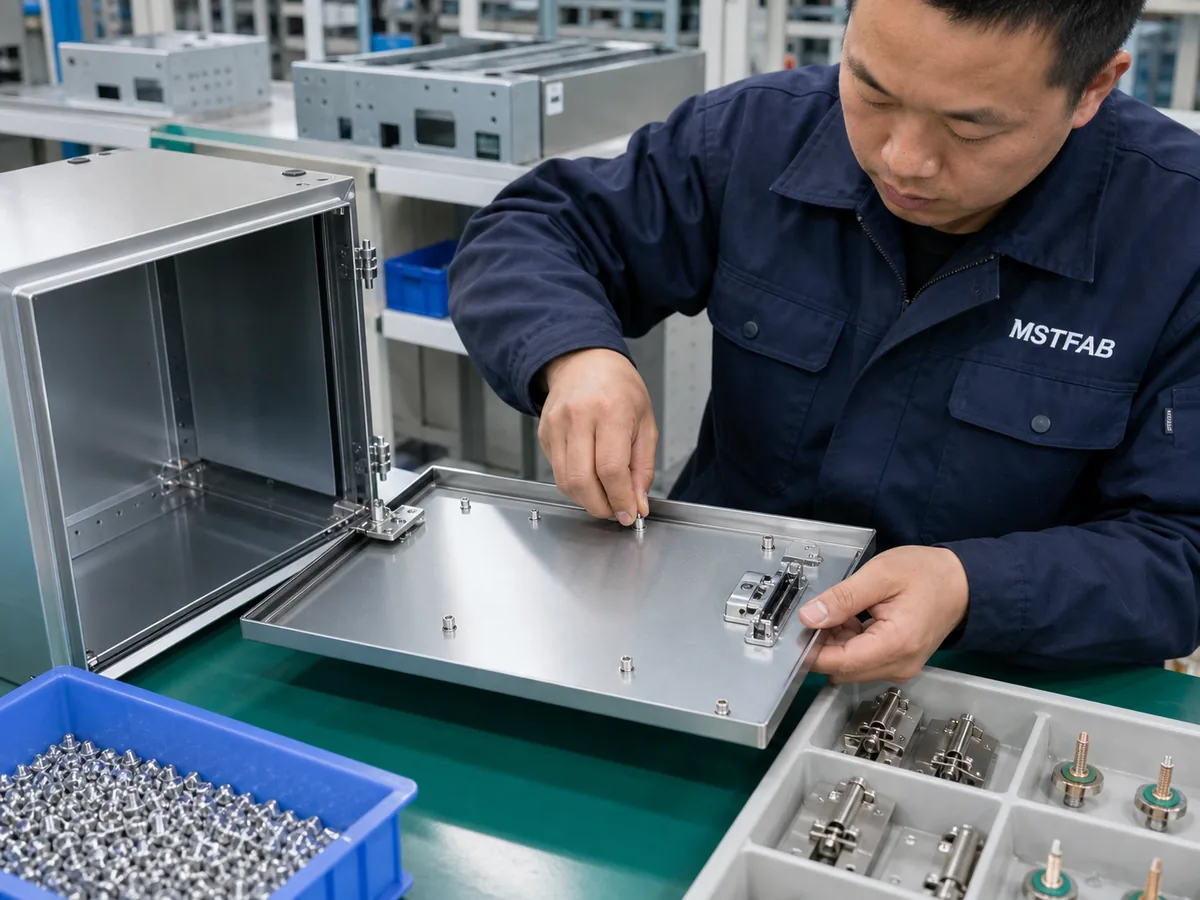
Hardware fit
PEM inserts, hinges, locks and grounding studs are checked for access, alignment and post-finish fit.
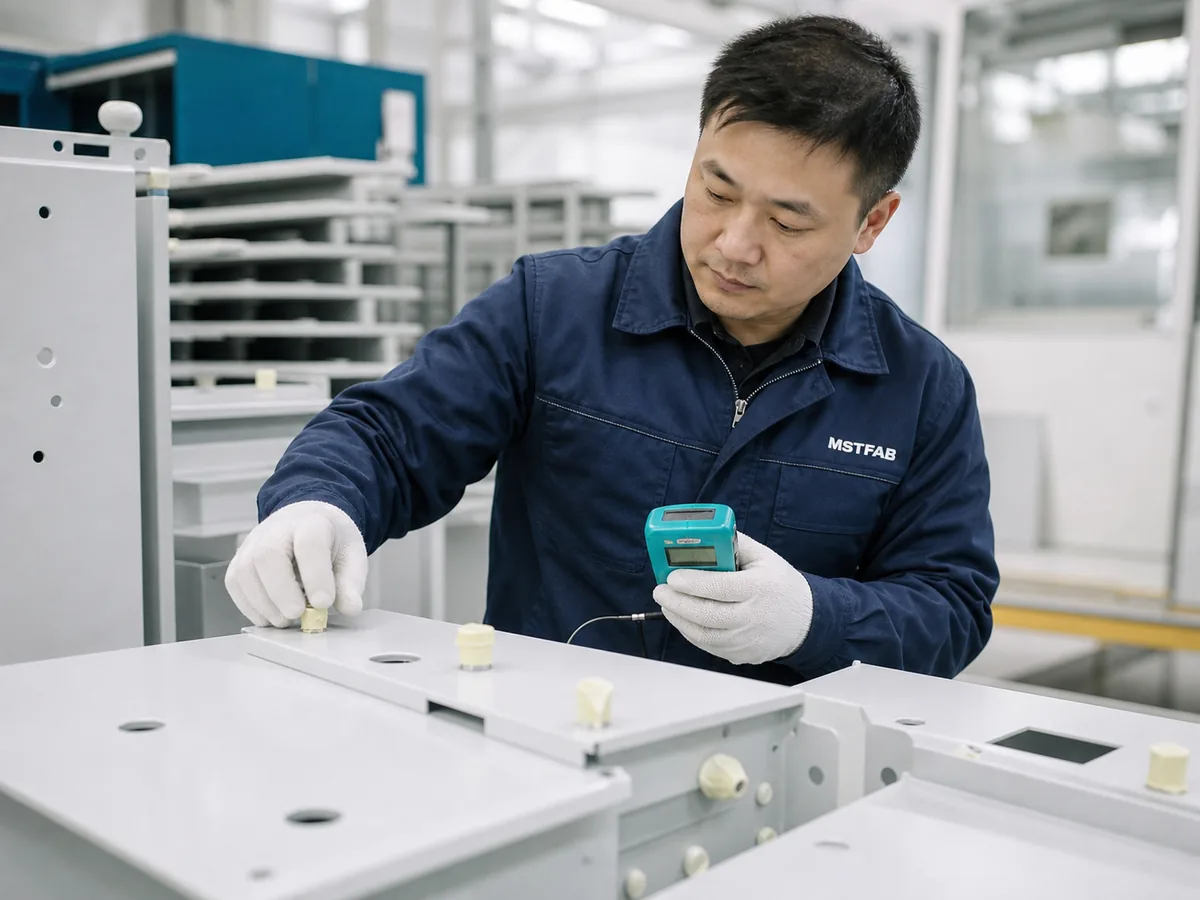
Finish protection
Masking and coating allowance protect threads, grounding zones and gasket surfaces from becoming expensive surprises.
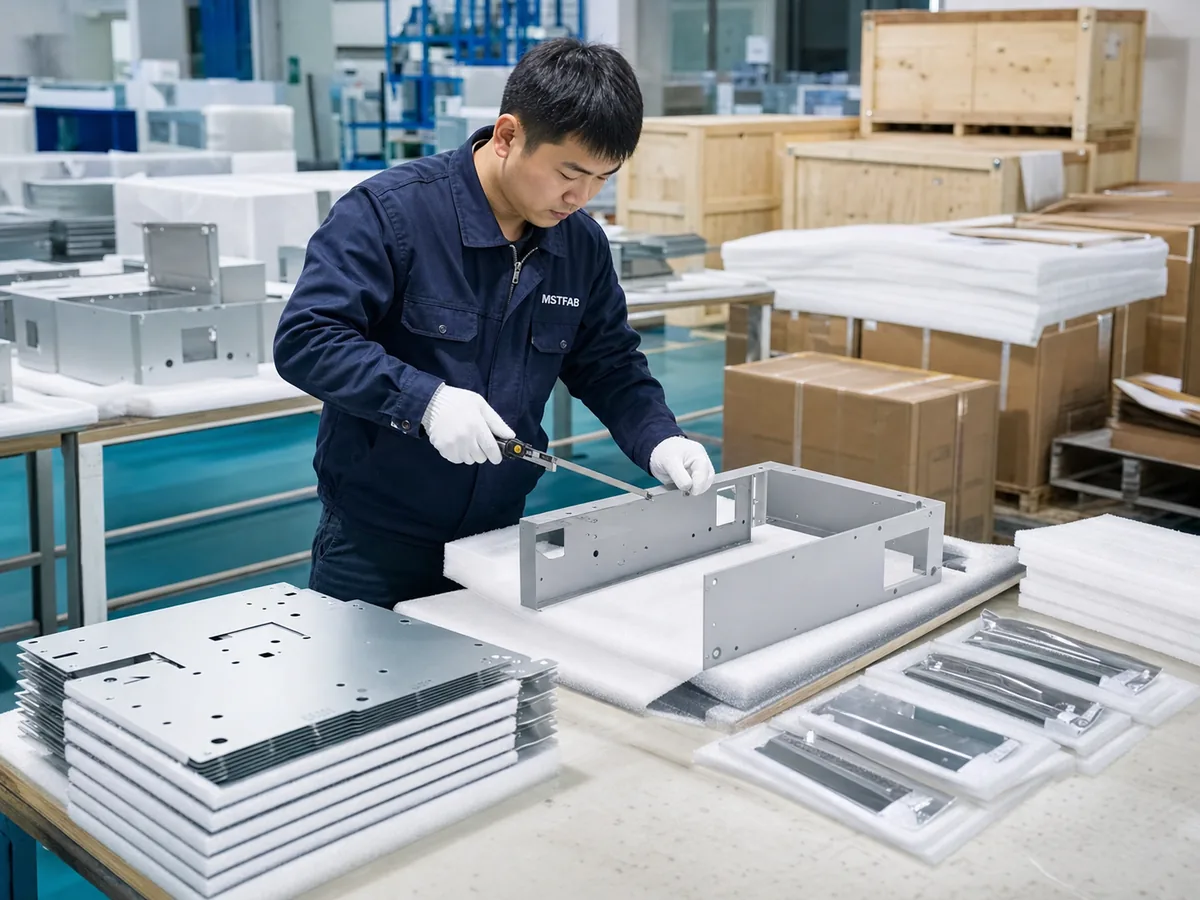
Final QC and packing
Dimensional checks, surface review and export packaging reduce rejects, transit damage and awkward supplier emails.
Trust Table: What OEM Buyers Should Ask
Trust is not built by saying "high quality" three times into a quotation. It is built with evidence. Ask for the practical proof below before you place the order.
| Buyer question | What a reliable answer looks like | MSTFAB evidence to request |
|---|---|---|
| Can you review my design before quoting? | Specific DFM comments, not just "yes, can make". | Marked drawing screenshots, manufacturability notes, process route. |
| How do you control repeat orders? | Drawing revision, material grade, fixture and inspection records are controlled. | Revision confirmation, first article photos, QC checklist. |
| What happens if the drawing is risky? | The factory explains the risk and proposes a practical manufacturing change. | DFM feedback on bend radius, hole position, weld sequence or finish allowance. |
| Do you understand export packaging? | Parts are protected by surface, geometry and shipping route, not tossed into a box with optimism. | Packaging photos before shipment and carton/crate plan. |
| Are you a factory or a trading desk? | The supplier can show cutting, bending, welding, inspection and packing evidence. | Factory photos, process videos, production photos for your order. |
When This Supplier Page Is the Right Fit
This page is for OEM buyers, engineers and sourcing teams who already have drawings or a product concept and need a factory to manufacture the sheet metal enclosure or metal parts. If you are still deciding design rules, this related sheet metal DFM design guide explains the engineering basics. If you need broader process capability, see our custom sheet metal fabrication service.
For tolerance planning and quality control, use the relevant technical reference: sheet metal assembly tolerance guide helps define realistic dimensions, while sheet metal quality control covers FAI, CMM and SPC. Agree the required inspection scope before production rather than assuming that every possible report is included.
Send Your Drawings for a Practical DFM Review
Send STEP, DWG/PDF drawings, material, finish, annual volume and the features that must fit. MSTFAB will review manufacturability before quotation and clarify what we can manufacture as sheet metal parts or enclosure metalwork. If your project asks us to build finished electronics, we will say so early, because surprise scope gaps are not a sourcing strategy.
Request DFM and quotation supportFrequently Asked Questions
What does DFM engineering support mean for OEM sheet metal manufacturing?
It means the factory reviews the design for manufacturability before production: bend radius, hole position, tolerance stack-up, welding access, hardware fit, finish allowance, inspection points and packing risk. The goal is not a prettier drawing. The goal is fewer expensive surprises.
Does MSTFAB make finished electrical products?
No. MSTFAB manufactures sheet metal enclosure shells, panels, frames, brackets and related metal parts. We do not supply finished EV chargers, battery systems, PLC panels, electronics or certified complete equipment.
What files should I send for a DFM quotation?
Send 3D STEP files, 2D PDF/DWG drawings, material and thickness, finish requirements, critical tolerances, expected quantity, target application and any hardware or gasket requirements. If you have photos of the assembly, send those too.
Can you support prototypes and batch production?
Yes. MSTFAB can review manufacturability for prototypes and then stabilize the same design for repeat batch production with controlled revision, inspection and packaging records.
How does DFM reduce cost?
It removes preventable complexity: impossible bends, unnecessary tight tolerances, hard-to-weld corners, coating conflicts, hardware access problems and packaging damage. Cost reduction by design is cleaner than arguing over the unit price after the design is already difficult to make.
 WeChat Contact
 WhatsApp Me Directly