
Custom stamped metal parts sound simple until a batch shows up with burrs on the wrong side, a panel that looks like a potato chip, or tooling that costs more than the first order. Stamping is not magic. It is repeatable pressure, good tooling, clear drawings and boring discipline. Boring is good here. Boring means your assembly line is not calling you at 4:47 p.m.
Quick Answer: What Should OEM Buyers Check?
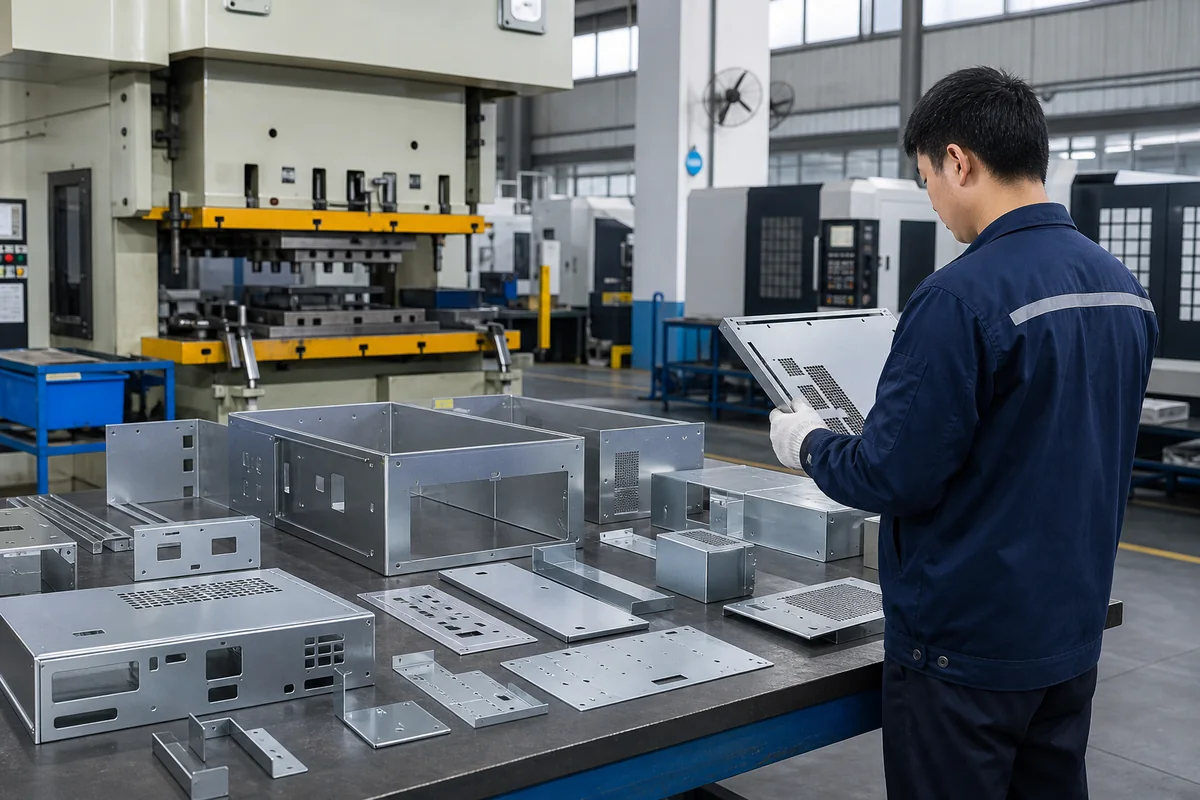
For custom stamped sheet metal parts, check six things before placing an order: material grade and thickness, drawing revision, burr direction, flatness or warping risk, tooling plan, and inspection evidence. MSTFAB manufactures stamped enclosure panels, covers, brackets, chassis plates, mounting hardware and other empty sheet metal parts. We do not supply electronics, batteries, wiring harnesses, software, complete machines or finished products.
What MSTFAB Makes, and What We Do Not Make
This page is about metal fabrication parts, not finished equipment. If your buyer, engineer or boss keeps saying “just make the whole thing,” stop them gently before the quote becomes fiction.
| Buyer Requirement | MSTFAB Scope | Not Included |
|---|---|---|
| Stamped enclosure parts | Panels, covers, doors, vent plates, shields and chassis components | Power modules, screens, controllers or complete devices |
| Stamped brackets and hardware | L brackets, mounting plates, ribs, clips, tabs and reinforcement parts | Motors, sensors, cables, software or final assembly as a branded product |
| Secondary operations | Bending, welding, PEM insertion, tapping, deburring, powder coating, plating or packing | Electrical testing, firmware, certification of finished equipment |
| Export-ready supply | Inspection records, photos, protective packing and shipment support for the metal parts | Retail packaging or consumer-ready finished goods |
When Stamping Makes Sense
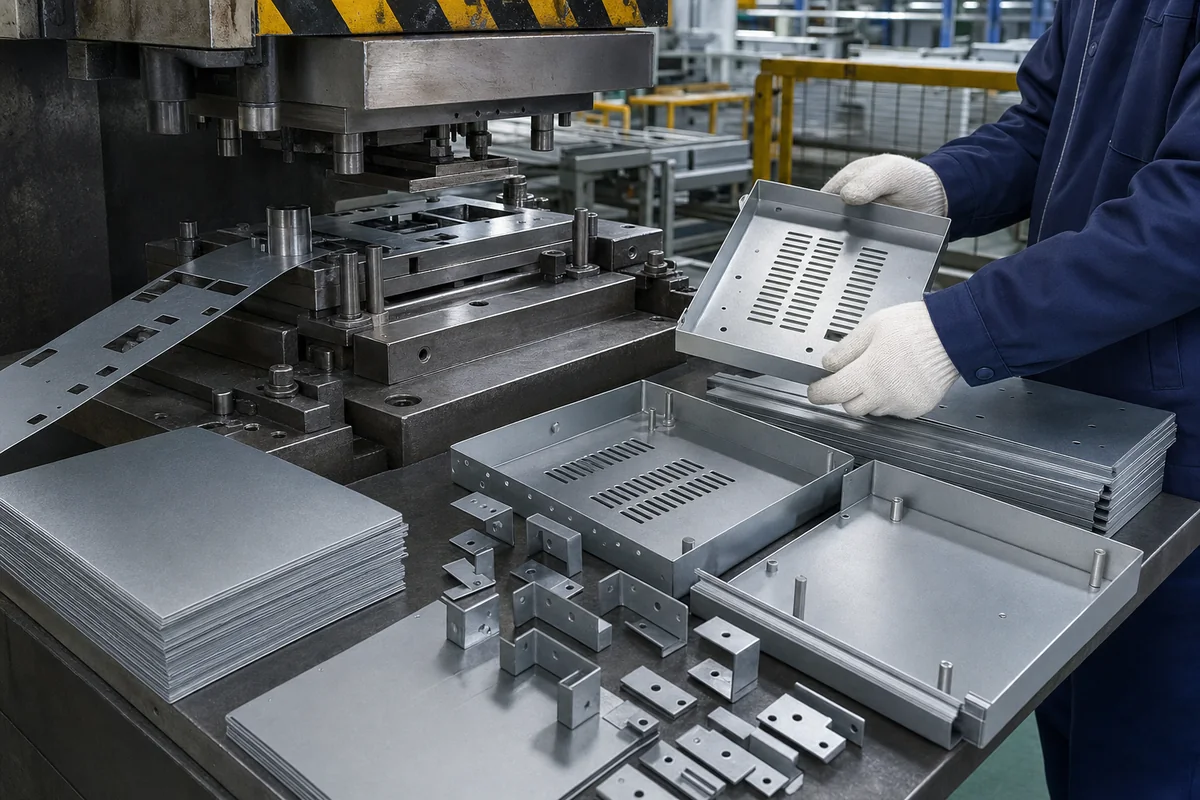
Stamping is best when the part repeats. If you need consistent holes, ribs, louvers, shallow forms, clips or mounting tabs across hundreds or thousands of pieces, stamping can reduce per-part cost and improve repeatability. If you need ten prototype pieces next Friday, laser cutting and bending may be smarter. Tooling is useful when volume earns it. Tooling for a tiny pilot run is like buying a delivery truck to move one chair.
The Problems That Usually Hurt Buyers
Burr Direction
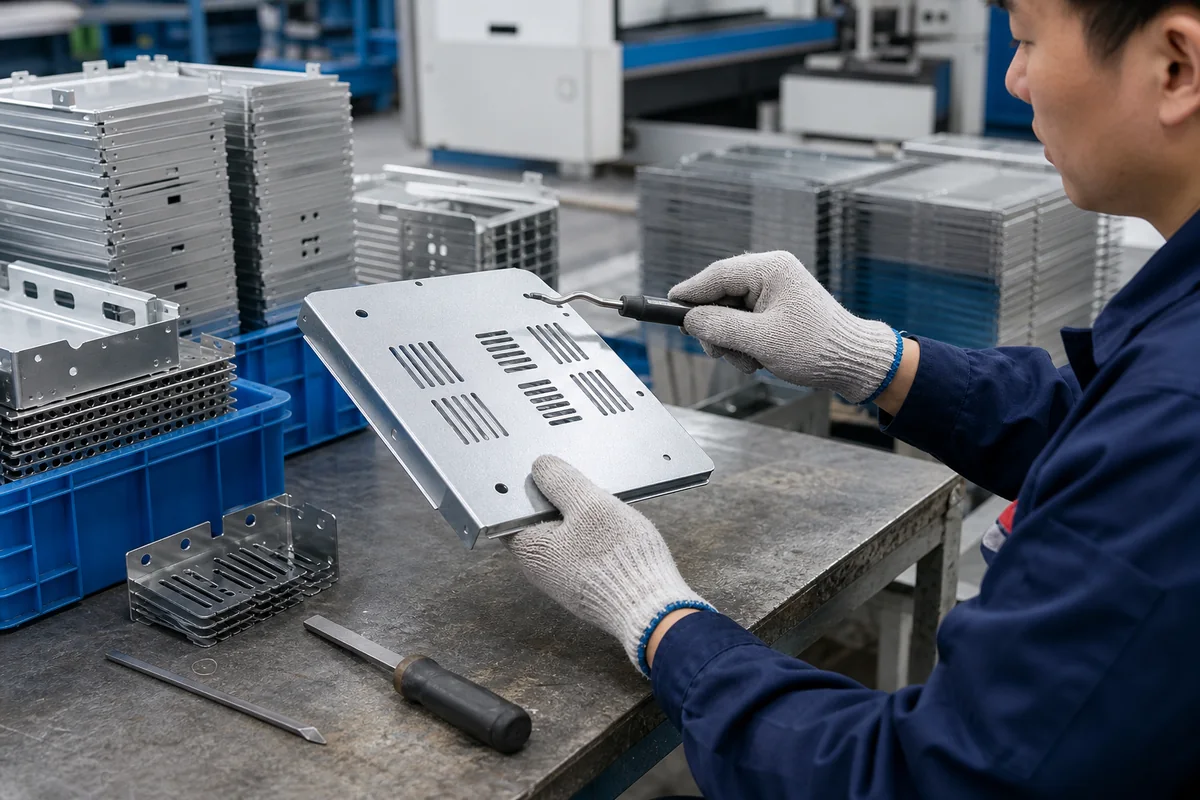
Burrs are normal in stamping. The question is where they face and how much is acceptable. If a burr faces a gasket, cable, hand-contact edge or coated surface, it becomes your problem later.
Warping and Flatness
Large thin panels can warp after stamping, bending or coating. Flatness requirements should be named on the drawing so the supplier can plan tooling, handling and inspection.
Tooling Assumptions
Tooling can be soft tooling, hard tooling, shared tooling, special fixtures or no tooling at all. If the quote does not say, you are not comparing quotes. You are comparing guesses in nice formatting.
Batch Drift
The first sample may pass, then the repeat batch slowly drifts. Good suppliers control fixtures, die wear, material lot changes and first article approval before production runs wild.
Inspection Should Be Built Into the Quote
A serious quote should state the material, thickness, tolerance standard, surface finish, tooling charge, sample approval process and what inspection evidence is included. For stamped parts, ask for first article photos, key dimension checks, burr direction confirmation and packaging photos. If a supplier says “trust us” but cannot show evidence, that is not confidence. That is fog with a purchase order attached.
Design Rules That Save Tooling Money
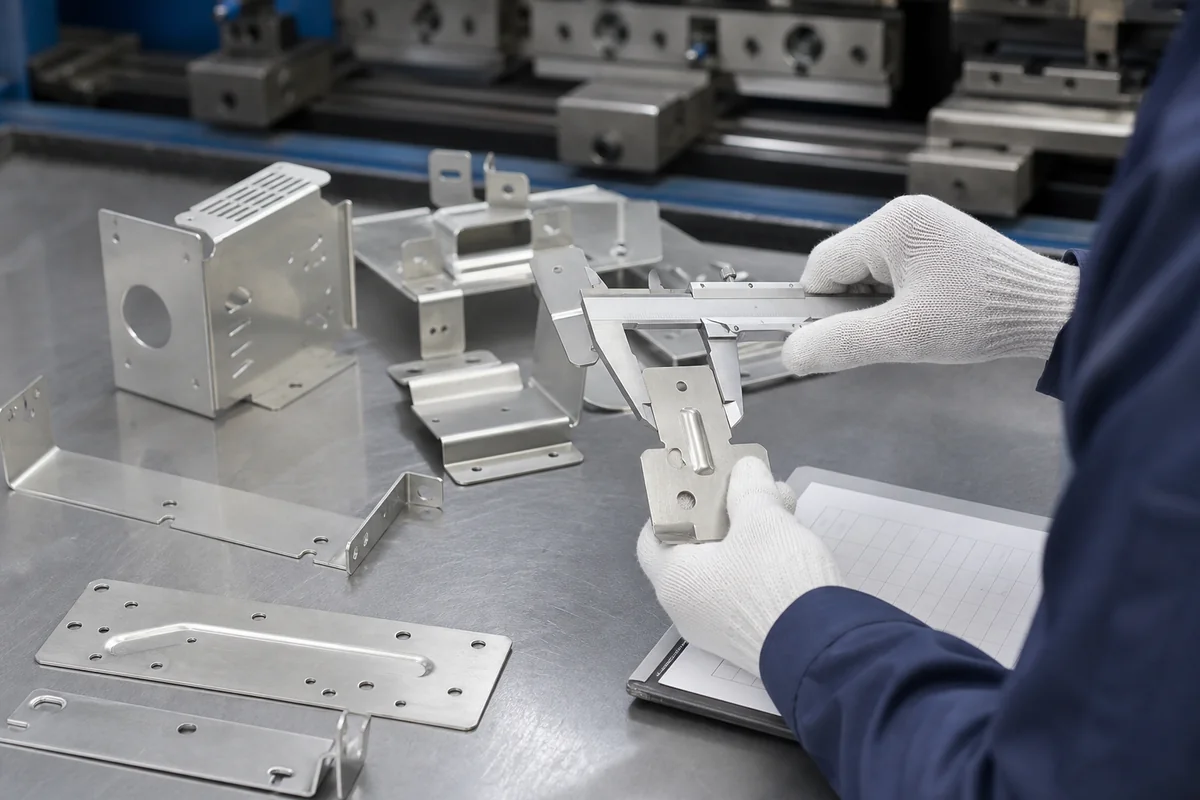
Good stamped parts start in the drawing. Keep holes away from bend lines, avoid tiny features that punish the die, use realistic bend radii, call out only the tolerances that matter, and confirm whether cosmetic surfaces need protection before forming. For more detail, review our sheet metal DFM rules and sheet metal tolerance guide. The short version: do not make every dimension heroic. Heroes are expensive.
Deburring and Finish: Small Details, Big Complaints
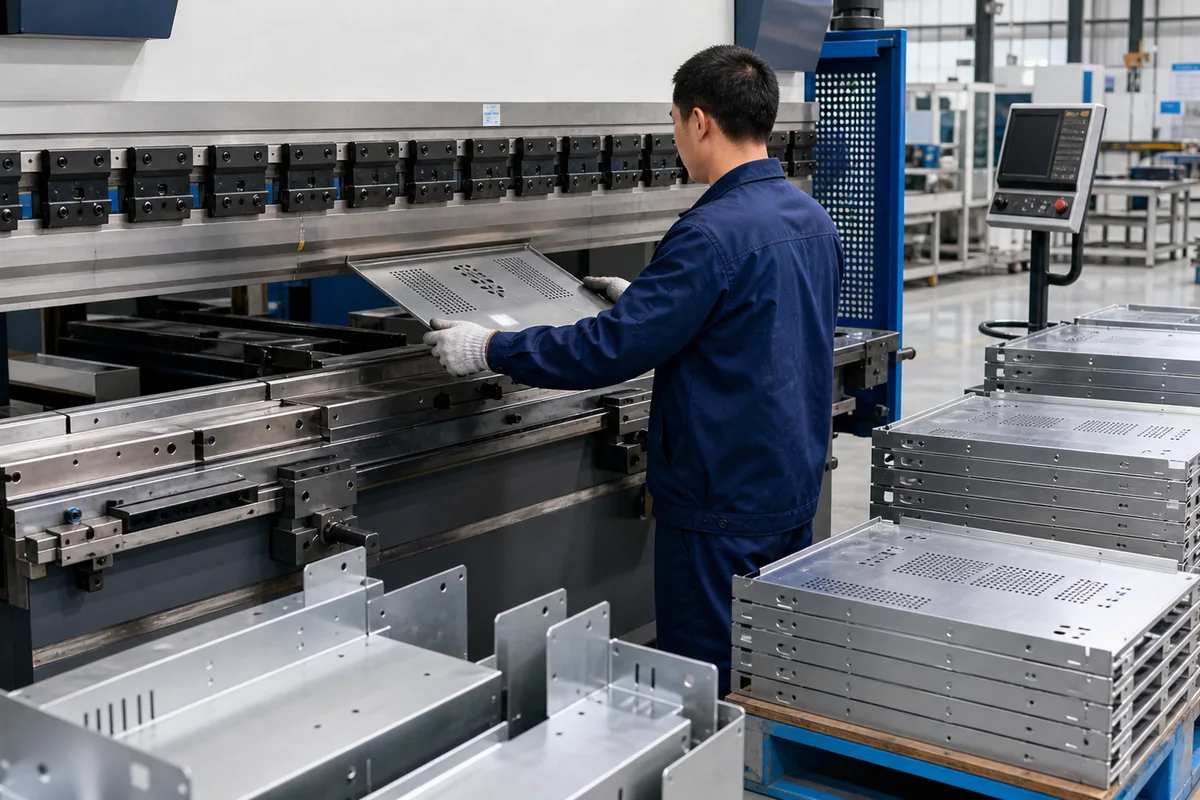
Stamped parts often look acceptable until someone handles them, coats them or fits them into an assembly. Burrs can cut hands, damage wiring supplied by your own assembly team, or stop a panel from sitting flat. Finish also matters: powder coating adds thickness, plating behaves differently, and masking holes or threads may be needed. Choose the finish by function, not by whichever sample looked nice in a photo.
Trust Table: What OEM Buyers Should Ask For
| Risk | What to Ask the Supplier | Why It Protects You |
|---|---|---|
| Wrong revision | Confirm drawing number, revision and approved sample record. | A perfect part made from the wrong print is still wrong. |
| Material substitution | Confirm grade, thickness and whether material certificate can be provided when required. | Cheap material swaps create fit, strength and corrosion surprises. |
| Burr complaints | Define burr direction, deburring level and hand-contact edges. | Prevents sharp edges, coating defects and assembly damage. |
| Flatness failure | Call out flatness only where function needs it and ask how it will be checked. | Large thin parts need process control, not hopeful eyeballing. |
| Tooling confusion | Separate tooling charge, sample cost, production unit price and tooling ownership. | Makes quotes comparable and reduces hidden cost arguments. |
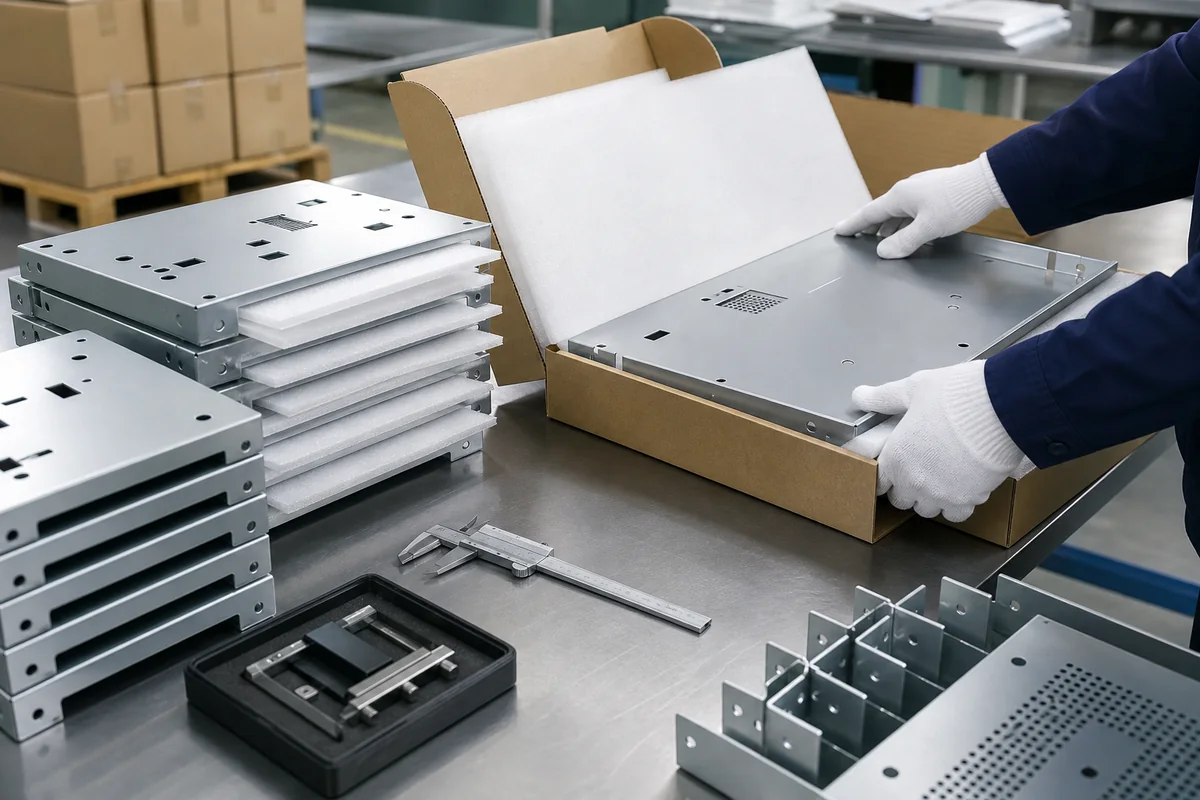
| Transit damage | Request packing method, separators, carton weight and shipment photos. | Good metal parts can still arrive scratched, bent or useless. |
How to Send a Better RFQ
- Send 2D drawings and 3D files with the same revision name.
- State material grade, thickness, surface finish, quantity and annual forecast.
- Mark critical dimensions instead of tightening the entire drawing.
- Tell the supplier which side is cosmetic and which side can show forming marks.
- Ask for tooling, sample, production and packaging costs as separate lines.
- Confirm Incoterm and shipping method before comparing overseas and local quotes.
If you want to make quotes easier to compare, use our guide on how to read a sheet metal quote. If price is the main question, the sheet metal fabrication cost guide explains the levers without turning the page into accounting soup.
Common Mistakes to Avoid
- Ordering hard tooling before the sample is proven.
- Leaving burr direction undefined on hand-contact or cable-contact parts.
- Using tight tolerances everywhere because the CAD default looked official.
- Forgetting that coating thickness can close holes, threads or tight slots.
- Comparing a quote that includes tooling and packing with one that hides both.
- Asking for a finished product when the supplier is quoting only metal fabrication.
Frequently Asked Questions
What custom stamped metal parts can MSTFAB make?
MSTFAB can manufacture stamped sheet metal panels, brackets, covers, chassis plates, shields, clips, reinforcement parts and enclosure hardware. The scope is empty metal parts, not completed equipment.
Does MSTFAB make finished products?
No. MSTFAB makes the metal fabrication portion: stamped, cut, bent, welded, deburred, finished and packed sheet metal parts. Electronics, batteries, wiring, software and final finished machines are outside the scope.
When is stamping better than laser cutting?
Stamping is usually better for repeat volume, consistent features and formed details such as ribs, louvers, clips or tabs. Laser cutting and bending are usually better for prototypes, low volume or designs that may still change.
Why does burr direction matter?
Burrs can affect safety, coating, gasket sealing and assembly. Define burr direction and deburring level early, especially on hand-contact, cable-contact, cosmetic or sealing surfaces.
What should be included in a stamped parts quote?
A complete quote should include material, thickness, finish, quantity, tooling cost, sample cost, production unit price, tolerance assumptions, inspection scope, packaging and Incoterm.
Need Custom Stamped Sheet Metal Parts?
Send MSTFAB your drawing, material, finish, quantity and revision details. We will review the fabrication scope and quote the empty stamped panels, brackets, covers or chassis parts clearly.
 WeChat Contact
 WhatsApp Me Directly