
A custom metal part can look perfect in CAD and still create trouble in real production.
The bracket may fit in the 3D model but block a connector after bending. The enclosure may look clean before coating but lose thread function after powder coating. The welded frame may be strong but move slightly out of square. The prototype may look good on a table but fail when installed into the real machine.
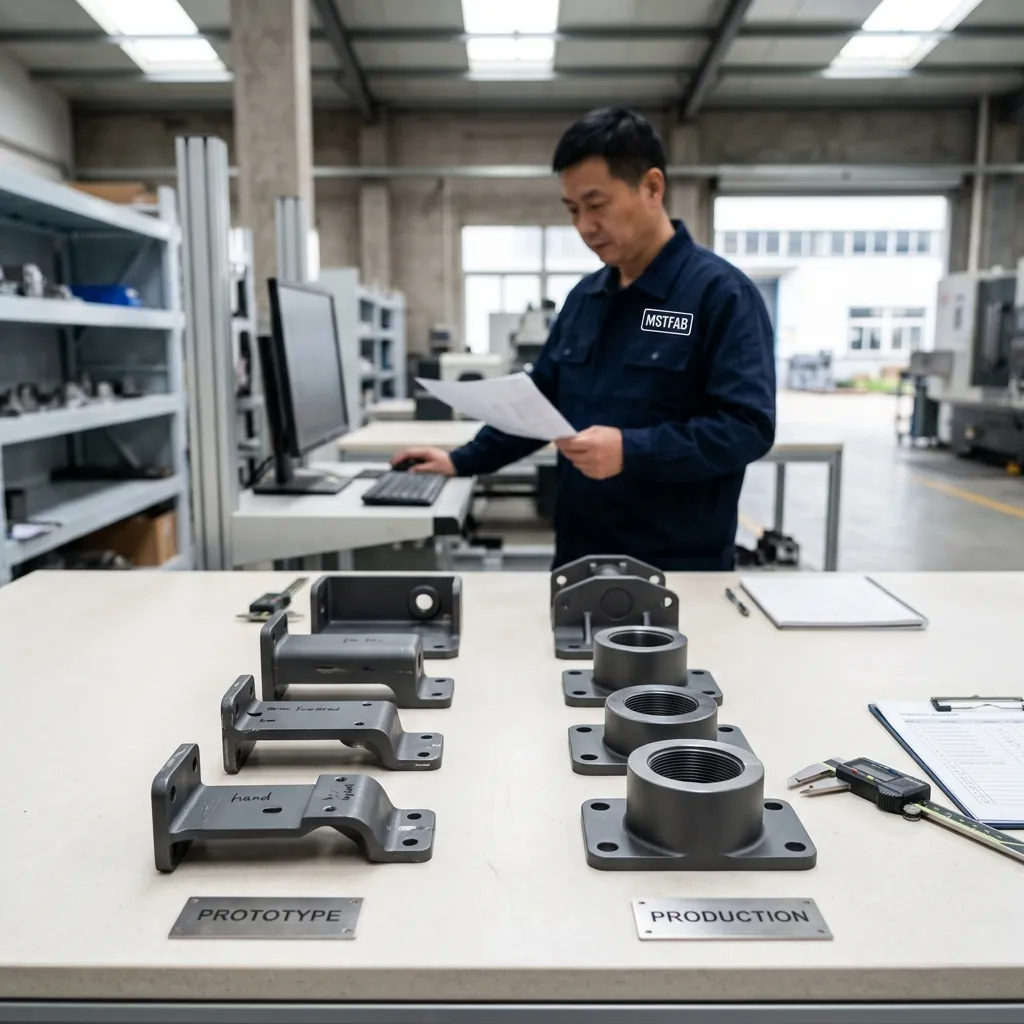
That is why custom metal parts manufacturing services from prototype to production should not be treated as one simple order.
It is a controlled process.
The project needs to move from drawing review, to prototype validation, to pilot production, to stable repeat manufacturing. Each stage has a different purpose. Each stage should reduce risk before the buyer invests in the next one.
At MSTFAB, we support drawing-based metal fabrication for OEM brackets, panels, enclosures, cabinets, machine covers, mounting plates, chassis parts, machine guards, frames, and welded assemblies.
The goal is straightforward: Your prototype should help you build a reliable production process, not create a new problem for every future order.
For the full fabrication capability overview, see custom sheet metal fabrication for OEM parts.
Prototype to Production Is Not One Step
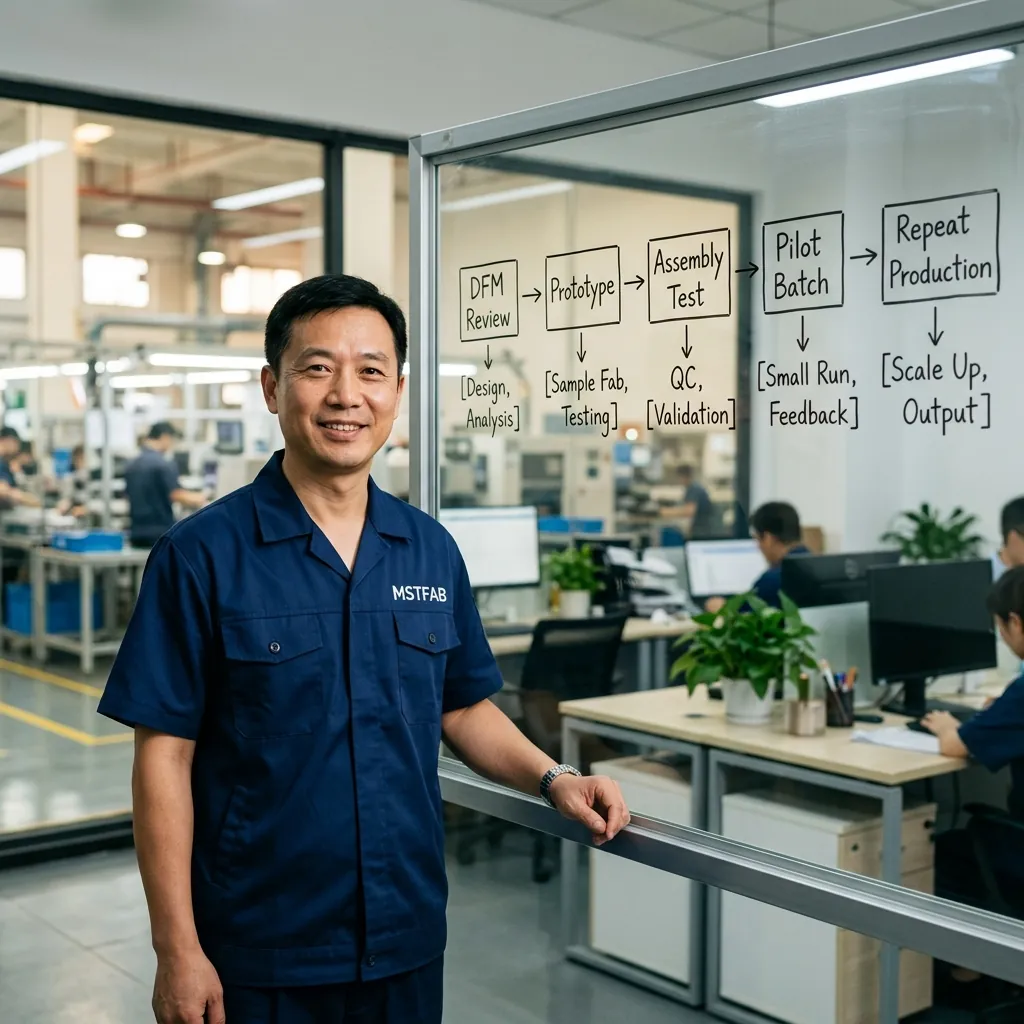
Many buyers think the process is simple: Send drawing → Make sample → Place production order. In reality, that route often skips the most important work.
A successful project usually follows a controlled sequence:
| Project Stage | Main Question Answered |
|---|---|
| DFM & Drawing Review | Can this part be manufactured correctly without risking delays? |
| Prototype Stage | Does this part fit and function in the real machine assembly? |
| Pilot Batch Stage | Can the manufacturing process be repeated consistently at scale? |
| Repeat Production | Can quality, finish, packing, and delivery remain stable over time? |
A prototype proves that a part can exist. A pilot batch proves that it can be repeated. Production proves that the approved process can keep working without everyone reopening the same engineering discussion every month.
Step 1: Start With a Practical DFM Review
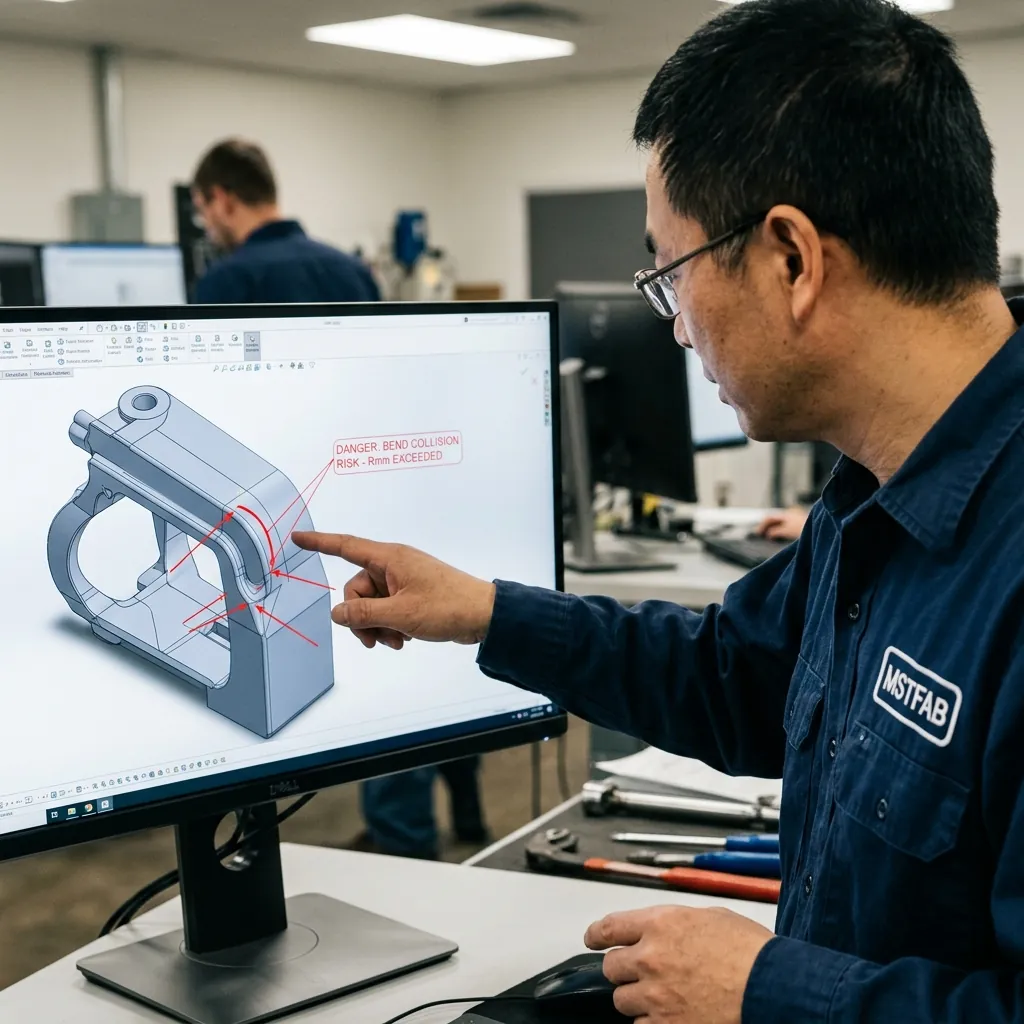
The first step should happen before metal is cut. This is where DFM, or Design for Manufacturing, becomes important.
For example, a mounting hole may be too close to a bend line and distort during forming. A thin panel may need folded edges to avoid flexing. A powder-coated threaded hole may require masking.
These are normal manufacturing questions. The problem is not that they exist. The problem is finding them after 200 finished parts have already been coated and packed. For more guidance, see sheet metal fabrication design for manufacturability.
Step 2: Build a Prototype That Can Be Tested Properly
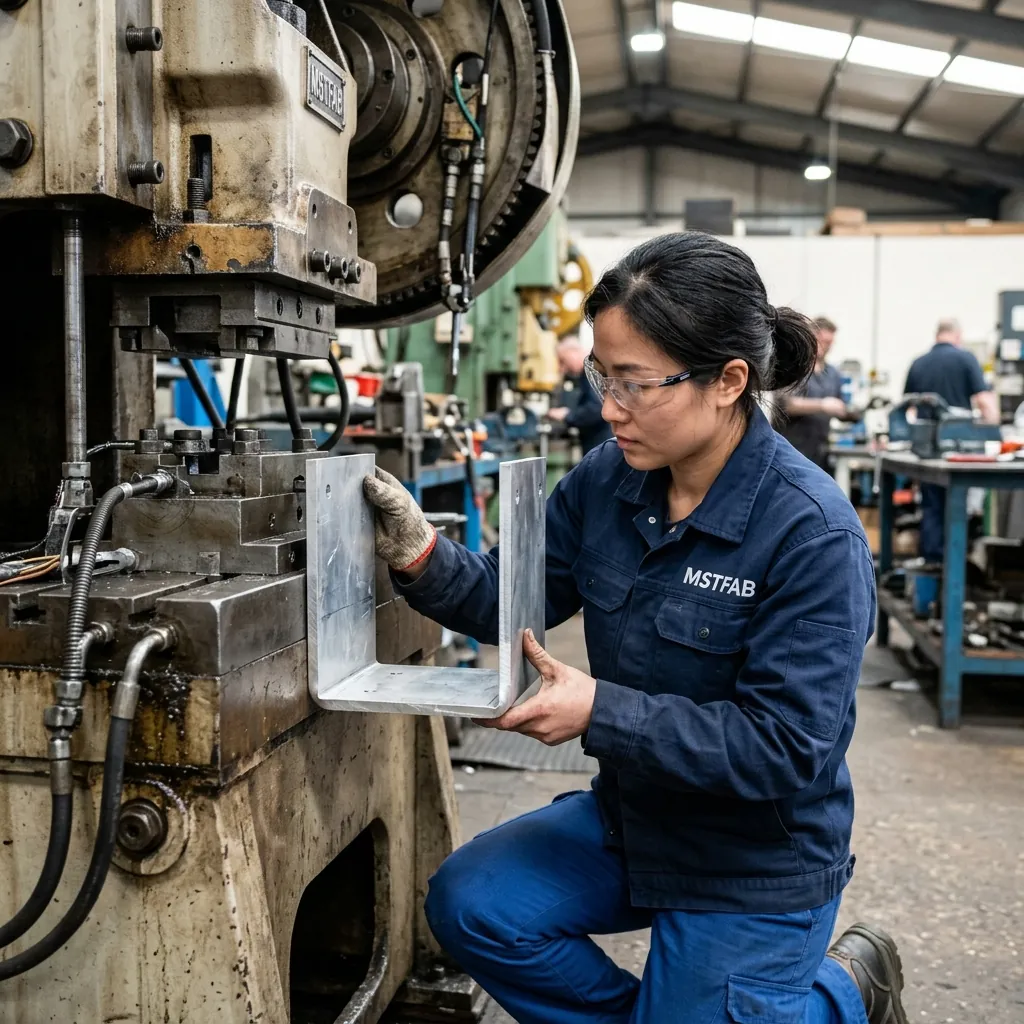
A prototype should not only look good in photos. It should answer practical questions.
For example, a machine cover may fit the frame but leave no room to remove a filter. A control panel may look correct but block cable routing. A welded bracket may align before coating but become difficult to install after finish thickness is added.
A prototype should be tested with the real product whenever possible. A metal part that looks fine alone can still fail when it meets the rest of the assembly. For prototype specific solutions, review prototype sheet metal fabrication.
Step 3: Freeze the Approved Drawing Revision
One of the biggest risks between prototype and production is revision confusion. The buyer may have a STEP file, a PDF drawing, a DXF file, and several emails with changes.
If the approved version is not clearly controlled, the factory may manufacture the wrong revision. A production order should never begin with “I think this is the latest file.” That sentence is usually the first chapter of a very avoidable problem.
Step 4: Use Pilot Production to Test Repeatability
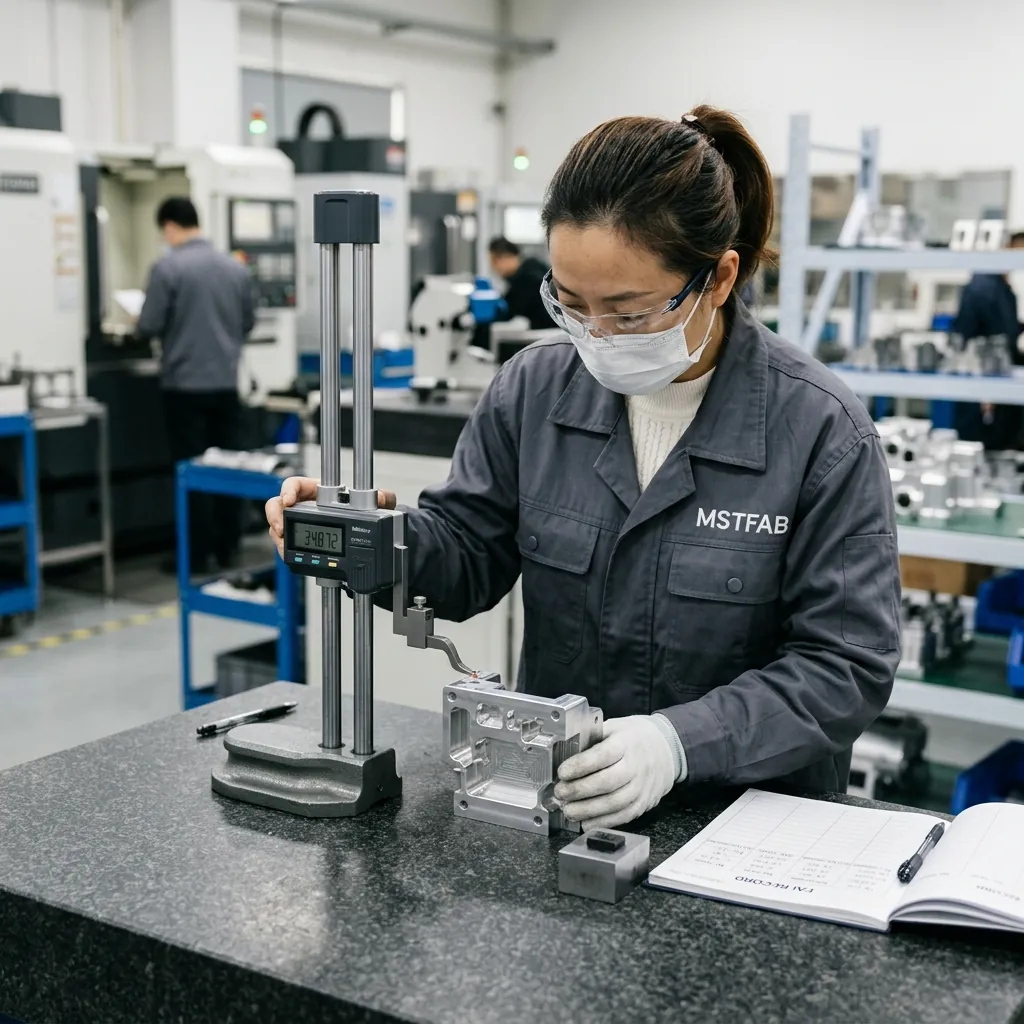
A pilot batch is not simply a larger prototype order. It is the first test of whether the process can be repeated.
One prototype may look perfect because it received extra attention from engineering. A pilot batch helps confirm whether the same result can be achieved across multiple parts without relying on luck, manual correction, or heroic effort. (Learn more about low-volume production stability).
Step 5: Control Laser Cutting, Bending, and Welding
Custom metal parts are often made through several connected processes.
CNC Bending: Springback means metal naturally moves slightly back toward its flat shape after bending. In short, metal occasionally has its own opinion. For combined cutting and bending, see custom sheet metal cutting and bending services.
Welding: Heat can affect flatness, squareness, and hole positions. A welded frame can be strong and still be unusable if it does not remain square. For specific controls, see welded sheet metal fabrication services.
Step 6: Confirm Hardware Before Finishing
Many metal parts are not complete until hardware is installed (PEM nuts, hinges, latches, etc.).
Powder coating inside threads may stop screws from fitting. Grounding points may need bare metal contact. A common mistake is treating hardware as a final detail. It is not. Your final assembly team should not need to become part-time metal surgeons.
Step 7: Plan Packaging Before the Production Order Is Finished
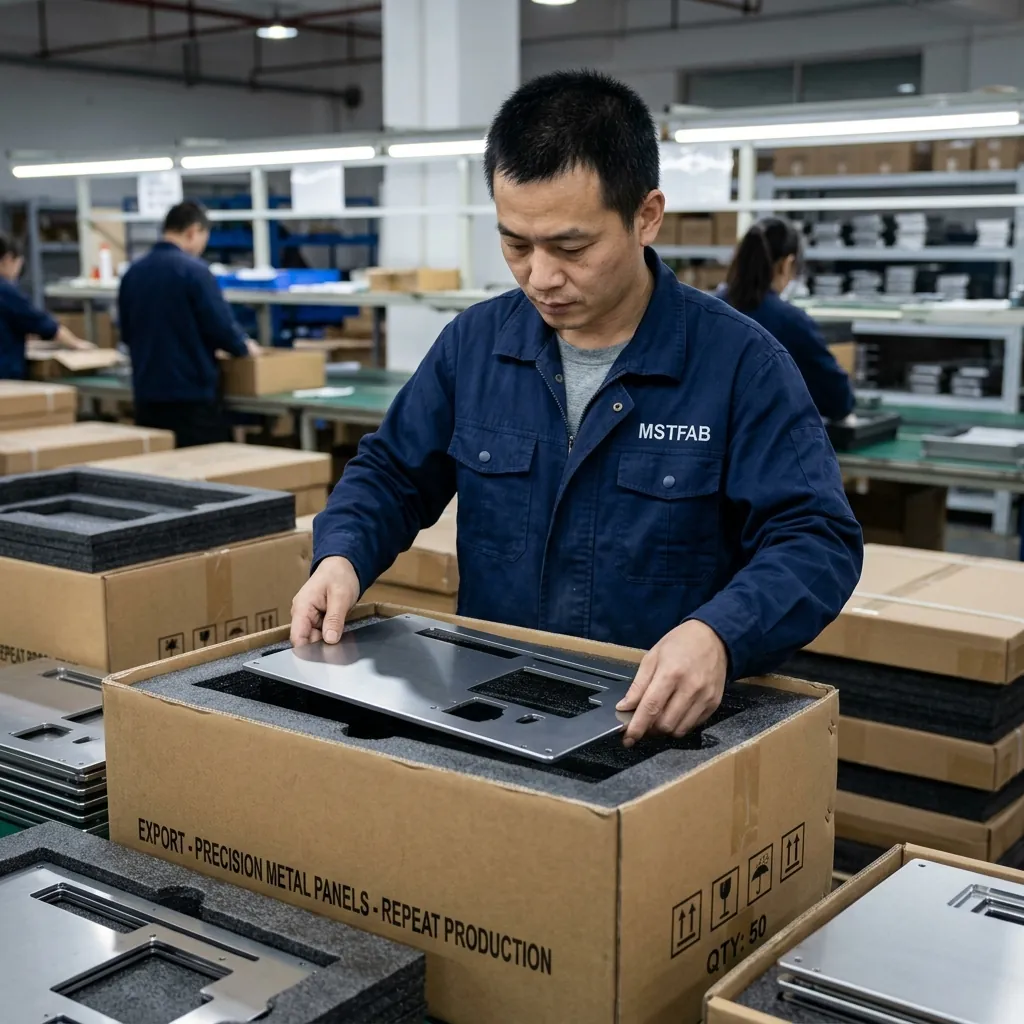
A part can pass inspection at the factory and still arrive damaged. Packaging should be planned during the project review, not five minutes before the shipment leaves the factory.
A beautiful metal part that arrives scratched is still a failed result.
How to Compare Prototype-to-Production Quotes
Do not compare quotes using unit price alone. Compare the complete production scope.
A lower quotation may include only flat laser cutting. Another quotation may include bending, welding, hardware, finishing, inspection, packing, and export preparation. Those are not the same manufacturing scope. For RFQ preparation, see how to get an accurate sheet metal fabrication quote.
Frequently Asked Questions
What is the difference between prototype and pilot production?
A prototype is mainly used to verify design, fit, function, material, and appearance. A pilot batch is used to verify whether the approved manufacturing process can be repeated consistently before regular production begins.
Why should I test a prototype in the real assembly?
A part may look correct on its own but fail when installed with wiring, connectors, motors, covers, seals, fasteners, or other components. Real assembly testing helps identify these risks early.
Start Your Prototype-to-Production Metal Parts Project
A successful project is not only about producing one good-looking prototype.
It is about building a stable manufacturing route that supports the next prototype, the pilot batch, the production order, and the repeat order after that.
Send your drawings, material requirements, prototype quantity, pilot quantity, surface finish details, tolerance notes, and application information through the MSTFAB quotation page.
Because the best prototype is not the one that only looks good on a table. It is the one that makes production easier, safer, and more predictable.
Complete OEM Sheet Metal Fabrication Capabilities
Review our full-service manufacturing route, combining DFM, cutting, forming, welding, and premium finishing under one roof.
Prototype validation begins with precise cutting. MSTFAB provides laser-cut prototype blanks ensure flat patterns are dimensionally accurate before bending, welding or finishing.
 WeChat Contact
 WhatsApp Me Directly