
Premium Design Requires Premium Execution
In modern industrial design, brass is chosen for one primary reason: uncompromising visual authority. Whether it is a luxury architectural panel or a high-end medical equipment bezel, a scratched surface or a distorted bend instantly destroys the product’s value. Brass in OEM design is not just about material selection—it is about partnering with a fabricator capable of executing flawless precision brass fabrication and protecting that finish from the factory floor to your assembly line.
Brass in Modern OEM Design
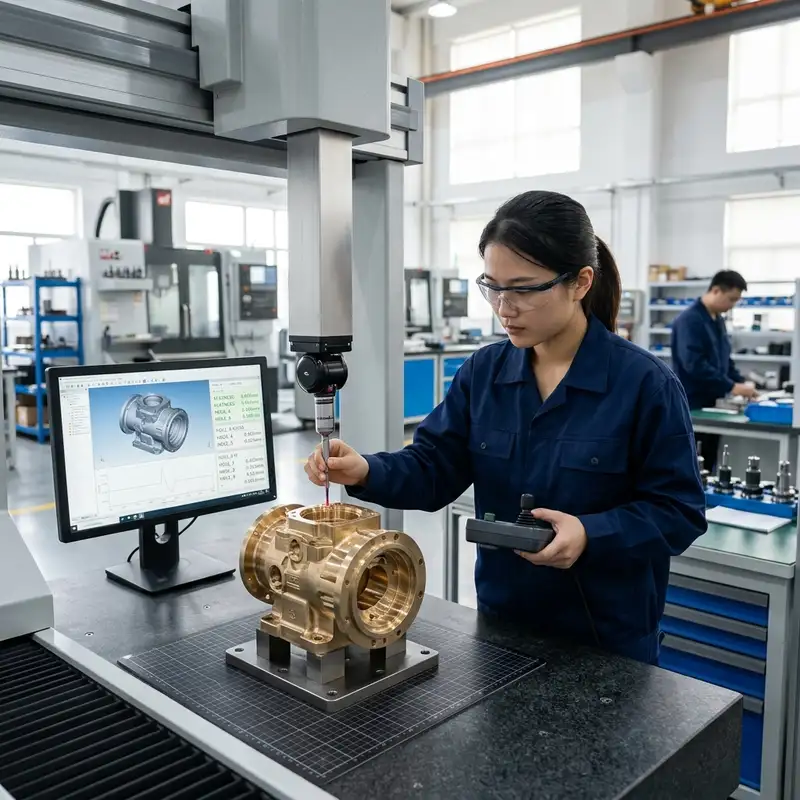
Brass has firmly established itself as a cornerstone material for modern OEM products that demand both robust mechanical function and exceptional aesthetic value.
You will find it in luxury commercial fixtures, premium equipment control panels, aesthetic medical devices, and high-fidelity electrical components. The warm gold tone of brass instantly elevates a product above standard painted steel or aluminum, projecting an image of durability, precision, and high-end engineering.
However, realizing that design intent requires extreme manufacturing control. Brass is softer than carbon steel, meaning it scratches easily during tooling. It is highly sensitive to welding heat. If the sheet metal fabrication process is not strictly managed, your premium material investment will turn into expensive scrap.
Why OEM Designers Choose Brass
OEMs specify brass when standard materials fail to deliver the required visual or functional impact. The primary drivers include:
- Unmatched Visual Identity: A warm, organic metallic hue that cannot be perfectly replicated by powder coating or anodized aluminum.
- Exceptional Machinability: Certain alloys (like C360) cut faster and cleaner than almost any other metal, ideal for custom metal parts.
- Natural Antimicrobial Properties: Inherently hostile to bacteria, making it highly valuable in premium medical and aesthetic equipment.
- 100% Recyclability: A highly sustainable material choice that retains its metallurgical value indefinitely.
The True Cost of Sustainability: Do It Right the First Time
While brass is infinitely recyclable, relying on recycling to cover manufacturing mistakes is terrible engineering practice. A poorly fabricated brass part that cracks on the press brake wastes not only the material, but the energy, labor, and machine time invested in it.
For OEM procurement teams, true sustainability means achieving a 0% rejection rate. This is accomplished through relentless DFM (Design for Manufacturability) reviews, selecting the correct materials, and enforcing strict handling protocols to protect the soft metal from tooling marks.
Metallurgical Precision: Matching the Alloy to the Process
A drawing that simply calls out “Brass” is a critical failure in the quotation stage. The exact copper-zinc ratio determines whether the part will succeed or shatter during manufacturing. For a deep dive, see our brass alloy selection guide.
| Brass Alloy | Primary Design Application | Manufacturing Reality |
|---|---|---|
| C260 (Cartridge Brass) | Bent brackets, stamped panels, decorative covers. | High ductility; excellent for CNC bending and laser cutting. |
| C360 (Free-Machining) | Threaded inserts, CNC turned fittings, precision housings. | Contains lead for fast machining; will crack if bent. |
| C464 (Naval Brass) | Marine hardware, outdoor architectural elements. | Resists saltwater corrosion; much harder to form than C260. |
Surface Finishing: Defining the Final Value
For premium OEM products, a dimensionally accurate part is useless if the surface finish is compromised. Brass naturally oxidizes (patinas) when exposed to air and human touch.
If your design intent is for the product to age organically, raw brushed brass is perfect. However, if the design requires the part to remain permanently bright and gold-like, the surface must be aggressively protected immediately after polishing.
- Mirror Polishing: Creates a flawless, highly reflective surface, but highlights every microscopic scratch.
- Directional Brushing: Provides a modern satin look that hides minor handling marks.
- Clear Protective Lacquer: Mandatory for preventing oxidation and maintaining a bright finish in commercial environments.
Heat, Joining, and Assembly Alternatives
Welding brass is notoriously difficult due to zinc vaporization, which causes porosity and dark discoloration at the joint. For highly decorative OEM parts, thermal joining should often be avoided.
During our DFM review, we frequently recommend redesigning welded brass assemblies into interlocking formed structures, utilizing hidden mechanical fasteners, or employing structural adhesives. If the surface must remain visually perfect, the joining method must not introduce extreme heat.
Execute Your Brass OEM Designs Flawlessly
Brass is an expensive material that leaves no room for manufacturing errors. Upload your 3D STEP and 2D PDF drawings to MSTFAB today. Our engineering team will verify your alloy selection, confirm bending feasibility, and deliver a factory-direct quotation for premium brass fabrication.
Related engineering guide: Before releasing a drawing for quotation, review our guide to reading sheet metal drawings for thickness, bend notes, hole dimensions, tolerance callouts, and manufacturability checkpoints.
FAQ: Brass in OEM Design
Why must I specify the exact brass alloy on my drawing?
Because different alloys behave radically differently. If you specify C360 for a bent part, it will crack on the press brake. If you specify C260 for a highly threaded part, machining costs will skyrocket due to poor chip formation.
How do you protect polished brass parts during shipping?
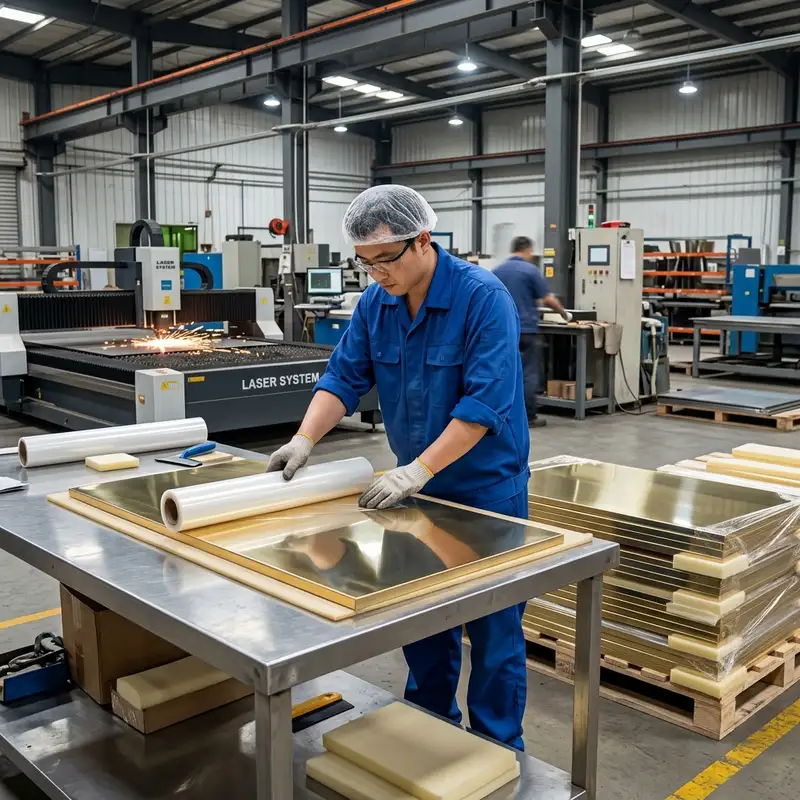
Brass is soft and scratches easily. We apply heavy-duty protective film immediately after polishing, and utilize custom foam inserts and separated packaging layers to ensure parts never touch each other during transit.
Is it a good idea to weld decorative brass panels?
Generally, no. Welding brass requires high heat that vaporizes the zinc, causing permanent dark discoloration that is very difficult to polish out. We recommend using hidden mechanical fasteners or interlocking bends for aesthetic parts.
CNC sheet metal bending services
MSTFAB provides CNC press brake bending services for precision sheet metal parts, enclosures, brackets and OEM assemblies.
 WeChat Contact
 WhatsApp Me Directly