
Brass Demands Metallurgical Respect
Brass is not carbon steel. It is a highly sensitive copper-zinc alloy that severely punishes poor manufacturing practices. If your fabricator applies too much heat during welding, the zinc vaporizes, leaving behind brittle, porous joints and severe discoloration. If the wrong alloy grade is forced through a press brake, the outer radius fractures instantly. True precision brass fabrication requires uncompromising DFM review, strict thermal management, and an obsessive focus on surface quality.
Precision Brass Fabrication for Custom OEM Parts
Brass delivers a premium, warm metallic aesthetic, exceptional electrical conductivity, and natural corrosion resistance. This makes it a highly sought-after material for luxury architectural panels, high-end equipment housings, electrical contactors, and premium custom metal parts.
However, treating brass like standard steel is a fast track to expensive scrap. The sheet metal fabrication of brass components requires a specialized engineering approach.
MSTFAB provides factory-direct precision brass fabrication for OEM clients who refuse to compromise on visual quality or structural integrity.
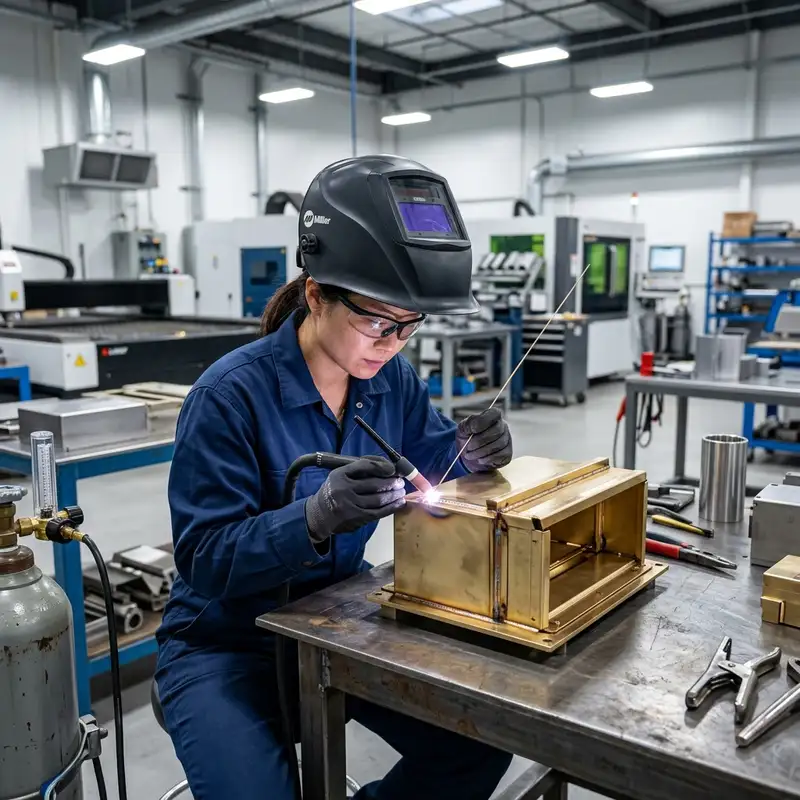
The Heat Control Challenge (TIG Welding Brass)
Joining brass structures is one of the most difficult disciplines in metalworking. Because brass contains a high percentage of zinc (which has a much lower melting point than copper), excessive heat during TIG welding or brazing causes the zinc to literally boil and vaporize (dezincification).
This results in:
- Porosity: Microscopic holes that destroy the structural integrity of the joint.
- Severe Discoloration: Unsightly black/brown heat-tinted zones that cannot be easily polished out.
- Warping: Heat distortion that ruins the flatness of decorative custom sheet metal enclosures.
Our engineers mitigate this through advanced thermal management: minimizing weld lengths, utilizing specialized filler rods, or redesigning the assembly to use hidden mechanical fasteners and interlocking formed geometries instead of thermal joints.
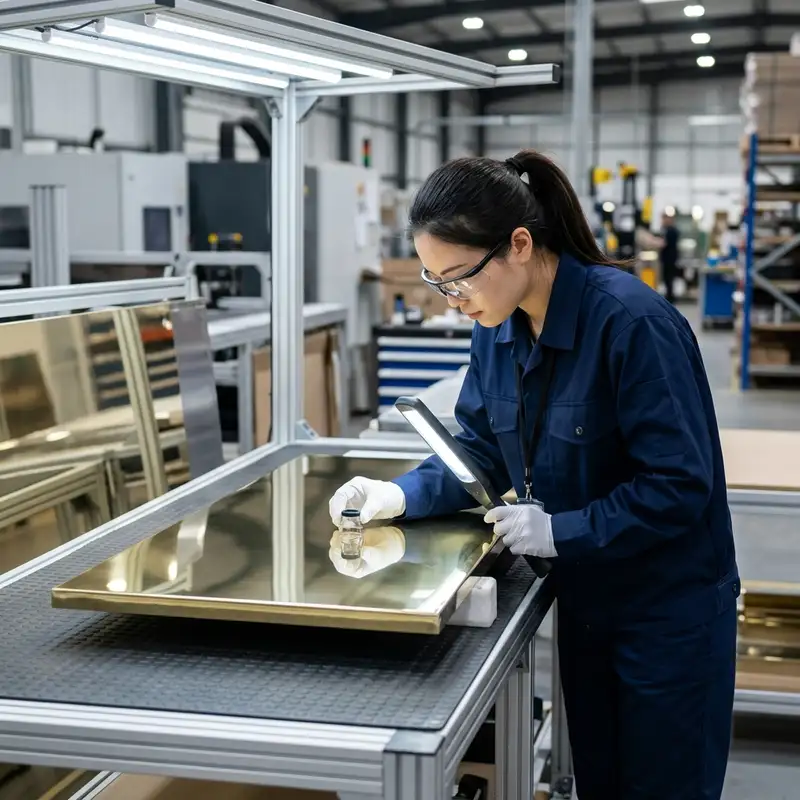
Surface Finishing: Preserving the Premium Aesthetic
When an OEM specifies brass, appearance is almost always a primary design requirement. Raw brass oxidizes quickly, developing a dark patina. If this is not the intended architectural effect, the surface must be aggressively protected.
| Surface Finish | Application & Visual Effect |
|---|---|
| Directional Brushing (Satin) | Provides a modern, matte aesthetic. Excellent at hiding minor fingerprints on equipment housings. |
| Mirror Polishing (#8 Finish) | Creates a brilliant, highly reflective gold-like surface. Mandatory for luxury retail and high-end aesthetics. |
| Clear Protective Lacquer | A transparent, UV-resistant coating applied post-polishing to permanently halt oxidation and patina. |
| Anti-Oxidation Plating | Specialized electro-chemical treatments for brass electrical contacts to ensure long-term conductivity. |
Alloy Selection: The Foundation of Success
You cannot simply write “Brass” on a 2D PDF drawing. You must specify the exact alloy in your materials requirement, because the metallurgical differences dictate the manufacturing process.
- C260 Cartridge Brass: Features the highest ductility. It is the absolute mandatory choice for sheet metal laser cutting, CNC bending, and deep drawing.
- C360 Free-Machining Brass: Contains lead for flawless CNC turning and milling. It has near-zero ductility and will crack instantly if you attempt to bend it.
Clear Manufacturing Boundaries (IP Protection)
Your product designs and proprietary system logic are your most valuable intellectual property.
MSTFAB is strictly a mechanical hardware manufacturer. We do not require your source code, your electronic schematics, or your internal logic architecture. You provide the 3D mechanical design; we provide the flawless physical brass components, fully finished and ready for your final assembly.
Manufacture Premium Brass Parts with Confidence
Stop risking your budget on fabricators who do not understand brass metallurgy. Upload your 3D STEP and 2D PDF drawings to MSTFAB today. Our engineering team will execute a rigorous DFM audit and deliver a factory-direct quotation for flawless precision brass fabrication.
FAQ: Precision Brass Fabrication
Can you TIG weld brass sheet metal?
Yes, but it requires highly specialized heat control to prevent zinc vaporization (dezincification), which causes porosity and discoloration. Where possible, we recommend designing brass enclosures with interlocking bends and hidden mechanical fasteners to preserve the surface finish.
How do you prevent brass from tarnishing or oxidizing?
Raw brass will naturally oxidize and darken over time. To maintain a bright, polished, or brushed finish permanently, we apply a high-quality clear protective lacquer or clear powder coat immediately after the final polishing stage.
Which brass alloy should I specify for a bent sheet metal bracket?
You must specify C260 (Cartridge Brass). It has the necessary ductility to withstand CNC press brake forming without fracturing on the outer radius. Never specify C360 for a bent part.
sheet metal welding services
MSTFAB provides TIG and MIG sheet metal welding services for structural assemblies, cabinets, frames and OEM metal components.
 WeChat Contact
 WhatsApp Me Directly