
Use this page for OEM build-to-print expectations
OEM fabrication is not the same as buying a finished product. The buyer owns the design intent; the factory owns the manufacturing route, process control and evidence that the metalwork matches the approved print.
This page has been separated from the basic definition guide so Google and buyers can see the job of this article clearly. The useful question here is not “can someone make metal parts?” It is: what should a buyer check before sending drawings, approving a quote or moving into production?
- Send approved drawings instead of screenshots.
- Clarify who owns each design revision.
- Ask the supplier to flag DFM problems before quoting.
- Define inspection records expected with shipment.
- Separate metalwork scope from electrical or system assembly.
| 1 | Send approved drawings instead of screenshots. |
| 2 | Clarify who owns each design revision. |
| 3 | Ask the supplier to flag DFM problems before quoting. |
| 4 | Define inspection records expected with shipment. |
| 5 | Separate metalwork scope from electrical or system assembly. |
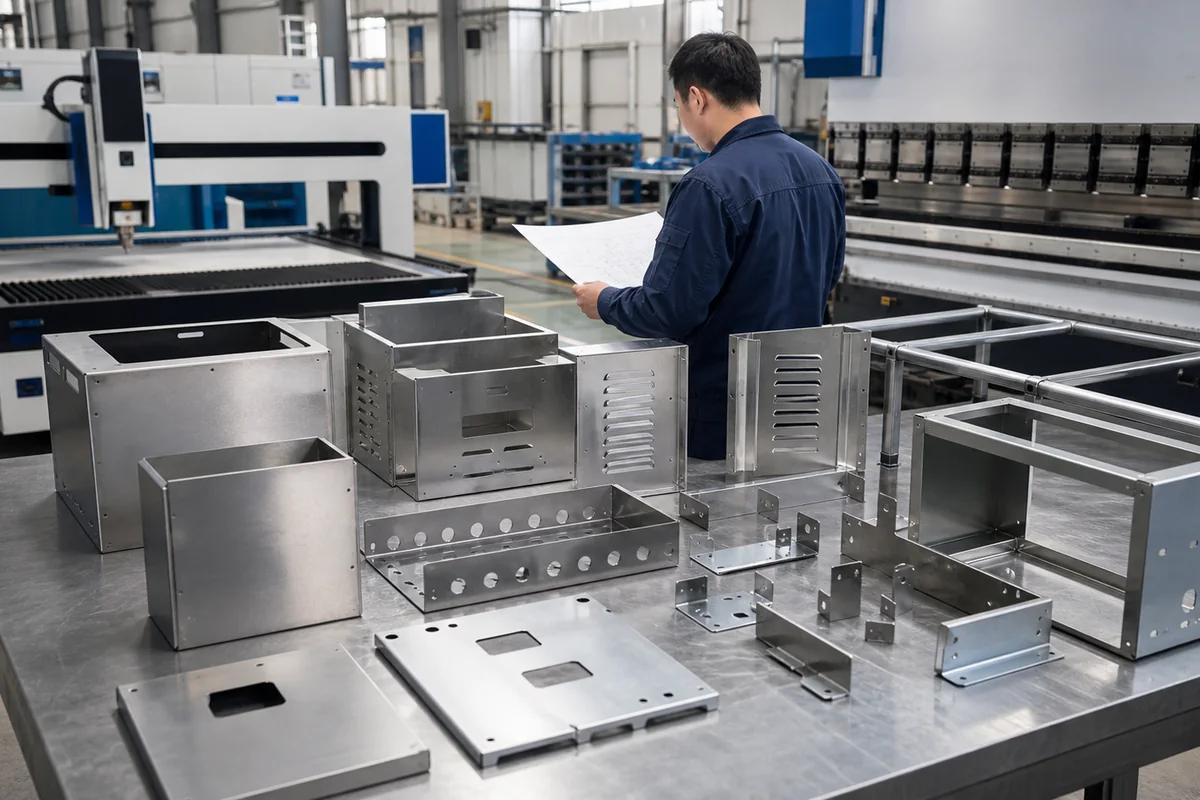
OEM sheet metal fabrication sounds like a big phrase, but the buyer version is simple: you own the product design, and a factory turns your drawings into repeatable metal parts. The trick is making sure the supplier is quoting the right scope. MSTFAB makes empty sheet metal enclosures, panels, brackets, chassis parts and welded frames. We do not ship a finished product with electronics hiding inside like a surprise party nobody asked for.
Quick Answer: What Is OEM Sheet Metal Fabrication?
OEM sheet metal fabrication is the process of making custom metal parts from a buyer-owned drawing or product design. It usually includes DFM review, material selection, laser cutting, CNC bending, welding, hardware insertion, surface finishing, inspection and packing. The output is metal parts such as enclosure shells, chassis covers, brackets, access panels, doors and frames. MSTFAB does not supply electronics, batteries, wiring harnesses, software, motors, complete machines or finished products.
What MSTFAB Makes, and What We Do Not Make
This is the first trust issue to solve. A metal fabrication quote is not the same as a finished product quote. If the scope is fuzzy, the price will be fuzzy too, and fuzzy prices have a talent for becoming expensive.
| Buyer Requirement | MSTFAB Scope | Not Included |
|---|---|---|
| Custom enclosure or box | Empty sheet metal enclosure shells, covers, doors, panels and mounting features | Electronics, wiring, displays, batteries or complete device assembly |
| Mechanical metal parts | Brackets, frames, chassis plates, guards, access covers and welded sub-assemblies | Motors, sensors, bearings, hydraulics, software or finished equipment |
| Production support | DFM feedback, first article checks, batch inspection, finish control and export packing | Product certification for an assembled electrical or mechanical system |
| OEM repeat batches | Repeatable parts made to your approved drawing revision and purchase order scope | Design ownership transfer, retail packaging or branded finished goods |
When OEM Fabrication Makes Sense
Your Part Is Not Standard
If the enclosure, bracket or panel must fit your machine, board layout, mounting frame or installation space, catalog metalwork usually gets awkward fast.
You Need Repeat Batches
OEM buyers care about the second, third and tenth batch, not just one pretty prototype. Repeatability is where a supplier proves itself.
The Drawing Must Control the Work
Material, thickness, tolerance, finish and critical dimensions should be controlled by the print, not by the supplier’s mood on quote day.
You Want Visible Scope
Good quotes separate cutting, bending, welding, hardware, finishing, inspection and packing. A one-line price is not simple. It is a sealed box.
Step 1: RFQ and Drawing Review
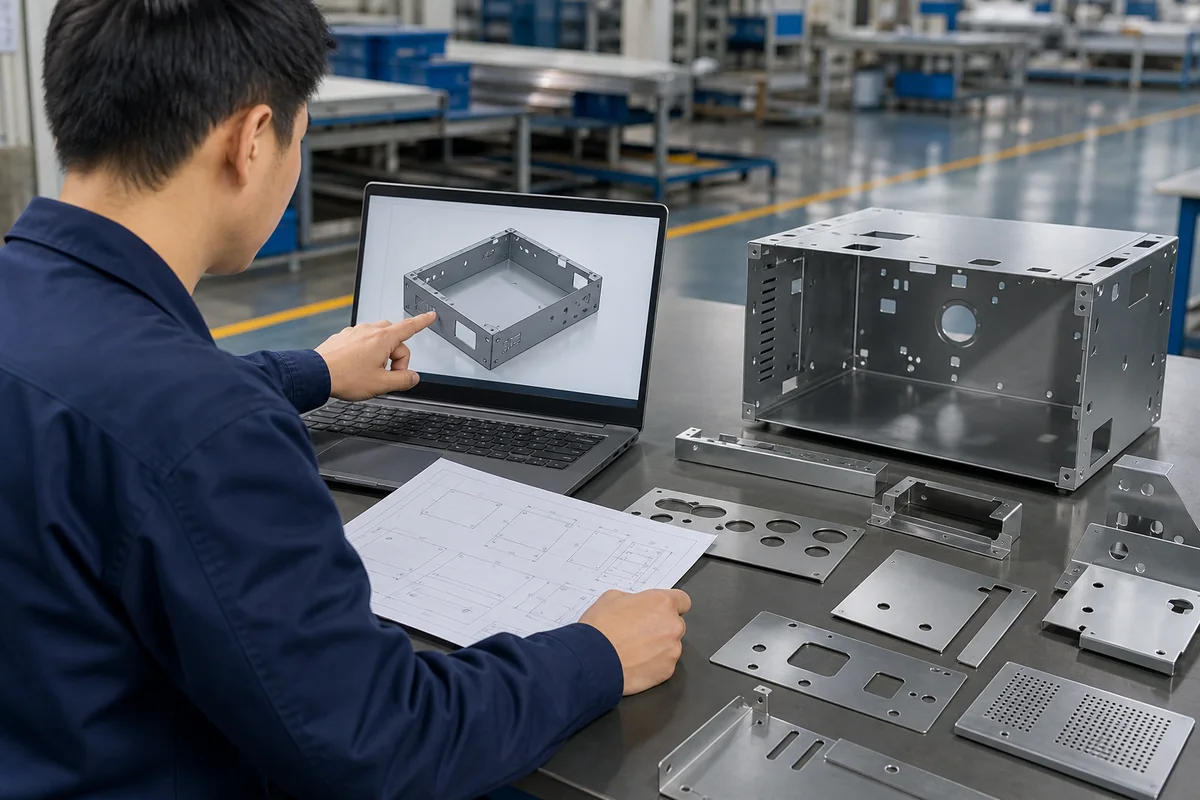
A useful RFQ includes 2D drawings, 3D files, material grade, thickness, finish, quantity, annual forecast and critical dimensions. If a supplier quotes without asking about missing tolerances, finish or packaging, they may be guessing. Guessing is fine for lunch. It is less charming in production.
Step 2: DFM Before Cutting Metal
DFM review checks whether the part is easy, risky or expensive to make. Bend radius, hole-to-edge distance, weld distortion, PEM hardware, finish masking and packaging all matter. This is where a reliable supplier should push back before the part becomes scrap with a shipping label.
That pushback should remain a documented question until the buyer approves a revision. The build-to-print sheet metal supplier guide explains how to separate released design requirements, quote assumptions, DFM recommendations and approved manufacturing scope without transferring design ownership.
For more detail, use our sheet metal DFM guide and sheet metal tolerance guide.
Step 3: Cutting and Bending
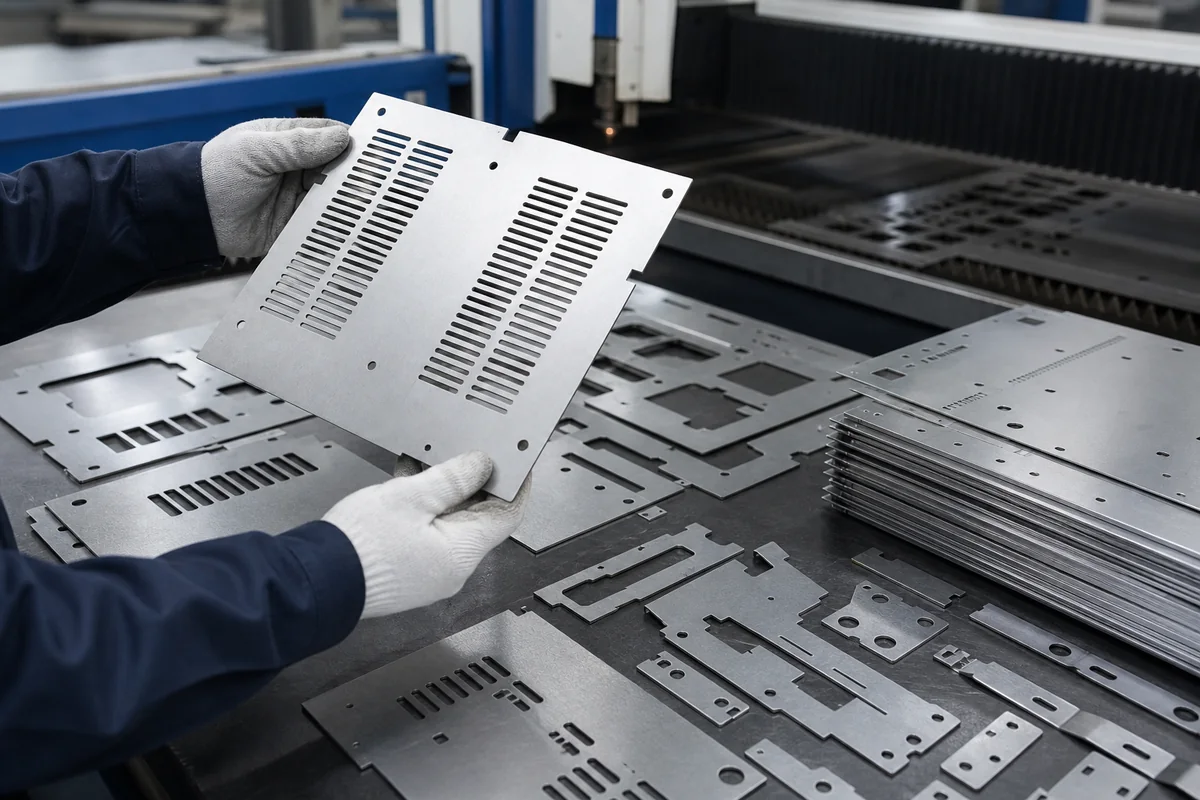
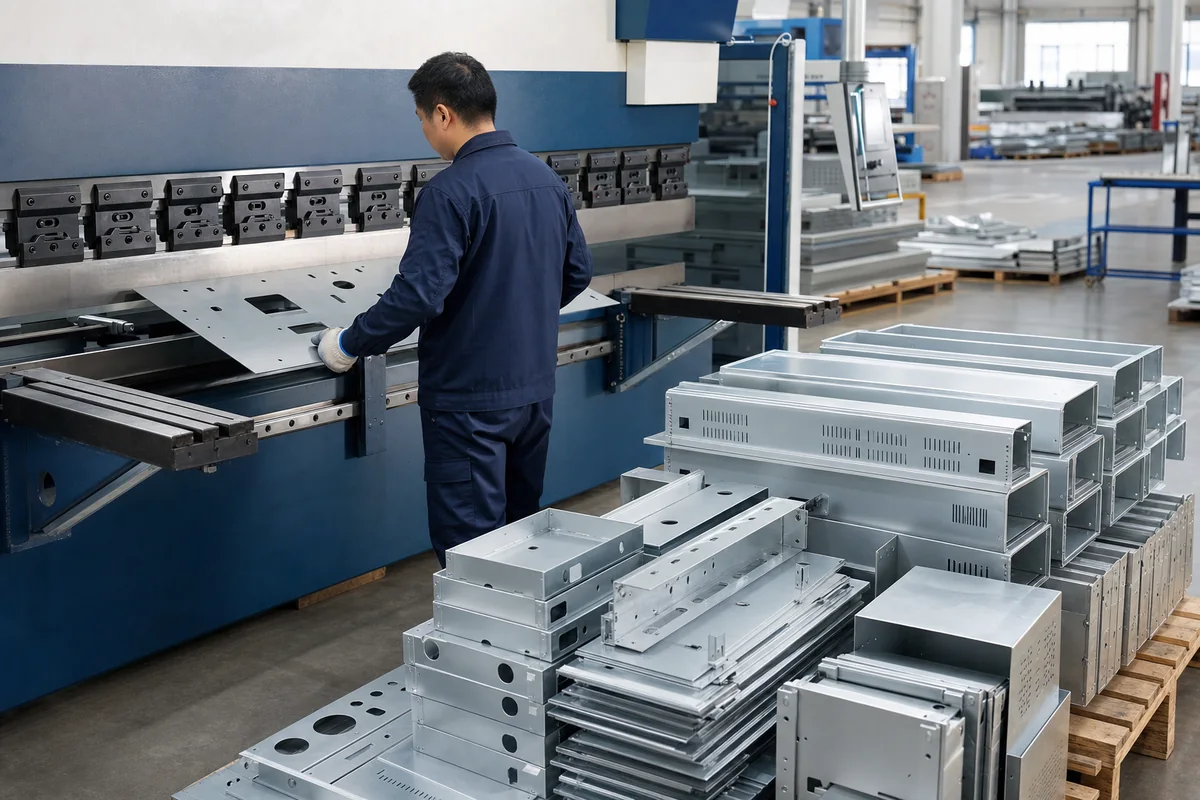
Laser cutting makes the flat blanks: holes, slots, vents, profiles and mounting features. CNC bending turns those blanks into usable enclosure shells, chassis covers and brackets. Cutting accuracy gets the part started; bending accuracy decides whether it actually fits.
Step 4: Welding, Hardware and Finish
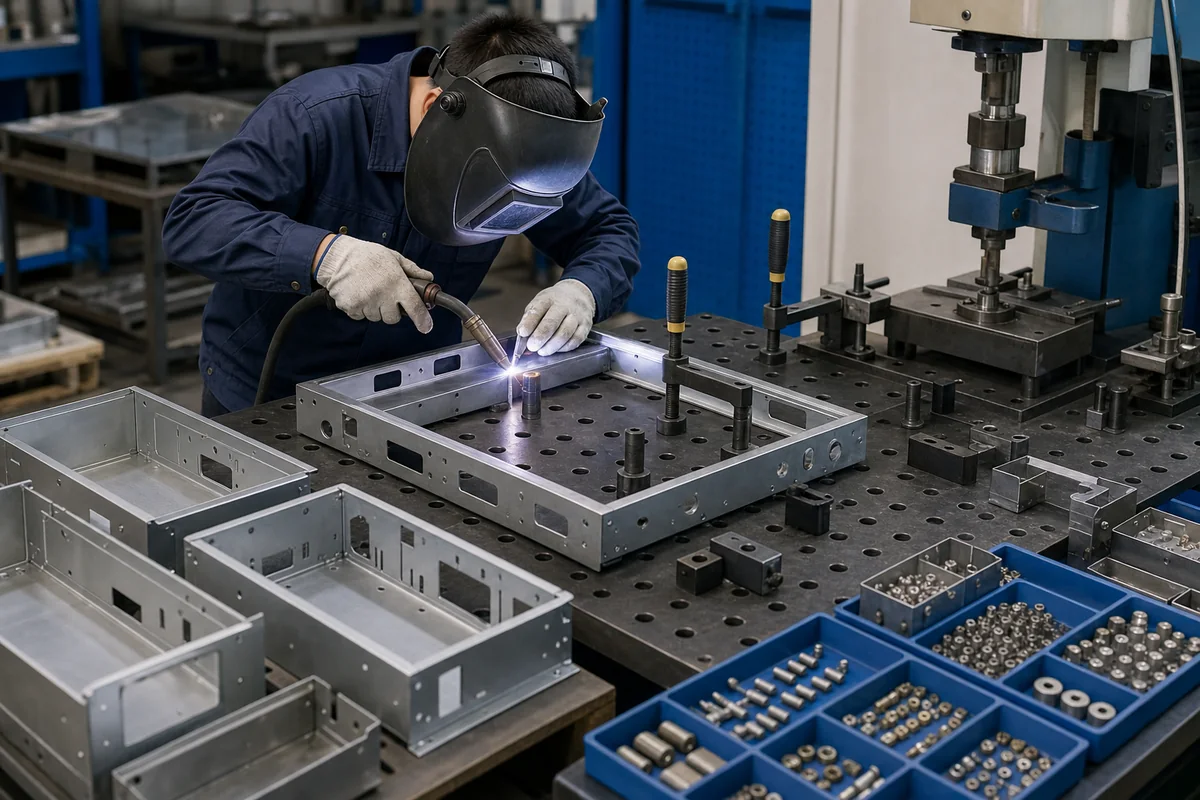
Welding creates frames, boxes and stronger assemblies, but heat can pull parts out of square. PEM nuts, studs and threaded inserts need correct hole sizes and pull-out control. Finish adds protection and appearance, but powder coat or plating can also change fit if masking is ignored. The small features are usually where the loudest complaints are born.
Trust Table: What OEM Buyers Should Ask For
| Risk | What to Ask the Supplier | Why It Protects You |
|---|---|---|
| Wrong scope | Confirm the quote is for sheet metal parts only, not finished products. | Prevents surprise arguments over electronics, wiring, software and final assembly. |
| Wrong revision | Freeze drawing number, revision, material, finish and quantity before production. | A correct part made from the wrong drawing is still wrong. |
| Hidden quote gaps | Ask for material, cutting, bending, welding, hardware, finish, inspection and packing as visible lines. | Makes quotes comparable and exposes the missing costs early. |
| Batch drift | Ask for first article inspection and repeat batch control method. | Stops one good sample from becoming a messy production run. |
| Assembly problems | Mark fit-critical dimensions, PEM hardware, hole patterns and cosmetic surfaces. | Focuses inspection on the features that decide whether the part installs cleanly. |
| Shipping damage | Request foam separators, carton limits, pallet plan and packing photos. | Good metal parts can still arrive scratched or bent if packing is treated as an afterthought. |
Step 5: Inspection and Packing
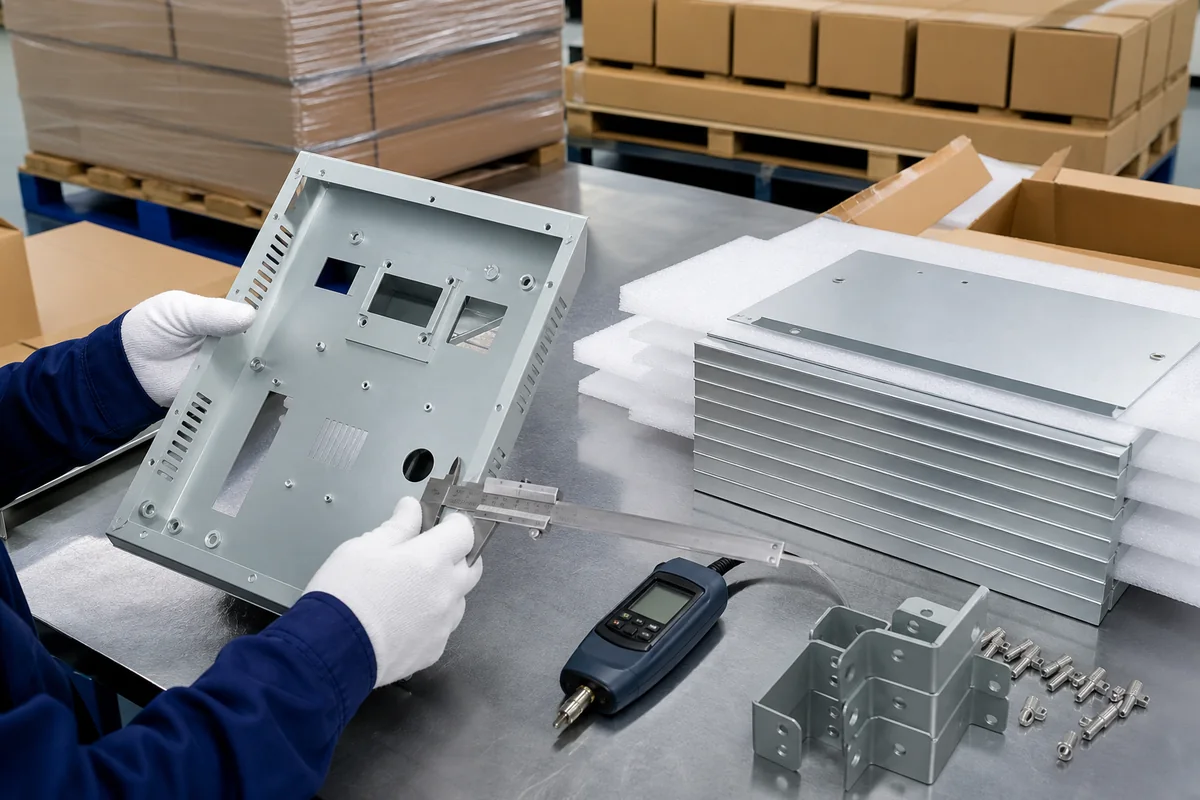
Inspection should cover critical dimensions, hole patterns, bend angles, squareness, hardware installation, finish quality and cosmetic surfaces. Packing should protect edges, coatings and large flat panels. If your supplier treats packaging like leftover cardboard art, your receiving team will know.
How to Send a Better OEM RFQ
- Send 2D drawings and 3D files with the same revision name.
- State material grade, thickness, finish, quantity and annual forecast.
- Mark critical dimensions instead of tightening every dimension.
- Define cosmetic side, masking areas, hardware and packaging requirements.
- Separate sheet metal fabrication scope from components your team will install later.
- Ask what is included, what is excluded and which Incoterm the quote uses.
For quote clarity, read how to read a sheet metal quote. For finish selection, use the sheet metal finishing guide. Useful links should help the buyer decide, not decorate the page.
Common Mistakes to Avoid
- Asking for a finished product when the supplier is quoting only metal fabrication.
- Sending a 3D file without a 2D drawing or tolerance table.
- Leaving material as “steel” instead of naming the grade and thickness.
- Ignoring coating thickness around threads, holes and tight slots.
- Skipping first article approval before repeat batch production.
- Comparing an EXW overseas quote with a delivered local quote like they are the same thing.
Frequently Asked Questions
What does OEM sheet metal fabrication mean?
It means manufacturing custom sheet metal parts from the buyer’s approved design or drawing. The supplier fabricates parts such as enclosures, panels, brackets and chassis components according to the print.
Does MSTFAB make finished products?
No. MSTFAB makes the sheet metal fabrication portion only: empty enclosures, panels, brackets, chassis parts, covers, doors and welded frames. Electronics, batteries, wiring, software, motors, complete machines and finished products are not included.
What should I send for an OEM sheet metal quote?
Send 2D drawings, 3D files, material grade, thickness, finish, quantity, annual forecast, critical dimensions, cosmetic surface notes and packaging requirements.
Why is DFM review important?
DFM review catches bend, hole, weld, hardware, finish and packaging risks before production. It is cheaper to fix a drawing than to remake a batch.
How do I know if a supplier is reliable?
A reliable supplier clarifies scope, asks drawing questions, separates quote line items, offers DFM feedback, confirms first article inspection and shows how parts will be packed before shipment.
Need OEM Sheet Metal Parts?
Send MSTFAB your drawings, material, finish, quantity and revision details. We will quote the sheet metal fabrication scope clearly: empty enclosures, panels, brackets, chassis parts and welded frames.
 WeChat Contact
 WhatsApp Me Directly