
There is a special kind of MedTech heartbreak: the enclosure looks perfect, the prototype fits the trolley, the demo photos are beautiful, and then sterilization validation walks in wearing steel-toe boots. The coating blisters. The label fades. The seam traps moisture. The box was never designed for the one process that makes it safe to reuse.

Quick answer: A sterilization-compatible medical equipment enclosure is a sheet metal shell designed around the exact sterilization method and claimed cycle count: ETO, gamma or e-beam radiation, or moist heat/steam. For MedTech startups, the practical job is to specify 304/316 stainless, passivation or electropolish where needed, validated coatings, drainable geometry, no blind pockets, durable marking and inspection evidence before pilot production. MSTFAB manufactures the custom medical enclosure shell and sheet metal parts from your drawings. We do not make finished medical devices or validate the complete sterilized device.
Scope note for buyers: This article is about empty sheet metal medical equipment enclosure shells, panels, brackets, doors, mounting plates and related metalwork. Sterilization validation, biocompatibility, clinical use, labeling claims and regulatory submission belong to the device manufacturer and its validation partners. MSTFAB supports the metal design with manufacturable geometry, material traceability and inspection evidence.
Sterilization is a design input, not a finishing note
Sterilization is not something you sprinkle on the drawing at the end like salt on fries. It is heat, moisture, pressure, radiation or gas attacking the whole enclosure: metal, coating, gasket, seam, label, fastener and drain path. If the enclosure shell was designed only to look clean, validation may teach the team a lesson with a very unfriendly invoice.
The better approach is boring in the best possible way: choose the sterilization method early, define reusable or single-use, decide the claimed cycle count, and then build the sheet metal enclosure around that reality.
Pick the sterilization method before picking the finish
| Method | What it does to enclosure metalwork | Buyer design note |
|---|---|---|
| ETO | Gentler on many materials, but gas needs a path in and residues need a path out. | A fully sealed box can trap residue. Plan vents, removable panels, membranes or aeration paths with the validation team. |
| Gamma or e-beam | Stainless metal is usually stable, while polymers, labels, adhesives and some coatings may change. | Check gaskets, windows, labels, coating color and marking durability, not just the metal grade. |
| Moist heat or steam | Hard on coatings, seals, trapped condensate, aluminum finish and weak seams. | Favor stainless, drainable geometry, rounded internal corners and finish routes proven by testing. |
Material choice: why stainless keeps showing up
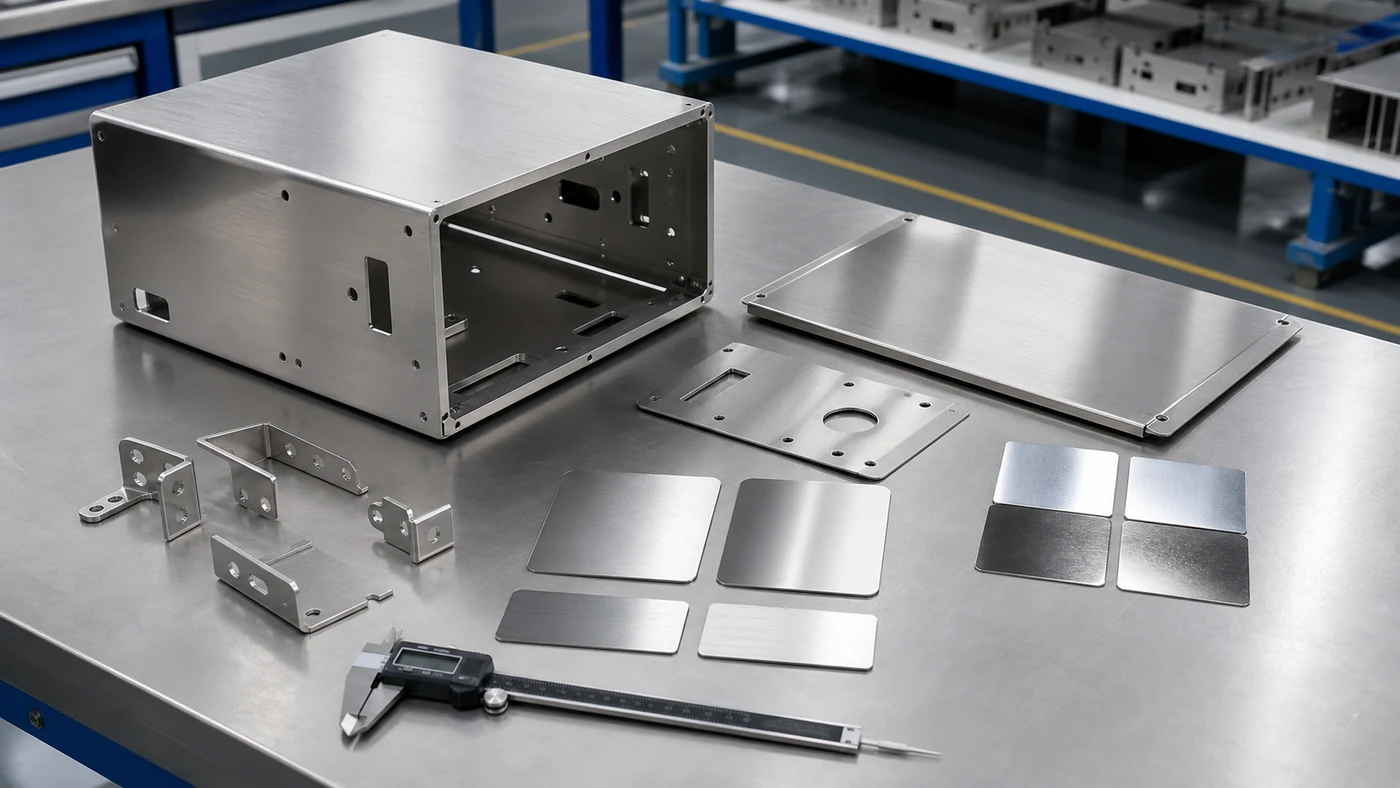
For sterilizable enclosure shells, 304 and 316 stainless are the usual starting point because they resist corrosion, tolerate cleaning and can be passivated or electropolished without adding a coating layer that later becomes the weak link. 316 stainless is often chosen where chlorides, aggressive cleaners or harsher environments enter the story.
Aluminum can be useful when weight matters, but repeated steam cycles and finish stability need careful validation. Powder-coated steel may work for some cleaning and ETO/radiation scenarios, but the coating must be proven against the actual sterilization route and cycle count. “Looks clean” is not a validation method, though it has fooled many prototypes.
Cleanability by design
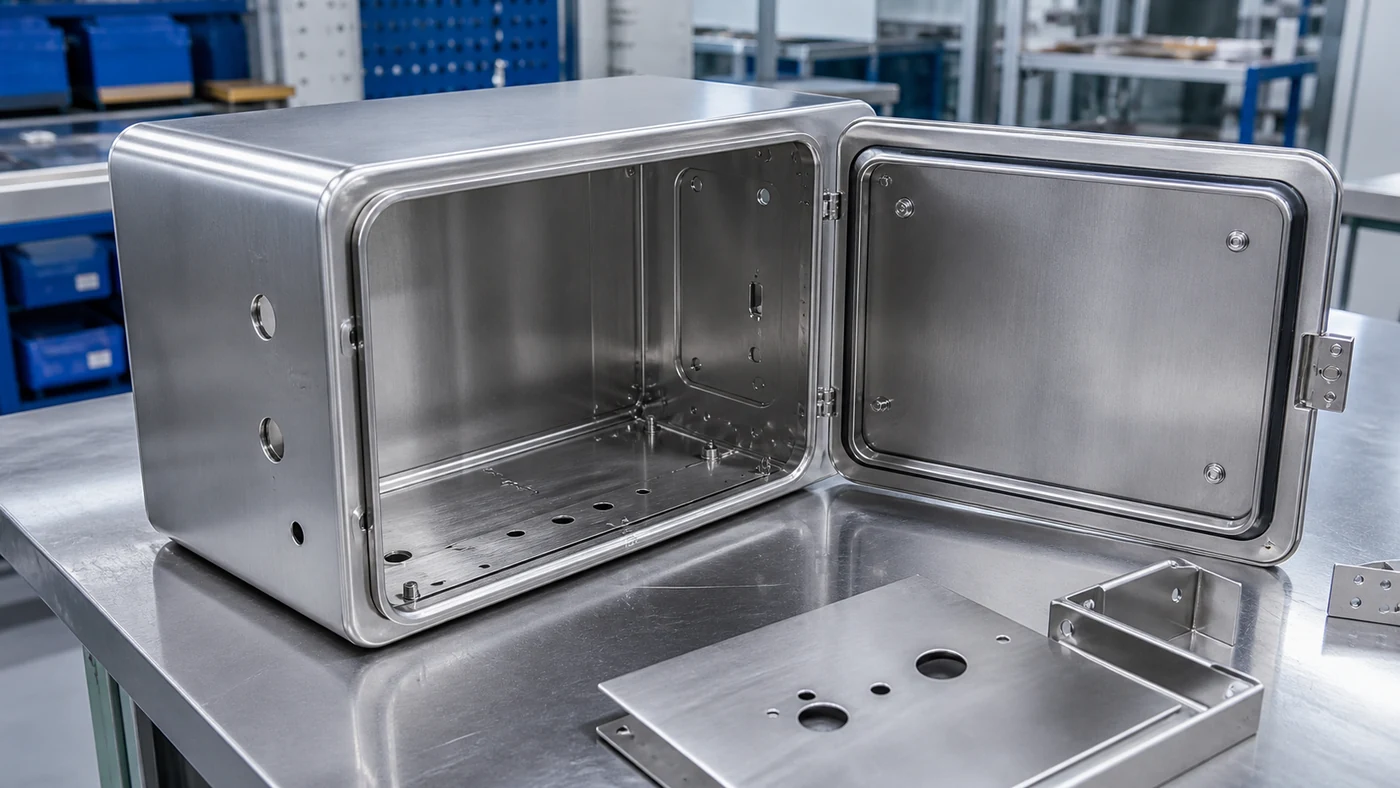
A cleanable medical enclosure shell tries to avoid tiny hiding places. Blind pockets, sharp internal corners, crevice-heavy seams and trapped condensate are the design equivalent of leaving snacks out for trouble. Use drain holes where the device orientation allows, generous internal radii, accessible fasteners, smooth weld cleanup and removable panels where inspection matters.
ETO needs a gas path
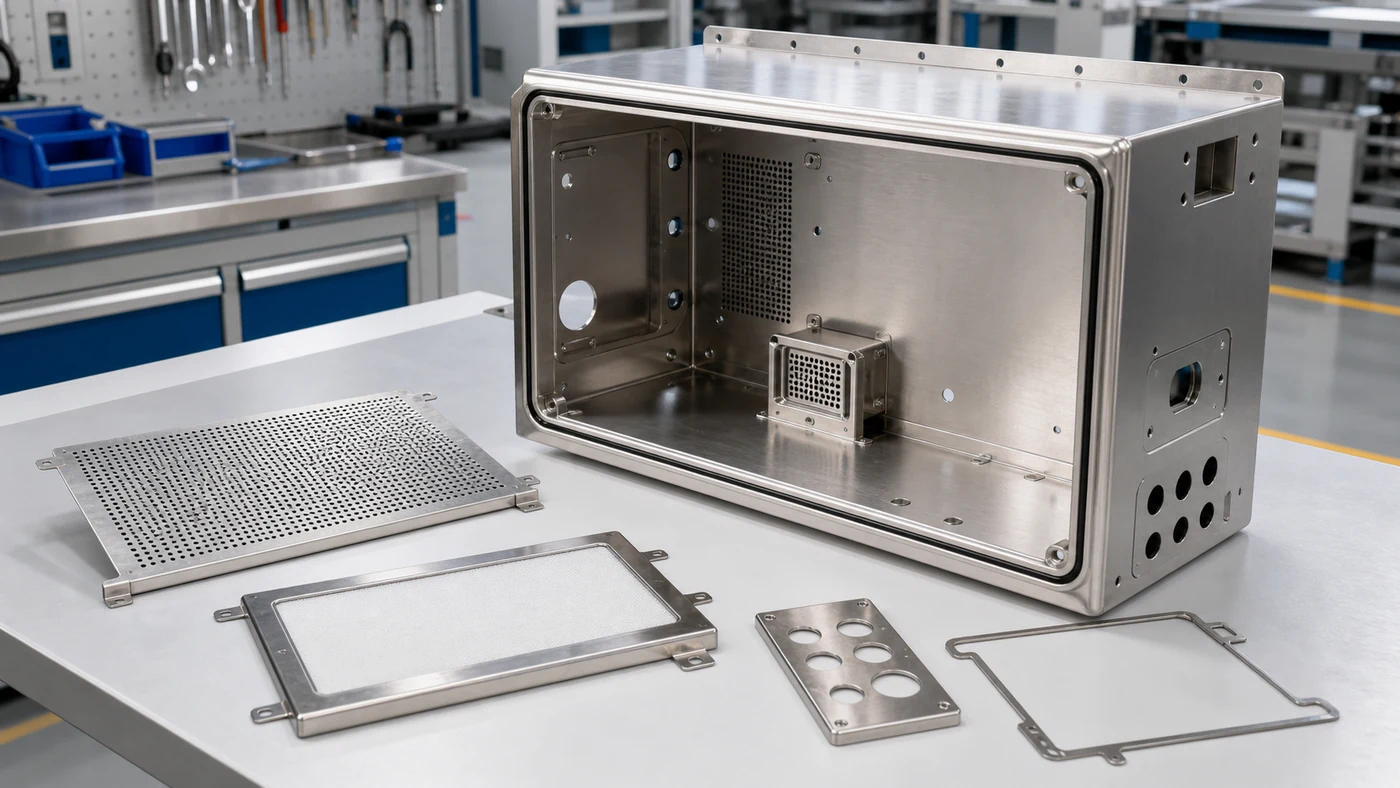
ETO can be friendly to many materials, but it is not magic fog that politely exits a sealed enclosure on request. The metalwork must let gas enter and residues leave during aeration. That may mean vented panels, temporary openings, membrane frames, removable covers or a validated process fixture. The exact answer belongs to the sterilization validation team, but the sheet metal design must leave them something usable.
Steam punishes lazy geometry
Steam cycles are where small enclosure sins become loud. Condensate trapped in a corner can drive corrosion or staining. Coatings can lift at edges. Labels can peel. Seals can take compression set. Stainless helps, but geometry still matters: drain paths, relief features, smooth corners and stable gasket land are all part of the metal design.
Finish and marking: validate the weak links
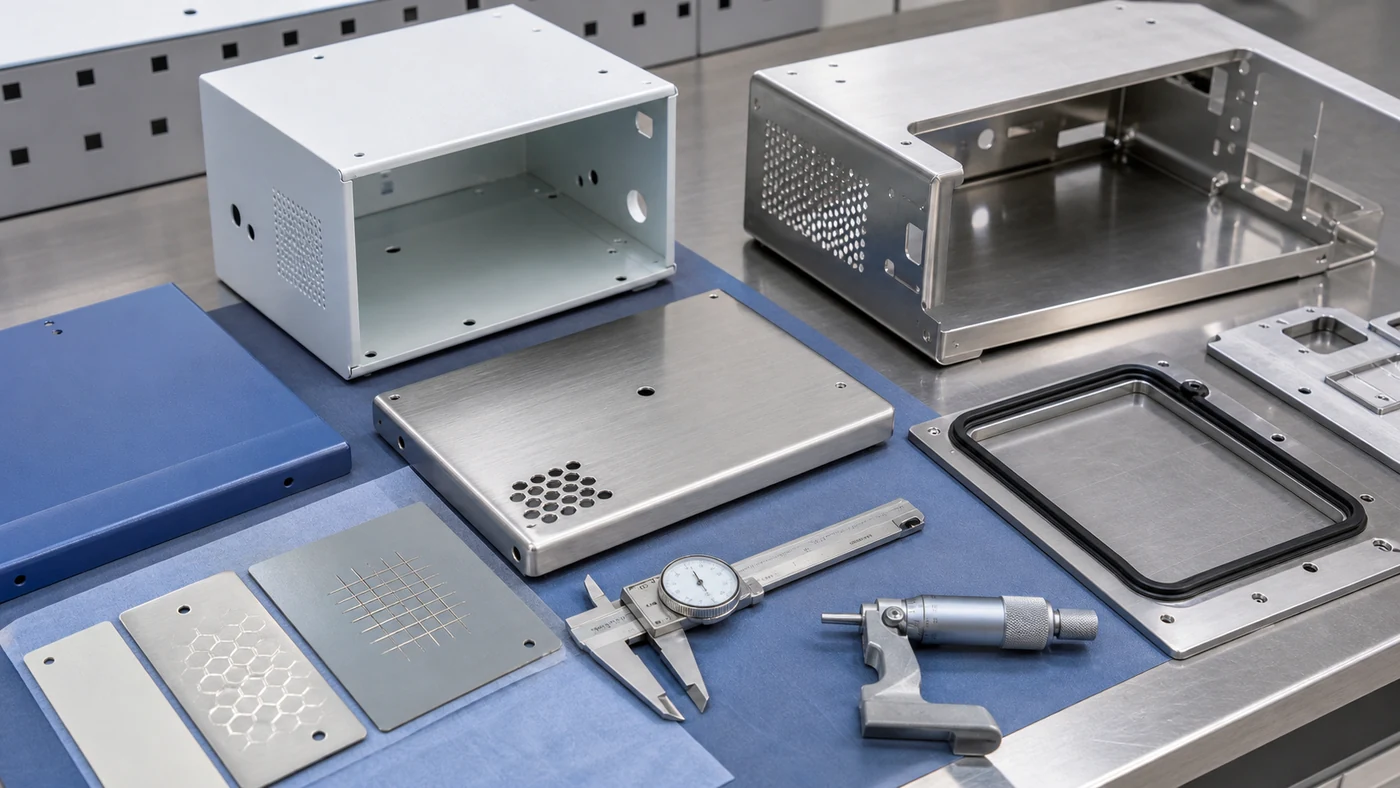
Passivation and electropolishing are popular for stainless because there is no decorative coating layer waiting to fail. Powder coating and paint can be appropriate in some cases, but they need adhesion and appearance checks before and after the chosen sterilization exposure. Marking is the same story: laser marking or validated printing beats a heroic sticker that gives up after cycle ten.
Standards to discuss with your validation team
| Topic | Current reference to discuss | How it affects sheet metal buyers |
|---|---|---|
| ETO sterilization | ISO 11135:2014 | Ask how gas entry, aeration and residue limits affect enclosure vents, openings and removable covers. |
| Radiation sterilization | ISO 11137-1:2025 | Review coatings, labels, gaskets and plastic inserts because radiation often challenges non-metal items more than stainless steel. |
| Moist heat or steam | ISO 17665:2024 | Plan stainless surfaces, drainable geometry, condensate escape, coating validation and repeated-cycle evidence. |
| Coating adhesion | ASTM D3359-23 | Use pre/post exposure tape-test evidence when coatings are expected to survive cleaning or sterilization cycles. |
Re-sterilization cycle count: the forgotten number
A single-use device may see sterilization once. A reusable device may see dozens or hundreds of cycles. That changes everything. The enclosure that smiles after cycle one may show staining, gasket aging, marking fade or coating loss by cycle fifty. The RFQ should state the claimed cycle count so the supplier can avoid suggesting a finish that survives the catalog page but not the real life.
What MSTFAB can fabricate
- 304 and 316 stainless medical equipment enclosure shells from buyer drawings.
- Doors, covers, removable panels, gasket flanges, hinge plates and latch reinforcement.
- Drain holes, vent panels, cable-entry plates, mounting plates and internal brackets.
- Rounded-corner sheet metal geometry, weld cleanup and cleanable access features.
- Passivation, brushing, electropolish or powder-coating coordination based on the drawing and finish plan.
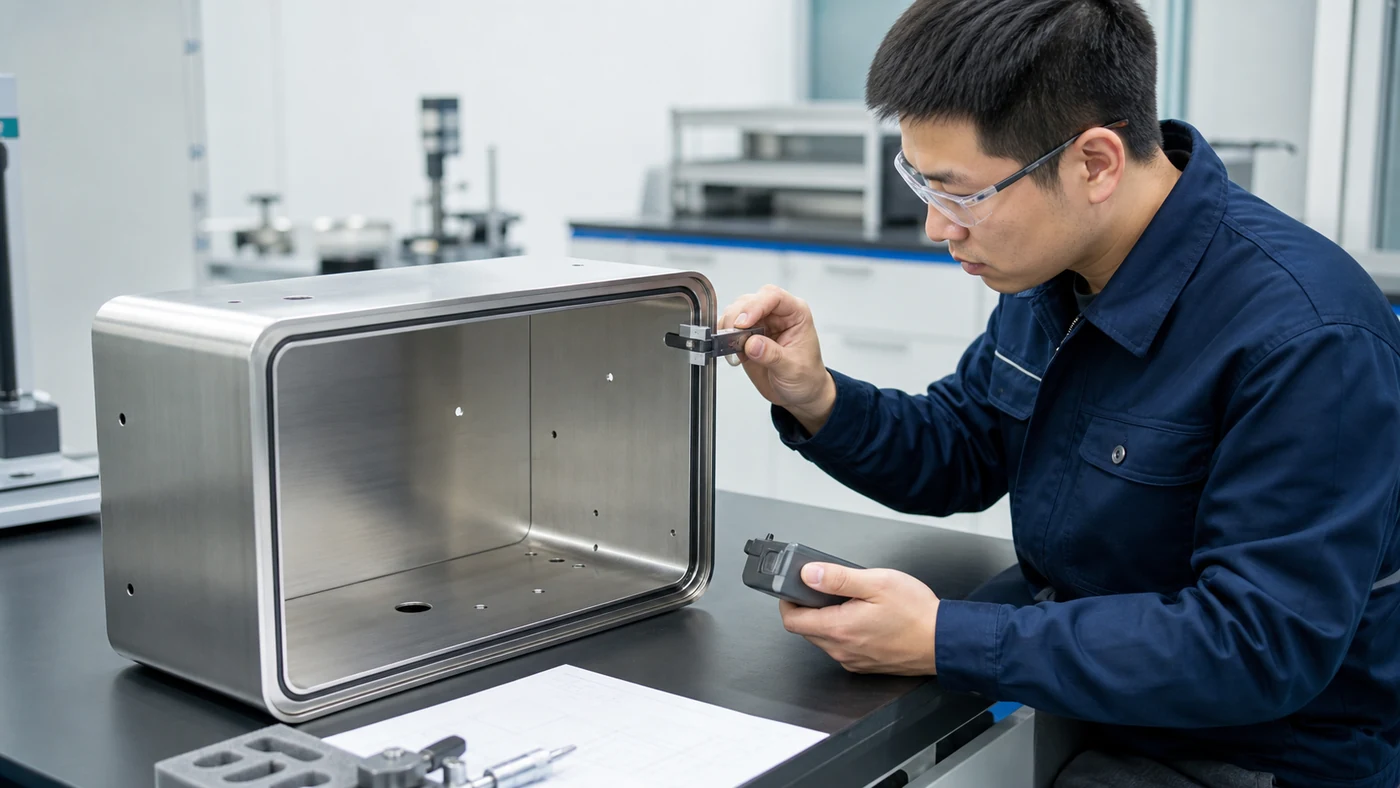
- Dimensional inspection, finish inspection photos, material traceability records and export packaging evidence.
What MSTFAB does not provide
MSTFAB does not make complete medical devices, electronics, software, biological validation, sterilization services, clinical claims, regulatory submissions or final device approval. We fabricate the sheet metal enclosure shell and related mechanical metalwork. Your device team owns the sterilization method, cycle claim, validation protocol and regulatory file.
That boundary is not a weakness. It is exactly how good sourcing avoids confusion. The buyer brings the medical device requirements; the fabricator turns the metal portion into something measurable, repeatable and less likely to embarrass everyone in validation.
Buyer trust table
| Buyer risk | What to ask before PO | Good evidence |
|---|---|---|
| Wrong scope | Are you quoting the sheet metal shell only or a finished medical device? | Quote separates enclosure body, panels, hardware, finish, inspection and packaging from device functions. |
| Sterilization mismatch | Which sterilization method and cycle count did the finish route assume? | Material/finish declaration and buyer-approved validation assumptions. |
| Trapped residue or moisture | Where do gas, air, steam, condensate or cleaning fluid enter and leave? | Vent, drain, relief or removable-cover geometry shown on the drawing. |
| Coating failure | How will coating adhesion or marking durability be checked? | Pre/post exposure sample plan, ASTM D3359-style adhesion evidence where applicable. |
| Grade confusion | How do you prove 304/316 stainless grade and finish route? | Material certificate, revision-controlled drawing, photo inspection and traceable batch record. |
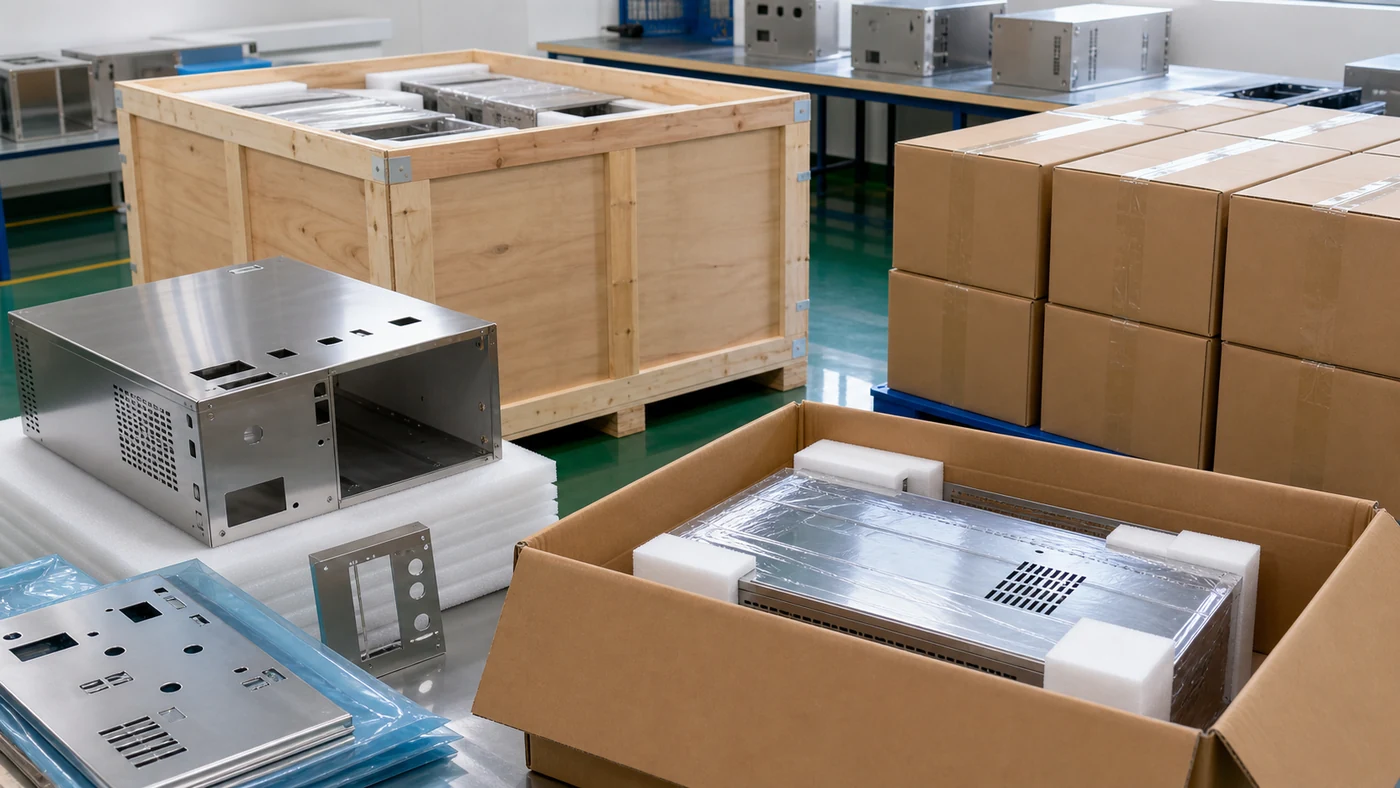
| Shipping damage | How are brushed surfaces, corners and gasket lands protected? | Foam separation, film protection, carton/crate plan and packing photos. |
Red flags in a sterilization-compatible enclosure RFQ
- The supplier says “medical grade” but cannot name material grade, finish route or inspection evidence.
- The drawing has no sterilization method, no reusable cycle count and no cleaning orientation.
- Powder coat is chosen for looks with no adhesion or post-cycle check plan.
- ETO is planned but the enclosure is fully sealed with no gas path discussion.
- Steam is planned but the design has blind pockets, trapped condensate zones and weak label choices.
- The quote shows finished medical devices instead of fabricated sheet metal enclosure shells.
- Material traceability is vague: “stainless” is not enough.
Related buyer resources
FAQ
Does MSTFAB make sterilized finished medical devices?
No. MSTFAB manufactures custom sheet metal medical equipment enclosure shells, panels, doors, brackets and related metalwork from buyer drawings. Sterilization validation and final medical device approval belong to the device manufacturer and its validation partners.
Which material is safest for reusable sterilizable enclosure shells?
304 or 316 stainless steel is usually the safest starting point for reusable medical enclosure shells, especially when passivation or electropolishing is specified. 316 is often chosen when chlorides, aggressive cleaners or harsh environments are expected.
Can powder-coated medical enclosures survive sterilization?
Sometimes, depending on the method and cycle count. Powder coating may be more realistic for ETO or radiation than repeated steam, but the coating must be validated with adhesion and appearance checks before and after exposure.
Why does ETO need enclosure vents or gas paths?
ETO needs to penetrate and later aerate out. A fully sealed enclosure can trap gas or residues, so the device team should define venting, removable covers, membranes or process fixtures before the metal design is frozen.
What should be added to the RFQ?
Name the sterilization method, reusable or single-use status, claimed cycle count, material grade, finish route, drain or vent requirements, marking method, critical dimensions and inspection evidence required before shipment.
 WeChat Contact
 WhatsApp Me Directly