
The Short Answer
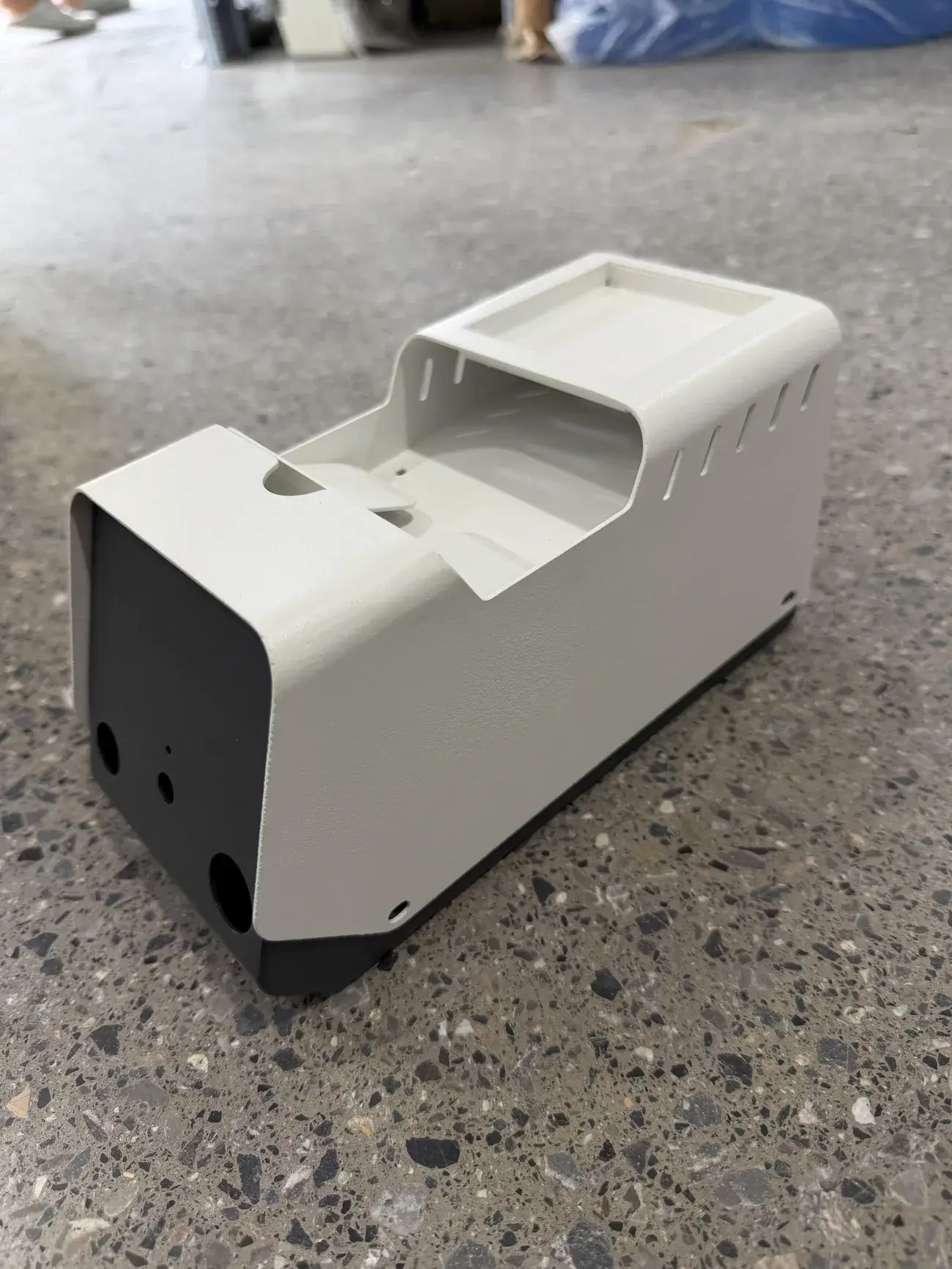
Qualifying a medical device enclosure supplier requires auditing seven operational gates before awarding production: clear empty-shell manufacturing scope under an ISO 9001 quality system, 3D/2D DFM revision control, EN 10204 3.1 + XRF material traceability, Class A disinfectant-resistant surface finishes, CMM cutout/bezel verification, hardware retention testing, and zero-damage export crating.
Explore this guide
Supplier Qualification Framework
Why Medical Device Enclosure Shells Need a Dedicated Supplier Audit Checklist
General industrial sheet metal audits focus primarily on press tonnage and hourly machine rates, overlooking the failure modes that actually stall medical OEM assembly lines: inconsistent powder coat texture across mating access doors, unmasked grounding studs, sharp internal cable routing edges, or warped display bezel flanges.
A structured medical enclosure supplier audit evaluates whether a contract fabricator controls three foundational pillars from prototype through recurring batch builds:
Revision-Locked CAD & Routing Discipline
Every laser nest, press brake setup sheet, PEM hardware bill of materials, and masking template is tied to a specific customer drawing revision under ISO 9001 document control.
Multi-Panel Fitment & Dry-Fit Validation
Complex analyzer cabinets and mobile diagnostic carts are test-assembled in bare metal and after coating so door gaps, hinge kinematics, and seal compression are verified before shipment.
Objective Cosmetic & Metrology Standards
Replacing vague notes like “good medical finish” with quantifiable gloss units, film thickness (DFT), RAL delta-E limits, and CMM positional reports.
Audit Rule #1: Always verify that your supplier’s shop-floor traveler explicitly defines A/B/C cosmetic zones and masking callouts before raw sheets reach the laser table.
Dimensional & Mechanical Interfaces
Controlling Display Bezels, Connector Bulkheads and Self-Clinching Hardware
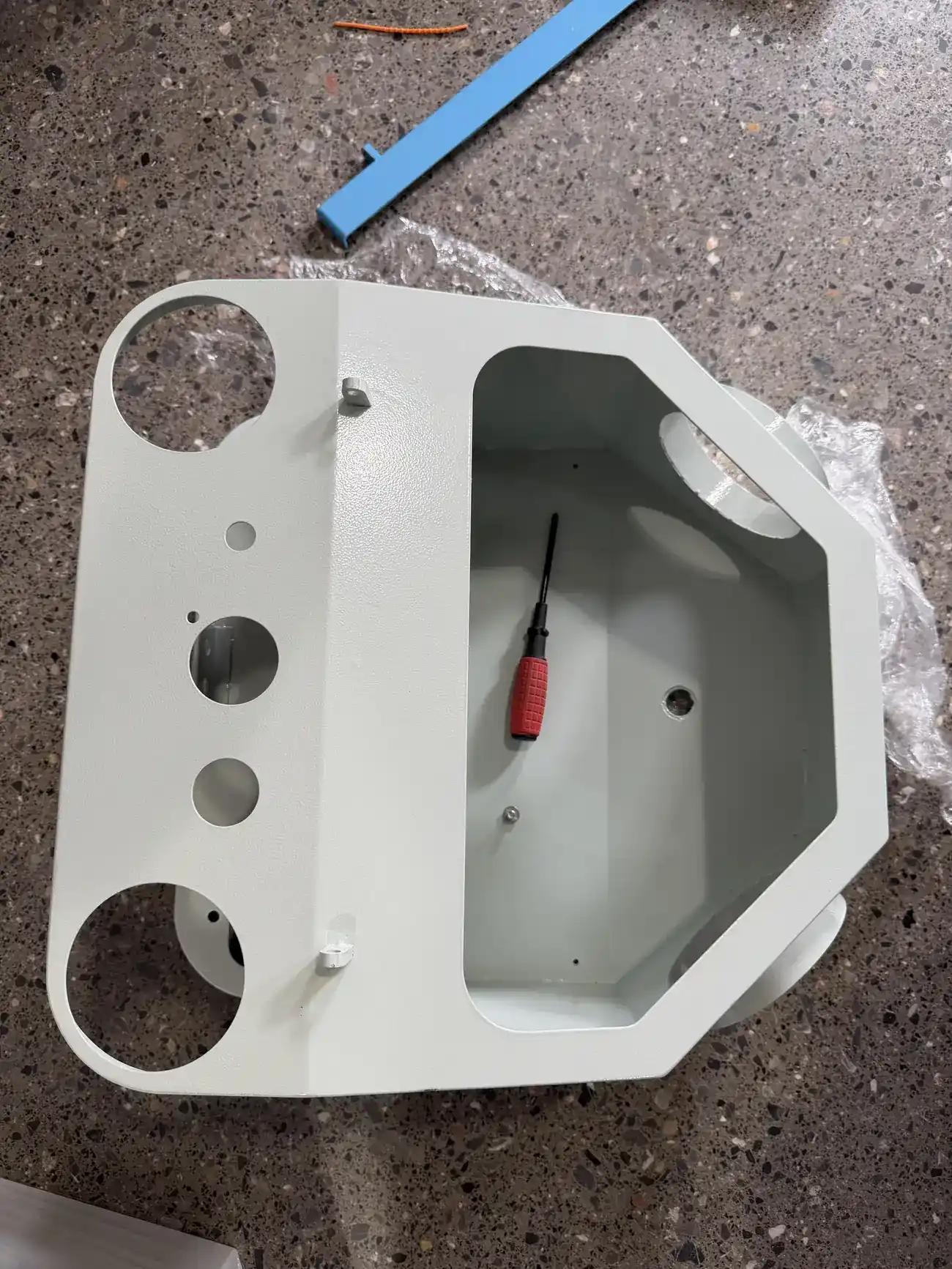
A medical device enclosure shell serves as the mechanical datum chassis for touchscreens, fluidic manifolds, power supplies, and PCB motherboards. Minor drift in bend angles or fastener perpendicularity quickly prevents drop-in sub-assembly installation.
- Touchscreen and optical window flange flatness: Controlling laser thermal stress and press brake crowning around large front-panel cutouts so elastomer gaskets seal uniformly against clinical fluid ingress.
- Rear I/O connector bulkhead registration: Cutting D-sub, USB, Ethernet, and pneumatic bulkhead port arrays within +/-0.10 mm positional tolerance relative to internal PCB standoff datums.
- PEM standoff, nut and grounding stud installation: Using calibrated pneumatic/hydraulic insertion presses with anvil depth stops so fasteners sit flush without dimpling Class A exterior skins.
- Welded cart base and caster mounting coplanarity: Fixtured TIG welding and surface-plate verification ensure four-point caster pads sit flat on hospital floors without rocking.
During pre-award audits, verify how the supplier translates your 3D STEP and 2D drawing package into calibrated press brake backgauge programs and hardware check fixtures.
Surface Engineering & Hygiene
Why Cosmetic Class A Finishes and Safe Edges Are Crucial for Medical Enclosures
Hospital clinicians and patients judge equipment quality immediately by external cabinet fit and finish, while infection-control protocols subject surfaces to aggressive chemical disinfectants.
- Seamless external TIG weld blending: corner joints are ground, polished, and conditioned through progressive grit stages so zero pinhole, undercut, or halo shows through powder coat.
- Disinfectant-resistant powder coating: multi-stage pre-treatment and controlled oven curing deliver uniform 60–100 micron film build that passes ASTM D3359 5B cross-hatch adhesion.
- Passivated 304 and 316L stainless surfaces: directional #4 brushed or bead-blasted stainless trays and worktops undergo nitric or citric passivation to eliminate free iron.
- Burr-free internal service safety: every laser-cut lightening hole, cable pass-through, and flange edge is rotary-deburred or hemmed to protect wiring harnesses and technician hands.
- Precision thread and ground masking: die-cut high-temp masking discs and silicone plugs preserve clean bare metal on protective-earth grounding pads and M-series threads.
Aligning both engineering teams on a written medical equipment enclosure cleanability and cosmetic finish standard eliminates subjective inspection rejections.
See how MSTFAB executes custom medical device enclosure fabrication →
Quality Records & Inspection Evidence
Material Traceability, Positive Material Identification and FAI Documentation
Medical OEM supplier quality engineers need auditable objective evidence accompanying every pilot and production shipment—not verbal assurances.
- EN 10204 3.1 mill certificates and XRF PMI logs: Tracing raw stainless steel, aluminum, and cold-rolled steel sheets to mill heat lots and verifying alloy chemistry on finished parts via handheld XRF analysis.
- Ballooned First Article Inspection (FAI) packages: Numbering every dimension, geometric tolerance, thread callout, and finish note on your 2D drawing and recording actual measured values.
- Coating thickness, gloss and adhesion test records: Documenting dry film thickness (DFT), 60° glossmeter readings, MEK rub cure checks, and cross-hatch tape adhesion results per batch.
- Pre-shipment dry-fit and packaging photo archive: Providing time-stamped high-resolution photos of assembled shells, masked grounding points, thread gauge checks, and export crating before dispatch.
Reviewing a supplier’s first article inspection and quality control workflow during onboarding ensures their inspection report format plugs directly into your incoming quality records.
OEM Supplier Audit Table
Medical Device Enclosure Supplier Qualification Matrix
Use this five-part audit table when qualifying a contract sheet metal fabricator for custom medical enclosure shells and cart assemblies:
Pilot Run Validation
Validating Supplier Capability Through a Structured First-Article Pilot Build
Even the most thorough desktop audit should be followed by a controlled 1-to-5 unit pilot build before authorizing recurring production batches.
Use the pilot build to lock in boundary limit samples for cosmetic weld blending and powder coat texture, verify that all internal PEM standoffs align with your actual PCBs and wire harnesses, and confirm that grounding studs meet your electrical bonding resistance targets.
Once the pilot unit passes incoming mechanical integration at your facility, those exact press brake setups, weld fixtures, and masking templates become the locked baseline for serial production.
Clear Responsibility Boundaries
Contract Fabrication Scope Versus Medical OEM Regulatory Responsibility
Establishing an unambiguous regulatory and manufacturing boundary is a core requirement of any medical supplier audit. MSTFAB operates under an ISO 9001 certified quality management system as a build-to-print manufacturer of custom metal components and empty enclosure shells.
We manufacture precision sheet metal housings, welded stainless cart frames, aluminum bezels, shielding cans, and mounting brackets strictly to customer drawings, backed by documented first article inspection and traceable material records.
Manufacturing scope: MSTFAB manufactures custom drawing-based sheet metal parts and empty enclosure shells only. We do not design or market finished medical devices, assemble clinical electronics, or hold medical device regulatory clearances; final system integration, safety testing, and regulatory certification remain entirely with the OEM.
Pre-Award Qualification Checklist
Eight-Point OEM Audit Checklist Before Awarding Medical Enclosure Tooling or Production
- Confirm ISO 9001 scope and direct factory ownershipVerify that cutting, bending, welding, and inspection occur inside an audited manufacturing facility.
- Establish A/B/C cosmetic surface zone mapsMark clinical exterior panels (Class A), secondary faces (Class B), and hidden brackets (Class C) on drawings.
- Audit DFM feedback on bends, seams and fastenersEnsure the supplier flags hole-near-bend deformation, weld corner gaps, and PEM edge distances upfront.
- Lock material heat lot and XRF PMI requirementsMandate EN 10204 3.1 mill certs and positive material identification on stainless and aluminum batches.
- Approve a dedicated grounding and thread masking mapVerify how every earthing stud, blind nut, and conductive EMI flange is masked prior to powder coating.
- Require bare-metal and coated dry-fit assemblyConfirm doors, hinges, bezels, and removable panels are test-fitted on the master frame before shipping.
- Review ballooned FAI and surface test reportsInspect 100% dimensional measurements alongside DFT thickness, gloss, and cross-hatch adhesion logs.
- Standardize clean-wipe and foam-lined export cratingRequire protective surface film, foam-compartmentalized crates, and photo sign-off before dispatch.
Running every candidate vendor through these eight verification gates protects your product launch schedule and ensures consistent clinical-grade enclosure quality.
Frequently Asked Questions on Medical Enclosure Supplier Qualification
What is the scope of MSTFAB when supplying medical device companies?
MSTFAB is a build-to-print contract fabricator of custom sheet metal parts, welded structural frames, and empty enclosure shells manufactured under an ISO 9001 quality management system. Final device assembly, electronics installation, and medical product certifications remain with the OEM.
How do you define Class A cosmetic surfaces on medical equipment enclosures?
Class A surfaces are external faces visible to clinicians and patients during normal operation. On these zones, we require seamless TIG weld blending, zero visible scratches or die marks, uniform powder coat texture and gloss, and protective PE film preservation through final crating.
What inspection documentation accompanies a first-article medical enclosure shell?
Our standard FAI package includes a ballooned 2D drawing cross-referenced to 100% dimensional inspection results, EN 10204 3.1 raw material mill certificates, XRF PMI alloy verification photos, powder coat DFT and cross-hatch adhesion logs, and high-resolution assembly/packaging photographs.
How do you ensure self-clinching PEM fasteners do not loosen or deform thin enclosure panels?
We laser-cut mounting holes to exact PEM catalog tolerances, install hardware after deburring using calibrated squeezing presses rather than impact tooling, and perform periodic push-out and torque-out verification on witness coupons.
Can MSTFAB fabricate both the heavy welded internal frame and the thin cosmetic outer skins?
Yes. Producing both the heavy-gauge welded steel/stainless structural skeleton and the formed aluminum or cold-rolled steel outer covers in the same facility allows us to dry-fit the entire enclosure shell on a master check fixture before shipment.
How quickly can we complete a supplier audit and pilot enclosure build?
Engineering DFM feedback and quotation typically take 24 to 48 hours after receiving your 3D STEP and 2D PDF files, and custom first-article enclosure shells are generally completed within 10 to 18 working days depending on surface treatment complexity.
Technical references
Technical standards and MSTFAB engineering guides for medical enclosure qualification:
Ready to Qualify a Custom Medical Enclosure Shell Partner?
Send your 3D STEP files, 2D tolerance drawings, and supplier audit checklist to MSTFAB for a comprehensive DFM review and trial-order quotation.
Request Medical Enclosure Audit & Quote →
Have a question first? caroline@mstfab.com
 WeChat Contact
 WhatsApp Me Directly