
Stainless steel electrical cabinet selection starts with exposure, cleaning, appearance and service life, not with the assumption that the shiniest option is automatically the safest. Define the environment first, then compare grade, fabrication, finish and sealing interfaces.
This guide is written for OEM buyers who need stainless steel cabinet shells, door panels, mounting plates and related sheet metal parts made to drawing. It explains where 304 or 316L makes sense, what to check before RFQ, and what evidence a supplier should provide before you trust them with production.
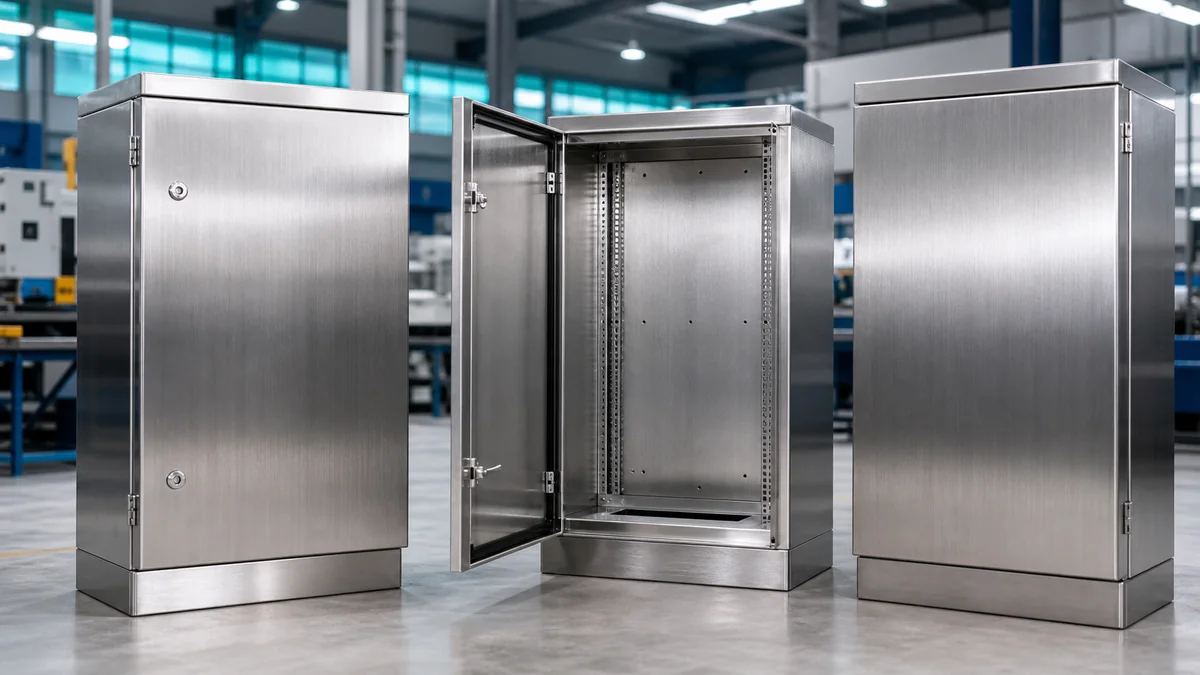
Quick Answer: When Should Buyers Choose Stainless?
Use stainless steel electrical cabinet enclosures when the environment attacks paint or bare carbon steel: food washdown, pharmaceutical clean areas, coastal sites, marine terminals, water treatment, chemical processing, mining wash stations, outdoor energy equipment and clean manufacturing rooms. For dry indoor projects, powder-coated steel may be enough. For chloride, washdown or hygiene, stainless earns its keep.
| Buyer question | What to define before quote | Evidence to request |
|---|---|---|
| Which stainless grade? | Compare 304 and 316L against chloride exposure, cleaning chemistry, finish and lifecycle requirements | Specified grade, agreed material document and incoming identification |
| Will the cabinet seal? | Door gap, gasket channel, rain lip, gland plate and hinge layout | Door-fit photos, gasket-channel checks, first-article dimensions |
| Will welding distort the shell? | Weld sequence, fixture datums, visible weld requirements | Fixture photos, squareness checks, corner weld close-ups |
| Will the finish match expectations? | 2B, brushed #4, mirror, bead-blast or passivation requirement | Surface sample approval and finish inspection photos |
| Will it arrive undamaged? | Protective film, foam corners, pallet or crate, door restraint | Packing photos before shipment |
304 vs 316L: The Practical Selection Rule
Here is the plain-English version. 304 stainless is the sensible choice for dry indoor cabinets, clean rooms, dry food areas and inland industrial sites. 316L is the safer choice when chloride is present: coastal air, salt spray, brine, washdown chemicals, water treatment, marine terminals or outdoor cabinets expected to last for years with little babysitting.
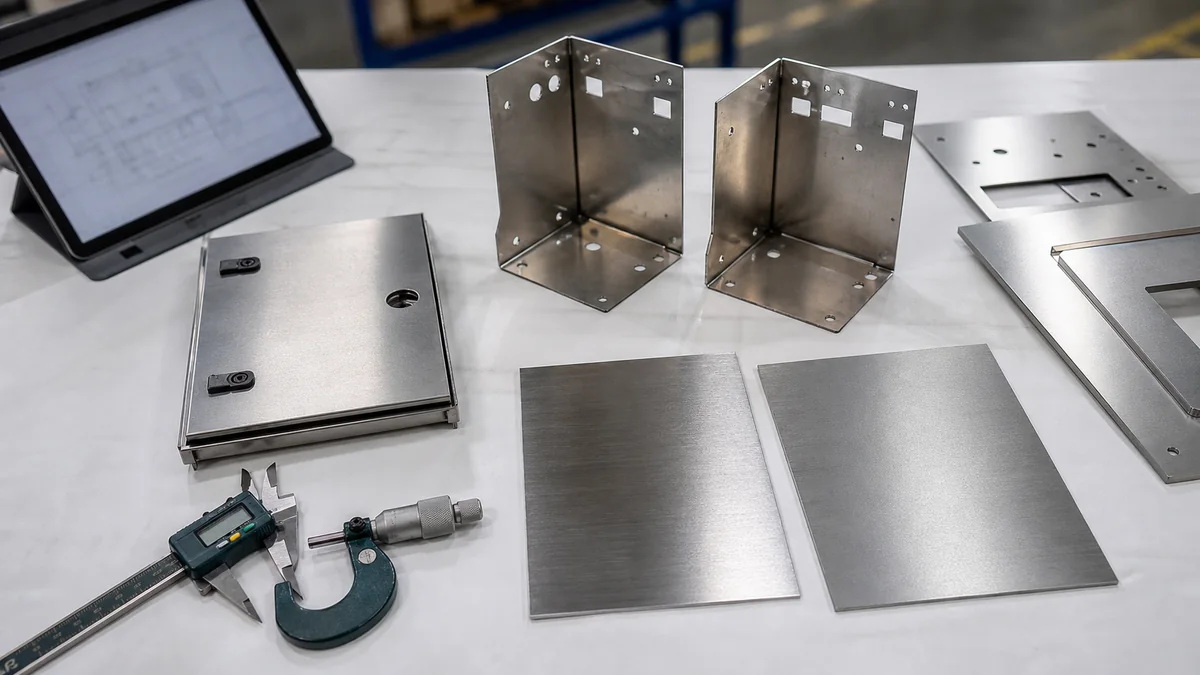
Do not specify 316L just to sound serious. It costs more and is not magic. But do not use 304 in coastal or chlorine-heavy service and then act surprised when the surface starts complaining. Stainless selection is not a personality test; it is environment, budget and service life.
Applications Where Stainless Cabinet Shells Make Sense
Manufacturing Route for Stainless Cabinet Enclosures
Stainless is less forgiving than painted steel. You cannot hide grinding marks, weld heat tint or scratches under powder coat. The process has to be controlled from blanking to packing.
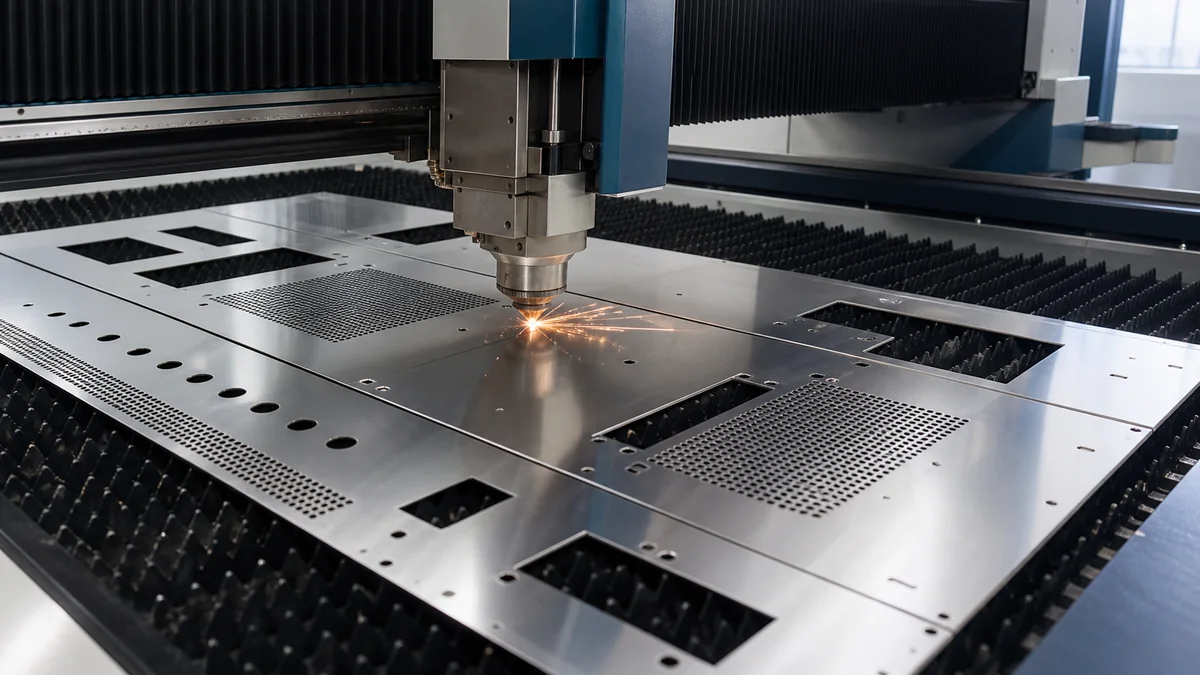
1. Laser cut the cabinet panels
Vents, mounting holes, cable-entry cutouts and hinge features are cut from approved drawings. For stainless, clean edges and deburring matter because every edge will be visible or touched during integration.
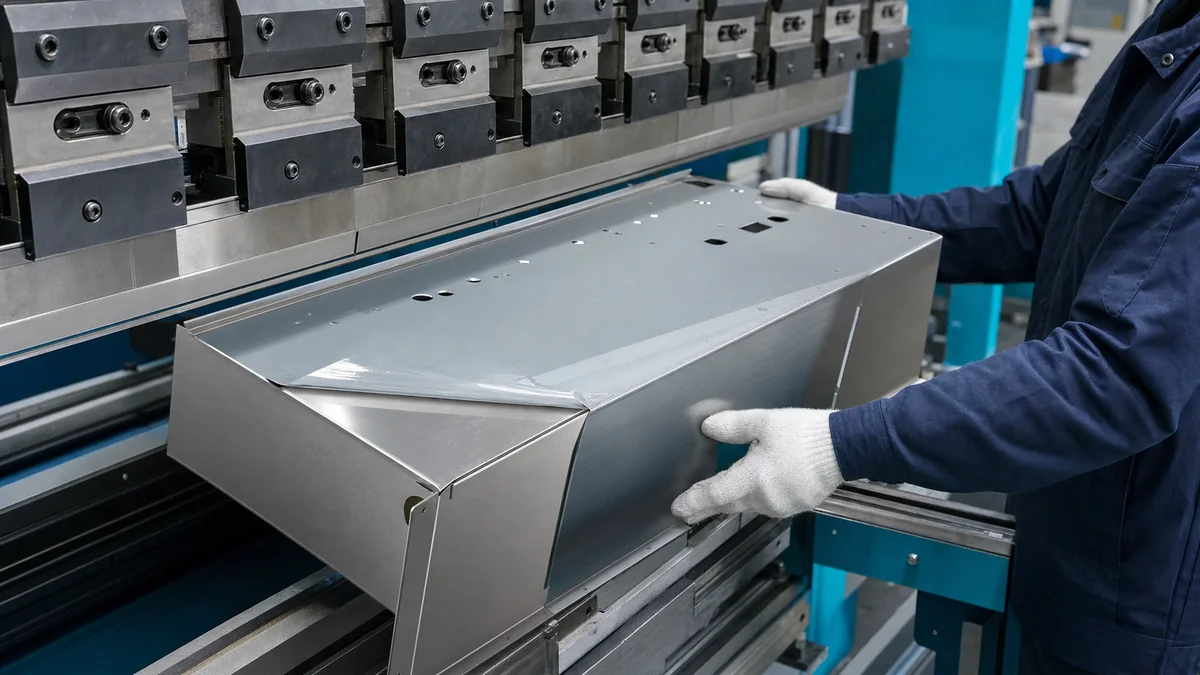
2. Bend with springback in mind
Stainless springs back more than carbon steel. If the drawing uses deep returns, narrow channels or tight box shapes, bend access needs DFM review before quote. Otherwise the first article becomes a very shiny lesson.

3. TIG weld and control distortion
TIG welding is often preferred for visible stainless cabinet seams because it gives cleaner control. Fixtures help keep door openings square, hinge sides flat and mounting surfaces where the electrical team expects them.

4. Finish, brush and passivate where required
A brushed stainless finish looks simple until one panel grain runs the wrong direction. Confirm surface direction, weld cleanup, passivation needs and handling rules. Stainless does not forgive careless scratches. It remembers.
Sealing and Quality Control
For enclosure buyers, the inspection plan should focus on fit and function: door gap, gasket channel width, hinge alignment, latch position, mounting plate holes, gland plate fit, weld distortion and surface finish. A long inspection report with the wrong dimensions is just expensive paperwork.
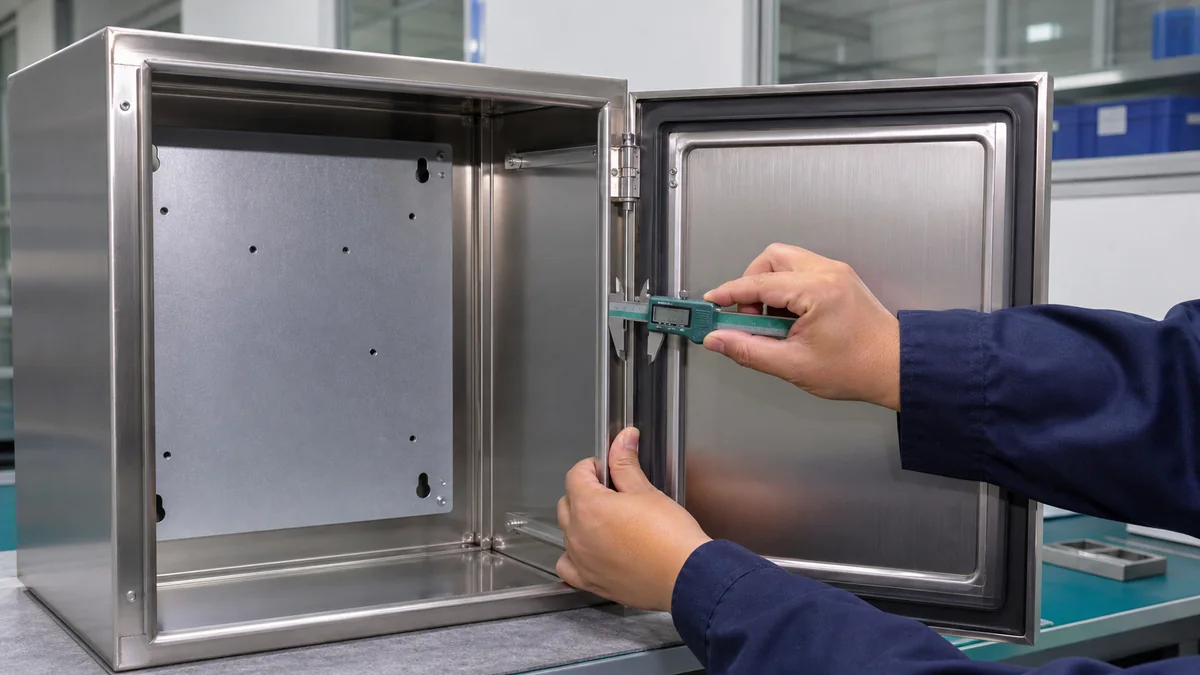
If the final assembly needs an IP, NEMA or other electrical enclosure rating, validate that on the completed product after internal components, glands, fans, filters and locks are installed. MSTFAB can manufacture the metal features that support the requirement, but the final certified system is the OEM’s responsibility.
Export Packing Is Not Optional
Brushed stainless cabinets scratch easily. A low quote that forgets packing is not cheap; it is a future argument in a wooden crate. Ask how the supplier protects door edges, corner radii, brushed faces and loose panels.
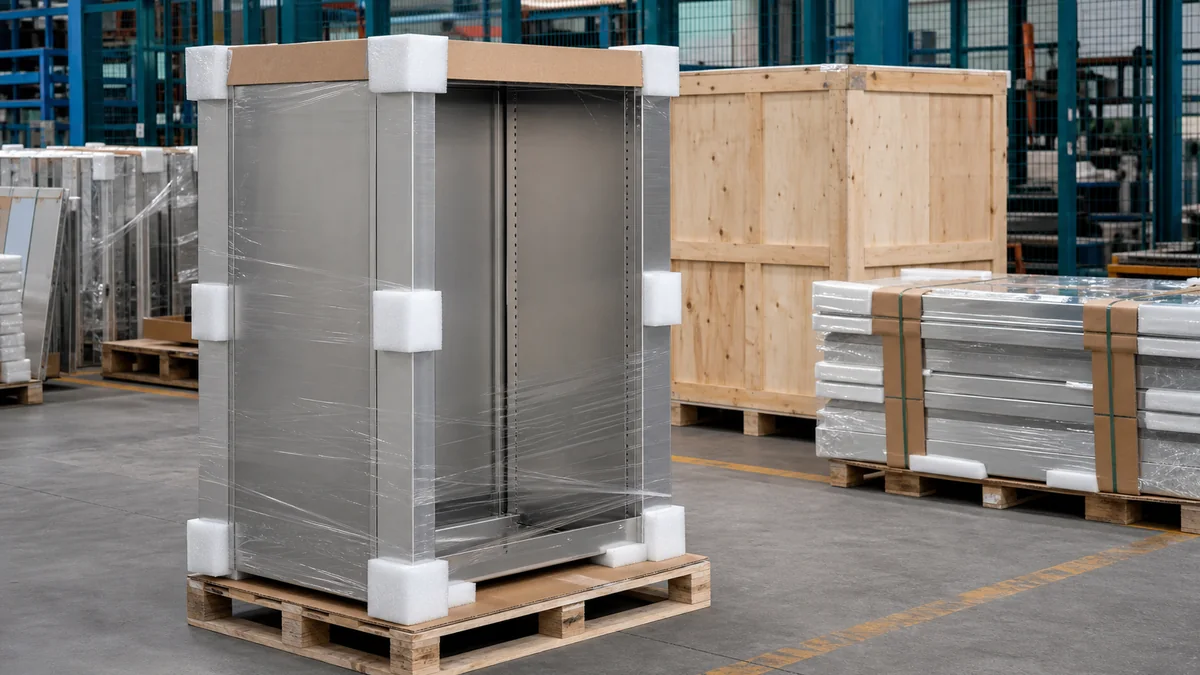
For overseas projects, request packing photos before shipment. Protective film, foam corners, panel separation and door restraint reduce the chance that your expensive stainless enclosure arrives with a dent that everyone insists happened somewhere else.
What to Send for a Reliable RFQ
- 2D drawings and STEP files with revision number
- Cabinet size, material grade, thickness and annual volume
- Application environment: dry indoor, washdown, coastal, chemical, outdoor or clean area
- Surface finish: 2B, brushed #4, mirror, passivated or other requirement
- Door, hinge, lock, gasket and gland-plate layout
- Hardware BOM: PEM inserts, studs, hinges, locks and fasteners
- Critical dimensions and inspection requirements
- Packing requirements for prototype and production shipments
Related Guides for Smarter Buying
If you are still choosing the metal, start with our sheet metal material selection guide. If finish choice is the confusing part, read the sheet metal surface finishing guide. For quote comparison, use the sheet metal fabrication quote checklist. For broader enclosure projects, see custom sheet metal enclosure fabrication.
Red Flags When Sourcing Stainless Cabinet Shells
- The quote says “stainless” without naming 304, 316L or another grade.
- The supplier does not ask about environment, washdown, coastal exposure or cleaning chemicals.
- Visible welds are quoted with no discussion of finish, grinding or passivation.
- No plan for protecting brushed surfaces during production and shipping.
- The supplier claims to provide the complete electrical cabinet system when you only need metal enclosure manufacturing.
Frequently Asked Questions
Do you make complete stainless steel electrical cabinets?
No. MSTFAB manufactures the sheet metal enclosure shell, doors, mounting plates, brackets and related metal parts. We do not wire PLCs, install breakers, supply electronics or certify the final electrical assembly.
Should I choose 304 or 316L stainless steel?
304 can suit many dry indoor or inland applications. 316L is often considered where chloride, coastal air, washdown chemistry or water treatment increases corrosion risk. Confirm the grade from the real environment and lifecycle requirements rather than this general comparison alone.
Is stainless always better than powder-coated steel?
No. For dry indoor cabinets, powder-coated steel can be more cost-effective. Stainless is worth the premium when corrosion resistance, hygiene, washdown or long outdoor service is the real problem.
Can you support IP or NEMA-style sealing designs?
We can fabricate the cabinet features that support sealing, including gasket channels, rain lips, controlled door gaps and gland plates. The final IP or NEMA validation should be performed on the complete assembled product.
What is the biggest cost mistake with stainless cabinets?
Over-specifying stainless where painted steel is enough, or under-specifying 304 where 316L is needed. Both are expensive, just on different timelines. One hurts the budget now; the other hurts after installation.
Send your drawings, STEP files, application environment, stainless grade, finish and annual volume. MSTFAB will review the enclosure metalwork before quoting, so the price is based on a real manufacturing route.
 WeChat Contact
 WhatsApp Me Directly