
Machining vs Sheet Metal Fabrication: Which Process Fits OEM Enclosures?
Machining vs sheet metal fabrication is not a battle where one process wins forever. It is a buyer decision. If your part is a solid precision block, shaft or thick mechanical interface, CNC machining may be the right tool. If your project needs custom enclosure shells, panels, covers, brackets, chassis trays or cabinet parts, sheet metal fabrication usually gives better structure, faster revision flexibility and a more practical cost path.
Short answer for OEM buyers: use machining when the part must be cut from solid metal with tight 3D features. Use sheet metal fabrication when the part starts as flat sheet and needs laser cutting, CNC bending, welding, powder coating, PEM hardware preparation or export packing. MSTFAB focuses on custom sheet metal enclosure parts and semi-finished metal structures made from STEP, DXF and approved drawings.
MSTFAB scope note: we are not positioning this article as a generic CNC machining service page. MSTFAB is strongest when overseas buyers need drawing-based sheet metal enclosure shells, doors, back plates, covers, louver panels, mounting brackets, rails and chassis trays. This comparison is written to help buyers avoid choosing an expensive process for a part that should have been fabricated from sheet metal.
What Is Machining?
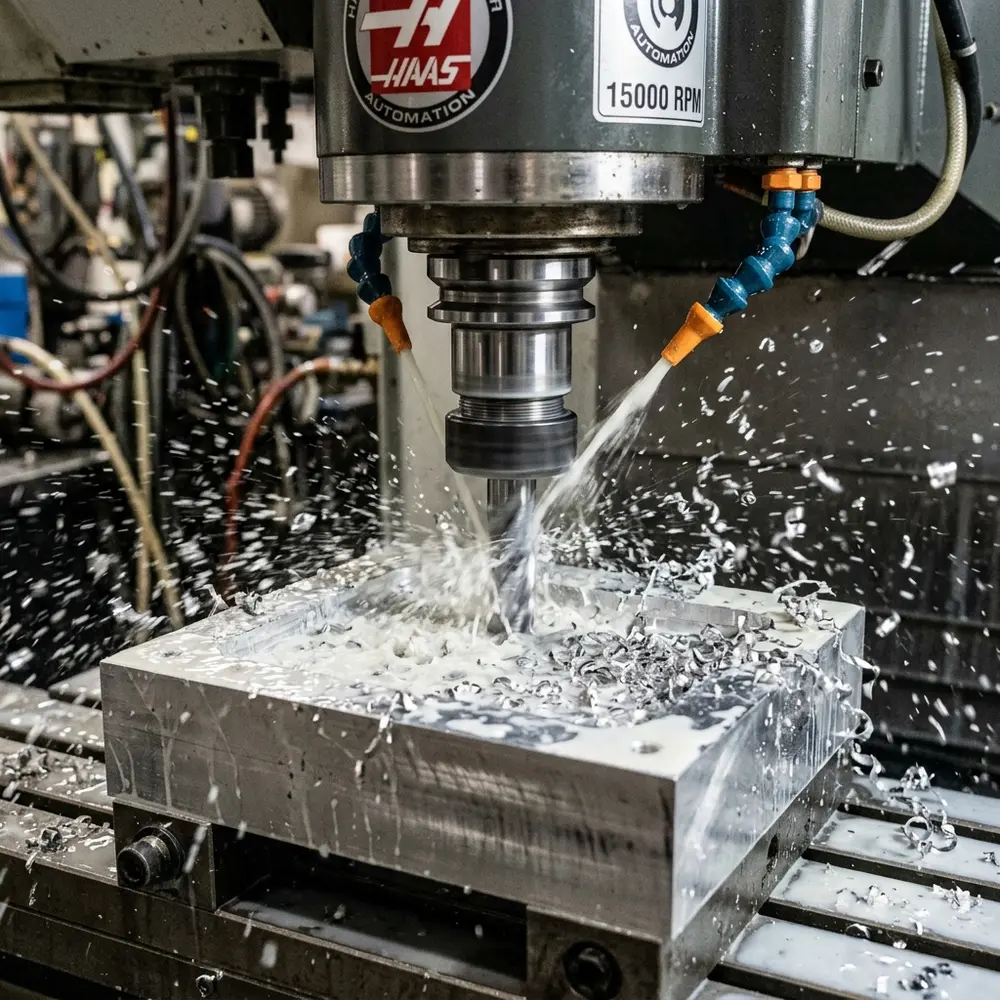
Machining is a subtractive manufacturing process. A CNC mill, lathe, drill or grinder removes material from a solid block, bar, plate or casting until the required shape appears. It is excellent for tight mechanical features such as bearing seats, shafts, thick mounting blocks, precision pockets, threaded holes, flat mating faces and complex 3D surfaces.
Machining is powerful, but it can be expensive when the part is mostly a large cover, panel, enclosure shell or cabinet body. Removing material from a solid block to make a thin box is a little like buying a whole loaf of bread and carving out one slice with a pocket knife. It can be done. It is just not the cost story procurement wants to hear.
For OEM sourcing, machining is usually the better process when the part requires high local precision, thick sections, rotating interfaces, bearing alignment, deep tapped holes or geometry that cannot be created by bending sheet metal. It is often the wrong first choice for sheet metal enclosures, cabinet doors, back plates, brackets and light structural covers.
What Is Sheet Metal Fabrication?
Sheet metal fabrication starts with flat metal sheet. The factory cuts the shape, forms bends, adds welded details or hardware when required, applies surface finishing and checks the part against the drawing. For custom enclosure projects, sheet metal fabrication is the practical route for shells, panels, covers, brackets, trays, guards and cabinet parts.
The typical route includes laser cutting, CNC bending, welding, hardware preparation, surface treatment, inspection and export packing. Not every part needs every process. A simple cover may only need cutting, bending and powder coating. A heavier enclosure frame may need fixture-controlled welding and additional inspection.
For buyers who need custom metal enclosure fabrication, sheet metal is usually more flexible than machining because the design can be revised by updating files and bend programs rather than rethinking a solid billet strategy. This is especially useful for prototype to production work, small and medium batches, and custom OEM projects where drawings change during development.

Machining vs Sheet Metal Fabrication: Quick Comparison
The easiest way to choose is to look at the part’s job. Is it a thick precision mechanical component, or is it a formed enclosure part? Does it need material removed from a solid block, or does it need cutouts, bends, flanges, vents and surface finish? The answer usually appears when the buyer stops looking at the part name and starts looking at the geometry.
| Decision point | Machining is usually better when… | Sheet metal fabrication is usually better when… |
|---|---|---|
| Part shape | The part is thick, solid, round, block-like or needs complex 3D pockets | The part is a shell, panel, cover, tray, bracket, guard or cabinet component |
| Material use | Removing material from a solid blank is acceptable | Flat sheet can form the structure with less material waste |
| Tolerances | Very tight local tolerances, bearing fits or machined mating faces are required | Functional sheet metal tolerances, bend accuracy and hole alignment are required |
| Cost driver | Machine time, programming, setup and material removal define cost | Laser cutting, bending, welding, finish, hardware and packing define cost |
| Design changes | Changes may require new programming and more machine time | DXF, STEP and bend changes are often more flexible for enclosure revisions |
| Typical MSTFAB fit | Limited to supporting machined hardware context where relevant | Strong fit for custom sheet metal enclosure shells and semi-finished metal parts |
When Machining Makes Sense
Machining makes sense when the design depends on features that sheet metal cannot create efficiently. Examples include thick aluminum blocks, shafts, round collars, bearing seats, precision spacers, heavy bosses, exact flat mating faces, deep tapped holes and parts with complex 3D surfaces. If the part’s function depends on a solid cross-section and tight mechanical interfaces, machining may be the correct process.
Machining also works when quantity is low and the geometry is too complex for sheet metal forming. A prototype block with multiple milled pockets may be cheaper to machine than to redesign into multiple formed parts. A precision fixture plate may need machined flatness. A custom hinge block may need milling and drilling rather than bending.
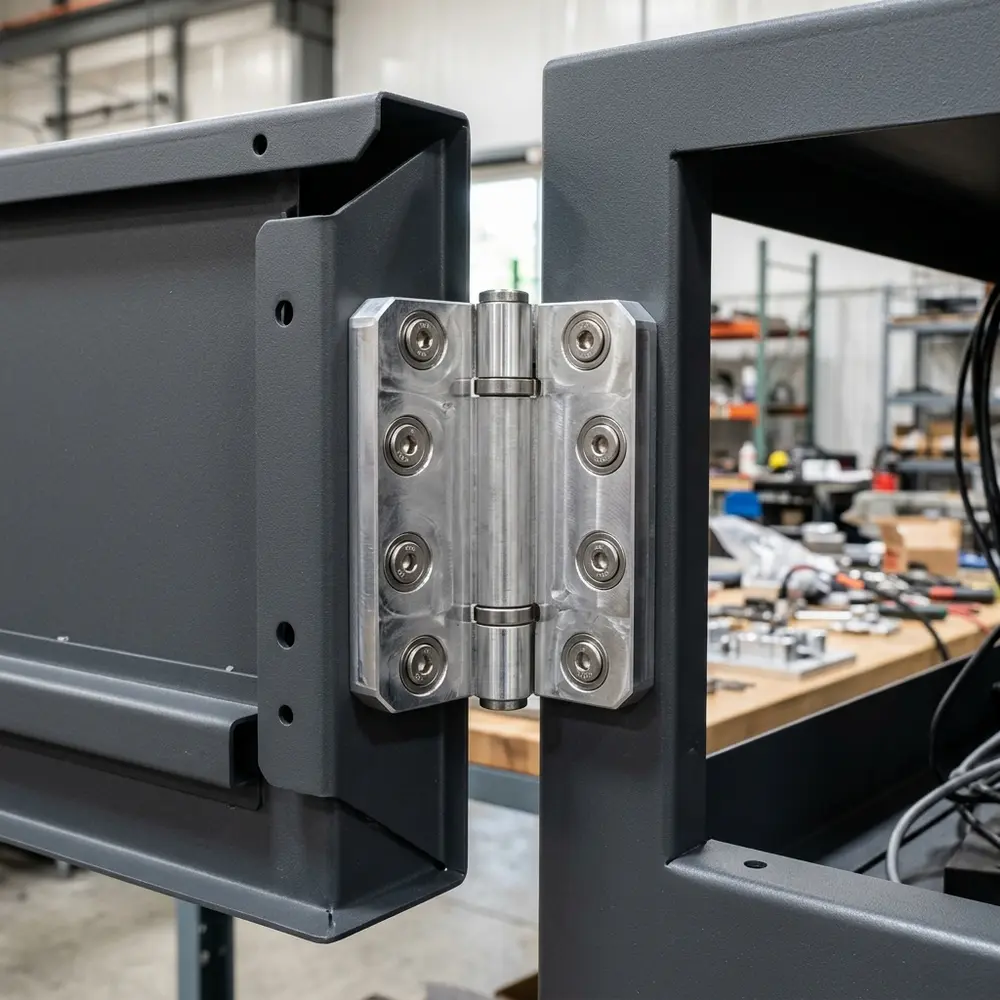
For enclosure projects, machining may appear in small supporting parts. A machined hinge block or spacer can be mounted to a sheet metal panel. A threaded insert or custom boss may support a bracket. But the large cover, door, back plate or enclosure body should not automatically be machined from solid metal if sheet metal fabrication can do the job more efficiently.
When Sheet Metal Fabrication Makes Sense
Sheet metal fabrication makes sense when the design is mainly a formed structure. This includes custom sheet metal enclosures, electrical cabinet shells, telecom enclosure panels, battery cabinet covers, machine guards, brackets, chassis trays, removable covers, louvered panels and powder-coated metal boxes. These parts usually need flat patterns, bend lines, hole arrays, slots, flanges, mounting tabs and surface finish.
For OEM buyers, sheet metal fabrication often gives a better balance of cost, weight, strength and revision flexibility. Bends and flanges create stiffness. Laser cutting creates custom openings. Welding adds support where needed. Powder coating or other finishing adds corrosion protection and appearance. The buyer gets a practical semi-finished metal part that fits the later project integration.
MSTFAB’s focus is exactly this type of work: custom sheet metal fabrication for overseas OEM buyers who have drawings and need enclosure parts manufactured accurately. If your RFQ includes STEP, DXF, DWG or PDF drawings for shells, panels, brackets or covers, the project is much closer to our production strength.
Good sheet metal candidates
- Electrical enclosure shells
- Telecom cabinet panels
- Machine guards and covers
- Battery cabinet brackets
- Chassis trays and rails
Common process route
- DFM review
- Laser cutting
- CNC bending
- Welding or hardware
- Surface finish and QC
Buyer value
- Lower material waste
- Faster design revision
- Strong but lighter structure
- Good for enclosure kits
- Export-ready packing control
Cost Comparison: The Cheapest Process Is the One That Fits the Geometry
Cost is one of the biggest reasons buyers search for machining vs sheet metal fabrication. Machining cost is driven by material block size, machine time, tool wear, setup, tight tolerances and how much material must be removed. Sheet metal fabrication cost is driven by material sheet size, thickness, laser cutting time, bend complexity, welding, finishing, hardware insertion, inspection and packing.
If a large thin cover is machined from a solid plate, the buyer pays for material that becomes chips. If the same part can be cut and bent from sheet metal, the material use is usually much more practical. On the other hand, if a small precision block needs tight features on several faces, forcing it into sheet metal may create multiple parts, welding, extra tolerance stack-up and more risk.
The practical rule is simple: do not ask machining to behave like sheet metal, and do not ask sheet metal to behave like a precision billet. Choose the process that matches the geometry, tolerance and function. That is where real cost control starts.
| Cost factor | Machining impact | Sheet metal fabrication impact | Buyer action |
|---|---|---|---|
| Material waste | Can be high if large pockets or thin walls are cut from solid stock | Usually lower for panels, covers and enclosure shells made from flat sheet | Review whether the part can be formed instead of carved |
| Setup time | Fixtures, programming and multiple machining operations can add cost | Laser and press brake setup depend on flat file, bends and tooling | Provide clean STEP, DXF and 2D drawings |
| Tolerance demand | Very tight tolerances are possible but can raise price quickly | Functional sheet metal tolerances should be defined realistically | Mark only critical dimensions as tight |
| Surface finish | Machined finish may require additional cosmetic handling | Powder coating, brushing or plating can be planned after forming | Define visible surfaces and finish expectations |
| Shipping risk | Dense machined parts may be heavy but compact | Large panels and covers need scratch and bend protection | Request packing photos for export shipments |
Tolerance Comparison: Machined Precision vs Sheet Metal Reality
Machining can hold tighter local tolerances than most sheet metal processes. That is one reason buyers use CNC machining for mechanical interfaces. However, not every enclosure part needs machined-level tolerance. A powder-coated cabinet cover, louver panel or mounting bracket often needs practical fit control, not aerospace-style tolerance on every feature.
Sheet metal tolerances depend on material thickness, bend length, hole-to-bend distance, press brake tooling, welding heat and finish thickness. A hole cut before bending may move slightly after forming. A welded frame may need fixture control. Powder coating can add thickness around holes and edges. These are normal manufacturing realities, not excuses.
The best sourcing approach is to define critical dimensions clearly. If a hole pattern locates a rail, mark it. If a cutout must match a display or connector, define the tolerance. If a surface is visible, say so. If the part only needs clearance, do not over-tolerance it. Tight tolerances everywhere are like red flags everywhere: eventually nobody knows where to look.
Weight and Strength: Why Sheet Metal Works So Well for Enclosures
Enclosures need structure without unnecessary weight. Sheet metal is strong because bends, flanges and formed edges add stiffness. A thin flat panel can flex, but a panel with returns or ribs becomes much stronger. This is one reason sheet metal is widely used for electrical enclosures, telecom cabinets, industrial covers, control boxes and machinery guards.
Machining can create very strong parts, but making a large enclosure from solid metal can be heavy and expensive. Sheet metal fabrication lets the buyer place strength where it is needed: flanges around doors, reinforced mounting areas, brackets near load points, louvers where airflow is required and thicker material only when the drawing needs it.
For OEM enclosure sourcing, this balance is valuable. The buyer can control strength, service access, ventilation and weight through sheet thickness, bend design, bracket placement and material choice. A good DFM review helps prevent underbuilt parts, overbuilt parts and the classic procurement favorite: a part that is both expensive and still annoying.
Design Flexibility: Sheet Metal Is Friendly to Revisions
OEM enclosure projects often change. A cable gland moves. A vent pattern grows. A bracket hole shifts. A display opening gets larger. A latch changes. A buyer adds a logo plate or asks for a different powder coating color. Sheet metal fabrication is well-suited to these changes because many updates are controlled through drawings, laser files and bend programs.
Machining also supports revisions, but design changes can add machine time, new fixtures or new programming. For large enclosure panels and shells, sheet metal often keeps revision cost more practical. This is especially helpful during prototype, pilot production and early repeat orders.
At MSTFAB, drawing clarity is the key. When buyers send a complete drawing package, we can review manufacturability and quote more accurately. If the files are incomplete, we ask questions before production. That may feel slower for five minutes, but it is much faster than discovering a wrong cutout after a shipment arrives.
Can Machining and Sheet Metal Fabrication Work Together?
Yes. Many real OEM projects combine both processes. A sheet metal enclosure may use machined spacers, hinge blocks, threaded bosses or precision hardware. A fabricated cabinet may include machined mounting blocks. A formed bracket may hold a precision turned component. The question is not whether one process is allowed to exist near the other. The question is which process should carry the main structure.
For custom enclosure projects, the main shell, door, cover, panel and bracket system is often best made by sheet metal fabrication. Machining can support the design where tight local geometry is required. This hybrid approach can reduce cost and weight while still giving the buyer the precision features needed in specific locations.
The important sourcing point is to separate the scope. Do not machine a whole enclosure because one small area needs a precise block. Do not bend a weak approximation when a small machined support is truly necessary. Let each process do the job it does well.
DFM Questions Before Choosing a Process
Before sending a purchase order, buyers should ask a few practical DFM questions. These questions help decide whether machining or sheet metal fabrication fits the project and help prevent quote surprises. The goal is not to make the drawing complicated. The goal is to remove expensive ambiguity.
| DFM question | Why it matters | Likely direction |
|---|---|---|
| Is the part mostly a thin shell, panel, cover or bracket? | Thin formed structures are natural sheet metal candidates | Sheet metal fabrication |
| Does the part require a bearing fit, shaft seat or tight 3D pocket? | These features usually require solid material and local precision | Machining |
| Can bends and flanges create the needed strength? | Forming can add stiffness without unnecessary weight | Sheet metal fabrication |
| Will powder coating or surface finish affect fit? | Finish thickness changes holes, slots and contact areas | Review during sheet metal DFM |
| Does one small area need high precision? | A machined insert or block may be better than machining the whole part | Hybrid design |
RFQ Checklist for Sheet Metal Enclosure Buyers
If the comparison points toward sheet metal fabrication, prepare the RFQ package carefully. The best quote package includes STEP or STP files, DXF flat files when available, 2D PDF or DWG drawings, material grade, thickness, quantity, finish, critical tolerances, hardware details, visible surface notes, packing requirements and target delivery schedule.
For custom sheet metal enclosure projects, buyers should also explain the role of the part. Is it a door panel, back plate, cover, bracket, chassis tray, louver panel or empty shell? Which side is visible? Which holes align with another part? Which area needs gasket contact? Which dimensions are critical to assembly? A little context helps the supplier protect the features that matter.
Useful MSTFAB resources include what files are needed for a sheet metal fabrication quote, DFM for sheet metal fabrication, and sheet metal fabrication cost for enclosures. These pages help buyers move from general research into a clearer drawing-based inquiry.
Send files
- STEP or STP 3D model
- 2D PDF or DWG drawing
- DXF flat file if available
- Current revision number
Define requirements
- Material and thickness
- Surface finish and color
- Critical tolerances
- Hardware and inserts
Reduce risk
- Mark visible surfaces
- Confirm bend direction
- Request inspection evidence
- Define export packing
Which Process Should You Choose for Custom Enclosures?
If your part is an enclosure shell, cover, door, louver panel, chassis tray, back plate, bracket or cabinet component, sheet metal fabrication is usually the first process to evaluate. It supports custom sizes, holes, vents, flanges, bends, welded supports, powder coating and practical export packing. It also keeps design revisions easier for OEM projects.
If your part is a thick precision component with complex 3D geometry, bearing fits, tight machined faces or deep tapped holes, machining may be the right choice. If the project contains both types of requirements, use a hybrid approach: fabricate the sheet metal structure and add machined hardware only where it is truly needed.
For overseas procurement teams, the smartest decision is usually not “machining or sheet metal” in the abstract. It is “what process makes this specific drawing accurate, repeatable and cost-effective?” That is the question that prevents overpaying for unnecessary machining or under-specifying a sheet metal part that needs better DFM review.
How MSTFAB Supports This Decision
MSTFAB focuses on custom sheet metal fabrication for OEM enclosure parts. We support drawing-based projects that need laser cutting, CNC bending, welding, hardware preparation, surface finishing, inspection and export packing. Typical projects include electrical enclosure shells, telecom cabinet panels, industrial equipment covers, control cabinet parts, machinery guards, battery enclosure brackets and custom chassis trays.
We are a good fit when the buyer has drawings and wants practical manufacturing feedback before production. We can review whether a sheet metal route makes sense, identify common DFM risks and manufacture the metal parts according to the approved drawing package. If a feature requires machining support, the drawing should clearly identify that need so the process route can be planned correctly.
The result is a cleaner RFQ, better process choice and fewer surprises at receiving inspection. Procurement teams do not need more drama. They need parts that fit, surfaces that look right, and cartons that open without bad news.
FAQ: Machining vs Sheet Metal Fabrication
What is the main difference between machining and sheet metal fabrication?
Machining removes material from a solid block, bar or plate to create precise 3D features. Sheet metal fabrication starts with flat sheet and uses cutting, bending, welding and finishing to create enclosure shells, panels, covers, brackets and similar formed parts.
Is sheet metal fabrication cheaper than machining?
For large thin panels, covers, enclosure shells and brackets, sheet metal fabrication is often more cost-effective because it uses flat sheet and forming rather than removing large amounts of solid material. For small precision blocks or complex mechanical features, machining can be the better choice.
Which process is better for custom sheet metal enclosures?
Custom sheet metal enclosures are usually better made by sheet metal fabrication. Laser cutting, CNC bending, welding, powder coating and inspection are more suitable for shells, doors, back plates, covers, louver panels and chassis trays.
Can sheet metal parts hold tight tolerances?
Yes, but sheet metal tolerances should be defined realistically around laser cutting, bending, welding and coating behavior. Mark critical dimensions clearly instead of applying unnecessary tight tolerance to every feature.
Can a project use both machining and sheet metal fabrication?
Yes. Many enclosure projects use sheet metal for the main shell, panels and brackets, while using machined spacers, hinge blocks or precision hardware only where needed.
What should I send to MSTFAB for a sheet metal enclosure quote?
Send STEP or STP files, DXF flat files if available, 2D PDF or DWG drawings, material grade, thickness, quantity, finish, critical tolerances, hardware details, visible surface notes and export packing requirements.
Need help choosing the right process for enclosure parts?
Send your STEP, DXF, DWG or PDF drawings. MSTFAB will review the sheet metal fabrication route for custom enclosure shells, panels, brackets and semi-finished metal parts before quotation.
 WeChat Contact
 WhatsApp Me Directly