
⚡ Direct Answer: What Drives Sheet Metal Fabrication Cost for Enclosures?
The sheet metal fabrication cost for enclosures typically ranges from 45 to350+ per unit depending on batch size, material grade (SPCC carbon steel vs. 5052-H32 aluminum vs. 304/316 stainless steel), structural geometry, and surface finishing. Primary cost drivers comprise raw material utilization (30–45% of total cost), CNC laser cutting and press brake setup times (20–30%), welding and manual grinding labor (15–25%), and surface treatment such as electrostatic powder coating or passivated anodizing (10–15%).
Sheet Metal Enclosure Cost Breakdown by Manufacturing Stage
| Cost Factor | Percentage of Total Cost | Key Cost Variables | DFM Cost Reduction Strategy |
|---|---|---|---|
| 1. Raw Material | 30% – 45% | Alloy grade (316 SS vs. SPCC), sheet gauge (1.2mm vs. 3.0mm), nesting scrap rate. | Standardize on standard sheet sizes (1220x2440mm); design interlocking parts to maximize nesting efficiency >85%. |
| 2. Laser Cutting & Punching | 15% – 25% | Linear cut distance, pierce count, assist gas selection (Oxygen vs. Nitrogen). | Combine internal cutouts, use common-line cutting, eliminate non-functional micro-slots. |
| 3. CNC Press Brake Bending | 15% – 20% | Number of bends, special punch/die changeovers, flange height vs. tooling clearance. | Maintain uniform bend radii across all features to eliminate secondary setup operations. |
| 4. Welding & Grinding | 15% – 25% | Continuous seam TIG vs. stitch MIG, cosmetic corner blending, weld distortion fixtures. | Replace welded seams with folded corner wraps and PEM self-clinching fasteners where NEMA ratings permit. |
| 5. Surface Treatment | 10% – 15% | 5-stage pre-treatment wash, powder coat thickness (60–80μm), silk screening, anodizing. | Specify standard RAL powder coating colors; avoid multi-color masking on individual panels. |
How Volume Amortization Affects Per-Piece Enclosure Costs
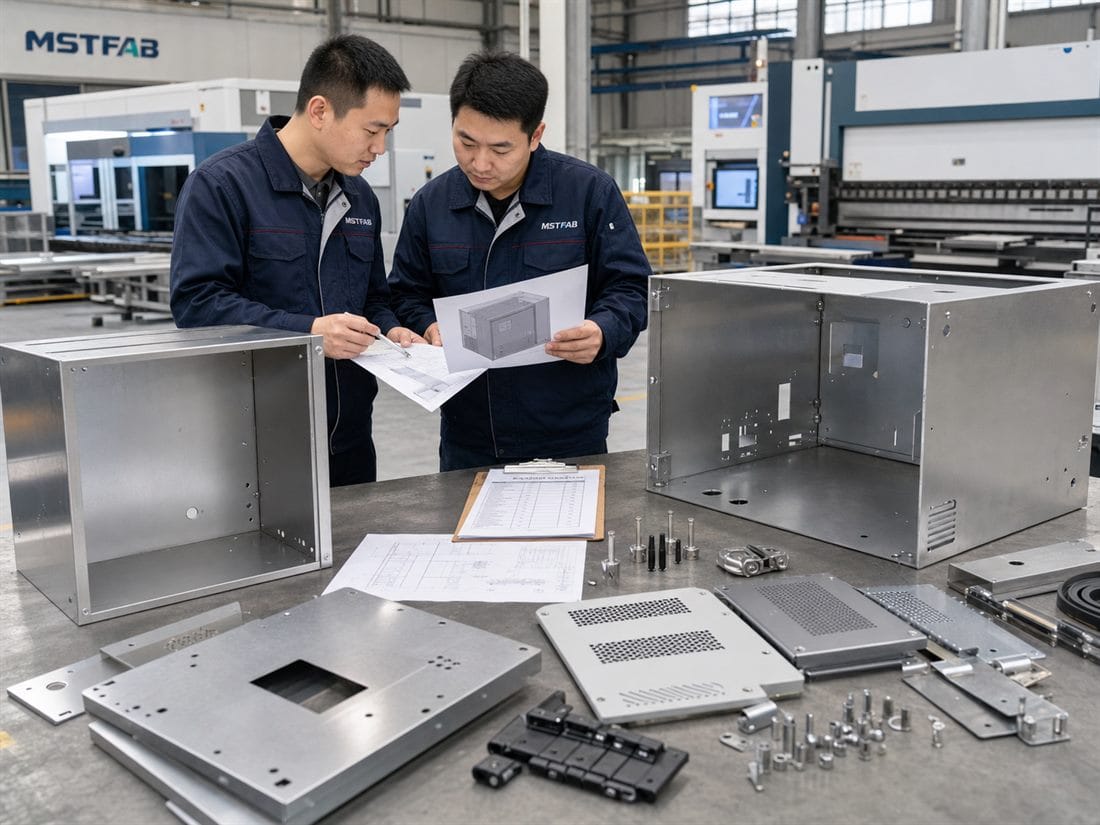
Sheet metal manufacturing is characterized by low initial tooling costs compared to injection molding or die casting. However, setup costs—such as CAD/CAM programming, laser nesting configuration, press brake punch/die alignment, and powder coat booth color changeover—remain constant whether producing 5 units or 500 units.
- Prototype Runs (1–10 units): Setup costs represent up to 40% of the unit price. Expect higher piece costs (150–450/unit) with zero hard tooling charges.
- Pilot Batch (20–100 units): Setup charges amortize rapidly. Production efficiency stabilizes, cutting piece costs by 35% to 50%.
- Full Production Runs (200–2,000+ units): Raw material purchasing discounts, optimized multi-part sheet nesting, and continuous conveyorized powder coating reduce unit costs to optimal baseline levels (40–120/unit).
5 Critical Engineering Decisions that Inflate Enclosure Costs
- Unnecessarily Tight Tolerances: Specifying ±0.05mm across large sheet metal covers forces extensive fixture tuning and manual straightening. Defaulting to ISO 2768-m (±0.2mm to ±0.3mm) reduces inspection overhead and rejection rates.
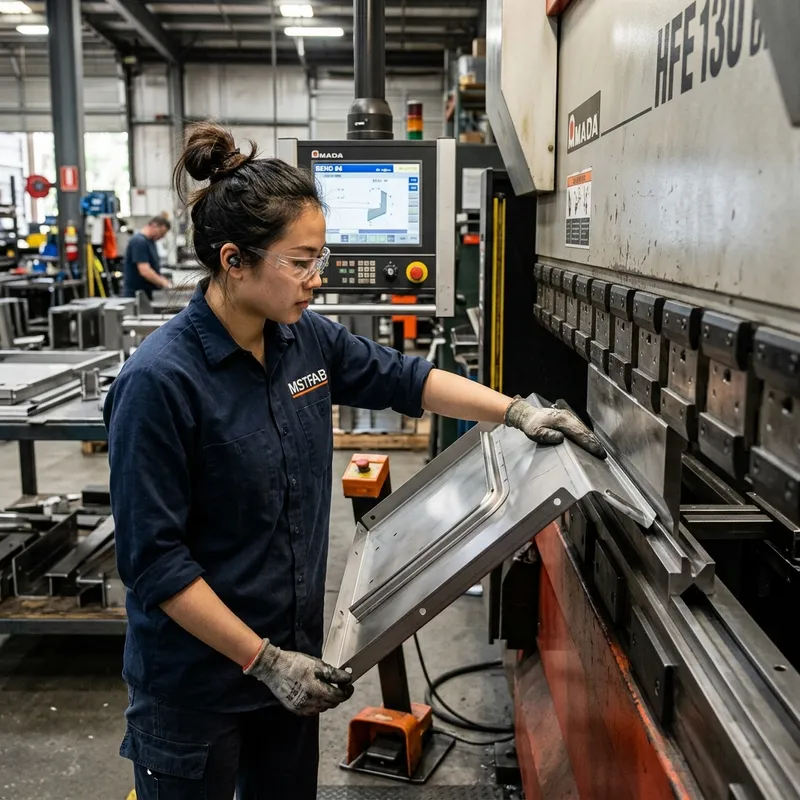
- Mixed Bend Radii: Designing multiple bend radii on the same enclosure shell requires press brake tool swaps during production, doubling forming cycle times. Standardizing on a single internal bend radius (R = 1.0 × T) cuts labor drastically.
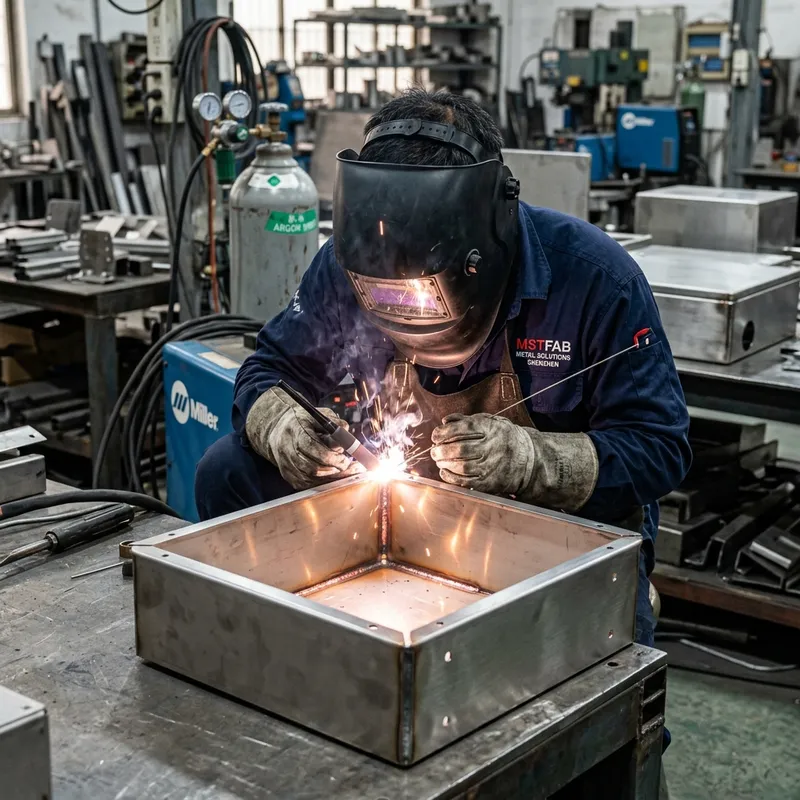
- Excessive Continuous Seam Welding: Continuous TIG welding of long cabinet seams generates severe heat distortion requiring manual flame straightening. Using intermittent stitch welds or deep drawn corner press designs saves up to 60% of welding labor.
- Non-Standard Hardware: Custom threaded studs or exotic clinch hardware lead to high minimum order quantities and long supplier lead times. Specifying off-the-shelf PEM® self-clinching studs and nuts ensures rapid automated insertion.
- Custom Paint Colors: Ordering non-standard custom powder coat batches adds pigment minimum charges ($250–500 per batch) and cleaning downtime. Sticking to standard RAL palettes (e.g., RAL 7035 Light Grey, RAL 9005 Jet Black) keeps finishing costs minimal.
Optimize Your Enclosure Fabrication Cost Today
Send your STEP files and 2D drawings to MSTFAB. Our senior engineering team provides complete DFM feedback and detailed cost-optimized quotes within 24 hours.
Frequently Asked Questions on Enclosure Fabrication Costs
Which metal alloy is most cost-effective for indoor electrical enclosures?
Cold-rolled carbon steel (SPCC) or pre-galvanized steel (SGCC) paired with an industrial powder coating delivers the lowest total manufacturing cost for indoor environments, costing approximately 40% less than 5052 aluminum and 65% less than 304 stainless steel.
What information is needed to get an accurate sheet metal enclosure quote?
To receive a definitive quote within 24 hours, provide 3D CAD files (.STEP or .IGS), 2D vector drawings (.PDF or .DXF) showing critical tolerances and thread specifications, material grade, required batch quantities, and finishing details (powder coat RAL number, texture, silkscreen artwork).
 WeChat Contact
 WhatsApp Me Directly