
What Buyers Should Check Before Ordering Harvester Replacement Parts
Harvester replacement sheet metal parts are not just “old metal parts made again.”
They need to fit an existing machine, match mounting holes perfectly, survive brutal field vibration, resist corrosion, and install without turning a simple repair into a long argument with a wrench.
That matters because harvesters usually need replacement parts at the worst possible time: During harvest season. In the field. With dust everywhere. With the machine already stopped. And with absolutely nobody in the mood for a bolt hole that is 3mm off.
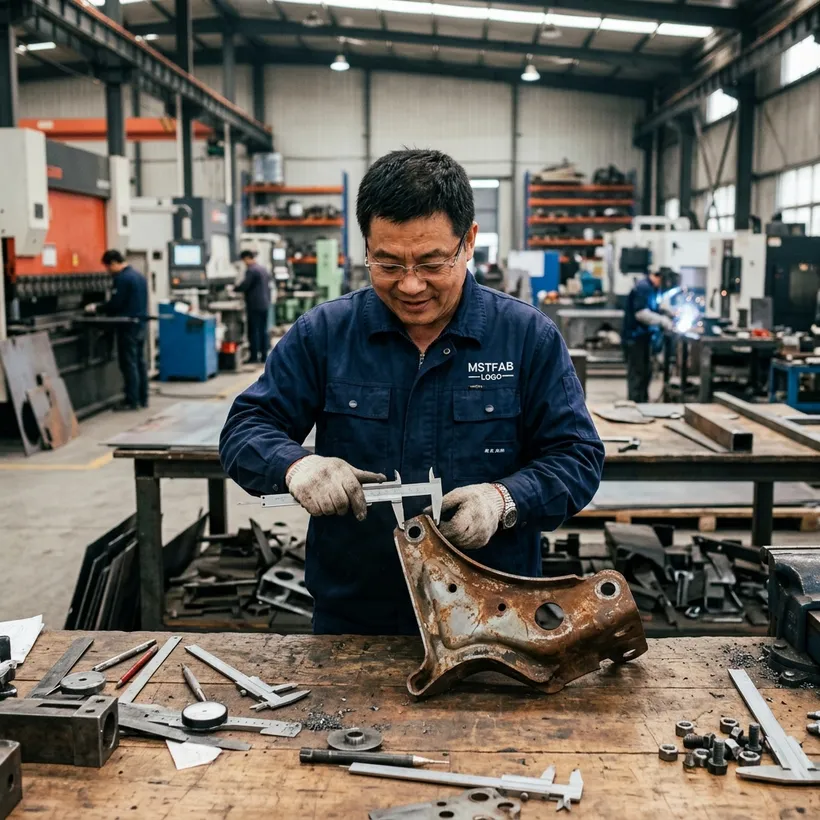
Our engineering team carefully measuring an old, worn physical sample before reverse engineering the replacement part.
At MSTFab, we manufacture custom sheet metal replacement parts based on customer drawings, STEP files, 2D PDFs, physical samples, or reverse-engineered requirements. For aftermarket buyers, repair part suppliers, and machinery rebuilders, the real sourcing question is not only “Can you make this part?” but “Will this replacement fit correctly and remain consistent in repeat orders?”
Because a cheap replacement panel that does not fit is not cheap. It is just downtime with fresh powder coating.
1. Replacement Parts Have a Different Procurement Risk
New OEM production parts are usually designed together with the machine. Replacement parts are completely different. They may need to match discontinued designs, worn mounting frames, or previous supplier dimensions.
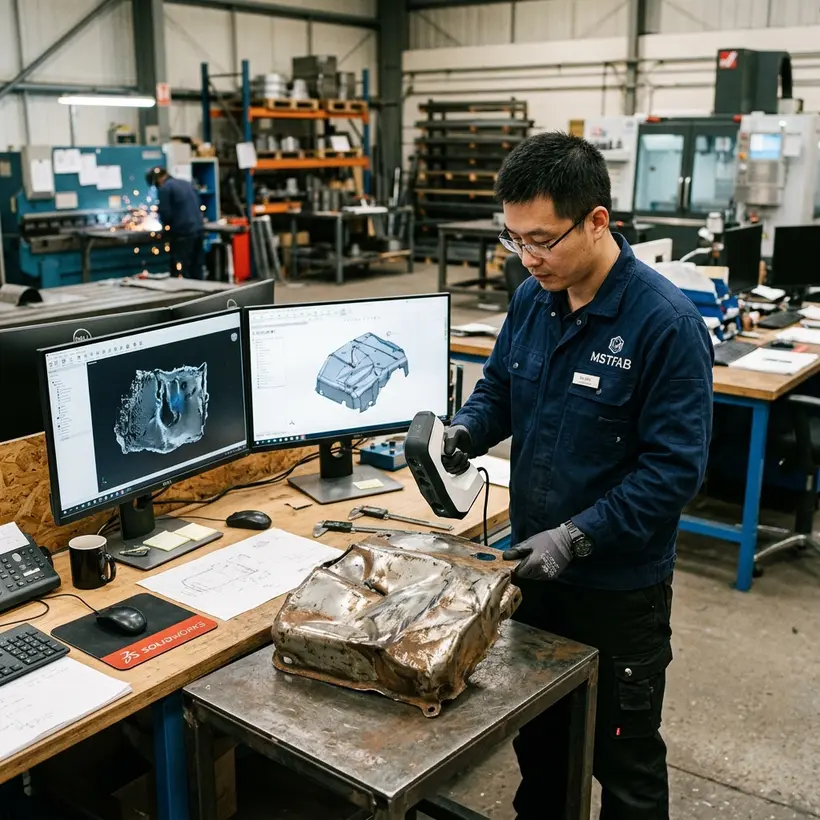
Reverse-engineering a damaged part using 3D scanning and CAD software to ensure the new design perfectly matches the legacy machine.
For buyers, the first step is confirming what the replacement part must match. Old farm machines have history. Sometimes that history includes a drill, a hammer, and a farmer solving problems creatively in the field.
| Pain Point | Blindly Copying Old Samples (The Trap) | MSTFab Reverse Engineering DFM |
|---|---|---|
| Sample Deformation | Copies the bends, dents, and wear of the rusted sample exactly. New part fits terribly. | Identifies structural damage and mathematically reconstructs the original design intent. |
| Hole Misalignment | Supplier uses a different bending K-factor. Holes shift and farmers have to re-drill. | Precision CNC bending ensures mounting holes align flawlessly with legacy frames. |
| Repeat Orders (Batch Consistency) | “Same as last time” relies on memory. The next batch comes out completely different. | Strict version-controlled drawings and programming. Batch #1 and Batch #100 are identical. |
2. Physical Sample Matching Needs Careful Measurement
Many harvester replacement parts are sourced from old physical samples. That can work well, but only if measured carefully. A physical sample may have bending deformation, worn mounting holes, rusted edges, or field-drilled modifications.
A worn sample should not be copied blindly. Copying damage is not reverse engineering. It is manufacturing the problem again.
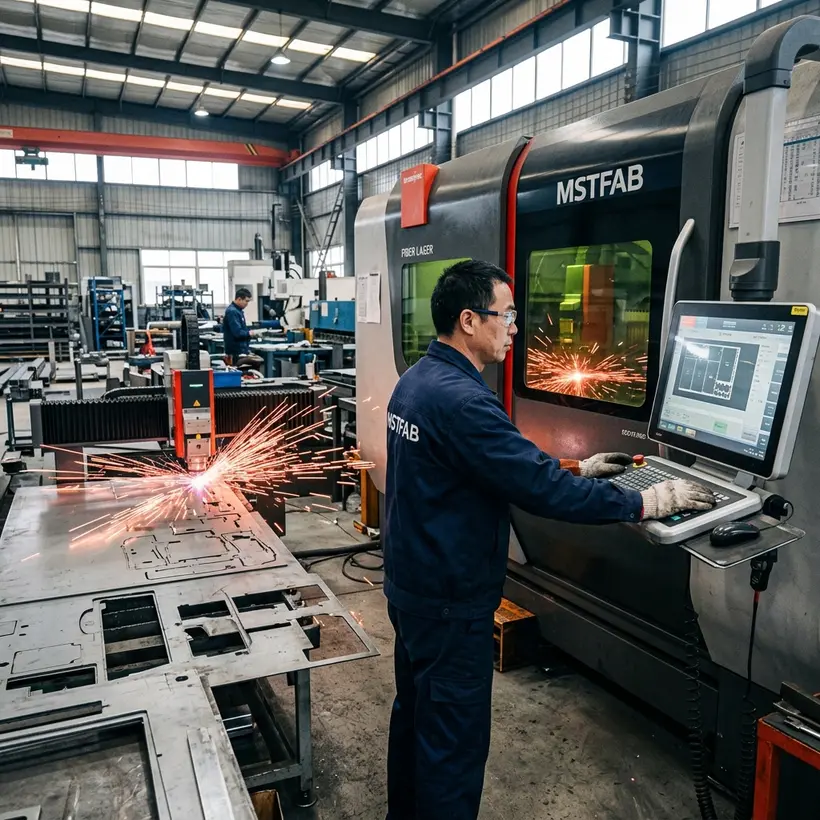
High-precision CNC fiber laser cutting guarantees that the flat pattern of the replacement panel matches the finalized CAD model exactly.
3. Mounting Hole Accuracy Is the First Fitment Check
If holes do not align, the replacement guard is unusable. A mounting hole that is “close enough” in the factory may be very far from acceptable in the field. Especially when the machine is stopped during harvest. The farmer does not care about tolerance excuses—the bolt either goes in, or it does not.
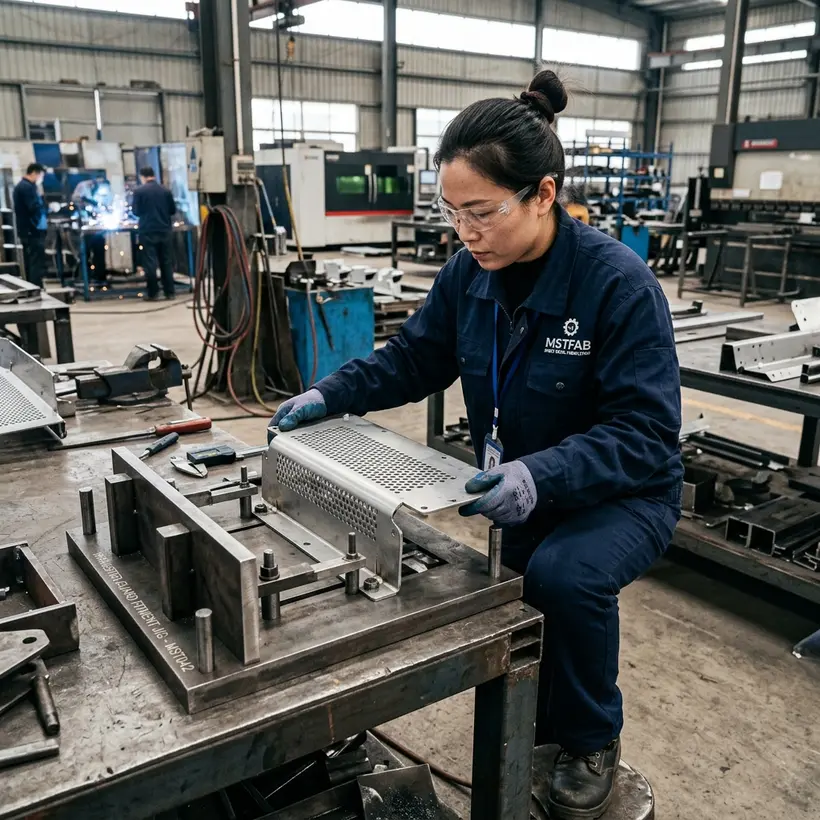
Testing the fitment and hole alignment of a newly fabricated replacement guard against a master fixture before batch production.
4. Material Selection and Thickness
Replacement parts should not be selected only by copying the old material blindly. Sometimes the original material failed because it was too thin or poorly coated.
Common material options include Mild Steel (cost-effective but needs heavy coating), Galvanized Steel (better base corrosion resistance), and Stainless Steel (for high chemical or fertilizer exposure).
Many buyers ask for thicker metal when replacing failed harvester panels. But strength can also come from formed ribs, return flanges, and gussets. A flat panel may still rattle even if it is thicker. Good replacement sourcing should solve the real failure reason, not just make the old problem heavier.
5. Powder Coating and Color Matching
Buyers may need the replacement part to match the machine’s original color. But “green” or “red” is not enough. You must define the RAL color, gloss level, and coating thickness.
Powder coating is not magic paint. It needs clean metal and proper edge treatment. A replacement part that arrives with a beautiful color but scratched corners is still a problem—it just looks disappointed in a specific RAL code.
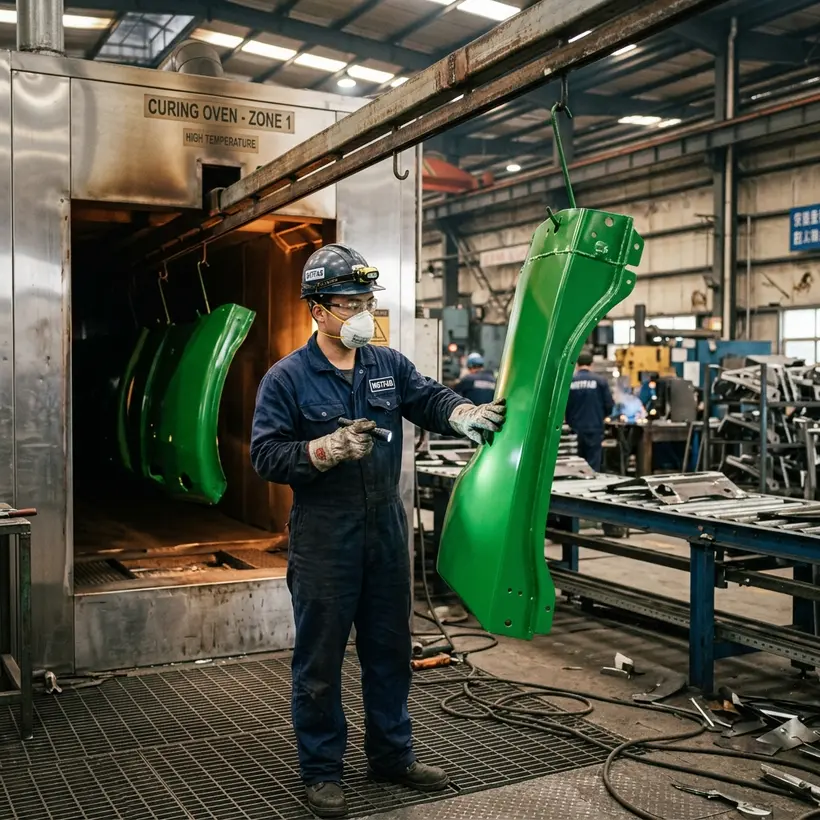
Applying heavy-duty powder coating to ensure the replacement part survives acidic crops and harsh outdoor environments.
6. Prototype Review and Packaging
For agricultural replacement sheet metal parts, prototype or first article review can prevent expensive repeat problems. It confirms whether the supplier interpreted the old sample correctly. One good prototype is useful, but repeatability is where real fabrication quality shows up.
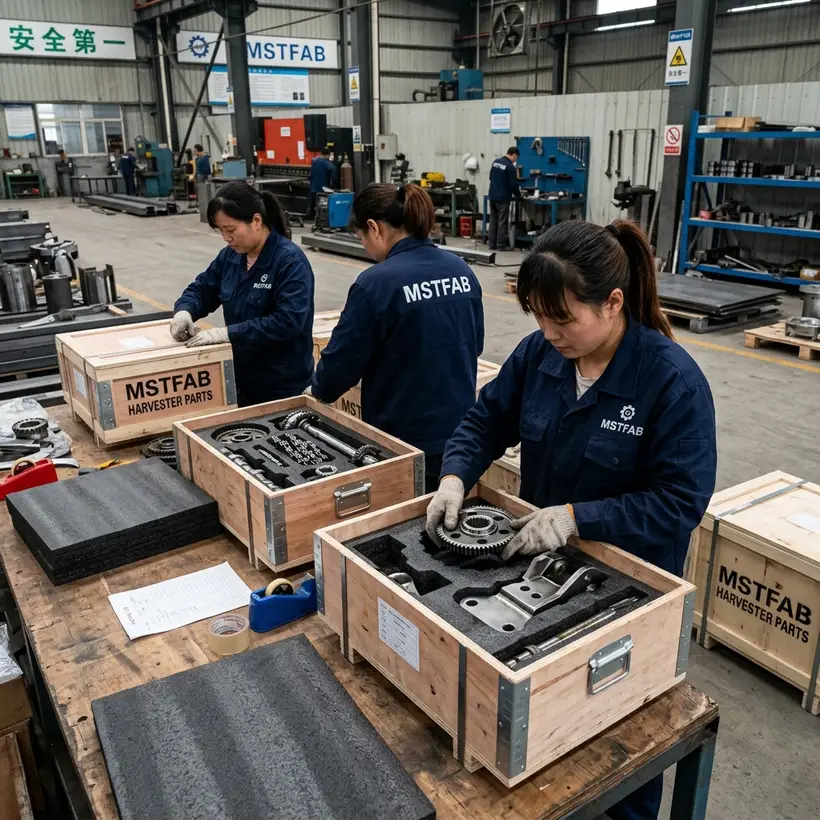
Carefully packing small-batch harvester replacement metal parts into robust wooden crates with foam inserts to prevent transport damage.
A replacement part that leaves the factory correct but arrives bent is not a successful shipment. Export packaging may require foam separation, corner protection, and robust wooden crates.
Stop Replacing Bad Parts with More Bad Parts.
Whether you are an aftermarket supplier or leading a machinery rebuild project, we engineer replacement parts that actually fit your legacy equipment.
Send us your STEP files, 2D drawings, or physical samples for a meticulous reverse-engineering and DFM review.
CNC sheet metal bending services
MSTFAB provides CNC press brake bending services for precision sheet metal parts, enclosures, brackets and OEM assemblies.
 WeChat Contact
 WhatsApp Me Directly