
Equipment metal chassis design starts with load paths, mounting points and service access, not with a generic box size. The chassis must support modules, keep locating features aligned, resist transport and operating vibration, and still leave enough access for assembly and maintenance.
This engineering guide explains how material, stiffness, fastening, cable routing and fabrication choices affect an OEM equipment chassis. For quotation and production capability, visit our custom sheet metal chassis manufacturer page. For tolerance and assembly controls, use the sheet metal chassis DFM guide.
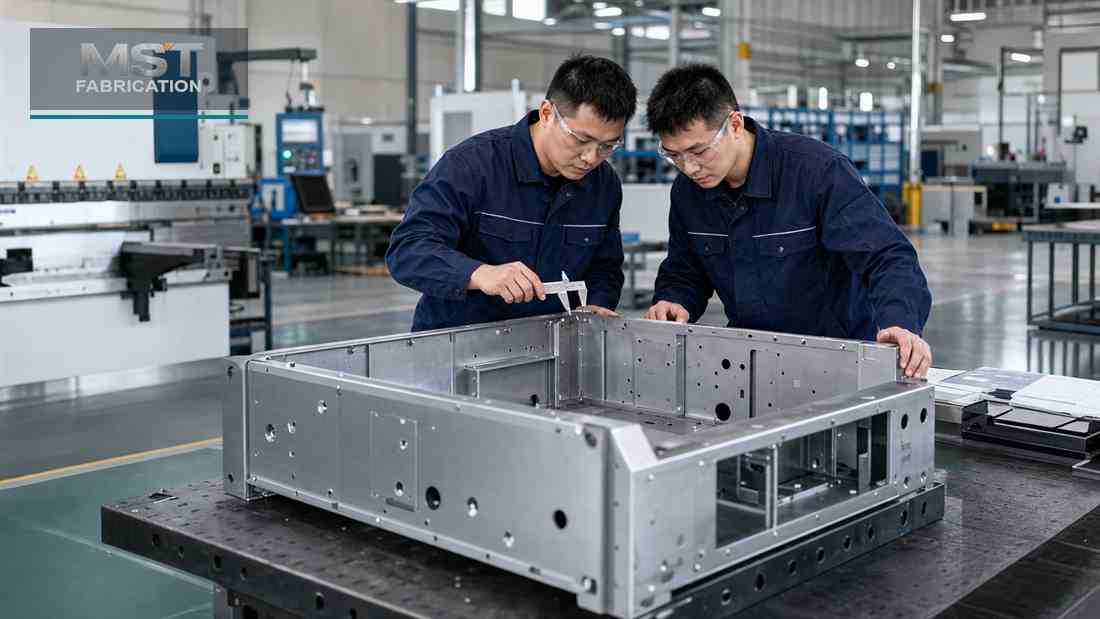
Define the Chassis Load and Mounting Requirements
A custom metal chassis is a highly engineered, fabricated metal structure utilized to support, secure, and hold internal electronic, electrical, or mechanical components inside larger equipment or machinery.
It may be deployed as:
- Heavy-duty equipment base frames
- Internal electronic support structures
- 19-inch rack-mounted server chassis
- Industrial CNC machine chassis
- Telecom equipment chassis
- Medical and aesthetic equipment frames
- Custom sheet metal enclosure internal frameworks
- Power supply and inverter mounting chassis
- Battery storage (BESS) support frames
Depending on the mechanical application, a chassis may incorporate precision-bent sheet metal panels, heavily welded tubular frames, exact mounting holes, embedded PEM nuts, sliding rails, thermal ventilation openings, cable routing channels, and protective surface finishing.
Common Equipment Chassis Design Failures
Off-the-shelf standard chassis parts rarely fit advanced OEM designs. Complex products require bespoke dimensions, specialized mounting patterns, internal custom metal brackets, precise component layouts, and application-specific load-bearing architectures.
Professional custom metal chassis fabrication eliminates chronic assembly problems such as:
- Incorrect mounting hole alignment causing assembly line delays
- Weak internal support leading to catastrophic component failure
- Difficult and time-consuming final assembly
- Chaotic internal cable routing
- Insufficient thermal clearance for sensitive electronics
- Excessive chassis vibration during operation
- Unstable or warping equipment bases
A precision-engineered chassis guarantees that your final equipment assembles faster, operates flawlessly, and maintains absolute structural integrity over decades of use.
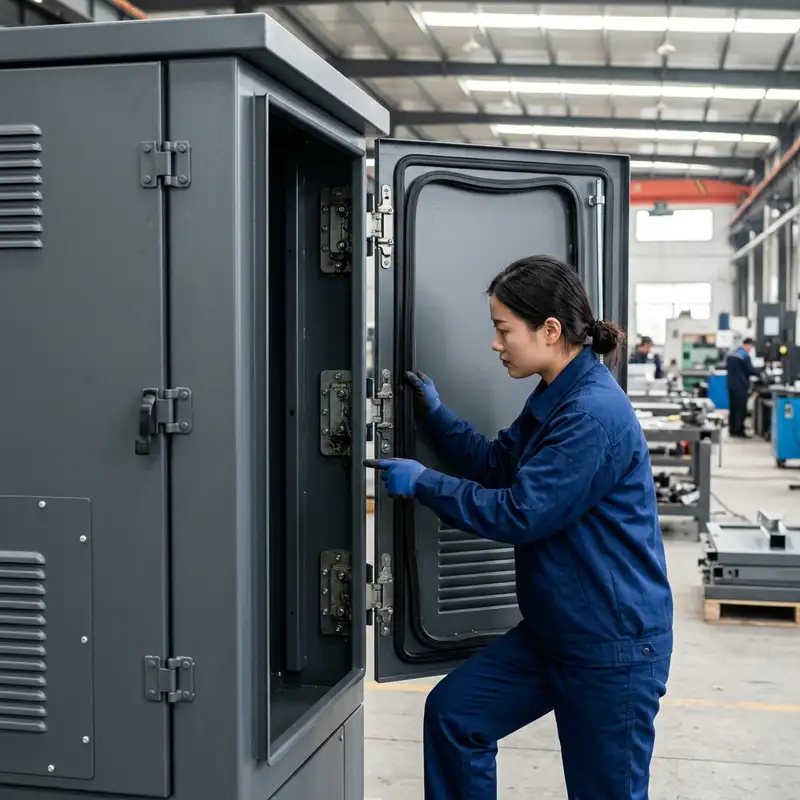
Choose Material Around Load, Weight and Environment
Material selection defines the strength, thermal performance, weight, and lifespan of the chassis.
Cold-Rolled Steel (SPCC): The industry standard for indoor equipment chassis, server racks, and industrial frames. Offers immense structural strength and flawless powder-coated aesthetics.
Galvanized Steel (SGCC): Impregnated with a protective zinc layer. Mandatory for telecom equipment, electrical enclosures, and semi-outdoor chassis demanding heightened rust protection.
Stainless Steel (SUS304 / 316L): Required for medical equipment chassis, food-grade machinery, marine environments, and applications necessitating ultimate corrosion resistance.
Aluminum (AL5052 / AL6061): Exceptionally lightweight and thermally conductive. The premier choice for aluminum equipment shells, aerospace electronics, EV systems, and handheld diagnostic chassis.
Carbon Steel: Deployed exclusively for extreme-duty, thick-gauge welded base frames supporting multi-ton industrial machinery.
How Fabrication Decisions Affect Chassis Performance
Precision Laser Cutting
Fiber laser cutting vaporizes material to create the initial chassis flat patterns. We use it to cut high-tolerance mounting holes, dense ventilation louvers, precise cable entries, card slots, and custom sheet metal profiles. Accurate laser cutting is the foundation of flawless downstream assembly.
CNC Bending and Forming
Synchronized CNC press brakes form chassis panels, structural flanges, rigid support U-channels, brackets, and internal frames. Perfect bending relies on precise K-factor calculations, calibrated tooling, and strict bend radius control to prevent material cracking.
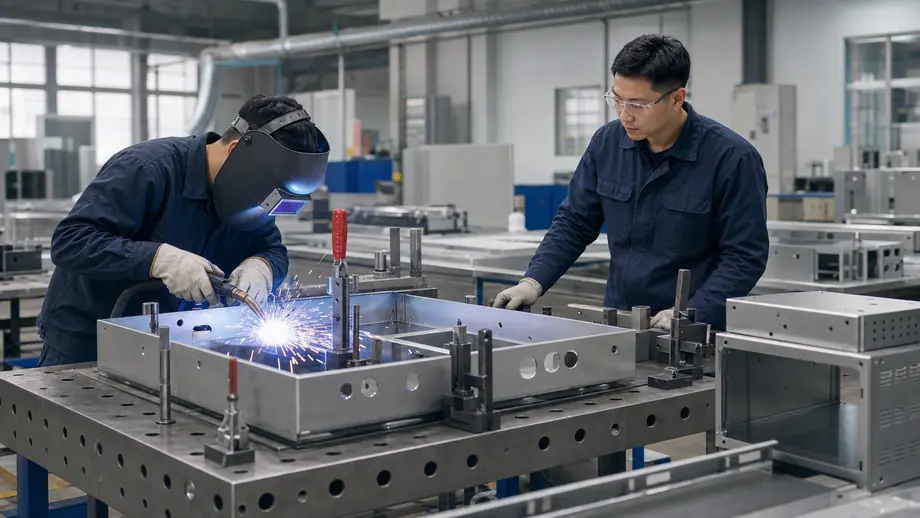
Structural Welding
TIG and MIG welding fuse individual sheet metal parts into indestructible, heavy-duty chassis frames. Welding demands masterful heat control—especially on thin-gauge materials—to prevent warping, twisting, and the misalignment of crucial assembly points.
Assembly-Ready Hardware Installation
A truly custom chassis is delivered “assembly-ready.” We permanently embed hardware using hydraulic insertion presses, including PEM nuts, threaded inserts, blind studs, PCB standoffs, grounding studs, and sliding rails. Pre-installed hardware drastically accelerates your internal production line.
Load, Vibration and Mounting Design Checklist
- Load-Bearing Strength: The chassis must support heavy internal transformers, batteries, or modules without sagging. We engineer ribbed stiffeners and welded gussets to multiply rigidity.
- Mounting Hole Accuracy: Tolerance stack-up must be minimized. Hole diameters and positional true-positioning dictate whether your internal PCBs will fit.
- Vibration Resistance: For vehicular, telecom, and automation applications, the chassis must resist harmonic fatigue.
- Cable Routing: Strategic cable cutouts with rolled edges (to prevent wire chafing) are essential for clean, maintainable internal wiring.
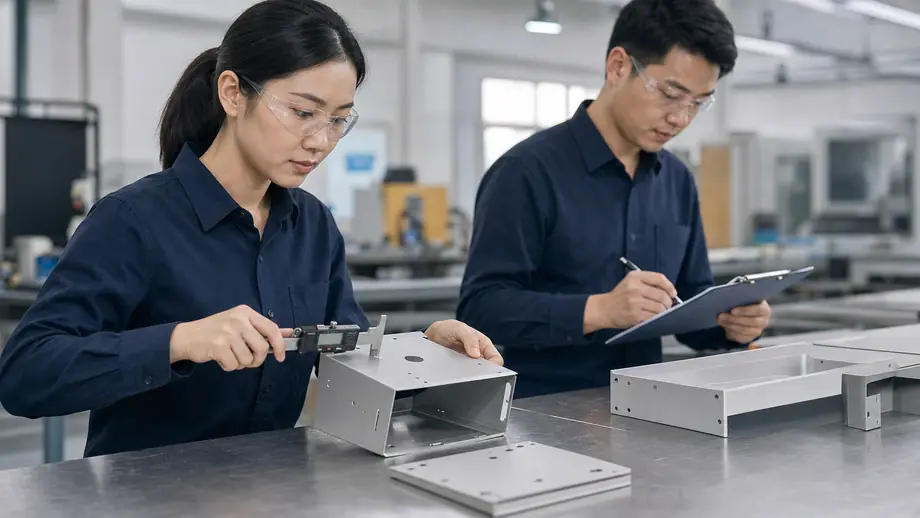
Clear Manufacturing Scope for IP Protection
At MSTFAB, we specialize in physical metal structures. We strictly manufacture the custom metal chassis, sheet metal frames, mounting bases, brackets, and mechanical enclosure structures.
We do not request your proprietary software, internal circuit designs, source code, or electronic schematics.
This explicitly defined manufacturing boundary guarantees that your core technological Intellectual Property remains completely safe and isolated from the mechanical supply chain.
FAQ: Equipment Metal Chassis Design
What is a custom metal chassis?
A custom metal chassis is a highly engineered, fabricated metal framework utilized to physically support, mount, organize, and protect sensitive internal components inside electronic, industrial, telecom, and medical equipment.
Can you manufacture metal chassis according to exact CAD drawings?
Yes. We provide precision custom metal chassis fabrication based strictly on your native 3D STEP models, detailed 2D PDF engineering drawings, or physical reference prototypes.
What materials can be used for metal chassis?
Common chassis materials include Cold-Rolled Steel (SPCC) for indoor racks, Galvanized Steel (SGCC) for rust resistance, Stainless Steel (SUS304) for medical applications, and Aluminum (AL5052) for lightweight electronics.
Can you install PEM nuts, standoffs, and sliding rails?
Yes. We deliver assembly-ready chassis with all required hardware pre-installed, including PEM nuts, threaded inserts, blind studs, PCB standoffs, sliding rails, and grounding points, drastically reducing your final assembly time.
Get a Free Sheet Metal Assembly DFM Quote — in 24 Hours
Upload your CAD drawings today for a comprehensive DFM review and factory-direct quotation.
- ✅ 5,000 m² Guangzhou factory — fiber laser, CNC bend, robot weld, powder coat in-house
- ✅ ISO 9001 certified — strict DFM, precision tolerances, and quality control
- ✅ 23+ years exporting custom enclosures to EU, US, AU OEMs
MSTFAB provides TIG and MIG sheet metal welding services for structural assemblies, cabinets, frames and OEM metal components.
 WeChat Contact
 WhatsApp Me Directly