
OEM process decision guide
Most EV charger cabinet parts belong on a sheet metal route. Machining is better reserved for the smaller places where thickness, flatness, threads or heat transfer justify the cost.
That distinction matters because an RFQ labeled only "EV charger machining" can send the entire cabinet down the wrong purchasing path. A tall door does not need to begin life as a heroic block of aluminum.
Use laser cutting, bending, welding and finishing for cabinet bodies, doors, panels, brackets and gland plates. Use CNC machining for localized precision parts such as heat-spreading blocks, thick mounting interfaces, spacers or details that cannot be formed reliably. Many EVSE assemblies need both processes, but they need one controlled interface drawing.

Choose by function
Which EV charger parts should be machined?
The process should follow the geometry and job of the part. Sheet metal creates large, relatively thin structures efficiently. Machining removes material to create thicker, highly localized geometry. Calling one process "more precise" without naming the feature is not useful procurement language.
| Part or feature | Likely process | Why | What the drawing should control |
|---|---|---|---|
| Cabinet body, door and removable panel | Sheet metal fabrication | Large surface area, folded stiffness and efficient low-volume tooling | Datums, bends, gap, flushness, hardware and finish |
| Mounting plate, partition and bracket | Sheet metal fabrication | Flat or formed geometry with cut holes, slots and installed hardware | Hole pattern, stand-off height, load direction and access |
| Gland plate and cable-entry panel | Usually sheet metal; machining for thick plates | The right route depends on thickness, connector geometry and sealing interface | Cutout datum, thickness, edge condition, gasket land and cable clearance |
| Heat-spreading block or cold-plate interface | Machining or a specialist thermal process | Local flatness, channels or heat-transfer requirements may exceed a formed-panel route | Thermal design, interface flatness, material and validation method |
| Precision spacer, threaded block or hinge boss | Machining, standard hardware or a purchased component | Concentrated load, thread engagement or repeated motion may need a solid feature | Thread, fit, material, corrosion compatibility and retention method |
| Hybrid cabinet assembly | Sheet metal plus sourced machined parts | Each process does the work it is good at | Shared datums, stack-up, coating masks, fasteners and inspection ownership |
Example: machine the interface, not the whole cabinet
Suppose an EVSE cabinet needs a flat, threaded heat-spreader mount. Form the large panel from sheet metal; consider a separate machined block only where the OEM's flatness, thread and thermal requirements justify it. Put the shared datum, coating mask, fastener access and finished-assembly fit check on the same drawing revision. The OEM still validates heat transfer and the electrical design. This is a process-routing example, not a tested customer design.

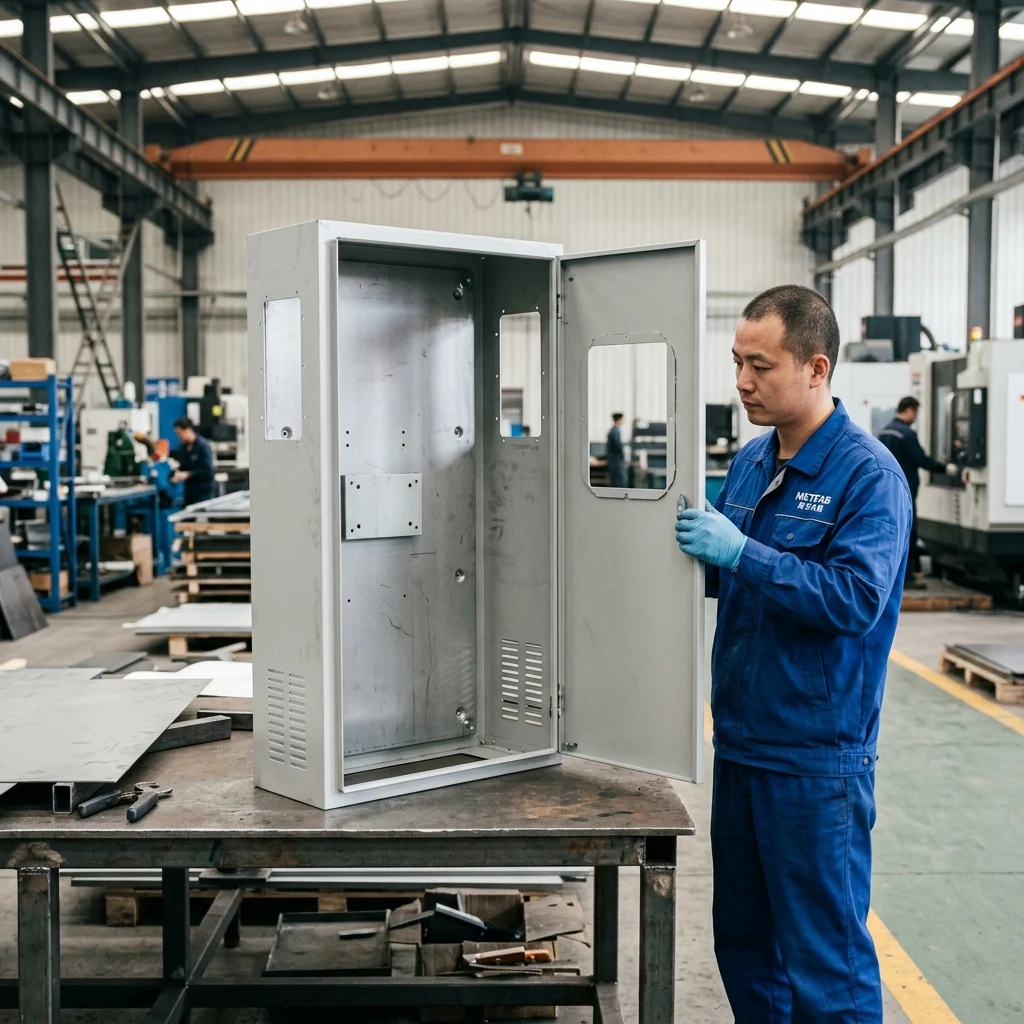
The expensive part is the interface
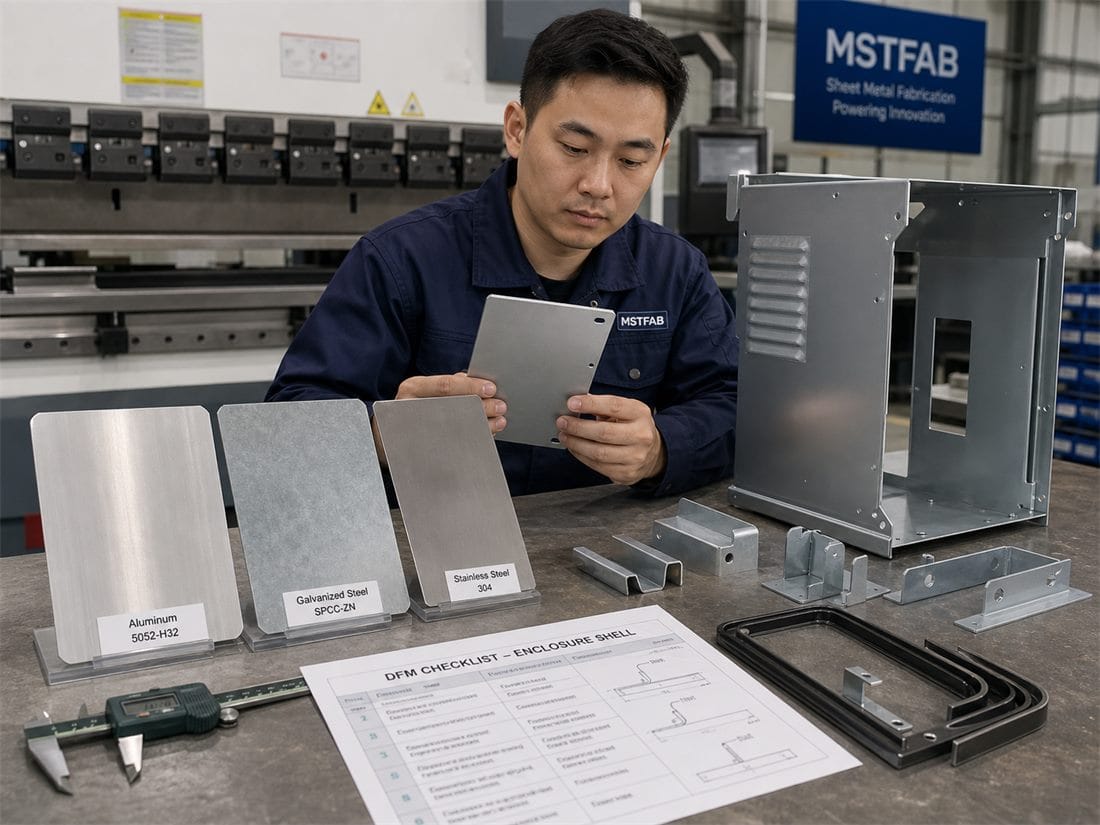
Hybrid assemblies fail at the handoff, not in the process name
A machined component can be excellent and still miss the holes in the cabinet. A formed panel can meet its drawing and still leave no tool access for the fastener. The shared interface needs one owner, one revision and one measurement plan.
Start with functional datums. Dimension the machined part and sheet metal part from the surfaces that control final fit. Then identify coating buildup, electrical contact zones, corrosion isolation, fastener access and the condition in which the assembly will be inspected.
- Matching STEP or STP model and revision-controlled 2D drawings
- Material and finish for each component, including masked areas
- Functional datums shared across sheet metal and machined parts
- Threads, inserts, studs, fasteners and required installation access
- Thermal interface defined by the responsible equipment designer
- Finished-part tolerance and inspection method for critical features
- First-article fit check using approved mating parts or gauges
- Drawing revision and change approval before repeat production

Clear commercial boundary
What MSTFAB supplies, and what remains with the OEM
MSTFAB mechanical scope
Guangzhou Maisituo Sheet Metal Manufacturing Co., Ltd., operating as MSTFAB, fabricates build-to-print empty sheet metal enclosure shells, doors, panels, brackets, gland plates and drawing-defined mechanical hardware. Machined or specialist thermal parts are included only when they are listed in the approved quotation scope.
OEM or integrator scope
The buyer remains responsible for electrical architecture, charger modules, thermal calculations, component selection, wiring, software, completed-equipment testing, certification and market release. A metal supplier can review manufacturability; it cannot quietly become the equipment design authority because a purchase order uses the word "charger."
| Decision | Buyer provides | Supplier reviews or records |
|---|---|---|
| Process selection | Functional requirement, material and critical geometry | Whether cutting, forming, joining, machining or sourcing is practical |
| Interface control | Datums, tolerance, mating parts and acceptance condition | Manufacturing risk, tool access and proposed inspection method |
| First article | Required report scope and approval authority | Agreed dimensions, hardware, finish and representative fit evidence |
| Engineering change | Approved drawing revision and affected requirements | Controlled implementation and new evidence where the change affects fit or process |

RFQ checklist
What to send before anyone chooses a process
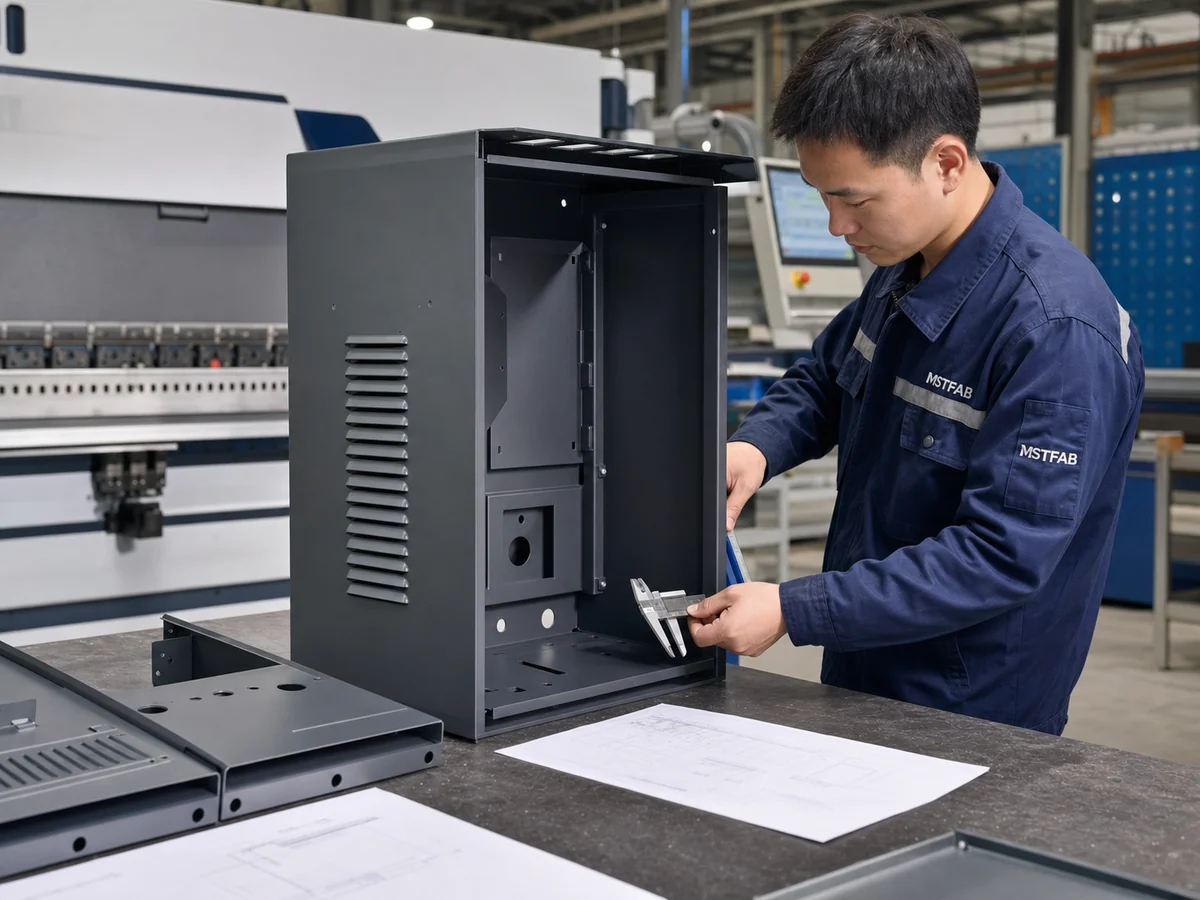
A useful quote starts with the problem the part must solve. Send the assembly model, part drawings, material and finish, order quantity, destination and the interfaces that cannot move. Identify any buyer-supplied machined, thermal or electrical components that must fit the cabinet.
For a large DC cabinet, also define service doors, lifting and anchoring, cable entry, ventilation openings and removable-panel access. The DC fast charger enclosure checklist covers those shell-specific decisions in more detail.
Buyer questions
EV charger machining FAQ
Is an EV charger enclosure a machined part?
Usually not as a complete cabinet. The body, doors and panels are normally sheet metal fabrications. A charger assembly may still include machined blocks, spacers, heat-transfer parts or other localized precision components.
Can one supplier make both sheet metal and machined parts?
Sometimes, but capability alone is not the key control. The quotation must list which parts are included, who owns each drawing and how the shared interfaces will be inspected.
Does machining automatically provide a better tolerance?
No. Tolerance belongs to a feature and a function, not a process label. Large cabinet geometry is also affected by bending, welding, coating and assembly. Specify the finished condition and inspection method that matter.
What should an EVSE first-article review include?
It should cover the critical dimensions, hardware, finish, door and panel operation, and any agreed fit checks with buyer-supplied components. The exact evidence should be stated in the RFQ or purchase order.
 WeChat Contact
 WhatsApp Me Directly