
CNC turning parts are used in many OEM products, industrial machines, equipment assemblies, electrical systems, automation devices, enclosures, and mechanical structures.
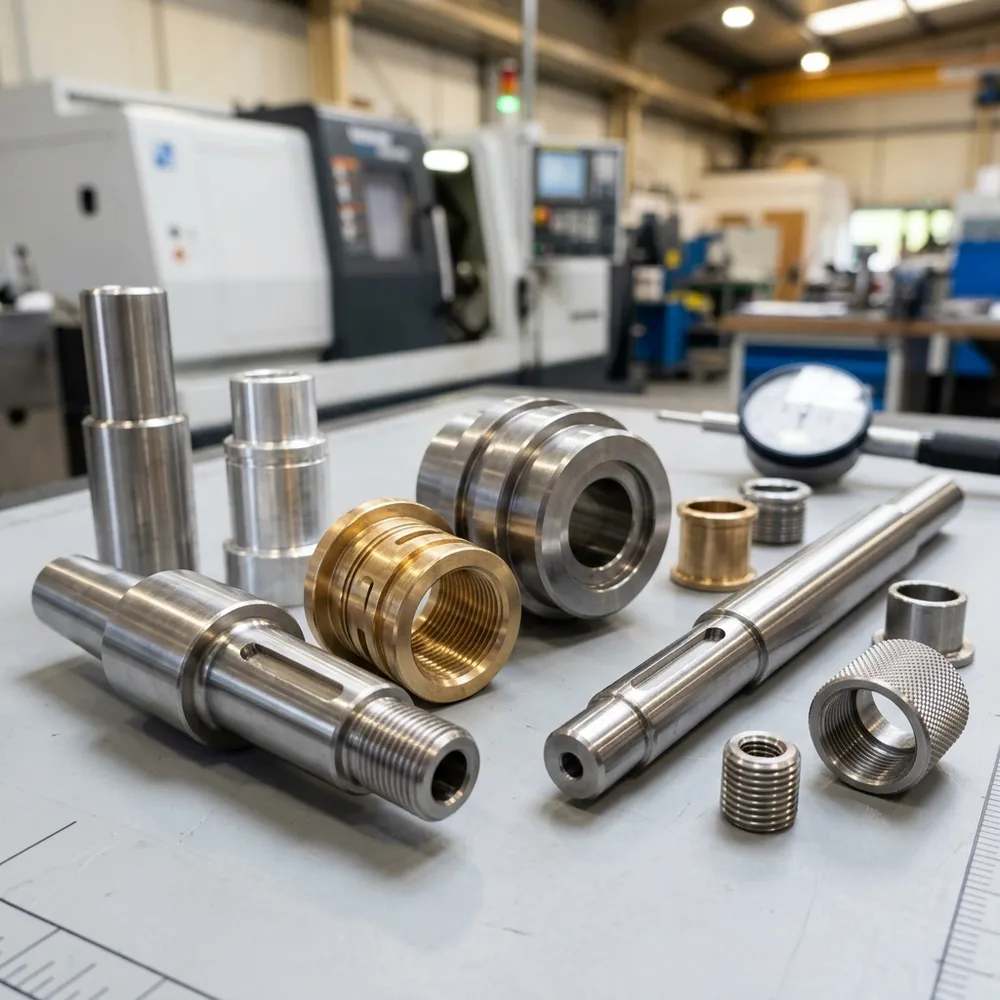
MSTFAB supports custom CNC turning parts based on customer drawings, samples, or project requirements. We manufacture precision turned components for OEM equipment, sheet metal fabrication assemblies, industrial machinery, control systems, telecom equipment, medical equipment, and custom metal parts.
For OEM buyers, engineers, and procurement teams, CNC turning is not only about making a round part. It is about producing a component that fits correctly, assembles smoothly, and performs reliably in the final product.
What Are CNC Turning Parts?
CNC turning parts are machined components produced on CNC lathes. During the turning process, the workpiece rotates while cutting tools remove material to create precise cylindrical, threaded, grooved, or stepped shapes.
Common CNC turning parts include:
- Shafts
- Pins
- Bushings
- Sleeves
- Spacers
- Threaded inserts
- Standoffs
- Couplings
- Fittings
- Fastener components
- Connector parts
- Custom round metal parts
- Precision machined components
CNC turning is suitable for parts that require round geometry, threads, tight diameters, internal holes, grooves, chamfers, and consistent batch production.
Applications of CNC Turning Parts
Custom CNC turning parts can be used in many industries and product types.
Industrial Equipment
Turned parts are used in machines, frames, adjustment mechanisms, guide systems, and mechanical assemblies.
Electrical and Control Equipment
CNC turned spacers, standoffs, bushings, and threaded inserts can be used inside electrical enclosures, control cabinets, PLC cabinets, and equipment housings.
Telecom and Network Equipment
Telecom equipment may require precision turned hardware, mounting components, connector parts, sleeves, and spacers.
Medical and Aesthetic Equipment
Medical equipment and beauty devices may use CNC turned components where precision, surface quality, and material reliability are important.
Sheet Metal Assemblies
Many sheet metal enclosures and cabinets require turned parts such as spacers, shafts, threaded inserts, sleeves, knobs, mounting hardware, or custom support components.
Automotive and Machinery Parts
CNC turned parts can be used for metal brackets, mechanical linkages, machine supports, shafts, bushings, and equipment hardware.
Materials for CNC Turning Parts
Material selection depends on strength, wear resistance, corrosion resistance, conductivity, weight, surface finish, and cost target.
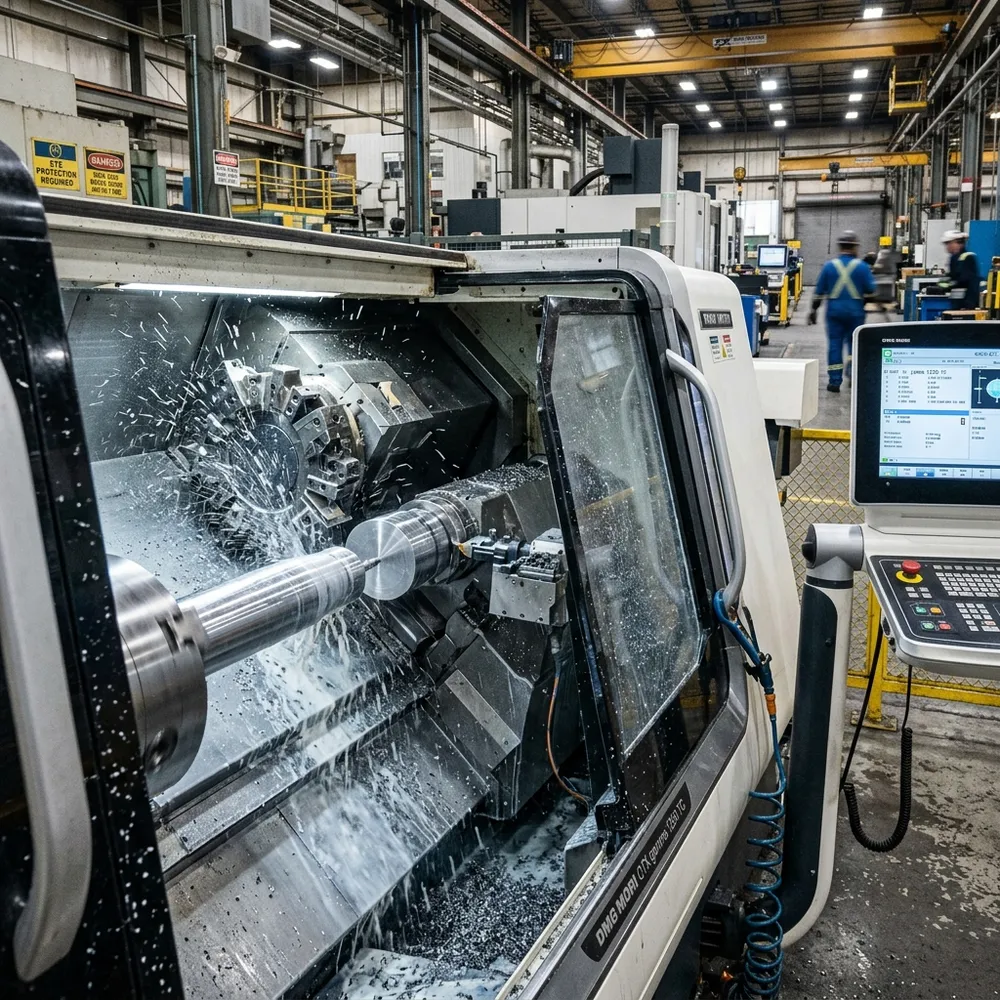
Aluminum
Aluminum is lightweight, corrosion-resistant, and easy to machine. It is commonly used for spacers, housings, sleeves, knobs, fittings, and lightweight mechanical components.
Common applications include:
- Aluminum spacers
- Aluminum sleeves
- Aluminum shafts
- Aluminum connector parts
- Aluminum equipment components
Stainless Steel
Stainless steel is suitable for applications requiring corrosion resistance, strength, and durability. It is often used in medical equipment, food equipment, outdoor products, industrial components, and precision hardware.
Common grades may include SUS304 and SUS316 depending on the environment.
Carbon Steel
Carbon steel is used for strong and cost-effective turned parts. It may require surface treatment such as zinc plating, black oxide, painting, or anti-corrosion coating.
Brass
Brass is often used for fittings, bushings, threaded inserts, connectors, and decorative or electrical components. It has good machinability and a clean appearance.
Copper
Copper may be selected for electrical conductivity or thermal conductivity requirements. It is used for certain connectors, terminals, and special components.
Plastic
Some turned parts can also be made from engineering plastics depending on the application, weight requirement, insulation requirement, or chemical resistance.
The correct material should be confirmed before quotation and production.
CNC Turning Capabilities
Custom CNC turning can support different part features and structures.
Common machining features include:
- External diameter turning
- Internal boring
- Drilling
- Threading
- Grooving
- Chamfering
- Knurling
- Tapping
- Facing
- Step turning
- Precision hole machining
- Custom profile turning
Parts can be manufactured according to 2D drawings, 3D files, samples, or customer specifications.
For precision OEM projects, critical dimensions and tolerance requirements should be clearly marked on the drawing.
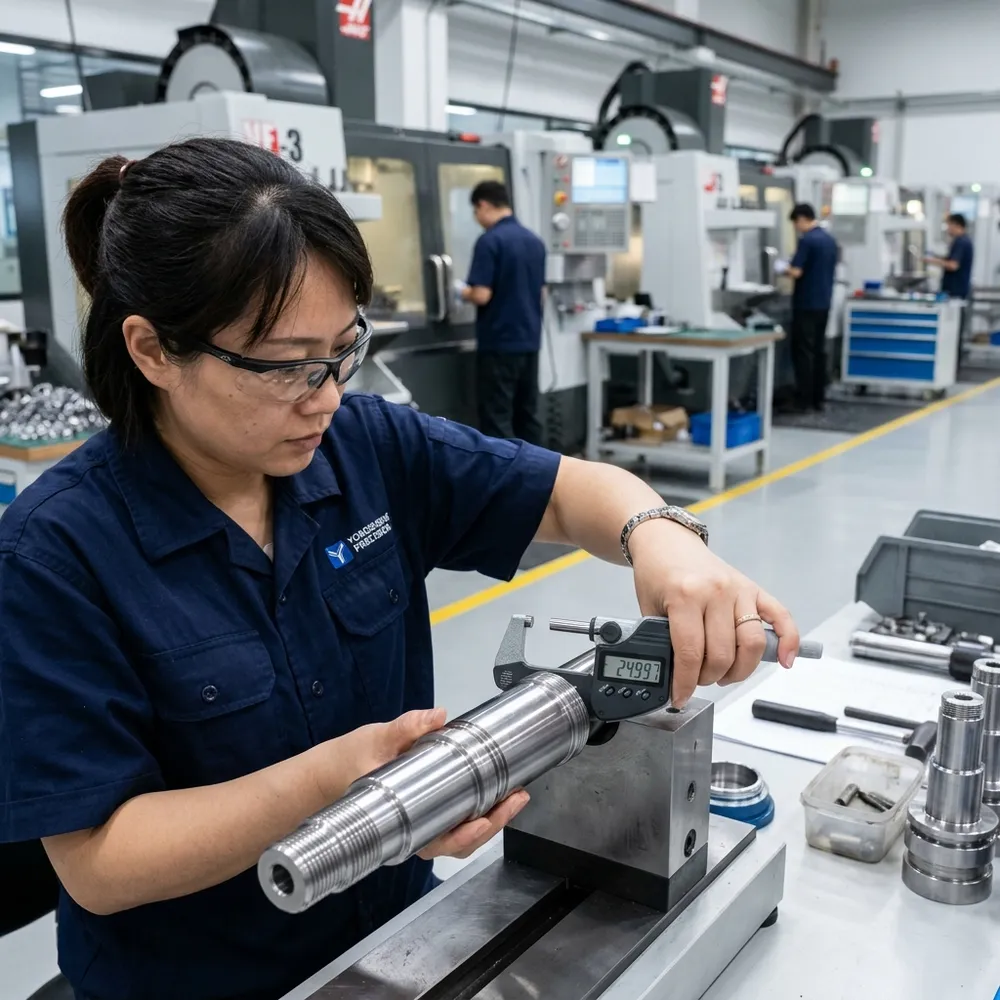
Tolerance Control
Tolerance is one of the most important factors in CNC turning.
However, not every dimension needs tight tolerance. Overly tight tolerance on non-critical dimensions can increase machining cost and inspection time.
Critical tolerance areas may include:
- Shaft diameter
- Bearing fit areas
- Threaded sections
- Internal holes
- Assembly interfaces
- Concentricity requirements
- Surface contact areas
- Press-fit or slip-fit dimensions
Surface Finishing Options
Surface finish affects appearance, corrosion resistance, wear resistance, and assembly performance.
Available surface finishing options may include:
- Anodizing for aluminum
- Zinc plating
- Nickel plating
- Black oxide
- Passivation for stainless steel
- Polishing
- Brushing
- Sandblasting
- Powder coating, if applicable
- Anti-corrosion coating
For visible components, surface appearance should be confirmed before production.
For functional parts, surface roughness, coating thickness, and fit after finishing should be reviewed carefully.
Threads and Hardware Features
Many CNC turning parts include threaded features.
Common thread-related requirements include:
- External threads
- Internal threads
- Metric threads
- UNC / UNF threads
- Tapped holes
- Threaded inserts
- Custom thread length
- Thread relief
- Chamfered thread starts
Thread specifications should be clearly shown on the drawing.
If the turned part will be assembled with sheet metal enclosures, brackets, panels, or cabinets, the thread fit and assembly method should be reviewed before production.
Design for Manufacturability Review
A proper DFM review can help reduce machining risk and cost before production begins.
For CNC turning parts, DFM review may check:
- Material selection
- Diameter and length ratio
- Wall thickness
- Thread feasibility
- Groove depth
- Hole depth
- Tolerance requirements
- Surface finish requirement
- Tool access
- Burr control
- Heat treatment or plating requirement
- Assembly fit
A design issue found during drawing review is easier to correct than a problem found after machining.
For OEM projects, DFM review is especially useful before moving from prototype to batch production.
Prototype and Batch Production
Custom CNC turning projects often begin with prototypes or first-article samples.
Prototype production helps confirm:
- Dimensions
- Threads
- Surface finish
- Assembly fit
- Material suitability
- Functional performance
- Inspection requirements
After sample approval, batch production can be arranged with controlled machining, inspection, finishing, and packaging.
For OEM buyers, consistency from sample to batch production is critical.
CNC Turning and Sheet Metal Assembly Support
Some projects require both sheet metal parts and CNC turned components.
For example:
- Sheet metal enclosures with threaded standoffs
- Electrical cabinets with custom spacers
- Control panels with turned knobs or bushings
- Equipment housings with machined shafts
- Brackets with turned sleeves
- Chassis assemblies with precision inserts
Combining CNC turned parts with sheet metal fabrication can help customers simplify sourcing and improve assembly consistency.
MSTFAB supports physical metal components and structures based on customer drawings and requirements.
Quality Control for CNC Turning Parts
CNC turning quality affects final assembly and product performance.
Typical inspection items include:
- Material confirmation
- Outer diameter inspection
- Inner diameter inspection
- Length measurement
- Thread inspection
- Surface roughness check
- Concentricity check, if required
- Chamfer and burr inspection
- Plating or finishing inspection
- Assembly fit check
- Packaging inspection
For precision parts, first-article inspection can be arranged before batch production.
Clear Manufacturing Scope
MSTFAB focuses on custom metal fabrication, sheet metal structures, and precision metal components.
We manufacture physical metal parts, including:
- CNC turning parts
- Shafts
- Bushings
- Sleeves
- Spacers
- Threaded inserts
- Standoffs
- Custom machined components
- Sheet metal enclosures
- Metal brackets
- Chassis and frames
- OEM metal parts
We do not require customer software, internal circuit design, protected electronic schematics, or proprietary system logic.
Our scope is the physical metal part or structure based on customer drawings and project requirements.
This keeps the project boundary clear and helps protect customer intellectual property.
What to Send for a CNC Turning Quote
To quote your CNC turning parts accurately, please provide:
- 2D PDF drawing
- 3D STEP file, if available
- Material requirement
- Quantity
- Tolerance requirements
- Thread specifications
- Surface finish requirement
- Heat treatment or plating requirement
- Application environment
- Assembly requirement
- Packaging or shipping requirement
If drawings are not available yet, samples, reference photos, and key dimensions can help with early evaluation.
For production orders, clear drawings are strongly recommended.
Request a CNC Turning Parts Quote
If you need custom CNC turning parts, shafts, bushings, sleeves, spacers, threaded inserts, standoffs, or precision machined components, send us your drawings or samples for review.
Our engineering team will evaluate material, structure, tolerance, machining process, surface finish, quantity, and application requirements.
A good CNC turned part should fit correctly, assemble smoothly, and perform reliably in the final equipment.
That starts with clear drawings, practical engineering review, and controlled CNC machining.
Request a Precision CNC Turning Quote
Ready to manufacture custom CNC turning parts for your OEM equipment? Send us your drawings for evaluation.
Frequently Asked Questions
What are CNC turning parts?
CNC turning parts are precision machined components made on CNC lathes. They are usually cylindrical or round parts such as shafts, bushings, pins, spacers, sleeves, inserts, and threaded components.
What materials can be used for CNC turning parts?
Common materials include aluminum, stainless steel, carbon steel, brass, copper, and engineering plastics depending on the application.
Can you manufacture CNC turning parts according to drawings?
Yes. We support CNC turning parts based on 2D PDF drawings, 3D STEP files, CAD files, samples, or reference photos.
What tolerances can be achieved?
Tolerance depends on material, part geometry, size, machining process, and inspection requirements. Critical tolerances should be clearly marked on the drawing.
Can you make threaded CNC turning parts?
Yes. External threads, internal threads, tapped holes, threaded inserts, standoffs, and custom thread features can be machined according to drawings.
Do you support prototype production?
Yes. Prototype or first-article production can be supported before batch manufacturing.
custom sheet metal enclosure fabrication
MSTFAB manufactures custom sheet metal enclosures, electrical cabinets, control boxes and industrial metal housings for OEM buyers.
 WeChat Contact
 WhatsApp Me Directly