
When buyers search for an aluminum laser cutting manufacturer, they usually need more than just flat pieces of metal. They are looking for a highly capable factory that can deliver lightweight, precision-cut sheet metal parts that are clean, dimensionally accurate, and completely ready for downstream assembly.
Aluminum is the material of choice for industrial equipment, EV charging stations, robotics, and electronic enclosures. It drastically reduces weight while providing excellent structural strength and natural corrosion resistance. However, aluminum reflects laser light heavily and dissipates heat rapidly, making it a notoriously tricky material to process without the right equipment.
As a professional laser cut metal parts manufacturer, MSTFab processes custom aluminum components directly from your DXF, DWG, PDF, or STEP files. We don’t just cut aluminum; we form, weld, and surface-finish it to your exact engineering standards.
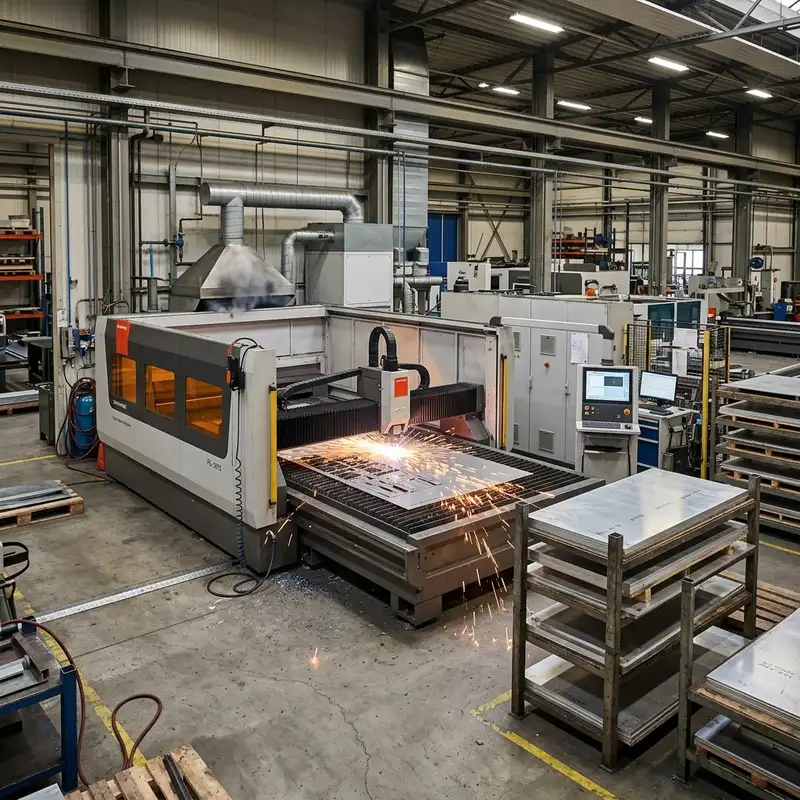
When buyers rely on us for production, they are typically sourcing highly specific custom laser cut aluminum parts tailored to their OEM equipment.
Need production capability? This article focuses on aluminum laser cutting. For manufacturing scope, process capability and drawing-based quotation support, review MSTFAB’s laser cutting services.
Selecting the Right Aluminum Grade
The grade of aluminum you choose determines how the part will behave during bending, welding, and surface finishing. The two most common grades we process for OEM buyers are 5052 and 6061.
| Aluminum Grade | Key Characteristics | Best Applications |
|---|---|---|
| 5052 Aluminum | Excellent formability, very good corrosion resistance, does not crack easily during bending. | Enclosures, chassis covers, complex bent brackets, marine components. |
| 6061 Aluminum | High structural strength, rigid. Prone to cracking if bent too tightly. Excellent for machining. | Flat structural plates, heavy-duty support frames, robotic arms. |
Engineering Tip: If your part requires multiple 90-degree bends (like an electronic enclosure), 5052 aluminum is almost always the correct choice. If you specify 6061 for a tightly bent part, it will likely fracture along the bend line.
For more insights on complete aluminum processing workflows, visit our aluminum sheet metal fabrication service hub.
Buyer Pain Points We Solve in Aluminum Manufacturing
1. “Our Aluminum Parts Keep Cracking During Bending”
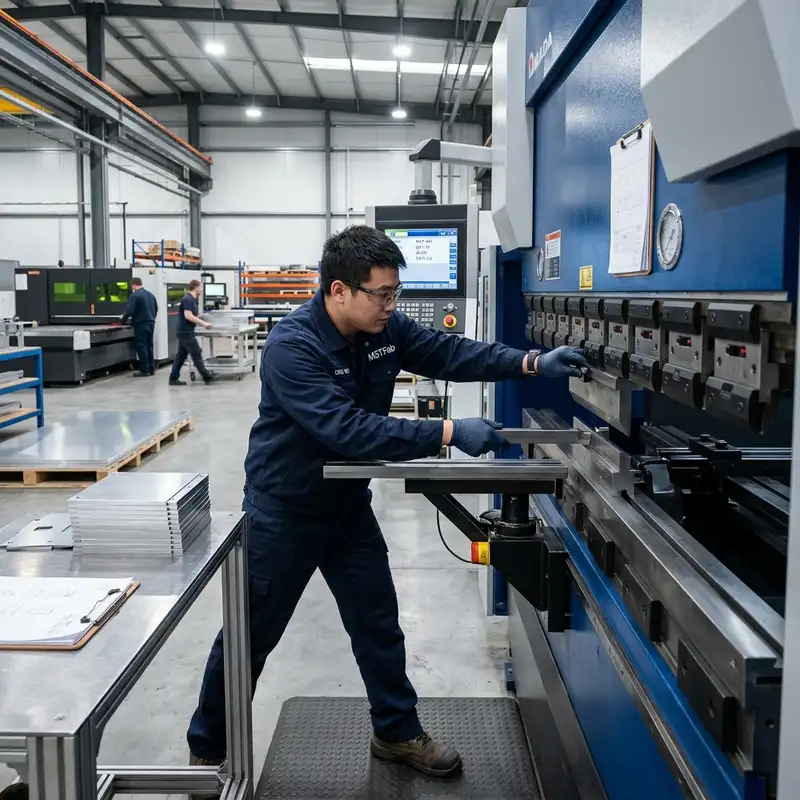
This is a classic issue when suppliers fail to review the drawing against the material grade. Bending 6061-T6 aluminum too sharply will cause the grain structure to fracture. At MSTFab, our engineers review every drawing. If we see a tight bend radius on 6061, we will consult with you to either increase the bend radius or switch the material to 5052. Explore our CNC bending service.
2. “The Cut Edges Are Covered in Dross”
Older CO2 lasers struggle with aluminum, often leaving a heavy slag (dross) on the bottom edge that requires expensive manual grinding. We use advanced fiber lasers with high-pressure assist gases to produce a clean, smooth edge directly off the machine.
3. “Aluminum Surfaces Arrive Scratched”
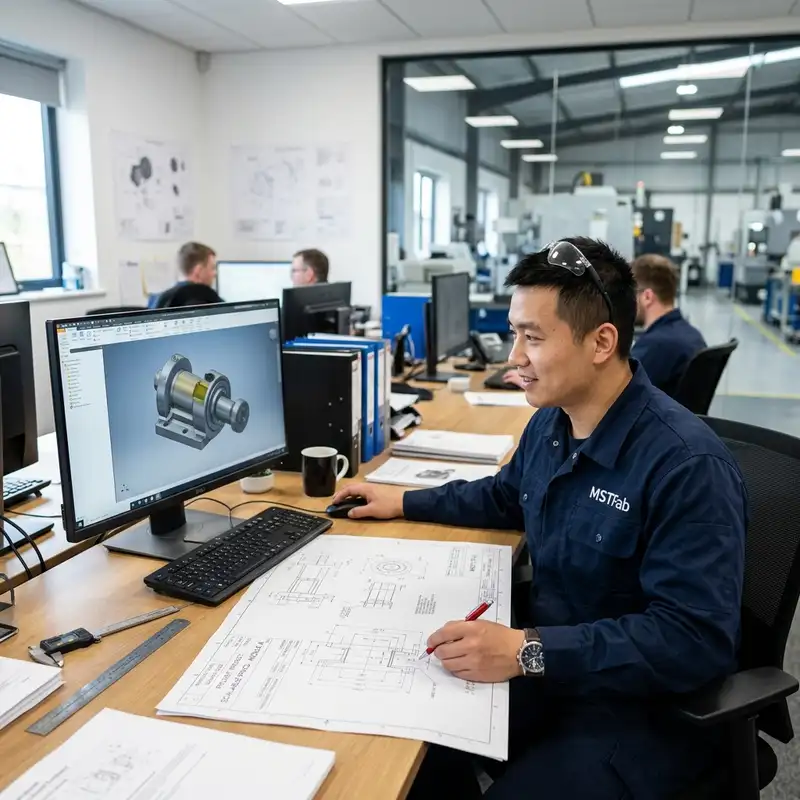
Aluminum is soft. If a factory drags an aluminum sheet across a messy work table, the cosmetic surface is ruined. MSTFab protects visible surfaces with PE film prior to processing, maintaining that protection through cutting, bending, and final shipment. We also provide robust export packaging to prevent transit damage.
4. “We Need Threaded Holes, But Aluminum is Too Soft”
If you tap a fine thread directly into a thin aluminum plate, the threads will strip easily during assembly. We routinely install PEM hardware (rivet nuts, self-clinching standoffs, and threaded studs) into aluminum parts to provide robust, reusable steel threads inside your lightweight aluminum chassis.
5. “Welding Aluminum Causes Massive Warping”
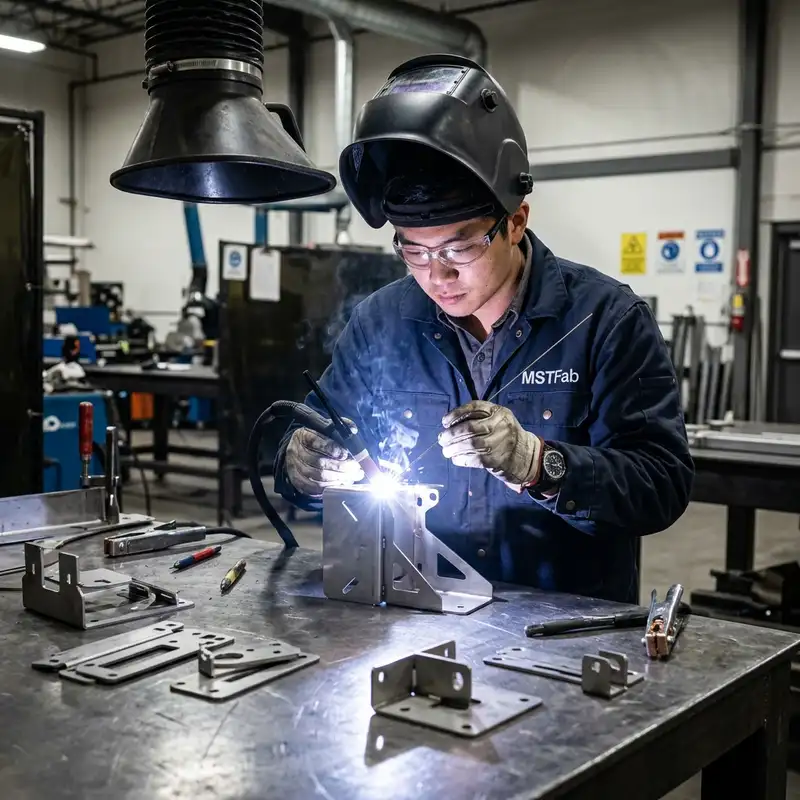
Because aluminum dissipates heat quickly, welders must use higher heat to establish a puddle, which often warps thin sheet metal. Our experienced TIG welders utilize specialized fixtures and pulsed welding techniques to control heat input and maintain dimensional accuracy. Visit our sheet metal welding service.
Aluminum Surface Finishing Options
Aluminum’s natural oxide layer provides decent corrosion resistance, but most OEM applications require a professional finish for durability and aesthetics. We offer:
- Raw / Deburred Finish: Cleaned edges, ready for hidden internal structural use.
- Brushed Finish: Linear grain applied before clear anodizing for a premium cosmetic look.
- Anodizing (Clear or Color): An electrochemical process that thickens the natural oxide layer, making the surface extremely hard and scratch-resistant.
- Powder Coating: Excellent for outdoor cabinets and EV chargers, providing a thick, durable, and colorful finish. See our powder coated sheet metal parts capabilities.
How to Request an Aluminum Manufacturing Quote
To ensure we provide the most accurate manufacturing solution, please provide the following:
- Flat Profiles: DXF files or DWG files.
- Complex Parts: STEP or STP files for bent or welded assemblies.
- Detailed PDFs: Clearly calling out material grade (5052 vs 6061), surface finish, masking requirements for threaded holes, and critical tolerances.
Partner with a Direct Aluminum Manufacturer
Don’t risk your project with suppliers who don’t understand the distinct behaviors of 5052 and 6061 aluminum. MSTFab provides reliable, scalable, and high-quality aluminum fabrication for OEM equipment manufacturers worldwide.
Send us your CAD files today. Our engineers will review your designs and provide a highly competitive manufacturing quotation that covers everything from raw laser cutting to final powder coating.
Submit Your Aluminum Drawings for Review WeChat Contact
 WhatsApp Me Directly